IHG Hotels & Resorts announced Danny Ha as development representative for Korea, where Ha will support the strategic growth of IHG brands in the country and focus on building long and trusted relationships with owners.
Ha brings 25 years of experience in hospitality strategy and planning, brand development, contract negotiation and conversions, pre-opening and project management in Korea, having ran his own hotel consulting practice where he represented owners in various capacities. He was also an owner’s representative for high profile projects of brands such as JW Marriott and IHG InterContinental and Holiday Inn & Suites.
Ha is excited to join the IHG team at such an opportune time as travel and hospitality rallies with the reopening of borders and looks forward to developing win-win strategic partnerships with owners, as well as unlocking the potential of IHG’s brands in Korea.
Japan’s tourism industry is buoyant after seeing a dramatic travel rebound during the country’s peak holiday period, leaving hopes high for summer.
The population enjoyed their first Golden Week without stay-at-home requests since the outbreak of Covid-19, resulting in an estimated 16 million people traveling, according to JTB Corporation.
Japan’s tourism industry saw a dramatic travel rebound during the country’s peak holiday period
Transport providers were among the first to show positive performance during the holiday period from April 29 to May 8, 2022 – domestic departures of Japan Airlines (JAL) and All Nippon Airways were almost fully booked on April 29, according to the airlines.
The number of passengers on Shinkansen and limited express trains over the period increased 2.45 times compared to 2021, according to the JR Group, but equates to only 56 per cent of the number over Golden Week 2019.
Japan’s domestic airlines reported 1.7 times more reservations that the previous year for domestic flights and 4.7 times more for international flights during the holiday period.
According to JAL, its total number of domestic passengers was 231 per cent year-on-year. In a statement, the company said: “All destinations are (performing) significantly higher than the previous year but, in particular, the total number of passengers in the Tohoku/Hokuriku, Kansai and Chugoku/Shikoku regions tripled from the previous year.”
Demand for such rural destinations reflects the growing interest among Japanese customers for rural areas, a trend also reported in JTB’s survey about Golden Week travel intentions. The study showed 31 per cent of respondents wanted to enjoy natural scenery while 21 per cent wanted to enjoy mountain climbing, camping and other outdoor activities.
In Kusatsu, a town in Gunma Prefecture known for its hot springs, 70 to 80 per cent of its 122-member ryokan inns were fully booked for Golden Week, according to the Kusatsu Onsen Tourism Association.
“Recovery is good and our campsites are seeing customers coming back,” said Taisuke Yokota, managing director of Camping with Soul Japan, which reported occupancy during Golden Week at 80 per cent of its 2019 occupancy over the same period.
He added: “This gives us high expectations for summer visitors.”
Tourism Malaysia has continued its pursuit of Middle Eastern travellers following the conclusion of Arabian Travel Market, with a series of roadshows in Iran, Oman and Qatar from May 13 to 21.
Travellers from the region have traditionally been long-staying and among the top five spenders in terms of per capita expenditure, making them an important source for Malaysia.
Zainuddin: thrilled to welcome international travellers worldwide to experience Malaysia again
Led by Tourism Malaysia’s director-general Zainuddin Abdul Wahab, the roadshows in the capital cities of Tehran, Muscat and Doha bring together Malaysia’s tourism fraternity comprising travel agents, hoteliers, product owners, state tourism bodies and medical tourism industry players.
Zainuddin said in a press statement: “As we welcome more West Asia travellers back to Malaysia, it is a timely occasion to strengthen our partnership with international airlines such as Qatar Airways, Oman Air and Mahan Air, which offer direct flights to Kuala Lumpur.
”With an exciting line-up of new attractions to be explored, including the newly opened Genting Skyworlds Theme Park, the world’s second tallest skyscraper, Merdeka 118, and the Sunway Resort in Kuala Lumpur that had just reopened after a once-in-a-generation transformation, we are thrilled to welcome international travellers worldwide to experience our country again.”
Apart from formal briefings and presentations on Malaysia’s tourism industry, travel trade partners are also invited to travel mart sessions and networking dinners.
Uzaidi Udanis, president of Malaysia Inbound Tourism Association, said: “It is important to build on this market and for Tourism Malaysia to collaborate with Middle Eastern airlines on promotional activities as tourists from the Middle East are mostly high-yield and (stay for) more than five days. It is also important to showcase new attractions, so outbound agents from there know we have not been stagnant in the last two years.”
TUI BLUE Hotels & Resorts has revealed plans to develop 70 to 90 hotels in Asia-Pacific, soon after establishing its new development team in Hong Kong.
The hotel subsidiary of TUI Group has an overall ambition to grow to more than 300 hotels worldwide, enabling it to become the leading leisure hotel brand. It currently has 97 hotels in 20 countries, and has its eyes on expansion opportunities across South-east Asia, China, Africa and the Middle East.
TUI BLUE Hotels & Resorts plans to grow to more than 300 hotels worldwide
Speaking to TTG Asia, Artur Gerber, managing director, TUI BLUE Hotels & Resorts, said that to drive the growth roadmap for the region, the Asia development team across Hong Kong, Singapore, Thailand – and soon in Vietnam and Indonesia – will reach out to local partners and amplify the advantages of TUI BLUE’s new management and franchise model for collaboration.
Gerber said: “We have a lot of operational expertise, and on the other side we are also a hotel owner with a lot of assets ourselves.”
TUI Blue’s partners are assured of the parent group’s support in terms of sales and hotel occupancy, he added.
Germany headquartered TUI Group posseses the sales power of 27 million customers per year.
To push demand to its global properties, Gerber believes that the brand’s unique selling points are critical. The novel Tui BLUE concept includes BLUE Guides, competent local contacts to assist guests; BLUEf!t, a fitness and relaxation programme; and BLUE App, a state-of-the-art digital service assistant to allow guests to customise their holidays.
As testimony that the new team is on the right track, new project leads have been on the rise, according to Gerber.
The team in Asia has also successfully inked management contracts for the first few TUI BLUE hotels in China near the Hainan region, as well as in the city of Taicang, 45 minutes away from Shanghai.
The Malaysia Budget & Business Hotel Association (MyBHA) called on the government to temporarily suspend the enforcement of the new minimum wage of RM1,500.00 (US$341) enforced since May 1, until survival challenges faced by budget hotel players are resolved.
National deputy president, Sri Ganesh Michiel, said the association had been repeatedly requesting the government to resolve the threats facing the industry since 2017, but pleas have fallen on deaf ears.
Sri Ganesh: resolving these threats will help budget hotels survive and improve on their services and offerings
Speaking at a press conference on May 12, Sri Ganesh said short-term residential accommodation is unregulated and flourishing nationwide.
He said: “This is a major threat towards budget hotels nationwide as they are doing business illegally with lower operating costs and they do not need to pay government tax or even have any licensing. Are the policy makers involved in having this illegal business which makes them reluctant to act?”
MyBHA called on the government to immediately enforce the guidelines on short-term residential accommodation, and also proposed that the electricity tariff that budget hotels pay be changed from commercial tariff to industrial tariff, which has a lower rate. It is also proposed that the government could set a special tariff to assist tourism and hotel industry entrepreneurs.
MyBHA also urged the government to immediately enact an act to regulate all types of OTAs.
Sri Ganesh explained: “OTAs set high commissions and this has caused the hotel industry to suffer losses or low income. They have to follow the selling prices and promotions that have been set by the OTAs for the sake of survival.
“In this post pandemic period, budget hoteliers in Malaysia are now even more dependent on OTAs for survival as bookings come mainly through OTAs. Furthermore, the service tax on digital services has placed a burden on hotel operators where OTAs have imposed the tax on hotel operators.”
In his opinion, resolving these threats will help budget hotels survive and improve on their services and offerings, allowing them to compete regionally.
He said: “We are not against the decision to look after the welfare of our employees but it must be implemented with a win-win mechanism for all parties – this was not the case at all.
“If the government does not assist us, we will have no choice but to increase our rates by as much as 60 to 70 per cent, thus making Malaysia less competitive than our neighbours, Thailand and Indonesia.”
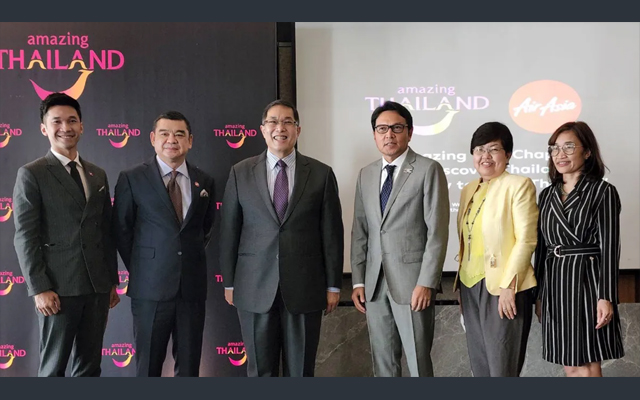
The Tourism Authority of Thailand (TAT) and Thai AirAsia are putting power behind the Amazing New Chapter: Rediscover Thailand Get ready to go to Thailand campaign, which is aimed at millennials and young couples from Singapore.
Singapore is a key visitor source market for Thailand, and the new campaign is among the various joint marketing activities the TAT Singapore Office is working on.
TAT and Thai AirAsia collaborate on the new Thailand tourism campaign
The campaign utilises Thai AirAsia’s Singapore-Don Mueang and Singapore-Phuket routes for travel in May to July 2022. Millennials and young couples are expected to take up over 3,000 seats on these routes during that period.
New tourist attractions and activities, as well as tourism-related facilities and offers have been created to promote the Singapore-Don Mueang route. TAT Singapore Office is also organising a media fam trip to Thailand from May 12 to 15.
Tanes Petsuwan, TAT deputy governor for international marketing – Asia and South Pacific, said: “With various factors supporting the return of tourism to Thailand, among them the relaxing of entry requirements to the kingdom, easing of travel restrictions in source markets worldwide and resumption of commercial flights, this is a great opportunity to stimulate travellers’ decision-making. This latest marketing campaign is expected to have a positive effect on the Thai tourism industry in the second half of this year.”
Santisuk Klongchaiya, CEO of Thai AirAsia, affirms the airline’s support for Thailand’s tourism industry, and revealed plans to add a Singapore-Chiang Mai route.
Thai AirAsia currently operates a daily flight on the Singapore-Don Mueang route, and two weekly flights (Tuesday and Saturday) on the Singapore-Phuket route.
For 2022, TAT expects Thailand to welcome 10 million foreign tourist arrivals, generating 625.8 billion baht (US$18 billion) in tourism revenue. Arrivals from short-haul markets are expected to include 1.1 million arrivals from South-east Asia, 200,000 arrivals from Australia, and 450,000 arrivals from South Asia (India) – with travels starting from April 2022 onwards.
Thailand recorded more than 85,000 foreign tourists from May 1 to 6, 2022, with arrivals from Singapore ranking third after India and Malaysia, ahead of the UK and the US.
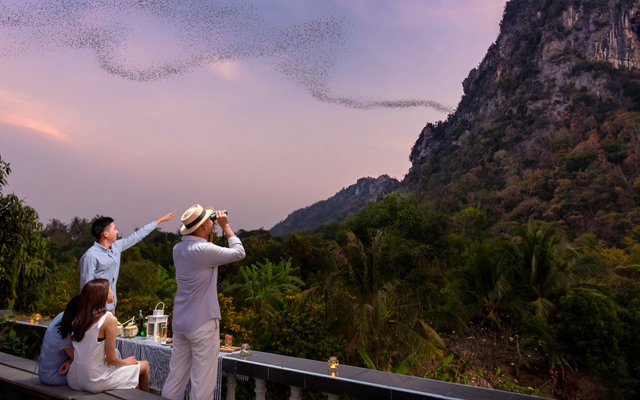
Enjoy a two nights’ stay at SO Sofitel Hua Hin along with activities around the destination’s natural appeals. Head to Khao Nang Phanturat for a morning hike or enjoy the sunset, and witness the moment when over two million bats leave Nayang Bat Cave.
The SO Explorer Room Package includes accommodation and breakfast for two, along with a choice of either the Khao Nang Phanturat or Nayang Bat Cave trips. Package rates start from 5,000 baht (US$151) per room per night.
Witness over two million bats leave Nayang Bat Cave
Reservations are required with three days’ notice, for stays until December 31, 2022.
BWH Hotel Group (BWH) has launched its Executive Residency by Best Western extended stay brand in Australasia in collaboration with ARBT Property Group (ARBT).
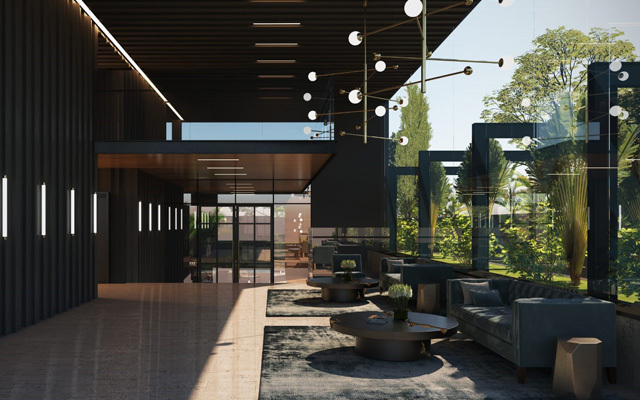
Set to open in 4Q2022, Executive Residency Woolloongabba will be positioned just two kilometres from Brisbane’s CBD and within walking distance to the famous Gabba Cricket Grounds.
Executive Residency Woolloongabba will open later this year
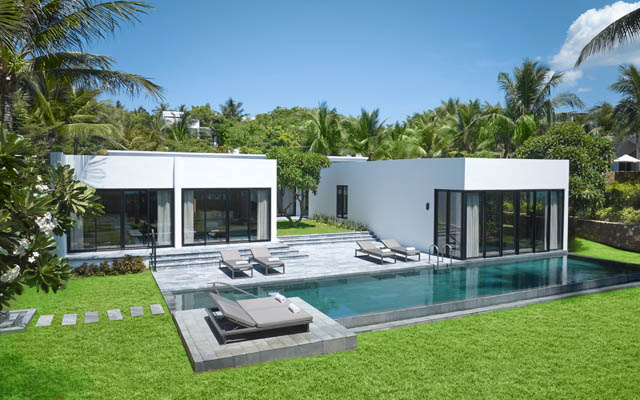
It features 51 apartments with two-, three- and four-bedroom options, all with amenities such as a kitchenette with appliances, complimentary high-speed Wi-Fi, and expansive living areas. Guests will also get to utilise a lap pool and 24-hour gym.
Along with ARBT, a Brisbane-based technology company specialising in modular hotel manufacturing, BWH plans to open new-build hotels across Australia and New Zealand over the next few years. ARBT’s advanced manufacturing technologies and speed to market for new-build properties will allow for rapid expansion of the BWH portfolio across the region.
The partners will open the second Aiden by Best Western in 1Q2023.
Bold business changes and partnerships have been instrumental in the survival of Singapore’s boutique hotels throughout the travel crisis, allowing them to ride out the storm and be ready to welcome again international travellers now.
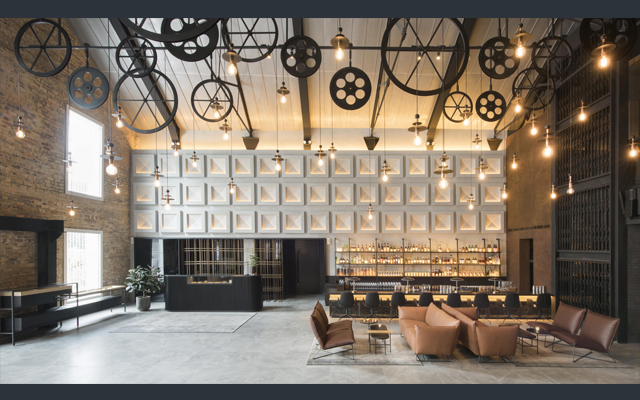
According to Hotel Mono and The Warehouse Hotel, their decisive pivot to rely on commercial long-term tenancy had helped to keep business going when international travel was cut off.
Boutique hotels crafted novel staycation offerings and played up their unique prepositions
Glenn Quah, general manager of the 46-key Hotel Mono told TTG Asia that the hotel relied heavily on commercial long-term tenancy with companies that needed to house many of their key personnel who were unable to cross borders for the first year of the pandemic.
The Warehouse Hotel also sought out long-stay corporate businesses with its regular clients to stay afloat, according to general manager, Tarun Kalra.
Like many businesses, the biggest challenge for Hotel Mono came from the manpower front. Few staff were keen to work on the frontline as they would have to come in contact with many guests.
Quah added: “A positive case (infection) among the staff would have crippled the front desk. At the same time, many of our foreign staff had not seen their families for long periods of time and were starting to feel really homesick.”
In response, hotel ensured that safety measures were in place and constantly monitored the mental and emotional well-being of its staff.
The Warehouse Hotel, on the other hand, found having to adapt to the frequent changes in safe management regulations tough. To counter that, the 37-key boutique heritage hotel made sure to exercise flexibility towards its guests who have booked their staycation and weddings.
As the battle for business shifted to local residents, boutique hotels crafted novel staycation offerings and played up their unique prepositions.
It was challenging for Hotel G Singapore, which positions itself as a boutique hotel, to remain top of mind for new and existing guests alike, according to general manager Michelle Lee.
She explained: “To maintain brand awareness and compete for a piece of the staycation pie, we collaborated with local partners and our F&B outlets to create innovative staycation packages. That has allowed us to navigate through these unprecedented times.”
Enter workcation package, Hustle & Grind, which allows a day-use of one of its rooms from 07.00 to 19.00 complete with all the necessities and modern comforts such as high speed Wi-Fi, smart TVs with mirroring function, and F&B perks including French wine and set lunches.
In August 2021, to celebrate Singapore’s 56th National Day, Hotel G Singapore collaborated with local brands to create its Slay, Stay & Play staycation. The package included an upgraded night’s stay, an F&B component, and complimentary goodies from homegrown names.
The Warehouse Hotel, which prides itself on its design-centric and local heritage and culture, partnered with In Good Company, a local clothing label, to design a custom robe that guests could buy and enjoy a discount voucher for use at In Good Company. The hotel’s staycation packages comprised F&B vouchers as well as locally curated gifts like paperweights, hip flasks and specially-designed playing cards that guests may use during their stay.
As Singapore started to ease social restrictions in 2021, allowing private groups of five to congregate, Hotel Mono moved into family getaways. The property is one of the few in Singapore with family rooms that can accommodate up to five guests at a time.
The Warehouse Hotel went after couples in love, dangling packages that were built for intimate weddings and solemnisations for 20 guests – in line with Covid regulations then on celebratory events. Kalra recalled that the packages were a hit with many couples that were looking to tie the knot in 2020 and 2021. The hotel collaborated with local floral design studio, Floral Kokoro, to offer customised floral arrangements along with curated lunch and dinner set menus from Po restaurant.
To overcome dine-in restrictions, The Warehouse Hotel’s Po restaurant and Lobby Bar worked with partners such as Grab, Oddle and Chope to make its menu and locally-inspired bottled cocktails available island-wide. Bundle sets containing signature dishes and guests’ favourites were priced appropriately to encourage online orders, while a contactless curbside pick-up was also offered as an option.
As international travel picks up along with heightened competition, boutique hotel players emphasised the importance of committing to high cleanliness standards, adapting to evolving situation and guests’ needs, as well as staying true to their distinctive personalities and amplifying that differentiation to customers.
Marriott International has expanded its Good Travel with Marriott Bonvoy programme, from just 15 pilot hotels to nearly 100 hotels and resorts now across more than 50 destinations across Asia-Pacific, providing even more opportunities for travellers to turn their vacations into meaningful travel that connects with local communities and the environment.
According to Bart Buiring, chief sales and marketing officer, APAC, Marriott International, the programme expansion was driven by positive response from hotels and guests.
Good Travel with Marriott Bonvoy programme offers meaningful experiences that connect guests with local communities and the environment
“Apart from this, the pandemic has shifted the way people travel – to have a positive impact on countries and to blend working trips with leisure,” he added.
According to the 2022 American Express Travel Global Survey, people are now more intentional about where they spend their money, and impact travel is resonating across all demographics.
Buiring said Good Travel with Marriott Bonvoy programme stands out from other similar programmes with the “truly grassroots efforts by our hotels”.
“We asked them to structure their activities on three key pillars – environmental protection, community engagement and marine conservation – and branding all experiences through a loyalty programme in a creative and curative manner,” he said.
Targeting the leisure travel market – families looking for a more meaningful travel experience – and corporate travellers, the foundation of the programme is synonymous with people wanting to reconnect with each other; it also helps connect member guests with local experts and NGOs at the destinations they visit, while promoting and deepening cultural understanding. These experiences are available for non-members as well.
The programme has the support of travel planners, agents and meeting planners, shared Buiring.
At present, Good Travel with Marriott Bonvoy programme offers meaningful experiences in many destinations – Australia, Fiji, Indonesia, Japan, India, Malaysia, China, Hong Kong, Macau, Nepal, Sri Lanka, Thailand, Vietnam and the Maldives. Guests can choose to plant mangrove seeds in the forests of Langkawi to restore the wetlands, joining a temple preservation in India to mitigate the destructive effects of sandstorms on its façade, and more.



 Ha is excited to join the IHG team at such an opportune time as travel and hospitality rallies with the reopening of borders and looks forward to developing win-win strategic partnerships with owners, as well as unlocking the potential of IHG’s brands in Korea.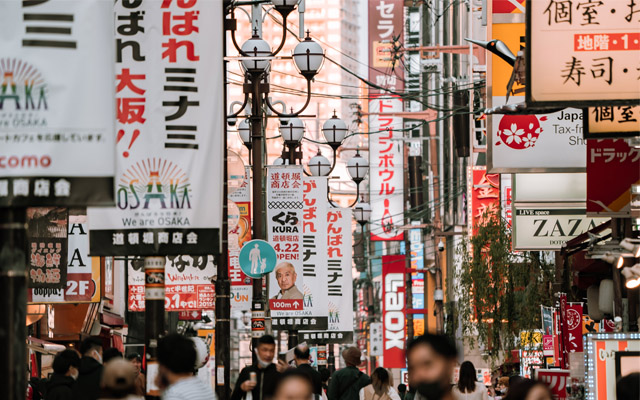









BWH Hotel Group (BWH) has launched its Executive Residency by Best Western extended stay brand in Australasia in collaboration with ARBT Property Group (ARBT).
Set to open in 4Q2022, Executive Residency Woolloongabba will be positioned just two kilometres from Brisbane’s CBD and within walking distance to the famous Gabba Cricket Grounds.
It features 51 apartments with two-, three- and four-bedroom options, all with amenities such as a kitchenette with appliances, complimentary high-speed Wi-Fi, and expansive living areas. Guests will also get to utilise a lap pool and 24-hour gym.
Along with ARBT, a Brisbane-based technology company specialising in modular hotel manufacturing, BWH plans to open new-build hotels across Australia and New Zealand over the next few years. ARBT’s advanced manufacturing technologies and speed to market for new-build properties will allow for rapid expansion of the BWH portfolio across the region.
The partners will open the second Aiden by Best Western in 1Q2023.