Japan’s outbound travel will spike this summer while domestic travel will reach almost pre-pandemic levels, according to surveys by two of Japan’s largest travel agents.
In a JTB Corporation survey of 1,030 people on their travel plans between July 15 to August 31 this year, 4.7 per cent said they would go a trip overseas, up 1.2 per cent year-on-year. However, the 2019 rate was 10.5 per cent.
Japan’s outbound travel is expected to rise between July 15 to August 31 this year
The most popular destinations were Hawaii (9.8 per cent), Australia and New Zealand (8.3 per cent), Europe (8.1 per cent), South Korea (5.7 per cent) and Taiwan (5.5 per cent).
The top JTB sales of overseas products over the period, though, were Hawaii, Singapore and Guam.
Based on its survey, JTB estimates that 500,000 people in Japan will travel abroad this summer, more than 500 per cent year-on-year but only 17 per cent of the 2019 figure.
The company cites Covid-19 testing on re-entry and the depreciation of the yen as the major barriers to greater rebound. Additional issues include higher airfares due to the impact of the Ukraine war and delayed recovery of air routes, particularly in Asia.
Still, outbound travel will be facilitated by recent Japanese government moves to open more airports to international flights, including Sendai (Miyagi Prefecture) Hiroshima (Hiroshima Prefecture) and Takamatsu (Kagawa Prefecture).
H.I.S. International’s June survey, which explored its package tours over July 21 to August 31, shows reservations are up 2,191 per cent compared to summer 2021, but international travel remains at only 10 per cent of 2019 levels.
The most booked overseas destinations are Hawaii, Bangkok and Seoul.
For domestic travel, H.I.S. noted a “movement to normalise domestic flights”, with the main carriers operating at 95 per cent of their pre-Covid levels from mid-July to end-August. By destination, Okinawa, Hokkaido, Nagasaki and Osaka have the most bookings.
JTB predicts 70 million people will spend at least one night on a domestic trip over the period of July 15 to August 31, an increase of 75 per cent year-on-year and representing 96.7 per cent of 2019 levels.
The company said summer 2022 will see “more destinations, a revival of travel to urban areas, greater use of public transport and an increase in the number of people travelling in groups”.
Despite setting foot into a post-Covid world with easing restrictions, the travel ecosystem continues to be in a state of flux. A new study by Collinson, conducted with over 5,000 frequent travellers across seven major markets of Asia-Pacific, reveals that the state of travel in 2022 will see a marginal improvement from the prior year in terms of the percentage of travellers undertaking frequent trips.
Travellers who averaged six return trips pre-pandemic (2019), are beginning to return to the skies, with an average of three self-predicted return trips planned for 2022. However, with countries across Asia-Pacific easing their travel restrictions and requirements in recent times, the pent-up demand among travellers is likely to result in a further spike in trips this year across the region.
Handcock: brands will have new opportunities to innovate and enhance customer experiences aligned with the return of travel
Planned trips on the horizon
With summer in the northern hemisphere ushering in what has generally been believed to be the “peak travel season”, one can expect to see a rise in travel around the region as people start planning their much-awaited vacations. Although the majority of these trips are expected to be domestic leisure trips, 55% of respondents have expressed an interest in travelling outside of their home market for at least one trip.
This significantly shows that the number of people who are willing to undertake international travel has grown by nearly 10% since 2021, while domestic leisure travel growth remains steady at 3% for the same period. Equally, it reflects how travellers are not holding back on the scale of their journey and remain eager to make up for the time and experiences lost over the last two years due to the pandemic.
Of all the forms of travel, be it leisure, business or a mix of the two, business travel is the one that has been impacted the most. On one hand, nearly 70% of travellers have booked at least one leisure trip in 2022, but this sits at less than 50% for corporate travel.
Overall, across all forms of travel, the number of return trips is seeing a gradual increase. While this shows positivity, some concerns remain around returning to travel, with 61% of the research respondents indicating that the pandemic continues to have a discouraging effect on their air travel.
Travel anxieties continue to linger
Despite people committing to travel in 2022, a large portion of travel hesitation seems to stem from people’s unwillingness to be inside an airport. Close to half (42%) of respondents indicated having anxiety about picking up infections while at the airport.
The remainder fear that crowds at the airport may lead to another outbreak, while others want to avoid the logistical hassles that come with travelling in the new normal – including mask-wearing, travel restrictions, mandatory quarantines, and more. However, only a little over 10% of people still feel unsafe about travel, which is a promising trend when it comes to travel recovery.
Airport lounges aiding the journey
Airport lounges are seen as key in curbing travel anxiety – on average, travellers regard lounge access as the number one most desirable travel benefit at the airport. 55% of respondents selected that they “feel valued as a customer” as their number one emotion when they have access to a lounge as a reward benefit in markets such as China, Hong Kong, Singapore and South Korea.
A further 41% also agreed that lounge access makes them feel safer when undertaking air travel. However, these numbers are significantly higher in markets such as China and India, where borders have largely remained closed in 2022. In China, in particular, 64% admit that being in a lounge makes them feel safer, while slightly less than 70% believe that having access to a lounge makes them feel valued.
Rewards in today’s new era of travel
The survey also revealed that a focus on improving the entire customer journey in these testing times could yield significant dividends for brands.
Todd Handcock, Asia-Pacific president for Collinson, said: “After two long years of waiting for the pandemic to recede and borders to open up, people across Asia are eagerly embracing the return of travel. This is an encouraging trend given that apprehensions around travel safety continue to exist. As countries further relax their travel restrictions and people head out to their dream vacations, brands will have new opportunities to innovate and enhance customer experiences aligned with the return of travel.”
With Covid-19 continuing to result in additional checks and balances at airports, it is inevitable that travellers will demand fresh airport lounge experiences. The increased emphasis on safety and celebration of the return to travel is expected to make travellers attach an increased value to travel-related benefits. This calls for brands to identify innovative ways to retain loyalty among current customers, while attracting new ones by leveraging lounge access and flight-delay benefits.
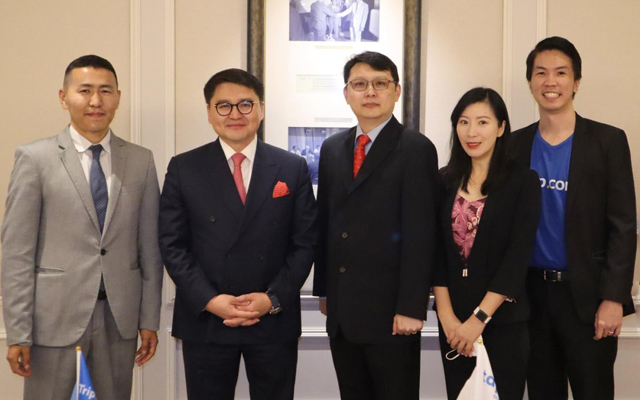
Trip.com Group and Tapatrip have inked a two-year Memorandum of Understanding (MOU) to promote Mongolia as a tourism destination through joint marketing and media activities as well as collaboration on various capacity building and knowledge sharing initiatives.
Tapatrip founder and chairman Batmunkh Unubukh commented that the partnership comes at the perfect time for travellers to explore Mongolia.
Trip.com Group and Tapatrip have signed a two-year MOU to promote Mongolia as a tourism destination
“The Mongolian government has announced 2023 and 2024 as a year to visit Mongolia and therefore, we are cooperating with Trip.com with the mission to bring one million tourists to Mongolia,” he said.
Trip.com’s managing director and vice president (international markets), Boon Sian Chai said: “Mongolia has set for itself a target of attracting one million tourists per year, and we will leverage our strengths and resources to promote Mongolia as a tourism destination to the international community through targeted campaigns.
“In addition, we will also collaborate with our partners in Mongolia to further develop the tourism sector, including the sharing of knowledge and best practices.”
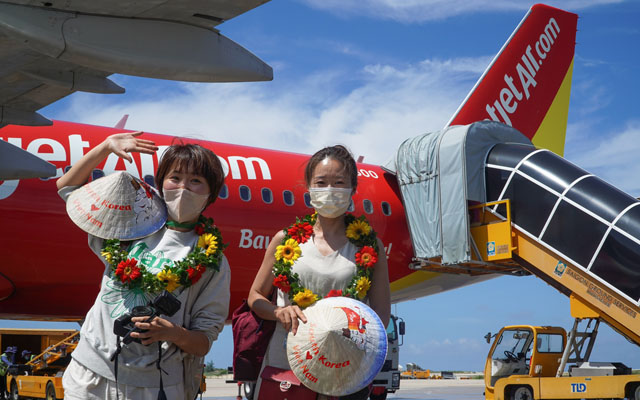
Vietjet will fly direct to Busan from Vietnam’s four major cities – Ho Chi Minh City, Danang, Nha Trang and Hanoi – from July 20, 2022.
Following the resumption of Hanoi–Busan service, the airline will launch two services linking Danang and Ho Chi Minh City with Busan on July 20 and July 25 respectively, and will operate one daily direct flight each.
Vietjet will fly direct to Busan from Ho Chi Minh City, Danang, Nha Trang and Hanoi from July onwards
The Nha Trang–Busan route will resume its daily return service from July 21.
Vietjet’s vice president Nguyen Thanh Son said: “With four services to Busan, our flight network between Vietnam and South Korea reaches 10 routes this month, offering the largest flight capacity between the two countries. This allows us to serve our flyers with the most flight options and most cost-saving fares for their favourite summer trips.”
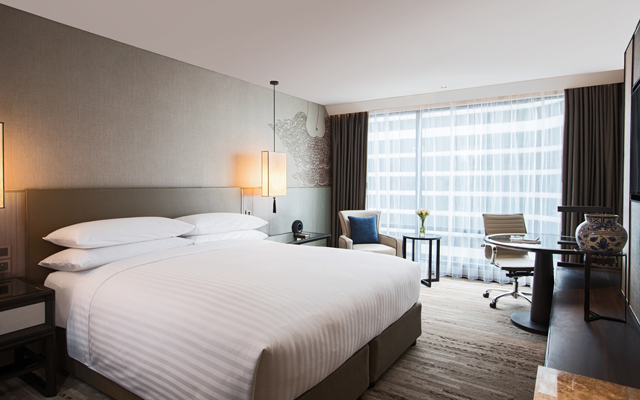
Bangkok Marriott Marquis Queen’s Park is offering a trio of promotions for guests to enjoy a city break.
The Discovery Dining package is priced from 5,300 baht (US$147) per night and includes a one-night stay with late check-out, and one meal in a choice of restaurants.
Save more when staying longer at Bangkok Marriott Marquis Queen’s Park
The 12 Nights and More package offers special rates for guests who book 12 or more consecutive nights – starting from 2,999 baht per night for a room only, or from 3,399 baht for a room and breakfast for two. Booking the MClub Room will include breakfast for two, lounge access and a 10 per cent discount on all other F&B, including in-room dining.
For stays longer than 30 nights, the Linger Longer package starts from just 83,970 baht and comprises accommodation, 10 per cent off F&B at the hotel’s restaurants and bars throughout the stay, and 5kg of laundry service.
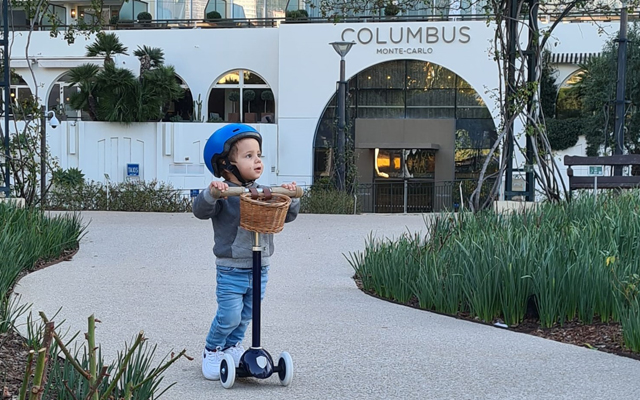
Columbus Monte-Carlo's kid-friendly options include Banwood bikes for children to explore the Princess Grace Rose Garden
Columbus Monte-Carlo’s kid-friendly options include Banwood bikes for children to explore Princess Grace Rose Garden (Credit: Columbus Monte-Carlo)
Well-known as the playground of the rich and famous, and teeming with opulent old-world glamour, Monaco may at first glance be an unlikely destination for child-friendly vacations.
On the contrary, hospitality players in the city-state present a myriad of family-centric activities and experiences, especially suited to travellers holidaying with their young ones. Older members of the family will not be left out too.
Ursula Fabre-Pilat, digital demand manager, Columbus Monte-Carlo, told TTG Asia that families are at the heart of the hotel’s offerings in 2022.
Kid-friendly options include a new family suite, Banwood bikes and tricycles for children to explore the Princess Grace Rose Garden, as well as a kids club and movie room in summer. An indoor petanque terrain and a selection of board games and books are also available at the reception.
Play-based activities for young guests to learn about sustainability involve workshops on selective sorting, recycling and waste reduction, as well as ocean protection.
Fabre-Pilat opined: “We are convinced that happy children make happy parents, so we focus on the kids’ experience when putting together a new family experience.”
Meanwhile, Hotel Hermitage offers children access to the indoor heated pool at Thermes Marins Monte-Carlo and to Monte-Carlo Beach where its Marmorata Kids Club pampers kids with premium bath care products. Parents with infants can also request complimentary baby equipment, such as a baby chair, bottle warmer and potty.
Family-centric options
1 of 6
Visit Monaco's well-loved attraction, Oceanographic Museum (Credit: Oceanographic Museum)
Hotel Hermitage offers children access to indoor heated pool and pamper them with premium bath care products (Credit: Hotel Hermitage)
Marvel at the private car collection of Prince Albert II and Prince Rainier at Terrasses de Fontvieille (Credit: Benjamin Vergeley)
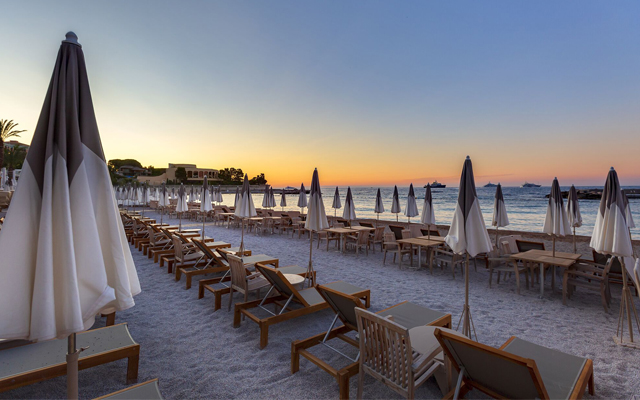
Spend quality time with the family at one of Monaco’s beaches (Credit: Benjamin Vergeley)
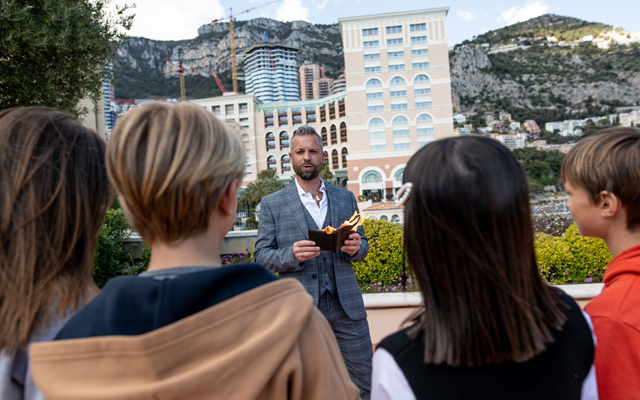
Learn tricks of the trade from magician Siméon Wolfgang (Credit: Fabio Galatioto)
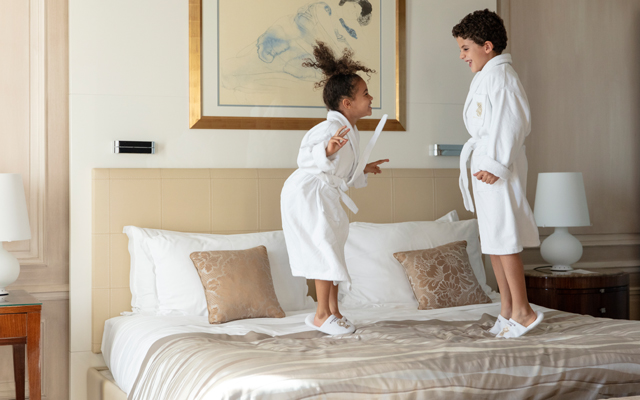
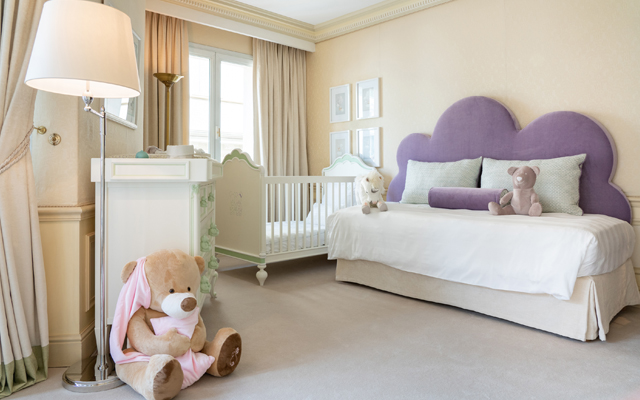
Luxuriate in a family suite with your loved ones at Hotel Metropole Monte-Carlo (Credit: Yvan Grubski)
Post-lockdown, Laurence Shukor, director of press & public relations, Hotel Metropole Monte-Carlo, also observed that families are increasingly travelling by private jet, and making more requests to privatise entire floors for themselves.
Expect no less than the red-carpet treatment at the luxury hotel’s family suite, with separate spaces for children and parents to luxuriate. Little ones get to sleep blissfully in handcrafted cradles and beds, as well as enjoy personalised bathroom amenities.
Patrick Mesiano, pastry chef at the hotel, will also open the doors of the Odyssey kitchen to young guests for them to try their hand at whipping up delicacies, and discover the pleasure of pastry-making and zero-waste cooking.
One of the hotel’s bestsellers is the Night at the Museum activity at The Oceanographic Museum of Monaco – where visitors get to explore the premises after hours, Shukor shared.
No surprise that families and the younger generation are its priority targets, according to Alexandra Bardy, media manager at The Oceanographic Museum.
Some of the museum’s activities are now available in private sessions – to accommodate the explosion in requests for smaller group visits, as more travellers are increasingly looking for exclusive and meaningful experiences.
Bardy told TTG Asia: “When we design our activities, we also make sure that each one offers a real moment of family exchange and sharing. To do this, we must create astonishment, arouse curiosity and provide knowledge.”
For example, daydreamers and animal lovers will excite at the museum’s latest exhibition, Polar Mission, where they can explore polar ice caps by journeying deep into the Arctic thanks to the latest 360-degree immersive technology; almost as though walking in the footsteps of Arctic explorers.
Along the way, visitors will have opportunities to learn more about the animal kingdom that stretches from the North to the South Pole, global warming and biodiversity.
The museum welcomes an average of 182,000 families yearly and more than 10,000 young visitors during school or day-care visits.
Car enthusiasts or not, both young and old visitors will be delighted at the spectacular sight of a rare car exhibition within the Terrasses de Fontvieille too.
Showcasing an illustrious selection within a spacious 5,000m2 space, the private collection of Prince Albert II and Prince Rainier features vintage automobiles from the turn of the century, 1950s to 1960s classics including Cadillacs, and cars from the Millenia age such as F1 Ferraris from the Grand Prix. Visitors can also marvel at the one-of-a-kind wonders designed by Rolls Royce, Alfa Romeo, Lamborghini, Maserati, and many more.
For the curious and performers-at-heart, they can channel their inner David Copperfield and learn the tricks of the trade at a bespoke magic workshop from magician Siméon Wolfgang, a brand new offering at Monte-Carlo Bay.
Soaking in the sun, sand and sea at many of Monaco’s beaches can also be a relaxing way for families to spend quality time together – whether it is enjoying a dip in the ocean or sunbathing under the golden rays of the French Riviera.
There are protective nets in certain zones so it is safe for the little ones to swim without being stung by sea creatures. For the adventurous, the recently redesigned Larvotto Beach also boasts numerous watersport activities.
Then revel in the company of loved ones while savouring a delicious beachside lunch at Le Neptune, and end the day on a sweet note with ice cream at the famous Glacier Mullot ice cream parlour.
Shukor concluded: “Families want to get back together often for holiday experiences as they haven’t seen each other for a while. Multigenerational travels are very frequent.”
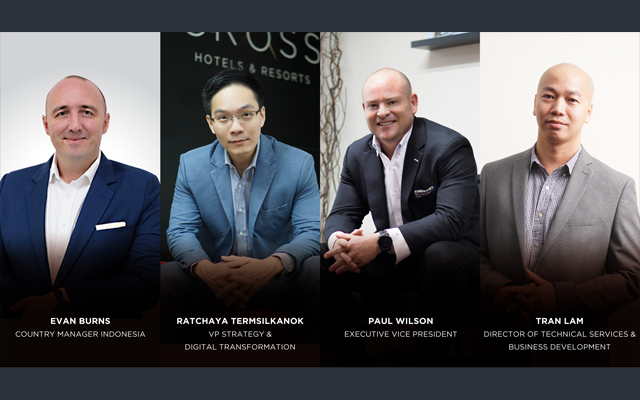
Cross Hotels & Resorts has announced the following personnel promotions, following a number of hotel signings.
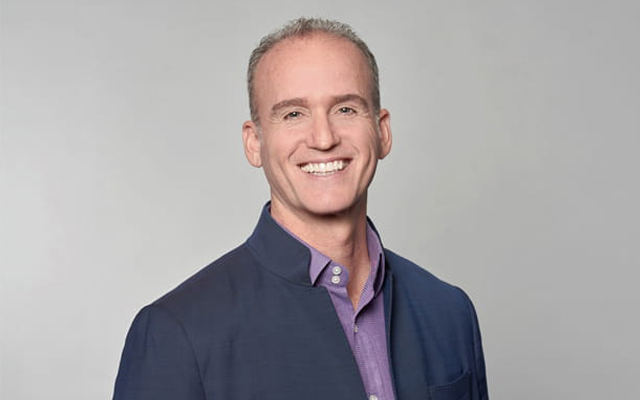
Paul Wilson has been made executive vice president.
In his new role, Wilson will be responsible for leading the group’s operations and executions, including brand development, sales and marketing, revenue management, guest engagement, digital transformation, and loyalty strategies.
Prior to joining Cross Hotels & Resorts in 2018, Wilson was vice president of sales for Thailand’s Centara Hotels & Resorts. He also held leadership positions for the Mantra Group in Australia.
Meanwhile, Ratchaya Termsilkanok has been promoted to vice president of strategy & digital transformation. In this new role, he will spearhead the company’s strategy and digital transformation.
Ratchaya first joined Cross Hotels & Resorts in 2019 after an extensive career leading revenue management teams for Radisson, Marriot, and Dusit.
Next, Evan Burns has been promoted to country manager of Indonesia. For the last four years, Burns has been general manager for Away Bali Legian, as well as area manager for Indonesia and Japan.
Burns has been instrumental in signing new management agreements for several properties in Indonesia, as well as extending the brand’s footprint in Japan with the opening of Away Okinawa Kouri Island Resort.
Lastly, Tran Lam is now the director of technical services & business development. He previously took charge of several high-profile projects in Vietnam, China, and the UK, valued in excess of US$50 million.
Lam will be based in Vietnam to guide Cross Hotels & Resort’s expansion in the country.
Amari SPICE Hotel in Penang, Malaysia, has named Noorazzudin Omar as general manager of the new hotel.
He brings with him 30 years of experience in the hospitality industry, having worked for hotels both in his home country Malaysia and abroad in Dubai and Thailand.
Brands he has worked for include IHG Hotels & Resorts, Marriott, Mayfair, Mutiara, Resorts World, Tradewinds and more.
High-end Chinese travellers, willing to fork out US$500 and up a night per person, are swapping luxury resorts for glamping holidays in tents that come with all amenities at developed sites near Beijing and Shanghai, or in remote locations such as the Gobi Desert.
Industry observers said the trend, which started two years ago due to outbound restrictions and Covid-19 concerns resulting in preferences for outdoor experiences, picked up speed this year.
More China travellers are opting for outdoor experiences like glamping holidays (Photo: Bespoke Travel Company)
Travellers are booking with companies such as Nomads Wild and Norden, according to Sam Braybon, director, Bespoke Travel Company. His company has helped to organise a few glamping trips last year, where the typical profile was young, urban professionals in their 30s or 40s.
A number of less expensive options for a weekend getaway, he noted, could be found around Shanghai, with more high-end sites located in Yunnan, Gansu, Sichuan and Tibet.
Braybon commented: “Three-night trips are popular but programmes can be longer to include more activities to include hiking, horseback riding, and stylish dining with local influences in the wild.”
Alexander Glos, CEO, China i2i Group, which provides B2B and B2C tourism-related services, added glamping has been gaining popularity among families with young children as it provided a “different experience from a Sanya resort holiday”.
“Glamping is appealing because locations are isolated but some places have permanent tents and dining areas, like an early Club Med. Some glamping operators are part of hotel groups where some of the sites are in the desert and some are in the mountains, and in winter, offer activities like dog sledging,” he elaborated.
Violet Wang, managing director of Realm, said five glamping projects were being developed close to Shanghai in “natural spaces” and would be ready in two years’ time.
Wang noted: “The glamping trend started in 2020 and people started buying high-end equipment from outdoor lifestyle companies like Snow Peak Company from budgets they would have otherwise spent on an overseas trip.”
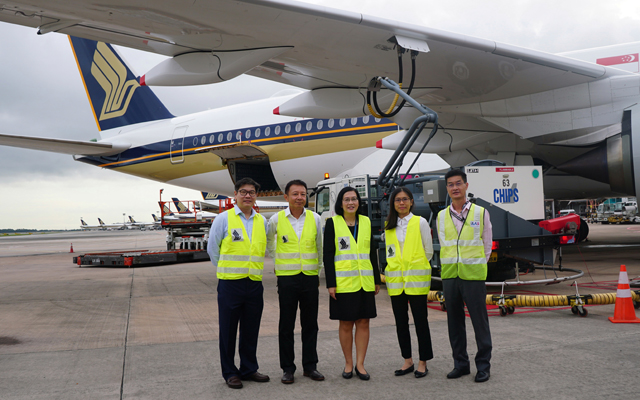
On July 7, 2022, the Civil Aviation Authority of Singapore (CAAS), Singapore Airlines (SIA), and Temasek’s investment platform GenZero delivered blended Sustainable Aviation Fuel (SAF) to Changi Airport via the airport’s fuel hydrant system.
This is the first time blended SAF is uplifted onto SIA and Scoot departing flights at Changi Airport. Under this pilot, 1,000 tonnes of neat SAF will be supplied by Neste and blended with refined jet fuel at ExxonMobil’s facilities in Singapore. This is expected to cut carbon dioxide emissions by 2,500 tonnes.
Sustainable Aviation Fuel was uplifted onto SIA and Scoot departing flights at Changi Airport for the first time on July 7, 2022
Han Kok Juan, director-general, CAAS, said: “This first successful uplift of blended SAF is an important milestone in Singapore’s journey towards sustainable aviation. It shows that the Singapore Changi Airport is SAF-ready. It also provides useful operational learning points on the adoption of SAF which the CAAS is studying as part of our work on a Sustainable Air Hub Blueprint. We target to publish the Blueprint early next year.”
Announced in November 2021, the Singapore pilot aims to advance the use of SAF in Singapore. It is a follow-up to a study conducted by the Singapore Government and industry players on the operational and commercial viability of using SAF at Changi Airport.
Singapore Airlines’ senior vice president corporate planning, Lee Wen Fen, added that the move “demonstrates our commitment to achieve net-zero carbon emissions by 2050”.
Incorporating the blending of neat SAF in local facilities, certification of blended SAF, and delivery to Changi Airport to operationally validate SAF integration options in Singapore, the project will also provide insights on end-to-end cost components, potential pricing structures for cost recovery and support future policy considerations for SAF deployment.
In June this year, CAAS, SIA and Temasek also announced the sale of 1,000 SAF credits from July as part of this pilot. This provides customers, as well as freight forwarders, an avenue to reduce their carbon footprint, stimulate demand for SAF, support the development of the nascent SAF industry, and advance the adoption of SAF for aviation sustainability.
From 4Q2022, SIA customers will be able to purchase a mix of SAF credits and carbon offsets, as part of the SIA Group Voluntary Carbon Offset Programme. SIA will also partner Climate Impact X (CIX), a global exchange for quality carbon credits, to introduce a bundled portfolio consisting of SAF credits and carbon credits. The product will be designed to meet corporate demand for SAF while balancing affordability.
In the next phase of the pilot, Neste will start SAF production in Singapore in 1Q2023 with one million tonnes of production capacity per annum.




 Paul Wilson has been made executive vice president.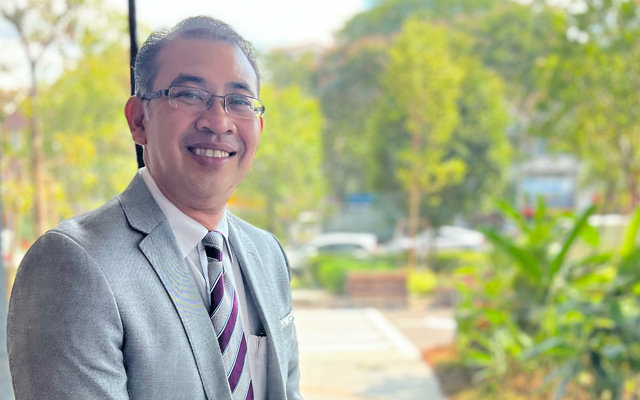
 Brands he has worked for include IHG Hotels & Resorts, Marriott, Mayfair, Mutiara, Resorts World, Tradewinds and more.