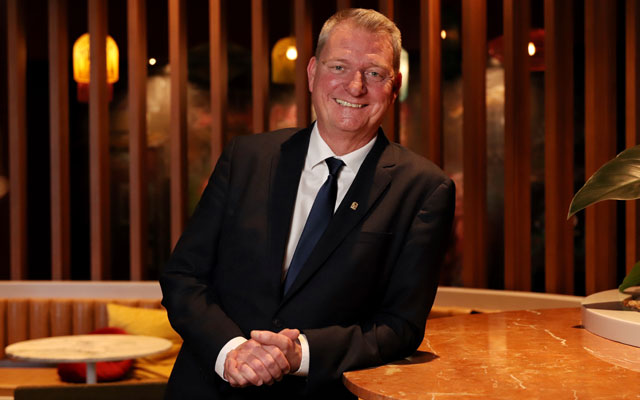
Paul Flett has been appointed general manager of Pan Pacific Perth.
He was previously general manager at Parkroyal Parramatta, a position that followed a two-year appointment at Pan Pacific Sonargaon Dhaka. Prior to this, Flett held the general manager position at Parkroyal Darling Harbour, as well as senior positions for InterContinental Hotels Group across the Northern Territory and Queensland.
In total, Flett brings over 30 years of hospitality experience to his new role, while his tenure with Pan Pacific Hotels Group spans 10 years, across Australia and South Asia.
Recovery of international travel from Europe has slowed down as queues and cancellations grow due to airlines failing to adequately prepare for the great travel comeback.
Travel and tourism analyst at GlobalData, Hannah Free commented: “International departures from European countries are expected to reach 69 per cent of 2019 figures in 2022, according to GlobalData forecasts. While destinations are eager to welcome visitors, supply simply cannot meet demand following extreme staffing deficits and industrial disputes, which has coincided with a rebound in international travel.”
Queues and cancellations grow in Europe due to airlines failing to adequately prepare for a rebound in travel demand
Other than the chaos and cancellations at several European airports, the travel industry’s recovery is also contending with other challenges including inflation, the rising cost of living, and the Russia-Ukraine conflict – all of which are likely to significantly dampen travel demand.
Free said: “Airports like London Heathrow and Amsterdam’s Schiphol have been forced to ask airlines to cut flights, while many carriers have had to pre-emptively cull their schedules by the thousands, affecting millions of holidaymakers.”
Due to staff shortages, airlines have had to cut their flights from their summer schedule. easyJet has reportedly culled more than 11,000 flights while British Airways has cancelled 13 per cent, including another 10,300 short-haul flights up to the end of October 2022 to be axed.
Looking at British Airways’ hiring trends, however, the airline may have failed to adequately prepare for a rebound in travel demand this summer. In November 2021, British Airways had announced increasing its workforce by 15 per cent, adding around 4,000 personnel including pilots, cabin crew, ground staff and back-office roles as part of a recruitment drive to prepare for Covid-19 recovery.
However, the recruitment drive has fallen short after British Airways reportedly cut as many as 10,000 jobs during the pandemic. Furthermore, GlobalData’s Job Analytics Database hiring trends data showed that the airline had not increased the number of active job postings on its career pages until at least March 2022. Instead, job postings had declined by 18.4 per cent between November 2021 and February 2022.
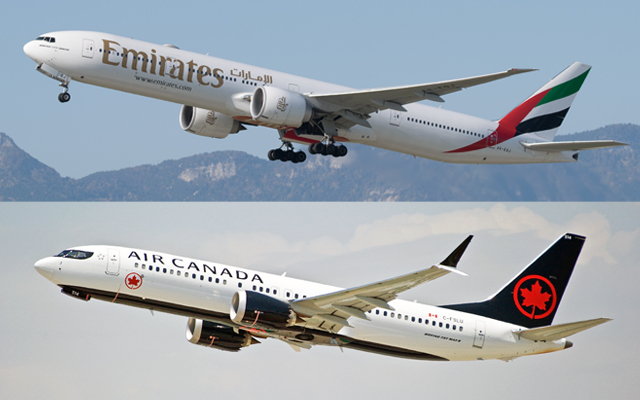
Emirates and Air Canada have come together to create more options for customers when travelling on both carriers’ networks.
With the intention to establish a codeshare relationship later in 2022, both airlines will offer enhanced consumer travel choices for Air Canada customers to travel to the UAE and other destinations beyond Dubai. Emirates customers will also enjoy an enhanced travel experience when travelling to Toronto or other key destinations across the Air Canada network.
The partnership between Emirates and Air Canada will create more options for customers when travelling on both carriers’ networks
Travellers will be able to book connecting travel between both airlines’ networks with a single ticket, enjoy seamless connectivity at the carriers’ respective global hubs and baggage transfers to their final destinations.
Emirates Airline’s president Tim Clark said: “This is a significant partnership that will enable our customers access to even more destinations in Canada and the Americas, via our Toronto and US gateways. It also opens up many new route combinations for travellers across Emirates’ and Air Canada’s extensive networks in the Americas, the Middle East, Africa and Asia… we look forward to jointly progressing on various areas to provide even better customer flight choices and experiences.”
Air Canada’s president and chief executive officer Michael Rousseau added: “This strategic agreement will create network synergies, and Air Canada customers will have additional, convenient options when travelling between Canada and the United Arab Emirates as well as destinations beyond Dubai.”
The carriers will also establish reciprocal frequent flyer benefits and reciprocal lounge access for qualifying customers. Further details will be announced once finalised.
What
Taking a cruise holiday is one of the most fuss-free ways of vacationing, as one has the benefit of an entire integrated resort moving along together from one destination to the next. A cruise guest has all the dining and recreation they could ever want conveniently located at his doorstep, and can elevate the experience with various packages.
Cruising as a guest of The Palace, however, takes fuss-free holidays to a whole different level. There is no need to consider what adds-on are necessary because the Palace guest gets them all, from free high-speed Wi-Fi for up to two devices and priority show arrangements, to complimentary dining at any of Genting Dream’s six specialty restaurants as well as free-flow tea, coffee and juices all day, every day within the luxurious and exclusive cocoon that is The Palace enclave.
In keeping its promise of luxurious hospitality, The Palace speeds guests through check-in at the cruise terminal. A staff will handle the procedure while guests take a short rest in a lounge where coffee and tea are served.
Once on board, a butler is assigned to guests booked into every suite, and mine was Anya. She whisked me and my family off to the Palace Restaurant to make the most of the remaining hour of lunch service, while she brought our bags to our suite.
Later, she joined us to find out what we hoped to do over our two-night cruise, and recommended various restaurants, activities and shows that were suitable for us. As I was travelling with my little boys, Anya marked out a variety of attractions that will charm the young ones and proceeded to book and plan our itinerary on our behalf.
The Palace guests enjoy the best seats in the house at shows
1 of 2
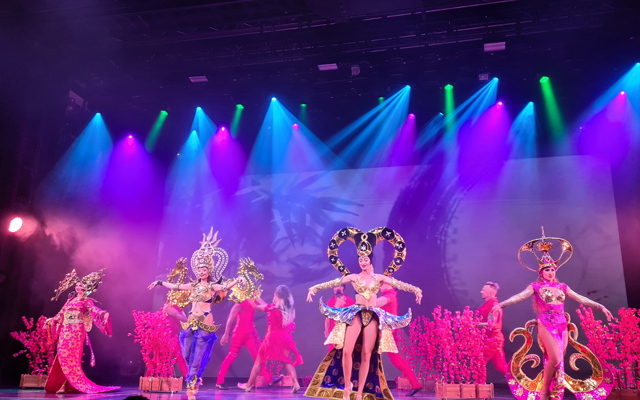
Yin.Yang show features traditional Chinese face-changing acts (credit Karen Yue)
Stunning costumes are featured in Yin.Yang (credit Karen Yue)
A handwritten programme, which packed in front-row seats at Yin.Yang theatre show (stunning, with a nice surprise at the end), art & craft workshops at the lobby deck (so fun), meals at specialty restaurants we were keen on (all delicious), and family karaoke (in a private room so nobody discovered how tone-deaf we were), was deposited in our room when we got back from lunch.
For our remaining time onboard, Anya was always present to say hello, find out how we were doing, and to escort us to our next programme. Should we need help, Anya was just a phone call away, no matter the time of day.
Exclusive facilities reserved for guest of The Palace
1 of 2
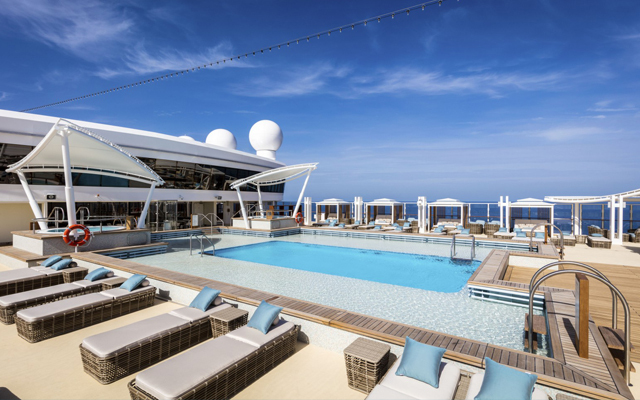
The Palace Pool and Sun Deck
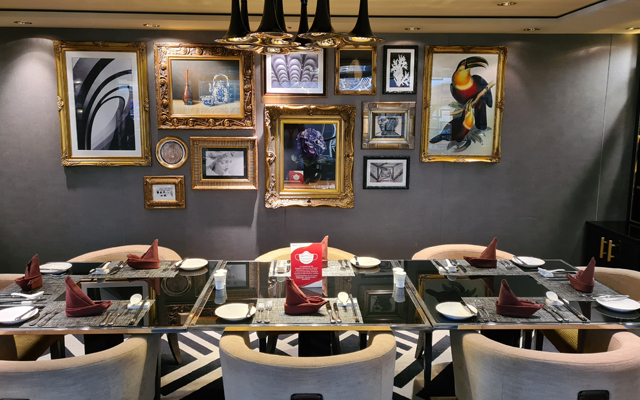
A private dining space within the Palace Restaurant (credit Karen Yue)
Facilities
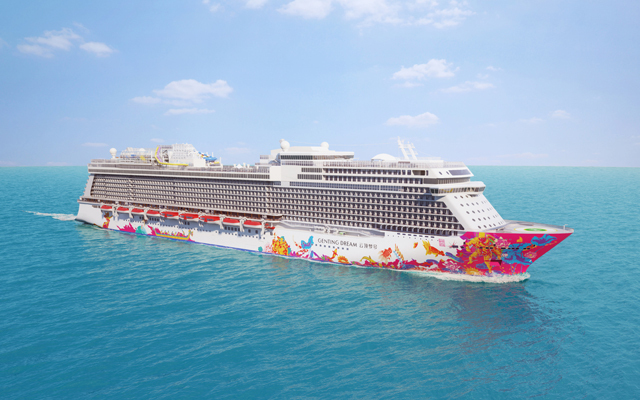
The Palace is truly an exclusive space that requires the right key card for access. Occupying the forward section of Genting Dream, The Palace offers a dedicated elevator to bring guests through decks 13 to 18 where all the private facilities and Palace accommodation are.
Palace guests have their own pool, Jacuzzis, sun deck and poolside café on deck 18. This is a wide open space dressed in rattan, white and beige and with lounge and pop music playing overhead. The vibe here is laid back and elegant, and lies in contrast to the boisterous party scene over at the public pool and sun deck.
Also exclusive to Palace guests is the Palace Restaurant on deck 17 where main meals, afternoon tea and supper are served every day of sailing; Genting Club on deck 16; the Palace Spa, gym and fitness studio on deck 18; and complimentary fitness classes led by a professional trainer at Crystal Life Fitness on deck 15.
With limited access, these facilities were often serene and partially occupied throughout our cruise. In fact, we had the pool, gym and fitness studio all to ourselves most of the time.
The only crowd I came across within The Palace confines was in the afternoon at the Palace Restaurant, when it was time for Afternoon Tea – a complimentary F&B treat that is very popular with The Palace regulars, according to Anya.
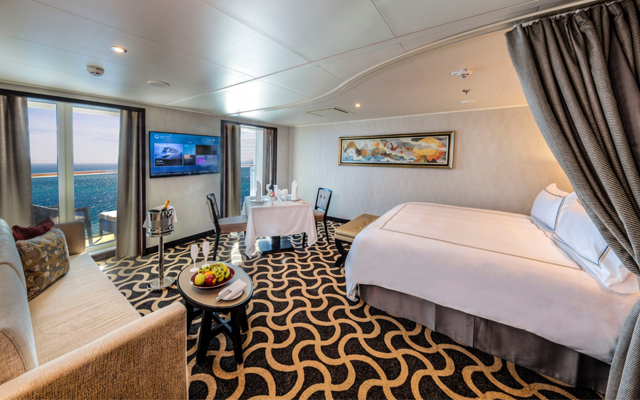
The Palace Suite
Room
We had the Palace Suite – the lead in room category for The Palace.
The spacious unit comes with a queen bed with quality linen, sofa bed that sleeps two, walk-in wardrobe, pantry with premium coffee-making facilities and a minibar stocked with complimentary drinks and snacks the first round, roomy bathroom with his-and-her basins, bath and shower, and balcony with a pair of sun loungers.
The young ones were particularly impressed with the selection of animated movies on TV.
Verdict
As the default trip planner of the family, I was unused to leaving someone else to organise our programme on board. However, The Palace’s 24-hour butler service was a luxurious entitlement I could get used to. I loved having the Wi-Fi, specialty dining and beverage add-ons as a default, which saved me from having to purchase them piece-meal. I loved even more the serenity and privacy offered by The Palace’s exclusive facilities. I would gladly return to The Palace for a rejuvenating me-time getaway.
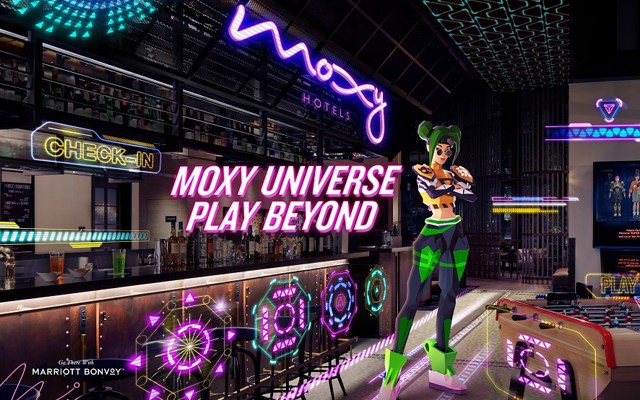
Moxy Hotels has launched the Moxy Universe, Play Beyond augmented reality experience in Asia-Pacific, bringing its Play On experiences from the hotel to the virtual world through the Moxy Universe.
Guests are invited to explore the Moxy Universe with their own avatar in 12 Moxy hotels across Asia-Pacific from July 12 through December 31 this year.
Guests can explore the Moxy Universe with their avatar in 12 Moxy hotels across Asia-Pacific
“Moxy has always challenged the status quo by inviting guests to live in the moment. With the campaign, we are bringing Moxy’s ‘Play On’ spirit to another dimension through fun, immersive experiences while creating greater connections with our guests,” said Jennie Toh, vice president, brand marketing and brand management Asia-Pacific, Marriott International.
Before arriving in-person to each hotel, guests can access the Moxy Universe via mobile devices to customise their own avatar with a selection of hairstyles, outfits and accessories. Upon checking in at the hotel’s signature Bar Moxy and scanning a designated QR marker, guests will instantly enter the Moxy Universe to unlock a minimum of five challenges throughout the hotel’s guestroom and public spaces to win prizes.
Visitors can fully immerse into the world of Moxy at the hotel and unlock challenges in the Moxy Universe as a guest or avatar simultaneously. Bar Moxy doubles up as the hotel’s front desk and offers guests a Got Moxy cocktail upon check-in, where upon receiving their room keys, they can scan the QR marker at the bar to view holographic projections and take photos with life-sized avatars.
All-day snacks and beverages can be accessed at Moxy’s 24/7 Grab & Go, where guests can unlock another photo challenge, or head to the fitness centre and work out with their avatar.
Singapore Urban Polo returns for its second year at Marina Bay South on October 15, 2022. Sponsored by FWD Singapore, top polo players will square off to beats from Singapore’s leading DJs, set against the backdrop of the iconic Marina Bay Sands and the stunning city skyline.
Urban Polo is the perfect formula to introduce the sport to more audiences in a fun, interactive and engaging way. With three adrenaline-filled games of polo, an anticipated DJ line-up, as well as food and beverage offerings, the event also allows enthusiasts to meet star polo players, stomp in the divots and participate in a “fashion on the field” competition.
Singapore Urban Polo returns for its second year
Individual attendees can choose between a standard entry ticket for the Polo Lawn with a wide choice of food and drinks options, or upgrade to the VIP Champagne Terrace area, which includes a bottle of Perrier Jouet and a buffet.
PATA and the Global Business Travel Association (GBTA) will host their inaugural PATA & GBTA APAC Travel Summit at the Queen Sirikit National Convention Center in Bangkok, Thailand from December 8 to 9, 2022.
The first-of-its-kind joint event in Asia will address sustainability and best practices in the tourism, business events, and corporate travel spheres.
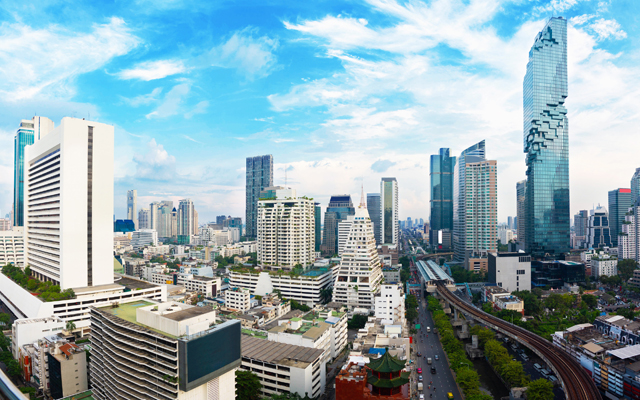
The joint event in Asia will address best practices in the tourism industry; Bangkok pictured
With the theme Defining a Responsible, Sustainable Future for Business, Tourism and MICE, the event will highlight the challenges and solutions for CO2 emissions, destination sustainability options, and procurement-oriented approaches in the context of the global and Asia-Pacific region’s pandemic recovery.
Regional and global travel suppliers including top airlines, hotel and ground/car rental brands – as well as MICE and corporate travel decision-makers from the world’s largest travel companies and travel management companies – are expected to participate in this educational and tradeshow event.
“We are delighted to be working with GBTA in bringing together both of our industry networks to share insights and discuss opportunities and best practices for the responsible and sustainable growth of the travel and tourism industry,” said PATA chief executive officer, Liz Ortiguera.
Suzanne Neufang, chief executive officer, GBTA, added: “The path to recovery for the global travel industry continues for both tourism and business travel. However, there’s also the opportunity and need to create a better, more sustainable way forward to serve the industry and the planet as well.”
Through this two-day event, Neufang hopes to highlight to the attendees “the important insights, learnings and discussions on what a sustainable future might look like and the actions that we can take in the region as well as across the globe to get there”.
GBTA has a growing global network of more than 28,000 travel professionals and 125,000 active contacts, where members manage more than US$345 billion of global business travel and meetings expenditures annually.
Macau’s determination to keep her casinos running despite the pandemic has fallen through as the city continues to struggle with her worst-ever Covid-19 outbreak.
Casinos were last shut in February 2020 for 15 days, but have so far been allowed to remain open to ensure job security in an industry that generates more than 80 per cent of government income.
Casinos have so far been allowed to remain open to ensure job security but will now shut down for a week
More than 30 casinos and other businesses will shut for one week, with effect July 11, and people are only allowed to make quick trips out of their homes for essentials.
Macau has recorded around 1,500 infections since mid-June, and some 19,000 people are in mandatory quarantine. More than 30 zones in the city that have been deemed high risk are now under lockdown, even as city authorities maintain it is not imposing a citywide lockdown.
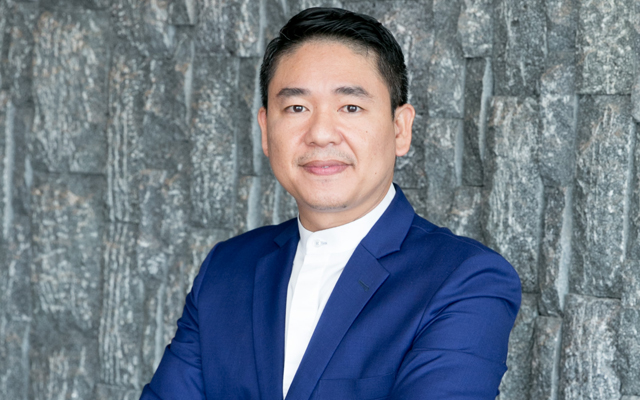
Thawintorn Kanungkid will take on the role of general manager for Centara Hotel Korat, scheduled to open in September 2022.
Thawintorn brings with him two decades of experience in the hospitality industry, most recently as resident manager at The Sukosol Bangkok Hotel.
No stranger to the Centara family, he first joined the hospitality business in the front office team in 2006, and again in 2013 as the rooms division manager in the pre-opening team of one of Centara’s Pattaya properties.
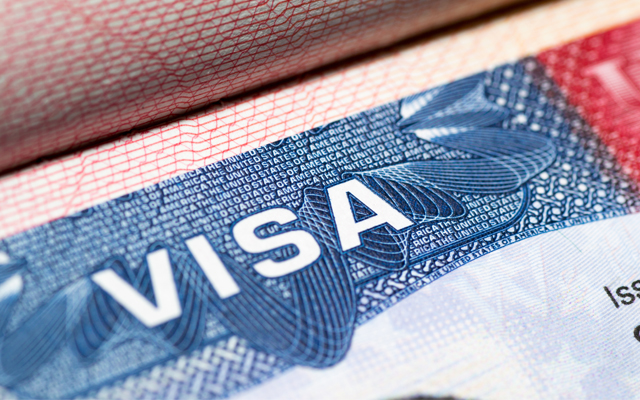
Travel visa applications with the embassies of France and the UK are taking far longer to be processed
Reported losses from cancellation charges and forfeited fees are running as high as US$500,000 for a single travel company
European Tourism Association says disrupted Indonesian arrivals will hinder Europe’s Asian inbound recovery, due to the importance of the Indonesian outbound market
Several Indonesia group departures to Europe have been disrupted due to delays in visa issuance
Delays in visa issuance have disrupted several Indonesia group departures to Europe, causing travel companies massive losses from cancellation charges and non-refundable fees.
Travel agents and operators who spoke to TTG Asia said visa woes mostly stemmed from the embassies of France and the UK.
Hellen Xu, CEO of Panorama JTB Tours, said some visa applications that were sent out a full month ahead of scheduled departure date would still fail to be approved by the time of travel.
Panorama JTB Tours had three groups of about 25 people each who failed to leave as planned due to visa delays.
Golden Rama Tours & Travel shares the same predicament. Spokesperson Ricky Hilton said one group bound for the UK and two groups scheduled for France were impacted.
G2 Travel’s Indonesian office reported 20 affected holiday groups from Indonesia to France.
“Group departures to France have been badly disrupted since the French legislative election on June 19. While we have had eight long years of good relationship with the French Embassy, when every procedure went like clockwork, now passports are being returned very late and travel visas are taking far more than 10 working days to be issued,” lamented Al Mulenga, director, Hong Kong, G2 Travel.
Mulenga said visa delays at the French embassy have a knock-on effect on other European destinations, as his travellers “typically do three nights in France and continue onwards to other destinations on the continent”.
“We are also seeing the same situation with the British Embassy. We had a group of 30 Indonesian travellers who sent their passports to Manila for visa processing, and only four passports came back to the agent just prior to departure, and after waiting for more than eight weeks,” he shared, adding that neither VFS Global nor the embassy knew where the rest of the passports were, and to make matters worse, the assigned embassy staff in Manila had gone on leave.
Obtaining travel visas for Italy is also problematic, Mulenga said, as the Italian embassy in Jakarta is only accepting FIT applications now, while group visas will only commence in January 2023.
The losses from disrupted departures are hefty. G2 Travel has about 500,000 euros (US$501,315) worth of cancellation charges to deal with, while Panorama JTB Tours has so far incurred almost five billion (US$333,465) in forfeited fees.
Unpopular solutions
To help affect customers whose travel dreams have been dashed, both Panorama JTB Tours and Golden Rama offer either a refund or a transfer to a later group departure.
Golden Rama’s Hilton said that even for refunds, customer would not get back the cost of their visa application.
While G2 Travel encourages affected customers to postpone their holidays, Mulenga said it was not a popular solution because people have paid up, taken leave, and made plans for a good time.
“Most therefore demand refunds, which has presented a financial headache to travel agents and operators here. By the time a departure is disrupted by delayed visa processes, we are long past the grace period offered by hotels and long-distance coach operators; we can no longer enjoy cancellation waivers.
“With some airlines, agents may be able to negotiate for changes. With tour operators, we rely on our relationship but there are some that will insist on full cancellation charges. Furthermore, travel insurance does not cover trip disruptions due to visa problems,” said Mulenga.
He added: “This situation is hurting outbound travel agencies across Indonesia. The big agencies may be able to deal with this, but how about the smaller agencies? We have a small agent in Surabaya facing cancellation charges of 25,000 euros and having to refund their customers. Who will pay for the losses caused by the embassies?”
Troubled by the messy state of visa applications with France and the UK, Mulenga said G2 Travel’s customers are now favouring destinations that offer a smoother visa application. Embassy of Switzerland in Indonesia has come up tops in terms of visa application confidence, and that has resulted in a surge in demand for mono-Swiss programmes among G2 Travel’s Indonesian customers.
Impact on Europe
In an interview with TTG Asia, Tom Jenkins, CEO of the European Tourism Association (ETOA), said the visa disruptions in Indonesia have strong negative impact on Europe as a destination, and the potential to hinder Asian inbound recovery.
“One cannot emphasise enough how important Indonesia is for Europe. As one of the fastest growing origin markets for Europe, Indonesia is a critical part of the Asian (inbound) recovery. For Indonesians to be subjected to bureaucratic hitches is acutely embarrassing, and the messaging on social media is the opposite of good,” said Jenkins.
“People who have made the decision to travel to Europe should never be confronted with incompetence. It is not disrespectful; it is stupid, which is worse,” he added.
When asked what ETOA and its members could do to help their Indonesia trade partners through this challenge, Jenkins acknowledged that “officialdom never responds well to being called out”.
“But we are drawing attention to the problem at every level within Europe,” he said.
He told TTG Asia that visa delays are not unique to Indonesian travellers, as pent-up travel demand is “hitting a service which has been in hibernation for two years”.
“Alas, getting visas right is not a high political priority in any country, nor is their handling a matter of national pride. (What is) happening is deeply shocking and sad, (but improvement) is also certain,” he concluded. – Additional reporting by Dhini Oktavianti


 In total, Flett brings over 30 years of hospitality experience to his new role, while his tenure with Pan Pacific Hotels Group spans 10 years, across Australia and South Asia.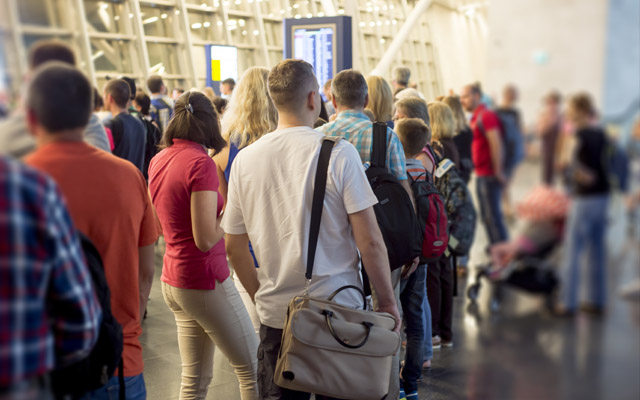




 No stranger to the Centara family, he first joined the hospitality business in the front office team in 2006, and again in 2013 as the rooms division manager in the pre-opening team of one of Centara’s Pattaya properties.