TTG Asia
Asia/Singapore Sunday, 14th December 2025
Page 679

Airlines to reinstate pre-pandemic flight frequencies in India

0
NEW DELHI, INDIA - JAN 16, 2016: Emirates airplane at the Indira Gandhi International Airport, the busiest airport in the country

India’s approval for the resumption of scheduled flight operations worldwide from March 27 has triggered an urgency among international airlines to announce increased flight frequencies for the summer season.

Emirates, the biggest foreign carrier to operate in India, will resume pre-pandemic flight frequencies to India beginning April 1. The Dubai-based airline used to operate 170 weekly flights to nine Indian destinations – Delhi, Mumbai, Chennai, Kolkata, Chennai, Hyderabad, Kochi, Ahmedabad and Thiruvananthapuram – prior to late-March 2020.

Emirates is one of the airlines to resume scheduled flight operations in India

Sri Lankan Airlines will double up to 88 weekly flights to India to match pre-pandemic levels. It currently covers New Delhi, Mumbai, Hyderabad, Trivandrum, Kochi, Chennai, Trichy, Madurai and Bangalore.

LOT Polish Airlines will commence passenger flights to Mumbai effective May 31. The Polish flag carrier has since resumed passenger flights to New Delhi effective March 29.

“Ensuring a direct connection is an essential element in strengthening Polish-Indian cooperation,” said Rafal Milczarski, CEO and president of the management board, LOT Polish Airlines. “I believe that passengers originating from Delhi will also appreciate the relaunch of this connection, which will enable them to comfortably travel to many cities across Europe and North America.”

Air France and KLM, which had maintained their operations under an air bubble model throughout the pandemic, have also resumed their scheduled commercial operations. Both airlines will progressively increase flight operations from India, starting with 20 weekly flights in April and 30 weekly fights in May. Air France will operate from Bengaluru, Chennai, Delhi and Mumbai, while KLM will operate from Delhi and Mumbai.

Naveen Manchanda, president, Indian association of travel and tourism experts (IATTE), said: “With the beginning of scheduled international flights in India, we expect South-east Asia and Europe to be the main drivers of outbound tourism demand. With popular destinations like Thailand also easing travel curbs for international tourists, we are seeing a strong demand from leisure and incentive segments.”

Japan charts new routes in light of Ukraine-Russia conflict

0
TOKYO JAPAN / APR 15 2019 / Japan airlines Boeing 777-200 take off from Tokyo Haneda airport.

Japan’s main airlines are developing resilience to flight path disruption following the outbreak of war in Ukraine, with the announcement of new routes and transit cities.

Japan Airlines (JAL) and ANA Holdings, which normally use Russian airspace for their Europe flights, had cancelled all passenger flights to and from Europe in early March, citing concerns about safety in the face of Russia’s invasion of Ukraine. Some flights were later restored and, in recent days, the national carriers have released plans for further improvements to their European services.

Japan’s main airlines have announced new routes and transit cities

As of March 28, JAL’s London and Helsinki flights will take a detour to avoid Russian and Ukrainian airspace. Options are to reroute over either Alaska, Canada, Greenland and Iceland or over Scandinavia and northern polar regions. The new routes take approximately four hours longer than previously.

The longer routes not only add to fuel costs but also deter passengers from new bookings – putting extra strain on a travel industry attempting to rebound from the worst of the pandemic.

Meanwhile, JAL’s flights to and from Frankfurt, Paris and Moscow remain suspended.

ANA’s flights may also follow a different flight route, have a longer flight time, depart or arrive at unscheduled times or be routed through another airport, according to a March 29 statement from ANA.

The airline’s Tokyo Haneda to Frankfurt route, for example, is now operating as a non-direct flight transiting in Vienna.

ANA’s new launch date for flights between Haneda and Milan, Haneda and Stockholm, Haneda and Istanbul, and Haneda and Moscow have yet to be confirmed. ANA will update once a decision is reached.

New hotels: Holiday Inn Dhaka City Centre, Novotel Melbourne Preston and more

0
Holiday Inn Dhaka City Centre

Holiday Inn Dhaka City Centre, Bangladesh
The first Holiday Inn in Bangladesh, Holiday Inn Dhaka City Centre is located in the heart of the city, with major public transport and the diplomatic and commercial districts nearby.

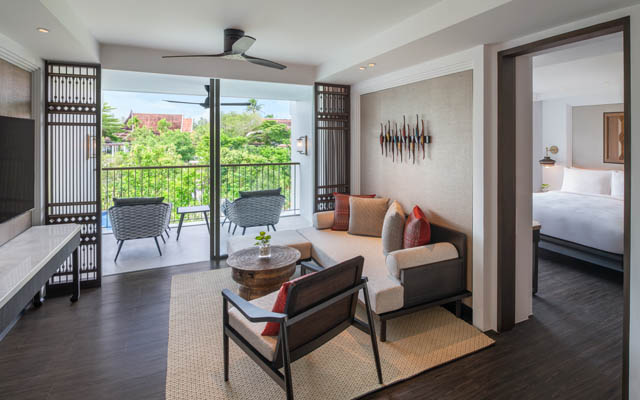
Its 187 modern guestrooms and suites feature uninterrupted views of the Lake Hatirjheel or Dhaka City. Some rooms are fitted out with a sofa bed.

As with all Holiday Inn hotels globally, kids under the age of 12 stay and eat for free.

The hotel has five restaurant and bars, a gym with sauna facilities, as well as a business centre, meetings spaces and secured parking.

Novotel Melbourne Preston

Novotel Melbourne Preston, Melbourne, Australia
The new Novotel Melbourne Preston has been transformed after an extensive refurbishment and rebrand. It comprises 383 guestrooms, suites and fully self-contained studio apartments, and is located on Bell Street at Preston – home to eclectic pockets of vintage shops, cafés, bars and a diverse range of restaurants.

All rooms feature modern technology and facilities, as well as a captivating view of the city Dandenong.

A new addition to the hotel is The Stampton, set to open to diners in April 2022. The restaurant is designed to marry the rustic charm of a farmhouse with Melbourne’s urban hospitality scene.

Other onsite facilities include grab-and-go Stampton & Co café, lounge area, co-working and informal meeting spaces, and a collection of 16 meeting and events spaces.

lyf Farrer Park Singapore

lyf Farrer Park Singapore, Singapore
Located in Singapore’s culturally rich enclave of Little India, lyf Farrer Park Singapore is designed for the next-generation travellers, offering digital nomads and creative self-starters a dynamic environment to live, work, and play.

Guests enjoy convenient access to major attractions, shopping malls as well as to the central business district with the nearby Farrer Park MRT station. There are also plenty of multicultural establishments, eclectic shops, historic sights and gastronomic food right at the hotel’s doorstep.

The hotel curates #lyfgoeslocal community programmes and experiences which offers guests opportunities to interact with other individuals within the property and in the neighbourhood.

Crowne Plaza Phu Quoc Starbay

Crowne Plaza Phu Quoc Starbay, Phu Quoc Island, Vietnam
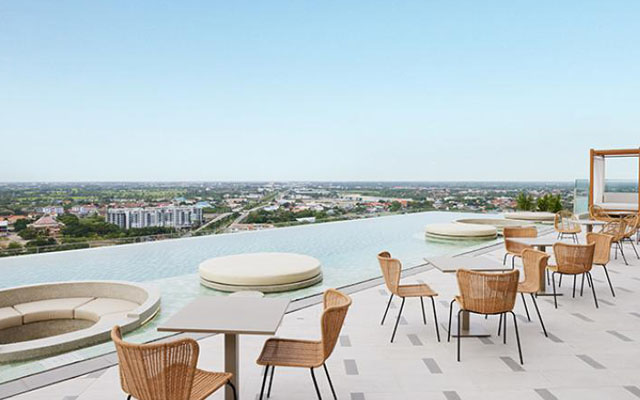
The new-built, 308-key Crowne Plaza Phu Quoc Starbay on Phu Quoc island is situated along the unspoilt Bai Dai beach, a 40-minute drive from the Phu Quoc International Airport, and 30 minutes from downtown.

Every room offers an expansive balcony overlooking the ocean or the island’s native greenery. The rooms are equipped with USB outlets and unlimited high-speed Wi-Fi. Amenities such as pillow menus and bath products from organic beauty brand, Antipodes, are included.

Guests can relax and unwind at the resort’s two swimming pools, gym, and the Hoa Sim Spa while the kids are kept busy as wildlife adventurers in a day camp setting with Tribe Kids Club.

There are two distinctive dining venues on site: the Horizons Restaurant-Lounge-Bar which serves local and international cuisine with a Mediterranean flair; and the beachfront Amber Sands Beach Club that dishes out fresh locally-sourced seafood and prime cuts of meat from its open-fire kitchen, while guests take in a live fire dance performance and a spectacular sunset.

Egg-citing getaway at JW Marriott

0

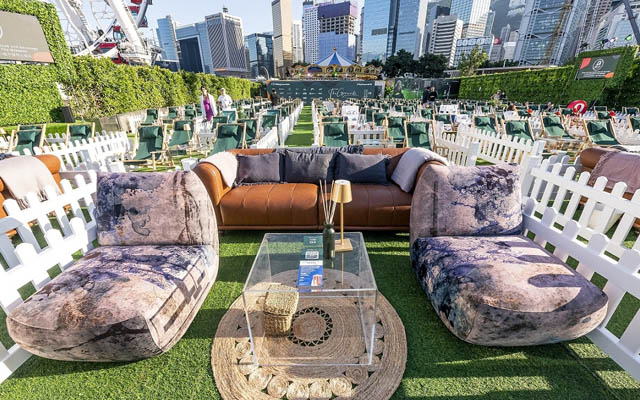
JW Marriott Hotel Hong Kong has crafted the JW Double Happiness Staycation for guests looking to celebrate springtime or the Easter Holidays.

The JW Double Happiness Staycation package comes with two options: JW Double Happiness Staycation – Family Holiday package and JW Double Happiness Staycation.

Enjoy a family-friendly food platter with the JW Double Happiness Staycation – Family Holiday package

Priced from HK$3,580 (US$457.80) per night, the JW Double Happiness Staycation package offers accommodation in a set of connecting rooms (one Deluxe King Room and one Deluxe Room with Double Beds); 24-hour accommodation for check-in between Monday and Thursday with the latest checkout time at 14.00 (except public holiday and subject to availability); breakfast buffet for four; a HK$1,200 dining credit; a complimentary bottle of selected red wine in the guestroom.

The JW Double Happiness Staycation – Family Holiday package is priced, the same and comes with the same inclusions. However, in place of the dining credit, this package offers a family-friendly food platter for three to four persons, to be served in the guestroom on the day of arrival, as well as welcome snacks and kids’ activities such as board games and egg hunt game with rewards.

The JW Double Happiness Staycation packages require a two-day advance reservation and a one-day advance reservation for dining options.

Promotion ends May 31.

Thankyou, hotel chains join fight to end global poverty

0

Australian FMCG personal care brand and social enterprise, Thankyou, has roped in three global hotel chains in its mission to end global poverty by having the properties stock their products as guest amenities and direct sales proceeds to fund impactful causes.

Rydges Hotels & Resorts and Ramada by Wyndham will stock Thankyou amenities across their Australia and New Zealand properties, respectively, while all hotels worldwide under the Canopy by Hilton brand will carry Thankyou amenities by the end of the year.

Thankyou hotel amenities will carry messages of the social enterprise’s cause to guests, and encourage them to find out more

The hotel range is launched in partnership with Hunter Amenities, a prominent global supplier of hotel amenities for world-leading brands. It comprises some of Thankyou’s best-selling personal care products and a new liquid hair-care series. Products are 100 per cent vegan friendly, not tested on animals, and utilise rPET bottles and FSC certified packaging.

Like the rest of Thankyou’s personal care range, these hotel stocks contribute funding to change-making organisations that are serving the world’s poorest. Parent organisation, Thankyou Charitable Trust, currently has 18 active global impact partners that operate on a variety of grants focusing on economic development, food security, health, and systems change.

According to a Thankyou spokesperson, the move to involve hotels in its mission is new. Thankyou products are currently stocked in major retailers across Australia and New Zealand, as well as several online and independent retailers.

“Thankyou exists to turn consumerism into a vehicle that can spread the positive impact of products to as many people as possible, all over the world. The launch into the hotel and accommodation industry allows Thankyou to reach more consumers, and the expansion of the unique Thankyou business model into the amenities sector empowers hotel and accommodation services to make more conscious and sustainable choices in their everyday business practices,” explained the spokesperson.

She shared that there has been encouraging interest from other hotel and accommodation service providers, “which is an exciting opportunity for more organisations in the industry to stock Thankyou amenities and join in the fight against global poverty”.

When hotels stock Thankyou amenities, they play a part in educating the public on Thankyou’s mission. Messaging about Thankyou’s purpose is captured on the product, and guests are encouraged to visit the impact section of Thankyou website to find out more.

While Thankyou products are not manufactured by impoverished communities, the social enterprise’s work goes into backing solutions executed by impact partners that address root causes of poverty traps.

“For example, our economic development programmes and partners work with communities to increase the yields/income of their livestock and agricultural produce, which does not easily translate into ingredients found in a personal care product,” the spokesperson explained.

TUI Group set for hotel business unit expansion

0

Germany headquartered TUI Group will expand its TUI Blue global hotel brand into new regions across South-east Asia, China, and the Middle East, and Southern Africa, with some 300-plus hotels as its eventual goal.

An important driver for the future growth strategy are international partnerships in which TUI Blue hotels are operated either under management contracts or by franchisees.

Friemuth: TUI Blue aims to be the leading leisure hotel brand with more than 300 hotels worldwide

Erik Friemuth, managing director of TUI Hotels & Resorts, said in a press statement that TUI Blue’s new management and franchise model will allow its future partners to benefit and bring guests unique holiday experiences.

“TUI has unrivalled strong expertise in designing, developing and successfully operating leisure hotel brands as well as developing holiday destinations,” said Friemuth.

The TUI Blue business model was presented to investors as well as representatives of the hotel industry at a hybrid event in Dubai on March 28.

TUI Blue will establish its own hotel development team in the Arabian Gulf and Hong Kong.

Progress in Asia is being made with the formation of a dedicated team as well as contracts being signed for the first TUI Blue hotels in China, shared Artur Gerber, managing director for TUI Blue.

RedDoorz launches fourth label aimed at urban, corporate travellers

0

Urbanview is the latest label to join RedDoorz’s multi-brand portfolio, with the new collection of accommodation being aimed at urban and business travellers who desire affordable, aesthetic and comfortable options.

Urbanview properties are strategically located in close proximities to key business districts, transport nodes, urban areas, and key tourist attractions. The firm currently has 50 Urbanview properties in Indonesia and the rooms are priced at an average rate of US$15 to US$20 per night.

Urbanview is starting off with a collection of 50 properties in Indonesia

Urbanview will provide travellers with amenities such as Wi-Fi, cable TV, and an atmosphere inspired by a natural oasis at an affordable price, while also adhering to RedDoorz’s proprietary HygienePass-certified cleanliness measures for travellers’ peace of mind.

Amit Saberwal, founder and CEO of RedDoorz, said: “We are pleased to announce the launch of Urbanview in our bid to provide greater quality and value for a larger spectrum of travellers within this region. Urbanview will allow our multi-brand strategy to tap onto a larger segment of travellers, driving us further towards our goal of being a key leader in the hospitality and tourism sector.

“As per Statista, in 2020, domestic tourism spending in South-east Asia totalled over US$106 billion. This was an increase from 2011, in which domestic tourism spending almost reached US$74 billion. We believe we have only scratched the surface in this region.”

Singapore organisations pioneer tourism sustainability programme to nurture future talent

0

Resorts World Sentosa (RWS) and Ngee Ann Polytechnic (NP) launched the Sustainability Programme at RWS (Sustainability@RWS) on March 29, a first ever initiative for both that is aimed at developing skilled talents in the sustainable tourism industry through real-world learning.

The three-year programme is designed for students pursuing their Diploma in Tourism & Resort Management (TRM).

RWS will open up its facilities and leadership to NP students pursuing their Diploma in Tourism & Resort Management

TRM students at NP’s School of Business & Accountancy will have the opportunity to propose and execute sustainability-related business solutions for RWS, such as working on advocacy campaigns that target guests and visitors, and education programmes on environmental conservation.

The students will attend lessons at RWS’ extensive facilities, where they will benefit from industry-real learning. RWS and NP will collaborate on the sustainability-related curriculum, learning experiences, and assessment of two event modules – Event Creation & Design (ECDE) and Event Management & Operations (EMOP).

Lectures by RWS’ sustainability team will be conducted via the NP Virtual World platform, an innovative digital learning platform where videos, simulations, and interactions are presented in a 3D environment. NP Virtual World also allows students to gain first-hand insights into managing virtual events.

RWS will co-assess concept proposals by students to ensure that they are applicable in real-world settings, with some of the sustainability ideas adopted and implemented as part of the graduating students’ capstone projects.

Sustainability@RWS draws on the strengths and expertise of RWS to spearhead efforts in Singapore’s tourism economy and environmental education, aligned with the nation’s ESG (Environmental, Social and Governance) development. The programme also reaffirms RWS’ commitment towards sustainability and sustainable tourism.

Ngee Ann Polytechnic’s principal and CEO Lim Kok Kiang said: “NP is committed to nurture the next generation of sustainability leaders and contribute towards Singapore’s Green Plan. Through this programme, our students will deepen their understanding of sustainable tourism, and have the opportunity to conceptualise and testbed innovative solutions for the industry. The industry-real learning experience offered by RWS to our students will be invaluable.”

“Nurturing the next generation of talent who can help shore up our nation’s sustainability drive is imperative. Through the Sustainability@RWS programme in collaboration with NP, we aim to firstly, boost awareness and practical understanding of sustainable tourism among students today, who can in turn drive positive impact tomorrow, and secondly, play our part in driving sustainability education and advocacy amongst all our stakeholders. This aligns to our broader ambition of creating positive environmental and socio-economic impact for the communities in which we operate,” stated Loh Su Kim, RWS’s vice president, sustainability.

Penang revives fam trips, readies for return of tourism business

0

Penang kicked off her first trade and media fam trip conducted since the start of the Covid-19 pandemic, with participants coming from Singapore and the programme being supported by Tourism Malaysia, Singapore office.

The fam trip, which started on March 29, was attended by six media representatives, four travel agents, a representative from Tourism Malaysia, Singapore office, two representatives from Tourism Malaysia headquarters, and one representative from Air Asia.

Tourism Malaysia, Singapore office facilitated Penang’s first post-lockdown fam trip this week

Speaking at a press conference at The Prestige Hotel, Yeoh Soon Hin, head of Penang State Exco for Tourism Development, Arts, Culture and Heritage, said there was a need to gradually revive the industry and put in place initiatives to generate economy activities that support the tourism industry.

Yeoh noted that recent measures to allow domestic travellers to visit Penang as well as Singapore’s Vaccinated Travel Lane with Penang, launched March 16, have led to stronger tourism performance for the destination.

“Penang is home to us Penangites, yet it is also a destination filled with the known and unknown treasures to be discover by visitors. That is why Penang remains one of the top destinations for travellers throughout the years,” he elaborated, adding that Singapore is Penang’s second biggest arrival market just after Indonesia.

Rebuilding, rethinking travel

0

As travel starts to rebound globally, what does the industry need to do to thrive?
The industry needs to rebuilt trust. Actually, I do think consumers are giving the industry credit for acting very quickly around restrictions and transparency of information. Refunds and exchanges by and large went very smoothly during what was an unprecedented time. I think consumer trust is shockingly high for the travel industry right now, but continuing to build that trust, like making sure consumers and travellers know what the latest is on restrictions and everyone along the chain is trained on that so when things change they know, is key.

What opportunities has the pandemic presented for the industry to reinvent itself?
There are a couple of key moves that the industry is poised to make in the wake of the pandemic. The first is more flexibility. The rigidness around changes and refunds has changed drastically. The industry had to act very quickly to become nimble about how to operationalise those quicker and in a much more flexible way than we as travellers were used to. I hope that stays; travellers will expect that to stay because there’s still uncertainty.

The second is that consumers expect a good experience. It’s been a hard-earned pent-up wait for travel, so we expect things to go smoothly and we expect suppliers to provide that experience. We’re really counting on suppliers to deliver that now more than ever.

Why is the travel industry lagging behind in digital innovation?
Travel technology is very complicated if you compare it to other retail sectors. What I like about Travelport, and why I came to Travelport, is it’s a company with decades of in-depth experience and deep expertise, yet it is building something altogether new. There are a lot of upstarts in the industry but they don’t have the depth of experience to understand the complexities and how to simplify them.

What exciting entries to the market should the industry look out for in 2022?
We are very lucky to have a new CTO (Tom Kershaw, who joined as chief product and technology officer in July 2021) who is evaluating travel technology with fresh eyes. He’s very passionate about rebuilding search for travel and making it work just like the Internet; adding machine learning and the data we know about the traveller to the search so that it’s more personalised.

The second is workflow. It’s really important for the industry to make the workflow feel more like the Internet. This isn’t just for the end consumer but for the people working in the industry. A technical example is PNRs. They’re woefully outdated and have been flawed for a long time. Our plan is to reinvent them and move to an open-source model so that more than one person at a time can work on a file and bring the data closer to end travellers.

A recent Travelport survey revealed shopping for travel is complicated and cumbersome for consumers. What does the industry need to do to change this?
As we build Travelport+, our goal is to simplify that experience for both the industry and consumer. It’s not necessarily to reduce the complexity, travel is always going to be a really complex back-end technology, but to reduce the interaction with that complexity is our goal. To be able to simplify it for the users would be a real first in the industry.

What new needs have arisen from post-lockdown travel behaviour?
The depth of digital has accelerated across all of our lives and all generations. We carried out a study on trust last year and the thing that came out is there is zero tolerance for hidden fees, especially during a pandemic. For example, when you’re ordering food online, you know what it costs to have it delivered and any gratuity fees (are) not hidden. That transparency has to carry into travel.

There is a lot of buzz around personalising the travel experience. What does this mean?
The key thing is information sharing and, again, the industry needs to move towards a more collaborative model that is maybe some form of unified traveller ID. However, there is hesitance there. Like with the publishing industry, there is a reluctance to share information for fear of competition despite the fact everyone knows it would be for the best. I think this will continue to be a discussion that evolves.