Amadeus is partnering with Yanolja Cloud, the wholly-owned subsidiary of South Korean travel company Yanolja, to shape the future of travel with the creation of Travel Innovation Alliance.
The alliance will unlock key strategic areas of interest that will improve the travel experience for customers all over the world. Both organisations will combine their resources, strategic objectives, and roadmaps for the future, and work together through deep dive workshops to identify key target areas to invest in, and the next big problems to solve in travel.
From left: Yanolja’s Jongyoon Kim and Amadeus’ Fred Barou
Many aspects of travel will be explored to find areas of synergy such as accommodation, airline merchandising and distribution, destination tours, and tickets to activities like concerts, sports, and exhibits. This offers the possibility for Yanolja and its affiliates to gain access to Amadeus’ global network of travel sellers via the Amadeus Travel Platform.
Other Amadeus content and solutions will also be reviewed for integration into existing Yanolja Cloud and affiliate platforms.
In addition, Yanolja Cloud and its affiliates will deep dive into Amadeus’ search solutions such as MasterPricer and Instant Search, as well as technology around automation and merchandising to enhance Yanolja platforms. Together, these solutions will help travellers using the Yanolja platforms find and book personalised travel experiences easier and faster than ever before, while travel sellers will be able to reach their target customers more efficiently.
“This Travel Innovation Alliance is a key step in our commitment to giving back to the travel industry and travellers,” said Fred Barou, senior vice president, online travel and market strategy, Asia Pacific, Amadeus.
Jongyoon Kim, CEO of Yanolja and Yanolja Cloud, added: “The travel industry can only evolve and innovate at the speed of collaboration. In today’s connected and globalised world, no company can risk working alone. Working together, we will be able to achieve great things and accelerate the much-needed transformation of this industry.”
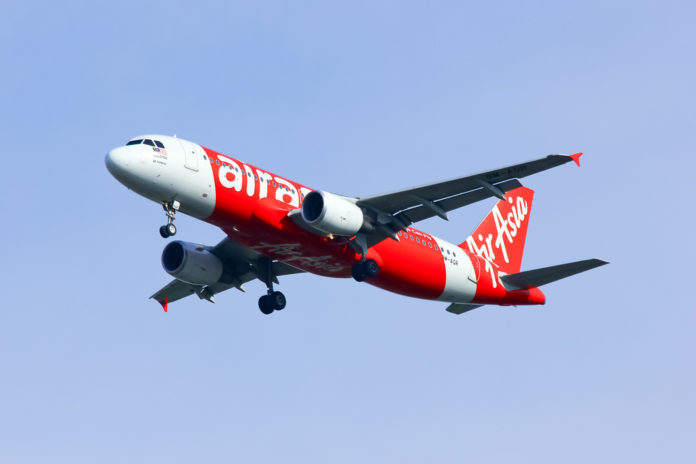
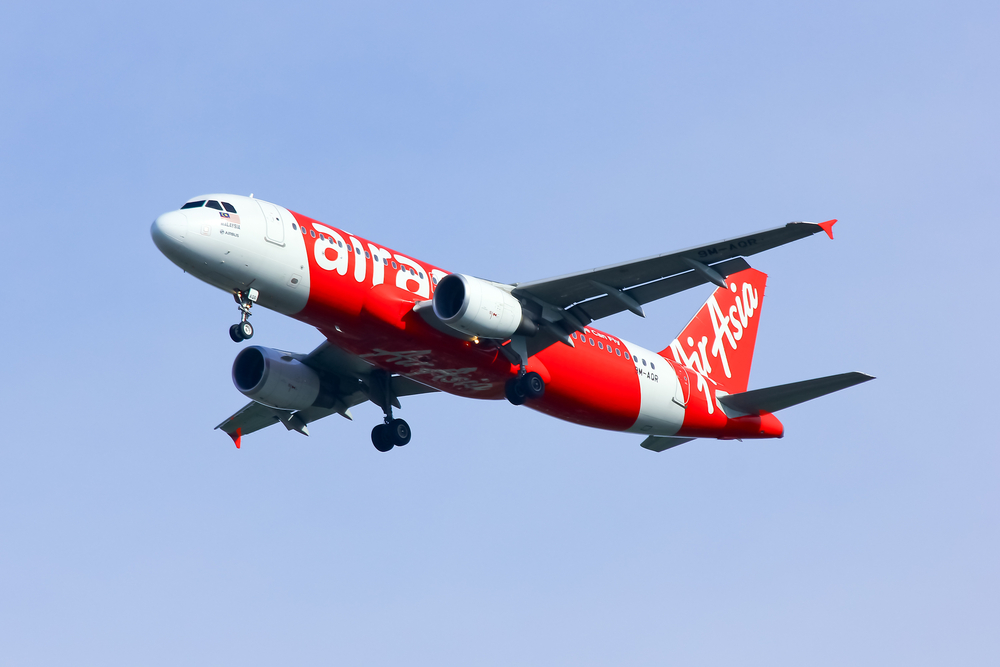
AirAsia will increase flights to and from Hong Kong starting this December, with a special promotion to support the surge in travel demand ahead of the upcoming festive seasons.
From December 15, flights between Hong Kong and Bangkok (Don Mueang) will increase to four times weekly, while Hong Kong-Kuala Lumpur and Hong Kong-Manila will operate three-times weekly.
AirAsia will fly to and from Hong Kong starting December
With the promotional all-in one-way fare starting from HK$672 (US$85), passengers can now fly to destinations in South-east Asia, or connect via the airline’s network to Penang, Kota Kinabalu, Chiang Mai, Phuket, Singapore, Bali and more.
IHG Hotels & Resorts (IHG) has partnered Dinso Resort Co. to introduce its Luxury & Lifestyle collection brand, Vignette Collection, to Thailand’s Patong in mid-2023.
The sustainability-focused Dinso Resort Phuket, Vignette Collection will support the brand’s continued global expansion since its launch in 2021. It will be IHG’s fourth opened or pipeline Vignette Collection property in Thailand.
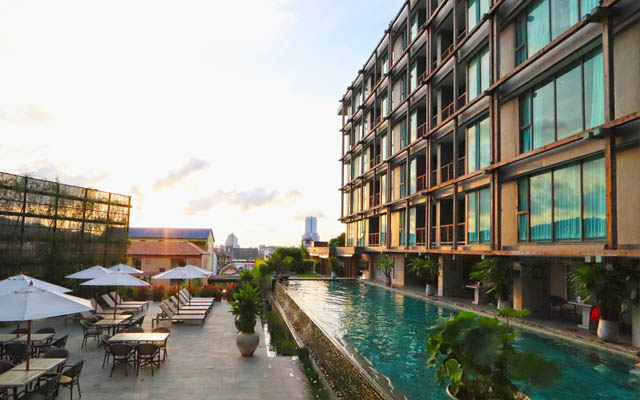
The sustainability-focused Dinso Resort Phuket, Vignette Collection will open mid-2023
A 60-minute drive from Phuket International Airport and just eight minutes from the tourism hub of Patong, the resort is located nearby Patong Beach, restaurants, bars, night markets and shopping centres.
The property offers 148 rooms and suites, as well as 26 tree-top pool villas. Facilities include two restaurants and bars, a 150m² meeting room, swimming pool, fitness centre and spa.
Singapore gears up for the inaugural Singapore Sail Grand Prix (SailGP), supported by Singapore Tourism Board, which will take place on January 14 and 15, 2023 at the destination’s Parkland Green in East Coast Park.
It will be the eighth leg of an eleven-stop global championship that visits some of the world’s most iconic cities – from San Francisco to Saint-Tropez to Sydney, and for the first-time ever in the region, Singapore.
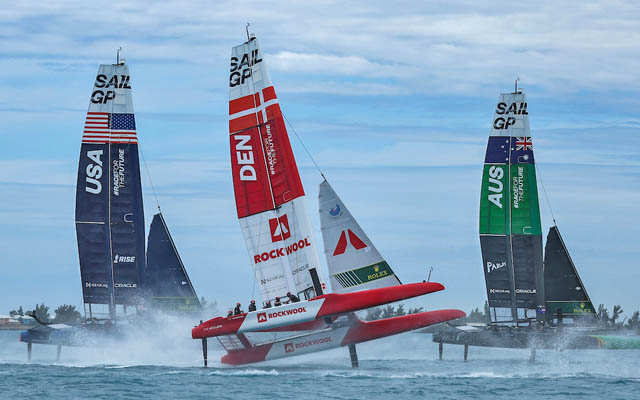
The eighth leg of the Sail Grand Prix will be held in Singapore for the first time ever in January next year
With teams from Australia, Canada, Denmark, France, Great Britain, New Zealand, Spain, Switzerland and the US sailing F50 catamarans at highway speeds, guests can enjoy the exciting event from shore with a range of ticket options starting from S$28 (US$20). These include private VIP hospitality suites, waterfront access to the race village that includes live commentary and entertainment, plus access to the race boats and opportunities to interact with SailGP athletes.
Guests can even go behind the scenes at the SailGP Team Bases, and tour the “pit lane garages” where athletes and shore teams prepare the high-tech F50 race boats.
Hotels and ryokans in Japan are seeing a surge in bookings for the coming autumn, winter and spring seasons following the country’s move last month to reinstate visa-free travel for 68 countries.
Overseas enquiries and reservations came swiftly after the announcement that Japan would welcome FITs from October 11, with an average of 12,900 pax arriving daily over October 11-31, up from 1,900 daily over October 1-10. As of November 7, the daily average was 20,045 pax.
Ryokan bookings are on the rise ever since Japan reinstated visa-free travel for 68 countries
Amami Onsen Nanten-en, a ryokan in Osaka, is “virtually fully booked” until the end of December, with “fair interest” already for April, the region’s cherry blossom season, a front desk staffer told TTG Asia.
Jared Campion, founder of Tokyo-based campervan rental company Dream Drive, is also “very busy” with inbound bookings, which has prompted the company to add more campervans to its fleet.
IHG Hotels & Resorts, which has 44 hotels in Japan, has reported an 80 per cent increase in bookings month-on-month from September to October.
And, in a further boost, international travellers are tending to stay longer and spend more in each accommodation.
Amami Onsen Nanten-en’s spokesperson said: “We’re seeing an increase in multiple night reservations and in bookings of our most expensive room, perhaps because people want to treat themselves after a rough couple of years.”
Local communities are also set to benefit as tourists are increasingly seeking out Japanese experiences around their hotel, according to Abhijay Sandilya, managing director of IHG Japan & Micronesia.
“We’re seeing people seek out the experiential element” of travel, he told Bloomberg, adding that IHG Hotel Indigo’s programme showcasing its neighbourhood in Karuizawa, Nagano Prefecture, is proving popular.
Based on current and projected bookings, 45 per cent of a cross-section of 800 hotels and ryokans in Japan are expected to see an increase in year-on-year annual revenue in fiscal 2023 (April 2022 to March 2023), according to Tokyo-based research firm Teikoku Databank.
Marriott International is expanding its select service portfolio in Greater China with the expected addition of 30 hotels in the segment by the end of 2023.
Its portfolio currently includes the following brands spanning across 67 cities in Greater China: Moxy Hotels, Fairfield by Marriott, Courtyard by Marriott, Four Points by Sheraton, AC Hotels by Marriott, Aloft Hotels, and Element Hotels.
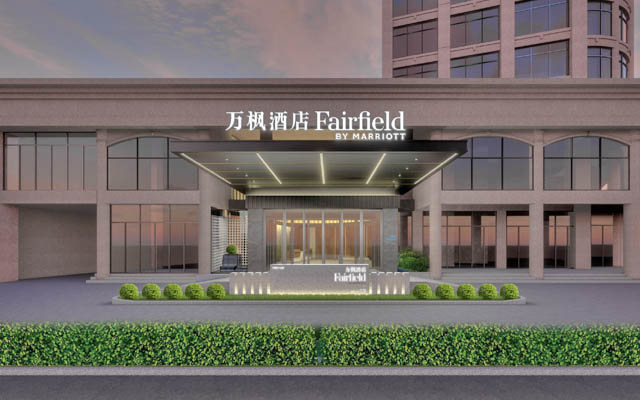
Fairfield by Marriott Hangzhou Xihu District is the brand’s 150th hotel in Greater China and opened this year
The expansion of the select service portfolio in the region will elevate consumers’ travel choices in China’s second- and third-tier cities, such as Foshan and Changchun, while expanding its presence in first-tier cities like Shanghai.
Gavin Yu, chief development officer, Greater China, Marriott International said: “With a well-defined ‘Brand + Destination’ development strategy, we see great growth potential in providing approachable and moderately-priced choices across emerging destinations.”
He added that Marriott International will continue to work with owners and franchisees to enhance the select-service brands portfolio through new-builds and conversions.
The company is also enhancing its strategic positioning in Greater China through dual-brand projects and its franchise-plus model – the former will accommodate travellers’ growing desires for flexible accommodation by offering consumers more choices, and saw the signing of six dual-brand hotel projects representing 14 hotels this year; while the latter helps to streamline hotel openings and initial stage operations, as well as uphold brand quality.
Upcoming anticipated openings across Greater China include AC Hotels by Marriott in Suzhou; Moxy Hotels in Chongqing and Ningbo; Fairfield by Marriott in Kunshan and Zhuji; Courtyard by Marriott in Chongli and Jiuzhaigou; Aloft Hotels in Beijing and Yantai; and Element Hotels in Guangzhou Baiyun.
In addition, Four Points by Sheraton will accelerate its growth in Greater China with over five planned openings in 2023.
Mitsubishi Estate Co. and Tokyo Century Corporation have appointed Dorchester Collection to manage the hotel within Japan’s Torch Tower, the tallest building in Japan.
Scheduled to open in 2028, it will be the first Dorchester Collection hotel in Asia-Pacific.
Dorchester Collection will manage the hotel within Japan’s Torch Tower when it opens in 2028
The hotel is a key component of Tokyo Torch’s aim to become a core of urban tourism as the gateway to Tokyo and Japan.
Christopher Cowdray, CEO, Dorchester Collection said: “Tokyo has long been an integral part of our growth strategy given it is a gateway to Asia and its global significance, and to be partnering with the highly esteemed Mitsubishi Estate Co. and Tokyo Century Corporation is a true honour. Their core values are perfectly aligned with ours given the vision of ‘a love for people, a love for the city’ and our ‘We Care’ philosophy.”
Junichi Yoshida, president & CEO, Mitsubishi Estate Co. is confident that the hotel will provide a “one-of-a-kind experience” unique to the location.
Located in the upper floors of Torch Tower, the hotel will offer a panoramic view of Tokyo Bay, the city centre, and Mount Fuji.
Japan will soon lift its lengthy ban on international cruise ships, which has been in place since the start of the Covid-19 pandemic in 2020, a move that cruise tourism specialists say will allow cruise lines and tourism companies to better plan for the return of regional cruise journeys.
Heather Hopkins Clement, CEO of Cruise Port Navigation, and a Japan cruise and destination expert, told TTG Asia that Japan is a critical piece of the puzzle for successful regional cruises.
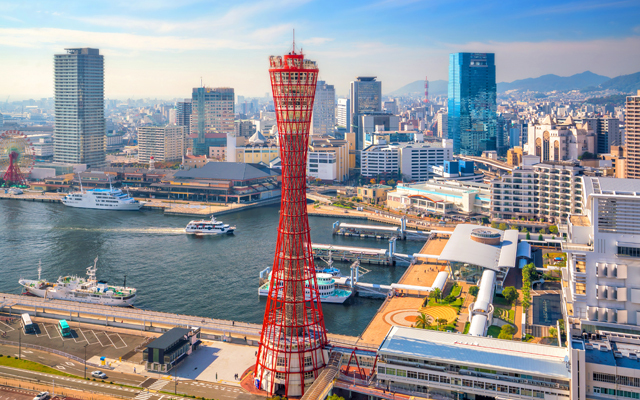
Japan boasts numerous scenic ports that offer unique destination experiences to cruise guests
“In October, South Korea and Taiwan announced that they were ready to welcome international cruises again. However, due to cabotage laws, such announcements will have little impact in reality without Japan, which serves as a lynchpin for cruising in North-east Asia with approximately 100 ports of call,” explained Clement.
According to Cruise Lines International Association’s 2021 State of the Cruise Industry Outlook report, Asia and China make up the second most popular cruise destination, coming only after Caribbean/Bahamas/Bermuda in the pre-pandemic year of 2019. Asia and China altogether welcomed 3,977,400 passengers then.
Clement added: “This long-awaited announcement from the national government will allow international cruise lines and local port authorities to begin establishing the specific policies and procedures required for the resumption of international cruising in Japan.
“The goal of resumption in the spring will enable international cruise ships to call on Japanese shores for the first time in three years – a pause much longer than in other regions of the world.”
The Transport Ministry’s announcement that came on November 15 stated that cruise operators are due to discuss with local authorities their port entry plans. New guidelines call for all crew members to have received three Covid vaccine shots, while passengers must be vaccinated at least twice, as well as procedures for safe distancing and disinfection. While there was no specific timeline for the return of international cruise ships, news media have reported that a Japanese ship will operate in December a voyage from Yokohama to Mauritius.
Meanwhile, some global cruises lines, such as Regent Seven Seas Cruises, Silverseas Cruises and Royal Caribbean International, have plotted Japanese port calls into their forward itinerary, well ahead of Japan’s decision to resume international cruising.
Regent Seven Seas Cruises, for instance, has sold Seven Seas Explorer journeys that will take guests to Japan’s Kagoshima, Kochi, Kyoto, Shimizu, Tokyo, Nagoya, Beppu, Nagasaki, Naze and Okinawa in March 2023 as part of the ship’s wider Asia voyage.
In an earlier interview with TTG Asia last week, Regent Seven Seas Cruises’ senior vice president and managing director Asia Pacific, Steve Odell, emphasised the appeal of Japanese port calls among his cruises customers.
“Our Tokyo cruises are always in high demand,” he said, adding that Regent Seven Seas Cruises is packing more Japanese port calls into future sailings.
When asked if the latest news from Japan would spur Resorts World Cruises into adjusting its upcoming regional journeys, Michael Goh, the cruise line’s president, would only say it would “continue to explore new destinations as options for our cruise itineraries”. Resorts World Cruises itineraries are currently centred on South-East Asia, with calls at Phuket in Thailand being the latest additions.
Yuki Matsuura, president of Cruivel Communication Japan, and a consultant with expertise in both inbound and cruise tourism, said Japan is “no doubt a very popular worldwide destination” and the relaxation of cruising restrictions will benefit both tourism businesses as well as travellers.
“Japan has a large number of ports, each of which offers unique traditions, culture, and landscapes to experience through local festivals and events and throughout the year as the seasons change. With the wide range of ship sizes and categories scheduled to call on Japan, international visitors can enjoy an amazing range of itinerary options,” Matsuura told TTG Asia.
Clement shared that her clients “are thrilled” to resume their cruising plans for Japan “after such a long period of anticipation”.
“Japan will surely be a top destination in 2023, and cruising is a great way to explore the diversity of Japan with the convenience of only having to unpack once,” she added.
Meanwhile, as critical Chinese travellers continue to be absent from the cruise tourism landscape and with the continued uncertainty in China’s Covid-19 measures, Matsuura said “there are high expectations for…Japan (to take the place as) driver for growth of the cruise industry in the region”.
Shama, a core brand of ONYX Hospitality Group, has launched Shama Social Club to enhance guest experiences while connecting them to each distinct neighbourhood.
Shama Social Club brings together a like-minded community of global travellers who love connection and value social interactivity and new experiences, delivering locally-tailored programmes of activities, events, games, social occasions, food and drink, music, as well as a variety of guest service hallmarks, including CSR aspects such as serving the local community food bank, and interactivity with local vendors.
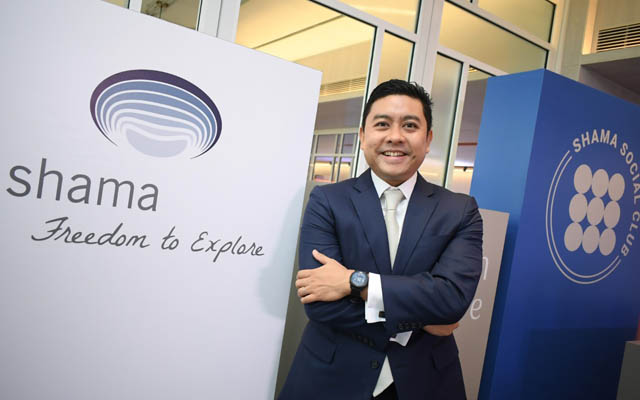
Charanachitta: leveraging Shama Social Club to emphasise the holistic community-based Shama experience
Yuthachai Charanachitta, CEO, ONYX Hospitality Group, said: “We are leveraging Shama Social Club to emphasise the holistic community-based Shama experience, with a focus on acclimatising residents to the locale, but also expanding it to be an important neighbourhood feature for people in those communities.
“We want to make Shama a thoughtful and valuable contributor to communities we touch; and so, it is our passion to be a present member of our community with an open warmth. With each Shama at the heart of each neighbourhood giving guests connectivity to local communities, proffering the Shama brand promise, Freedom to Explore.”
Built on Shama’s three main pillars – contemporary living, without boundaries, and thoughtful gestures – the brand offers the convenience and sense of place with extended-stay serviced apartment accommodation and top-class hotel-level services to make guests feel like they’re ‘already at home’ in their new city.
The Shama portfolio in Thailand currently comprises Shama Yen-Akat Bangkok; Shama Lakeview Bangkok; Shama Sukhumvit Bangkok; Shama Sukhumvit 39 Bangkok; Shama Petchburi 47 Bangkok; and Shama Ekamai Bangkok.
Sabre and IATA are working to “a shared vision” to roll out the Offers and Orders (O&O) distribution and retailing platform as a better alternative to the legacy airline passenger system.
Investing billions in its own technological transformation – including a US$100m spend in 2022 alone – to drive innovation and transformation across the industry, Sabre is targeting O&O for “an aspirational goal of 100 per cent transition by 2030”.
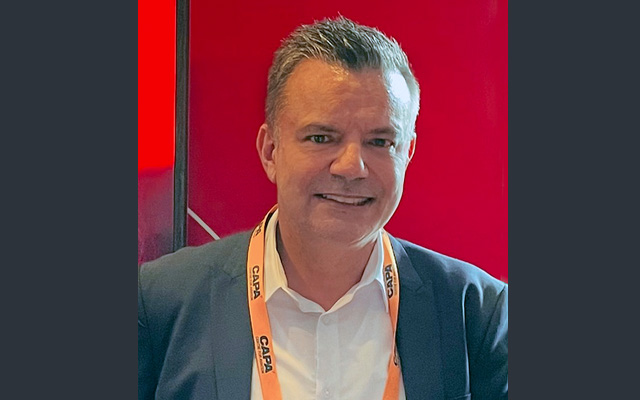
Chapman: the new world of O&O will generate smarter, more relevant offers for agents
Speaking to TTG Asia on the side-lines of the recent CAPA Asia Aviation Summit, John Chapman, head of strategic sales and business development, Asia Pacific at Sabre, said there was convergence among full-service carriers wanting to “unbundle” their products and use artificial intelligence and machine learning to understand “what the customer wants, his propensity to pay and market conditions”.
Chapman explained O&O would move “PNR (passenger name record), EMD (electronic miscellaneous document for options such as preferred seating, baggage, priority boarding) and e-ticketing into one order”.
Stressing how the new “more transparent and modular” O&O capability would simplify the process, he noted: “IATA is driving standards and Sabre is thinking beyond standards with the goal of delivering a modern, intelligent retail platform.”
He added Sabre was “heavily developing” O&O with a projected beta version launch by 2024.
According to Chapman, European airlines such as Finnair and Lufthansa Group were looking at “wholly replacing their legacy system” to be able to personalise and market their products better.
He commented that the pandemic pushed NDC and O&O to the fore, and this transition “is ultimately about providing a win-win-win for travel suppliers, buyers, and the end consumer”.
“The new world of O&O will generate smarter, more relevant offers for agents to put in front of their travellers, while streamlining servicing and increasing revenue opportunities for agents,” said Chapman, adding that Sabre’s role as a trusted technology partner is “to facilitate these interactions, create opportunities and reduce friction for all elements of the travel ecosystem”.
“O&O is the natural development in the NDC journey, and we’re already working with a number of airlines to place NDC content in front of agents, and ultimately, travellers.
“Our innovation partnerships, including with Google, are also key in creating the technological solutions needed to create the best offers for travellers,” Chapman pointed out.