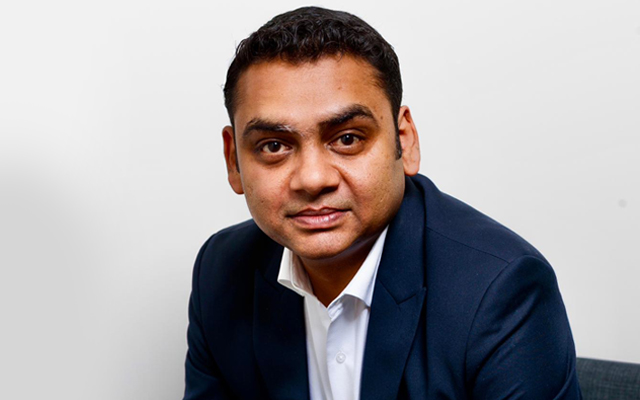
La Vie Hotels & Resorts has appointed Shankar Sreekumar as its head of South & South-east Asia.
Based at La Vie’s regional office in Bangkok, Thailand, Shankar brings with him almost two-decades of experience in the hospitality industry, having held numerous operations-focused roles.
He was most recently director of IHG’s centre of excellence, new hotels, AMEA.
Centara Hotels & Resorts has appointed Rutjiret Ananphong as general manager of Centara Ubon.
Having been a part of Centara Ubon’s pre-opening team since August 2022, she will continue to oversee and direct all aspects of operations when the hotel officially opens next year.
Bringing with her over 20 years of experience, she was previously general manager of COSI Krabi Ao Nang Beach.
Resorts World Cruises (RWC) celebrated a new milestone with its maiden voyage to Surabaya on the Genting Dream with over 3,500 passengers from her dual homeports in Singapore and Malaysia (via Port Klang).
In addition to Surabaya as a destination, the ship will also visit North Bali as part of RWC’s special Indonesia cruise itinerary to celebrate the year-end holiday period.
Genting Dream’s first arrival at the Gapura Surya Nusantara Cruise Terminal in Surabaya
Guests disembarking at Surabaya can explore many of the city’s famous landmarks – the Four Faced Buddha monument; Putuk Truno Waterfall or Mount Penanggugan in Tretes; and enjoy shopping at Pasar Genteng and Tunjungan Plaza.
In Bali, passengers can visit the Kekeran Rice Terrace or go diving in the pristine waters of Menjangan Island.
The Genting Dream offers many choices of onboard accommodation, and provides a variety of offerings that are inclusive as part of the cruise fare and package – complimentary all day-dining, international stage performances, a 1,000-seat capacity Zodiac theatre, water park, rope courses and ziplines, a rock climbing wall and more.
Travellers from Indonesia can also explore the various FlyCruise options to Singapore or Malaysia to embark on a series of two-night and three-night cruises to popular destinations such as Penang, Phuket, and Kuala Lumpur.
Michael Goh, president of RWC, said: “Indonesia remains an important cruise market with huge potential both as a destination and source market for the FlyCruise sector… we (will) continue to work closely together to revitalise the cruise and tourism sector in Indonesia and across the region in a post-Covid era.”
Cosmos Hotel Management Co. has launched five Mimaru apartment hotels in Tokyo and Osaka, bringing the total number of Mimaru properties in Japan to 25.
New hotels in Tokyo include Mimaru Suites Tokyo Nihombashi and Mimaru Tokyo Ikebukuro, which recently opened in September and November respectively. Mimaru Suites Tokyo Asakusa is set to launch on December 22.
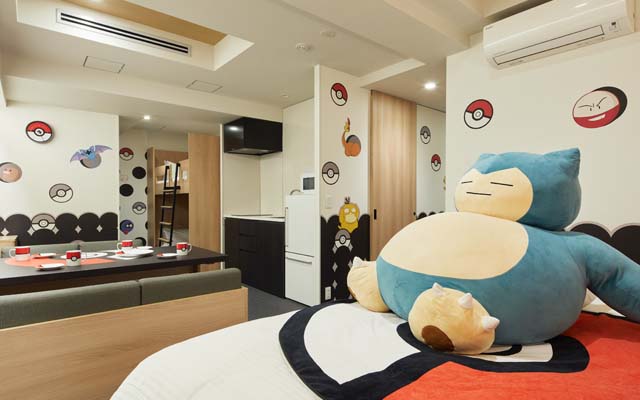
Mimaru offers themed rooms to make the stay in Japan even more memorable, like the Pokemon Room pictured
In anticipation of Expo 2025, two new properties have opened in Osaka’s Shinsaibashi with access from airports – Mimaru Osaka Shinsaibashi East and Mimaru Osaka Shinsaibashi North.
Mimaru has diverse themed rooms to make the Japan experience even more memorable, like the Pokemon Room, the Ninja Room, as well as a Premium Party Room furnished with a sushi counter and an Ukiyo-e (Japanese woodblock print).
Mimaru is a neologism from the Japanese phrase “minna de tomaru” which means “stay together”. The brand’s hotels are located in the popular urban areas of Tokyo, Osaka and Kyoto, each featuring easy accessibility, accommodation for large groups on extended stays, spacious rooms, stocked kitchens, living/dining area, and laundromats.
In addition, Mimaru staff members are able to communicate smoothly in Japanese and English, and some can even speak Chinese, Spanish, and Korean.
Rounding up the Travel Spark by TTG’s 2022 video series is an episode centred on the Philippines’ festivals and tourism developments.
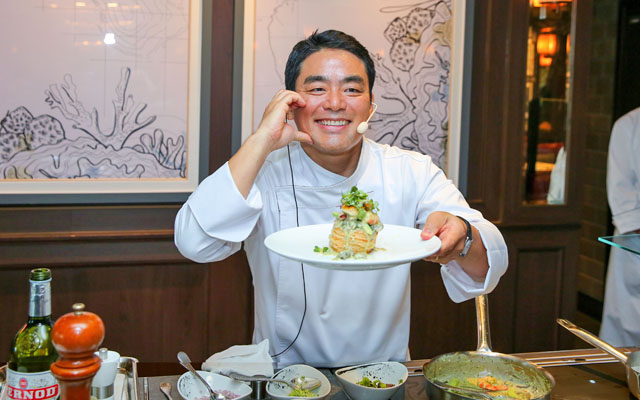
Arnold T Gonzales, acting head of the MICE department, Tourism Promotions Board Philippines, fronts the episode. Not only does he detail the Philippines’ rich cultural tapestry and unique festivals that provide memorable discoveries for travellers, he also sheds light on the various new developments for tourism and business events taking shape across the Philippines, and introduces the support system in place for investors keen to play a part in the country’s tourism progress.
Travel Spark by TTG is a programme that aims to spark off travel and events ideas. Past episodes can be found on the TTG Asia Media YouTube channel.
With cruise calls at Surabaya and Semarang rejected while Jakarta and Bali were accepted, Indonesian cruise-related players expressed concern with the inconsistency of the application of port policies by the Indonesian port authorities.
The issue was brought up during the Indonesia Inbound Tour Operator Association (IINTOA) meeting with the cruise-related stakeholders in Jakarta recently.
Jongki: cruise operators would lose confidence in Indonesia and create a loss for the overall cruise industry in the country
On November 17, the Viking Orion made a call on Jakarta with three suspected and quarantined passengers on board. Next, the ship tried to enter Semarang on November 18, but local port authority declined its entry and so did Surabaya’s port authority.
The ship then sailed directly to Bali where she spent three nights on the island instead of its original one night.
Similarly, the MS Regatta – originally scheduled for Semarang and Bali – was rejected because of a couple of quarantined passengers.
Jongki Adiyasa, general secretary of IINTOA, said: “We want certainty. With this cancellation, land operators in the affected cities who have prepared bus rentals, paid restaurants for deposits and (other things in the excursion itineraries) lost the business (because) the suppliers (didn’t) want to return the deposits.”
Jongki was also concerned that with this experience, cruise operators would lose confidence in Indonesia and create a loss for the overall cruise industry in the country.
Pitria Kartikasari, branch manager, Tanjung Wangi Subholding of Pelindo Multi Terminal port operator said: “We received information that (apart from) the Viking Orion and MS Regatta, the National Geographic was also declined entry in Surabaya.”
Pitria explained that for Pelindo, the loss was the revenue from services and the potential non-tax revenue that deposits into the national income, of which the value varies from port to port. For example, in Semarang, it was around 500 million rupiah (US$32,000), not to mention the potential loss from the shore excursions.
Such an issue should not have happened as the Indonesian government already has a regulation in place, whereby all crew and passengers on ships departing from overseas ports have been vaccinated thrice and are in good health. In the event they are tested positive for Covid, the destination port can conduct a health screening, quarantining those unwell and allowing only the healthy passengers to leave the ship.
Related government agencies had agreed in a meeting that the port authorities should use the Covid-19 Task Force Circular No. 25 of 2022 on Healths Protocols for International Travels as the first reference to avoid inconsistent policies between ports in the country.
Itok Parikesit, coordinator of product and promotion of nature tourism of Indonesia at the Ministry of Tourism and Creative Economy, shared that it was also agreed that “the first port of entry (becomes) the reference for the next”, meaning that if the first port allows the ship to dock even with a Covid case, “the subsequent ports should also approve”.
Passengers in close contact with those quarantined are also advised to take the antigen test and receive clearance from the cruise doctor before leaving the ship for excursions.
Trip.com Group’s Chinese language platform Ctrip has launched its 2023 Travel Revival A Plan – its four-pronged strategy aims to capture the pent-up travel demand in the Chinese travel market by reuniting global destinations with Chinese travellers.
In 2020, Trip.com Group launched its pilot Travel Revival V Plan, investing 1 billion yuan (US$143.2 million) in a recovery fund to help the industry battle pandemic pressures.
Trip.com Group’s travel revival plan aims to capture the pent-up travel demand in the Chinese travel market
On the new iteration of the initiative, Bo Sun, executive vice president and chief marketing officer of Trip.com Group, commented: “Our focus on revival is to assist the industry to meet short-term difficulties, while strengthened revitalisation efforts will look to reshape the post-pandemic industry by forging new opportunities for the industry and destinations.
“For Chinese tourists, there has been a huge build-up of anticipation for their first outbound journey. For this reason, our Ctrip platform has been collaborating with destinations in preparation.”
In July 2022, Ctrip produced the travel documentary Hit the Road that combined destination marketing and the platform’s unique new “Travel + Culture” content marketing model, with the show garnering over 120 million total views. This model will be extended to tourist destinations around the world in the future.
On the group’s expanded marketing offering, Sun said: “We have built out top destination lists, delivered hundreds of super destination promotions, destination-specific live streaming events, and facilitated the distribution of 1 billion yuan in travel consumption vouchers across 20 countries and regions to boost campaign destination orders. In 2023, we will continue to leverage the cultural travel economy to drive business.”
Ctrip Community and Star Hub channels enable destinations to engage with hundreds of millions of users every week, allowing partners to leverage this traffic to offer regular content and products through Ctrip Live, with over 200 million users on the platform. The product system will be updated through dynamic data to meet tourists’ needs.
In addition, Trip.com Group is building a global tourism data and resource sharing platform, linking its brands, including Ctrip, in order to help global destinations to better welcome Chinese tourists again.
This means airline ticketing and hotel resources to travel agencies around the world will open up, facilitating travel service providers to package and sell their products online, and help destinations to access the first cohorts of outbound Chinese tourists.
Trip.com Group also released its first-ever Sustainable Travel Consumer Report in 2022. With sustainable travel now a global trend, they launched its Green Tourism Goals in July, with more than 10,000 low-carbon travel products.
“We have a duty to develop sustainable travel for the future of the entire industry and to fulfil the tourism industry’s responsibility to the world,” said Sun.
India’s new tourism policy that has been in a limbo for a long period is expected to be introduced in the next two months, and will roll out after the Union Cabinet’s approval, shared Rakesh Kumar Verma, additional secretary (tourism), Ministry of Tourism, Government of India.
The announcement was made during an address to delegates at the 37th annual convention of the Indian Association of Tour Operators (IATO) that took place in Lucknow, Uttar Pradesh last week.
Verma: we have our plans ready for the next five years
Once introduced, the new tourism policy will pave the way to reinstate India’s promotional activities which have been put on hold since the onset of the pandemic.
Verma shared: “We had an overseas promotional scheme under which we used to undergo promotional campaigns in all overseas markets. Prior to the pandemic, we were on track spending 3 billion rupees (US$36 million) every year on our marketing and promotional campaigns.
“After the onset of the pandemic, the funds were not released. However, now with the new tourism policy, we have our plans ready for the next five years which will see (the) setting up of a national tourism board and aggressive promotion of our destinations in international markets.”
Tour operators have been ruing that unlike other international tourism government bodies, India has not undergone marketing campaigns in overseas markets after the much-improved pandemic situation.
“We need an immediate marketing splash from the Ministry of Tourism for the period 2023-2024 followed by long-term plans. The efforts have to start now if we want the inbound tourism sector to get going,” opined Rajnish Kaistha, director of Paradise Holidays.
Apart from dedicated funding on tourism sub sectors like adventure, wellness and MICE, the new tourism policy will also focus on digital and social media marketing – the ministry has recently appointed McCann as its agency for branding and social media activities.
In addition, the ministry has decided to scrap its 20 overseas tourism offices and will instead appoint tourism representative companies in these markets.
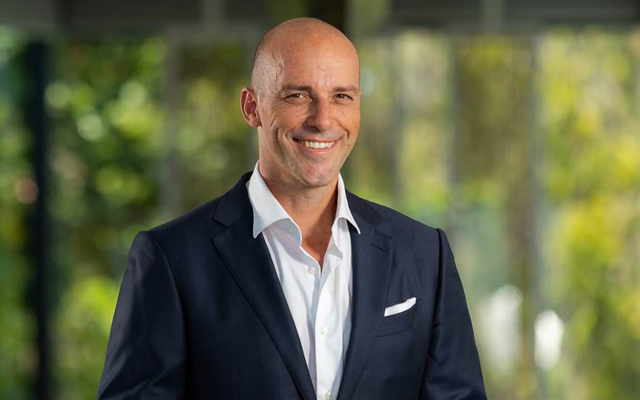
Ernesto Osuna Lopez is the general manager for the first Gran Melia resort in South-east Asia in 2023 – he will oversee both the flagship Gran Meliá Nha Trang and Meliá Nha Trang, a sister property that will open by 2025.
Drawing on two decades of experience in hotel management, Lopez joined Meliá Hotels International in 2011 to oversee Melia Buenavista in Cuba as general manager. He also led the grand opening of Meliá Koh Samui in 2020.
Lopez was previously based in Mexico serving in executive roles at The Westin Resort & Spa and Excellence Playa Mujeres, both in Cancun.
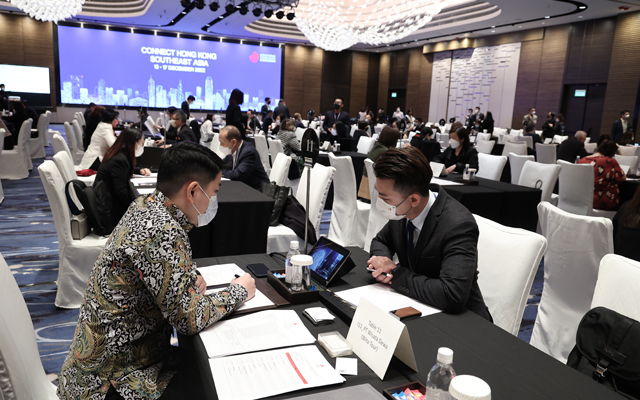
With travel restrictions eased, Hong Kong Tourism Board (HKTB) initiated a mega fam trip that brought 60 travel trade representatives from Thailand, Malaysia, Indonesia, the Philippines and Singapore to shore, showcasing the destination’s latest tourism draws and winter festivities.
The event, which ran from December 13 to 17, set a milestone in Hong Kong’s return to tourism normality since the start of the pandemic.
Travel trade representatives from South-east Asia met with Hong Kong tourism specialists to work on business opportunities
According to a HKTB spokesperson, it is also the first fam trip to Hong Kong for its travel trade partners.
“The fam trip will inspire these South-east Asian trade representatives to introduce brand new tourism products, share Hong Kong’s tourism appeal to visitors in their respective market, and bring them back to Hong Kong as soon as possible,” said the spokesperson.
Participants visited new attractions such as Hong Kong Palace Museum in West Kowloon Cultural District, experienced Hong Kong’s authentic local culture through Hong Kong Neighbourhood – West Kowloon, indulged in new rides and performances at Hong Kong Disneyland (HKDL), Ocean Park Hong Kong and Water World Ocean Park Hong Kong, and more.
Another aspect of the fam trip was a full-day meeting where more than 120 local travel trade representatives met with the South-east Asian delegation to discuss business opportunities.
Commenting on the success of the fam trip, Eva Lau, director, sales, Hong Kong and international with HKDL, told TTG Asia: “We believe seeing is believing. We also see this fam trip as a great opportunity to reconnect with the agents, to reignite the magic with them, and make HKDL a top-of-mind destination again.”
Lau added that there is potential to create more travel promotions to benefit travel agent partners and their guests.
According to HKTB, South-east Asia is a crucial source market for Hong Kong. Recent arrival data showed that regional travellers were among the first to return to Hong Kong.
HKTB executive director Dane Cheng said in a statement that a global promotional campaign is in the pipeline to “drive the full revival of Hong Kong’s tourism together” with various sectors across the city.
HKDL’s Lau revealed that another fam trip kicked off yesterday, on December 19, for the Japanese Tour Operators Association. HKDL is also preparing for trade fairs in the Philippines and Thailand early next year.
“We have also resumed our presence in key markets by making physical sales visits to our trade partners in the Philippines, Thailand, Singapore, and soon Malaysia and Indonesia. So far, we are the first attraction in Hong Kong that has done so. More visits will be scheduled in the coming months,” Lau said.
On a broader scale, Hong Kong’s reopening to travellers is expected to catalyse Asia-wide travel recovery, opined Mayur Patel, head of Asia, OAG Aviation.
“Hong Kong enjoys proximity to some of the fastest growing markets in the region. Cathay Pacific is adding some 1.16 million seats across its network this month, and it expects the adjustments will help boost travel sentiments. That is about 30 per cent compared with previous month’s (seat numbers), so you can see that’s quite an aggressive move forward,” he added. – Additional reporting by Prudence Lui


 He was most recently director of IHG’s centre of excellence, new hotels, AMEA.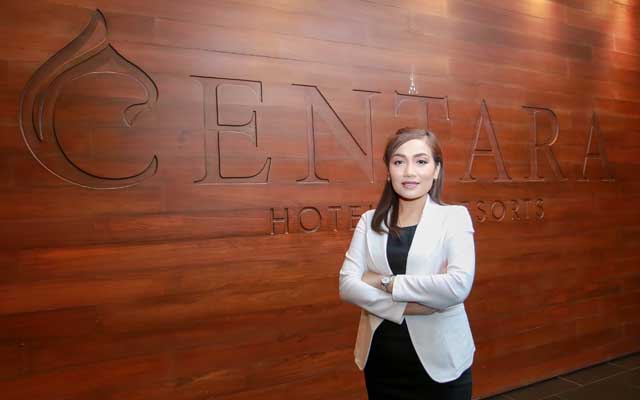
 Bringing with her over 20 years of experience, she was previously general manager of COSI Krabi Ao Nang Beach.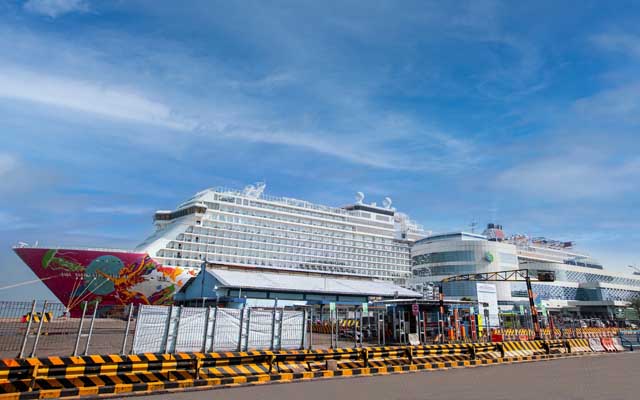




 Lopez was previously based in Mexico serving in executive roles at The Westin Resort & Spa and Excellence Playa Mujeres, both in Cancun.