Greg Liddell has been named general manager of Mandarin Oriental, Hong Kong and area vice president, operations.
He will oversee the operations of Mandarin Oriental, Macau and Mandarin Oriental, Tokyo in his new position.
A seasoned hotelier with over 25 years of experience in the luxury hospitality industry, Liddell has held various senior management positions around Asia. He was most recently general manager and area vice president operations of Mandarin Oriental Ritz, Madrid.
Martin Wuethrich has been appointed as the new general manager of Hua Hin Marriott Resort & Spa.
Bringing with him 30 years of hospitality experience and expertise, the Swiss national was most recently the general manager at Sheraton Imperial Kuala Lumpur.
Luxury gastronomy tourism in Japan is expanding, with regions and operators launching new packages to cater for an expected uptick in affluent inbound travellers.
The Japanese government aims to increase annual spending by international tourists to five trillion yen (US$35.3 billion) as soon as possible, up from 4.8 trillion yen in 2019, by focusing on visitors who spend at least one million yen during a visit to Japan. This market equated to one per cent of all arrivals but 10 per cent of total inbound tourism spending in 2019, according to the Japan National Tourism Organization.
Japan hopes to increase annual spending by international tourists through travel packages offering unparalleled experiences, such as gastronomy
This fiscal year (until March 2024), the Japan Tourism Agency is subsidising 139 travel packages that offer unparalleled experiences, including in gastronomy, and targeting high-net-worth individuals. In Nara Prefecture, participants can dine on a meal typical of the court cuisine of the Asuka Period (592–710), after visiting historical sites dating from this period.
In the private sector, Japanticket is teaming up with Honda Motor to offer local, seasonal food and drink experiences in Toyama Prefecture for participants traveling from Tokyo’s Haneda Airport by private jet and helicopter.
Jacada Travel, based in the UK, offers a seven-day-six-night luxury gourmet tour of Tokyo and Kyoto for US$8,135 per person, promising exclusive cooking classes, market and street food tours, a sake brewery experience, and a traditional tea ceremony as well as luxury accommodation throughout and full support from a travel concierge.
Tokyo-based tour company Michi Travel Japan’s private eight-hour tour of the capital allows participants to sample everything from sashimi at Tsukiji, one of the world’s largest seafood markets, to traditional confections for 78,000 yen for two people (meals not included).
According to a recent study by Spin Genie, Japan has the third-highest number of Michelin-starred restaurants in the world and the highest-number in Asia at 344 – this gives tour operators a wealth of high-end restaurants to choose from.
Artyzen Hospitality Group (AHG) is gearing up to launch two flagship luxury lifestyle hotels in Shanghai and Singapore in October this year.
Artyzen Singapore – the first in the city-state – and Artyzen NEW BUND 31 Shanghai are the latest additions to AHG’s existing portfolio of 13 projects in operation, including its serviced apartments and residences.
Artyzen NEW BUND 31 Shanghai will offer 202 keys when it opens in October
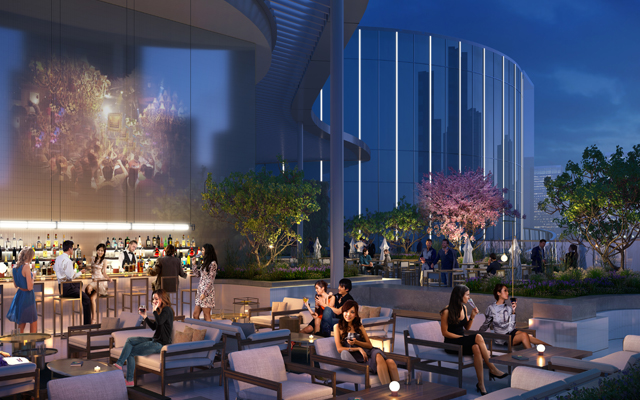
Inspired by Singapore’s culture, colours and flavours, Artyzen Singapore in the Orchard district will offer 142 rooms and suites, complete with balconies, ceiling fans, and baths. Its roof garden doubles up as a social destination where guests can dip in the 25-metre cantilevered infinity pool and enjoy signature drinks in the sunken lounge.
Meanwhile, Artyzen NEW BUND 31 Shanghai, adjacent to the performing art centre of NEW BUND 31, will offer 202 keys. One of its unique selling points will be Shanghai Modern on the fifth floor, which will offer a creative interpretation of Chinese cuisine and Asian flavoured tapas.
Earlier in the year in China, two new Artyzen Habitat – an AHG brand – hotels also opened in Suzhou and Shanghai in March 2023 and May 2023 respectively. Another two properties are scheduled to open in Chongqing and Zhuhai in 4Q2023 and 1Q2024 respectively.
According to AHG’s senior vice president, Peter Wynne, what sets the group apart is its ability to serve authentic experiences and understand guests’ needs.
He told TTG Asia: “I am very much in favour of the smaller, individual hotel brands with personality, instead of vanilla brands that keep repeating the same things. They got all of your data and history, but you still don’t get an authentic experience.”
These differentiating factors allow the group’s portfolio to be well-positioned to cater to current hospitality trends of health and wellness, including eating well and eating local.
Whether it is arranging for a t’ai chi master for a workout session or providing culinary fare that reflects local flavours for hotel guests during their stay, Artyzen’s guest experiences aim to keep cultural immersion and exploration at its core.
Wynne further opined that the group’s strength lies in its ability to be nimble and provide customisation due to its smaller scale.
“We are a small player, not one of the big guys that is overrun with corporate policies and standards. (For us), it is more about that individual guest experience and attention to details… the experience you get is highly personalised.”
The 10-year-old company plans to continue its expansion strategy with at least five more hotels over the next 10 years.
Wynne reckoned: “I would really like to see an Artyzen hotel in a key European city, be it in London or Lisbon, as it would fit very well in such cities that have a strong culture, community and history.”
Paula Vatunicoko has been promoted to resort manager at Outrigger Resorts & Hotels’ Castaway Island, Fiji.
With experience in administration, concierge and front office operations, housekeeping, events and weddings, Vatunicoko returns to Castaway Island, Fiji Resort from his 15-year stint with Lalucala Island Resort.
Rosewood Hotel Group has unveiled Rosewood Impacts, a group-wide roadmap for delivering positive impact on all its communities and the planet.
The roadmap features tangible goals in the fields of sustainability, employment, partnerships and more, encompassing consequential policies and programming under two distinct pillars: Rosewood Empowers and Rosewood Sustains.
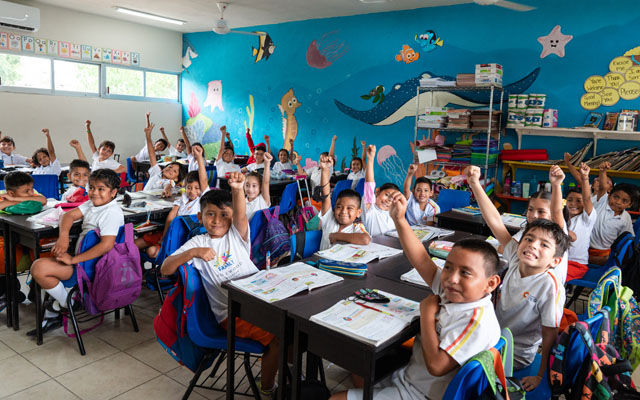
Rosewood opened Centro Educativo K’iin Beh, a non-profit school in Mexico, when employees shared that schooling for their kids was the number one need
“With Rosewood Impacts, we are not only championing the exemplary efforts being made across our organisation but setting new benchmarks for positive impact that will propel us forward to a more sustainable and equitable tomorrow,” said Sonia Cheng, CEO of Rosewood Hotel Group.
Rosewood Empowers uplifts communities through equal access to opportunity, such as Opportunity Employment, which seeks talent from underserved or underrepresented groups and working to lower barriers to employment. In addition, it strengthens local economies through local hiring, sourcing and partnerships.
Rosewood also believes in empowering people through education and upskilling. Two examples include Rosewood Mayakoba’s work with Centro Educativo K’iin Beh, a non-profit school in the Riviera Maya, Mexico, and BluHouse, Rosewood Hotel Group’s first restaurant inspired by the concept of a business-with-purpose.
Lucy Werner, chief commercial officer, Rosewood Hotel Group, shared: “(With the) schools in Mayakoba, Mexico, we (had) asked our employees what their number one need was, and the answer was schooling for their kids. At Rosewood Hong Kong, in BluHouse, we employ two refugees who would typically struggle to find employment. We look at each specific location, and explore what attributes we can elevate to power that local community and our associates.”
Additionally, a newly-launched programme, Rosewood Bridges, connects young people from disadvantaged backgrounds with internships at the group’s hotels. Committed in being an inclusive company, Rosewood sends vocational students from the Hong Kong Vocational Training Council abroad for internships, and partnering with local NGOs to give young people with autism a chance of a career at Rosewood Beijing or Guangzhou.
Meanwhile, Rosewood Sustains showcases a commitment to growing Rosewood’s lifestyle ecosystem responsibly and protecting the environment for future generations. Setting targets for environmental sustainability, these include pursuing carbon neutrality, engaging in regenerative practices, to driving the evolution of circular hospitality and eventually eliminating waste.
Rosewood Baha Mar has teamed up with The Bahamas Reef Environment Educational Foundation to preserve the marine environment off Nassau’s Cable Beach and educate the next generation of Bahamians and visitors on how to protect coral reefs, which are critical both for ecosystem preservation and for supporting local livelihoods dependent on fishing.
At Kona Village, A Rosewood Resort, opening in Hawaii this summer, the entire property is fully powered by solar energy, while an onsite cultural centre provides both visitors and locals with perspective into the rich natural and cultural significance of the surroundings.
Furthermore, multiple properties including Rosewood Hong Kong, Rosewood Bermuda and Rosewood London have partnered with EcoSpirits, a low-carbon, low-waste spirits distributor, to champion circularity in the F&B space.
When asked about future expansion plans, Werner told TTG Asia: “We currently have properties across the world, and we have another 20 more signed in the pipeline. In 2024, Rosewood Miyakojima will be opening in Okinawa, Japan. A majority of the pipeline is in China – Shenzhen, Shanghai, Chongqing, Ningbo – and we’ve also just announced our first project in Seoul.”
On how these locations are chosen, Werner explained: “We are not signing for the sake of signing; we want to be purposeful. We pick destinations that are worthy of a Rosewood and we curate that property to the specific destination. For instance, the Rosewood in Luang Prabang barely gets local tourism, but instead positions itself as a bucket list destination.”
Sabre Corporation has partnered with digital vouchering platform iCoupon to enhance passenger and crew experience during flight disruption by turning passenger and staff boarding passes into vouchers that can be immediately redeemed at airport restaurants and retailers.
Complementing Sabre’s existing technology and expertise, iCoupon’s solution will eliminate the need for a physical voucher, thus providing an environmentally friendly solution. Its technology enables airlines and ground handlers to remotely and instantly issue digital vouchers directly to a passenger’s boarding pass in the event of significant delays or disruption.
Passengers can redeem digital vouchers using their boarding pass if there are flight delays or disruption
Passengers can then redeem their voucher instantly at any iCoupon-integrated restaurant or retailer with their mobile or printed boarding pass. The solution can also be used for staff and crew meal entitlements.
Richard Bye, CEO of iCoupon, said: “This alliance will support our global expansion plans by enabling us to offer our innovative solution to more airlines across the world, while allowing airlines to improve efficiencies, reduce costs, and improve passenger satisfaction during times of disruption.”
Corrie DeCamp, senior vice president, product management, Sabre Travel Solutions, commented that when a flight disruption occurs, “passengers expect and demand instant solutions”.
The solution of providing “immediate compensation through unique barcodes on boarding passes that passengers already have streamlines processes for airlines while minimising what can be a stressful situation for both passengers and airline staff”, she added.
Traveloka has joined forces with global climate company, South Pole, to launch a pilot climate action checkout for flight bookings for users in Singapore.
From June 16, Singapore-based consumers will be able to check the amount of greenhouse gases (GHG) emitted on their flights and make donations towards a climate action project that is reducing emissions from the atmosphere. The revenue generated will be allocated to the Khon Buri wastewater treatment plant, a GHG mitigation project in Thailand.
The collaboration allows passengers to calculate the amount of greenhouse gases emitted on their flights and make donations towards a climate action project
This climate action project is a closed loop system that captures the methane emissions from a starch factory in Khon Buri, and uses the otherwise harmful gas to generate heat and electricity for the facility – the endeavour will reduce both GHG emissions into the atmosphere and fossil fuel consumption.
Traveloka’s new offering follows the launch of another recent platform feature, which allows users to easily identify and book hotels in Indonesia with a credible sustainability certification accredited by the Global Sustainable Tourism Council.
Traveloka’s president, Caesar Indra, commented: “South-east Asia must (work on making) travel more sustainable, and ultimately embrace sustainability in everything we do. Our new climate action checkout for Singapore travellers is an excellent starting point for us to provide more comprehensive climate offerings.”
“Research tells us that it’s not just companies who are looking for an opportunity to take responsibility for their impact – customers are too. South Pole’s solutions provide that opportunity (by) making meaningful climate action possible for every one of us, right now,” said Marwan Mounzer, global associate director, digital solutions, South Pole.
Norwegian Cruise Line (NCL) has unveiled six new immersive shore excursion categories to help guests uncover more of each destination they visit, including Europe, Asia, South America, Australia, Africa and the Middle East.
The new categories include Beyond Blueprints, Gourmet Tours, Go Local, Let’s Take a Selfie, Small Group Tours, and Design Your Day.
Let’s Take a Selfie excursions lets travellers take destination shots in locations such as Santorini, pictured
Beyond Blueprints is a bespoke selection of 15 tours that uncover the design secrets and stories of some of Europe’s most iconic architectural landmarks, including those in Barcelona, Lisbon, Belfast, Amsterdam, Copenhagen, Oslo and Helsinki.
Designed for the foodie-driven traveller, Gourmet Tours takes guests behind the scenes to uncover the secrets behind the local cuisine of some of Europe’s most iconic culinary destinations.
Go Local lets guests uncover life’s everyday rhythms and customs in destinations as diverse as Europe, South America and South Africa with tours designed to offer authentic cultural experiences that connect guests to locals in a meaningful and memorable way.
Let’s Take a Selfie excursions deliver the ultimate destination photos in worldwide locations, with a knowledgeable guide sharing the perfect angles and most picturesque spots to capture unforgettable moments in Santorini, Virgin Islands, and Cartagena De Indias, Colombia.
Small Group Tours takes in no more than 16 guests per group, providing an intimate experience in destinations like Italy, Greece and Spain.
Those who prefer a personalised touch can choose bespoke experiences with Design Your Day, from private wine tastings to a five-course dining experience at a Michelin-starred restaurant. Contact NCL to plan the ideal shore excursion team.
Marriott International is anticipating leisure domestic travel to remain popular over the next six to 12 months as domestic travellers continue seeking new experiences.
The company’s president for Greater China, Yibing Mao, told TTG Asia that its RevPAR in Greater China has recovered 95 per cent of pre‐pandemic levels, with mainland China fully recovered in 1Q2023.
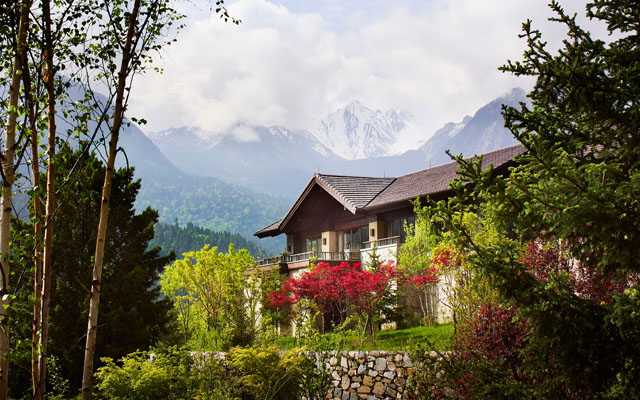
Ritz-Carlton Reserve will debut in China with Rissai Valley, a Ritz-Carlton Reserve in Jiuzhaigou, pictured
She said: “China’s travel trends have shifted from being destination-focused to being more experience-oriented and interest-driven. Guests are seeking out more personalised experiences and wanting to connect with the community while travelling.”
She noted that there is growing interest in purposeful travel among the new generation of travellers that “appreciate brands that support cultural understanding and sustainability”, as well as a strong growth in demand for outdoor activities, such as camping, hiking, and water sports.
To meet these demands, the Good Travel with Marriott Bonvoy programme (available at 38 hotels in Greater China) helps keep these purpose-driven travellers engaged with curated experiences.
She added: “We are also seeing a boom in cultural tourism, where travellers look for experiences beyond typical sightseeing and landmark tours. Our 24 brands in Greater China provide personalised experiences that bring together local tourism resources, food and culture.”
These include learning the art of making ancient Chinese incense at Wutai Mountain Marriott Hotel, immersing in the history of Chinese art at The Westin Xi’an’s onsite Xi’an Qujiang Museum of Fine Arts, among others.
Mao shared that their Brand + Destination development strategy taps into evolving travel trends across different brand segments. Building off this strategy, Marriott works with owners and franchisees to drive demand and provide more diversity in its travel offerings and experiences.
With rising demand for cultural tourism in historic cities, Marriott expects to strengthen its presence in leisure destinations with first-time entries and brand debuts in new markets across its labels in the next few years.
The company has planned openings of luxury properties in the UNESCO World Heritage Site of Jiuzhaigou, Macau, and the Xi’an Economic and Technological Development Zone.
Its multi-branded complex strategy also meets demand for more flexible accommodation such as the recent openings of Guangzhou Marriott Hotel Baiyun, Four Points by Sheraton Guangzhou, Baiyun, and Element Guangzhou Baiyun.
Marriott is also tapping into unique hotel stay experiences for millennial and Gen Z travellers like the new Moxy and AC Hotels in Ningbo, Qiandao Lake, Hangzhou and Wuhan.
In 2023, Westin Hotels and Resorts is expected to debut in Yantai, the core city of the Bohai Economic Rim. Also opening this year are Foshan Marriott Hotel, Guangzhou Marriott Hotel Baiyun and Zhuhai Marriott Hotel Jinwan – complementing the company’s existing presence in The Greater Bay Area.
Other key openings include W Macau – Studio City, which will offer its signature onsite recording studio, and the debut of Ritz-Carlton Reserve in China with Rissai Valley, a Ritz-Carlton Reserve in Jiuzhaigou.


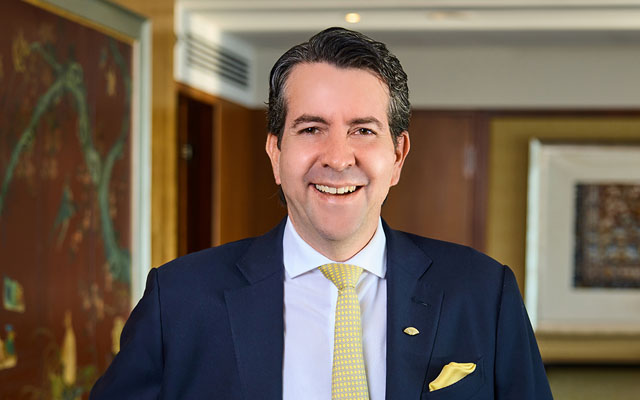
 A seasoned hotelier with over 25 years of experience in the luxury hospitality industry, Liddell has held various senior management positions around Asia. He was most recently general manager and area vice president operations of Mandarin Oriental Ritz, Madrid.
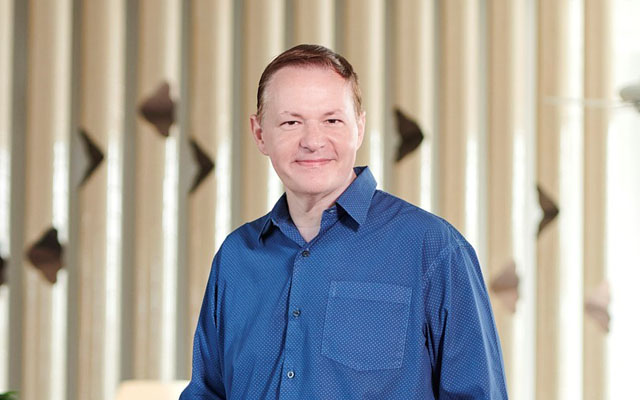 Bringing with him 30 years of hospitality experience and expertise, the Swiss national was most recently the general manager at Sheraton Imperial Kuala Lumpur.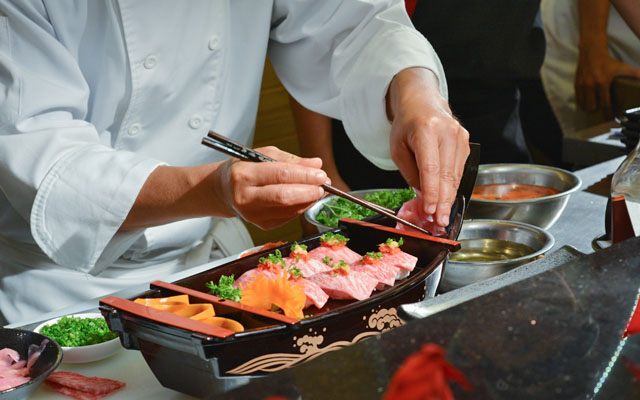

 With experience in administration, concierge and front office operations, housekeeping, events and weddings, Vatunicoko returns to Castaway Island, Fiji Resort from his 15-year stint with Lalucala Island Resort.