TTG Asia
Asia/Singapore Friday, 10th April 2026
Page 1668

Making it home sweet home

0

As vacation rentals make inroads into Asia, agents believe this sharing economy space can be good for tourism – but proper regulations are a must. By Raini Hamdi, Barathi Narayan, S Puvaneswary and Rosa Ocampo

Home-sharing platforms such as Airbnb, HomeAway and Roomorama do not pose a threat to Asian travel agencies as much as OTAs do, but there is an underlying uneasiness about them among some players who worry they may spoil a destination’s reputation if not properly controlled.

Agents in Singapore such as Saravana Chandrasekar, director of sales at Josco Gsa Travel, are seeing an increase in the number of passengers using these short-term home rentals and have lost some revenue from hotel bookings. The alternative accommodation also poses operational headaches for agents, such as having to transfer clients to various residential areas.

Over in Malaysia, Adam Kamal, CEO, Olympik Holidays, sees a similar trend, mainly in Kuala Lumpur’s Klang Valley and in cities such as Malacca and Johor.

Said Adam: “We notice FIT clients want to be dropped off at private homes and apartments rather than hotels. “In Malacca, renting out a shophouse with three or four rooms has become a full-time business for some. The impact will be greater in the future if the business is not regulated, which will also encourage new offerings (and players) in Malaysia.”

He pondered: “Do these types of accommodation have the safety measures and equipment in place in the event of a fire? Their promotions may also be misleading. One might say it is five minutes away to a shopping centre, when actually the shopping centre is a small one frequented by locals. Or it could say, five minutes away from the Light Rail Transit, which could be at a station far away from the city. It will cause harm to the destination if a tourist has a bad experience caused by misleading information and shares it with peers on social media.”

Agents are not opposed to home-sharing platforms but believe clear regulations must be in place. David Kho, CEO of Anaya Tour and Travel in Singapore, said these platforms in fact will help the medical tourism side of his business.

“Normally medical tourists seeking treatments in Singapore will stay more than five days and prefer places that allow them to cook. Actually, it will bring more business to us if the Singapore government really reduces the minimum rental time frame (currently six months). Our medical customers will then be able to rent the room legally,” he said.

Philippine agencies such as Marsman Drysdale Travel do include homes on a selective basis, if only because of a lack of accommodations in remote areas.

Said sales manager inbound Michael Kipping: “The DoT (Department of Tourism) allows us to use small accommodations in far-flung areas where travellers don’t really have an option. We try to market them (to partners) at trade shows.”

But a source believed the Philippines lacks quality homes in those areas. “While metro Manila may have them, with 7,1000 islands in the Philippines, the farther you go, the more ‘rustic’ the accommodations,” said the source.

“We would want to work closely with the DoT to ensure the quality of sharing economy accommodations. They should be checked. At the end of the day, it is the reputation of the country that is at stake,” he added.

Raaj Navaratnaa, general manager, New Asia Holiday Tours & Travel Malaysia, also sees the likes of Airbnb and HomeAway as encouraging travel by providing more options for people to stay and by helping to open a new segment of younger travellers. The savings made on accommodation might go towards longer stays and increased spending on food, shopping and tours, he said.

However, the agency head too wants to see proper regulations by the governments of all countries where sharing economy operates, in order to protect consumers and the neighbourhoods in which it is present. “Neighbours might not like seeing foreigners walking in and out all the time,” said Navaratnaa.

Law can’t keep up
Worldwide, the pace of acceptance of sharing economy by travellers has been faster than governments’ ability to control them. Creating a level playing field for all parties and protecting the safety of consumers and neighbourhoods is not easy.

In Singapore, a dense city where the majority of people live in public housing flats, condos and apartments, security and disamenity – noisy tourists, strangers coming and going, loss of privacy, etc – is a big issue.

Last year, the Urban Redevelopment Authority (URA) received 608 complaints, 61 per cent more than the 377 complaints in 2015.

The Singapore parliament recently passed a legislation enforcing an existing guideline by the URA that prohibits short-term rentals under six months. Home-owners who violate the rules face a fine of up to S$200,000 (US$141,400) or jail time of up to a year.

Singapore’s minister for national development, Lawrence Wong, said in parliament: “Private residential properties should not be used for other purposes without planning approval, as there is a need to safeguard the living environment of residents in the neighbourhood.”

But the government is also looking into creating a new category of private residences that could host short-term rentals.

Wong said: “We do see a role for home-sharing platforms to continue operating in Singapore, so long as they are properly regulated and there is a level playing field between them and similar entities that provide short-term rentals like hotels and serviced apartments.”

It isn’t clear yet when the new law will take effect or whether it will be implemented together with changes the government is considering.

After two years of public consultations, there will only be more waiting for home-sharing platforms, homeowners, hotels, serviced apartments and the industry at large on clear-cut rules. The government plans to engage everyone further in the second quarter on questions such as how long can homes be rented out in a year, and whether the new category applies to homes in specific areas.

Airbnb could not hide its disappointment that there isn’t clarity even after consultations have been going on for two years.

Airbnb’s Mike Orgill, director of public policy for Asia-Pacific, said: “While the government has come up with a new bill that codifies existing guidelines, they also say that there may be some way for hosts to engage in home-sharing through an application for planning permission. But the bill lacks essential details, and it is this lack of clarity that needs addressing. While the penalties have been made clear, a way forward for our host community has not.

“We are not opposed to regulation – we absolutely support any clear regulation that makes it easy for Singaporeans to share their extra space in a fair and responsible way. But we believe that any steps required of hosts should be simple and straightforward, as we’ve seen implemented in places such as London and Tasmania.”

Both Airbnb and HomeAway said they are committed to work with the Singapore government to iron out specific issues, adding they have collaborated with governments worldwide to respond to each city’s unique set of needs.


This article was first published in TTG Asia April 2017 issue. To read more, please view our digital edition or click here to subscribe.
Preserving for posterity

0

Round up of the 37 sites in South-east Asia that sport the UNESCO World Heritage label. Plus, agents weigh in on the state of tourism at these sites and other locations they think should make the cut

CAMBODIA

1. Angkor – Constructed by Khmer King Suryavarman II between 1113 and 1150, the long-standing symbol of Cambodia has more than 3,000 apsaras (celestial nymphs) carved into its stone walls.

2. Temple of Preah Vihear – Dating back to the 9th century, the Hindu temple – constructed along an 800m-long north-south axis – stands atop a 525m-high cliff in the Dangrek Mountains near the Thai-Cambodian border.

INDONESIA

3. Komodo National Park – Located in Nusa Tenggara, the park covers more than 1,800km2 and comprises three major islands – Komodo, Rinca and Padar. It is the only place in the world where Komodo dragons are found.

4. Borobudur Temple Compounds – Built in the 8th and 9th centuries during the Syailendra Dynasty, the 29m-high step pyramid in Central Java has more than 500 Buddha statues perched all around.

5. Prambanan Temple Compounds – Dating back to the 10th century, this large Hindu complex features three temples decorated with reliefs illustrating the Ramayana epic, dedicated to Shiva, Vishnu and Brahma, and three temples to the animals which serve them.

6. Ujung Kulon National Park – This park in Java’s Banten Province is one of the natural world’s best-known examples of recent island volcanism with its ongoing geological evolution since the 1883 Krakatau eruption. It is also home to the critically-endangered Javan rhinoceros.

7. Cultural Landscape of Bali Province: the Subak System as a Manifestation of the Tri Hita Karana Philosophy – This inscription comprises five rice terraces and their water temples that cover a total of 19,500ha. The temples are the focus of a cooperative water management system of canals and weirs, known as subak, which dates back to the 9th century.

8. Lorentz National Park – This 2.4 million-ha park stretches for over 150km from Irian Jaya’s central cordillera mountains in the north to the Arafura Sea in the south, and contains a range of ecosystems from snow-capped mountain peaks to lowland wetlands.

9. Tropical Rainforest Heritage of Sumatra – Comprising Gunung Leuser National Park, Kerinci Seblat National Park and Bukit Barisan Selatan National Park, this 2.5 million-ha protected area is home to an estimated 10,000 plant spieces, 200 mammal species and 580 bird species.

10. Sangiran Early Man Site – Situated 15km north of Solo in Java, the site rose to prominence thanks to the discovery of more than 100 Homo erectus remains and associated stone artefacts. These fossils show human evolution process during the Pleistocene period.

LAOS

11. Town of Luang Prabang – Built on a peninsula formed by the Mekong and the Nam Khan Rivers, the ancient capital boasts a fusion of traditional Lao architecture and colonial structures built by the Europeans in the 19th and 20th centuries.

12. Vat Phou and Associated Ancient Settlements within the Champasak Cultural Landscape – At the base of the Phou Kao mountain in southern Laos, the Vat Phou Temple complex is more than a millennia old with well-preserved ruins of temples, shrines and waterworks dating from the 5th to 15th centuries.

MALAYSIA

13. Gunung Mulu National Park – Occupying some 53,000ha, the park is located on the island of Borneo in Sarawak. It is dominated by Gunung Mulu, a 2,377m-high sandstone pinnacle, and has caves measuring at least 295km long.

14. Kinabalu Park – The centrepiece of this 754km2 national park in Sabah is the 4,095m Mount Kinabalu. It is home to a wide range of habitats, and features more than 5,000 vascular plant species, 90 species of lowland mammals and 326 bird species.

15. Melaka and George Town, Historic Cities of the Straits of Malacca – Asia and Europe have endowed Melaka with 15th-century Malay sultanate, Portuguese and Dutch influences, while George Town represents the British era from the end of the 18th century. These influences can be seen through the respective towns’ government buildings, churches and squares.

16. Archaeological Heritage of the Lenggong Valley – Situated in the Lenggong Valley are four archaeological sites which span close to two million years. The sites suggest the presence of a fairly large, semi-sedentary population with cultural remains from the Palaeolithic, Neolithic and Metal ages.

MYANMAR

17. Pyu Ancient Cities – The site comprises the archaeological remains of palace citadels, burial grounds and Buddhist stupas belonging to the three city-states – Halin, Beikthano and Sri Ksetra – along the Irrawaddy River.

PHILIPPINES

18. Baroque Churches of the Philippines – These are four Roman Catholic churches built by the Spanish colonialists: Church of San Agustin in Manila; Church of La Nuestra Señora de la Asuncion in Santa Maria, Ilocos Sur; Church of San Agustin in Paoay, Ilocos Norte; and Church of Santo Tomas de Villanueva in Miag-ao.

19. Tubbataha Reefs Natural Park – The marine park in the centre of the Sulu Sea protects more than 130,000ha of three atolls and deep sea. The reef ecosystem supports over 350 species of coral, 500 species of fish, and is a nesting site for birds and marine turtles.

20. Rice Terraces of the Philippine Cordilleras – The five clusters of rice fields on Luzon have followed the contours of the mountains for two millennia. They all belong to the Ifugao, a minority community that has occupied these mountains for just as long.

21. Historic Town of Vigan – Established in the 16th century, Vigan is the best-preserved example of a planned Spanish colonial town in Asia. Featuring 233 historic buildings along a grid of 25 streets, the 17.3ha site is located in the province of Ilocos Sur.

22. Puerto-Princesa Subterranean River National Park – The limestone karst site covers more than 22,200ha, and boasts an 8.2km-long underground river. The full mountain-to-sea ecosystem on south-western Palawan features intact-old growth forests and distinct wildlife.

23. Mount Hamiguitan Range Wildlife Sanctuary – Straddling San Isidro Municipality, Governor Generoso Municipality and the City of Mati, all in the province of Davao Oriental, the 16,923ha sanctuary is home to 1,380 species including the critically-endangered Philippine eagle among the 341 endemic species.

SINGAPORE

24. Singapore Botanic Gardens – Established in 1859 by the Agri-Horticultural Society, this the first and only tropical botanic garden on the UNESCO list. The green site has 36,400 living plant accessions, 6,544 species and 44 heritage trees.

THAILAND

25. Historic City of Ayutthaya – Founded in 1350 by U Thong, Ayutthaya’s first king, the 289ha city flourished for four centuries before it was attacked and destroyed by the Burmese army in 1767. Temples such as the Wat Phra Si Sanphet and Wat Phra Mahathat still remain.

26. Historic Town of Sukhothai and Associated Historic Towns – Situated in the northern region of present-day Thailand, this property comprises the three physically closely related ancient towns Sukhothai, Si Satchanalai and Kamphaeng Phet.

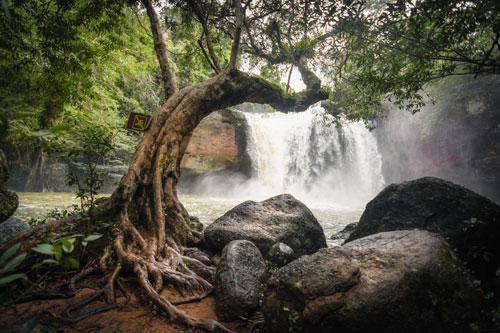
27. Thungyai-Huai Kha Khaeng Wildlife Sanctuaries – Encompassing 622,200ha in Uthai Thani, Tak and Kanchanaburi, the sanctuary comprises two river systems, the Upper Khwae Yai and Huai Khakhaeng. Species include 120 mammals, 400 birds, 96 reptiles, 43 amphibians and 113 freshwater fish.

28. Ban Chiang Archaeological Site – Dating from 1,495BC, the 67ha area in north-east Thailand contains early evidence of settled agrarian society in South-east Asia, along with evidence of wet rice agriculture and domesticated farm animals.

29. Dong Phayayen-Khao Yai Forest Complex – The 615,000ha site comprises five contiguous national parks of Khao Yai, Thap Lan, Pang Sida, Ta Phraya and the Dong Yai Wildlife Sanctuary. It contains more than 800 fauna species, 112 mammal species, 392 bird species, and 200 reptiles and amphibians.

VIETNAM

30. Complex of Hué Monuments – Established as the capital of unified Vietnam in 1802, Hue was the political, cultural and religious centre under the Nguyen dynasty until 1945, and is a remarkable example of late feudal urban planning in Asia.

31. Halong Bay – Covering an area of 43,400ha in the Gulf of Tonkin north-east of Vietnam, Halong Bay boasts more than 1,600 limestone islands and islets. Most of them are uninhabited and have towering limestone pillars, arches and caves.

32. Hoi An Ancient Town – The inscribed property in Quang Nam Province comprises a well-preserved complex of 1,107 timber frame buildings with brick or wooden walls. The town reflects a fusion of cultures and is a good example of a small-scale trading port active from the 15th to19th centuries.

33. My Son Sanctuary – Dating from the 4th to13th centuries, the site was the religious and political capital of the Champa Kingdom. Located in the Duy Xuyen District, it is made up of numerous tower temples built for Hindu divinities Krishna, Vishnu and Shiva.

34. Phong Nha-Ke Bang National Park – Located in the middle of the Annamite Mountain Range in Quang Binh Province, the 123,326ha national park features geological diversity as well as over 104km caves and underground rivers.

35. Central Sector of the Imperial Citadel of Thang Long – Hanoi – The Thang Long Imperial Citadel was built in the 11th century by the Ly Viet Dynasty and constructed on the remains of a Chinese fortress from the 7th century. It reflects a culture specific to the lower Red River Valley, at the crossroads of influences from China and the Champa Kingdom.

36. Citadel of the Ho Dynasty – Built in 1397, the site in Vinh Loc District comprises the Inner Citadel, La Thanh Outer Wall and Nam Giao Altar. It bears witness to the period in South-east Asian history when traditional kingship and Buddhist values were giving way to new trends in technology, commerce and centralised administration.

37. Trang An Landscape Complex – The property near Ninh Bình comprises limestone karst peaks permeated with valleys, paddy fields and small villages. Caves there have revealed archaeological traces of human activity over a continuous period of more than 30,000 years.


This article was first published in TTG Asia April 2017 issue. To read more, please view our digital edition or click here to subscribe.

GTA to be sold to Hotelbeds

0

Hotelbeds Group has swooped in on its rival, Kuoni GTA, for an undisclosed price.

A statement released today said the Kuoni Group has entered into a binding agreement on the sale of its Global Travel Distribution business division which consists of the main brand GTA and excluding MTS Globe to Hotelbeds Group.

Hotelbeds Group was bought over from the TUI Group last year by a consortium led by Cinven and Canada Pension Plan Investment Board. At the time, the new owners emphasised they were keen to consolidate the wholesale accommodation market, which is highly fragmented.

The shareholders of Kuoni Group will roll-over a large portion of their proceeds from GTA into the combined Hotelbeds/GTA business. In 2016, GTA’s gross operating profit was CHF 204 million (US$204.1 million) representing about 34 per cent of total gross operating profit of the Kuoni Group.

The purchase price will consist partially in shares of Hotelbeds Group and partially in cash, to be used mainly for repayment of debt and funding of transaction costs. The shareholders of Kuoni Group, EQT VII (a fund advised by EQT Partners), the Kuoni and Hugentobler Foundation and selected members of the management, will roll-over a large proportion of their equity participation in GTA and, upon completion, will hold a substantial minority stake in the combined Hotelbeds/GTA business.

The parties have agreed not to disclose further details regarding the purchase price or their contract. The acquisition is subject to approval by the relevant competition authorities.

The deal will bolster Hotelbeds. GTA sells around 40,000 room nights per day online, and these are particularly sourced from fast-growing markets in Asia, the Middle East and Africa.

Kuoni Group¹s two other remaining divisions are Global Travel Services, which handles 50,000 leisure tours per year from main source markets in Asia/Pacific, and VFS Global, the world¹s largest visa and passport processing specialist.

New hotel openings: April 15-21, 2017

0
The latest hotel openings and announcements made this week

Kerry Hotel, Hong Kong
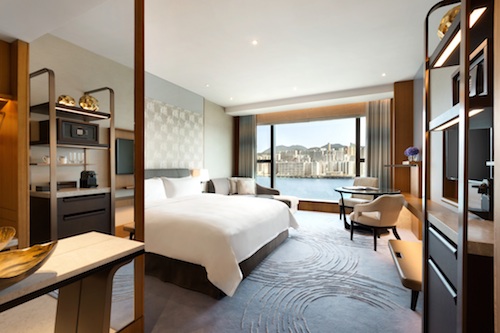
Opening on 28 April along the shoreline of Hung Hom Bay on Victoria Harbour, the new-build 16-storey hotel offers 546 rooms, ranging from Deluxe Sea View (42m2) to Presidential Suite (294m2). Facilities include a fitness centre, 25m outdoor infinity swimming pool, Jacuzzi, steam bath, sauna, spa, the 1,756m2 Grand Ballroom and 1,125m2 Hung Hom Ballroom, in addition to five F&B concepts. The hotel is a short walk from Tsim Sha Tsui East, Hung Hom Ferry Pier, Whampoa MTR Station and Hung Hom Train Station.

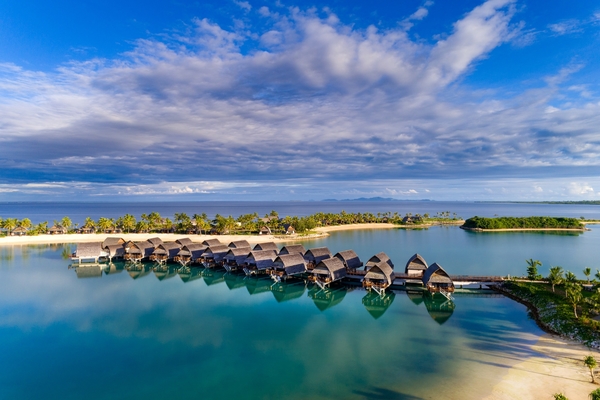
Fiji Marriott Resort Momi Bay
Marriott flagship’s debut in Fiji has 114 Bure Villas, including 22 over-water units with direct access into the waters, and 136 Deluxe Rooms. For events, the resort features a 360m2ballroom and 1,200m2 of outdoor pre-function space. Facilities include the Health Club offering activities such as kayaking, paddle boarding and tennis; kids’ club; spa; three pools and a whirlpool. F&B options on offer are the Goji Kitchen & Bar serving Fijian, Asian and international dishes; Fish Bar for seafood; Lagoon House & Bar serving Mediterranean fare; and the Fiji Baking Company cafe. Nestled on the secluded beaches of Momi Bay, the resort is a 45-minute drive from Nadi International Airport.

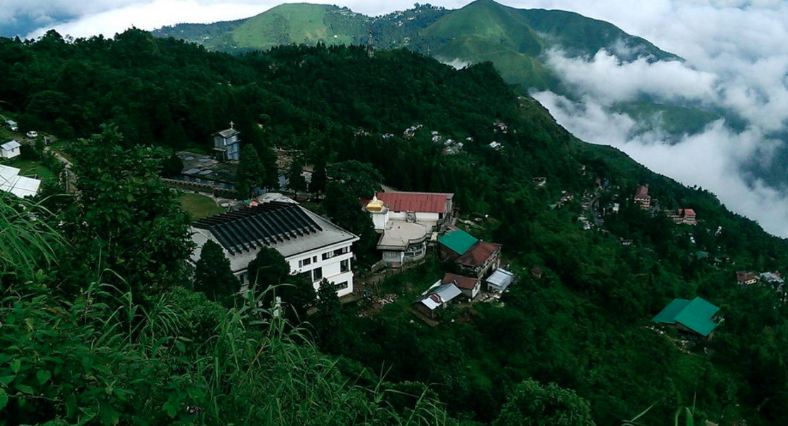
Eastin Hotel Kurseong Darjeeling
The first international-branded four-star resort hotel in Kurseong Darjeeling offers 35 rooms across categories of Deluxe, Executive and Suites, each providing views of the Himalayan mountain range. Facilities include an all-day dining restaurant, vegetarian restaurant, lounge bar, terrace cafe, banquet and meeting centre, temperature-controlled pool, wellness spa, gym, meditation and yoga. The resort also features a teahouse offering Darjeeling tea and tea mocktails and cocktails. There’s a trekking trail within the property that leads to a viewpoint overlooking the mountains and valleys. The resort hotel has easy access to attractions like Eagle Craig, Dow hill, Giddapahar View Point.

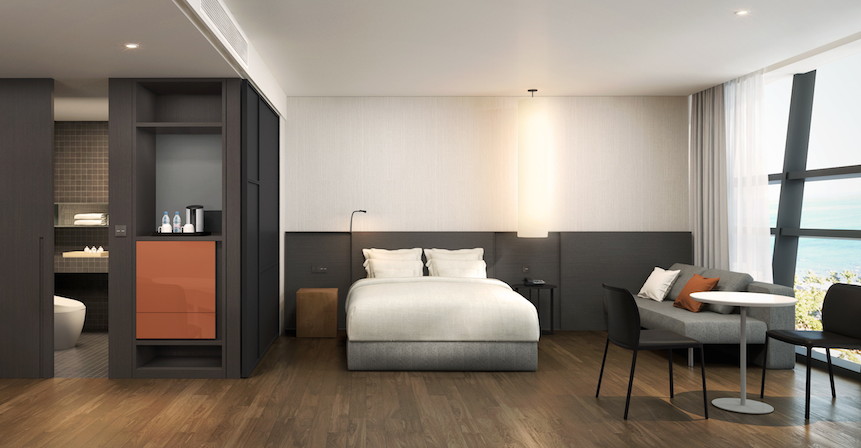
Shilla Stay Haeundae
Shilla Stay Haeundae has opened in Busan, a two-minute walk from Haeundae Beach. Featuring residential-style accommodation with a resort atmosphere, the 407-key property offers six room types, including the Ondol Suite for up to four pax that recreates a traditional underfloor heating system. Facilities include a 24-hour business centre, all-day dining Cafe, rooftop pool overlooking the beachfront and poolside bar.

New Mövenpick hotel coming to Lahore’s Johar Town

0

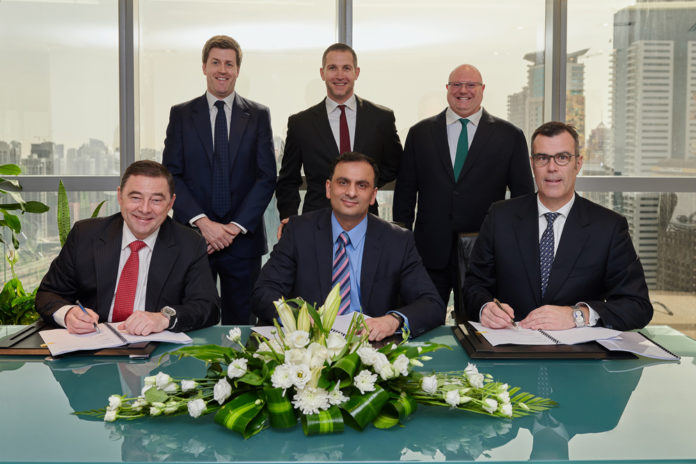
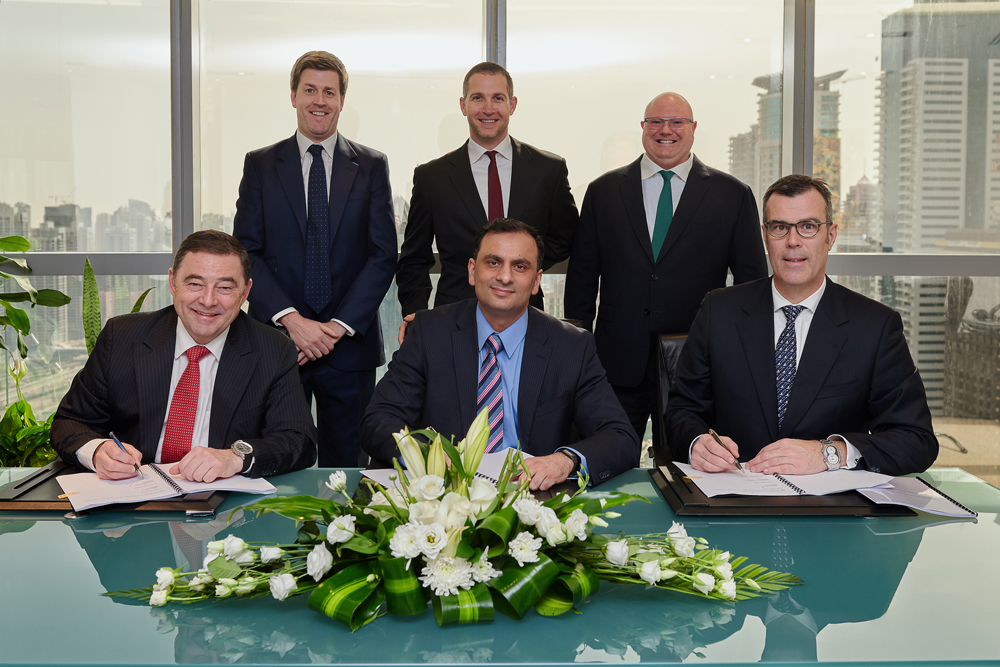
Mövenpick Hotels & Resorts has signed a deal with the Orient Group of Companies to manage the 310-key Mövenpick Hotel & Apartments Lahore, scheduled for opening in 2021 as part of the Finance and Trade Centre in Johar Town, a mixed-used development earmarked as the city’s new commercial hub.

Mövenpick Hotel & Apartments Lahore will feature 260 rooms and 50 serviced apartments; five restaurants and lounges; 1,500m2 of meeting and event space, including a large ballroom; a 700m2 spa and fitness area; and a kids’ club and business centre.


(From left front row) Mövenpick Hotels and Resorts’ Andreas Mattmuller; Orient Group of Company’s Mian Ahmad Fazal, Mövenpick Hotels and Resorts’ Olivier Chavy; (back row) Mövenpick Hotels and Resorts’ David Weir, Amir Lababedi and Andrew Langdon 

The hotel will also be close to the Lahore International Expo Centre, the Bank Square financial precinct and several corporate and government offices, as well as new and upcoming theme parks and shopping malls.

Andrew Langdon, chief development officer, Mövenpick Hotels & Resorts, said: “Pakistan is undergoing rapid development and we are actively seeking opportunities to further expand our footprint in a country that offers strong growth potential.”

In Pakistan, Mövenpick already operates the 407-room Mövenpick Hotel Karachi and is scheduled to open the 361-key Mövenpick Hotel Centaurus Islamabad in 2018.

ITB China Conference line-up unveiled

0

With the inaugural ITB China event round the corner, programme and speaker details for the key conference component have been released, covering themes of ‘destination’, ‘online travel & travel tech’ and ‘corporate travel & MICE’.

The keynote speech will be delivered on May 10 by Ctrip CEO Jane Jie Sun, who with PhocusWright founder Philip Wolf will discuss how the Chinese OTA giant will focus on globalisation as a core strategy in the next few years.

Leading industry figures such as Rungang Zhang, vice-president of the China Tourism Association and Eduardo Santander, executive director of the European Travel Commission, will then present papers on destinations.

The second day will be dedicated to online travel and travel technology, with a panel discussion looking at how travel companies can cater to the increasingly diverse and personal needs of travellers.

This will be moderated by Joseph Wang, chief commercial officer, TravelDaily and feature panellists Steven Pang, managing director of Greater China Skyscanner; Ning Ma, general manager of marketing department, Yangtze River Airlines; and Qianyuan Yin, general manager, Zhejiang New Century Manju Hotel Management.

Cindy Tan, vice president of display, Asia-Pacific, TripAdvisor will discuss opportunities in China’s inbound and outbound travel and share insights on the search trends and behaviours of global and Chinese travellers.

The third day is dedicated to corporate travel and MICE. Kejian Wu, deputy general manager CWT China, will speak on the business-travel challenges posed by China. A panel discussion on the transformation of the MICE industry will be moderated by Lenny Jia, founder and chief editor, China BT MICE.

Speakers will include Crystal Zhang, president, UCC; Kitty Huang, vice president – customer loyalty and revenue generation, Greater China, Wyndham Hotel Group; Dong Wei, COO, Shouqi Car Rental; and Lei Li, founder, Youli Hotel GSA.

ITB China will take place from May 10 to 12 at the Shanghai World Expo Exhibition and Convention Center. TTG will be the official show daily during the three-day show.

Long-delayed MAPS theme park starts sales drive ahead of opening

0

The Movie Animation Park Studios (MAPS) theme park in Perak, opening this June, is ramping up sales efforts in Singapore by offering discounts to visitors who drop by its booth during the Travel Malaysia Fair 2017, held at the Singapore Expo Convention & Exhibition Centre from today to April 23.

With Tigerair and Firefly providing direct flights from Singapore to Ipoh, Singapore is an important source market for MAPS.


MAPS rendering

MAPs will generate interest at the travel fair by offering freebies and having The Smurfs cartoon characters, Papa Smurf and Smurfette, greet visitors.

The launch of the attraction had been plagued by numerous delays. It was supposed to open in 1H2016 but was delayed to early 2017. And after months of silence surrounding the project, local publicity kicked off with a media site inspection on April 21.

In Malaysia, some agents remain uncertain about the attraction’s opening dates and saleability.

Kingston Khoo, senior product development/contracting manager at Discovery Overland Holidays, said: “We will do our own recce once it opens to see what markets and age groups it is suitable for before we start marketing the product.

“We also need more information such as will it fully open in June or will that be a partial opening.”

Siti Rafeah, assistant account manager, Asia Pacific, MICE at Asia Experience, told TTG Asia that support for the attraction will only come after more details such as opening date and contract rates are made available.

Montano cries foul in face of corruption, competence allegations

0

The Philippine Tour Operators Association (Philtoa) has called for the resignation of Tourism Promotions Board (TPB) COO Cesar Montano, who was accused by his staff of 24 alleged irregularities, all of which he denied.

“Even if only half of these allegations were true, Montano should resign as he has lost the moral ascendancy to lead TPB,” said Philtoa president Cesar Cruz, who is also backing a Senate inquiry into the issue.


Montano (left) with tourism chief Wanda Teo after being sworn in in December last year

Cruz said the issue has thrown the industry off kilter at a time when “Philippine tourism is in a very critical situation”, not only because of the travel advisories from various countries but also due to the drop in the country’s tourism competitiveness caused by safety and security issues, global financial concerns, problems in Europe and the need to focus on Visit ASEAN@50.

The 24 allegations filed by anonymous TPB employees with the Presidential Action Center against Montano range from corruption to questionable work ethics and competence.

But in a phone interview, Montano said: “My name is being tarnished and maligned unfairly as the complaint was unsigned and there was no evidence to back up their allegations.

“I’m willing to answer their allegations point for point at the right forum,” Montano said, adding that he aired his side to president Rodrigo Duterte, who earlier maintained his trust in Montano.

Montano said the complainants were threatened because he uncovered TPB projects that have no contracts, with the most expensive entailing “billions of pesos”. As these projects took place in the last two years before he assumed office, Montano said “they might be doing it also in previous years” without detailing the projects or divulging names.

Urbane Nomads creates game-based adventure travel with charity goals

0

Singapore-based luxury travel agency Urbane Nomads has rejuvenated its business approach with a new website, fresh itineraries, courtship of high-end corporate retreats and an unusual travel game that benefits humanitarian organisations supporting various causes in 18 strickened destinations.

The highlight of the next-generation Urbane Nomads, according to founder Hajar Ali, is Nomads:Subversion, a deck-building collectible card game spanning 18 countries and 450 characters.


Hajar: using gaming element to highlight ‘exciting’ and lesser-known aspects of troubled destinations 

Eighteen of the rarest cards are kept by appointed humanitarian organisations in 18 different countries hurt by political instability or unfair demonisation caused by travel bans. They are hidden in wooden boxes and their artworks anamorphic, requiring mirrored cylinders to view.

Players hoping to score these rare cards will need to make the highest bid to the holding organisation, which will then decide if the successful bidder needs to make a trip over to receive the card.

There will be nine installations of the game, with each lasting a month and focusing on two countries. New installations will be released every three months. The first installation, available soon, features Syria and Circassia, Republic of Adygea (an autonomous republic within Russia), the latter known for having the first genocide in modern history.

However, not all featured destinations are safe for travellers. “They have been selected for a history of humanitarian crisis in modern times,” said Hajar, while noting that those that can be explored may “yield surprising under-the-radar touristic finds”.

Examples include undiscovered pyramids in Sudan, which Hajar opined “are as attractive as those in Egypt”, and “unexpected accommodation options” such as ski hotels and a “sci-fi looking pod seemingly in the middle of nowhere” in the Republic of Adygea.

When asked if the reputation of featured destinations – even those deemed safe to visit – would discourage travellers from taking up the game, Hajar said: “You cannot change the mindset of people but we hope that by highlighting the exciting but unknown historical aspects of these destinations, we could encourage travellers to visit them.”

Nomads:Subversion targets fans of card games as well as adventurous travellers who seek new concepts.

As for Urbane Nomad’s new itineraries, Hajar said travellers could look forward to experiences in new or relatively unknown parts of popular destinations, such as an ultra-luxurious overnight train in Japan, an udiscovered resort in Indian backwaters and an exclusive ski resort in Austria that can only be accessed on snow mobiles.

Since the start of this year, the agency has also diversified its focus to the corporate event market, targeting C-level retreats hosted by MNCs.

[SPONSORED POST] Discover 150 years of Canadian history on an Avis road trip

0

Canada has many fantastic places to explore – the amazing Niagara Falls; the spectacular Vancouver scenery and historical; the urban yet lively Montreal – to name just a few – and hiring a car is the best option if you want to fully enjoy the country. And with Avis locations onsite at all the major airports including Montreal, Vancouver, Ottawa and Toronto, it couldn’t be easier!

Whether you are a wildlife enthusiast, an intrepid explorer, or if you preferred to sit back and watch the natural beauty roll by, Canada has something for everyone and with over 60 years of experience in North American car rental, and options like GPS, child seats and one-way car hire, Avis has it planned for you.

With wide-open roads, driving is a pleasure and even in the city, speed limits are lower than many countries and it is easy to move between lanes of traffic. One little quirk that you will notice on Canadian roads are the horizontal traffic lights! But it is all very straightforward and the Avis rules of Canada’s roads provide helpful tips.

As Canada celebrates its 150-year anniversary, there is no better time to embark on an Avis road trip and discover this beautiful country.
To help get the party started, Parks Canada is offering free admission to all its locations in 2017, including national parks, historic sites, and marine conservation areas; and Avis has a range of great deals on car rental from Canadian locations including one-way rentals, where you can pick up your car at one location and drop off at another and not have to worry about back-tracking.
Explore these great Canadian drives for your next road adventure!
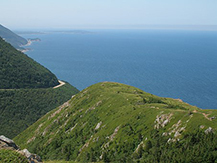
The Cabot Trail

If you want to enjoy the best of Canada’s east coast, then the Cabot Trail is a must-see. With your windows rolled down, you will be able to breathe in the fresh salty air while watching the waves kiss the shore. The trail is a loop around Cape Breton Island and passes by superb seafood restaurants and cosy villages.
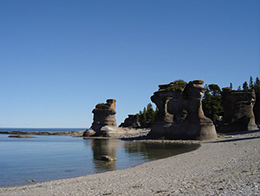
Mingan Archipelago National Park Reserve

In Quebec, along the North Shore of the Gulf of St. Lawrence, you will be able to take in the beaches of Quarry Island. The island’s rock formations make for unique photography. If you are lucky, you might even meet the locals – whales and seals often surface here, and puffins also call the reserve home.
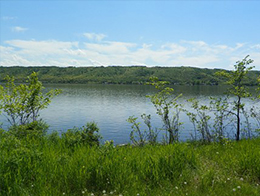
Grasslands National Park
On an Avis drive to Southern Saskatchewan, you will be able to discover some of Canada’s rarest wildlife, astonishing dinosaur fossils, over 12,000 teepee rings, and varied landscapes, from buttes and valleys to breathtaking badlands. If you want a really wild experience, you can end the day gazing at stars from a teepee or a campsite.
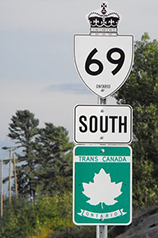
Thousand Islands National Park
For wild views, take an Avis road trip through south-central Ontario, just 3 hours from Toronto and Montreal, and 90 minutes from Ottawa to Thousand Islands National Park. The picturesque granite islands and windswept pine trees will captivate your senses. Swap the car for a kayak and paddle up the river, exploring secluded bays and sighting colorful marine life.
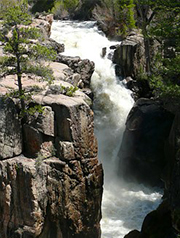
Yoho National Park

It will be easy to fall in love with British Columbia on your Avis road journey. With 28 peaks, offering rocky cliff-faces, tumbling waterfalls and breathtaking hikes, the Yoho National Park in the south-eastern Canadian Rocky Mountains is unmissable. On a walk to one of the Burgess Shale Fossil sites, you can see fossil finds that date back 505 million years.


Avis is your key to unlocking Canada.

Bon Voyage!


(Photo Sources – Avis, Getty, Pixabay)