TTG Asia
Asia/Singapore Monday, 29th December 2025
Page 1661

Tokyo turns on charm offensive in India ahead of 2020 Olympics

0

shinjuku-tokyo
Shinjuku, Tokyo

As part of its strategy to double tourist arrivals from India in the run-up to the 2020 Olympics, the Tokyo Metropolitan Government last week organised its maiden tourism promotional event in India.

The New Delhi event saw the meeting of senior tourism officials from Japan with 85 Indian agents and members of the press to inform them about Tokyo’s tourism products.

“Our aim is to provide an overview of what Tokyo can offer to the Indian tourists. Japan is targeting to welcome 25 million international tourists by the Tokyo 2020 Olympics and we hope to double arrivals from India,” said Chitose Maeda, director for city sales, tourism division, Bureau of Industrial and Labour Affairs.

Indian arrivals to Japan stood at 123,000 in 2016, a growth of 19.3 per cent over 2015.

To grow the Indian market, the Tokyo Metropolitan Government plans to launch initiatives such as participating in travel tradeshows in India, conducting fam trips for Indian agents and developing a dedicated website for Indian consumers.

Ken Katayama, deputy director general, Bureau of Industrial and Labour Affairs, elaborated: “We are looking into an advertising campaign on Indian TV channels, apart from focusing on the Internet to reach out to the market. We will also be participating in SATTE 2018 in New Delhi.

“Tourist arrivals from India are mainly from the business segment so our aim is to increase leisure arrivals. We will be promoting Tokyo’s heritage, gardens, cuisine and entertainment options to Indian tourists,” he added.

Godfrey Pereira, head – holiday products at Via.com, said: “The growth from the Indian market to Japan has been steady in the last five years, but there is a lack of awareness about the destination. The tourist office needs to take a two-pronged approach to promote Japan, which includes engaging consumers through channels like advertisements and educating the trade through activities like training seminars.”

Marco Polo Hotels names new DOSM

0

Antony Box has been appointed director of sales and marketing for Marco Polo Hotels, Hong Kong.

He will be responsible for the overall strategic direction and oversee sales and marketing across corporate, MICE, communications, events, leisure and loyalty marketing departments for the Marco Polo Hongkong, Gateway and Prince hotels.

Antony_Box

Prior to his new appointment, Box was director of sales and marketing, and regional director of business development at The Westin Resort Macau.

Box has over 20 years of hospitality industry experience across China and Asia, including senior management positions in hotels such as The Westin Bund Center Shanghai, Hyatt on the Bund and Sheraton Huzhou Hot Spring Resort.

Heyday for smaller players

0

As global chains figure out synergies from their M&As, smaller groups are making hay.
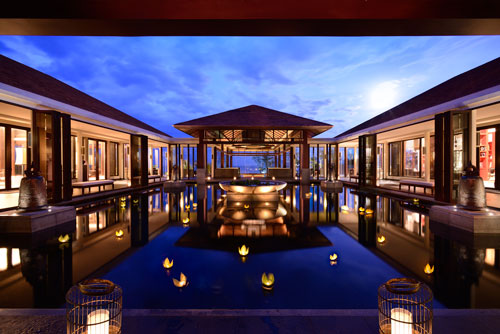
Banyan-tree-Danang-lobby
Banyan Tree Lang Co

On the question of who wins in the continuing trend of hotel industry consolidation, one group that appears to be thriving are smaller hotel companies, at least in Asia where the hotel market remains buoyant and the majority of hotels is unbranded.

During a session on mega hotel mergers presented by Baker & McKenzie at Hotel Investment Conference Asia-Pacific (HICAP) in October last year, 60 per cent of the audience polled believed fewer global hotel chains won’t be financially better for owners and operators. In another instant poll there, 73.6 per cent believed smaller players would benefit from mega mergers.

These players include small and medium-sized hotel management companies; hotel groups that focus on a real niche such as boutique or luxury, which can’t easily be copied; and owner representation firms that have the best accounting experts to decipher the various fees chains are charging them and take chains to task if these fees don’t commensurate with the returns.

For these companies, the field is wide open as owners ponder if they would be better off with huge chains where benefits of consolidation have yet to be proven or flow through, or with smaller groups which may not have the scale but are more likely to be able to give more focus to their hotels and stay truer to the brand DNA.

Marriott International’s regional vice president of hotel development Asia-Pacific, James Doolan, who’s on the Baker & McKenzie panel, agreed that “inevitably there would be people who just don’t like it, (being) part of a conglomerate that’s much bigger than it was before”.

“For the smaller groups, that’s the opportunity – ‘attacking’ or identifying the smaller, under-performing assets that feel a bit left out in this new world. There are opportunities for them to pick some of these up. I think there will be a little bit of that at the end of this (merger),” he said.

Bangkok-based Minor Hotels, which owns, operates and invests in 155 hotels currently – small in relation to Marriott international’s 5,700 properties, Hilton International’s 4,700 or AccorHotels’ 3,942 (as of June 30, 2016) – has already benefited from industry consolidation on at least one score. Speaking at a HICAP panel session, CEO Dillip Rajakarier said: “Actually we are happy… some of the best people are joining us from Starwood and Marriott.”

Rajakarier also said it had been difficult for Asian owners, particularly the less experienced ones, to decide what to do in the changing market. He said: “Sophisticated owners will manage their business well, but those owners who are not used to having hotel assets will have problems: who are they going to speak to, who is going to manage their asset, who is going to be their competitive set?

Swiss Belhotel is a perfect example of how smaller groups are positioning themselves ever more confidently in an environment of confusion and uncertainty that M&As bring about.

At HICAP, the Hong Kong-based company announced that it intends to pick up more management contracts, bringing its portfolio to over 200 hotels and 40,000 rooms by 2020, from 135 hotels now, as it “continues to provide a strong and attractive alternative to the big brand players such as Accor, Marriott and InterContinental Hotel Group”, said a spokesperson.
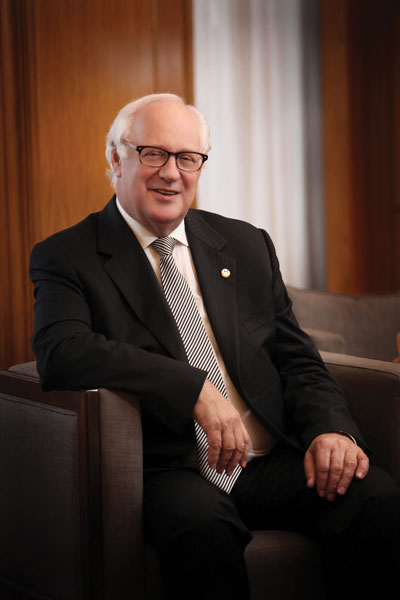
Gavin3Chairman and president Gavin Faull, who founded the independent hotel management group in 2000, told TTG Asia: “The more M&As there are, the better the business will be for us, because there are fewer people for developers to talk to (as a result of the consolidation).

“Many owners feel they are being dictated to… On top of it, we live in a world of big generational change… you have to be a lot more flexible and chain control is not flexible.

“We are flexible. We talk to owners and staff, so it’s personalised management. I was in Kuala Lumpur yesterday and the guy could not believe I was president of the company!”

All of Swiss Belhotel’s 135 hotels are management contracts, 80 of which are in operation, the rest in pipeline. Faull counts timing and earning the trust of owners as among the key pillars of his success. Swiss Bellhotel, for instance, has been in Indonesia since it was a sleeping giant, with a strong, silent partner, Ciputra, he said.

While the big chains dangle the benefits of having millions of loyal customers, Gaull said loyalty programmes are not the key anymore as people stay in different hotels for different reasons. “People now holiday once a month. There is a cultural and generational change.

“And I might have lost out initially to the big chains on distribution, but with the Internet today, the world is open. Technology is a lot cheaper now,” he said.

His worry is keeping the company personalised as it expands. “We can get to 250 or 300 hotels but I feel it is dangerous. I don’t want us to be a global machine. Right now I’m there, and I’ve a real passion for the job. At 140 hotels, it is already getting harder – the physical commuting especially; emailing only kills communications. The hotel industry does not have much of a relationship with its clients anymore, yet that’s what the clients need.”

So for smaller groups, the outlook looks rosy – until the behemoth hotel chains are able to show owners how their M&As have not only made them stronger but bring greater benefits to owners as well.


This article was first published in TTG Asia February 2017 issue. To read more, please view our digital edition or click here to subscribe.

Making a good change agent

0

You were a travel agent for 22 years. How has this given you an edge in your post?
(Detractors said that) I’m merely a travel agent who knew nothing. But having come from the industry, I understand and relate to the problems of the trade. I’m also seen as one of them so it’s now easier for the trade to deal with the Department of Tourism (DoT). I’m working with the trade now on accreditation and addressing issues such as the lack of tour guides, hotels and rates, etc.

(Some say) I have no marketing background. But there are those with marketing background who are not hands-on. I’m hands-on and am already getting a good response from tour operators and travel agencies abroad.

Many are expecting too much too soon. I’m just five months here (as of early December). Give me one, two years and I will prove them wrong.

There were criticisms about your bringing of new people to DoT.
I came from the private sector and have to work with people whom I can trust. I have not fired anyone except one who was not performing.

How do you deal with the critics?
Although I get hurt by the critics, I derive strength from my four brothers in the media. They’ve told me not to get distracted by criticisms as long as I do my job, not to be onion-skinned and just work really hard to prove myself.

One advice Mon (Ramon Tulfo, the crusader newspaper columnist) has given me is to ignore critics so I won’t get discouraged and fall down. The most painful thing to a critic is being ignored.

How did you start in the travel industry?
I worked as a model (for couturier Renee Salud) and flight attendant (with Air Niugini). After I got married, my husband and I lived in Davao where I taught business administration at Ateneo de Davao University. But my love for travelling led me to set up Mount Apo Travel & Tours.

I did well selling outbound and my forte was Europe. I was also the top producer for airlines and Royal Caribbean International cruises, and received awards for my performance.

When I realised that many didn’t know the Philippines, I felt that I had to do something about it, so I started handling inbound, starting with Davao and later Boracay and Palawan as well.

Selling inbound was not easy but I joined sales missions and travel fairs abroad to move things forward.

It must be tough selling Davao then.
Davao was not safe then. People would always cancel, and we didn’t have foreign groups in Davao. It’s now easier to sell Davao.

Tell us more about your experience as president of the National Association of Independent Travel Agencies (NAITAS) and other organisations.

There are three big organisations in the Philippines – Philippine Travel Agencies Association, Philippine Tour Operators Association and NAITAS, which was lagging behind before I brought it up to par with the other two. I started by increasing its membership, and mounting travel and trade shows.

I was also secretary of the first Tourism Congress of the Philippines. I was very active in Davao. I was elected president of the Davao Travel Agencies Association and got re-elected for a second term. I also served as president for the Davao Association of Tour Operators.

What can we expect from the DoT after two years?
I’m already working on increasing arrivals. There will be more tourist attractions, activities, flights and hotels. Beautiful destinations will be developed and poor communities will benefit from tourism.  Being a Cabinet member is an advantage as I can personally approach those in the government to speed up the requisites to boost tourism.

This will be a very good year. We’re able to bring to the Philippines the Miss Universe pageant, Madrid Fusion Manila, UNWTO International Conference on Tourism Statistics and we also won the bid for a conference of 1,000  university professors from England. China has also lifted its travel ban against the Philippines.

What’s your vision for Philippine tourism?
The Philippines will become known as one of the best destinations in Asia, with the development of many more local beautiful destinations.

Thailand receives millions of Chinese visitors while we get just 500,000. The Philippines should be at par with them. We’re selling (similar) attractions but we have another selling point: Filipino hospitality. We go out of our way to help. The economic benefits of tourism can help the many marginalised communities.

What’s being done to realise this vision?
The It’s More Fun in the Philippines campaign slogan will be levelled up from the  Miss Universe pageant in January this year. It will not be changed but improved by focusing on unique Philippine service and hospitality.

We’re selling the Philippines in Asia, Europe, the US and the rest of the world.We engage with travel agents, the media and bloggers to bring them to the Philippines.

Since China lifted the travel advisory against the Philippines, big investors have been coming in. I want to increase arrivals from China to two million in 2017 but (China) expects to to reach three million.

What about tourism infrastructure?
The tourism secretary is also a Cabinet member. The advantage is that I can personally follow up with other Cabinet members on matters concerning tourism such as airports and road infrastructure.

And safety and security concerns in the Philippines?
The Philippines is safe. Crime rate has gone down. I tell travel agents to visit the Philippines and see for themselves. They realise it’s safe and (gain confidence to sell) the Philippines.

After the bombings in Davao (in early September), I questioned the placing of the country on red alert (with security measures stepped up) as it would discourage tourists from visiting. But Philippine president Duterte asked me: “Wanda, what’s more important to you: red alert or tourists not coming here?” So there, we now have more peace and order.

What’s the legacy you want to leave after finishing your six-year term?
That the Philippines will become a top destination, that I’ve been a good tourism secretary and that I’ve done good for the country.


This article was first published in TTG Asia February 2017 issue. To read more, please view our digital edition or click here to subscribe.

India fastest-growing business travel market in 2016: GBTA

0

business-traveller-india

India recorded double-digit business travel spending growth last year, making it the world’s fastest-growing major business travel market in 2016, according to The Global Business Travel Association (GBTA) Foundation’s latest BTI Outlook – India report.

“India continues to position itself to become a world leader in business travel for decades to come,” said Gaurav Sundaram, GBTA India regional director. “Despite fears surrounding the demonetisation efforts, India saw a 10.9 per cent growth in year-over-year business travel spending for 2Q2016 – even higher than our last report projected.”

The report also forecasts 11.6 per cent growth in business travel spending in 2017 to reach US$36.8 billion, up from 11.4 per cent the previous year.

Moving up five spots since the early 2000s to become the 10th largest global business travel market in 2015, India was expected to overtake Brazil last year. It is projected to outperform both South Korea and Italy in the coming year to become the world’ sixth largest business travel market by the end of 2019.

Meanwhile, India’s domestic business travel spending is forecasted to grow at consistently high rates of 11.8 per cent this year, from 12 per cent last year, to reach US$33.8 billion. The country’s international outbound business travel spending is estimated to have grown 5.4 per cent last year and to jump to nine per cent in 2017.

Hua Hin resort to rebrand as Mövenpick

0

movenpick-hua-hin_asara
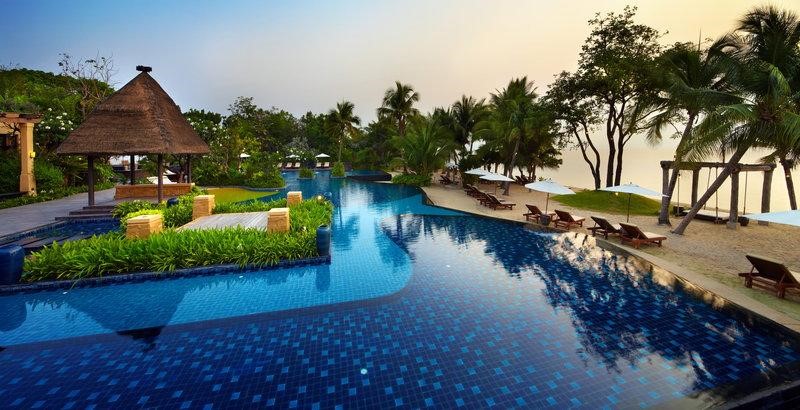
Pool area at the soon-to-be Mövenpick Asara Resort & Spa Hua Hin

Mövenpick Hotels & Resorts will make its Hua Hin debut this November with the rebranding and management of Asara Villa and Suite Resort.

In operation since 2010 under the ownership of Ocean Property, the existing property comprises 54 pool villas and 42 suites.

When relaunched as Mövenpick Asara Resort & Spa Hua Hin, it will feature a spa with eight treatment rooms, a kids club, meeting facilities, a library, multiple swimming pools and lush tropical landscaping.

For F&B, the property will offer a casual all-day dining restaurant, specialty beach side restaurant, lobby lounge and pool bar.

The property is located less than one kilometre from Hua Hin Airport and is a five-minute drive from the town centre and its shopping and nightlife options.

Meanwhile, Mövenpick Resort Khao Yai and Mövenpick Residences Ekkamai Bangkok are expected to launch in 2Q2017, while Mövenpick Resort & Spa Mai Khao Phuket is due for a 4Q2018 opening.

The group currently boasts three properties in Thailand: Mövenpick Siam Hotel Pattaya, Mövenpick Resort Bangtao Beach Phuket and Mövenpick Resort & Spa Karon Beach Phuket.

Qantas, Jetstar Asia codeshare on more Asia routes

0

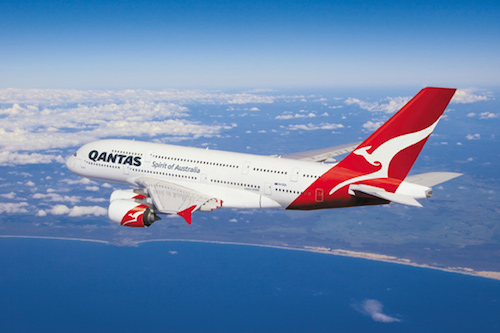
A380.101.tif

Qantas and Jetstar Asia are expanding their codeshare arrangements, offering travellers more choice and frequencies across the Qantas Group Network in Asia.

Starting this month, Qantas code will be available on a further 142 services operated by Jetstar Asia, bringing the number of weekly codeshares between the two carriers to 349. This will add to add to Qantas’ 44 weekly flights between Australia and Singapore.

Under the expanded arrangement, Qantas codeshare passengers will be entitled to benefits including through-check on Qantas international flights, accrual of Qantas Frequent Flyer points and status credits, access to Qantas Club Lounge in Singapore (for eligible passengers), access to Qantas International baggage allowance (as stated on their ticket); and a hot meal on flights exceeding 90 minutes or a muffin on flights under 90 minutes, plus water, tea or coffee.


Thai carriers raise domestic fares over fuel tax hike

0

bangkok-airairbus319_2
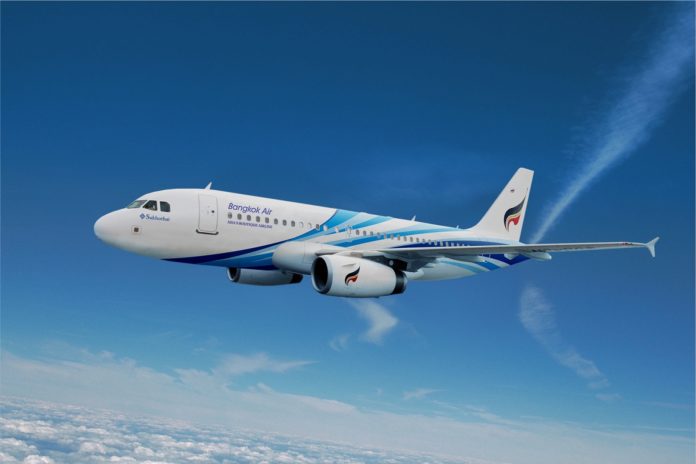
Bangkok Airways

Thai airlines are responding to the government’s recent fuel tax hike effective since January 25 by raising fares on domestic routes.

Thai AirAsia, Bangkok Airways, Thai Vietjet, Nok Air and Thai Lion Air have confirmed the increase in domestic airfares, ranging from 150-200 baht (US$4.30-5.70) per passenger per flight, which will be implemented immediately or by February 8 depending on the airline.

The amended fares reflect the actual cost increase resulting from the sudden 1,900 per cent rise in excise tax imposed by the Thai government on jet fuel and lubricant, say the airlines.

At press time, Thai Airways and its subsidiary Thai Smile have yet to issue statements.

Thai trade upbeat as key markets surpass expectations

0

koh-lan_chonburi_thailand_chinese-tourists
Chinese tourists waiting for boat at Koh Larn off Pattaya coast

Thailand’s tourism is expected to keep its growth momentum in 1Q2017, which industry players have attributed to the quick recovery of Chinese and Russian markets.

Despite the downward trend in Chinese arrivals following the recent clampdown on zero-dollar tours, Lunar New Year reservations from China grew five per cent contrary to the projected four per cent drop, said Tourism Authority of Thailand (TAT) governor Yuthasak Supasorn.

Charoen Wangananont, president of Association of Thai Travel Agents (ATTA), expects a full recovery of Chinese arrivals within the first quarter, adding that this could be accelerated if the government extends the visa fee waiver for Chinese travellers ending in February to October.

Supawan Tanomkieatipum, president of the Thai Hotels Association (THA), has likewise observed strong bookings from the Chinese, Indian and Russian markets in the first quarter, and further projects average hotel occupancy to reach 70 per cent, up from 68 per cent during the same period last year.

In 1Q2017, TAT expects international tourist arrivals to grow three per cent to 9.3 million and tourism income to increase seven per cent to 490 billion baht (US$14 billion), while domestic tourism is expected to rise eight per cent to 32.5 million trips amounting to 240 billion baht in tourism income (up 12 per cent).

China (2.4 million visitors), Russia (460,000 visitors) and Malaysia (900,000 visitors) rank among the top three source markets in the current quarter, according to TAT.

New Clark hub brings fresh destination pairings in the Philippines

0

clark_international_airport_departure_hall_view
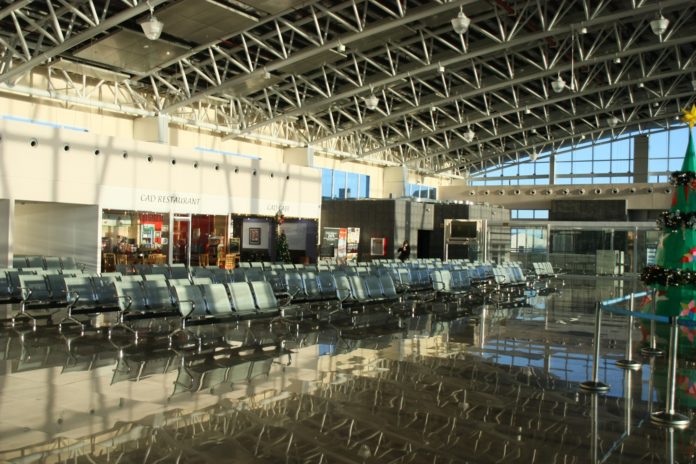
Clark International Airport’s departure hall

The emergence of Clark International Airport as a secondary air hub in the Philippines is opening up new business opportunities for travel suppliers in pairing destinations in the country.

Due to runway congestion at Manila’s Ninoy Aquino International Airport (NAIA), Philippine Airlines (PAL) was forced to start flying from Clark to Caticlan (Boracay) last December, followed by Incheon last month and soon Davao.

Qatar Airways returned to Clark recently with a daily flight to Doha, following the lead of Emirates which has been flying from Dubai to Cebu via Clark since last year. Both also fly from NAIA.

Cebu Pacific, meanwhile, has existing flights from Clark to Hong Kong and Macau.

Travelexperts consultant Arnie Bayag told TTG Asia that increased domestic and regional flights via Clark present new business opportunities as travellers from Central and Northern Luzon need not pass through Manila anymore.

Bayag will look into developing packages covering destinations that PAL flies to from Clark, which can include Caticlan to enable passengers to connect directly to Cebu. He thinks access through Clark will prove popular as the city is “green, with good hotels and restaurants”.

Vic Chan, general manager of the new Midori Clark Hotel and Casino, is discussing with travel consultants the possibility of creating hotel and tour packages combining Manila for shopping, Clark for staycation, Subic for golf and adventure, etc.

Chan said Clark Freeport Zone is fast developing as a tourist and business destination and more investments will flow in as the Philippine economy remains robust, underscoring the importance of air links and transport infrastructure in the area’s tourism development.

As well, Manila clients prefer Clark airport over NAIA as the former is more relaxed and convenient with free shuttle service provided from TriNoma (Quezon City) to the airport, according to Sabina Pe, managing director of Bridges Travel and Tours.

She added that it is hard to get a seat from Manila to Europe and other destinations, so Clark is proving to be a better option especially as Qatar Airways has ongoing promotions at Clark.