TTG Asia
Asia/Singapore Monday, 15th December 2025
Page 1606

Messe Berlin stays modest about ITB China growth

0

Messe Berlin is keeping modest about the future growth of ITB China even though the inaugural show this year sold out ahead of the event and early feedback shows some exhibitors want to expand their presence next year.

Interviewed by TTG Asia yesterday on how big ITB China could be next year, Messe Berlin’s senior vice president-travel & logistics, Martin Buck, said: “Based on demand, we can be hopeful.”


Buck: recent frequency of ‘incidents’ calls for flexibility 

ITB China this year fields 600 exhibitors from nearly 70 countries, occupying 12,000m2 of space, meeting around 600 hosted Chinese buyers and another 100 international buyers who make their own way here, beating other more established shows in China on the first salvo.

But Buck is keeping jubilation levels down, saying that the industry is more vulnerable than ever to geopolitics, safety & security issues, and huge changes, all of which have made it “difficult to forecast growth, even though we are optimistic”.

He pointed out how consolidation in the hotel industry, for example, could impact tradeshows. “Before you have two or three exhibitors. With consolidation, it’s not likely you will have three stands,” he said.

Added Buck: “(Before) we had only isolated incidents, say, the tsunami, one (incident) over 12 months. Now, there is a dramatic increase in frequency of incidents, be it geopolitical or terrorism, where certain destinations which are in could be out of the picture easily. The world is changing and we have to stay flexible and cautious about capacity and space. One never knows.”

He said he wasn’t surprised ITB China sold out ahead of the event. “We saw that the Chinese market has incredible potential but the shows available in China left room for improvement, especially when it comes to getting professional buyers and the right composition (tour operators, meeting planners, etc).”

He attributed ITB China’s success on this to “a certain proficiency” in the region that Messe Berlin has gained from launching ITB Asia in Singapore, and having the right partners who are well-connected to the market, like Travel Daily China.

When asked how ITB China might strengthen ITB Asia and ITB Berlin, he said for many Chinese, ITB China is the “gateway” to the ITB brand and that they could be participating in Berlin and Singapore too now that they have had seen the quality for themselves.

On launching more ITB spin-offs, possibly ITB India, Buck said: “I believe India’s potential should never be underrated. We have been trying for some time but it is difficult to find the right partners.”

Malaysia is official partner country of ITB Berlin 2019

0

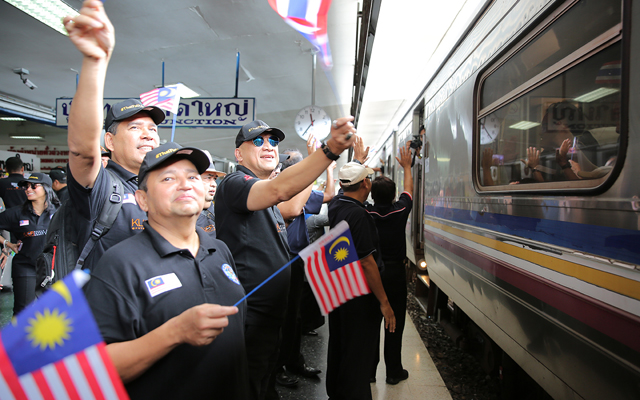
While the official partner for the 2018 edition has yet to be confirmed, Malaysia has been confirmed as ITB Berlin’s official partner country in 2019 in an official signing of the contract at ITB China yesterday.

Mohamed Nazri bin Abdul Aziz, minister of tourism and culture for Malaysia, explained: “Our long-term target is to achieve 36 million tourist arrivals and RM168 billion (US$38.6 billion) in receipts by the year 2020, based on the Malaysia Tourism Transformation Plan. Building up to this year will be very much like a ‘crescendo’, which is why we wanted to plan a major partnership with ITB Berlin in 2019.”


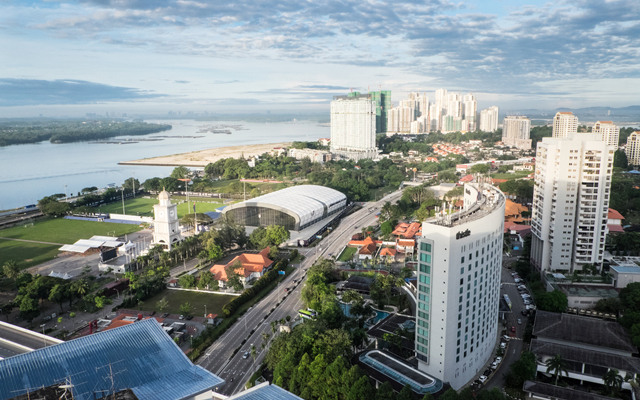
Kuala Lumpur

The 2019 Official Partner Country project is part of a much broader plan by Malaysia to increase awareness of the natural and human assets of the country over the next years. Kinabalu National Park and Gunung Mulu National Park in Malaysian Borneo and George Town cities and the archaeological heritage of the Lenggong Valley are four of the UNESCO designated World Heritage sites in Malaysia that will be highlighted.

In a statement, David Ruetz, head of ITB Berlin from Messe Berlin, said that negotiations are still under way with several “suitors” for the 2018 edition and the partner is expected to be announced shortly.

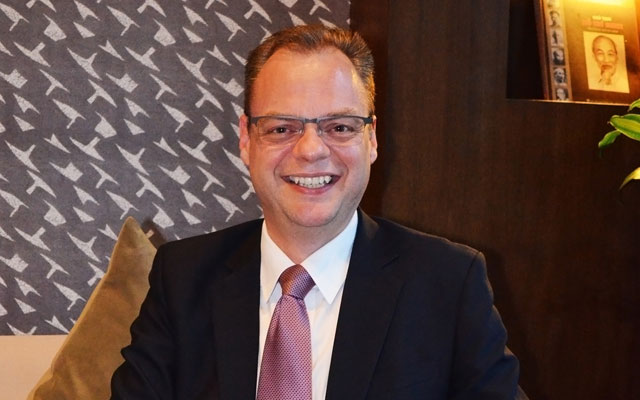
New chapter for SilverNeedle as it relaunches as Next Story Group

0

Having identified new media competency as a core need to “futureproof” asset owners, SilverNeedle Hospitality Group acquired Brand Karma and relaunched itself as the Next Story Group.

Its hotel management division has also been rebranded from SilverNeedle Hospitality to Next Hotels, which together with SilverNeedle’s existing in-house architecture and design agency Virsa and Brand Karma now form Next Story Group.

Anand Nadathur, CEO of Next Story Group, commented: “Over the past year we’ve developed in-house architecture and design capabilities via Virsa, identified new media marketing competency as a must-have which led to the acquisition of Brand Karma, strengthened our employees and board, and studied the impact of the sharing economy on urban spaces.

“We now have the right set of specialised services, and are ready to move forward to help asset owners futureproof their real estate by giving consumers something fresh and relevant.”

Added Morris Sim, previously CEO of marketing agency Brand Karma, now chief marketing officer for Next Story Group: “The hospitality and real estate industries are experiencing unprecedented shifts, with new consumer expectations giving quick rise to disruptors.

“It is difficult for asset owners to ensure what they have today will be relevant and monetisable for tomorrow’s consumers. Being a part of Next Story Group means asset owners can count on us to differentiate and respond to market changes faster.”

Along with the launch, the Singapore-based Next Story Group also appointed veteran hotelier Patrick Imbardelli to its board of directors.

China booms for Sharjah

0

Sharjah is on a roll with Chinese arrivals, having benefitted from Dubai’s air connectivity and proximity, the UAE’s visa-on-arrival for Chinese visitors introduced in September 2016, AirArabia’s four weekly direct flights from Urumqi launched last year, and Sharjah Commerce and Tourism Development’s new representative office in Beijing opened in early 2016.

These development lifted the number of Chinese hotel guests in Sharjah by 63 per cent over 2015 to reach 86,069. Sharjah expects the numbers to grow to 200,000 in 2021.

Khalid Jasim Al Midfa, chairman, Sharjah Commerce and Tourism Development, said most Chinese visiting Sharjah were group travellers and the remaining 10 per cent were FITs. In 2015 and 2016, both India and China compensated for the decline in Russian arrivals when the ruble devaluated.

Sharjah attracts the Chinese with authentic cultural and heritage experiences and outdoor activities such as wildlife spotting, trekking, mountain biking, dune bashing and desert safari.

It has also been observed that Chinese families are drawn to Sharjah’s eco-tourism attractions, such as the Al Noor Island butterfly park and the Mleiha Archaelogical Centre. A new safari park slated to open by the end of this year will add to Sharjah’s eco-tourism lures.

Meanwhile, the Heart of Sharjah development is being registered as a UNESCO World Heritage Site, said Khalid Jasim, who expects the status within the next two years. The development will include Albait Hotel, a luxury heritage hotel.

Fairfield by Marriott to make Cambodia debut

0

Cambodia’s first Fairfield by Marriott hotel is expected to open in Phnom Penh in 2021.

Paul Foskey, chief development officer, Asia-Pacific, Marriott International, said: “As Phnom Penh continues to grow into a prominent destination in the region, we will cater to the robust demand from business and leisure travellers for reliable, mid-range accommodations in the bustling city.”

Owned by Royal Field Development Company, a subsidiary of Cambodian conglomerate Chip Mong Group, Fairfield by Marriott Phnom Penh will be situated in the Russian Boulevard within the administrative centre of the city and a 20-minute drive from the airport.

The site is minutes away from the Peace Palace, which serves as the office of Cambodia’s prime minister; the Office of the Council of Ministers; the Ministry of National Defense and various other government offices.

Facilities at the mid-range accommodation will include a restaurant serving local and international flavours as well as a fitness centre.

Dusit heads into Vietnam with Phu Quoc resort

0

Thailand-based global hospitality company Dusit International will make its Vietnam debut this December with the opening of the DusitPrincess Moonrise Beach Resort on the country’s largest island, Phu Quoc.

The result of a long-term franchising arrangement with Linh Chi Limited Company, the new hotel will comprise 108 rooms in a lush location overlooking popular Bai Truong beach on the island’s west coast, only eight minutes’ drive from Phu Quoc International Airport.


Linh Chi Limited Company’s Nguyen Thi Thu and Do Van Chanh; Dusit International’s Suphajee Suthumpun and Rustom Vickers

The rooms will range from 32m2 Deluxe rooms to 56m2 Grand Suites, all providing sea views, while facilities will include an all-day-dining restaurant, a spa, an outdoor pool, a lounge and pool bar, a fully-equipped conference room, and a kids’ zone.

“Phu Quoc’s growing reputation as a major tourist destination is only set to flourish over the next 10 years as many high-end developments are slated to open on the island,” said Suphajee Suthumpun, Group CEO of Dusit International.

New hotel openings: May 8-12, 2017

0
The latest hotel openings and announcements made this week

Element Kuala Lumpur
Designed by Foster+Partners, the first Element-brand hotel in South-east Asia has opened in Malaysia with 252 rooms. Housed within the Ilham Tower, the 132 studio units as well as one-, two- and three-bedroom suites are furnished with Smart TVs and a Signature Heavenly Bed. Facilities include the Trace restaurant & bar on the 40th floor, four meeting rooms, plus a pool and fitness centre on level 39. There are also scheduled yoga and Zumba classes, as well as a Bikes-to-Borrow Programme.

Hotel Gracery Kyoto Sanjo South
Standing next to its sister hotel Hotel Gracery Kyoto Sanjo North is the Hotel Gracery Kyoto Sanjo South which opened on May 1. While the North property offers 97 double rooms, the South property offers 128 twin rooms, bringing the total number of rooms to 225. As well, the South property boasts two themed rooms – the Kabuki Room and Kyoto Room – along with the Bon Salute restaurant.

Aviary Bintaro
Located south of Jakarta in Bintaro, Tangerang Selatan and 15 minutes from Jakarta International Airport is the 125-key Aviary Bintaro. Accommodation options come in a mix of hotel guestrooms and serviced apartments. Amenities include the Starling Eatery, Nest Skylounge, a fitness centre, semi-indoor pool and nine function rooms.

Sheraton Grand Mirage Resort, Port Douglas
Renovated to the tune of A$43 million (US$31.7 million), the Sheraton Grand Mirage Resort, Port Douglas on Four Mile Beach is the only five-star beachfront property in Port Douglas. The 147ha resort in Australia’s Queensland now features 295 rooms and suites, including 41 Lagoon Edge Rooms and 12 Lagoon Edge Studio Suites. Amenities include two hectares of swimmable lagoons, an 18-hole golf course and three F&B options. For meetings and events, refurbished spaces include the Mirage Ballroom, which can cater for 300 people theatre-style, as well as the foyer area.

Manila: A city bypassed

0
The Philippine capital city has become a mere transit or bypassed altogether as carriers go straight to secondary gateways. Rosa Ocampo, based in Manila, looks at its plight, which is worsened by other challenges

From several years ago when virtually all tourists arrived at the country’s only gateway at Manila’s Ninoy Aquino International Airport (NAIA), as of January, only 68 per cent do so, with the rest through secondary international gateways.

The percentage of arrivals at NAIA is likely to drop further as, since last year, more non-stop flights have been mounted from the country’s top source markets – South Korea, the US (Los Angeles), Japan and China – to the most popular sun-and-sea destinations Cebu, Kalibo and Caticlan (Boracay) and Palawan, where an international airport has just opened (late-April).

More regional and chartered flights are also expected for Clark, Davao and other destinations outside Manila, said Erwin Balane, chief of route development at the  Philippine Department of Tourism (DoT).

As a result, leisure travellers are bypassing Manila to save time and cost or, if they’re unable to do so, shorten their stay in the metro given their perception that it has few tourist attractions, a lot of grime, traffic congestion and one of the worst airports in the world.

Blue Horizons Travel and Tours senior sales and marketing manager, Marjorie Aquino, said:“For our mainly European clients, Manila is only a drop-off point for tours, with clients spending three-day/two-night upon arrival before embarking on beach holidays, and spending another night in Manila before departing the country.”

While it used to be the destination, “Manila has become a destination for casino players and MICE,” said Rajah Tours president Jojo Clemente.

Within the strip of reclaimed land at the Entertainment City are three integrated resorts and a fourth to be launched within the next three years or so. They were built on the premise of getting high rollers from China that initially didn’t materialise due to the Chinese government clampdown on corrupt activities, said Joey Bondoc, research manager, Colliers International.

These integrated resorts continue to increase the supply of upmarket hotels along Manila Bay which is also known as MICE area. Meanwhile, Colliers has projected 4,000 additional keys to be added to the total stock in metro Manila this year.

Clemente noted that some Makati hotels have already “substantially” reduced their rates from three-and-a-half years ago. “They realise they cannot sustain the rates…only casino hotels can do that,” Clemente explained.

Makati CBD hotels, which used to command the highest rates in Manila (except for the Marriott at Resorts World Manila which is raking in good business), do not any more command a rate premium over their Manila Bay counterparts. There has also been a growing geographical grouping of hotels in Bonifacio Global City, Ortigas and Quezon City.

What to do?
So what’s being done to make Manila more sellable?
The reduced rates may help, along with the weakening of the Philippine peso, from 47.50 last year to 50 pesos to the dollar early this year.

In fact, tourism secretary Wanda Teo in an earlier interview in February lamented the “exorbitant rates” of tour packages including some in Manila. “Throughout my long career in the travel and tour business, travel agents and tourists complained about the expensive tour packages to the Philippines. I found it difficult to market our country with these exorbitant rates,” she said.

Teo explained that other South-east Asian countries, and even Japan, “sell reasonably priced packages, especially after a natural calamity or political upheaval, so foreign travellers would be enticed to visit after a crisis”.

Rajah Tours’ Clemente agreed: “It’s still a price-driven industry especially compared with Thailand, so anything that makes us closer to what Thailand is offering is better for us.”

But to make Manila more sellable, other efforts are being done. A travel consultant has created tours that avoid passing through seedy and grimy areas which the metro has become notorious for.

Philippine Tour Operators Association (Philtoa) president Cesar Cruz noted a “modularisation” in  tours, which entails less travel time through simplified means of transport and better road connectivity. As well, tours that don’t combine cities instead focus on one area like old Manila for example, without crossing over to Makati lest the tourist remembers the traffic congestion the most.

Philtoa is also mapping out tours combining neighbouring cities to lessen travel time, such as Marikina and Pasig for arts and crafts; Navotas and Malabon for culinary programmes; and a branding such as eco-hub for Quezon City tours.

Cruz pointed out there are now tours that were impossible in the past, such as shopping tours in the huge retail and wholesale area in Divisoria which is now cleaner and more organised. There also are some interesting tours of Luzon such as Tagaytay, Laguna and Batangas with Manila as starting point.

Haranah Tours managing director Jasmine Tan said the company has opened Haranah Eco Park in Tanay, Rizal, just a couple of hours from Manila as the easily accessible and bucolic Rizal with its varied landscape of mountains, rivers, caves and waterfalls is not yet known to tourists.

Tan recommends a night’s stay after arrival in Manila and another night before leaving “more for resting and getting to know the capital and the areas around it”.

Clemente suggested encouraging more investors in areas that are not yet popular and in new destinations that can be accessed from Manila, to take back some of the critical mass from major destinations like Boracay and Cebu.

Meanwhile, tourism secretary Wanda Teo is in discussions with Manila stakeholders to revitalise urban tourism in the metro, saying that it is paying the price of progress in the form of traffic, congestion and lack of urban planning.

When dynamism meets heritage

0
Its economic prowess aside, Shanghai is also a powerhouse in tourism, tapping its unique blend of western and oriental influences, old and new to pull in visitor numbers. Prudence Lui takes a look at what makes tourism tick in this megacity

Shanghai’s history may be short vis-à-vis the storied cities of China, but this cosmopolitan city, often dubbed the Paris of the East, and its contrasting blend of old and new, openess, and mix of cultures is often what travel experts find most compelling in its attraction to international visitors.

It is a dynamic city whose tourism scene is constantly brimming with new attractions. The latest additions include Shanghai Disneyland last year; the 632m Shanghai Tower, which launched in January as the world’s second tallest building; and the soon-to-complete Shanghai Haichang Polar Ocean Park.

The Shanghai government is also keen to positon the city as an international destination and has laid out plans for new tourist areas, which include the creation of six national-level tourism areas centred around Sheshan, Dianshan Lake, the Bund and the Dongtan Wetland Park by 2020.

The new attractions notwithstanding, it is still Shanghai’s blend of heritage and modernity that tour operators often look to for inspiration in their creation of novel experiences and packages.

Faces of China, CEO, Cindy Zhang perceives Shanghai as a gateway city that leverages her recent history well. She said: “Shanghai’s rich history over the past 100 years can be seen in many buildings from the Art Deco period. We have Shanghai Museum, one of the best in China, while the Kun Qu opera is an interesting programme to international audience. We have developed several exclusive private programmes led by experts like museum curators, expats and Chinese historians to offer cultural perspectives.”

Zhang added: “Shanghai has a lot more to offer than just the 1930s. Overall, it’s cosmopolitan with strong contrasts and diversity. It is a dynamic destination where changes are happening every day and always fun.”

Frank Gao, vice general manager of Shanghai branch at Century Holiday International Travel Group, shares a similar view and sees Shanghai as a mature destination in both its hard and soft aspects. Repeat visitors no longer opt for sightseeing tours but in-depth experiences, he noted.

“That’s why we offer insightful itineraries combining culture and local livelihood with authentic Shanghainese culinary experience at the Old City of Shanghai. By taking visitors to view architecture with centuries of history, they can immerse themselves and trace how people lived in the olden days,” he said.

Furthermore, for a city already known for its diverse dining options, the launch of the inaugural Michelin Guide Shanghai last year lent a further buzz to its dynamic, cosmopolitan dining scene.

A total of 35 stars were awarded to 26 restaurants in the city, with the T’ang Court of The Langham Hotel clinching the coveted three stars. A further 25 restaurants received the Bib Gourmand recommendation for offering good-value meals for under RMB200.

The guide’s international director, Michael Ellis, said: “The city is an economic and cultural crossroad, and its gastronomy is the result of a strong culinary heritage which makes the dining scene very exciting.”

According to Pudong Shangri-La, East Shanghai, area general manager, Mark Kirk, Shanghai’s allure as a modern city with heritage, multitude of experiences  and attractions makes it more desirable. The addition of the Michelin Star Guide further propelled it into the limelight as an international dining destination.

Futhermore, general manager of Hilton Shanghai Hongqiao, Joseph Zitnik, noted: “Bringing back the image of romantic-old Shanghai paired with the new, vibrancy of our Michelin Star-rated restaurants, only adds to our city’s mystery and luster. The restaurants on the Michelin Star Guide were fully booked upon its release and this is a great lead-in for tourists and locals alike to try new restaurants, foods and experiences.”

Pacific World, destination manager of Shanghai, Violet Wang, commented: “It’s a plus as we can sell our destination by restaurants, food and wine. For programmes in Shanghai, we usually take clients into local outlets that serve traditional Shanghainese snacks or dim sum. With this culinary guide, we will produce a brand-new itinerary with Michelin dining in them.

“However, my concern is that these restaurants are small in size and ideal for group in 30-50 pax only. Therefore, they can’t accommodate big groups and could be very expensive.”

Beating OTAs at their own game

0

WHO The vision of wresting control back from giant OTAs is what led a group of hospitality veterans – COO Yann Gouriou, CFO Martijn Dekker and CTO Bjorn Harvold – to launch Traveliko, a new hotel booking engine that seeks to return pricing control to hoteliers as well as to rebalance travel ethics.

Traveliko takes a flat 10 per cent commission, a rate significantly lower than the 15-17 per cent typically charged by major OTAs in the market now, Gouriou revealed.

Former Miss Universe Natalie Glebova has been appointed Traveliko’s brand ambassador.

From left: Dekker, Gouriou, Glebova and Harvold

WHAT Every hotel is equally visible on Traveliko, according to Gouriou, unlike other OTAs that charge hotels a premium to improve their rankings on their sites.

Hotels can also choose three main targeted segments (e.g. spa, solo travel and family friendly, etc), enabling hoteliers to leverage their strengths to enhance their visibility on the site while travel customers can better customise their search through filters.

“Because of Traveliko’s fixed low commission, the booking engine has also been optimised for selling additional hotel products that hoteliers would not want to sell anywhere else. It will give customers more options and an overall better experience,” said Harvold.

Hotels, for instance, can package a room together with transfers or a bottle of champagne.
And unlike the current OTA practice of sharing with hotels just basic booking information – date of arrival, etc – Traveliko will include customers’ preferences if they wish to reveal too to facilitate more seamless travel for travellers.

Traveliko will also donate 20 per cent of the net commission to local charities in Thailand selected by guests. “We deem ourselves a social venture too,” added Gouriou.

WHY Traveliko is conceived as a business model to help hotels, especially small and boutique properties, save money on commission and focus on giving their customers a better experience, according to Gouriou.

“We want to give power back to hotels and not aggregate power at the top (of the industry), not to those who made immense profits on the back of the tourism industry.”

“We translated our frustration into solution. We see hotels as partners. I’m a hotel person too, so I want to give hoteliers a solution,” said Gouriou, a former hotel general manager who now heads Bangkok-based Unicorn Hotels & Resorts as CEO.

TARGET Since officially launching in April 2017, Traveliko now boasts 450 hotels in its portfolio, having received sign-ups from international companies like Absolute Hotel Services, Centara Hotels & Resorts, Dusit International and Red Planet, plus other hospitality chains and independent hotels in Thailand, Sri Lanka and the Maldives.

Gouriou hopes bigger chains like Accor and InterContinental Hotels Group will come on board soon, and would like to expand Traveliko coverage across Asia-Pacific through the founders’ personal networks as well as word of mouth.

While the focus will be kept on the B2C side for the time being, Gouriou wants to expand into B2B and flights sector to grow Traveliko into a “travel Facebook” for travellers to create their personal profile, post comments and gain loyalty programme points.