TTG Asia
Asia/Singapore Sunday, 14th December 2025
Page 1605

New Pontianak connection a likely boon for Sarawak’s medical tourism

0

AirAsia’s new daily service from Kuching to Indonesia’s Pontianak, commencing June 5, comes at an opportune time for Sarawak as it aspires to attract more medical tourists from the neighbouring country.

Sarawak Tourism Board is eager to leverage the opportunity to promote medical tourism to those residing in Pontianak. The route is currently monopolised by Indonesia’s Xpress Air, operating daily.


Kuching, Sarawak

Acting CEO at Sarawak Tourism Board (STB), Mary Wan Mering, said: “There are five private medical hospitals in Kuching promoting medical tourism to Indonesians (and) STB started to promote (the segment) overseas this year.

“We did a B2B roadshow in Bandung this month and hope to do a similar one in Pontianak later this year where outbound agents in (Pontianak) can meet with representatives from medical centres in Kuching and inbound players.”

Gracie Geikie, director/principal consultant, Place Borneo, a local PCO, also welcomes the new connection as an alternative route for Jakarta delegates attending medical conferences in Kuching.

She added: “It is also timely for us as we are the PCO for the 10th International Meeting of Asian Society of Conservation Medicine this October and the new flights will help with delegate boosting activities in Indonesia.”

Around 300 delegates are expected to attend the conference, of which 30 per cent will come from Indonesia.

De Neef promoted to global role at Carlson Rezidor

0

Executive vice president and chief commercial officer of Rezidor Hotel Group (EMEA) Eric de Neef has been promoted to executive vice president, global chief branding and commercial officer at Carlson Rezidor Hotel Group.


De Neef

In addition to his team in Brussels where he will continue to be based, global branding and commercial teams based in Minneapolis (Americas) and Singapore (Asia Pacific) will now also report to him.

Federico González-Tejera, the new president and CEO of The Rezidor Hotel Group, said: “Adding Americas and Asia Pacific to his scope, in addition to EMEA, Eric is charged with developing the global branding, marketing and RevGen strategy focused on driving guest engagement and loyalty. His role will also include sales, distribution and revenue optimisation, to cover the full commercial scope of our business.”

Additionally, he will continue to drive the corporate communications, PR and reputation management strategy for The Rezidor Hotel Group.

AirAsia readies for LCC JV in China

0

AirAsia has signed an MoU with Everbright and Henan Government Working Group outlining the incorporation of a joint venture to be known as AirAsia (China).

Under the agreement, AirAsia (China) will be based in Zhengzhou, capital of Henan province, and invest in aviation infrastructure, including a dedicated LCC terminal at Zhengzhou airport and an aviation academy to train pilots, crew and engineers, as well as maintenance, repair and overhaul (MRO) facilities to service aircraft.


AirAsia’s Kamarudin Meranun, Everbright Financial Investment Holding’s Wang Weifeng, Malaysian prime minister Najib Tun Razak, AirAsia’s Tony Fernandes, China Everbright Group’s Gao Yunlong and Henan Airport Group’s Li Weidong

AirAsia Group CEO Tony Fernandes said: “We chose Zhengzhou as our base due to its strategic location and importance as a logistics hub. As China’s gateway to Europe, Zhengzhou sits at the centre of a vast rail, highway and air transport network that forms the linchpin of China’s development plans for its central and western regions. With president Xi Jinping’s vision for One Belt, One Road, Zhengzhou is set to become even more important, not least as the heart of low-cost air travel in North Asia.

“This Chinese venture represents the final piece of the AirAsia puzzle. In just 16 years, we have successfully built a presence in Malaysia, Thailand, Indonesia, Philippines, India and Japan, with China closing the loop on all major territories in Asia-Pacific.”

Henan Provincial People’s Government deputy governor Shu Qing, said: “With AirAsia supporting the city’s aeropolis – an industrial, commercial and logistics zone five times the size of Manhattan with the airport at its heart – we have absolute confidence that we will succeed in transforming Zhengzhou into the new hub for global transport and logistics.”

Vietjet opens Hanoi-Yangon route

0

Vietjet will commence services between Hanoi and Yangon on August 31, 2017, marking the airline’s second Myanmar route after the Ho Chi Minh City-Yangon service.

The route will be operated on a daily basis with flight time of one hour 55 minutes per leg. The Hanoi-Yangon flight departs at 12.05 and arrives at 13.30, and the return flight takes off in Yangon at 14.30 and arrives in Hanoi at 16.55.

China proving a tough travel market as it matures

0

Gone are the days when Chinese travellers are viewed as a sensitive bunch that respond to negative news coverage of a destination with tour cancellations, making them a more resilient customer than Europeans or Japanese, sellers at the recent ITB China told TTG Asia.

“They read the news, they discuss the news and then they forget about the news,” commented Khaled El Kholy, CEO of Solar Empire Egypt. He added that Chinese travellers are relatively “mature” and “practical”, and whose opinions are not easily swayed by the media.


Chinese tourists in Paradise Island, Egypt

Khaled attributes China’s vast size as a contributing factor, which enables Chinese travellers to understand that problems in an area does not mean that whole country is affected.

Following the onset of Arab Spring in early 2011, which crippled the Egyptian tourism sector, the Chinese market was one of the first to make a comeback to the country, said Khaled.

Since 2016, the Chinese market recovery has picked up faster and is expected to surpass its previous peak in 2010 this year, he noted.

The Egyptian company is seeing such robust demand from China that it now has nine charter flights from eight Chinese cities each week, and will increase the number to 16 weekly flights come July. By end-2016, it is expecting a 300 per cent increase in Chinese business volume.

“Egypt’s tourism will shut down if Chinese tourists stop coming to Egypt now, as the Europeans are not back yet,” Khaled remarked.

It’s also a similar story in Turkey, which saw a sharp plunge in tourism numbers following a series of terror attacks in 2015, but is now propped up by the Chinese market even as Europe arrivals continue to nosedive.

“The Chinese market is not at all fragile,” said Flex Tourism & Travel Agency’s general manager Tayfun Bayram. “They are not as influenced by the media unlike the Europeans. The Chinese trust the government, so if no severe travel advisory is issued they will still visit a destination.”

Another Turkish tour operator, Alican Aktas, chief representative at Erguvan, shares similar sentiments. “The Chinese are not easily afraid. Even one week after the bombings, you could still see Chinese groups around, unlike the Japanese.”

Kevin Sheng, product executive supervisor at Shanghai Toptown International Travel Agency, also downplays the impact of the current diplomatic spat between China and South Korea. He said: “We’re already seeing a recovery of about 30 to 40 per cent (of outbound demand to South Korea). (The drop) is certainly not as dramatic as reported by the media.”

Taking the technology route to reach out to the Chinese

0

Tourism suppliers are focusing their marketing efforts on a growing new breed of technologically savvy millennial travellers from China, by catering to their needs and making it convenient for them to book and pay on the go, and to experience travel in unique ways.

Sharing their experiences during a panel discussion during ITB China last week were senior representatives from Finnair, Genting Cruise Lines and Maritim Hotels.


Panellists (from left) Genting Cruise Lines’ Li;  European Travel Commission’s Frantisek Reismuller; Finpro’s Paavo Virkkunen; Finnair’s Öhrnberg; and Maritim Hotels’s Duan

Robert Ohrnberg, Finnair’s general manager for Greater China, said the company uses virtual reality (VR) to promote Finland, allowing customers to visualise the destination through VR headsets.

And when Finnair celebrated the first anniversary of its Helsinki-Shanghai flight in November 2016, it brought Santa Claus – an icon of Finland – onboard and streamed his movements including what he ate in business class, taking a nap and greeting our guests live through the popular Chinese Inke app. Santa’s life onboard the nine-hour flight generated 500,000 views on the app.

Finnair has also made it convenient for Chinese mobile users to make in-flight purchases by providing free Wi-Fi and facilitating payment through Alipay mobile solutions. First introduced on the Shanghai-Helsinki route in January, the service led to a spike in in-flight sales. This prompted Finnair to roll the service out on the Beijing-Helsinki route a month later, and to further introduce it to three more routes from China next month.

Recognising that “millennials cannot live without their mobile phones”, Christine Li, head of marketing senior vice president, Genting Cruise Lines, said her company has brought Alipay and UniPay as payment solutions on board its ships.

Huilian Duan, vice president of sales and marketing Asia with Maritim Hotels, shared that the company has built a large social media marketing team that has seen “huge success” in using WeChat to convert brand awareness into actual bookings made online.

Duan pointed out that studies have shown that mobile bookings incidences are high among the Chinese millennials.

Air New Zealand, Tourism New Zealand renew partnership

0

Air New Zealand and Tourism New Zealand have signed an MoU worth up to NZ$20 million (US$13.7 million) to promote New Zealand in key offshore markets, with a focus on growing international visitation throughout New Zealand and during off-peak periods.

At the signing, the two organisations outlined their intent to invest up to NZ$10 million each over 12 months for joint activities in Australia, China, North and South America, Japan, Singapore, the UK and Europe.


Cathedral Cove, Coromandel Peninsula, New Zealand

This is the fifth consecutive year Air New Zealand and Tourism New Zealand have coordinated their international market development and promotion, taking the total joint investment to NZ$100 million to date.

Air New Zealand’s CEO Christopher Luxon said the partnership aligns with the airline’s commitment to supercharge New Zealand’s success by growing tourism’s economic contribution to national and regional economies.

“Spreading tourists and their holiday spend more evenly throughout the year and beyond the main gateways is a clear way for our regions to share tourism’s benefits – such as increased year-round employment and trade opportunities,” he said.

“Working in partnership optimises our marketing spend and strategy, putting our strength behind campaigns to attract more premium travellers to our shores, who stay longer, explore more widely and enjoy our country in all seasons.”

Tourism New Zealand’s chief executive, Stephen England-Hall, added: “Our joint investment gives us greater impact on the world stage, as we share a consistent message about the ease of travelling here and the experiences on offer.

Air New Zealand and Tourism New Zealand’s collaboration in the past year includes increased marketing in the US, Argentina and Brazil, which saw success such as the airline’s addition of new services from Houston and Buenos Aires.

Tokyo brandishes new logo, slogan for global promotion

0

The Tokyo Metropolitan Government has created a new logo and slogan, “Tokyo Tokyo Old meets New”, which will be used in various promotional activities abroad.

The two fonts – one in brushstroke and the other in Gothic block typeface – are meant to impart an image of the city, where traditions dating back to the Edo period (1603-1867) coexist alongside the cutting-edge culture of today.

The logo also includes a traditional stamp that shows the one of Tokyo’s newest sightseeing landmarks, the Shibuya scramble crossing.

Mövenpick to have second hotel in rising Bangladesh

0

Mövenpick Hotels & Resorts will roll out its second property in Bangladesh in the north-eastern city of Sylhet when the Mövenpick Hotel Sylhet Bangladesh opens in 3Q2018.

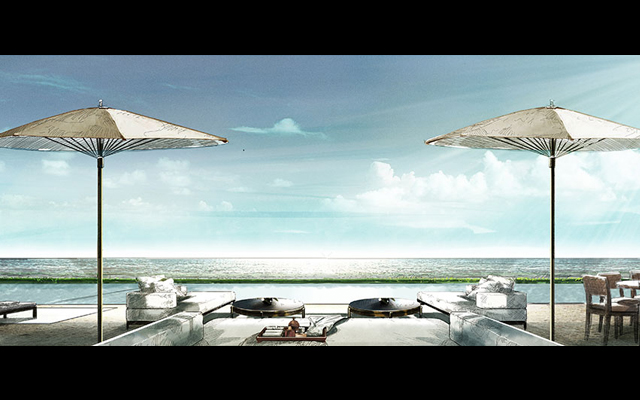
The 210-room hotel will feature a rooftop infinity swimming pool, spa, fitness centre, tennis court and bowling alley, complementing the adjacent shopping area offering 1,170.6m2 of retail space. It is touted to house the city’s largest meeting rooms, and will feature an all-day dining restaurant, speciality bistro and lounge.


Concept art for the upcoming property

Mövenpick Hotel Syhlet Bangladesh is located a few minutes from Sylhet Osmani International Airport. Syhlet is also home to Pangthumai Waterfall, Jaflong hill station, and the largest tea garden in the world.

“This is the second Bangladesh property we have signed in the last 12 months and we look forward to establishing ourselves as the first international hotel chain in Sylhet,” said Andrew Langdon, Mövenpick Hotels & Resorts newly appointed chief development officer and senior vice president Asia, who added that the country’s developing economy will be an important driver to the group’s business.

According to the IMF, Bangladesh was the second-fastest growing major economy globally in 2016, at a rate of 7.1 per cent. The country recorded over 500,000 overseas arrivals last year.


Ctrip starts harvesting Skyscanner synergies

0

Ctrip is running an instant booking trial with Skyscanner, the metasearch site it bought recently, revealed its CEO Jane Jie Sun, in a live Q&A at ITB China Conference on Wednesday.

Interviewed on stage by Phocuswright founder Philip Wolf, Sun said: “We are doing a trial run with Skyscanner…originally, we planned to have the first transaction of direct booking by the end of the year but it has moved faster than expected.

“The reason we can do the test run is because we have invested in Skyscanner; we feel the two companies are one entity. The engineers day in and day out are talking to each other.”

Sun said metasearch sites have an advantage in that they can scale quickly, however the absence of a direct booking facility for customers means users need to jump to another site to finish the transaction.

When approached by TTG Asia for more details on the trial, Sun said: “It’s just a test run, so far it’s been positive.”


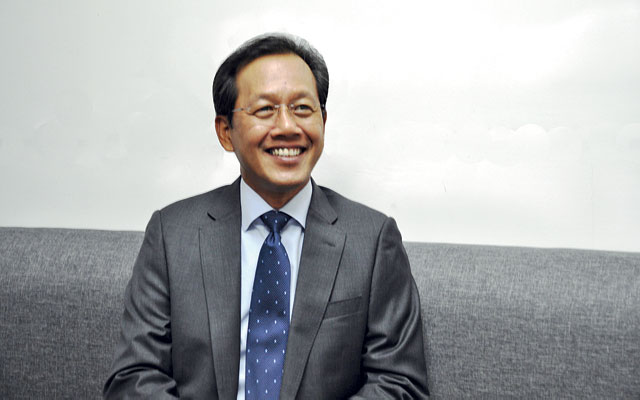
Sun: trial moving faster than expected

Google is also dabbling in instant bookings where, in the footsteps of TripAdvisor, users can complete a hotel room booking without ever leaving the search giant’s desktop interface. Skyscanner in March joined forces with Finnair and Amadeus to enable travellers to book Finnair directly with the airline without leaving Skyscanner.

One analyst report said though Ctrip offers metasearch options in China, Skyscanner being a global leader in metasearch will significantly increase Ctrip’s international reach. If Skyscanner’s capability is provided with Ctrip’s booking functionality, the synergy can increase bookings for Ctrip significantly.

But the jury is still out if instant booking on metasearch engines will work, with Wolf pointing out that TripAdvisor’s pivot to this is “by all indications a disaster”.

He said: “Ctrip manages its own successful future with an uncanny ability to make the right bold moves at the right time. They don’t follow anyone else’s footsteps. That’s the true sign of leadership. And I would keep watching out for pioneering breakthroughs on mobile apps for search/shop/buy/memorialise in travel.”

Ctrip’s unaudited financial results for the first quarter ending March shows a 46 per cent year-on-year net revenues increase to RMB6.1 billion (US$883 million). In a statement, executive chairman James Liang said: “This is the first quarter we consolidated Skyscanner results. By leveraging Skyscanner and other strategic overseas investments, we expect to further strengthen our international product offerings and improve user experiences for both Chinese and international travellers.”

Sun also gave insights into Ctrip’s culture during the Q&A. “We want the company to have the spirit of innovation and the innocence of a small company, but the discipline and focus of a big company,” she said, admitting this is a challenge as Ctrip grows bigger, with 33,000 employees. She said most of them are 25 to 26 years old. “Sometimes I feel we’re in a high school,” she said.

One way she keeps the innovation spirit up is through a “baby tiger” programme, where all young employees are able to pitch business plans to executive members. To-date, there are more than 30 baby tigers, which run as separate businesses.

On how Ctrip decides what to acquire, Sun said: “We’re very disciplined about our investments. First, it must be closely related to our core business, i.e. travel. A lot of people want us to buy a piece of land, for example, we’re not interested, even though it may be a good investment. Secondly, the target must be number one or two in its vertical. Thirdly, it must not only be the leader, the valuation must be reasonable.”

On what advice she has for females leaders, Sun said: “We women have lots of advantages.We are team players, for one, and we always try and strike win-win (results) in any negotiation. If we focus on our strengths, we will go a long way.”