TTG Asia
Asia/Singapore Tuesday, 16th December 2025
Page 1607

New hotel openings: May 8-12, 2017

0
The latest hotel openings and announcements made this week

Element Kuala Lumpur
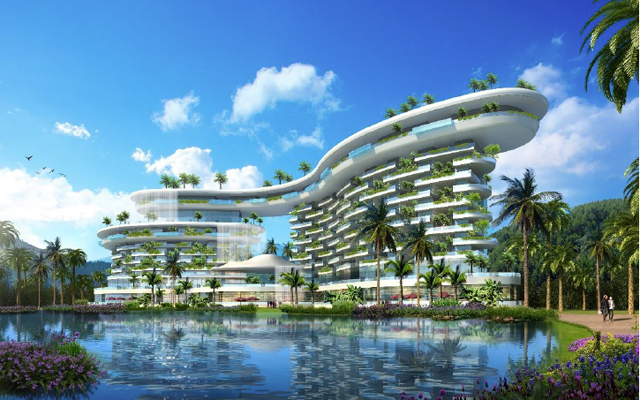
Designed by Foster+Partners, the first Element-brand hotel in South-east Asia has opened in Malaysia with 252 rooms. Housed within the Ilham Tower, the 132 studio units as well as one-, two- and three-bedroom suites are furnished with Smart TVs and a Signature Heavenly Bed. Facilities include the Trace restaurant & bar on the 40th floor, four meeting rooms, plus a pool and fitness centre on level 39. There are also scheduled yoga and Zumba classes, as well as a Bikes-to-Borrow Programme.

Hotel Gracery Kyoto Sanjo South
Standing next to its sister hotel Hotel Gracery Kyoto Sanjo North is the Hotel Gracery Kyoto Sanjo South which opened on May 1. While the North property offers 97 double rooms, the South property offers 128 twin rooms, bringing the total number of rooms to 225. As well, the South property boasts two themed rooms – the Kabuki Room and Kyoto Room – along with the Bon Salute restaurant.

Aviary Bintaro
Located south of Jakarta in Bintaro, Tangerang Selatan and 15 minutes from Jakarta International Airport is the 125-key Aviary Bintaro. Accommodation options come in a mix of hotel guestrooms and serviced apartments. Amenities include the Starling Eatery, Nest Skylounge, a fitness centre, semi-indoor pool and nine function rooms.

Sheraton Grand Mirage Resort, Port Douglas
Renovated to the tune of A$43 million (US$31.7 million), the Sheraton Grand Mirage Resort, Port Douglas on Four Mile Beach is the only five-star beachfront property in Port Douglas. The 147ha resort in Australia’s Queensland now features 295 rooms and suites, including 41 Lagoon Edge Rooms and 12 Lagoon Edge Studio Suites. Amenities include two hectares of swimmable lagoons, an 18-hole golf course and three F&B options. For meetings and events, refurbished spaces include the Mirage Ballroom, which can cater for 300 people theatre-style, as well as the foyer area.

Manila: A city bypassed

0
The Philippine capital city has become a mere transit or bypassed altogether as carriers go straight to secondary gateways. Rosa Ocampo, based in Manila, looks at its plight, which is worsened by other challenges

From several years ago when virtually all tourists arrived at the country’s only gateway at Manila’s Ninoy Aquino International Airport (NAIA), as of January, only 68 per cent do so, with the rest through secondary international gateways.

The percentage of arrivals at NAIA is likely to drop further as, since last year, more non-stop flights have been mounted from the country’s top source markets – South Korea, the US (Los Angeles), Japan and China – to the most popular sun-and-sea destinations Cebu, Kalibo and Caticlan (Boracay) and Palawan, where an international airport has just opened (late-April).

More regional and chartered flights are also expected for Clark, Davao and other destinations outside Manila, said Erwin Balane, chief of route development at the  Philippine Department of Tourism (DoT).

As a result, leisure travellers are bypassing Manila to save time and cost or, if they’re unable to do so, shorten their stay in the metro given their perception that it has few tourist attractions, a lot of grime, traffic congestion and one of the worst airports in the world.

Blue Horizons Travel and Tours senior sales and marketing manager, Marjorie Aquino, said:“For our mainly European clients, Manila is only a drop-off point for tours, with clients spending three-day/two-night upon arrival before embarking on beach holidays, and spending another night in Manila before departing the country.”

While it used to be the destination, “Manila has become a destination for casino players and MICE,” said Rajah Tours president Jojo Clemente.

Within the strip of reclaimed land at the Entertainment City are three integrated resorts and a fourth to be launched within the next three years or so. They were built on the premise of getting high rollers from China that initially didn’t materialise due to the Chinese government clampdown on corrupt activities, said Joey Bondoc, research manager, Colliers International.

These integrated resorts continue to increase the supply of upmarket hotels along Manila Bay which is also known as MICE area. Meanwhile, Colliers has projected 4,000 additional keys to be added to the total stock in metro Manila this year.

Clemente noted that some Makati hotels have already “substantially” reduced their rates from three-and-a-half years ago. “They realise they cannot sustain the rates…only casino hotels can do that,” Clemente explained.

Makati CBD hotels, which used to command the highest rates in Manila (except for the Marriott at Resorts World Manila which is raking in good business), do not any more command a rate premium over their Manila Bay counterparts. There has also been a growing geographical grouping of hotels in Bonifacio Global City, Ortigas and Quezon City.

What to do?
So what’s being done to make Manila more sellable?
The reduced rates may help, along with the weakening of the Philippine peso, from 47.50 last year to 50 pesos to the dollar early this year.

In fact, tourism secretary Wanda Teo in an earlier interview in February lamented the “exorbitant rates” of tour packages including some in Manila. “Throughout my long career in the travel and tour business, travel agents and tourists complained about the expensive tour packages to the Philippines. I found it difficult to market our country with these exorbitant rates,” she said.

Teo explained that other South-east Asian countries, and even Japan, “sell reasonably priced packages, especially after a natural calamity or political upheaval, so foreign travellers would be enticed to visit after a crisis”.

Rajah Tours’ Clemente agreed: “It’s still a price-driven industry especially compared with Thailand, so anything that makes us closer to what Thailand is offering is better for us.”

But to make Manila more sellable, other efforts are being done. A travel consultant has created tours that avoid passing through seedy and grimy areas which the metro has become notorious for.

Philippine Tour Operators Association (Philtoa) president Cesar Cruz noted a “modularisation” in  tours, which entails less travel time through simplified means of transport and better road connectivity. As well, tours that don’t combine cities instead focus on one area like old Manila for example, without crossing over to Makati lest the tourist remembers the traffic congestion the most.

Philtoa is also mapping out tours combining neighbouring cities to lessen travel time, such as Marikina and Pasig for arts and crafts; Navotas and Malabon for culinary programmes; and a branding such as eco-hub for Quezon City tours.

Cruz pointed out there are now tours that were impossible in the past, such as shopping tours in the huge retail and wholesale area in Divisoria which is now cleaner and more organised. There also are some interesting tours of Luzon such as Tagaytay, Laguna and Batangas with Manila as starting point.

Haranah Tours managing director Jasmine Tan said the company has opened Haranah Eco Park in Tanay, Rizal, just a couple of hours from Manila as the easily accessible and bucolic Rizal with its varied landscape of mountains, rivers, caves and waterfalls is not yet known to tourists.

Tan recommends a night’s stay after arrival in Manila and another night before leaving “more for resting and getting to know the capital and the areas around it”.

Clemente suggested encouraging more investors in areas that are not yet popular and in new destinations that can be accessed from Manila, to take back some of the critical mass from major destinations like Boracay and Cebu.

Meanwhile, tourism secretary Wanda Teo is in discussions with Manila stakeholders to revitalise urban tourism in the metro, saying that it is paying the price of progress in the form of traffic, congestion and lack of urban planning.

When dynamism meets heritage

0
Its economic prowess aside, Shanghai is also a powerhouse in tourism, tapping its unique blend of western and oriental influences, old and new to pull in visitor numbers. Prudence Lui takes a look at what makes tourism tick in this megacity

Shanghai’s history may be short vis-à-vis the storied cities of China, but this cosmopolitan city, often dubbed the Paris of the East, and its contrasting blend of old and new, openess, and mix of cultures is often what travel experts find most compelling in its attraction to international visitors.

It is a dynamic city whose tourism scene is constantly brimming with new attractions. The latest additions include Shanghai Disneyland last year; the 632m Shanghai Tower, which launched in January as the world’s second tallest building; and the soon-to-complete Shanghai Haichang Polar Ocean Park.

The Shanghai government is also keen to positon the city as an international destination and has laid out plans for new tourist areas, which include the creation of six national-level tourism areas centred around Sheshan, Dianshan Lake, the Bund and the Dongtan Wetland Park by 2020.

The new attractions notwithstanding, it is still Shanghai’s blend of heritage and modernity that tour operators often look to for inspiration in their creation of novel experiences and packages.

Faces of China, CEO, Cindy Zhang perceives Shanghai as a gateway city that leverages her recent history well. She said: “Shanghai’s rich history over the past 100 years can be seen in many buildings from the Art Deco period. We have Shanghai Museum, one of the best in China, while the Kun Qu opera is an interesting programme to international audience. We have developed several exclusive private programmes led by experts like museum curators, expats and Chinese historians to offer cultural perspectives.”

Zhang added: “Shanghai has a lot more to offer than just the 1930s. Overall, it’s cosmopolitan with strong contrasts and diversity. It is a dynamic destination where changes are happening every day and always fun.”

Frank Gao, vice general manager of Shanghai branch at Century Holiday International Travel Group, shares a similar view and sees Shanghai as a mature destination in both its hard and soft aspects. Repeat visitors no longer opt for sightseeing tours but in-depth experiences, he noted.

“That’s why we offer insightful itineraries combining culture and local livelihood with authentic Shanghainese culinary experience at the Old City of Shanghai. By taking visitors to view architecture with centuries of history, they can immerse themselves and trace how people lived in the olden days,” he said.

Furthermore, for a city already known for its diverse dining options, the launch of the inaugural Michelin Guide Shanghai last year lent a further buzz to its dynamic, cosmopolitan dining scene.

A total of 35 stars were awarded to 26 restaurants in the city, with the T’ang Court of The Langham Hotel clinching the coveted three stars. A further 25 restaurants received the Bib Gourmand recommendation for offering good-value meals for under RMB200.

The guide’s international director, Michael Ellis, said: “The city is an economic and cultural crossroad, and its gastronomy is the result of a strong culinary heritage which makes the dining scene very exciting.”

According to Pudong Shangri-La, East Shanghai, area general manager, Mark Kirk, Shanghai’s allure as a modern city with heritage, multitude of experiences  and attractions makes it more desirable. The addition of the Michelin Star Guide further propelled it into the limelight as an international dining destination.

Futhermore, general manager of Hilton Shanghai Hongqiao, Joseph Zitnik, noted: “Bringing back the image of romantic-old Shanghai paired with the new, vibrancy of our Michelin Star-rated restaurants, only adds to our city’s mystery and luster. The restaurants on the Michelin Star Guide were fully booked upon its release and this is a great lead-in for tourists and locals alike to try new restaurants, foods and experiences.”

Pacific World, destination manager of Shanghai, Violet Wang, commented: “It’s a plus as we can sell our destination by restaurants, food and wine. For programmes in Shanghai, we usually take clients into local outlets that serve traditional Shanghainese snacks or dim sum. With this culinary guide, we will produce a brand-new itinerary with Michelin dining in them.

“However, my concern is that these restaurants are small in size and ideal for group in 30-50 pax only. Therefore, they can’t accommodate big groups and could be very expensive.”

Beating OTAs at their own game

0

WHO The vision of wresting control back from giant OTAs is what led a group of hospitality veterans – COO Yann Gouriou, CFO Martijn Dekker and CTO Bjorn Harvold – to launch Traveliko, a new hotel booking engine that seeks to return pricing control to hoteliers as well as to rebalance travel ethics.

Traveliko takes a flat 10 per cent commission, a rate significantly lower than the 15-17 per cent typically charged by major OTAs in the market now, Gouriou revealed.

Former Miss Universe Natalie Glebova has been appointed Traveliko’s brand ambassador.

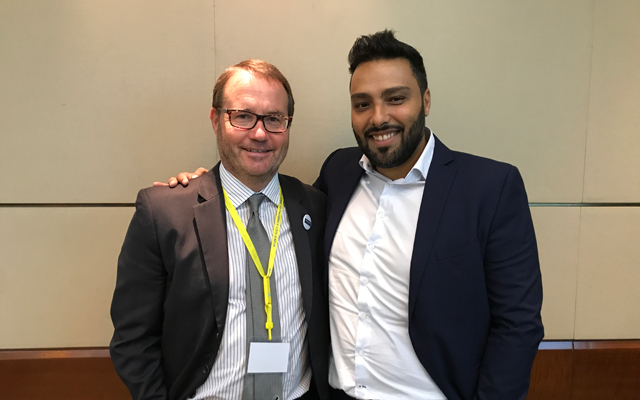
From left: Dekker, Gouriou, Glebova and Harvold

WHAT Every hotel is equally visible on Traveliko, according to Gouriou, unlike other OTAs that charge hotels a premium to improve their rankings on their sites.

Hotels can also choose three main targeted segments (e.g. spa, solo travel and family friendly, etc), enabling hoteliers to leverage their strengths to enhance their visibility on the site while travel customers can better customise their search through filters.

“Because of Traveliko’s fixed low commission, the booking engine has also been optimised for selling additional hotel products that hoteliers would not want to sell anywhere else. It will give customers more options and an overall better experience,” said Harvold.

Hotels, for instance, can package a room together with transfers or a bottle of champagne.
And unlike the current OTA practice of sharing with hotels just basic booking information – date of arrival, etc – Traveliko will include customers’ preferences if they wish to reveal too to facilitate more seamless travel for travellers.

Traveliko will also donate 20 per cent of the net commission to local charities in Thailand selected by guests. “We deem ourselves a social venture too,” added Gouriou.

WHY Traveliko is conceived as a business model to help hotels, especially small and boutique properties, save money on commission and focus on giving their customers a better experience, according to Gouriou.

“We want to give power back to hotels and not aggregate power at the top (of the industry), not to those who made immense profits on the back of the tourism industry.”

“We translated our frustration into solution. We see hotels as partners. I’m a hotel person too, so I want to give hoteliers a solution,” said Gouriou, a former hotel general manager who now heads Bangkok-based Unicorn Hotels & Resorts as CEO.

TARGET Since officially launching in April 2017, Traveliko now boasts 450 hotels in its portfolio, having received sign-ups from international companies like Absolute Hotel Services, Centara Hotels & Resorts, Dusit International and Red Planet, plus other hospitality chains and independent hotels in Thailand, Sri Lanka and the Maldives.

Gouriou hopes bigger chains like Accor and InterContinental Hotels Group will come on board soon, and would like to expand Traveliko coverage across Asia-Pacific through the founders’ personal networks as well as word of mouth.

While the focus will be kept on the B2C side for the time being, Gouriou wants to expand into B2B and flights sector to grow Traveliko into a “travel Facebook” for travellers to create their personal profile, post comments and gain loyalty programme points.

Agents still wanted as Chinese get more involved in travel planning

0

Amid burgeoning information and greater opportunities to travel, Chinese travellers are wanting more personalised holidays while still valuing support from travel service providers, according to Sabre’s Evolving Chinese Traveller Study.

Today, nine out of 10 Chinese travellers say they have the means and are hoping to travel more frequently as compared to five years ago, with top contributing factors being better disposable income (20 per cent), enabling technologies that make travel more convenient (17 per cent) and access to relevant information (15 per cent).

Sabre refers to this as “a new era of ‘mass tourism’”, with travellers starting to pay attention to quality and become more inclined towards personalised travel experiences.

Seventy four per cent of respondents expressed they are willing to spend time and energy on their travel plans, although this does not come at the expense of external support. In fact, 78 per cent of respondents still welcome support from friends, relatives and travel service providers.

From travel agents, respondents mainly wish to get more information on local culture and history (64 per cent), famous local attractions (56 per cent), and more relevant and personalised travel information (52 per cent).

Three to five years ago, respondents felt that there was a lack of travel information available to them (60 per cent). Now, 46 per cent believe there are too many travel options and information available.

Meanwhile, the report noted that the new generation of travellers – comprising digital natives who grew up with the Internet – tend to be more demanding when it comes to travel experiences, and are motivated beyond traditional sightseeing.

The top travel motivations for these travellers are to find an outlet where they can relax (25 per cent), have a good time with friends or family (22 per cent), and seek a better understanding of foreign cultures (17 per cent).

Sabre observed there are two overarching attitudes toward travelling. While 49 per cent of the respondents see travel as a means of personal improvement, over half (51 per cent) say it has become a new form of social currency.

For the latter, this means that travel has become a platform to connect and build stronger emotional bonds (57 per cent), and a way of enriching their life experiences to share with friends and family (56 per cent).

Richard Solomons to step down as IHG CEO

0

InterContinental Hotels Group’s (IHG) CEO Richard Solomons will step down on June 30 and retire from the company on August 30. He joined the group 25 years ago and has served as the chief executive in the last six.

Solomons will be succeeded by chief commercial officer Keith Barr on July 1. Barr joined IHG in 2000 and has held senior leadership positions in IHG’s Americas, Asia, Middle East and Africa (AMEA) and Greater China regions, including four years as CEO of IHG’s Greater China business. He was appointed chief commercial officer in May 2013.

Tourism Malaysia in pact with AirAsia to promote tourism

0

Tourism Malaysia and AirAsia yesterday signed a Memorandum of Agreement, which will see both parties collaborate to promote tourism in Malaysia.

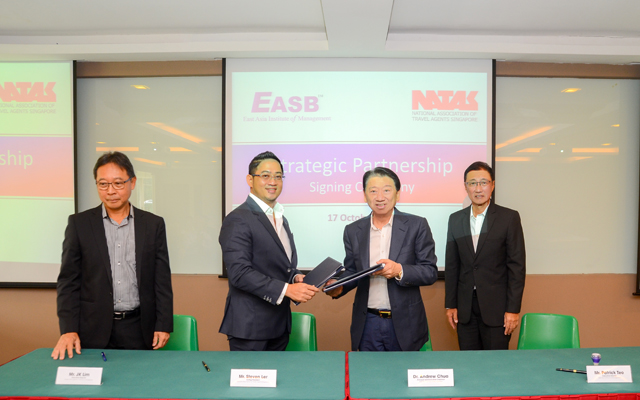
The signing ceremony was held between Abdul Khani Daud, deputy director general (Promotion), Tourism Malaysia and Spencer Lee, head of commercial for AirAsia, and witnessed by Mohamed Nazri bin Abdul Aziz, Minister of Tourism & Culture Malaysia. Nazri was in Shanghai to lead Malaysia’s participation at the inaugural ITB China event.


(From left) Abdul Khani Daud; Mohamed Nazri bin Abdul Aziz, Minister of Tourism & Culture Malaysia; AirAsia’s Lee and Rayner Teo Kheng Hock ​

Abdul Khani Daud, deputy director general (promotion), Tourism Malaysia, said: “Connectivity is the heart of tourism, and this partnership between Tourism Malaysia and AirAsia will combine our marketing efforts, resulting in a stronger awareness and branding for Malaysia as a tourist destination. We look forward to stronger customer demand and confidence in Malaysia as an ideal holiday destination.”

Spencer Lee, head of commercial for AirAsia, said: “Through this partnership, we aim to generate wide awareness and publicity on Malaysia as a preferred leisure and business destination; and boost the country’s tourist arrivals and receipts. This effort is in line with the national objectives, as seen through the newly implemented e-visa entry for China and India, making tourist entry into Malaysia easier and convenient.”

The two-year agreement between Tourism Malaysia and AirAsia will include efforts in terms of brand advertising, promotional activities and campaigns; familiarisation trip for consumer, trade, media, travel agencies to Malaysia; synergy in planning between tourism development and air transportation to provide better connectivity; market intelligence sharing and assistance for the development of Tourism Sector; joint roadshows between both parties to market Malaysia to trade partners; and many more.

Tourism Malaysia and AirAsia will focus on developing promotional activities to promote Malaysia to all 10 ASEAN countries, China, Japan, South Korea, India, Sri Lanka, Bangladesh, Nepal, Maldives, Saudi Arabia, Iran, Australia and New Zealand.

Potential SriLankan Airlines investor backs out

0

Texas Pacific Group (TPG) has pulled out from nearly 10 month-long discussions with the Sri Lankan government over picking up a stake in the country’s debt-ridden national carrier, forcing the authorities to seek other options.

The decision was confirmed on Monday after the US-based private equity firm completed due diligence.

TPG, local firm Peace Air and a Maldivian company were shortlisted for a 49 per cent stake in SriLankan Airlines after the government called for bids last July.

“We have made some preliminary approaches to some airlines for a kind of partnership, though there are no negotiations as yet,” said Sri Lanka’s deputy minister of public enterprise development Eran Wickramaratne, who added that Emirates were among those approached.

SriLankan has been scouting for a partner in the past year as debt accumulated due to a combination of uneconomic routes, prior mismanagement and competition from the Middle East carriers.

Last week, the airline announced that net group loss (before finance and one-off charges) for the financial year ending March 31, 2017 had risen to US$15.1 million from US$3.1 million loss in the previous year.

To cut losses, the airline last year stopped flying to Paris, Rome and Frankfurt but strengthened its regional services particularly to India, where SriLankan operates the most number of flights by any foreign operator.

TAcentre enters digital realm with new tours

0

Online B2B travel platform Asiatravel.com is getting ready to roll out digital tours using the latest technology to offer a unique travel experience.

Asiatravel.com, together with its US strategic partner, Yalla Digital, will develop and operate digital tours in Asia in 2H2017, according to Fred Seow, president of TAcentre.com, the leisure wholesale arm. These tours will kick off in Singapore before expanding throughout Asia from next year.


Seow: utilising AR and object recognition tech in tours

In Singapore, Asiatravel will collaborate with local bodies like the National Heritage Board to produce multiple language videos that are synchronised with the tour itinerary. In addition, each tour will also consist of live enactments of interesting historical stories through a live skit or play.

“Such tours utilise augmented reality and object recognition technologies to enhance the tourist’s overall experience,” Seow said. “All these will translate into a much stronger, deeper and even emotional experience of the destination’s history and culture for the travellers… (giving) tours a new meaning and purpose in this region.”

As well, Asiatravel.com will from mid-July launch a digital tour to Israel, focusing on Israel’s strong cultural heritage to appeal to the Chinese market, he added.

“Since TAcenter.cn’s (TAcentre.com’s localised name in China) launch last October, we have been working closely with various major online (partners) through our B2B API while over 6,000 traditional agents have subscribed to our Chinese web version. We are working hard to develop new products and theme packages for the Chinese market,” he said.

Recognising the increasingly sophisticated Chinese travel market’s hunger for “adventure and new experiences”, TAcenter.cn will at ITB China this week launch a new wedding group tour package to Asian beach destinations, which allows Chinese travellers to experience a wedding solemnisation ceremony and celebration with their family and friends in a foreign locale, Seow told TTG Asia.

TAcenter.cn will also roll out its own chartered flights and packages to destinations not well served by scheduled flights from China. One such charter will connect Nanjing, Xi’an and Tianjin to the twin destinations of Vientiane (Laos)/Udon Thani (Thailand) and Vientiane/Luang Prabang or Savvannakhet, all in Laos.

In addition, TAcenter.cn will introduce the Travel Trade Alliance Club (TTAC), a professionals club programme offering a host of membership benefits, including a professional network for resource sharing, training and enrichment, for sales and marketing personnel in the travel trade sector.

A key benefit of TTAC will be travel packages at special prices for members, said Seow.

“We believe one of the best forms of training for travel trade sales and marketing personnel is for them to visit the destination that they are promoting and to experience it like a customer. These packages will be for their own personal travel with subsidy for both the member and a companion of up to 80 per cent,” he revealed.

Europe embraces the dragon

0

Understanding will be a key theme that the Europe Travel Commission (ETC) will adopt as it rolls out stronger efforts to grow Europe’s success as a destination for the Chinese, which has risen to become the continent’s second largest source market after the US.

Buoyed by easier visa process and increasing flight connectivity, Chinese numbers to Europe have shot up “like a rocket” in the last five years, said Eduardo Santander, executive director of ETC. Last year, China sent about 12 million visitors to the continent, which Santander acknowledges is still a far cry from Chinese arrival numbers to South-east Asia, for example.


Santander: understanding works two ways

“But we want quality over quantity,” emphasised Santander, when asked if the non-profit organisation, which has 32 NTO members, has set any arrival goals for the fast-growing market.

“Certain destinations like Venice and Barcelona are already seeing capacity problems, so we want to spread Chinese tourists to second-tier cities in Europe, which has a lot of heritage, shopping, wine and culture,” he added.

In particular, the Europe-China Tourism Year 2018 has been deemed a high-priority initiative by both the European Commission and Chinese government to not just attract the Chinese to Europe but to enhance their understanding of Europe.

Santander is quick to point out that the understanding will work in a two-way direction, as training and education will be provided to European operators to better cater to Chinese travellers, whether it’s making sure that there’s availability of hot water, Mandarin-speaking staff and CCTV channel at hotels.

More research and analysis will be undertaken with UNWTO, WTTC and European Tour Operators Association (ETOA) to better understand what Chinese travellers are seeking in Europe, he elaborated.

More attention will be devoted to the FIT market from China, especially as a new class of Chinese traveller no longer wants the traditional experiences in Europe, he added. “(They are) trying to discover the hidden tracks in Europe,” he remarked.

Emphasis will also be placed on fostering partnerships with craftsmenship industries like fashion and watch-making, which are “good magnets” for the Chinese to visit Europe to buy original products where they are produced, said Santander.

“We sell Europe as a collection of experiences – the history, wine, gastronmy, music, shopping, and so forth,” he added.

At ITB China 2017, where Europe is the official partner destination, ETC – together with ETOA, Welcome Chinese and China Outbound Tourism Research Institute – have come together to match 150 European tourism suppliers with the corresponding number of Chinese buyers with the World Bridge Tourism project.