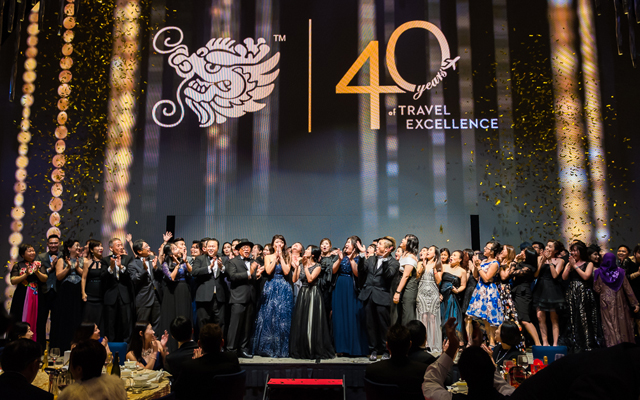
A spirited celebration with partners and loyal customers
Singapore’s Dynasty Travel recently commemorated its 40th year milestone with 350 guests at the JW Marriott Singapore South Beach.
There’s plenty in its 40 years worth celebrating, the agency says, including being the first local travel agency to have a website that offers online payments for group tours, and also the first to have a proprietary iPad reservation system.
A spirited celebration with partners and loyal customers
Going forward, it aims to “scale to new heights of innovation” whether it be in its services or destinations on offer.
As part of its corporate social responsibility commitment, Dynasty Travel has since 2013 been conducting annual charity drives, a recent one being Zumba Glow Charity, which raised funds for the Singapore Children’s Society.
In 2018, it aims to continue helping underprivileged children, such as through a year-long donation drive to help improve children service centres.
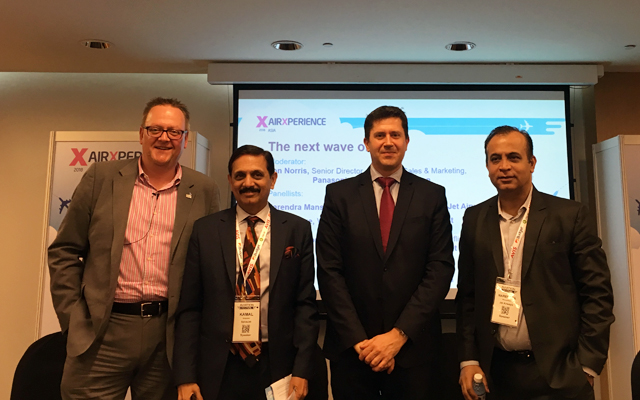
Panasonic Avionics' Jon Norris; SpiceJet's Kamal Hingorani; Inmarsat's Otto Gergye; and Jet Airways' Narendra Mansukhani
Airlines in Asia are increasingly letting passengers take in-flight entertainment into their own hands, as they turn their attention to building in-flight connectivity instead.
At the Aviation Festival Asia, Kamal Hingorani, senior vice president & head inflight services and customer experience of Indian LCC SpiceJet, shared that while installing seat-back screens is inexpensive, the maintenance of the equipment and possibility of glitches would cost the LCC much more.
Panasonic Avionics’ Jon Norris; SpiceJet’s Kamal Hingorani; Inmarsat’s Otto Gergye; and Jet Airways’ Narendra Mansukhani
Instead, the airline will focus on the BYOD (bring your own device) model and instead offer “quality Wi-Fi connection” as well as customised passenger greetings, said Hingorani.
He cited a London School of Economics study, which predicted that more short- and medium-haul flights will adopt BYOD.
Still, SpiceJet may consider alternatives for its future longhaul wide-body aircraft, such as in-seat power.
Jet Airways’ head of guest experience Narendra Mansukhani concurred, and added that the airline has special features on its Boeing 737 Max 8 aircraft for BYOD passengers. These include smartphone and tablet holders, and in-seat power may be introduced for longer flights, such as between Delhi and Singapore.
Both airlines asserted that they will aim to offer in-flight connectivity services free of charge.
New categories include Concerts, Social Dining, and Adventures
Following its recent announcement to expand its core home-booking platform with more categories, Airbnb will by the year’s end increase Experiences from 60 destinations to cover 1,000 cities, including Easter Island, Tasmania and Iceland.
Airbnb says Experience bookings grew by 2,500 per cent in 2017 – 25 times faster than Homes did in its first year. The Trips platform, which houses Airbnb Experiences, was launched in November 2016.
New categories include Concerts, Social Dining, and Adventures
It is also introducing new Experience categories such as Airbnb Concerts, Social Dining, and Adventures, in addition to expanding its existing Social Impact category.
Over 50,000 hosts have applied to host Experiences, but Airbnb says it is stringent about quality. “We select them based around the uniqueness of the offering, and the special expertise and passions of the host,” an Airbnb statement reads.
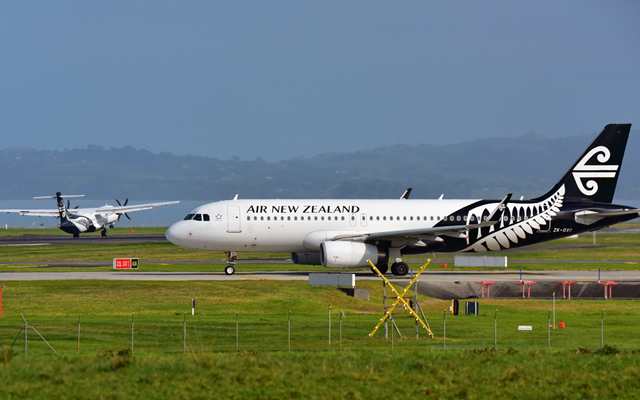
Air New Zealand takes off to Taipei
Air New Zealand will start five-times weekly flights between Auckland and Taipei from November 1, 2018, with NZ77 departing Auckland at 10.35 and arriving in Taipei at 16.50. NZ78 will depart Taipei at 18.30 and arrive in Auckland at 10.20 the following day. With a flight time of just over 11 hours, the non-stop service will be operated by Boeing 787-9 Dreamliner aircraft.
AirAsia links up Hua Hin and Kuala Lumpur
AirAsia will soon begin four-times weekly flights from Kuala Lumpur to the Thai coastal town of Hua Hin from May 18, 2018, marking the Malaysia-based LCC’s seventh destination in Thailand. AK830 will depart Kuala Lumpur every Monday, Wednesday, Friday and Sunday at 10.00, arriving in Hua Hin at 11.00. The return leg, AK831, will depart Hua Hin at 11.30 to land in Kuala Lumpur at 14.35.
Cathay Pacific to launch seasonal service to Cape Town
Cathay Pacific will launch a seasonal non-stop service to Cape Town later this year, its second destination in South Africa after Johannesburg. The thrice-weekly service, operating from November 13, 2018 to February 18, 2019, will be operated by Airbus A350-900 aircraft. The outbound flight, CX795, will depart Hong Kong at 23.45 every Tuesday, Thursday and Sunday and arrive in Cape Town at 08.05 the following morning. On the return, CX794 will take off from Cape Town at 11.05 every Monday, Wednesday and Friday, landing in Hong Kong at 06.55 one day later.
Cebu Pacific Air starts Melbourne-Manila flights in August
Cebu Pacific Air will begin flying out of Melbourne to Manila from August 14, 2018, operating the non-stop service thrice weekly on a 436-seat Airbus A300-330 aircraft. From Manila, 5J049 will take off at 06.05 before arriving in Melbourne at 15.50, while the return 5J050 will depart Melbourne at 17.05 to land in Manila at 23.15.
Nanchang, Pekanbaru added to Scoot’s network
Scoot will begin thrice-weekly flights from Singapore to Nanchang, the capital of Jiangxi Province in south-eastern China, on July 2, 2018. Meanwhile, Scoot will also be taking over sister airline SilkAir’s services to Pekanbaru in Indonesia in 2Q2018. Both services will be operated by A320 aircraft.
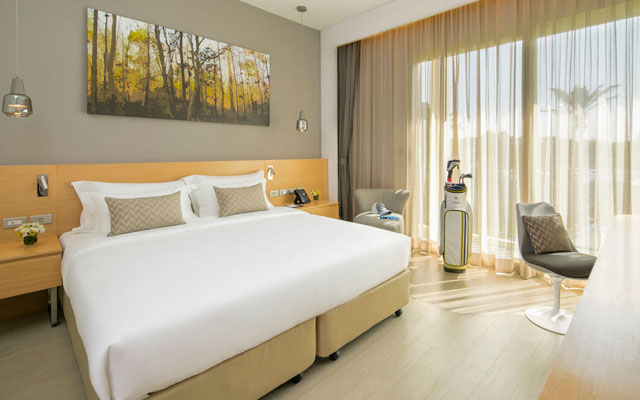
Guests at the resort get access to golf course and sports club facilities
Eastin Thana City Golf Resort Bangkok will open its door within the Thana City mixed-use development on April 1, 2018.
For stays from April 1 to October 31, the resort is offering savings of up to 50 per cent, and introductory rates start at 1,899 baht (US$61) per night for a Superior room.
Guests at the resort get access to golf course and sports club facilities
Thana City, which includes the newly renovated Thana City Golf and Sports Club, is located 10 minutes from Suvarnabhumi Bangkok International Airport and 25 minutes from Bangkok’s downtown area.
Eastin Thana City Golf Resort Bangkok will feature 194 rooms; an outdoor pool; a playground, kids’ club; a 24-hour gym; as well as futsal, badminton, tennis and squash courts.
Guests will also be able to enjoy facilities at the neighbouring Thana City Sports Club, which includes an international-class 18-hole course designed by Greg Norman.
About 60 establishments in Boracay have been issued with notices of violation
A six-month resuscitation effort has begun on Boracay, after the tourist hotspot was recently described by the Philippine president Rodrigo Duterte as a “cesspool” for its water pollution, ecosystem damage, lack of proper town planning, and lax implementation of rules and regulations.
According to the Philippine Department of Tourism (DOT), the Department of Environment and Natural Resources has ordered the closure of tourism establishments in Boracay found violating environmental laws and regulations, including easement as well as water and solid waste disposal.
About 60 establishments in Boracay have been issued with notices of violation
Within six months, hotels without individual water treatment facility must acquire one and have it connected to the centralised sewerage system.
The DOT also stated that in coordination with other government agencies, it will press “criminal and administrative charges against those establishments/operators responsible for the seawater contamination in violation of environmental and tourism laws”.
About 60 establishments in Boracay, including hotels and resorts, have been issued with notices of violation out of the 300 initially identified. The island has approximately 500 accommodation establishments.
Despite the outrage against the desecration of the island renowned for its fine white sand and clear waters, regional tourism director Helen Catalbas said only 192 tourist have cancelled their bookings and that “tourist traffic remains relatively similar or heavier as compared to the past days and weeks”.
In a statement, Boracay Foundation, of which majority of hotels and resorts are members, said it welcomes “the six-month ultimatum” by Duterte to address the island’s issues.
But rather than close Boracay as Duterte had threatened, Boracay Foundation pressed for a simple solution “to strictly implement existing environmental laws and local ordinances and close all erring establishments immediately”.
Tourism Congress of the Philippines president Jojo Clemente agrees that while there’s no denying that Boracay needs to heal itself, “it can be done without adversely affecting establishments that have complied and the people who rely on these establishments for a living”.
“It is now incumbent on the government and the local stakeholders to address the situation in the short, medium and long term,” Clemente added.
Marjorie Aquino, Blue Horizons Travel and Tours’ senior sales and marketing manager, said Boracay’s rehabilitation is long overdue. If the island is continuously destroyed by lack of proper planning and implementation of building clause, she reckons “Boracay will be gone in maybe 10 years”.
“We can still correct things although we cannot bring back Boracay as it was,” she pointed out.
Norwegian looking at adding more routes to Asia from London
LCCs have revolutionised the regional aviation landscape in the last two decades, and now industry experts are expecting the arrival of budget airlines on longhaul routes to shake up the Asian skies too.
The emergence of longhaul LCCs has been sparked by the entry of the “game-changer” Boeing 737 Max 8 aircraft, which enables airlines to fly farther at 40 per cent less trip cost compared to previous narrow-bodies, said Patrick Murphy, executive advisor, Peach Aviation, speaking at Aviation Festival Asia yesterday.
Norwegian looking at adding more routes to Asia from London
The aircraft is currently part of a number of low-cost fleets, including Malindo Air and Norwegian.
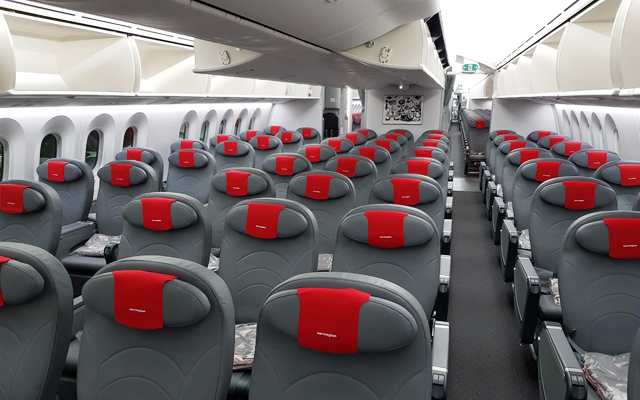
Norwegian’s CEO Bjorn Kjos stated earlier this month that the airline is eyeing future expansion from London to other parts of Asia, pending access to the Siberian Corridor. The airline’s Singapore-London route commenced last September and is currently operated on a 787-9 Dreamliner aircraft.
Con Korfiatis, CEO, flyadeal, observed: “Most of the longhaul demand is coming out of South-east Asia, where people are lapping it up.”
For example, Cebu Pacific’s Manila-Sydney route has doubled in passenger take-up since its launch in 2014, and was “profitable within a year”, shared the airline’s chief operations advisor Rick Howell.
He added that Cebu Pacific will welcome a new fleet of Airbus A321ceo within the next few weeks, when it will be able to take on more passengers per flight.
Korfiatis speculated that as longhaul LCC connections reach critical mass, airlines may start looking out for “selected markets” for their new routes, and added that flyadeal is evaluating “greenfield markets that nobody is flying to yet”.
Update [February 28; 19.03]: The article misstated that Norwegian operates the Boeing 737 Max 8 aircraft on its Singapore-London route. It should be the Boeing 787 Dreamliner.
Come August, Angie Stephen – currently Royal Caribbean Cruises’ associate vice president, market development, China – will replace Sean Treacy as managing director, Asia-Pacific.
From his current base in Singapore, Treacy will relocate back to Miami, where he will take up the new role of associate vice president strategic planning for international.
Stephen will relocate to Singapore to take on Treacy’s role, bringing with her almost 20 years of experience in the company.
In her new role, she will take on the management of the Singapore source market for the Royal Caribbean International and Azamara Club Cruises brands.
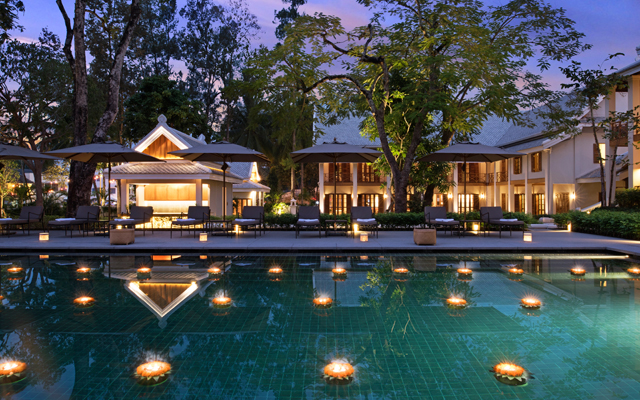
The Luang Prabang hotel will be the first property under Avani's new soft brand
The Luang Prabang hotel will be the first property under Avani’s new soft brand
Avani Hotels & Resorts is introducing a brand extension, Avani+, which will debut in Luang Prabang on March 1, 2018.
Avani+ properties will each have unique elements, whether it be in the architecture, design, location or otherwise.
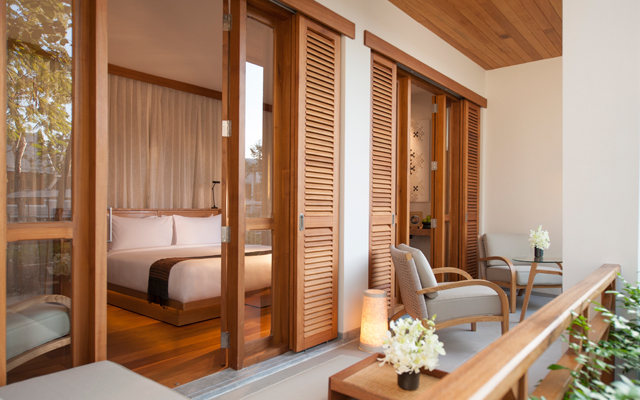
The Avani+ Luang Prabang will feature 53 rooms and suites, each with an open-plan feel as well as a balcony or terrace. Dining concepts will include specialty restaurants and rooftop or al fresco bar concepts.
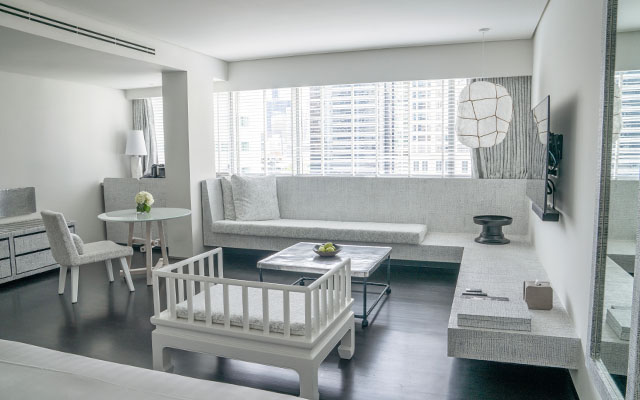
Courtyard Room; the hotel offers a mix of courtyard and pool views
The hotel will also provide a “digital space experience for modern explorers”, offering insight into local culture, hotspots and travel tips about urban cities and, in some cases, off-the-beaten track destinations.
Avani+ Luang Prabang is situated in central Luang Prabang, near the Mekong River, Royal Palace and Night Market.
Launched in 2011, Avani currently operates over 3,800 keys in 15 countries across multiple regions and with a further 3,000 new keys in the pipeline.
Thai Airways reports loss, but RPK was up from previous year
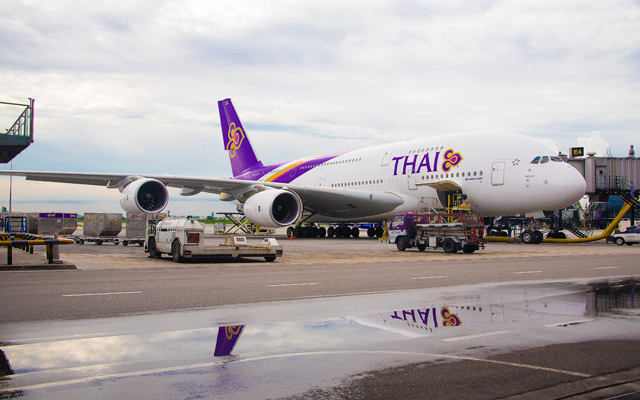
Thai Airways International (THAI) and its subsidiaries posted a 29.8 per cent decline in operating profit to 2.9 billion baht (US$91 million), blaming an increase in fuel costs and a seven per cent fall in average passenger yield.
Total revenue was at 191 billion baht, up 11.4 billion baht, or 6.3 per cent, attributed in part to an increase in passengers and excess baggage revenue.
Thai Airways reports net loss of nearly 2.1 billion baht
Average cabin factor was 79.2 per cent, up from last year’s 73.4 per cent. This represents the highest in the last 10 years, with 24.6 million passengers carried, representing a 10.3 per cent from the previous year. In RPK terms, passenger traffic increased 14.7 per cent.
On the other hand, the airline reported total expenses of 189 billion baht, an increase of 12.6 billion (7.1 per cent), due in part to the rise in fuel expense by 4.9 billion (10.8 per cent).
Overall, the group reports net loss of nearly 2.1 billion baht, after taking into account one-time expenses, which it says were “mainly from the impairment of assets and aircraft and the loss on foreign currency exchange”.
Last year, the Rolls-Royce TRENT 1000 engines installed in THAI’s six Boeing 787-8 had issues with their turbine blades, an issue that affected other airlines too. Having to ground affected aircraft in order to send engines for overhaul resulted in increased cost and lost revenue from impacted schedules. However, THAI says it is in the process of negotiating compensation for such effects.












Air New Zealand takes off to Taipei
Air New Zealand will start five-times weekly flights between Auckland and Taipei from November 1, 2018, with NZ77 departing Auckland at 10.35 and arriving in Taipei at 16.50. NZ78 will depart Taipei at 18.30 and arrive in Auckland at 10.20 the following day. With a flight time of just over 11 hours, the non-stop service will be operated by Boeing 787-9 Dreamliner aircraft.
AirAsia links up Hua Hin and Kuala Lumpur
AirAsia will soon begin four-times weekly flights from Kuala Lumpur to the Thai coastal town of Hua Hin from May 18, 2018, marking the Malaysia-based LCC’s seventh destination in Thailand. AK830 will depart Kuala Lumpur every Monday, Wednesday, Friday and Sunday at 10.00, arriving in Hua Hin at 11.00. The return leg, AK831, will depart Hua Hin at 11.30 to land in Kuala Lumpur at 14.35.
Cathay Pacific to launch seasonal service to Cape Town
Cathay Pacific will launch a seasonal non-stop service to Cape Town later this year, its second destination in South Africa after Johannesburg. The thrice-weekly service, operating from November 13, 2018 to February 18, 2019, will be operated by Airbus A350-900 aircraft. The outbound flight, CX795, will depart Hong Kong at 23.45 every Tuesday, Thursday and Sunday and arrive in Cape Town at 08.05 the following morning. On the return, CX794 will take off from Cape Town at 11.05 every Monday, Wednesday and Friday, landing in Hong Kong at 06.55 one day later.
Cebu Pacific Air starts Melbourne-Manila flights in August
Cebu Pacific Air will begin flying out of Melbourne to Manila from August 14, 2018, operating the non-stop service thrice weekly on a 436-seat Airbus A300-330 aircraft. From Manila, 5J049 will take off at 06.05 before arriving in Melbourne at 15.50, while the return 5J050 will depart Melbourne at 17.05 to land in Manila at 23.15.
Nanchang, Pekanbaru added to Scoot’s network
Scoot will begin thrice-weekly flights from Singapore to Nanchang, the capital of Jiangxi Province in south-eastern China, on July 2, 2018. Meanwhile, Scoot will also be taking over sister airline SilkAir’s services to Pekanbaru in Indonesia in 2Q2018. Both services will be operated by A320 aircraft.