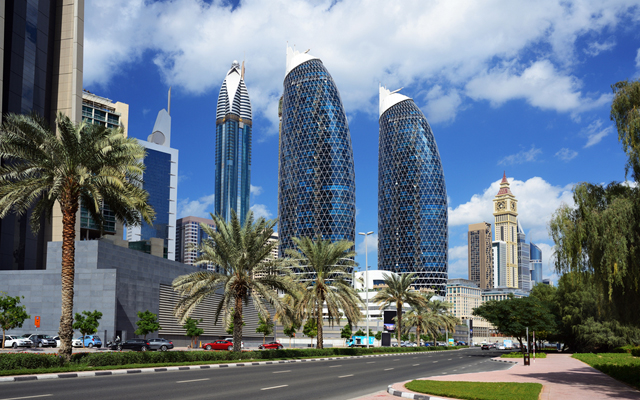
ATM2018 takes place at the Dubai World Trade Centre this April
Chinese arrivals to the GCC will surge 21 per cent to reach 2.5 million visitors annually by 2021, Reed Travel Exhibitions said ahead of its Arabian Travel Market (ATM) show this year, citing data published by Colliers International.
The data predicts Saudi Arabia will experience the highest proportionate increase in arrivals from China, up 35 per cent on 2016 figures. The UAE will follow at 20 per cent, with Oman at 12 per cent and Bahrain and Kuwait at seven per cent.
ATM2018 takes place at the Dubai World Trade Centre this April
GCC countries currently attract 1.9 per cent of China’s total outbound market, up from 1.3 per cent in 2012, however positive trends are expected to continue as 154 million Chinese tourists prepare to go abroad in 2018 and a predicted 244 million follow in 2022.
Moreover, the number of Chinese Muslims visiting the two Holy Cities is expected to increase from the current 15,000 annually, as China’s Muslim population grows to account for 2.1 per cent of the total population by 2030.
Further enhancing awareness of Arab culture in China, in 2017 Saudi Arabia loaned Arab artefacts from the pre-historic, pre-Islamic and Islamic periods to Chinese museums.
Simon Press, senior exhibition director, ATM, said: “Owing to its many business opportunities and new leisure attractions, figures show the GCC is poised to further capitalise on these trends over the coming years as millions of Chinese make their first international trip.
“Over the years, sentiment at ATM has reflected the growth in Chinese tourists to the GCC and today we have seen more businesses than ever before eager to capitalise on the opportunities presented by the Chinese market.”
Reed Travel Exhibitions shares figures from ATM 2017, which show the number of delegates, exhibitors and attendees interested in doing business with China had increased 63 per cent on the previous year. The number of delegates arriving from China was up 28 per cent.
This year’s ATM, taking place at Dubai World Trade Centre from April 22 to 25, will host a discussion in the in the Showcase Theatre exploring the opportunities surrounding China’s 500 million millennials, with a presentation hosted by Chloé Reuter, founder of Reuter Communications.
On day two of the exhibition, the Travel Tech Theatre will host the panel discussion “What Middle East Businesses can do to capture the attention (and wallets) of Chinese luxury travelers”. The panel will be chaired by Reuter and consist of representatives from Dubai Tourism, Tencent’s WeChat and Emaar Hospitality.
Chinese exhibitors at ATM 2018 will include Guizhou Province and Fuijan Province, Zumata, XML Holiday, DidaTravel, Toursworld, DLC and Bonotel Exclusive.
ATM welcomed over 39,000 people to its 2017 event, including 2,661 exhibiting companies, signing business deals worth more than US$2.5 billion over the four days.
akyra TAS Sukhumvit Bangkok
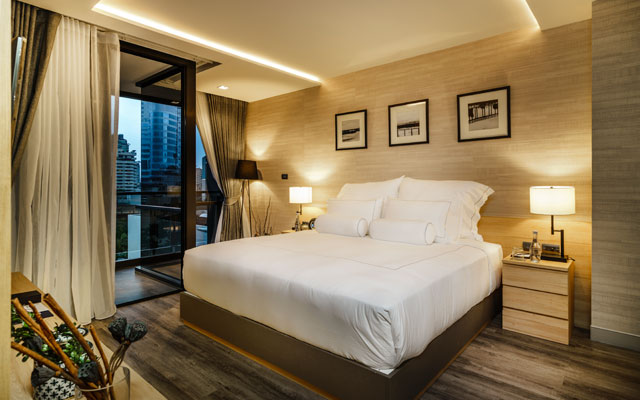
When open in May, akyra TAS Sukhumvit Bangkok is set to be the first in Asia to operate without single-use plastic in its rooms and F&B outlets. At the 50-key hotel, guests will be given stainless steel water bottles on arrival, which they can refill throughout their stay. Self-service drinking water will be dispensed on every floor. In addition, bathroom amenities will be presented in locally manufactured “celadon” pottery containers, bio-degradable bin bags will be used in all rooms and shopping bags will be available to encourage guests to refuse plastic bags when out shopping. The hotel is already taking advance bookings.
MGM Cotai
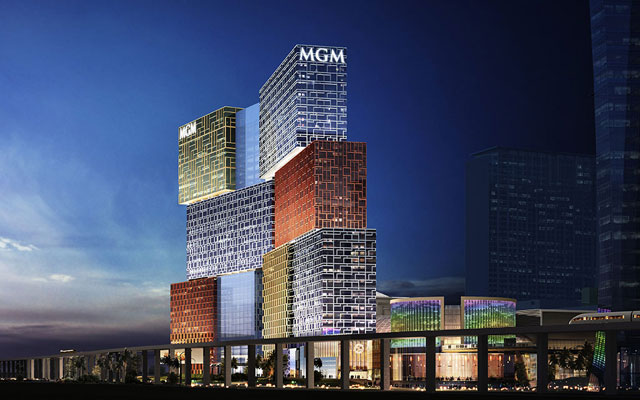
MGM Cotai has opened in Macau featuring 1,400 hotel rooms and suites, as well as the first international MGM Mansion, an extra luxurious and exclusive resort. Hotel facilities include meeting space, spa, retail offerings and F&B outlets. There is also a theatre on-property, where guests can choose from resident shows including The Experience, a 10-minute “technological symphony” inspired by the destination; the Destiny theatrical production, inspired by the concept of TV game shows and video games.
Sedona Suites Ho Chi Minh City’s Grand Tower
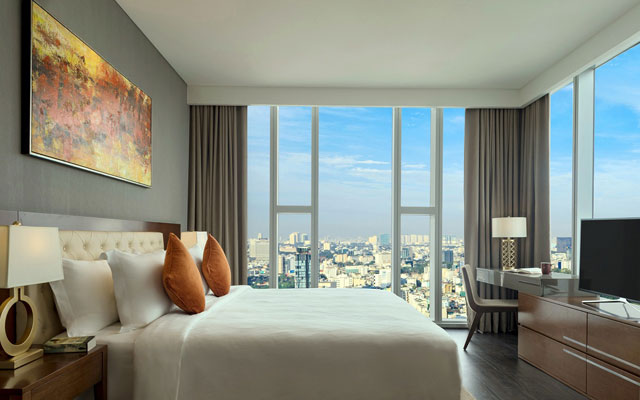
Sedona Suites Ho Chi Minh City’s Grand Tower has commenced operations at the Saigon Centre mixed-use development, located in the heart of Ho Chi Minh City’s CBD in District 1 along Le Loi Boulevard. The Grand Tower offers 195 serviced suites – from studio to three-bedroom – spread across levels 28 to 42 of Saigon Centre Tower 2. Guests enjoy access to a swimming pool, Jacuzzi, sauna, residents lounge and the California Centuryon fitness centre on level six. Services such as 24-hour concierge and security, laundry and dry-cleaning, room service and airport transfers are also available. Guests will also be given preferential rates to use a serviced co-office on level 21.
Ann Siang House
Ann Siang House, formerly known as The Club Hotel, will reopen in March. A conservation property restored from a 1920s shophouse, the hotel will feature 20 guestrooms, some of which come with fully equipped kitchenettes and balconies. The revamp will bring additional common areas, new furniture and artwork and a refreshed façade, while the Blue Label Pizza & Wine by Travis Masiero Restaurant Group has already opened on the basement level. The second phase of Ann Siang House is set to be unveiled in 1H2018.
Cathay Pacific, JetBlue, Lufthansa, Qantas, and United have made investments by forward-purchasing 1.5 billion gallons of SAF
Ten years since the first flight took off on a mix of jet and sustainable aviation fuel (SAF), IATA is aiming for one billion passengers to be carried by flights powered by SAF blends by 2025.
“The momentum for sustainable aviation fuels is now unstoppable. From one flight in 2008, we passed the threshold of 100,000 flights in 2017, and we expect to hit one million flights during 2020. But that is still just a drop in the ocean compared to what we want to achieve,” said Alexandre de Juniac, IATA’s director general and CEO.
On February 24, 2008, a Virgin Atlantic Boeing 747 flew from London to Amsterdam with sustainable aviation fuel in one of its engines. The flight demonstrated the viability of drop-in biofuels, which can be blended with traditional jet fuel, using existing airport infrastructure.
Cathay Pacific, JetBlue, Lufthansa, Qantas, and United have forward-purchased 1.5 billion gallons of SAF
A flight completely powered by sustainable fuel has the potential to reduce the carbon emissions of that flight by up to 80 per cent, according to IATA.
The push to increase uptake of SAF is being driven by the airline industry’s commitment to achieve carbon-neutral growth from 2020 and to cut net carbon emissions by 50 per cent compared to 2005.
A number of airlines, including Cathay Pacific, JetBlue, Lufthansa, Qantas, and United, have made significant investments by forward-purchasing 1.5 billion gallons of SAF. Moreover, airports in Oslo, Stockholm, Brisbane and Los Angeles are already mixing SAF with the general fuel supply.
On the present uptake trajectory, it is anticipated that half a billion passengers will have flown on a SAF-blend powered flight by 2025.
“We want one billion passengers to have flown on a SAF-blend flight by 2025. That won’t be easy to achieve. We need governments to set a framework to incentivise production of SAF and ensure it is as attractive to produce as automotive biofuels,” de Juniac said.
For the billionth passenger to be carried on an SAF-blend powered flight by 2025, IATA says the following needs to happen: allow SAF to compete with automotive biofuels through equivalent or magnified incentives; provide loan guarantees and capital grants for production facilities; support SAF demonstration plants and supply chain research and development; harmonised transport and energy policies, coordinated with the involvement of agriculture and military departments.
Acknowledging that some sources of land transport biofuels have been criticised for their environmental credentials, de Juniac emphasised the determination of the industry to only use truly sustainable sources for its alternative fuels.
Location
Formerly Luk’s Industrial building, the new 298-room hotel stands at the periphery of the Tuen Mun industrial area, with the West Rail terminal station and shopping mall only a three-minute walk away. The Tuen Mun Ferry pier is about a 10-minute drive away and offers daily ferry connections to Macau.
Room
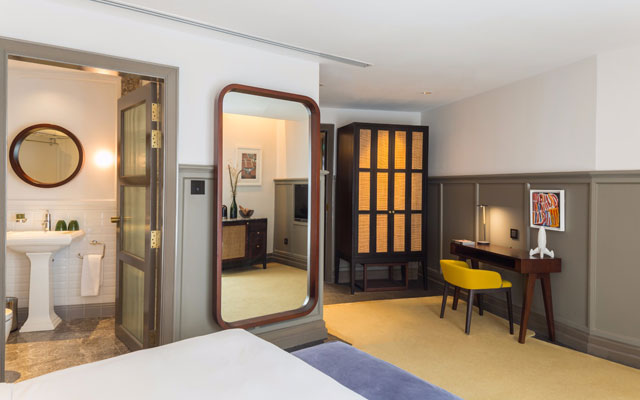
The 35m2 penta PlayerPad room (of which there are eight only) I stayed in was spacious with a three metre-high ceiling. The building’s former manufacturing past is revealed through clever in-room touches such as a bathroom sliding door designed like a black iron gate, black rotary dial phone, light bulbs hanging from the high ceiling and a retro metal chair.
What set this room apart from other categories are two wall-hung flat-screen TVs, one of which is dedicated for games – guests may borrow the game CDs from reception. Also, thumbs up to the smart design of panels with power switch, electricity plugs and two USB charging outlets on both sides of the king-size bed. An extra plug and USB can be found near the writing desk.
There’s no in-room fridge but vending machines are available on the ground floor for snacks and drinks.
F&B
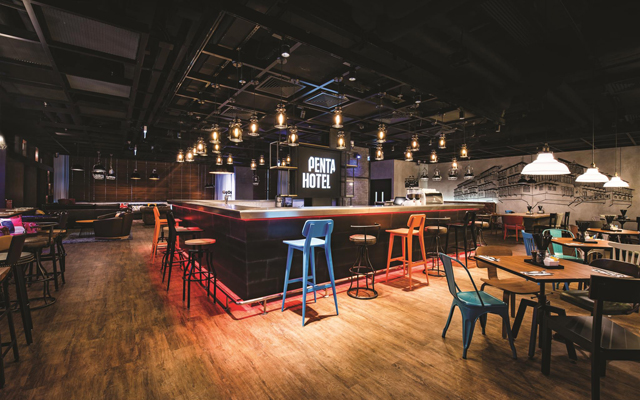
The 160-seat Pentalounge is the only restaurant serving set and a la carte meals. Buffet breakfast is occasionally available when big groups check in.
However, the restaurant offers regular festive F&B promotions for guests i.e. late-night snacks during Chinese New Year period till 02.00 and seasonal fresh yacon juice (known as Peruvian ground apple).
Facilities
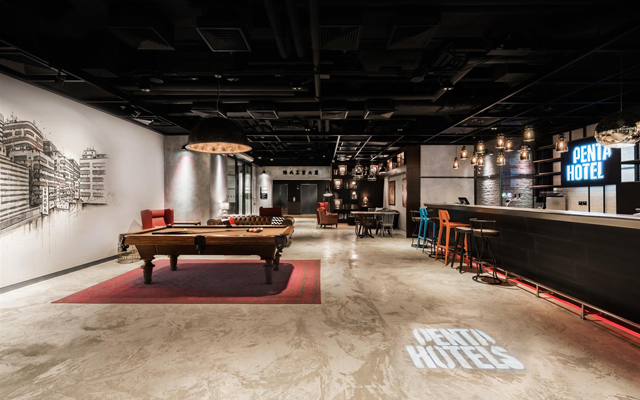
Unlike its sister property located in Kowloon, the newcomer’s signature 24/7 Pentalounge concept is split into two floors – a combined lobby, reception and bar on the ground floor while the lounge is situated on the first floor. Both venues feature free snooker games. Guests may borrow board games to kill time or ascend to a well-equipped gym room anytime as it’s open for 24 hours.
Service
Services are friendly and efficient.
Verdict
Great location, allowing one to easily find what you need within walking distance.
How is Blacklane is disrupting the market?
In our perspective, there are two ways of disrupting the market, one is the destructive way and the other, constructive.
Destructive means you are risking the existing infrastructure and shaking everything upside down. The constructive way is by leveraging the infrastructure, working with existing parties and providing a new service experience to all parties involved.
How are you constructive?
We work with existing local players. Typically in every market, 70 per cent of these players are small businesses owning, say, three cars and employ two drivers, and offer chauffeur service to their usual customers, mainly domestic. They are fully licensed and strictly follow the rules and regulations. However, they are 20 per cent utilised and are hungry for the inbound market but don’t have the technology and network to reach this international clientele.
By bringing them onto our platform, we can ramp up their utilisation rate from 20 per cent to 80-90 per cent. Because of that, the price for such a service becomes more realistic and affordable for more people. For a 20 per cent utilisation rate, they have to ask for high prices, but now that they have so much more business, they can accept lower prices. At the end of the day, they still have more money in their wallet.
On the other side, previously, it’s almost unaffordable for people to be chauffeured in beautiful cars around the world. Not only because the cost is prohibitive, but because it’s not available or accessible in an easy manner. We have a sleek booking process (app and web) and customers can access the service on a global basis. It’s reliable – we dispatch the algorithms to achieve capacity utilisation and whenever you place a booking, we guarantee we will fulfil it.
It’s also about the quality of the experience.
How much more affordable are you compared to the legacies?
We are a third of the pricing of the old limousine service networks. Sometimes, we are even 10-20 per cent cheaper than a taxi in some markets. But often we are also 10-20 per cent more expensive than a taxi, but this is fair as our service is so much better.
How do you charge?
We calculate the fare on a kilometre basis: the longer the distance, the more you pay. The traditional industry does a flat rate, which never works because you end up either overpaying or underpaying. It’s not fair. You can also book us by hours, one hour, four, a day – when you have multiple meetings in the city and you have luggage with you, you want to leave it in the trunk and you want to have a driver with you the entire day.
Our fares are transparent, all-inclusive – you don’t have to pay tip or taxes. And you can cancel a booking as late as one hour before the pick-up. Typically this would have required a 48-hour notice and at least a 50 per cent cancellation fee.
How did this idea come about?
In my previous job as consultant with the Boston Consulting Group, I was myself a heavy international business traveller. I was constantly in planes, running all over in airports, sometimes stranded in the middle of nowhere and sometimes sitting in nice cars, other times not in so nice cars.
If I go to say Beijing or New York, I would need to contact the local office, find out who the experts are in the market; they would send me the contacts of three small players, I would call them only to find they didn’t have a car left. Or if they had a car, they would ask me to send them an email or even a fax with all my details. So you’re constantly stressed out by the logistics.
But aren’t you destructively disrupting the airport transfer business, a lucrative one for tour operators?
The prices of airport transfers are opaque and often, too expensive. So indeed we are disrupting it. But tour operators can partner and benefit from us. It is not their core business to identify the right, high quality and consistent transfer provider worldwide. This is our core competency. We have a global network of these service providers. Tour operators are good at packaging (tours); when it comes to transfers, their best bet is to partner us instead of doing it on their own.
Won’t you yourself be disrupted by the future of mobility – autonomous vehicles?
We won’t. It would disrupt the car rental business, not us. Our customers want to be driven, they don’t want to drive. If I were a car rental player, that would make me nervous, because my entire business foundation is gone.
And that’s why the Avis’s and Hertz’s of the world are taking action now – Hertz for instance has a global partnership with Blacklane; it offers (since spring last year) a chauffeur service powered by us. This complements nicely their self-drive service. We have other players whom we’ll be cooperating with, although we can’t make that public yet.
And what if Hertz or Avis launch their own version of Blacklane?
(Laughs) It’s a lot of work to do, I can tell you that. It is difficult to do this on an international scale. Worldwide, we have tens of thousands of cars already and they aren’t leaving the network because they appreciate the platform. Five years ago, nobody knew us. But because we deliver, somehow our name grew and we now receive applications from the small players to join us.
(Editor’s Note: Blacklane’s global network of professional driver partners covers more than 250 cities and 500 airports in 50 countries. This year, Blacklane said it would reach more than 300 cities, with major growth across the Middle East and Africa.)
What about ride-hailing apps – Uber, Grab – don’t they work against you?
They are nice handover points. They are our partners. The industry – Uber, Grab, taxis – they play in the inner city. The short-distance mobility game is their space. When you go from a hotel to an exhibition centre, it’s a 10-minute ride, four to five kilometres, that’s not Blacklane. It’s too short to enjoy this beautiful car (this interview was done in a Blacklane car; present was also Lo Li-Wen, Blacklane’s regional director APAC who was responsible for the group’s rapid expansion in the region in the last 1.5 years). Blacklane is strong in long distance. We bring passengers into the city, and out. Or, we bring them from, say, Singapore to Kuala Lumpur, or Philadelphia to New York. This is our world. Then we had over the people to the local operators in the inner cities.
So who uses you, mainly corporate travellers?
Yes, but a good third are leisure travellers. Imagine the scenario of a family with kids. They want a child seat in the car and and space for luggage. We charge per car, not per person, and you can request a child seat, and the car will arrive equipped with the child seat without additional costs. You don’t want to stand in a taxi line at the airport and hope to find a big enough taxi for this. We’re neat for families.
In its third edition this year, the two-day HSBC Singapore Rugby Sevens has become a staple in the country’s sports events calendar. As the eighth of the World Rugby Sevens’ 10 legs, this year’s tournament will take place on April 28-29 at the 55,000-capacity Singapore National Stadium.
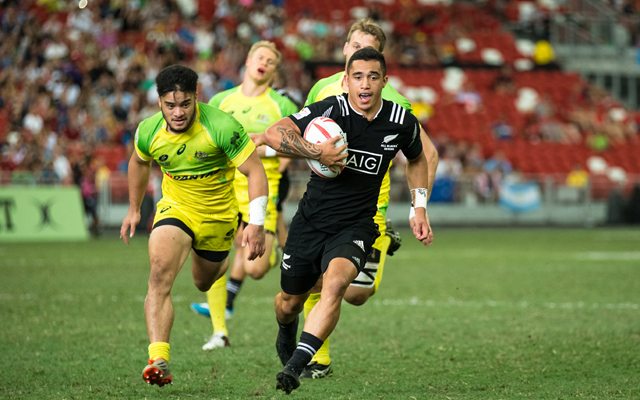
New Zealand Sevens team (black) played against Australia Sevens team (yellow and green) during Singapore Rugby Sevens 2016
Supported by the Singapore Tourism Board (STB) and government agency Sport Singapore, the two-day event lines up 45 matches between 16 rugby teams, with fringe festivities and parties organised at Clarke Quay, and around the Singapore Sports Hub.
Tale of two cities
As the Singapore Rugby Sevens grows in prominence, comparisons to its sell-out counterpart in Hong Kong – the tournament’s flagship that started way back in 1976 – have inevitably surfaced.
“It’s still early days for the Singapore Sevens,” said Darren Tan, managing director of World Express Singapore. “There were a lot of good vibes at the (Singapore) games, but it’s not at the level of Hong Kong’s yet.”
Angela Ng, managing director of Blue Sky Travel in Hong Kong, thinks that the Singapore leg can’t compete with its Hong Kong counterpart yet “given the rapport Hong Kong has built for years” in organising the event. “It takes years to nurture an international event,” she added.
Some agents express uncertainty about the sport’s draw in Asia. Tan observed: “(Rugby) has a strong but specific following. I was there to watch (the Singapore Sevens) last year and the followers were largely expatriates in the region. It’s good for the destination, but it’s a very special and niche market that’s very fan-based.”
BeMyGuest’ chief commercial officer Graham Hills thinks that fans who “only commit to one event per year will likely select Hong Kong due to its profile and popularity”.
But as the game spreads its wings in the region, proponents see the two Asian Sevens being complementary to each other, bringing opportunities for both tournaments.
David Lim, chairman of Rugby Singapore, noted that there has been a “rise in popularity” for rugby in Asia, particularly driven by Japan’s recent victories in the sport as the country prepares to host Asia’s first Rugby World Cup in 2019 and the 2020 Summer Olympics.
It’s a similar sentiment shared by Robbie McRobbie, CEO of Hong Kong Rugby Union, which organises the Hong Kong Sevens.
“It’s been great to have the Singapore Sevens return to the HSBC World Rugby Sevens Series – if we are going to push the growth of rugby in Asia we need to build the number of international marquee events that are hosted here,” he opined.
Last year, Singapore Sevens attracted 36,000 spectators, of which 24 per cent of were foreign visitors, and the event generated a total economic impact of S$23.5 million (US$17.7 million). This year, the organisers are targeting a crowd of 60,000, which will surpass its first-year high of 52,000 in 2016.
Jean Ng, director, sports, STB, told TTG Asia that as the only South-east Asian host in the World Rugby Sevens Series, Singapore aims to “draw more visitors from our proximity markets such as Malaysia and Indonesia”.
“We see the Singapore Sevens as one of the tentpole events that can bring fans and people from around the world to Singapore. We are currently in talks with agents, family-friendly attractions and retail options for partnerships.”
David Lim, Chairman, Rugby Singapore
A family-friendly sport
As a young event, the trade is hopeful that Singapore Sevens can carve its own identity with its own selling point, making it equal parts festive and sporting.
BeMyGuest’s Hills suggested: “Rather than compete against Hong Kong, it’s more effective (for Singapore Sevens) to create a unique-to-Singapore aspect to help differentiate and create its own tradition. Growing the event to create more of a festival atmosphere… helps to create a true family affair and increase its popularity.”
For this year’s edition, Singapore Sevens is pushing beyond its sporting roots to become more family-friendly. It will feature the Singapore Rugby Carnival, offering activities such as face painting, themed challenges, inflatable stations and photo booths, in addition to local bands and food.
Lim explained: “We want that diverse variety of activities – not just sports – that will engage and bring people here. This is something we want to use to distinguish ourselves from every other stop in the World Series.”
For example, the event aims to “incorporate a very strong element of food around the precinct of the stadium”, as well as cultures of the 16 nations participating in the tournament, said Lim, so that the Singapore Sevens can offer attractions for travellers and non-rugby fans too.
“We see the Singapore Sevens as one of the tentpole events that can bring fans and people from around the world to Singapore. We are currently in talks with agents, family-friendly attractions and retail options for partnerships,” he shared.
Rugby Singapore has stepped up partnership talks with attractions and travel agents in Singapore and around the region. Last year, 200 tickets were sold through travel agents; this year’s goal is set between 500 and 1,000.
What’s needed now, say agents, is increased collaboration with the organiser. General manager of Diethelm Travel, Judy Lum, suggested: “The organiser should consider having a dialogue with the local DMCs… to promote (the event) to overseas tour operators.”
Samson Tan, founder/CEO, GTMC Travel, proposed leveraging the National Association of Travel Agents Singapore as a communication platform with agents to maximise marketing distribution.
Already, the event is poised to raise tourism numbers between Singapore and Fiji, which is the current Olympic Champions in Rugby Sevens.
“In 2017, Fiji Airways brought in hundreds of Fijian rugby fans who travelled all the way to Singapore to watch the Singapore Sevens,” said Shaenaz Voss, the airline’s executive general manager, international and government affairs. “We expect numbers to continuously increase year on year.” – additional reporting from Prudence Lui
Le Bokor Palace Soft Opening 9 February, 2018 A luxurious and historical Hotel since 1920s is renovated for re-opening
Le Bokor Palace is a luxurious and historical hotel since 1920s situated on cliff at the top of Bokor Mountain (Kampot Province, Kingdom of Cambodia). The hotel offers breathtaking view of mountain and coastline, as known as the health resort that offers natural treatment to visitors.
Because of its cool climate and fresh air, it contributes and promotes blood regeneration, lungs, heart, breathing, nutrition, nervous system, regain strength and health. (Source: from Dr Vallet, Director of Cambodia’s Health Service, 1925)
Le Bokor Palace located between the tropical forest and the “Opal Coast” on Preah Monivong Bokor National Park, nearby Kampot Province and was inaugurated on 14 February 1925 to host royalty and elites for decades. The hotel was revived in the early 1962 by Preah Karuna Preah Bat Samdech Preah Norodom Sihanouk, and served members of high-ranking officials, governments and wealthy business people, and it used to be Preah Karuna Preah Bat Samdech Preah Norodom Sihanouk’s favorite retreat vacation.
Perched on a cliff at the top of Bokor Mountain, this historical hotel commands breathtaking views of what the French once called the Opal Coast. The weather on top of Bokor Mountain ranges between 17 °C – 24 °C (62.6 °F – 75.2 °F) for whole year round. Bokor Mountain is not just tourist destination for traveler, but also a health resort with natural health treatment that effects on lung, breathe, nutrition, nervous system, enable blood regeneration, and regain strength. (Source: from Dr Vallet, Director of Cambodia’s Health Service, 1925)
Le Bokor Palace is four-storied building, toughly and neatly designed, has a powerful presence, embellished with decks and Italian-style pergolas.
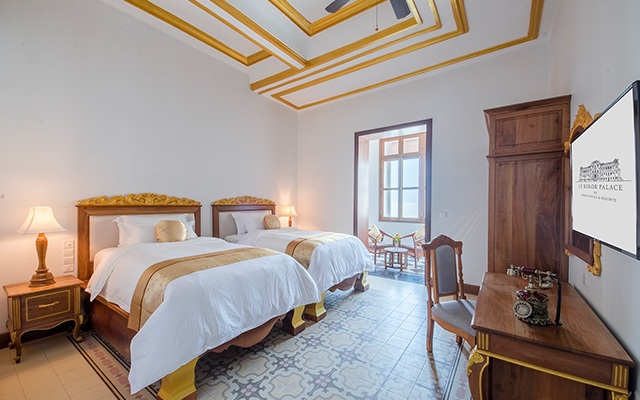
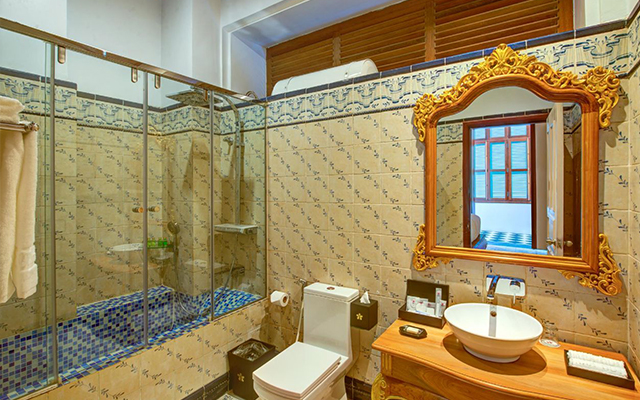
Today, Le Bokor Palace is restoring by Sokha Hotels & Resorts. “Le Bokor Palace is a historic hotel that is Cambodia’s treasure, our company has fully refurbished the building, preserving the original features and recreating its colonial interior design, with bathroom fixtures imported from Italy and ornate floor tiles from Spain. After extensive renovation of this grand colonial building for opening in early 2018, Le Bokor Palace includes 36 luxurious rooms and suites.
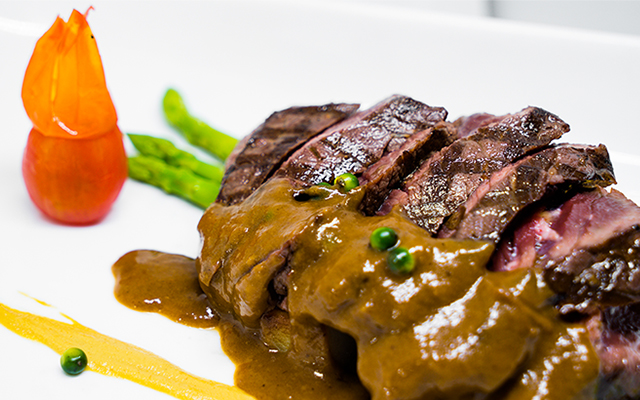
“Its two restaurants capture the elegance of the hotel’s historic past, with Swiss and Cambodian chefs are preparing both 100 year of renascence menu and Royal Khmer cuisine with freshest organic vegetables and ingredient that grown nearby organic farm. Name Le Bokor Palace is maintained and reserved as the historical French colonial and Preah Karuna Preah Bat Samdech Preah Norodom Sihanouk,” commented Mr. Frugere F. Philippe, General Manager of Le Bokor Palace.
The remains of the colonial settlement – which included Japanese house, Catholic Church, Wat Sampov Pram, Domnak Sla Kmao, Damnak Sdech, City Hall and other colonial buildings – can still be seen today, spread out across a plateau and often shrouded in mist.
While visitor stay at Le Bokor Palace known as nature health resort can also visit the spectacular of Mountain Lake, beautiful Popokvil waterfall, Rock formation various shapes of rocks at 100 rice field and a unique shape of rock symbolize a gate between heaven and earth. Meditation is recommended on Bokor Mountain especially at 500 rice field. Bokor Mountain is the only place in Cambodia that has Nepenthes flowers, the local use the flowers for medicine.
Le Bokor Palace includes 36 luxurious rooms and suites. Its two restaurants capture the elegance of the hotel’s historic past, with Swiss and Cambodian chefs are preparing both 100 year of renascence menu and Royal Khmer cuisine with freshest organic vegetables and ingredient that grown nearby organic farm.
Singapore does not lack global brands – think Singapore Airlines, Changi International, Banyan Tree Hotels & Resorts, Como Hotels and, in other industries, Osim (massage chairs), Razer (gaming), Charles & Keith (shoes) and Tiger (beer and balm) – but it has yet to produce a global travel agency brand.
This talking point arose when I chatted with sources about Scott Dunn’s acquisition of Country Holidays, a Singapore brand that began 24 years ago and has made a name for itself as a bespoke outbound travel agency. Including offices in Hong Kong, Beijing, Shanghai and Dubai, it claims a turnover of S$35 million (US$27 million).
The agency will be rebranded Scott Dunn Singapore and founder Theng Hwee will be Scott Dunn’s new CEO, Asia, reporting to group CEO Simon Russell. London-based Scott Dunn has been pursuing a global expansion since being acquired by Inflexion Private Equity in 2014. In 2016, Scott Dunn bought San Diego-based Aardvark Safaris to make inroads into the North American market, and tried to tap the Asian market by opening a Singapore office that year. Country Holidays accelerates this goal.
The remarks: ‘There goes another local brand.’ The questions: ‘Why does a local brand need foreign expertise to thrive internationally?’, ‘Why not the other way round – established local brands buying a foreign entity to grow internationally?’, ‘Why can’t we be an Abercrombie & Kent or even better?’, ‘Why can’t we be another success story like G Adventures from Canada?’
I asked Theng Hwee himself about it. He said he sensed those sentiments. He admitted that when Raffles Hotel Singapore was sold, he too ‘felt it’. He sold because he needed the financial muscle to go to the next level, pointing out that a move from a SME to an organisation with 300-400 staff on his own would take a while and would be a learning curve. Scott Dunn parachutes that with its advanced technology to tailor products quickly, marketing proficiency, customer service training, aside from boosting staff morale to be part of an international brand, he said.
I thought about A&K, founded by Geoffrey Kent and his parents in 1962 – 56 long years to reach 52 full-time offices worldwide staffed by more than 2,500 people. It’s perfectly alright if Theng Hwee does not want that kind of journey; but it does not mean Singapore companies can’t do it. Then again, if time is all it takes, why are, say, Chan Brothers Singapore, more than 50 years in business, and Dynasty Travel, 40 years in business this year, still largely a Singapore brand?
To me, one reason could be that Singapore travel agencies don’t take branding seriously, don’t see that a name is an asset and has enormous equity. Theng Hwee told me he didn’t know how he came up with the name Country Holidays, when his agency is anything but about country holidays. Another reason could be the comfortable, ‘safety net mentality’ of Singaporeans in general. If I compare young Singapore men and women – even today – to their global counterparts, I’d say few are willing to get up and go into the world. Just like the agencies.
But the fact that those questions are being asked by the local industry players I talked to is a pretty good sign. It reflects an awakening. Hopefully that flame will burn and we’ll see global local brands 10, 20 years down the road.
Second part of a major restructuring within the ministry
Indonesia’s Ministry of Tourism has promoted Nia Niscaya, former director of Europe, the Middle East, US and Africa marketing development to deputy minister for marketing development zone II.
In her new role, she will be responsible for the marketing development in Asia (excluding ASEAN), Middle East, Africa, US and Europe.
At the same time, Rizki Handayani, former director of ASEAN marketing development, is promoted to deputy minister for industrial and institutional development.
Second part of a major restructuring within the ministry
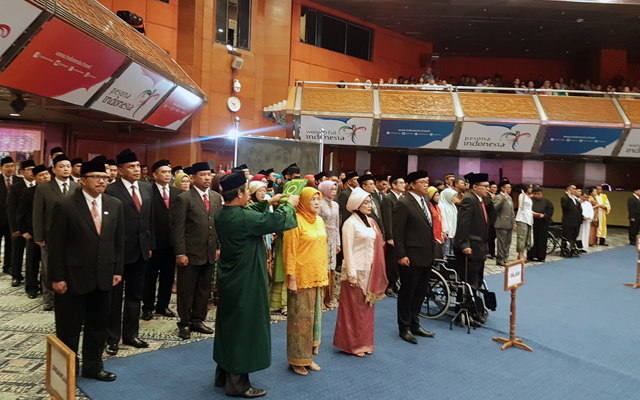
In a ceremony yesterday, both deputy ministers were inaugurated together with other echelon one to four officials in Jakarta.
This marked the second part of the Ministry of Tourism’s major restructuring effort, following the first part held in January.
With the two new deputy ministers inaugurated yesterday, the minister now has four deputies. The two inaugurated in January were deputy minister for marketing development zone I – Indonesia, ASEAN, Australia and Oceania, which is spearheaded by I Gde Pitana, and deputy minister for destination development, led by Dadang Rizki Ratman.
The new structure will enable the Ministry of Tourism to become more customer oriented and adept in understanding the needs of travellers and creation of travel products, paving for higher customer satisfaction and loyalty, tourism minister Arief Yahya remarked.
“As tourism is the business of experiences, the ministry with the new structure must be competent to create extraordinary experiences for travellers,” said Arief.
“Innovation is a must (for us) to catch up with our competitors like Malaysia, Thailand and Singapore,” he added.
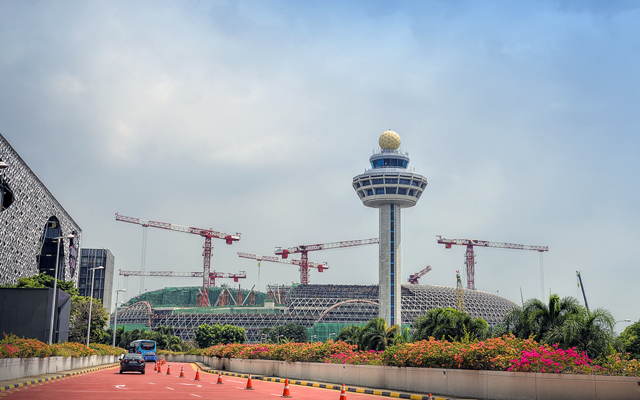
Capacity expansion ongoing at Singapore Changi Airport
IATA has expressed its disappointment over the additional fees that Changi Airport will charge passengers and airlines to fund the development of Changi East and T5 project.
Starting July, the Changi Airport Group (CAG) will adjust existing passenger and airline fees, while the government will introduce an Airport Development Levy.
CAG announced that Passenger Service and Security Fee (PSSF) for all passengers departing from Singapore Changi Airport, presently S$27.90 (US$21), will increase by S$2.50 per annum starting on July 1 this year, with the last increase on April 1, 2024. This year marks the mid-point of the estimated construction phase of the Changi East project.
Airline industry wants greater transparency on projected cost of Changi East project and funding model
There will be no change in the PSSF levied on transfer/transit passengers, who now pay S$6.00 when departing.
Meanwhile, the government is adding an Airport Development Levy – S$10.80 for passengers beginning their flights at Singapore Changi, and S$3 for transit passengers.
IATA yesterday issued a statement expressing the airline industry’s opposition to what it calls a “pre-funding” for infrastructure projects. It also pointed out that the decision to pre-fund was made despite industry feedback.
“It is unfair to expect passengers and airlines to pay in advance for a facility they may or may not use in the future when the facility is ready. It also goes against the International Civil Aviation Organization’s charging principle of cost relatedness – where passengers and airlines are charged for the cost of services actually used,” said Conrad Clifford, IATA’s regional vice president, Asia-Pacific.
Justifying the PSSF adjustment, CAG said: “Under the regulatory regime, CAG has the flexibility to set the amounts for the various aeronautical charges for up to 2030, so long as the overall amount does not exceed the cap set by the Civil Aviation Authority of Singapore. This cap will be reviewed if the competitiveness of Singapore air hub is adversely impacted.”
CAG added that funding for Changi East will come from three parties – the Singapore government, CAG and airport users (including airlines and passengers). The Singapore Government will fund the majority of the project’s development cost. CAG has invested S$3.6 billion to date, and will commit a substantial portion of its reserves and future surpluses, including earnings from its airport concessions, to the development.
But this is not enough to show how the cost are apportioned between all three parties – including airlines and passengers – IATA countered, calling for greater transparency on the funding model.
“Aviation is an economic catalyst and the added capacity does not just benefit the aviation community, but the entire Singapore economy. Making air travel more expensive for passengers will have a negative impact on travel, tourism, and as a result aviation’s contribution to an economy. Increasing charges for airlines could also affect the financial viability of their services to and from the airport,” Clifford pointed out.



 Destructive means you are risking the existing infrastructure and shaking everything upside down. The constructive way is by leveraging the infrastructure, working with existing parties and providing a new service experience to all parties involved.
 If I go to say Beijing or New York, I would need to contact the local office, find out who the experts are in the market; they would send me the contacts of three small players, I would call them only to find they didn’t have a car left. Or if they had a car, they would ask me to send them an email or even a fax with all my details. So you’re constantly stressed out by the logistics.
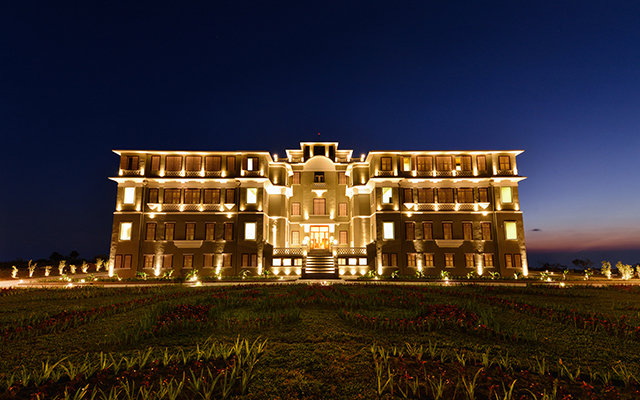
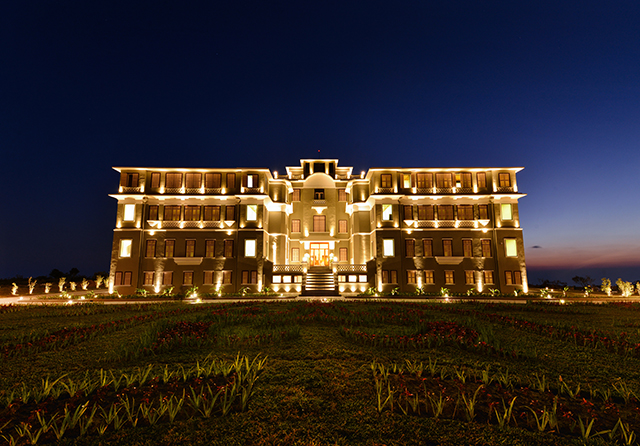 Le Bokor Palace is a luxurious and historical hotel since 1920s situated on cliff at the top of Bokor Mountain (Kampot Province, Kingdom of Cambodia). The hotel offers breathtaking view of mountain and coastline, as known as the health resort that offers natural treatment to visitors.
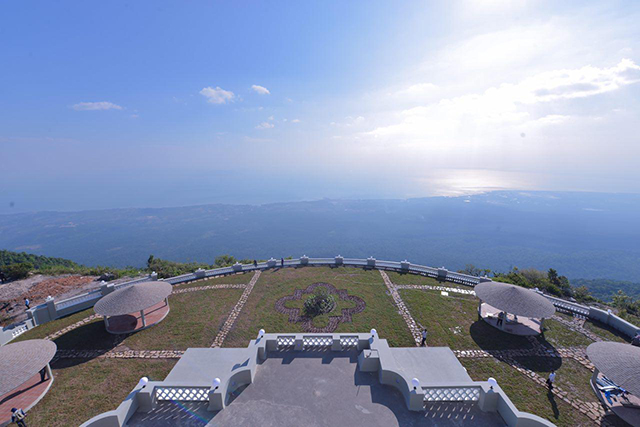 Le Bokor Palace located between the tropical forest and the “Opal Coast” on Preah Monivong Bokor National Park, nearby Kampot Province and was inaugurated on 14 February 1925 to host royalty and elites for decades. The hotel was revived in the early 1962 by Preah Karuna Preah Bat Samdech Preah Norodom Sihanouk, and served members of high-ranking officials, governments and wealthy business people, and it used to be Preah Karuna Preah Bat Samdech Preah Norodom Sihanouk’s favorite retreat vacation.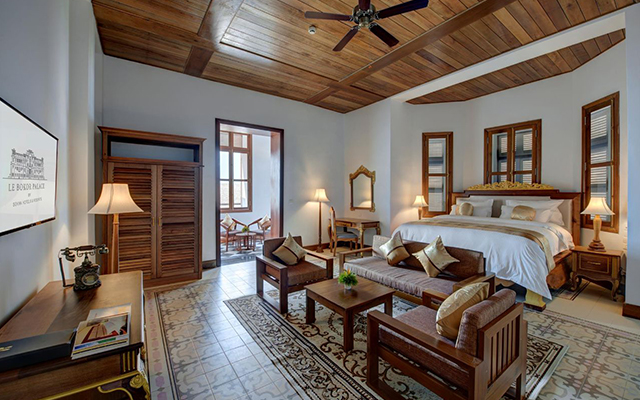

 This talking point arose when I chatted with sources about Scott Dunn’s acquisition of Country Holidays, a Singapore brand that began 24 years ago and has made a name for itself as a bespoke outbound travel agency. Including offices in Hong Kong, Beijing, Shanghai and Dubai, it claims a turnover of S$35 million (US$27 million).