TTG Asia
Asia/Singapore Monday, 13th April 2026
Page 1498

Getting the long and short of it

0
Oakwood Premier OUE, Singapore, Lobby and Reception

Kevin Goh, CEO, Ascott

Market outlook There are significant opportunities for serviced residences to expand in Singapore, as the government ramps up efforts to attract MNCs and innovative startups. We added five properties in Singapore in 2017, making Ascott the largest and fastest-growing serviced residence operator in Singapore with close to 2,300 units across 13 properties.

New initiatives We are opening the first property under our new lyf brand that is designed by millennials for millennials – lyf Wu Tong Island Shenzhen and lyf DDA Dalian (both 2018), lyf Funan Singapore (2020), and lyf Cebu City and lyf Farrer Park Singapore (both 2021).

Ascott’s new lyf brand is targeted at millennials

Ascott is actively looking at other potential markets including Australia, France, Germany, Indonesia, Japan, Malaysia, Thailand and the UK. Our target is to have 10,000 units under the lyf brand globally by 2020.

We are also opening our first properties in cities such as China’s Nantong (Ascott Harmony City), Pattaya (Citadines Jomtien Beach), Danang (Citadines Blue Cove) and India’s Gurgaon (Ascott Ireo City).

Challenges Firstly, aggressive competition within the hospitality industry will continue to drive mergers and acquisitions. We have acquired an 80 per cent stake in Synergy Global Housing in the US. We also increased Ascott’s stake in Quest to 80 per cent, which leapfrogged Ascott to becoming the largest serviced apartment provider in Australasia.

Secondly, the sharing economy concept is growing driven by the increasing prevalence of mobile technology. Companies are likely to devote more resources towards this area to cater to the customers and sharpen their competitive edge. Ascott has invested in Tujia, China’s largest online apartment-sharing platform.

2018 expectations We are confident of achieving our global target of 80,000 units in 2018, well ahead of 2020 as we press ahead with our aggressive expansion plans. We will continue to focus on key gateway cities in markets such as Singapore, China, Australia, capital cities in South-east Asia, Seoul, Tokyo, Paris, London, key cities in Germany and the US.

Arthur Kiong, CEO, Far East Hospitality

Market outlook Specific market segments that serviced residences serve – project groups, corporate relocations and medical tourists, to name a few – have increased steadily in 2017 fuelled by various factors.

There is an improvement in product knowledge among corporate travel managers. Furthermore, organisations have cut back on their spending on business travel in response to the slow economy in 2017. This is where serviced residences come in to offer the flexibility of keeping travel expenses low, while balancing business travellers’ needs.

New initiatives We have improved our property management system across all properties. This allows for real-time rate proposals, room-availability checks as well as reservations, regardless of sales office closure, weekends or public holidays.

To cater to a new generation of business travellers, we launched the first serviced residence under the Oasia brand – Oasia Residences – in October 2016. The serviced residence houses amenities such as a fitness centre, tennis court and swimming pool to offer wellness-conscious individuals a chance to recharge.

Challenges Business travel is expected to pick up in 2018, according to the Global Business Travel Association, with spending growing by 6.1 per cent against 5.1 per cent in 2017. This trend, coupled with the ever-changing business traveller demand, will continue to be a challenge in 2018.

With the growth of bleisure travellers, an accommodation that only offers business elements such as Wi-Fi or a business centre will no longer appeal to them. It is important that serviced residences provide options that allow bleisure travellers to engage in fun activities and wellness opportunities throughout their stay.

2018 expectations Singapore is uniquely situated in a region where travel volume and potential is growing. It is key for hospitality players to be forward-thinking, in order to be ready for the uptick in tourism as well as the changing needs of business travellers.

Choe Peng Sum, CEO, Frasers Hospitality

Market outlook 2018 is poised to be a promising year for the hospitality sector in Asia-Pacific, as intra-regional corporate travel is expected to receive a boost from the stronger-than-expected growth in China, Japan, South Korea and South-east Asian economies.

Coupled with the structural shift in corporate accommodation requirements where travel managers are challenged to seek quality accommodation while stretching budgets, as well as the steadying supply growth in the market, we are confident that the serviced residence sector is set to deliver better performance in 2018. Both occupancy and rate are broadly expected to improve.

An apartment at Modena by Fraser, Bangkok

New initiatives  To cater to the growing group of millennial travellers, Frasers will soon launch its flagship Capri by Fraser property in China Square, Singapore, which will serve as an innovation lab for cutting-edge hospitality concepts including the use of service robots to enhance customer experiences. This property will also focus on delivering e-efficiencies to tech-savvy guests with the use of iPad-activated check-ins, e-concierge, e-print facilities and high-speed Wi-Fi connectivity.

Challenges Disruption through the ongoing digital revolution and the sharing economy is the new constant, and staying nimble is a given. The flood of capital investment into the global travel ecosystem in the past two years has been significant and the possibility of having another Airbnb-like disruptor is high. We also cannot overlook Airbnb, given the changing nature of its business and its desire to expand into corporate travel.

2018 expectations We are on track to achieving our target of 30,000 keys under management by 2019, as we press ahead with strategic expansion via management contracts and investments in key regions such as China, South-east Asia and the Middle East. We have opened our first properties in Saudi Arabia and this year also marks our entry into Africa.

The group is on track to double its portfolio in China with presence in fast-growing cities such as Shenzhen and Shanghai as well as new cities like Dalian and Hefei.

Marc Hediger, CEO, Lanson Place Hospitality Management

Market outlook Despite a slowing regional economic growth, the market for quality serviced apartment remained strong last year, particularly within top and second-tier cities in China, and key gateway cities such as Singapore, Bangkok, Jakarta, Manila and Taipei.

Winsland Serviced Suites by Lanson Place

The latest mobility trends in these cities include shortened tenancies due to more temporary project assignments and corporate relocations to cheaper de-centralised CBD locations, and a shift of workforce and travel demographic towards millennials.

The industry has transformed from a pre-dominantly foreign expatriate market of seasoned travellers into a mixed market of local and foreign expatriates of varied seniority levels. The market demand has moved towards leaner and more affordable serviced apartments, as opposed to traditional serviced residences providing more upscale and extensive services.

New initiatives We are reopening our newly refurbished property in Singapore in spring 2018, now renamed as Winsland Serviced Suites by Lanson Place. The property offers a total of 109 studio to two-bedroom units, tailored towards millennials, young couples and small families.

Challenges The emergence of Airbnb, the sharing economy concept and a consumer landscape of instant gratification are challenges for the serviced residence industry.

Furthermore, with millennial travellers and the bleisure trend on the rise, we are poised to fine-tune our current products and services to offer unique and customised accommodation, and a social and authentic experience for this growing sector of tech-savvy and discerning customers.

2018 expectations We foresee expansion mainly in the South-east Asian region, with Bangkok, Kuala Lumpur, Singapore and Jakarta in the pipeline.

With shifting trends to inter-Asian and inter-China business postings, we see this business transformation being a regular phenomenon to keep up with.

Following the success of Two MacDonnell Road in Hong Kong, the group will continue to venture into the hotel and serviced suites hybrid this year, capitalising on online distribution channels and offering larger accommodation spaces.

Dean Schreiber, managing director, Asia-Pacific, Oakwood Worldwide

Market outlook Demand for serviced residences across an ever-widening geography continues to grow in line with the growth of the business travel market in Asia-Pacific, now the biggest travel market in the world.

Serviced apartments have progressively become the accommodation of choice for business travellers working on short-term assignments as cost-effective alternatives to traditional hotels. This factor, twinned with the continued rise in the ratio of short-term to long-term assignments, as companies increasingly choose to send employees on short-term secondments to fill skills gaps and save on relocation costs, indicates that the serviced residence sector will continue to grow robustly.

New initiatives In 2018, we will continue both to strengthen our regional and global presence and provide an increasingly flexible inventory of accommodation. This year will see us open seven properties in Surabaya, Ho Chi Minh City, Osaka, Tokyo (two), Sanya and Yangzhou.
Oakwood Premier OUE in Singapore

Challenges A key challenge for the industry is resourcing. As the average duration of an assignment falls, less client resources are usually allotted to manage each one. The time required to coordinate the logistics of a workforce on the move when amortised over three, six and 12 months, as opposed to five years, can begin to look prohibitive to companies. Ultimately, companies may need to place greater responsibility for the delivery of their mobility programmes on their accommodation solutions partners.

Our focus is therefore to continue to support our clients as a greater ratio of their employees move more regularly across a more complex international assignment landscape than before.

2018 expectations The serviced residence market will continue to be dominated by three main trends this year – an increasing number of millennials in the workplace, a rise in short-term assignments and globalisation.

As well, increased consumer awareness of serviced residences, a direct result of increased global inventory as well as platforms such as Airbnb, means Oakwood Worldwide is seeing a rise in uptake among leisure travellers.

Douglas Martell, president & CEO, Onyx Hospitality Group

Market outlook We are very positive for the serviced apartments market across Asia in 2018. The robust activities around our serviced apartments brand tells us that the market is indeed on the upswing with high consumer demand as well as increasing investor interest.

New initiatives Shama has been keeping us very busy and engaged lately. We kicked off 2018 with four new Shama signings in January 2018 alone and are now preparing to open five new Shama properties between January and August, namely Shama Island North Hong Kong, Shama Daqing Heilongjiang in China, Shama Lakeview Asoke Bangkok, Shama Hongqiao Shanghai and Shama Changfeng Shanghai.

These new openings will bring the brand to 13 operating properties, with seven in the development pipeline. From its beginnings as a China- and Hong Kong-centric brand, Shama now counts Australia and Malaysia among its pipeline destinations.

Challenges The changing demographics of the serviced apartment residents from larger families to couples or individuals is leading to a higher demand for studios and a lower demand for the larger multi-bedroom units. At our newer Shama properties in Shanghai and Daqing, a majority of our apartments are studio units and one-bedroom apartments.

With serviced apartments fast gaining popularity along short-stay leisure travellers, it is also essential for operators to balance the guest versus tenant mix to ensure that extended stay residents are not inconvenienced by the movements of the more transient guests.

2018 expectations The serviced apartments sector across Asia-Pacific is enjoying an upward momentum. This, coupled with the trend among more travellers opting to use serviced apartments even for short breaks or business trips, is changing the serviced apartment industry’s traditional long-stay model.

We target to have a minimum of 99 properties in our portfolio by 2024, and our serviced apartment brand Shama will represent a significant proportion of this growth.

Richard Tan, vice president, serviced suites, Pan Pacific Hotels Group

Market outlook Demand has stabilised as Asia-Pacific’s biggest market, China, eases into a more sustainable pace of growth. At the same time, the serviced apartment sector continues to be exposed to competition from the likes of home rental platforms and apart-hotels. The trend for shorter assignments continued, and so did the relocation of transnational corporations to lower-cost locations.

Performance was generally muted and uneven across markets in the past year. To illustrate, RevPAR for the serviced apartment sector in Singapore declined by nine per cent as at September 2017, whilst RevPAR grew by two per cent in neighbouring Kuala Lumpur.

New initiatives Later this year, we will debut our Pan Pacific brand in Malaysia with the opening of Pan Pacific Serviced Suites Puteri Harbour in Iskandar, Johor. In 2020, we will launch our first serviced suites property in Jakarta, as well as our flagship property, Pan Pacific London.

Challenges As a “traditional” accommodation provider, we will have to work harder to explain what customers can expect from us, which boils down to quality assurance.This is something we have to impress on millennials and post-millennials, who will shape the serviced suites sector as they join the workforce. This emerging generation of travellers also value customisation and flexibility over stunning décor and facilities, which has challenged us to look at – and also deliver – our service differently.

2018 expectations Asia-Pacific is expected to grow 6.2 per cent this year. Vietnam in particular stands out for its business travel boom and rapid economic growth. Similarly, in China, we anticipate more growth in 2018 as one in three Chinese companies expect travel budgets to rise over the next 12 months.

Pamela Chow, Rachel AJ Lee and Xinyi Liang-Pholsena contributed reporting to this article 

Seeds planted for new niche

0
Batad, northern Luzon, is home to some of the country's best preserved rice terraces

The Philippines may be a latecomer in developing agritourism as compared to some of its neighbours, but its tourism industry is not short of ideas on how it could compete for a slice of the market of farm-loving travellers.

Batad, northern Luzon, is home to some of the country’s best preserved rice terraces

The Department of Tourism (DOT) had begun taking notice of agritourism’s potential during the yearly gastronomy event, Madrid Fusion Manila. The Farm Tourism Development Act of 2016 soon followed, and the Farm Tourism Travel Guide was launched at the 2017 Madrid Fusion.

Building awareness and being heard over the competition is essential, said Patria Chiong, executive vice president of the Philippine Travel Agencies Association (PTAA), who acknowledged efforts to develop agritourism products should have begun 10 years ago.

For Afro Asian Travel’s president Angel Ramos Bognot, “farm tourism is viewed as a day package… You pick fruits, eat them, go home”. What she would like to see are more educational, creative and experiential farm stay products that stretch over several days, like those in Taiwan, Thailand, Malaysia and Australia.

“Tourists can plant the seeds and the farm can assign staff to take care of their plants, update them with photos, teach them Filipino cooking, then invite them to return after a few months to harvest what they planted,” Bognot suggested.

Also promising to change perceptions of farm tours as day packages is the DOT’s launch of a farm and faith tourism programme in December last year.

Roberto Alabado III, then tourism regional director, said Davao is the launch pad for agritourism because of its vast farms and plantations, and a farm tourism template is being prepared to be replicated across the country.

Alabado noted that the Calabarzon’s farm-to-table and organic farm concepts are already starting to get awareness, adding that there are also existing farm tours in Luzon and the Visayas.

Aida Briones, president, Batangas Alliance for Farm Tourism Development, comprising 20 organic and natural farming practitioners, noted the bright potential of the niche product, which can be combined with beach, heritage, culture, spa and wellness, and even faith tourism.

But she is pushing for tax breaks and reduced business permit fee for start-up farms, given that farming is capital intensive and return on investment can take time. For example, trees can take five to seven years to bear fruit.

Moreover, increased government support will be valuable especially in terms of staff training as well as marketing and promotions, she continued.

More players are jumping into this niche market. An example is Sheridan Organic Farm and Eco Village in Puerto Princesa, Palawan, run by Sheridan Beach Resort located in the area.

Resort director for sales and marketing Hannah Yulo said the 50ha agritourism farmstead has a hotel-standard dorm, in addition to activities such as tree planting, animal feeding, vegetable harvesting, field ploughing and farm-to-table dining to tempt guests to stay longer.

Newcomers could learn from farms and plantations that have successfully morphed into tourist destinations, including the Malagos Garden Resort in Davao, which became popular when its chocolate products won European awards.

Resort general manager Hermie Tabanag said that to meet the increasing demand, they have renovated the accommodation and added a new attraction, the Chocolate Museum, in March last year.

Costales Nature Farms in Laguna, which started organic farming of vegetables and herbs in 2005, offers accommodation, a convention hall, tour packages, workshops and an internship programme.

Why Silversea combines Asia with Europe

0
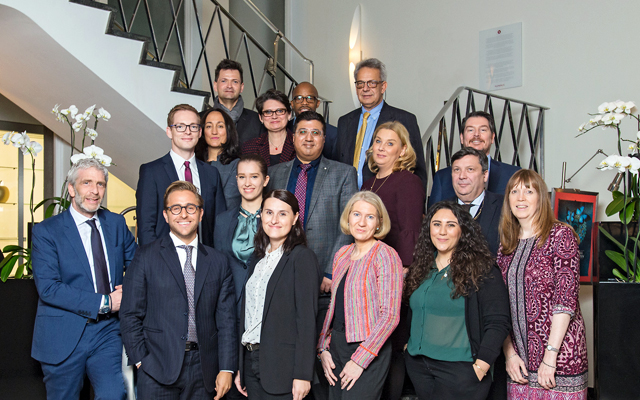
Spadon and Krupp (leftmost two in the front row) with the rest of Silversea's Eurasia team

Silversea Cruises says its new structure integrating Asia into Europe comes amid a growing business out of Asia towards the Mediterranean, and vice versa from Europe to the Far East.

Asia was under Australia/New Zealand previously but is now overseen from Frankfurt where a new managing director Europe & Asia, Alfredo Spadon, is based.

Spadon and Krupp (leftmost two in the front row) with the rest of Silversea’s Eurasia team

Spadon, in a phone interview from Tokyo where he and new vice president of sales Asia, Daniel Krupp, were meeting industry partners, said Silversea has every intention to step up efforts in the fast growing Asian luxury cruise market.

The appointment of Krupp as vice president of sales Asia is a new resource; Krupp said he would be travelling around Asia in the first year to meet partners. A hunt is on for a new regional director Asia, based in Singapore, to replace Melvyn Yap and report to Krupp.

“We are renewing our focus on Asia. Our objective is to enlarge and deepen the distribution channel, analyse our strategic partners, see where we can create new opportunities, both locally and for fly cruises,” said Spadon.

“There is a lot of potential business out of Asia towards the Mediterranean, and we’re also seeing the same from Europe towards the Far East, so we think the integration of Europe and Asia will allow us to share and exchange knowledge. We are at the beginning of this stage. We’re extremely happy with what has been done by our colleague, Melvyn, in the last 18 years, now we want to (strengthen) our positioning and evaluate new opportunities,” he said.

In Asia, Silversea has deployed four ships for this 2017/2018 winter season, including for the first time its new ultra-luxury ship and latest flagship, the Silver Muse.

Trade split as Thailand mulls scrapping travel agent security deposit

0
Outbound agents currently put down a one-time security deposit of 200,000 baht

A proposal to abolish the collection of security deposits from Thai outbound agents has been met with mixed reactions from the travel industry.

While his predecessor Kobkarn Wattanavrangkul had proposed to increase the deposit amount, tourism minister Weerasak Kowsurat wants it scrapped entirely as it is deemed especially costly for start-ups.

Outbound travel agents are currently required to pay 200,000 baht (US$6,420), compared with 100,000 baht for inbound and 50,000 baht for inbound and domestic agents.

Outbound agents currently put down a one-time security deposit of 200,000 baht

Suparerk Soorangura, the president of Thai Travel Agents Association (TTAA), told TTG Asia that he strongly supports the minister’s abolition of the deposit.

“The ministry collects guarantee deposits (and places them into the Tourist Business Protection Fund) so disputes between tourists and travel agents can be resolved immediately,” he explained. However, the benefits of the fund – which Suparek approximates to have billions of baht – cannot be equally distributed to all contributing parties.

“Besides, the security deposit requirement increases the workload for the ministry, (when it could devote more) focus to planning and developing Thailand’s tourism, which is now growing slower than neighbouring countries’,” Suparerk added.

The TTAA president instead suggests that the Ministry of Tourism and Sports discuss with insurance companies ways to encourage tourists to protect themselves and reduce their own risks.

On the other hand, Ratchata Warunsukhasiri, owner of Miracle Time Travel, is opposed to the proposal of removing the security deposit. To him, 200,000 baht fees is not a huge sum for travel agents.

He opined that start-up travel agents should have liquidity and be well-prepared prior to establishing a company. Moreover, he advises the ministry to screen entrepreneurs by reviewing tour guide knowledge, personal records, and their ability to understand the market and forecast its movements.

Moreover, Chotechuang Soorangura, associate managing director of NS Travel & Tours, is concerned that the removal of the deposit would give rise to more fraudulent travel agent practices.

“I think the ministry should still collect guarantee deposit, but offer loans with low interest to start-ups that want to enter the tourism industry but are short of revolving fund.”

IHG buys 51% stake in Regent; IC Hong Kong to become a Regent once again

0
InterContinental Hong Kong will become a Regent again

InterContinental Hotels Group (IHG) is acquiring a 51 per cent stake in Regent Hotels and Resorts for US$39 million as part of its expansion efforts. It has the right to buy up the remaining 49 per cent interest in phases from 2026.

IHG intends to bring Regent into its luxury portfolio and grow the brand from six hotels today to over 40 hotels in key global gateway city and resort locations over the long term.

InterContinental Hong Kong will become a Regent again

The US$39 million in cash will be paid in three tranches of US$13 million, the first upon the date of completion, the second in 2021 and the third in 2024. These amounts will be funded within IHG’s existing capital expenditure guidance of up to US$350 million gross, and US$150 million net, per annum into the medium term.

IHG also announced that following an extensive refurbishment due to commence in early 2020, InterContinental Hong Kong, originally a Regent, will return to its original brand in early 2021.

Steven Pan, executive chairman of Formosa International Hotels, said the rebrand is “symbolic of our ambition to return the brand to its former glory” and touts it “one of the greatest brand comebacks in the hotel industry”.

“IHG shares our vision for the brand and has the ability to make our ambition a reality. IHG has a deep understanding of how to protect what makes the Regent brand so unique and special, whilst at the same time ensuring that the brand can grow and thrive on a global scale,” he added.

Keith Barr, IHG’s CEO, said: “We see a real opportunity to unlock Regent’s potential and accelerate its growth globally. In addition, by creating a dedicated luxury division, we will be bringing together some of the most experienced and respected people in the industry who will help drive our luxury offer, ensuring that our existing luxury brands continue to evolve.”

Agents say Mega Maldives’ exit is no loss

0
Airline reportedly in debt and unable to secure new investors

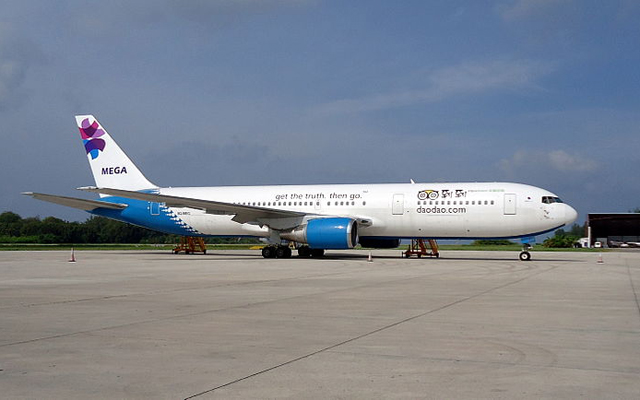
Mega Maldives Airlines, the troubled private airline which once claimed to carry 10 per cent of all tourist traffic into the Maldives, has gone into voluntary liquidation, after suspending operations in May 2017.

The news didn’t come as a surprise to the trade. “(This would have) no impact on the industry. Mega Maldives has not been operating for a long time,” said Abdulla Ghiyas, president of the Maldivian Association for Travel Agents and Tour Operators.

Airline reportedly in debt and unable to secure new investors

Other trade members also expressed similar views, saying that Mega Maldives’ long absence has been factored into their business decisions, especially since there are other airlines servicing destinations between China and the Maldives.

According to local media reports, the debt-ridden airline was unable to secure a new investor and restart operations, and on February 27 this year entered into voluntary liquidation.

The company website could no longer be accessed. CEO and founder George Weinmann, who has a 49 per cent stake in the company, and other spokespersons were also not reachable for comment.

Since a May 2, 2017 announcement that the airline was temporarily suspending all flights immediately as part of’ “restructuring and recapitalisation” efforts, there has been no information on the status of the airline.

The airline, largely dependent on the Chinese market, was badly hit by falling arrivals in 2016 forcing it to shed staff and cut the number of aircraft to three from five.

Mega Maldives was established in 2010 with the intention of expanding direct air connectivity between the Maldives and emerging market destinations, and at one time was operating flights to Beijing, Shanghai, Chongqing, Chengdu, and Hangzhou as well as Incheon (Seoul).

But its network shrank dramatically to just two destinations – Beijing and Shanghai – when financial troubles hit the airline.

Currently Air China, Beijing Capital, Sichuan Airlines, China Eastern and China Southern operate flights between Chinese cities and the Maldives.

The country’s other airline, Maldivian, operates to eight destinations in China, Bangkok, Dhaka and two cities in India.

Carnival strikes port development deal with Japan’s Sasebo

0
Carnival will invest in terminal and get berthing preference

Carnival Corporation has signed an agreement with the Japanese port city of Sasebo, which will see the company invest in the construction of a new port terminal, scheduled to to come into operation by 2020.

As part of the agreement, Carnival Corporation will be granted berthing preference, enabling the company to optimise its cruise itineraries visiting the port.

Carnival will invest in terminal and get berthing preference

The partnership supports the Japanese government’s initiatives to develop the country’s ports by 2020, in advance of the Tokyo Olympic Games. Of the public-private partnerships that have emerged, Carnival Corporation has the most number of committed ports.

According to a Carnival statement, Japan’s ports have witnessed exponential growth in visitors over the past few years. The growing popularity of cruising in Asia is expected to introduce greater strain on Japan’s existing port infrastructure.

Carnival Corporation currently has the largest cruise presence in Japan, including over 870 calls in 45 ports in Japan, carrying an estimated 1.8 million cruise passengers in the market.

Meanwhile, one of Carnival Corporation’s cruise brands, Princess Cruises recently unveiled a North Asia itinerary on Majestic Princess, which will homeport at Keelung, Taipei (Taiwan) for the first time from the end of this month to July.

After ending her current Singapore homeport season on March 25, Majestic Princess will sail to Keelung, offering over 20 cruises visiting Japanese ports including Okinawa, Ishigaki, Nagasaki, Sakaiminato, Osaka, Miyazaki, Kagoshima and Busan in South Korea. Three- to seven-night sailings are available.

Xiaozhu, agoda get cosy with new partnership

0

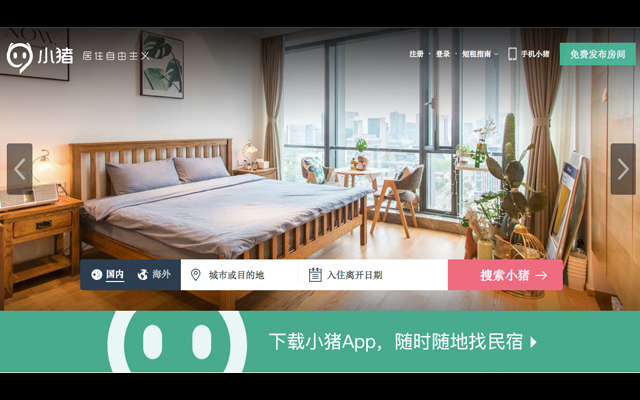
Chinese home-sharing platform Xiaozhu.com and global OTA agoda have combined forces in a global strategic partnership that will see both companies collaborating in areas including listings, technology and service innovation, branding and marketing.

The initial phase of the cooperative partnership will see the two companies share inventory, resulting in 100,000 listings on each platform.

Spencer Low, managing director, Greater China, commented: “This partnership will offer alternatives to traditional hotels in China, and will benefit travellers who are looking for more distinctive options for their accommodation needs.”

Among the benefits of the Xiaozhu-agoda alliance, added Low, is the flexibility for groups of friends or family to stay together at a larger property, more options for business travellers seeking home conforts, and a range of price points to cater for a variety of budgets.

Chen Chi, co-founder and CEO of Xiaozhu, dubbing the joining of forces a win-win cooperation, stated: “As Chinese outbound and inbound tourism is growing rapidly, homestay platforms must be able to provide high-quality services to global consumers. To this end, Xiaozhu is accelerating cooperation with our industry partners.”

Since launching its overseas business in 2017, Xiaozhu now covers listings in over 100 overseas cities, with a particularly strong upward trend in booming homestay markets like Japan and Thailand.

Amadeus invests in airport passenger flow venture

0
Managing crowds using computer vision software and AI

As the global aviation industry faces a boom in passenger traffic, Amadeus Ventures has invested in CrowdVision, an early stage company that uses computer vision software and AI to help airports monitor the flow of passengers in real time to minimise queues and more efficiently manage resources.

“Together with CrowdVision, we will be able to help airports to better anticipate and respond to traveller flows for better real-time, planning and investment decisions… When airports run smoothly, everyone benefits: airports can get more value out of their retail areas, more flights can take off on time, and travellers enjoy better journeys,” commented Suzanna Chiu, head of ventures at Amadeus.

Managing crowds using computer vision software and AI

According to a statement from Amadeus, CrowdVision’s existing airport customers are benefiting from reduced queues and waiting times, leaving passengers to spend more time and more money in retail areas. Others have optimised allocation of staff, desks, e-gates and security lanes to make the most of their existing infrastructure and postpone major capital expenditure on expansions.

With Amadeus as investor, CrowdVision gains access to global network of airports and travel partners, the start-up’s CEO, Fiona Strens, said.

CrowdVision joins Situm, Avuxi, Betterez, Bluesmart, BookingPal, Flyr and Yapta in the Amadeus Venture portfolio. The corporate venture arm of Amadeus was launched in 2014.

Aviation roundup: Air India, Citilink Indonesia and Hainan Airlines

0

Air India launches flights to Tel Aviv
From March 22, Air India will begin thrice-weekly direct flights from New Delhi to Tel Aviv, Israel.

The outbound flight will depart New Delhi at 16.50 and arrive in Tel Aviv at 20.25. The return leg will depart Tel Aviv at 10.15 and arrive in New Delhi the following day at 09.00. Flight time is seven hours and 10 minutes one-way.

The route will utilise a Boeing 787 Dreamliner with 18 business class seats and 238 economy seats.


Citilink Indonesia flies to three new destinations in SE Asia
Budget airline Citilink Indonesia will soon be flying to Malaysia, Singapore, and Thailand.

On March 25, the low-cost offshoot of Garuda Indonesia will fly daily to Penang. Double-daily Jakarta-Singapore flights will launch later in April, and flights to Bangkok are slated to commence later this year.


New non-stop service between London and Changsha
Hainan Airlines will be launching a non-stop flight between London’s Heathrow Airport and Changsha Huanghua International Airport on March 23.

HU421 will depart Changsha at 11.20, and arrive in London at 16.30, while HU422 will depart London at 22.00, and land in Changsha at 16.25 the following day. The route will be serviced by a Boeing 787 deluxe wide-body aircraft.

This thrice-weekly service is Hainan Airlines’ second direct flight between the UK and China, having previously launched a Manchester-Beijing service.


Cathay Pacific and Air Astana become codeshare partners
Cathay Pacific and Air Astana will begin codesharing on each other’s flights on March 15, 2018.

Cathay Pacific will place its “CX” code on Air Astana’s non-stop flights between Hong Kong and Almaty, as well as on connecting services between Almaty and Astana, the Kazakh capital.

Air Astana currently flies twice weekly between Hong Kong and Almaty, on Tuesdays and Fridays, but will be upping frequency by adding a third service, on Mondays, from March 25.

Cathay Pacific will also codeshare on Air Astana’s five weekly services between Bangkok and Almaty (going daily from 25 March), and four weekly services between Seoul and Almaty.

Meanwhile, Air Astana will place its “KC” code on selected Cathay Pacific services operating between Hong Kong and Sydney, Melbourne, Perth and Singapore.