An overwhelming proportion of young Indians are motivated to make sustainable holiday choices and merge altruism with travel, according to a Cox & Kings study released in conjunction with World Environment Day.
The results of the study were derived from surveys carried out in key Indian cities including Delhi, Mumbai, Chennai, Kolkata, Bangalore, Ahmedabad and Thiruvananthapuram, with the 5,000 youth respondents aged between 20 and 35 years.
Young Indian travellers try to help the environment by curbing their carbon footprint and opting for sustainable holidays
While the service providers on one end are modifying business models to contribute positively, travellers are also becoming more conscious than ever, Cox & Kings observed.
Close to 72 per cent of the participants said they prefer to hire a bicycle or simply take a bus/train to explore while on holiday in Europe. While there is very little that can be done to contain the greenhouse emissions by air travel, millennials in India wish to compensate by choosing more environmentally-friendly ground transport modes.
Places to eat are chosen either through local or online research. About 67 per cent of respondents take more to restaurants that provide locally sourced food, and criteria such as minimal to no usage of single-use plastics.
The demand for green hotels and accommodation facilities is also on the rise. An impressive 89 per cent of respondents indicated they have chosen their stay post researching sustainable practices.
Be it for luxury or budget accommodations, the young Indian explorer chooses the one that prioritises local community, local procurement of resources, solar power usage, waste treatment facilities and technology-intervention to minimise carbon footprint.
Moreover, 59 per cent of survey participants mentioned they reused their bath towels and asked for a no replacement from the hotel staff.
Voluntourism, an emerging trend of travel linked to doing good while on the go is also a big hit. About 92 per cent of young Indians expressed interest in participating in plogging events (picking up trash and jogging), rural tours, farming trips, NGO visits, cause-based trips and sustainable treks/hikes.
For many, overtourism is a concerning phenomenon. About 74 per cent of respondents avoids destinations that are strained by mass tourism.
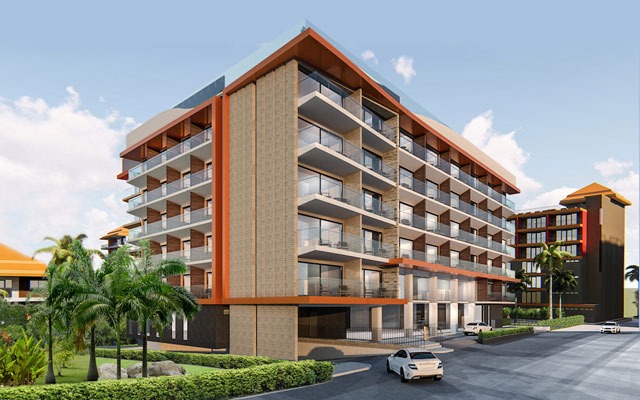
Hong Kong-based New Nordic Group has invested US$4.5 million in Auran Group’s Marcus Hotel Project in Thailand.
A rendering of the upcoming four-star property
This significant financial investment will go towards the development of a hotel project located in Pratumnak Hill, Pattaya, which is to be managed by Best Western Hotels & Resorts.
The 152-room, four-star property is set to be completed in October 2020. Amenities will include lounge areas, an all-day restaurant, fully-fitted gymnasium, as well as a rooftop area containing an infinity pool and bar with ocean and island views.
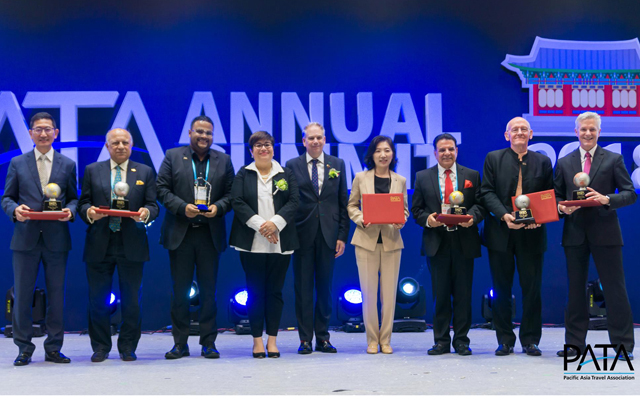
(From left) Asia Tourism Consulting's Soon-Hwa Wong; Rakaposhi Tours, Pakistan's Akbar A. Shareef;Maldives Association of Travel Agents and Tour Operators' Abdulla Ghiyas; PATA's immediate past chairperson Sarah Mathews; PATA's Mario Hardy;Korea Tourism Organization's (KTO) Oki Kang receiving the award on behalf of KTO president Young-bae Ahn; Venture Travel (Temple Tigers) Nepal's Basant Raj Mishra; Guardian - Sanctuary Resorts, Hong Kong's Andrew Jones; and Tourism Vancouver's Stephen Pearce
Industry leaders who have made significant contributions to the development of Asia-Pacific’s travel and tourism sector were recognised at the recent PATA Annual Summit 2018, which took place in Gangneung, Gangwon Province, South Korea.
Basant Raj Mishra, executive chairman of Venture Travel (Temple Tigers) Nepal, and Soon-Hwa Wong, CEO of Asia Tourism Consulting in Singapore, were awarded with the PATA Life Membership, the association’s highest accolade given to individuals.
(From left) Asia Tourism Consulting’s Soon-Hwa Wong; Rakaposhi Tours, Pakistan’s Akbar A. Shareef;Maldives Association of Travel Agents and Tour Operators’ Abdulla Ghiyas; PATA’s immediate past chairperson Sarah Mathews; PATA’s Mario Hardy;Korea Tourism Organization’s (KTO) Oki Kang receiving the award on behalf of KTO president Young-bae Ahn; Venture Travel (Temple Tigers) Nepal’s Basant Raj Mishra; Guardian – Sanctuary Resorts, Hong Kong’s Andrew Jones; and Tourism Vancouver’s Stephen Pearce
The PATA Award of Merit was presented to Andrew Jones, guardian of Sanctuary Resorts in Hong Kong, and Akbar A Shareef, managing director & chief executive of Rakaposhi Tours, Pakistan.
Stephen Pearce, vice president, marketing – Tourism Vancouver, was given the PATA Chairperson’s Award, while Abdulla Ghiyas, president of Maldives Association of Travel Agents and Tour Operators, was recognised as the PATA Face of the Future award for 2018.
The PATA Honorary Membership Award was awarded to Young-bae Ahn, president of Korea Tourism Organization, in recognition as host of the PATA Annual Summit 2018.
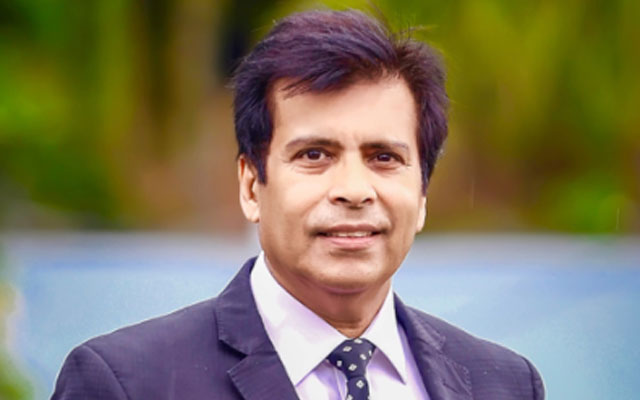
Subroto Banerjee has been appointed as general manager of Mövenpick Hotel Sylhet, the first Mövenpick-branded property in Bangladesh.
Banerjee has been a part of the Mövenpick Hotels & Resorts’ team in general manager roles in hotels in India and Saudi Arabia since 2014.
He first started his hospitality career more than three decades ago, and has worked for major hotel brands in India including Oberoi, Sheraton and Hyatt Regency. As a F&B specialist, he later moved to Oman to manage the main restaurant at the former InterContinental Muscat.
Upon returning to India, Subroto took on senior management roles for a series of prestigious hospitality projects, eventually becoming general manager of Starwood’s Aloft Bengaluru Whitefield hotel in 2012.
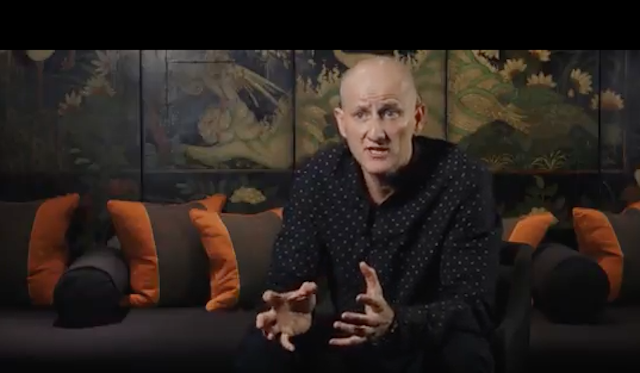
Serge Dive: “The other tradeshows are in a dating business; we are in the falling-in-love business.”
A new luxury travel tradeshow, Further East, to be held in Bali in November, asks buyers and sellers to “shake off your shoes and your tradeshow perceptions”.
If it wasn’t for Serge Dive who is launching it, that notion of a ‘barefoot’ show might be dismissed as just a gimmick. Dive created ILTM Cannes, sold it to Reed Exhibitions, and later went on to launch his own shows Pure Life Experiences, LE Miami, We Are Africa, and now, Further East.
Buyers interviewed show he seems to have built a cult following for being ‘un’ everything a traditional tradeshow is.
“We participated in the first Pure Life Experiences in Marrakech in 2009 and have attended every one since,” said Hamish Keith, group managing director of Bangkok-based Exo Travel. “Serge’s vision of a ‘un-conference’ and a different kind of tradeshow focused on experiential travel coincides with Exo’s vision of fusing active and experiential travel in exotic and emerging Asian destinations. I really like and respect that Pure remains focused on its principles and has not grown into a big mainstream tradeshow, and I trust Serge and his team to deliver another great event with Further East.”
Dive: “The other tradeshows are in a dating business; we are in the falling-in-love business.” Watch the video by Beyond Luxury Media, organisers of Further East here
The new event will be held from November 12 to 15 in Seminyak, Bali’s hip and happening upscale resort destination, at Alila Seminyak, Potato Head Beach Club, Katamama Hotel and W Bali-Seminyak next door.
So will the tradeshow be held on sand with barefoot buyers in bohemian wear strolling to their next appointment?
Dive, CEO of London-based Beyond Luxury Media, in a phone interview, said it won’t be on sand on the beach, but it would be the closest buyers and sellers could get to a barefoot luxury show. Appointments would be held in an indoor space at Alila, but bin the picture of a traditional mart in a convention hall, he said.
“I can’t tell you how the space would be dressed up, but everything we do is custom-made, and people will get a sense of the sea. When they go out to the networking area on the lawn facing the beach, we would encourage them to go barefoot,” said Dive.
The conference component, Awaken, will be held outdoors at Potato Head Beach Club. “Forget awful coffee, cold air-conditioned room, boring speakers, death by Powerpoint. It’ll be a mix of keynote, fast presentations, workshops, discussions. We want to create more conversations with the audience,” he said.
Dive has a mission for every show he creates. We Are Africa, for instance, aims to rebrand Africa travel as modern, positive and contemporary. Further East aspires to be the guardian of Asian values, he said.
“We realise that Asia is becoming the place more people want to go, because Asia has everything that the Western world has lost – spirituality, not necessarily in the religious sense, balance, social responsibility, self-respect and respect for others, great respect for heritage while putting itself into the future.
“At the same time, Asian brands and products are at an interesting crossroads where they could be tempted to embrace much of values of the Western world,” said Dive.
Further East can be the guardian by bringing forth the uniqueness of Asia through having the right cast of sellers – high-end, boutique, iconic, above all, uniquely Asian, he said. Once the casting is right, the discerning buyers would follow, he added.
“The problem with tradeshows is they mix Asian brands with European, African, etc, that there is no sense of context. Look at the story of trade fairs – they used to have everything. I was one of the first to separate luxury travel from normal travel (ILTM). Then we realised that within luxury travel, there’s an experiential market so we created PURE, and we realised that Africa needed to be treated differently from Asia so we created We Are Africa. Further East is the same. The values of Asia, its DNA, need to be displayed and elevated, not diluted,” Dive said.
That’s also the reason why he picked Bali. “Obviously we could go to one of the amazing, efficient destinations of Asia but we’ve been obsessed from the start by the idea of a barefoot travel tradeshow and want to make sure this will be on the beach. Bali has a great sense of character and look how zen and peaceful Alila is while Potato Head Beach Club shows the millennial, hipster feel of Asia yet is so anchored on traditional Asia. (Ronald) Akili (founder of Potato Head Beach Club) is totally obsessed with protecting the environment, culture and Asian values,” said Dive.
Some 145 exhibitors of a targeted 200 have signed up. They would be matched with 210 buyers in 42 pre-scheduled appointments. The show targets 35 per cent of buyers to be from Asia, 27 per cent Europe, 18 per cent North America, 10 per cent Oceania, seven per cent Latin America and three per cent Africa/Middle East. It is predominantly a leisure show (93 per cent) with the rest comprising corporate and MICE business.
It remains to be seen whether Further East isn’t built on sand. Dive’s followers like David Song, founder & managing director of Beyond X Boundaries Singapore who attends Pure and We Are Africa, thinks it’s going to be solid, saying Dive and team have “raised the bar in events management”.
“They do it with style and flair, with a very relaxed atmosphere and a bohemian attitude to dress code,” said Song, adding there were “meaningful engagements, new business developments” as exhibitors and buyers were carefully selected and screened to ensure quality.
Dive said he’s able to create meaningful engagements because “the other tradeshows are in a dating business; we are in the falling-in-love business”.
“We create a community people want to live in. When they come to our shows, they say, I realise I love what I’m doing. They may return with 80 business cards, but 40 will be friends forever, people they will do business with and whom they will protect.
“The Internet revolution is returning business to what it used to be: business based on trust, liking and knowing people well.”
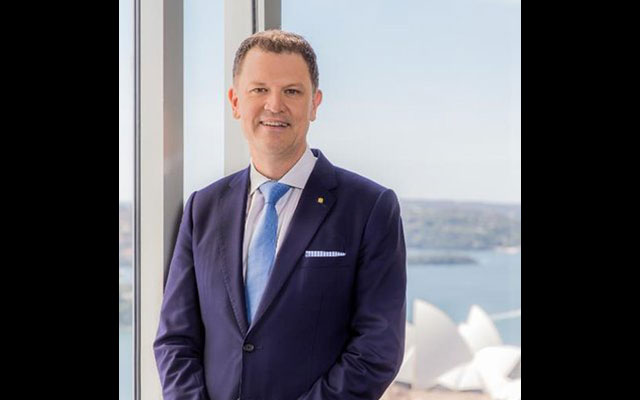
Minor Hotels has appointed Craig Hooley as the new COO of Oaks Hotels & Resorts and Avani Hotels & Resorts (Australia and New Zealand).
In his new capacity, Hooley will spearhead Oaks and Avani’s corporate and commercial operations in its key markets of Australia and New Zealand, where it currently has a portfolio of over 50 properties. Based in Minor Hotels’ regional office in Maroochydore on Queensland’s Sunshine Coast, he will also develop forward growth strategies for the company and provide leadership across various corporate factions.
Prior to joining Minor Hotels, Hooley was general manager of Shangri-La Hotel, Sydney, following a successful tenure at Shangri-La International Hotel Management in Hong Kong.
Hooley has amassed extensive industry experience during his two-decade-long hospitality career, having held several key leadership positions with Mirvac Hotels & Resorts and InterContinental Hotels Group, both in Australia and overseas.
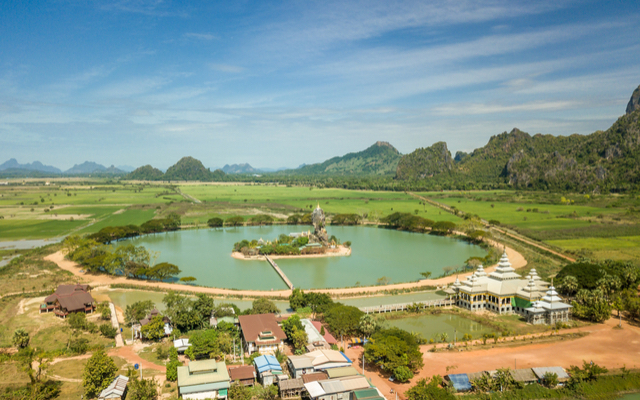
Hpa-An ()pictured) an example of domestic travellers being path finders for international tourists
As leisure travel picks up among Myanmar’s citizens, domestic tourism is surging and helping to plant the country’s emerging destinations on the international travel map.
Domestic travel is on the rise, hitting an all-time high of more than 10 million people in 2017, according to Myanmar Tourism Marketing chairperson, May Myat Mon Win.
Hpa-An (pictured) an example of domestic travellers being first-movers to a destination
The WTTC predicts domestic travel expenditure will reach 2.9 trillion kyats (US$2.2 billion) by 2027.
Said May Myat Mon Win: “Travelling is becoming (a larger) part of the younger generation’s life. Two generations ago people saved and bought gold, the next generation bought land. This generation is saving to travel; it’s becoming a part of the lifestyle.”
And it is these travellers who are driving the international appetite for new destinations across the country.
May Myat Mon Win added: “Domestic travellers move first. They discover the new places, then local incentive groups take interest, then development starts and then the foreigners move in.”
She cited Hpa-An in Kayin State as an example. The city and surrounding state have been on the radar of locals for years, thanks to its plethora of sacred sites and sprawling countryside. A recent raft of nature- and community-based attractions have been developed, and local accommodations and restaurants are now starting to cater to overseas visitors.
Edwin Briels, managing director of Khiri Travel Myanmar, said when Khiri started operating kayaking tours in Kayin State in 2015, it was off foreigners’ radar. “There were no guides in Hpa-An and simple hotels, but we still thought it’s worth visiting. We said, ‘you’ll have to rough it a bit but it’s worth it.’ Now we see more hotels coming and the clients will start coming.”
Greg Allan, vice-president of operations (ASEAN) at Pan Pacific Hotels Group, which operates Parkroyal Yangon and Pan Pacific Yangon, also predicts foreigners will follow in the footsteps of locals, who flock to beach destinations, such as Ngapali and Ngwe Saung – both a 45-minute flight from Yangon.
“These are undiscovered beach destinations that are popular with locals and soon-to-be discovered by tourists.”
Japan typically a crisis-sensitive travel market, but not in this instance
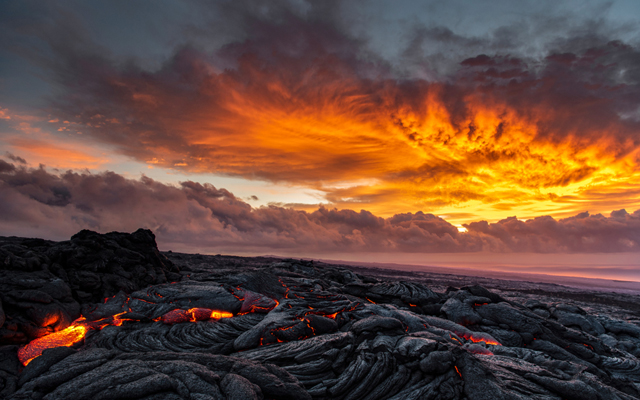
Following ongoing eruptions in recent weeks at Hawaii’s Kilauea volcano, ForwardKeys reported a slump in travel bookings from most of Hawaii’s top feeder markets in the month of May – with the exception of Japan, which bucked the trend with bookings up 10.6 per cent.
After the eruption on May 3, bookings for the period May 3-31 period slumped by 9.8%, with Canada down 23.2%, Australia down 32.2%, China down 39.8%, Germany down 47.7% and New Zealand down 27.5%.
Japan typically a crisis-sensitive travel market, but not in this instance
With Japan the one source market to buck this trend, ForwardKeys CEO and co-founder Olivier Jager said: “Normally, the Japanese market is super-sensitive to crisis situations and it is the first to cancel when any form of trouble occurs in a destination. Our hypothesis is that because Japan sits on the ‘Pacific Ring of Fire’ and has over a hundred active volcanoes, it is so used to earthquakes and volcanic eruptions that they cease to be newsworthy.
“Indeed, the situation in Hawaii has featured less in the news in Japan than it has elsewhere. An analysis of online news clips of the Kilauea eruption revealed that media exposure in Japan was just 0.2% of total exposure worldwide.”
While bookings in May suffered, over the coming five-month period to the end of October, forward bookings are still 2.2 per cent ahead of where they were at this time last year.
Bookings for June and July are just 0.5 per cent and 1.6 per cent behind and bookings for August, September and October are up 6.7 per cent, 7.9 per cent and 2.3 per cent respectively, which led ForwardKeys to suggest that the tourism outlook could be less worrying than might have been feared.
Analysing Hawaii’s most important forward bookings by origin market, Japan is 3.2% ahead, Australia 6.7%, Canada 3.1%, Germany 6.8% and New Zealand 27.0%.
A major driver of bookings from New Zealand has been a substantial increase in capacity, with nearly 60% more seats available in the June – October period.
The great disappointment is China, from where bookings are currently 18.9% behind for the period to the end of October.
Jager concluded: “Given the magnitude of media coverage, forward bookings to Hawaii are holding up surprisingly well. We are also aware that the vast majority of Japanese and other international visitors to Hawaii stay in Honolulu, which is on a different island from the one where Kilauea is erupting.”
OTA joins Amadeus’ NDC-X programme
Travix has joined Amadeus’ NDC-X programme to drive NDC progress for OTAs. As part of the partnership, Travix will provide input into the design of an NDC-based Amadeus Web Services solution that will help OTAs deliver more personalised and differentiated travel experiences. The solution will enable travel agencies to shop, order, and pay for flights and related services, and to add ancillaries and services to the booking, all using the NDC standard.
In the first phase, the two companies will define a solution which will give online travel sellers access to aggregated NDC and non-NDC content. In the second phase, Amadeus and Travix will jointly define the servicing requirements that an agency has once the booking has been made, such as any changes or cancellations, or adding ancillaries.
Pkfare partners Finnair to pilot NDC distribution
Travel B2B marketplace Pkfare has partnered Finnair to pilot NDC Distribution, a move that will allow customers to complete their Finnair booking without leaving the metasearch platform. Pkfare attained Level 3 NDC certification last November. This status recognises that Pkfare, as an aggregator, can manage NDC-driven offers and orders throughout the entire lifecycle, from booking to fulfilment.
Sabre expands NDC-enabled solutions
In 2018, Sabre plans to launch new service-enabled APIs and enhanced capabilities in the Sabre Red Workspace that will allow customers to shop and book NDC content alongside traditional content. The travel technology company is expecting to begin a pilot program with additional agency and airline customers in the third quarter this year.
In the fourth quarter Sabre will bring to market the industry’s first Digital Airline Commercial Platform, marking a major advancement in the capabilities airlines will have to seamlessly leverage data-driven insights.
Sabre achieved NDC Level 3 capability as an IT provider in February 2018 and has committed to Level 3 certification as an aggregator in 2018.
CTM receives highest NDC certification
Corporate Travel Management (CTM) has received Level 3 certification in the NDC programme, which it says resulted from working closely with its airline and technology partners around the world. CTM expects the certification – in addition to its own suite of technology, including the global Lightning online booking tool – to deliver richer content and more seamless customer experience.
Now spun off from Wyndham Worldwide as a pure-play hotel company, Wyndham Hotels & Resorts has appointed Joon Aun Ooi – who brings a track record in spearheading regional openings of hotel brands – to the role of president and managing director for South-east Asia and Pacific Rim.
Reporting to Bob Loewen, executive vice president and COO of Wyndham Hotels & Resorts, Ooi will lead the post-spin development and growth of the Wyndham Hotels & Resorts family of brands across the South-east Asia and Pacific Rim region and drive its strategic objectives including the company’s brand transformation and its focus on loyalty, distribution, as well as sales and marketing.
Joon Aun Ooi
Based in the regional headquarters in Singapore, Ooi replaces Barry Robinson who has been named president and managing director, Wyndham Vacation Clubs, a division of vacation ownership and exchange company Wyndham Destinations.
Since joining Wyndham in 2013 as vice president, openings and operations for Wyndham Hotel Group Greater China, he has introduced four new brands to the market and played a pivotal role in growing the combined franchise and management portfolio to over 1,400 hotels.
“Asia-Pacific is one of the world’s strongest travel markets, underpinned by rising middle class affluence and increased intra-regional travel driven by LCCs. We are accelerating the growth of our brands across the region to meet this demand which will make travel more accessible to all groups of travellers,” said Ooi.
“Going forward, we will be focused on our strategic transformation laser-focused on our brands, technology and marketing which will unlock even greater value for our franchisees, owners and management partners.”
Before joining the hospitality industry in 2002, Ooi had spent more than seven years at The Boston Consulting Group where he was a principal. He made his first foray into the hospitality industry as vice president strategy at InterContinental Hotels Group before moving to China in 2005 to take on the role of vice president, hotel openings (Greater China). In 2009, he was appointed vice president strategy and hotel openings (Asia Pacific) at Hilton.