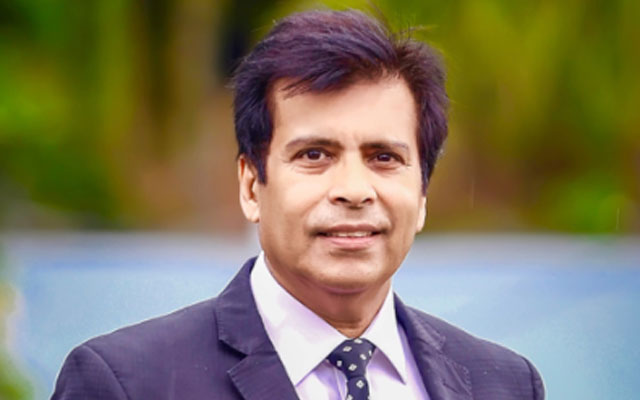
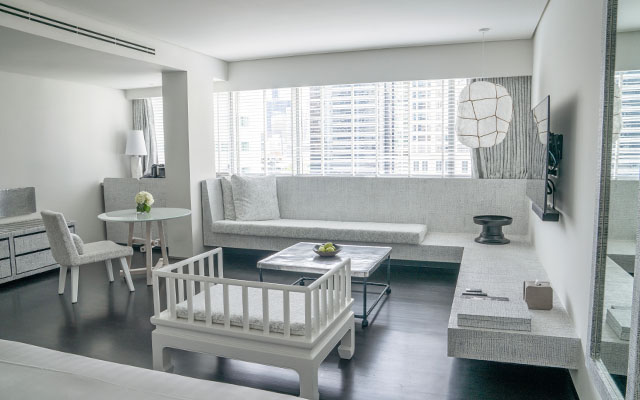
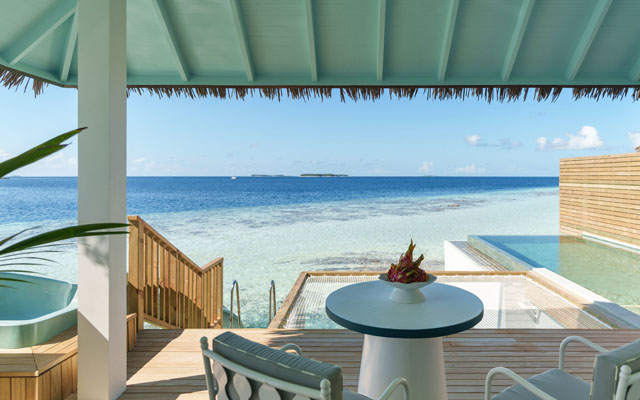
Subroto Banerjee has been appointed as general manager of Mövenpick Hotel Sylhet, the first Mövenpick-branded property in Bangladesh.
Banerjee has been a part of the Mövenpick Hotels & Resorts’ team in general manager roles in hotels in India and Saudi Arabia since 2014.
He first started his hospitality career more than three decades ago, and has worked for major hotel brands in India including Oberoi, Sheraton and Hyatt Regency. As a F&B specialist, he later moved to Oman to manage the main restaurant at the former InterContinental Muscat.
Upon returning to India, Subroto took on senior management roles for a series of prestigious hospitality projects, eventually becoming general manager of Starwood’s Aloft Bengaluru Whitefield hotel in 2012.
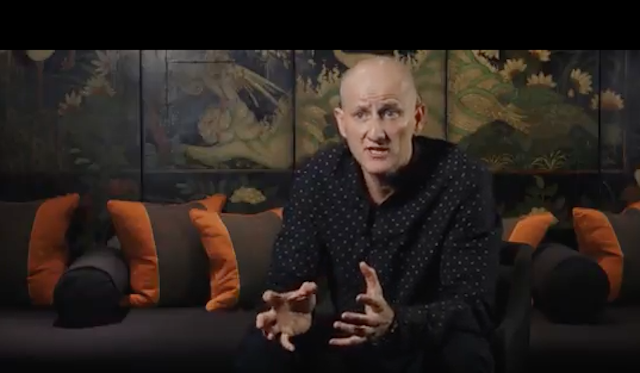
Serge Dive: “The other tradeshows are in a dating business; we are in the falling-in-love business.”
A new luxury travel tradeshow, Further East, to be held in Bali in November, asks buyers and sellers to “shake off your shoes and your tradeshow perceptions”.
If it wasn’t for Serge Dive who is launching it, that notion of a ‘barefoot’ show might be dismissed as just a gimmick. Dive created ILTM Cannes, sold it to Reed Exhibitions, and later went on to launch his own shows Pure Life Experiences, LE Miami, We Are Africa, and now, Further East.
Buyers interviewed show he seems to have built a cult following for being ‘un’ everything a traditional tradeshow is.
“We participated in the first Pure Life Experiences in Marrakech in 2009 and have attended every one since,” said Hamish Keith, group managing director of Bangkok-based Exo Travel. “Serge’s vision of a ‘un-conference’ and a different kind of tradeshow focused on experiential travel coincides with Exo’s vision of fusing active and experiential travel in exotic and emerging Asian destinations. I really like and respect that Pure remains focused on its principles and has not grown into a big mainstream tradeshow, and I trust Serge and his team to deliver another great event with Further East.”
Dive: “The other tradeshows are in a dating business; we are in the falling-in-love business.” Watch the video by Beyond Luxury Media, organisers of Further East here
The new event will be held from November 12 to 15 in Seminyak, Bali’s hip and happening upscale resort destination, at Alila Seminyak, Potato Head Beach Club, Katamama Hotel and W Bali-Seminyak next door.
So will the tradeshow be held on sand with barefoot buyers in bohemian wear strolling to their next appointment?
Dive, CEO of London-based Beyond Luxury Media, in a phone interview, said it won’t be on sand on the beach, but it would be the closest buyers and sellers could get to a barefoot luxury show. Appointments would be held in an indoor space at Alila, but bin the picture of a traditional mart in a convention hall, he said.
“I can’t tell you how the space would be dressed up, but everything we do is custom-made, and people will get a sense of the sea. When they go out to the networking area on the lawn facing the beach, we would encourage them to go barefoot,” said Dive.
The conference component, Awaken, will be held outdoors at Potato Head Beach Club. “Forget awful coffee, cold air-conditioned room, boring speakers, death by Powerpoint. It’ll be a mix of keynote, fast presentations, workshops, discussions. We want to create more conversations with the audience,” he said.
Dive has a mission for every show he creates. We Are Africa, for instance, aims to rebrand Africa travel as modern, positive and contemporary. Further East aspires to be the guardian of Asian values, he said.
“We realise that Asia is becoming the place more people want to go, because Asia has everything that the Western world has lost – spirituality, not necessarily in the religious sense, balance, social responsibility, self-respect and respect for others, great respect for heritage while putting itself into the future.
“At the same time, Asian brands and products are at an interesting crossroads where they could be tempted to embrace much of values of the Western world,” said Dive.
Further East can be the guardian by bringing forth the uniqueness of Asia through having the right cast of sellers – high-end, boutique, iconic, above all, uniquely Asian, he said. Once the casting is right, the discerning buyers would follow, he added.
“The problem with tradeshows is they mix Asian brands with European, African, etc, that there is no sense of context. Look at the story of trade fairs – they used to have everything. I was one of the first to separate luxury travel from normal travel (ILTM). Then we realised that within luxury travel, there’s an experiential market so we created PURE, and we realised that Africa needed to be treated differently from Asia so we created We Are Africa. Further East is the same. The values of Asia, its DNA, need to be displayed and elevated, not diluted,” Dive said.
That’s also the reason why he picked Bali. “Obviously we could go to one of the amazing, efficient destinations of Asia but we’ve been obsessed from the start by the idea of a barefoot travel tradeshow and want to make sure this will be on the beach. Bali has a great sense of character and look how zen and peaceful Alila is while Potato Head Beach Club shows the millennial, hipster feel of Asia yet is so anchored on traditional Asia. (Ronald) Akili (founder of Potato Head Beach Club) is totally obsessed with protecting the environment, culture and Asian values,” said Dive.
Some 145 exhibitors of a targeted 200 have signed up. They would be matched with 210 buyers in 42 pre-scheduled appointments. The show targets 35 per cent of buyers to be from Asia, 27 per cent Europe, 18 per cent North America, 10 per cent Oceania, seven per cent Latin America and three per cent Africa/Middle East. It is predominantly a leisure show (93 per cent) with the rest comprising corporate and MICE business.
It remains to be seen whether Further East isn’t built on sand. Dive’s followers like David Song, founder & managing director of Beyond X Boundaries Singapore who attends Pure and We Are Africa, thinks it’s going to be solid, saying Dive and team have “raised the bar in events management”.
“They do it with style and flair, with a very relaxed atmosphere and a bohemian attitude to dress code,” said Song, adding there were “meaningful engagements, new business developments” as exhibitors and buyers were carefully selected and screened to ensure quality.
Dive said he’s able to create meaningful engagements because “the other tradeshows are in a dating business; we are in the falling-in-love business”.
“We create a community people want to live in. When they come to our shows, they say, I realise I love what I’m doing. They may return with 80 business cards, but 40 will be friends forever, people they will do business with and whom they will protect.
“The Internet revolution is returning business to what it used to be: business based on trust, liking and knowing people well.”
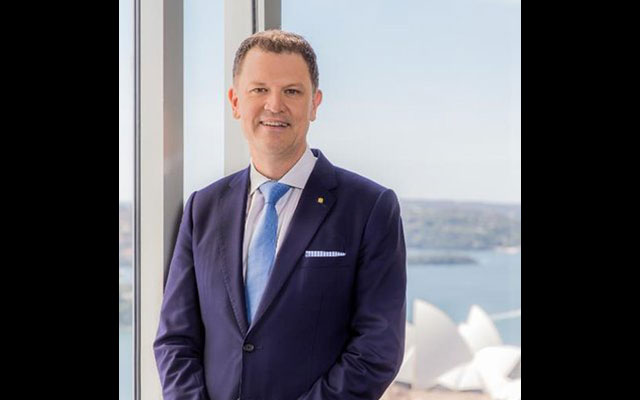
Minor Hotels has appointed Craig Hooley as the new COO of Oaks Hotels & Resorts and Avani Hotels & Resorts (Australia and New Zealand).
In his new capacity, Hooley will spearhead Oaks and Avani’s corporate and commercial operations in its key markets of Australia and New Zealand, where it currently has a portfolio of over 50 properties. Based in Minor Hotels’ regional office in Maroochydore on Queensland’s Sunshine Coast, he will also develop forward growth strategies for the company and provide leadership across various corporate factions.
Prior to joining Minor Hotels, Hooley was general manager of Shangri-La Hotel, Sydney, following a successful tenure at Shangri-La International Hotel Management in Hong Kong.
Hooley has amassed extensive industry experience during his two-decade-long hospitality career, having held several key leadership positions with Mirvac Hotels & Resorts and InterContinental Hotels Group, both in Australia and overseas.
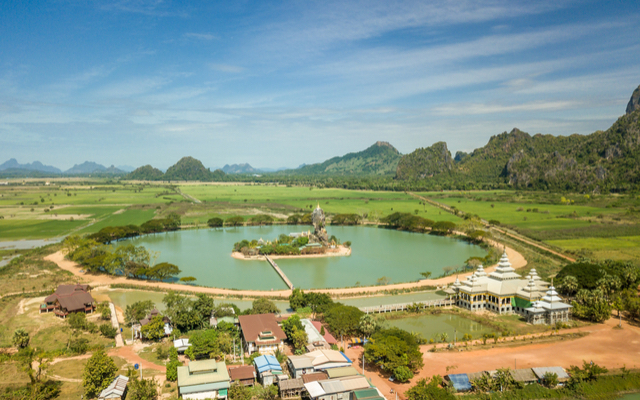
Hpa-An ()pictured) an example of domestic travellers being path finders for international tourists
As leisure travel picks up among Myanmar’s citizens, domestic tourism is surging and helping to plant the country’s emerging destinations on the international travel map.
Domestic travel is on the rise, hitting an all-time high of more than 10 million people in 2017, according to Myanmar Tourism Marketing chairperson, May Myat Mon Win.
Hpa-An (pictured) an example of domestic travellers being first-movers to a destination
The WTTC predicts domestic travel expenditure will reach 2.9 trillion kyats (US$2.2 billion) by 2027.
Said May Myat Mon Win: “Travelling is becoming (a larger) part of the younger generation’s life. Two generations ago people saved and bought gold, the next generation bought land. This generation is saving to travel; it’s becoming a part of the lifestyle.”
And it is these travellers who are driving the international appetite for new destinations across the country.
May Myat Mon Win added: “Domestic travellers move first. They discover the new places, then local incentive groups take interest, then development starts and then the foreigners move in.”
She cited Hpa-An in Kayin State as an example. The city and surrounding state have been on the radar of locals for years, thanks to its plethora of sacred sites and sprawling countryside. A recent raft of nature- and community-based attractions have been developed, and local accommodations and restaurants are now starting to cater to overseas visitors.
Edwin Briels, managing director of Khiri Travel Myanmar, said when Khiri started operating kayaking tours in Kayin State in 2015, it was off foreigners’ radar. “There were no guides in Hpa-An and simple hotels, but we still thought it’s worth visiting. We said, ‘you’ll have to rough it a bit but it’s worth it.’ Now we see more hotels coming and the clients will start coming.”
Greg Allan, vice-president of operations (ASEAN) at Pan Pacific Hotels Group, which operates Parkroyal Yangon and Pan Pacific Yangon, also predicts foreigners will follow in the footsteps of locals, who flock to beach destinations, such as Ngapali and Ngwe Saung – both a 45-minute flight from Yangon.
“These are undiscovered beach destinations that are popular with locals and soon-to-be discovered by tourists.”
Japan typically a crisis-sensitive travel market, but not in this instance
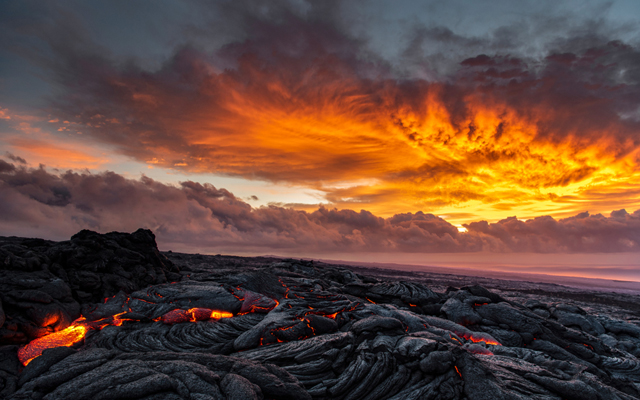
Following ongoing eruptions in recent weeks at Hawaii’s Kilauea volcano, ForwardKeys reported a slump in travel bookings from most of Hawaii’s top feeder markets in the month of May – with the exception of Japan, which bucked the trend with bookings up 10.6 per cent.
After the eruption on May 3, bookings for the period May 3-31 period slumped by 9.8%, with Canada down 23.2%, Australia down 32.2%, China down 39.8%, Germany down 47.7% and New Zealand down 27.5%.
Japan typically a crisis-sensitive travel market, but not in this instance
With Japan the one source market to buck this trend, ForwardKeys CEO and co-founder Olivier Jager said: “Normally, the Japanese market is super-sensitive to crisis situations and it is the first to cancel when any form of trouble occurs in a destination. Our hypothesis is that because Japan sits on the ‘Pacific Ring of Fire’ and has over a hundred active volcanoes, it is so used to earthquakes and volcanic eruptions that they cease to be newsworthy.
“Indeed, the situation in Hawaii has featured less in the news in Japan than it has elsewhere. An analysis of online news clips of the Kilauea eruption revealed that media exposure in Japan was just 0.2% of total exposure worldwide.”
While bookings in May suffered, over the coming five-month period to the end of October, forward bookings are still 2.2 per cent ahead of where they were at this time last year.
Bookings for June and July are just 0.5 per cent and 1.6 per cent behind and bookings for August, September and October are up 6.7 per cent, 7.9 per cent and 2.3 per cent respectively, which led ForwardKeys to suggest that the tourism outlook could be less worrying than might have been feared.
Analysing Hawaii’s most important forward bookings by origin market, Japan is 3.2% ahead, Australia 6.7%, Canada 3.1%, Germany 6.8% and New Zealand 27.0%.
A major driver of bookings from New Zealand has been a substantial increase in capacity, with nearly 60% more seats available in the June – October period.
The great disappointment is China, from where bookings are currently 18.9% behind for the period to the end of October.
Jager concluded: “Given the magnitude of media coverage, forward bookings to Hawaii are holding up surprisingly well. We are also aware that the vast majority of Japanese and other international visitors to Hawaii stay in Honolulu, which is on a different island from the one where Kilauea is erupting.”
OTA joins Amadeus’ NDC-X programme
Travix has joined Amadeus’ NDC-X programme to drive NDC progress for OTAs. As part of the partnership, Travix will provide input into the design of an NDC-based Amadeus Web Services solution that will help OTAs deliver more personalised and differentiated travel experiences. The solution will enable travel agencies to shop, order, and pay for flights and related services, and to add ancillaries and services to the booking, all using the NDC standard.
In the first phase, the two companies will define a solution which will give online travel sellers access to aggregated NDC and non-NDC content. In the second phase, Amadeus and Travix will jointly define the servicing requirements that an agency has once the booking has been made, such as any changes or cancellations, or adding ancillaries.
Pkfare partners Finnair to pilot NDC distribution
Travel B2B marketplace Pkfare has partnered Finnair to pilot NDC Distribution, a move that will allow customers to complete their Finnair booking without leaving the metasearch platform. Pkfare attained Level 3 NDC certification last November. This status recognises that Pkfare, as an aggregator, can manage NDC-driven offers and orders throughout the entire lifecycle, from booking to fulfilment.
Sabre expands NDC-enabled solutions
In 2018, Sabre plans to launch new service-enabled APIs and enhanced capabilities in the Sabre Red Workspace that will allow customers to shop and book NDC content alongside traditional content. The travel technology company is expecting to begin a pilot program with additional agency and airline customers in the third quarter this year.
In the fourth quarter Sabre will bring to market the industry’s first Digital Airline Commercial Platform, marking a major advancement in the capabilities airlines will have to seamlessly leverage data-driven insights.
Sabre achieved NDC Level 3 capability as an IT provider in February 2018 and has committed to Level 3 certification as an aggregator in 2018.
CTM receives highest NDC certification
Corporate Travel Management (CTM) has received Level 3 certification in the NDC programme, which it says resulted from working closely with its airline and technology partners around the world. CTM expects the certification – in addition to its own suite of technology, including the global Lightning online booking tool – to deliver richer content and more seamless customer experience.
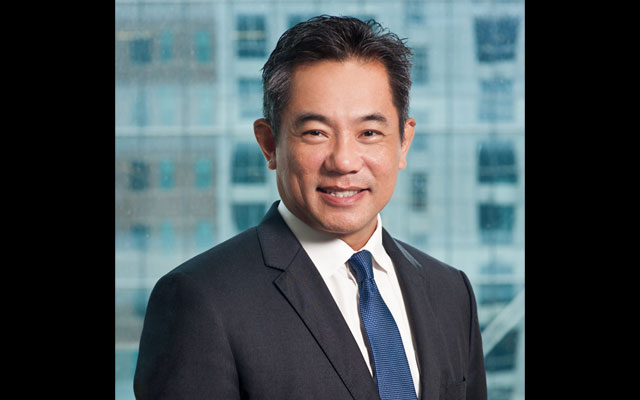
Now spun off from Wyndham Worldwide as a pure-play hotel company, Wyndham Hotels & Resorts has appointed Joon Aun Ooi – who brings a track record in spearheading regional openings of hotel brands – to the role of president and managing director for South-east Asia and Pacific Rim.
Reporting to Bob Loewen, executive vice president and COO of Wyndham Hotels & Resorts, Ooi will lead the post-spin development and growth of the Wyndham Hotels & Resorts family of brands across the South-east Asia and Pacific Rim region and drive its strategic objectives including the company’s brand transformation and its focus on loyalty, distribution, as well as sales and marketing.
Joon Aun Ooi
Based in the regional headquarters in Singapore, Ooi replaces Barry Robinson who has been named president and managing director, Wyndham Vacation Clubs, a division of vacation ownership and exchange company Wyndham Destinations.
Since joining Wyndham in 2013 as vice president, openings and operations for Wyndham Hotel Group Greater China, he has introduced four new brands to the market and played a pivotal role in growing the combined franchise and management portfolio to over 1,400 hotels.
“Asia-Pacific is one of the world’s strongest travel markets, underpinned by rising middle class affluence and increased intra-regional travel driven by LCCs. We are accelerating the growth of our brands across the region to meet this demand which will make travel more accessible to all groups of travellers,” said Ooi.
“Going forward, we will be focused on our strategic transformation laser-focused on our brands, technology and marketing which will unlock even greater value for our franchisees, owners and management partners.”
Before joining the hospitality industry in 2002, Ooi had spent more than seven years at The Boston Consulting Group where he was a principal. He made his first foray into the hospitality industry as vice president strategy at InterContinental Hotels Group before moving to China in 2005 to take on the role of vice president, hotel openings (Greater China). In 2009, he was appointed vice president strategy and hotel openings (Asia Pacific) at Hilton.
Following its recent sale-and-leaseback agreement with Goldman Sachs to reinvest in new Japan developments, Red Planet Japan has now established a new subsidiary in the Philippines, and along with it, the acquisition of two local flagship properties which will double its room inventory.
The new subsidiary, Red Planet Hotels Manila Corporation, will acquire the land lease rights and partially-constructed assets of two hotels in the Philippines, Red Planet Manila The Fort and Red Planet Manila Entertainment City, for a total consideration of 166.8 million pesos (US$3.2 million).
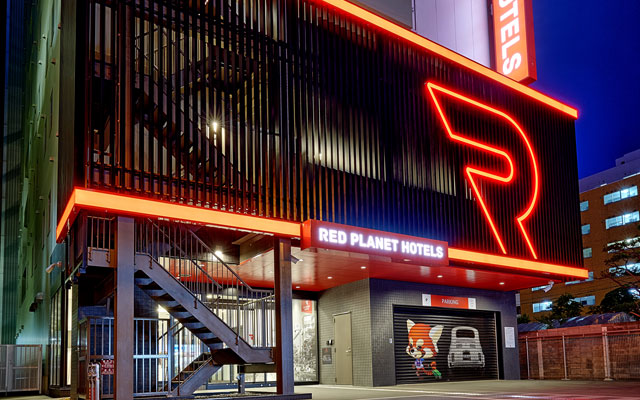
Red Planet Japan further expands hotel portfolio in the Philippines; its property in Sapporo pictured
Scheduled for launch in 2019, Red Planet Manila The Fort is being developed as a 245-room hotel located in the Metro Manila business district of Bonifacio Global City. Opening in 2020 is Red Planet Manila Entertainment City, a 330-room hotel located adjacent to Manila’s bayside, close to Ninoy Aquino International Airport, the new casinos, and the Mall of Asia complex.
According to a Red Planet statement, there are hopes this would spur two-way demand from Japanese and Filipino travellers, given the brand’s growing presence in Japan and the Philippines.
Red Planet’s CEO, Tim Hansing, commented: “The travel industry in the Philippines continues to grow rapidly, especially with a significant increase in inbound tourists. The similarities with the rapid development of inbound visitation to Japan tourism are notable, making this acquisition a natural next step in our growth strategy. Both Japan and the Philippines are high-growth leisure travel markets, and we are therefore building a sizable presence in both markets.”
Inbound arrivals to the Philippines grew by 25.6 per cent in 2017, propelled by sizeable increases in arrivals from China and Japan, Red Planet shared. And while Chinese visitors to the Philippines climbed 43.3 per cent in 2017 alone, Japanese tourist arrivals in the Philippines also surged over the past eight years, from 2009 to 2017, with a total increase of 80 per cent.
Premier Village Phu Quoc, Vietnam
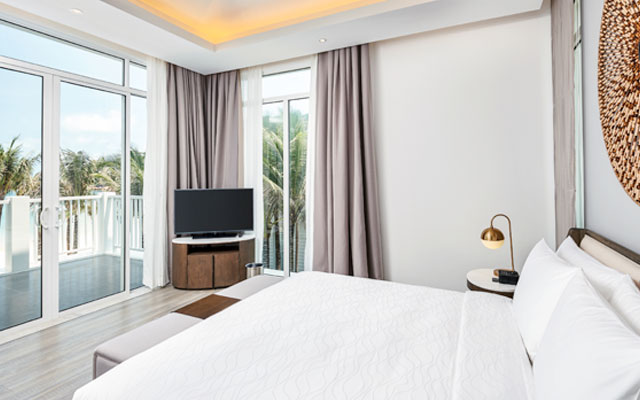
An all-pool-villa resort has opened on Vietnam’s Phu Quoc island. Nestled among the forested Ong Doi Cape, Premier Village Phu Quoc resort offers 217 villas in a number of configurations, from the two-storey two-bedroom villas to On The Rock villas with four bedrooms. Each dwelling features a private swimming pool, balcony, fully-equipped kitchenette, and a spacious living and dining room.
F&B options include the Mediterranean restaurant Corallo, the all-day dining Market and the Sunset Lounge (opening in late 2018). Leisure facilities include the Plumeria Spa, a fitness centre, communal swimming pool, kids’ club, as well as a Bill Bensley-designed elevated platform function space that can cater to 200 pax (also opens late 2018).
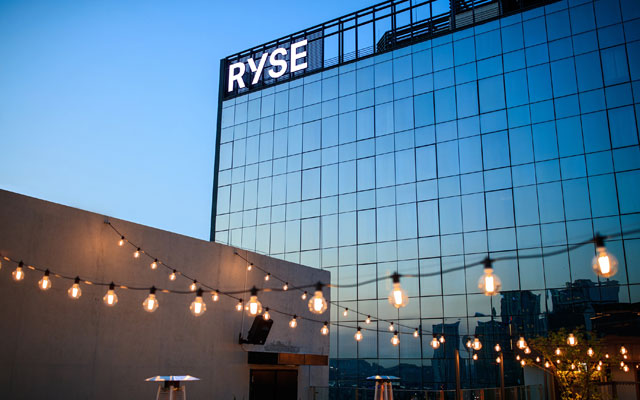
RYSE, South Korea
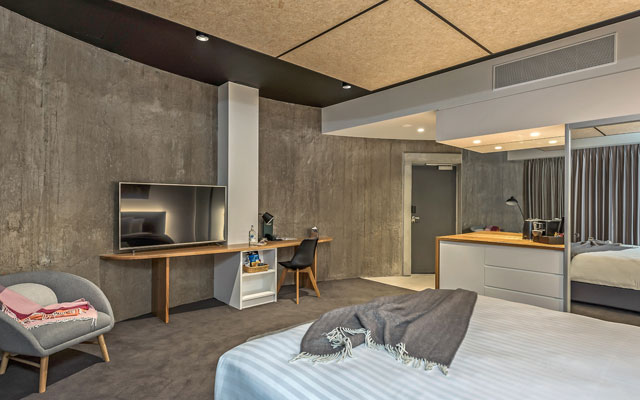
The second Autograph Collection hotel in Seoul has risen in the Hongdae district. RYSE boasts 272 guestrooms including 14 suites, each designed to highlight an art piece from an exclusive collection for the hotel. For instance, the 217m2 Executive Producer Suite, located on the 20th floor, features handpicked artworks and a graphic wall by renowned Korean graphic designer Na Kim. Aside from the four F&B options, facilities on the property include a fitness centre, 500m2 retail store, and 1,400m2 of meeting and event spaces.
Hyatt Regency Shenzhen Airport, China
The first Hyatt Regency hotel in Shenzhen has opened its doors a five-minute walk from Shenzhen Bao’an International Airport. Offering 335 keys, room sizes range from 40m2 to 245m2 , and feature floor-to-ceiling windows with airport or city views. Rooms are insulated and come furnished with 55-inch flatscreen TVs, a Bluetooth audio system, work areas and complimentary high-speed Wi-Fi.
The property also has four F&B venues, a spa with six rooms, 24-hour gym, indoor swimming pool, steam room, sauna and whirlpool. Event planners may avail the more than 1,670m2 of indoor function space, which includes the pillarless Regency Ballroom for up to 1,000 guests, and six meeting rooms. Complementing the indoor spaces is a 4,600m2 outdoor garden.
Peppers Silo, Australia
Launceston in Tasmania, Australia, has welcomed a new hotel Peppers Silo, the first such development in the city since 2010. The redeveloped site – from unused grain silos in Kings Wharf – along River Tamar is now a 10-storey hotel featuring 108 guestrooms, including 52 inside the barrels of the former silos, which includes one- and two-bedroom apartments.
Amenities at Peppers Silo includes a fully-equipped gym, day spa, child-minding facilities, hairdressing salon, and a restaurant and bar called Grain of the Silos. There are also conference facilities for up to 500 people, as well as private dining rooms available.
Le Bokor Palace Opening 2018
A luxurious and historical Hotel since 1920s is renovated for re-opening
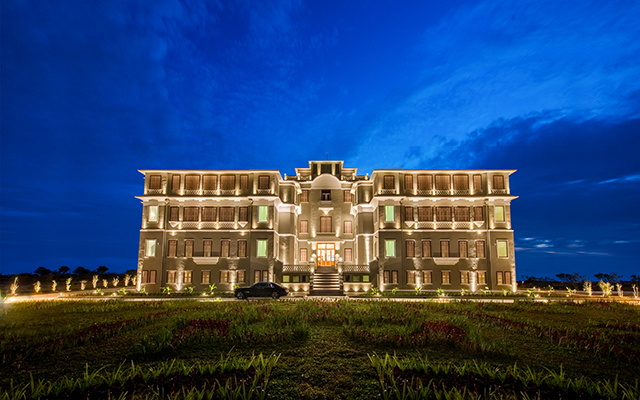
Le Bokor Palace is a luxurious and historical hotel since 1920s situated on cliff at the top of Bokor Mountain, Kampot Province, Kingdom of Cambodia. The hotel offers breathtaking view of mountain and coastline, as known as the health resort that offers natural treatment to visitors.
Because of its cool climate and fresh air, it contributes and promotes blood regeneration, lungs, heart, breathing, nutrition, nervous system, regain strength and health. Source: fromDr Vallet, Director of Cambodia’s Health Service, 1925
Le Bokor Palace located between the tropical forest and the “Opal Coast” on Preah Monivong Bokor National Park, nearby Kampot Province and was first inaugurated on 14 February 1925 to host royalty and elites for decades. The hotel was revived in the early 1962 by Preah Karuna Preah Bat Samdech Preah Norodom Sihanouk, and served members of high-ranking officials, governments and wealthy business people, and it used to be Preah Karuna Preah Bat Samdech Preah Norodom Sihanouk’s favorite retreat vacation.
Perched on a cliff at the top of Bokor Mountain, this historical hotel commands breathtaking views of what the French once called the Opal Coast. The weather on top of Bokor Mountain ranges between 17 °C – 24 °C (62.6 °F – 75.2 °F) for whole year round. Bokor Mountain is not just tourist destination for traveler, but also a health resort with natural health treatment that effects on lung, breathe, nutrition, nervous system, enable blood regeneration, and regain strength (Source: fromDr Vallet, Director of Cambodia’s Health Service, 1925).
Le Bokor Palace is four-storied building, toughly and neatly designed, has a powerful presence, embellished with decks and Italian-style pergolas.
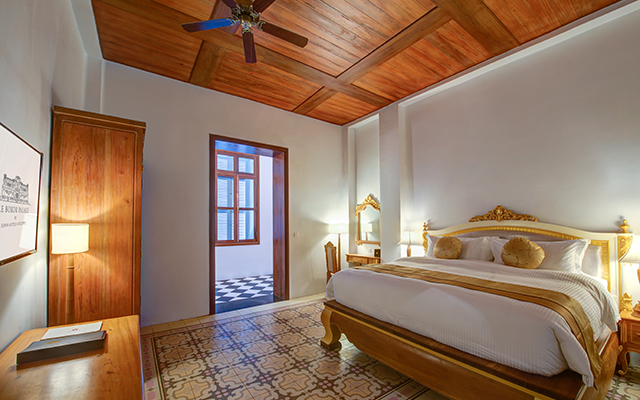
Today, Le Bokor Palace is restoring by Sokha Hotels & Resorts. Designed of French style to keep its original feature and size, guests can embrace a luxurious staying experience at the historical hotel of Le Bokor Palace. The hotel brings out 5 room types, featuring Thansur Room, Bokor Suite, Sokha Suite, Thansur Suite, and Palace suite ranging from 18.5 to 90 square meters. Each rooms and suites are well-equipped with the state-of-the-art facilities, Spain tiles, Italian bathroom equipment, handmade wooden furniture, comfortable mattress with luxury wooden bed (Single bed or King bed), and velvety sofa. A glance through window, guest can get a glimpse of stunning mountain and magnificent panoramic views of the “Opal Coast”.
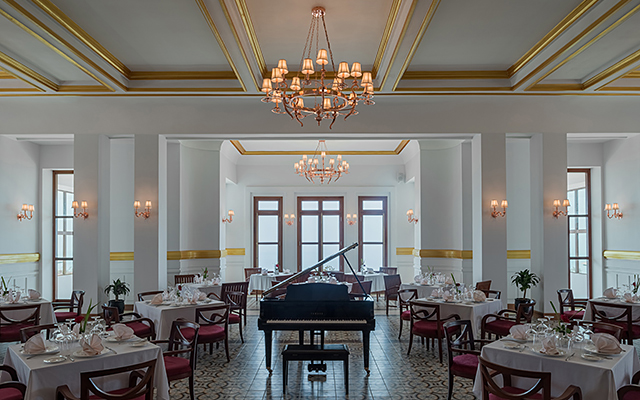
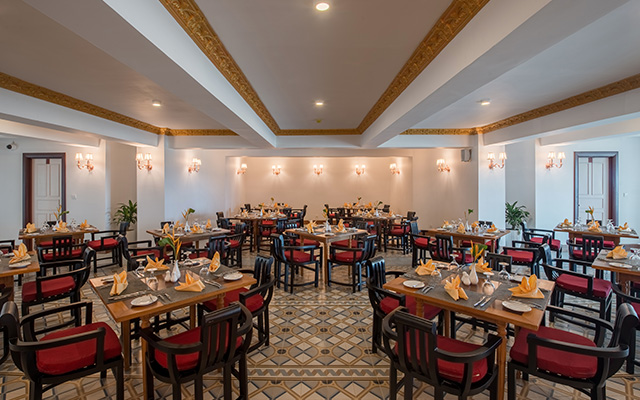
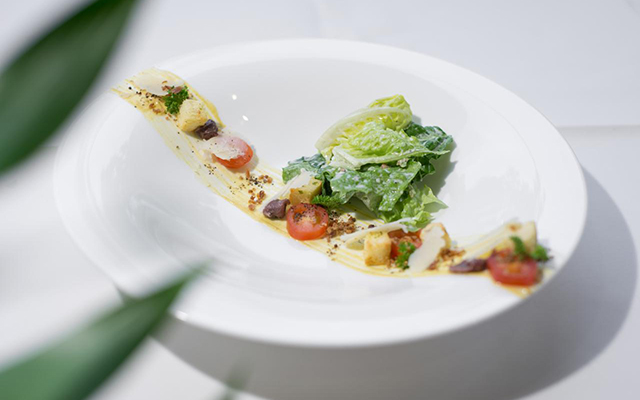
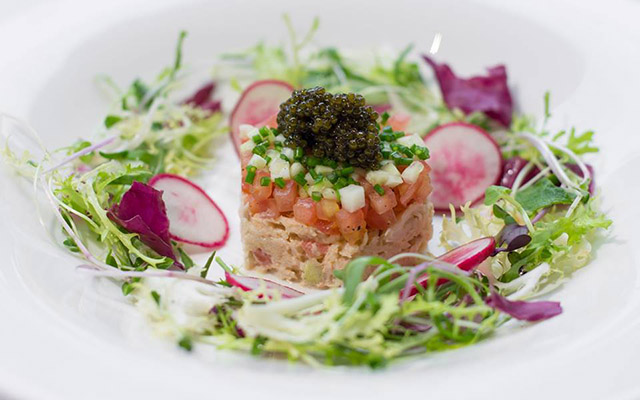
Its 2 restaurants offer fine-dining and all-day dining exclusively featuring the old menu that was used since Le Bokor Palace first opening in 1925. The dishes are made of fresh and high quality ingredients together with organic vegetables from Bokor Hydroponics Farm nearby to bring out the best flavor. Embellished with stylish lighting and elegant interior décor, these two restaurants offer a great dining experience in sophisticate atmosphere.
While staying at Le Bokor Palace known as nature health resort, guests can also visit the spectacular of Mountain Lake, beautiful Popokvil waterfall, Rock formation various shapes of rocks at 100 rice field and a unique shape of rock symbolize a gate between heaven and earth. Meditation is recommended on Bokor Mountain especially at 500 rice fields. Bokor Mountain is the only place in Cambodia that has Nepenthes flowers, the local use the flowers for medicine.
The remains of the colonial settlement – which included Catholic Church, Wat Sampov Pram, Domnak Sla Kmao, Damnak Sdech, City Hall and other colonial buildings – can still be seen today, spread out across a plateau and often shrouded in mist.
Le Bokor Palace includes 36 luxurious rooms and suites. Its two restaurants capture the elegance of the hotel’s historic past, with Swiss and Cambodian chefs are preparing both 100 year of renascence menu and Royal Khmer cuisine with freshest organic vegetables and ingredient that grown nearby organic farm.