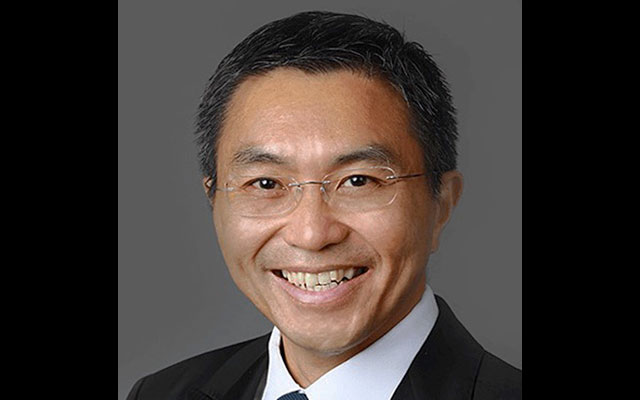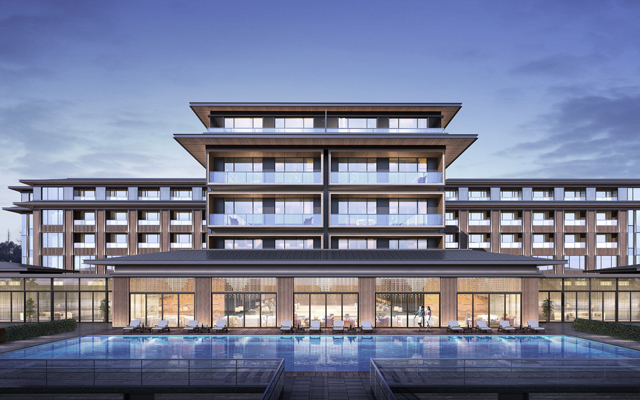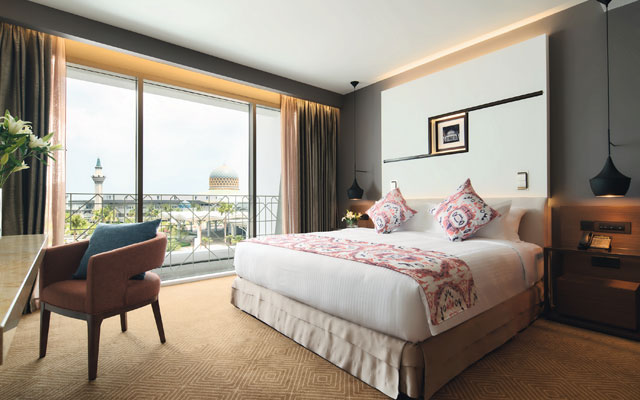
Hairul Maharis has been named general manager of Mövenpick Hotel & Convention Centre KLIA, a Sharia-compliant property scheduled to open in mid-2018 near the Kuala Lumpur International Airport (KLIA).
A Malaysian native, Maharis boasts a strong background in the management of airport hotels, having previously overseen the Tune Hotel klia2 and, most recently, ISG Airport Hotel in Istanbul.
Over the course of his 25-year-long career, the seasoned hospitality professional has also worked with brands including Le Méridien, Sheraton and Best Western.
Barely two months into its launch, Air Belgium has postponed the launch of its first service – between Hong Kong and Brussels – after failing to obtain the required Russian airspace permit in time for the initial commencement date.
The launch of this four-times weekly service to Brussels South Airport was initially announced for April 30, but has now been pushed back to June 3.
A Belgium Airline spokesperson says the necessary approval will be processed in a matter of days
The airline’s CEO Niky Terzakis explained in a statement: “At this date and despite all efforts of our teams and the Belgian authorities, we are still expecting to receive the overflight permit from the Russian Authorities, knowing that overflying through Russian airspace is unavoidable.
“In addition to the uncertainty created by the above, the complicated and delayed GDS implementation has also prevented Chinese tourists groups from being directed to our flights.”
An Air Belgium spokesman added that the flights were initially scheduled with a “relatively short lead time”, and expressed confidence in obtaining the Russian Overflight Permit in time for June 3. It will take a matter of days, not weeks, he remarked.
The spokesperson also shared that the airline has “proactively (offered satisfactory solutions) to impacted passengers”.
A source told TTG Asia that impact on the Hong Kong trade and consumers has been minimal, with agencies such as Premium Holidays and Wincastle Travel (HK) stating no bookings had been made with the airline.
A larger obstacle in the airline’s way is perhaps its lack of brand awareness in Hong Kong.
Premium Holidays, general manager, Simon Wo said: “I heard about the carrier but have no idea (when they were launching the Hong Kong flights). So far, we haven’t make any booking with it as Cathay Pacific kicked off its Hong Kong-Brussels route in late March.”
He added that competition on the route will be considerable as the destination is “not a hot pick” for Hong Kong travellers.
Eliza Li, senior manager for marketing and product, Wincastle Travel (HK), agreed that few clients are aware of Air Belgium as it is a new entrant, adding that longhaul travellers have preference for carriers like Cathay Pacific, Qatar Airways and Finnair.
Li however suggested: “It’d be great if tourism representatives from Belgium can stage a roadshow in Hong Kong and share some latest travel information with us. From there, we can update our offers and package it with the new carrier’s offers.”
While working with several partners, Air Belgium has also appointed two GSAs in Hong Kong (one each for passengers and cargo). Local sales and marketing campaigns are being rolled out, TTG Asia understands.
: Shoppers in Kuala Lumpur Little India, Brickfields, KL
With this year’s Ramadan – a traditional lean period for domestic travel in Malaysia – coinciding with the Indian peak summer travel in May and June, inbound players in the country have been quick to leverage the lower rates and traditions surrounding the fasting month to entice visitors from India.
Malaysia’s room rates for May and June are lower, pointed out Arokia Das, director, Luxury Tours Malaysia, thanks to weaker demand for domestic travel during this period.
Indian tourists in Kuala Lumpur’s Brickfields precinct
The availability of off-season rates is partly why summer travel from the Indian market this year is better than in 2017, observed Rajiv Kapoor, general manager of The Westin Langkawi Resort & Spa.
Inbound agents are also taking advantage of Ramadan as well as Hari Raya Aidilfitri, which follows the fasting month, to incorporate local festive elements into their tour itineraries.
Arokia shared that his company will include open house celebrations in conjunction with Hari Raya Aidilfitri for visitors to partake in the local festivities during this period.
Hidden Asia Travel & Tours is likewise running tours including Ramadan bazaars in Kuala Lumpur and Penang to give visitors “a feel of the local culture and festive mood”.
To commemorate Ramadan, The Westin Langkawi Resort & Spa and Langkawi International Convention Centre will offer buffet spreads for the breaking of fast, including an Indian vegetarian section to attract the Indian crowd, said Rajiv.
Maldives Holidays Collections began in 2012 much like other inbound tour companies – until a request for help with commercial shooting arrangements changed its story.
The company’s foray into production coordination began with an enquiry in 2014 to help in the logistics for a free diving documentary, recalled managing director Shausha Aan Shafeeq.
Maldives Holiday Collections’ Shafeeq with Star Wars Rouge One’s director Gareth Edwards
Shausha said the team shot for 10 days in different locations, some near inhabited islands. The company arranged for all the required government permits as well as the booking of venues and hotels.
The approvals process has since gotten more difficult, requiring approval not just from the Ministry of Arts and Culture but the police too, further cementing the company’s specialised service. “There are regulations – you can’t just come here and shoot videos,” he continued.
Since then the company has helped organise logistics and other support for close to 30 productions including a 20-minute scene of the Star Wars Rogue One movie released in December 2016.
Scenes were shot at the Laamu Atoll, one of the Maldives’ largest islands, which was depicted as planet Scarif in the film.
Two companies were involved in the coordination of this gigantic exercise with Maldives Holidays Collections handling the food and accommodation.
Two container loads of equipment including weapon props were shipped for the shoot while a helicopter was borrowed from Sri Lanka.
“That was an exciting event not only for us but great promotion for the country as well,” he said.
A few more production coordination jobs have been lined up this year.
Including Maldives Holidays Collections, there are just two companies in this business in the destination, according to Shausha.
The company handles logistics ranging from applying for business visas, booking of hotels and securing of locations.
The new revenue management system is expected to help Frasers better manage its diverse portfolio, which ranges from serviced apartments such as Fraser Place Setiabudi Jakarta (pictured) to hotel residences
Frasers Hospitality is collaborating with revenue strategy platform Duetto to develop what’s said to be the first revenue management system that uses open pricing to optimise rates for contracted extended stays in additional to traditional short stays.
To be made available in Duetto’s cloud-based GameChanger app, the feature is expected to help Frasers more efficiently balance revenue management strategy between long and short stays, and will be implemented across Fraser’s global portfolio.
The new revenue management system is expected to help Frasers better manage its diverse portfolio, which ranges from serviced apartments such as Fraser Place Setiabudi Jakarta (pictured) to hotel residences
Instead of traditional fixed-tier pricing where rates for different sales channels are derived from a single best available rate, open pricing allows accommodation providers to price all room types, channels and dates independently of each other based on actual demand.
By offering more flexibility in rate adjustments, this also means that guests are not turned away during peak periods when operators would normally close channels or add length-of-stay restrictions rather than sell discounted rooms.
Rates for the extended stay segment are typically inflexible and fail to account for the displacement of transient business and longer, more profitable longer-staying guests, according to Frasers.
Currently in beta stage, the new app module will be able to recommend an optimised rate and negotiation range for extended stay contracts after factoring in various costs.
The system is also expected to help hotels overcome manual data analysis, as well as allow for better prediction of demand that goes beyond historical guest records by leveraging third-party data such as web shopping behaviour, air traffic and weather to gauge price sensitivities and recommend optimal room rates.
This is part of a larger initiative that Frasers is embarking on to gain more insights into demand and boost its pricing and distribution strategies as it scales up its global portfolio, according to senior vice president, head of global marketing & sales, Joanne Ang.
The hotel will be Best Western's third in Malaysia
The hotel will be Best Western’s third in Malaysia
Best Western Hotels & Resorts is planning a new 200-room hotel in Nilai, a university town in Malaysia’s Negeri Sembilan state.
The 10-storey Best Western Mesa Hotel will form part of developer Green Target Group’s MesaHill development. The mixed-use complex also includes residences and a retail centre, MesaMall, which opened late last year to become the largest shopping and lifestyle mall in Nilai.
Best Western Mesa Hotel will be situated 18km from Kuala Lumpur International Airport (KLIA) and 50km from Kuala Lumpur.
It will become Best Western’s third midscale hotel in Malaysia, following Best Western Petaling Jaya and Best Western i-City Shah Alam, both of which are also located in the Klang Valley.
North Gate by Jetwing, Sri Lanka
Situated a mere 20m away from the Jaffna Railway Station is Jetwing’s second property in Jaffna. The hotel offers 44 rooms inspired by the city’s rich culture, and offers regular mod cons like a rain shower, TV with international and local channels, a tea/coffee making facility and mini bar. Facilities include a restaurant, bar, swimming pool, gym, and yoga classes for groups or individuals.
Photo credit: Hoshino Resorts
Hoshino Resorts OMO7 Asahikawa, Japan
The first property under OMO – Hoshino Resorts’ fourth brand – has opened its doors in Hokkaido. The no-frills OMO7 Asahikawa offers 237 compact rooms, a gathering space in the form of the OMO Cafe & Bar and where breakfast can be had, a lobby lounge filled with local Asahikawa design, as well as a loft-like library.
Mercure Yangon Kaba Aye, Myanmar
Mecure’s debut in Yangon offers 183 rooms and suites, with guestroom sizes ranging in size from 32m2 to 125m2. Suites come with an added kitchenette, as well as a separate lounge and dining room. Amenities on-site include the all-day dining MiCasa Restaurant & Bar, 21m-long lap pool, fitness facility, on-site babysitting services and several function spaces which can accommodate up to 210 pax.
Grand Hyatt Xi’an, China
The ancient Chinese city of Xi’an has welcomed a Grand Hyatt property, with a total of 396 guestrooms featuring designs inspired by a desert mirage. Facilities include four restaurants and bars on the 106m-high Sky Bridge that connects the hotel and office building – the property is part of the Maike Center – as well as a spa on level 6. For events and functions, the hotel has 2,134m2 of space on levels 3 and 3M.
Courtyard by Marriott Iloilo, Philippines
A 324-room Courtyard by Marriott has opened along Megaworld Boulevard in Iloilo City. The Courtyard Iloilo also offers the Refreshing Business lobby environment, where guests can enjoy media mods, complimentary Wi-Fi, and a variety of seating zones ideal for pop-up meetings to social gatherings. Aside from the Runway Kitchen, the 15-storey hotel also features an outdoor swimming pool, fitness center and guest laundry, and offers more than 279m2 of meeting space to accommodate functions of up to 180 people.
Kandima Maldives has appointed Brett Castleman as the resort’s general manager.
Castleman hails from South African and brings with him more than 20 years of international hotel management experience. He has worked in four- and five-star properties across Africa, the Indian Ocean and the Caribbean.
Observers wonder what will remain of the Movenpick DNA when the acquisition is complete
Once they were arch-rivals. Privately, Swissotel called the other one “that ice-cream hotel chain”, while Movenpick Hotels & Resorts, older and bigger, found Swissotel beneath itself to even call it anything.
When AccorHotels’ CHF560 million (US$562 million) acquisition of Movenpick is completed in the second half of the year, the rivals will become sisters and the sale will mark the end of Swiss-born international hotel companies, of which there were only the two (not counting representation firms such as Swiss Quality Hotels International). Many sentimental Swiss hoteliers will rue the day. They won’t be the only ones. Several Asian owners in fact care about it right now.
These owners picked Movenpick precisely because it wasn’t as big as the Accor’s or Marriott’s of the world. They had “close relationships” with the Movenpick team who could be easily reached to resolve issues immediately. A few have two or three Accor hotels located near their own hotel – to think that they had picked Movenpick specifically to compete against those Accor properties. Others thought of Movenpick becoming just a brand in the “fruit salad” of Accor and wondered why on earth Accor needed two Swiss fruits, or more fruits for that matter, given its upscale and upper upscale layers already bear brands such as Sofitel, Pullman and Grand Mercure.
Observers wonder what will remain of the Movenpick DNA when the acquisition is complete (photo credit: Movenpick Hotels & Resorts)
Bill Heinecke, chairman and CEO of Thailand-based The Minor Group, which owns and operates hotels under its brands and third-party brands, thinks their concerns are understandable. “I cannot imagine that the owners would be in support of this acquisition and integration. Of course there may be benefits to owners such as economies of scale, but there are also many downsides. Owners become very small fish in a very big pond. There can be little or no personalisation and it is hard to see how Accor would cater to the individual needs of owners and support them in their efforts to compete with new sister brands in the same market,” he said.
As it is, Accor’s brands distinction is “a big mess”, said a source. “Many Sofitel hotels are definitely not luxury and some Novotels are better than some Sofitels. Single brand management is definitely more focused and targeted – think Four Seasons (Hotels & Resorts) or Mandarin Oriental (Hotel Group). We have seen the unfortunate demise of Le Meridien brand once it was bought by Starwood (Hotels & Resorts); it became a dying brand, from an excellent single brand company with a French touch.
“The question is whether Accor will actively develop the Movenpick brand as it will have a lot of brands to be selected for upcoming hotel projects,” said the source.
Said another source: “Honestly, I don’t see why Accor would have any interest in the Movenpick brand. They already have plenty of brands and I don’t think Movenpick has any particular USP that Accor doesn’t have from (its) other brands. I think it’s mainly buying presence in certain markets where Accor could use the lift and Movenpick is there, i.e. Middle East (and) may be certain spots in Europe.”
A company insider told TTG Asia while it’s true that smaller companies like Movenpick would benefit from a larger chain’s distribution, clustering, procurement, HR strategies, customer retention, loyalty programmes, cash for key money to secure a trophy hotel in a key destination and so on, the source believed the sale was triggered by Kingdom Holding, which holds 33.3 per cent in Movenpick, not Swiss-based Movenpick Holding.
Wall Street Journal had reported that the Saudi Arabia government demanded at least US$6 billion from Kingdom’s chairman, Prince Alwaleed bin Talal, in the recent so-called government crackdown on rich officials and businessmen. The Journal also reported while the prince remains chairman of Kingdom, investment decisions at Kingdom are now subject to government approval.
Kingdom owns a 5.7 per cent stake in Accor, which is flushed with cash, having sold its majority stake in AccorInvest.
“Nobody knows the facts but there was a deal. Therefore, it made sense for him to transfer his 33.3 per cent stake in Movenpick as he wants out already earlier as it is a minority stake,” speculated the source.
The source added there were two due diligences done in the past on Movenpick, the last two years ago around the time FRHI (comprising Fairmont, Swissotel and Raffles) was sold to Accor, but the sale of Movenpick did not materialise then.
“There was always talk of merging Swissotel and Movenpick in the past but it never materialised. The two companies would have complemented each other quite well looking at the geographical spread of hotels. For example, Swissotel is ‘a nobody’ in the Middle East, whereas Movenpick operates over 30 hotels with 20 additional properties in the pipeline. As a result, it would work well as they complement each other moving forward.”
WILL TWO BECOME ONE?
Whether or not Accor will eventually merge Movenpick and Swissotel into one remains to be seen.
Jesper Palmqvist, area director Asia Pacific of STR, said it’s hard to tell. “As seen in M&A activity in the past few years, we’ve seen both complementary acquisitions, but the big groups have also not been adversed to bringing brands into the fold that technically would compete in terms of chain scale or overall brand and customer perspective.
“These two historic European brands could certainly both compete and complement each other, when you look at locations and pipeline for both brands. The scale of this being two competing brands in the same family is also smaller than that of Marriott after the Starwood acquisition.”
Added Robert Hecker, managing director, Pacific Asia Horwath HTL: ‘Accor is currently saying they are keeping the brand, so those owners who picked Movenpick will still have the brand, although Accor may later try to convince them to switch to other Accor brands.”
What’s certain is it is the end of Swiss international hotel chains. There is SwissBel, founded by the late Peter Gautschi who worked for The Peninsula Group for 30 years, and is run successfully by a New Zealander, Gavin Faull. However it operates out of Hong Kong, is not considered a Swiss company, does not operate hotels in Switzerland, focuses mainly on Asia-Pacific and the Middle East – and may also end up in a fruit salad one day.
“The sad part is that the soul of Movenpick will totally disappear and be eaten up by the Accor machine,” said the insider. “Sad to see the end of an amazing company, the disappearance of Movenpick’s soul, DNA and company culture. Mainly corporate and area people will have to worry about integrating into Accor and whether their job is still secured. The most exposed people are the corporate and area teams as they are often the first ones to be released in case of a takeover as the management is always looking for synergies and shareholder value by reducing overhead costs. Marriott’s target was US$350 million a year.”
Palmqvist sees a silver lining: “Brands get created all the time, so perhaps this is an opening for a new Swiss entrepreneur.”
Likewise, waiting in the wings to swoop in on any disenchanted Asian owner are other smaller hotel groups, Minor, which is also growing in the Middle East, makes no bones about it.
Heinecke said: “Similar to the acquisitions that we have seen over the last few years, I feel that the Movenpick takeover offers an opportunity to Minor Hotels, and indeed all small and medium sized hotel groups, as we remain nimble and dynamic in the face of oversized giants. We still have the ability to react quickly to market changes and customer expectations. We are not weighed down with layers of bureaucracy and rigid guidelines, instead we have the ability to rapidly evolve the customer journey in real time. I truly believe that small and mid-sized hotel companies are more in tune with guests, staff and owners and can react quickly to their needs. We all know the story of David and Goliath – times have changed but the story remains relevant.”
As is the saying: never ever treat a rival badly. They could end up a sister one day.
Some question if basic fares, which exclude check-in baggage, are suited for longhaul travel needs
British Airways is aiming to head off the challenge of its low-cost rivals by launching new basic fares on a series of longhaul routes, including to Singapore and Hong Kong.
The UK’s flag carrier recently unveiled the new fares, which allow passengers to book tickets without checked baggage or seat selection. Fares are expected to be up to £60 (US$86) less than the standard return fare, depending on the route.
Some question if basic fares, which exclude check-in baggage, are suited to longhaul travel needs
The move marks BA’s latest attempt to compete with LCCs like Norwegian, which are increasingly encroaching on the airline’s territory. Norwegian launched direct flights from London Gatwick to Singapore in 2017, promising fares as low as £150. BA’s Basic Singapore fare will start from £230.
Passengers booking the basic fares will still receive a meal, hand baggage, blanket and headphones. The new fare option is available on routes between London Heathrow and Singapore, Hong Kong, Delhi and Dubai, plus a series of transatlantic destinations.
“Someone travelling for a short meeting or leisure break, who isn’t planning to check in a bag and is happy for us to allocate them a seat, will appreciate the option,” commented Adam Daniels, British Airways’ chief commercial officer.
In response to the move by British Airways, UK-based Flight Centre stated: “Flight Centre welcomes all innovations that improve customer experience, choice and value-for-money.
“Whilst we believe that the majority of travellers wouldn’t want to travel longhaul without hold baggage… there will be some people that are only looking for the most cost-effective fare.”
Jill Chamberlain, a UK-based Travel Counsellor who specialises in business travel, said she would “definitely” book unbundled fares, but likewise questioned whether they would be suitable for longhaul Asian routes.
“These fares are great for business travellers. I think clients like having the option to pay less,” she said. “(But) to be honest, I think it is unlikely travellers would go for hand luggage only on Far East routes. In my experience they usually stay longer than hand luggage would allow.”
Fellow Travel Counsellor and leisure travel specialist, Becky Stephenson, suggested the new fares might not be suitable for the leisure sector, especially in the higher end of the market. “I would consider them, but with them being Basic fares and needing luggage (add-ons)… I would probably look at the higher levels for my customers,” she told TTG Asia.
She added that the most important factors for booking Asian flights from the UK were “most convenient times, less changes (and) reputation of airline”.
Earlier this month, BA’s parent company IAG acquired a minority stake in Norwegian. IAG also confirmed that it is considering “the possibility of a full offer for Norwegian” in future.