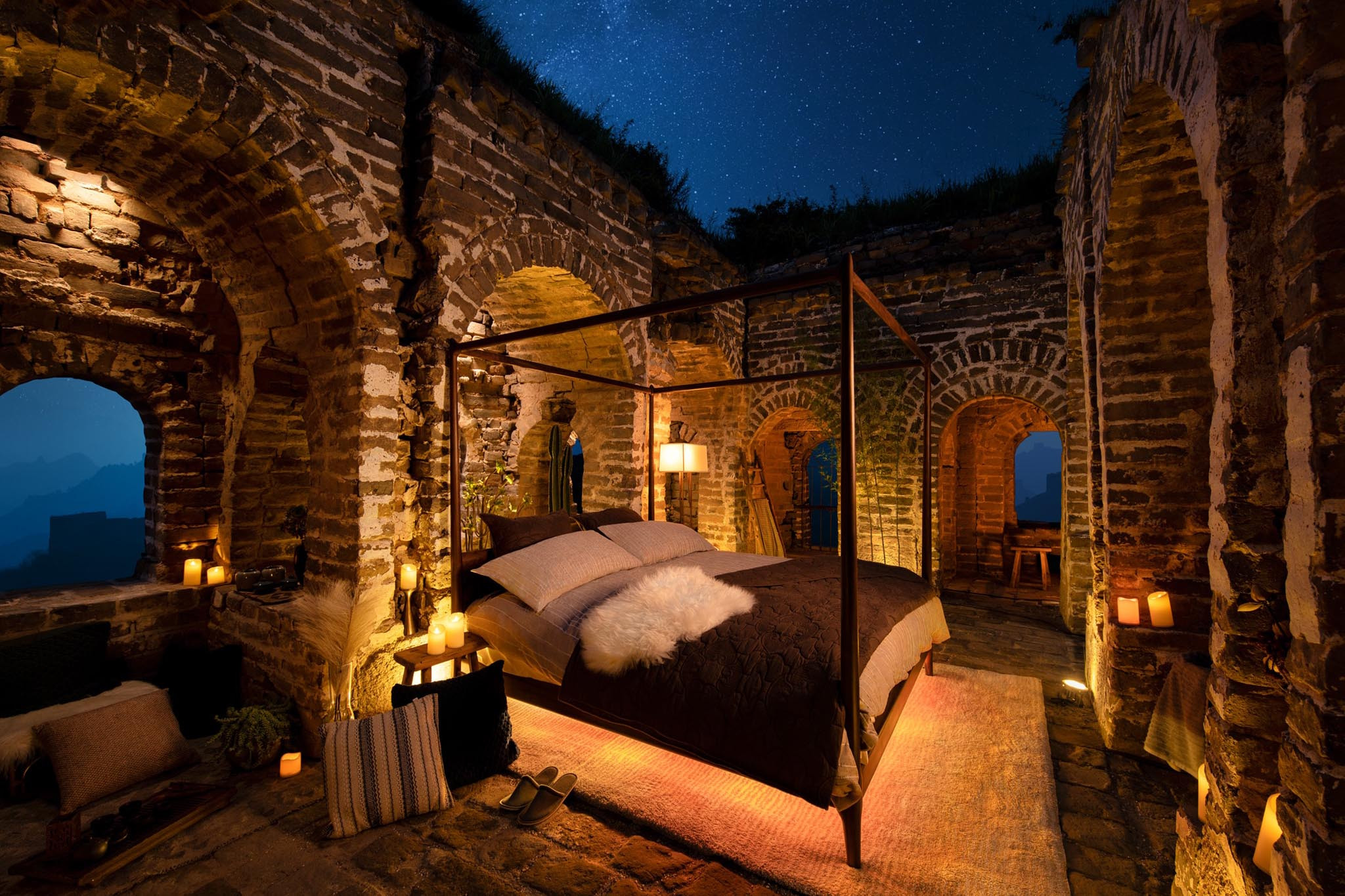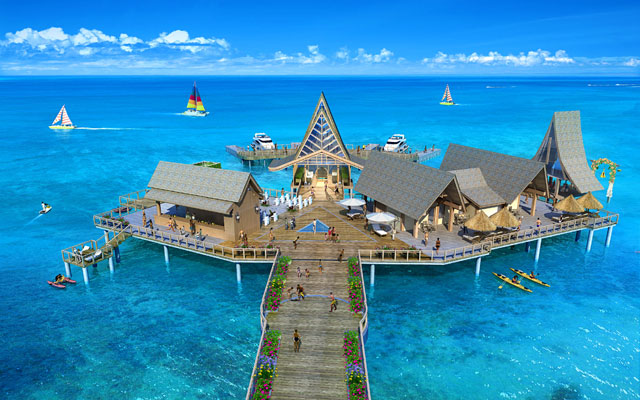
The Ultimate Travelling Camp (TUTC) is welcoming guests to a glamping experience in India’s Ladakh, with two seasonal camps up and running from today till September 30.
Through the Chamba Camp Thiksey and Chamba Camp Diskit, TUTC will introduce travellers to different aspects of the Ladakhi culture in three-, four-, five- and seven-night itineraries, or customised stays.
Tents complete with mod-cons such as en-suite bathrooms with hot shower and a safety deposit box
Apart from visits to monuments, monasteries, oral literature, art forms, fairs and festivals, guests may also choose from activities from the ancient sport of Polo, brought to Ladakh in the 17th century by the Royals, to rafting on the Indus River.
In keeping with its promise of luxury, the camps feature triple-layered tents fitted with wooden chandeliers, four poster beds, en-suite bathrooms with hot showers, safety deposit boxes, private decks and climate-controlled interiors.
Services available to guests include personal butlers, laundry, unlimited Wi-Fi at the reception, 24/7 security and on-site paramedics, while TUTC’s in-house chef prepares regional, Indian and international cuisine.
A representative office in Surabaya on the horizon for Tourism Malaysia
The Bali and Jakarta Police Offices have put both destinations on highest security alert following a series of bombings in Surabaya and neighbouring Sidoarjo on Sunday.
Additional security personnel and more stringent security checks are being imposed at Bali’s Ngurah Rai International Airport and all entry points to the island.
A Surabaya police office is the latest target in a series of bombings in Surabaya and neighbouring Sidoarjo
Budi Karya Sumadi, Indonesia minister of transportation said the number of security personnel at Jakarta’s Soekarno-Hatta International Airport had been increased from 500 to 700, including members of the bomb squad and bloodhounds.
The situations at both Indonesia’s busiest airports are running as normal.
The suicide bombing took place at three churches in Surabaya, Indonesia’s second biggest business city after Jakarta, almost simultaneously yesterday morning.
Last night, another bomb blast occurred in a flat in Sidoarjo, and another blast took place this morning (08.50 local time) at a police office in Surabaya.
At press time, at least 17 people have died including the nine suicide bombers, plus 45 people injured.
President Joko Widodo strongly condemned the terrorist attacks in East Java, saying they were “beyond humanity measures”.
KTO wants to ride the Pyeonchang 2018 hype to promote the Gangwon region to tourists; Seoraksan national park pictured
The easing tension between North and South Korea is expected to bolster tourism numbers into both nations, with Vietnam, Canada and Japan leading the tourism revival, alongside the Chinese market which last year took a hit amid souring diplomatic relations.
Speaking to TTG Asia at the Korean Tourism Organisation’s (KTO) MICE Roadshow last week, Yoon Seung Hwan, its director of Singapore office, said that the impression of North Korea as a safe destination is “getting better”.
KTO wants to ride the Pyeonchang 2018 hype to promote the Gangwon region to tourists; Seoraksan national park pictured
He added that riding on the popularity of the recent Pyeongchang Winter Olympic Games, KTO is also promoting the Gangwon region as an outdoor destination.
“Singaporeans like to ski in (South) Korea, and we’ve had a lot more facilities and winter sports activities since the Pyeongchang Olympic Games, so we can introduce complementary activities other than skiing and develop more unique experiences using these new facilities,” Yoon explained.
Indeed, ForwardKeys figures show that the Winter Olympics has boosted tourism in South Korea, which also saw a rebound from the Chinese market.
Last year when Beijing objected to the stationing of US Thaad missiles in South Korea, China’s government took action by discouraging group travel to the country; consequently, 84 per cent of Chinese arrivals are now independent travellers, compared to 35 per cent a year ago.
During the period of the Winter Olympics, arrivals were up 13.7 per cent, with Vietnam seeing an unprecedented 635.4 per cent increase, due to improved air connectivity, a visa waiver during the Olympics and the Vietnamese New Year.
The data further shows other big arrival increases came from China’s FIT segment, Hong Kong, the US and Canada.
The Olympics boost was sustained, as March and April registered double-digit growth. Bookings for May, June and July are 8.5 per cent further ahead than they were at the equivalent time last year.
Meanwhile, Ding Xianqin, owner of Heartlink Holidays, shared that despite political tensions and even before the Olympics, her clients have been “very interested” in South Korea, but are often concerned about the high cost.
This leaves her agency the responsibility of finding higher value experiences in the destination, she said.
Investors gathered at the summit's opening last year
The two-day South-east Asia Hotel Investors’ Summit (SEAHIS) kicks off this afternoon at Westin Grande Sukhumvit, Bangkok, promising heavy-hitting discussions among owners and investors on the most challenging issues facing the region’s hotel industry.
Sixty of the region’s leading hotel owning companies are among over 220 registered delegates at SEAHIS 2018 from 15 different countries in Asia, according to organiser HOFTEL, the world’s leading association of hotel property investors.
Investors gathered at the summit’s opening last year
“It is an exciting time to be in South-east Asia, the only place where significant new supply is also being backed by lots of new demand,” said HOFTEL chairman & CEO, Simon Allison.
“The Middle East is seeing a lot of new demand but vast amounts of supply, which is storing up problems; Europe and the US are stable with adequate demand growth and relatively few new hotels being built. Only in South-east Asia is there not only a strong pipeline of new hotels and serviced apartments but surging demand.”
Among 82 confirmed speakers, more than half are new faces to SEAHIS including Brian Williams, deputy chairman of Swire Hotels; Suchad Chiaranussati, founder of SC Capital; Puneet Chhatwal, CEO of Taj Hotels; Dillip Rajakarier, CEO of Minor Hotels; Olivier Do Ngoc, managing partner of Dynasty Investments; Siew Kim Beh, CEO of Ascott Residence Trust Management, Markland Blaiklock, deputy CEO of Centara and David Hamblin, vice president, Lodging Partner Services, Expedia.
SEAHIS will address the latest market trends, the rise of OTAs, the challenges faced by markets seeing massive new supply like Vietnam and challenging logistics like the Philippines; ask whether Thai resorts can ever compete on price with the Maldives, and question the big brands about whether their scale is now allowing them to squeeze owners on fees and terms.
A roundtable format provides guests a unique opportunity to grapple with the issues close at hand with owners and entrepreneurs, and startups seeking capital and investment an opportunity to get in front of the industry’s key decisionmakers.
More information about SEAHIS 2018 is available at www.seahis.com including discounted rates for hotel owning groups. Enquiries about the summit can be directed to simon.allison@hoftel.com
Growth seen from most major Asian markets; Halong Bay pictured
Vietnam recorded more than 5.5 million tourist arrivals from January to April 2018, a year-on-year rise of 29.5%, according to the General Statistics Office.
The strongest growth came from Asia, which climbed 36% from the same period last year, with improvements reported in most of the major markets such as South Korea (67.3%), China (39.7%), Malaysia (16.3%), Taiwan (14.3%), Thailand (9.2%), Singapore (8%) and Japan (7%).
Growth seen from most major Asian markets; Halong Bay pictured
Meanwhile, the number of European visitors rose by 12.9%, with growth seen from a number of countries including in Italy (19.7%), Russia (13.4%), the UK (11.1%), France (8.6%) and Germany (8%).
Vietnam also welcomed more holidaymakers from Africa (22.5%), Americas (13.4%) and Oceania (12.6%).
In April alone, Vietnam greeted over 1.3 million international vacationers, up 25.2% due to various happenings in the country such as the Vietnam International Travel Mart and Vietnam’s Ethnic Culture Day in Hanoi, the tourism festival in Ho Chi Minh City, the Mon Asian Food Festival in Hanoi and Quang Ninh Province, and the opening ceremony of the National Tourism Year 2018 in Quang Ninh.
In 2017, Vietnam achieved a record of 12.9 million foreign visitors, a year-on-year increase of 29.1%.
The country is targeting more than 15.5 million international tourists in 2018.
Leveraging blockchain for quicker and more seamless transaction settlements
The Cathay Pacific Group and its rewards programme, Asia Miles, are launching their first application of smart blockchain technology in a marketing campaign, in collaboration with Accenture.
By harnessing blockchain technology, the Cathay Pacific Group and Asia Miles are providing Asia Miles partners a single data source when managing account activity. This allows Asia Miles, partners and members a near real-time ability to manage rewards.
Leveraging blockchain for quicker and more seamless transaction settlements
The technology will kick off with an app for the Asia Miles dining promotion in Hong Kong – Unlock More Miles, allowing Asia Miles members to have miles credited to their accounts within the next day.
Cathay Pacific general manager IT solutions, Lawrence Fong, said the two “will continue to leverage the technology to develop more applications that our customers value”.
The mobile app was designed by Cathay Pacific and Asia Miles, and delivered by Accenture, using a mixture of deep blockchain, loyalty and aviation industry technology expertise.
Asia Miles CEO, Stephen SY Wong, said: “Asia Miles aims at improving member experience with blockchain technology through gamified miles earning and faster miles crediting.”
“Blockchain is helping industries across the globe to transform their workflows, making complicated business processes run more smoothly and added, including enabling quick and seamless transaction settlements,” said Peter Yen, a managing director at Accenture.
As the Cathay Pacific Group pursues new technology, the use of blockchain is expected to define the future of business using a transparent and secure transaction database.
InterContinental Hotels Group (IHG) has signed 10 new deals under seven of its brands in western China.
The 10 hotels will sit under the InterContinental, Hualuxe, Crown Plaza, Hotel Indigo, Even and Holiday Inn brands, spanning the luxury, upscale and midscale segments.
Jolyon Bulley, CEO, IHG Greater China, commented that the signings are a reflection of the group’s “confidence and commitment to both the west and the entire Chinese market”.
IHG goes big in China with 10 hotels signed
The list of new properties includes:
InterContinental Chengdu Shawan, the third InterContinental hotel in Chengdu, Sichuan Province, will be located adjacent to a number of shopping malls within walking distance to the district government.
Hualuxe Guiyang Financial City will be located in the emerging northern Guiyang Financial City. Hualuxe Hotels & Resorts is the first-ever upscale international hotel brand designed specifically for Chinese consumers.
Crowne Plaza Mianyang High-Tech Zone will be situated on the main road of Mianyang City in Sichuan Province, known as the “Silicon Valley in Western China”. The hotel will be surrounded by international and local high-tech enterprises.
Hotel Indigo Puzhehei will be the first international branded hotel in the Puzhehei Scenic Area in Yunnan Province.
Hotel Indigo Jiuzhai will sit close to the entrance of Zhongzha Valley, west of the Jiuzhaigou Natural Reserve in Sichuan Province.
Even Hotel Chongqing Central Park will be located in Yubei District of Chongqing Province next to the Central Park. The hotel will boast convenient access to the Chongqing International Expo Centre, iconic city landmarks as well as Chongqing International Airport. The Even brand was first introduced to the Chinese market in October 2017.
Even Hotel Xi’an High-Tech Zone will take a prime location in the High-Tech Development Zone in Xi’an, Shaanxi Province, surrounded by Fortune 500 companies. The hotel will be located on the 32nd to 38th floors of a 200m-tall building.
Holiday Inn & Suites Lanzhou Centre is situated in Lanzhou Centre, a building in Lanzhou, Gansu Province. Lanzhou West Railway Station and Lanzhou Metro Line 1 (to be completed in December 2018) will both be within walking distance. It will also be the first extended-stay hotel in the city.
Holiday Inn Express Guilin High-Tech Zone will be located in the heart of the High-Tech Zone of Guilin, Guangxi Zhuang Autonomous Region.
Holiday Inn Express Meishan Dongpo in Meishan, Sichuan Province, will sit on higher floors of the landmark Chunxi Square. This project is signed under the Franchise Plus model that IHG tailored for its Holiday Inn Express brand in China, which will see IHG providing owners with more flexibility while assigning a general manager to the hotel.
IHG currently operates more than 330 hotels, over 100,000 rooms under a total of nine brands in Greater China. In IHG’s 2018 first quarter trading update, Greater China achieved another exceptional quarter with market leading RevPAR increase of 11 per cent, the company stated in a press release.
Hardy (left) and Wong make travel app recommendations
Mario Hardy, CEO, PATA:
“I travel an average of about 94 trips a year, and my travel calendar is planned a year in advance, sometimes even longer. Among the multitude of travel apps that I use, the one I’m most loyal to is TripIt as it allows me and my family to see from one screen all of my travel months in advance. I’ve granted access to my TripIt account to my personal assistant where she uploads all the bookings for each trip. This way I know in advance where I’ll be next, how I’ll get there and where I’ll be staying. I also connect my TripIt account to another app called App in the Air, which lets me know the average amount of trips and distance I cover in a single year.”
Clement Wong, CEO & founder, BeMyGuest:
Currency exchange is one of the biggest hassles for frequent travellers. Depending on your destination it can be difficult to find a trustworthy operator, and it can mean carrying around more cash in your wallet than you’re comfortable with. Resolut is great for saving dollars on bank fees while travelling, and shifting money from one account to the next is easy. It’s a multi-currency facility and tracking of your spending is very handy; it even works with cryptocurrencies. Should you lose your card while travelling you can freeze your account instantly, and you can unfreeze it again instantly when you find your card. Overall it’s a great way to avoid spending foreign exchange fees when on holidays and work trips.
All six Millennium hotels in Singapore are participating in the deal
Millennium Hotels and Resorts (MHR) has introduced an extended stay package – Millennium Residence – for guests who stay at any one of the group’s six Singapore properties, on bookings made for seven to 21 nights.
For a minimum of seven nights’ stay, there will be 15 per off the flexible rate; as well as complimentary use of self-service launderette or 10 per cent off laundry & dry cleaning services; 10 per cent off on F&B across 13 restaurants throughout the six Singapore Hotels; 10 per cent off hotel restaurants, mini-bar & in-room dining; 10 per cent off on IDD calls; and 10 per cent off at the business centre.
All six Millennium hotels in Singapore are participating in the deal
For a minimum of 14 nights’ stay, it will be 20 per cent off the flexible rate, and 15 per cent off the same inclusions listed above. For a minimum of 21 nights, guests will be able to obtain 25 per cent off the flexible rate, and 20 per cent off everything else on the list above.
All Millennium Hotels in Singapore have allocated two floors to creating a dedicated space for long-stay guests. Millennium Residence rooms include daily housekeeping service, complimentary in-room coffee & tea making facilities, replenished daily; and complimentary Wi-Fi. Guests are also entitled to complimentary buffet breakfast for two persons throughout the duration of their stay.
All hotels also offer specially discounted self-parking rates and a free shuttle service to and from the hotel to designated locations.
The Millennium Residence package is available at any one of MHR’s six Singapore properties – Orchard Hotel Singapore, Grand Copthorne Waterfront Hotel Singapore, M Hotel Singapore, Studio M Hotel Singapore, M Social Singapore or Copthorne King’s Hotel Singapore.
The Millennium Residence offer is only applicable when booked via www.millenniumhotels.com from now until March 31, 2019, with minimum stay required. Terms and conditions apply.
Chatbots were launched by Chan Brothers Travel to drive productivity
Amid technological advancement and changing consumer habits, more travel companies are turning to chatbots to rev up their customer service, allowing them to communicate with clients in real time and provide instant gratification.
Chatbots were launched by Chan Brothers Travel to drive productivity
Early-adopter Chan Brothers Travel introduced a Webchat system on its website end-2016 to increase productivity and alleviate the load on its hotlines, according to managing director Anthony Chan.
Said Chan: “With the enhancements of artificial intelligence (AI) chatbots, the platform (since November 2017) is now able to hold up to 65 per cent of the conversation with the customer before requiring human intervention, if at all. The productivity benefits continue even after the travel adviser steps into the conversation as multiple conversations are managed concurrently.
“Since its inception, chat conversions have contributed to between 10 and 15 per cent growth in our market share.”
Meanwhile, Contiki launched Tiki the travel bot earlier this year, which allows travel agents to suggest trips for users based on a classification of travel styles it developed earlier.
However, Contiki’s spokesperson said: “Tiki is not meant to replace a travel agent or any of our representatives. It is a pre-screening process for anyone who wants to research what travel styles we have and which exact trip they should be on.”
Others, like Dynasty Travel, instead opt for human-powered live chat for online enquiries and bookings, according to Alicia Seah, director of public relations and communications.
“Online customers who need to be connected with someone to answer their questions in real time and with precision can use Live Chat, which has the ability to provide convenient answers that the customers are looking for.”
While chatbots are available 24/7 and can be used to automate simple enquiries and tasks, staff are still needed to handle more complex questions.
“Chatbots can only respond to specific types of questions and still cannot fully replace humans. They are costly to implement and require time to allow machine learning before they can handle more complex questions,” Seah opined.
Customers tend to prefer face-to-face interaction when it comes to travel products, and they want to have well-informed discussions with travel consultants on their travel needs, she added.
Albert Ho, executive director, Citystate Travel, agreed and said the company did consider using chatbots but felt they was “not quite ready” to meet the needs of its “high-level corporate travel and MICE clients”.
For its cruising-focused leisure division, Ho said many customers are tech-savvy repeats who have developed good relationships with its consultants and prefer to talk to them about their trips.
Regardless, Seah and Ho said they may adopt chatbots as part of the customer service process down the road when they become more sophisticated, where the future AI can hold a conversation and provide more tailored responses.