


Brought to you by Avis

In our last post, we shared that going on a self-drive holiday lets one get off-the-beaten path and see the world on one’s own terms; inspiring the desire for adventure and autonomy.
With more than 5,500 locations in over 170 countries, it is easy to pick up an Avis car and embark on a road journey to embrace more of life’s exploits.
Driving from place to place in a foreign land to uncover the gems of the country is a fundamental part of a self-drive holiday. To ensure that the holiday is a fun and rewarding one, it is important to understand that every country is different and has its own rules of the road.
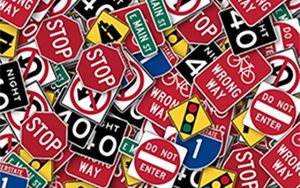
To help you and your customers appreciate the country’s “driver culture”, spend a moment to unlock Avis’ top-line road rules in different parts of the world**. Knowing the key rubrics can simplify the journey, reduce the stress and anxieties, while leaving more time to take in the sights and sounds of the foreign land.
Did you know that in Bulgaria, parking is only on the left side of the road on one-way streets?
While in Germany, there are no tolls to pay on the Autobahns (highways/expressways). And contrary to common belief (joke or otherwise!), there are speed limits on some German autobahns!
 When driving in Norway, it is important to note that vehicles approaching an intersection from the right have the right of way even if it is entering from a small road onto a major thoroughfare. There are however, exceptions to this rule and these are indicated with appropriate traffic signs on both the small roads (stop signs) and large roads (a yellow diamond-shaped sign).
There are historical areas in Italy in which one cannot drive. Look out for signs that read “Zona Traffico Limitato” (Limited Traffic Zones). And like they say, when in Rome, do as the Romans do!
Interestingly in Romania, it is against the law to drive an excessively dirty car! This can result in an on-the-spot-fine. In addition, any person who gets out of the car to walk on the road must wear a reflective jacket, day or night.
America is full of Toll Roads, also known as Turnpikes. Always set aside spare change in the car as not all payment booths accept Debit and Credit cards.

In Israel, children under 13 years old are not allowed to sit in the front of the car… and the STOP sign is denoted by a red octagon with a white hand.
 In some countries, we drive on the left side of the road and in others, we drive on the right side… so what does driving on the left and on the right mean? The terms Right-hand Drive (RHD) and Left-hand Drive (LHD) can be rather confusing. In brief, a RHD vehicle drives on the LEFT hand side of the road, while a LHD vehicle drives on the RIGHT hand side of the road. So who is right and who is wrong?
Thus, in Australia and New Zealand, as in Hong Kong, India, Malaysia and Singapore (where their British colonial history probably led to British driving rules being adopted in these countries), one drives on the left; hence, it means that the driver’s seat is on the right side of the car (i.e. RHD vehicle) – and that implies that the centre line is always on the right or on the driver’s side of the car.
 It probably comes as no surprise to learn that all countries have their own rules, regulations and laws. There may be many, which are similar to and applicable in several countries – drink-driving, mobile phone usage, and right-of-way at pedestrian crossings and for animals…
But like everything else, a little homework can go a long way to help avoid potential bumps on the road; and it pays to ask questions when in doubt!
The open road lies ahead… so, unlock the world of Avis for your customers here, go through our Road Rules and have your customers take on a road trip to discover more of Planet Earth!

Safe driving!
**These are road rules put together to help bring awareness of different driving laws in foreign countries. These rules are to be used only as a guide. Please be aware that rules are subject to change in each country and the country’s laws prevail. It is always best to verify directly with the destination country’s traffic authority or ask an Avis representative if any queries arise.
|
About Avis
|

(Photos: Avis, Pixabay)

 But is this assessment of Pattaya still valid, I wondered, during my visit to the city last month to attend Thailand Travel Mart Plus (TTM+). The Tourism Authority of Thailand (TAT), as TTM+ organiser, was keen to show the international travel community the














Aviation technology provider SITA has launched a industry research project to explore the potential of blockchain.
Barbara Dalibard, CEO, SITA, said: “Blockchain holds many promises but exploring these in individual organisations is not the most productive. As the technology company owned by airlines, SITA is in a position to work neutrally with multiple stakeholders to explore and test multi-enterprise applications. Through this collaborative innovation we will accelerate the learning for all.”
One of the key benefits of blockchain technology is hence the ability to have multi-enterprise applications, SITA said in a statement. These work across multiple organisations locking data immutably into the blockchain rather than having individual applications running separately and exchanging data on a case-by-case basis, providing a “single source of truth” to all stakeholders.
Led and managed by SITA Lab, SITA’s technology research team, the Aviation Blockchain Sandbox will develop in three stages. To start, SITA is opening the FlightChain project to airlines and airports in September. FlightChain was SITA’s blockchain trial, with British Airways, Heathrow, Geneva Airport and Miami International Airport, using smart contracts for shared control of data.
For the second stage, SITA will work with organisations that wish to test smart contracts across a number of airline and airport operational use cases.
During the third stage of the research, which is expected to start in late 2018, SITA will enable participants to run their own node, allowing them to become more involved and to participate in the running of the network, including becoming custodians.