Yangon Excelsior, Myanmar
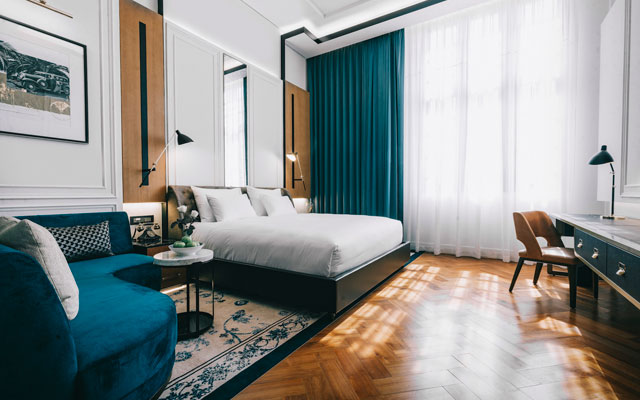
Housed within a 19th-century colonial building that once was the general headquarters of the Steel Brothers Company, the renovated five-storey boutique hotel now offers 74 luxurious rooms and suites. Rooms are split into four categories, with sizes varying from 30m2 to 65m2. Each room comes furnished with mod-cons such as a 46-inch LCD flatscreen TV, safe, mini bar, and complimentary Wi-Fi. There is a dedicated Executive Floor with 16 rooms and an Executive Lounge, plus on-site amenities including a gym, spa, two F&B options and two meeting rooms.
The Middle House, China
The Middle House by Swire Hotels has opened in the heart of Shanghai, within the bustling HKRI Taikoo Hui development. The property offers 111 modern studios – varying from 50m2 to 100m2 in size – and 102 serviced residences that range from 55m2 to 110m2 and come with kitchen and laundry facilities.
Recreational facilities include a heated indoor swimming pool, 24-hour gym facilities comprising a Hypoxi room and wellness studio, group yoga sessions and a lifestyle shop. There are three F&B venues, as well as a 660m2 top-floor Penthouse with a private kitchen that can be turned into an event venue.
Novotel Ambassador Seoul Dongdaemun, South Korea
AccorHotels has opened Novotel Hotels & Residences, the brand’s first mixed-use development that combines a hotel and residences, in the heart of Seoul’s shopping district. The Novotel Ambassador Seoul Dongdaemun features 331 rooms in double-, twin-, or triple-bed configurations, in addition to 192 residences that are a mixture of studios and one-bedroom suites. All dwellings feature high-speed wireless Internet, 55-inch full HD TV and one-touch temperature control.
Amenities within the new-build hotel include three F&B options, an indoor swimming pool on the 20th floor, fitness centre, an executive lounge and a kids’ zone. Events planners can avail any of the four meeting spaces, ranging from the Grand Ballroom which can host up to 280 guests banquet-style to the meeting room for smaller-sized functions for up to 20 pax.
Punthill Apartment Hotels, Australia
Apart-hotel Punthill Ivanhoe has opened in Melbourne’s north-eastern suburbs, opposite the Austin Health precinct and Olivia Newton-John Cancer Wellness & Research Centre. The hotel’s 52 one- and two-bedroom apartments are self-contained with cooking facilities and generous living areas. East-facing apartments also offer views of the Dandenong Ranges. Facilities in the complex include a cafe/bar, gym and parking spaces.
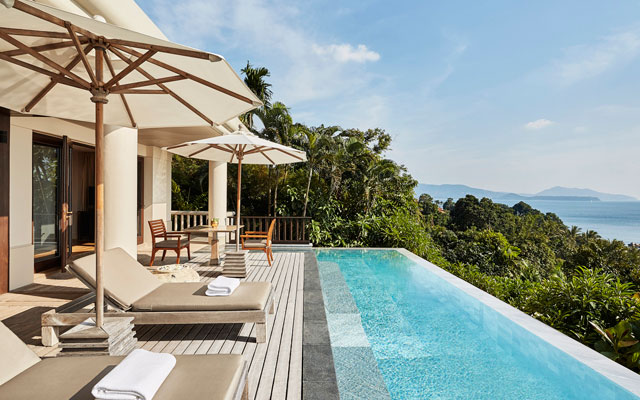
Phuket luxury resort Trisara is offering guests a complimentary third night for every two consecutive nights’ stay.
Trisara’s signature Ocean View Pool Suite
Other benefits included in this Stay 3 Pay 2 promotion are US$100 resort credit for use at the spa, restaurants or activities; a 15-minute photo shoot; daily breakfast at Seafood Restaurant; private car transfers from and to Phuket International Airport; complimentary Wi-Fi; and fast-track service for guests who arrive on non-stop international flights.
This promotion runs through the end of October 2018.
Waldorf Astoria Bangkok, which will soon open in 3Q, has appointed Simeon Olle as general manger.
Prior to joining Waldorf Astoria Bangkok, Olle served as general manager of Waldorf Astoria Shanghai on the Bund from 2012 to 2016.
The Australian has more than 30 years’ experience in the hospitality sector, and is known for his extensive background in launching luxury hotels, includes the opening of The Address Downtown Dubai, Park Hyatt Beijing and Park Hyatt Seoul.
Travel agencies in Malaysia are swiftly capitalising on the zero-rated Goods & Services Tax (GST) to entice price-sensitive clients, with the possibility of being subject to a new Sales & Services Tax (SST) in September still looming.
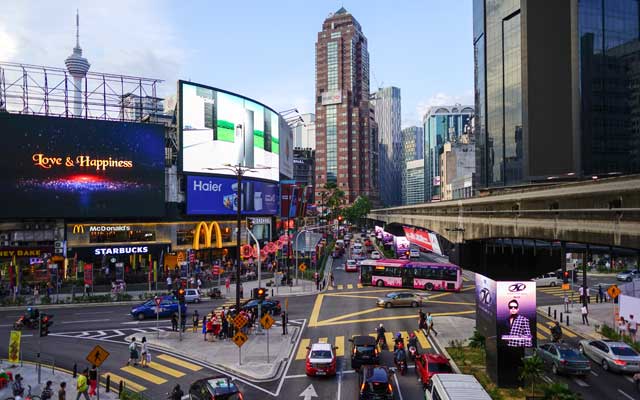
Bukit Bintang, Kuala Lumpur
When the Pakatan coalition came into power after the 14th Malaysia general election on May 9, one of the first things it did was to reduce the unpopular GST to zero from June 1, effectively abolishing it.
SST, which had been in place for 40 years until it was replaced by GST in April 2015, will see a return on September 1, 2018. In the past, SST was never imposed on the tourism sector, though it may be implemented differently this time around.
In the interim period however, there is no longer GST charges on room rates and hotel dining, domestic airfares, entrance fee tickets, restaurant bills and transportation costs. To the traveller, Malaysia is at its most attractive in years when it comes to rates.
Field day for inbound, domestic agents
“This window is exceptional as prices of hotels and entertainment are at bargain rates,” said Manfred Kurz, managing director of Diethelm Travel Malaysia, for which Europe is a key source market.
He added that the savings from not having to pay GST is “substantial” – RM300 (US$74) for a ground package worth RM5,000. “We don’t expect a tsunami of European tourists, but we anticipate at least 10 per cent increase because of the lower prices.
“On normal occasions, we get advance bookings six to eight weeks ahead… But (in this case) the government announced its intention to remove GST in mid-May and we had only two weeks to inform our partners overseas. We see the booking window narrowing to one or two weeks.”
The three-month GST-free period also overlaps with other seasonal conditions to make this a prime time for attracting price-sensitive tourists. The June to August period coincides with the nationwide mid-year sales season, with advertised discounts of up to 70 to 80 per cent.
As well, the value of the ringgit has depreciated against other major currencies since the general election in early May. It continued to be on a downward trend in early June, trading between RM3.96 and RM3.99 against the US dollar.
For Middle Eastern and European markets, now is also the peak summer travel period. Saini Vermeulen, executive director of Within Earth Holidays, said the agency informed partners in the Middle East of the zero-rated GST and encouraged them to upsell higher-end hotels.
Confirmed groups benefit as the six per cent savings could be used to make extra purchases, he shared. “We anticipate a 10 to 20 per cent increase from Middle East arrivals during this three-month period compared to last year. We have seen a 20 per cent increase in advance bookings.”
Further capitalising on low prices to attract retail-hungry tourists, the agency has worked with retailers and F&B outlets on discount vouchers specially for Middle Eastern clients.
“We also provide guests with local SIM cards and a customer service number to call should those with poor proficiency in English require assistance (communicating) while shopping.”
Meanwhile, inbound travel operators are also observing an uptick in demand from neighbouring markets.
Raaj Navaratnaa, general manager of the Johor-based New Asia Holiday Tours & Travel, has received increased bookings for family travel from Singapore and Indonesia for June, while forward bookings for July are looking good.
“The main attraction is the mid-year sales. While a 3D2N package is the norm, we are seeing increased bookings for 4D3N packages from both markets. The main destinations are Johor, Melaka, Kuala Lumpur and Penang. With domestic flights now cheaper, we are also seeing increased interest from Singaporeans to holiday in Kota Kinabalu and Kuching.”
Higher tour prices ahead?
The Ministry of Finance said in a statement that the shortfall from scrapping GST would be cushioned by revenue and expenditure measures, but it remains to be seen if levying SST on additional sectors – including travel – is one of them.
The Finance Ministry also noted that oil prices have been higher than the US$52 per barrel estimated for Budget 2018, providing a fiscal buffer for the immediate future.
Ong Kian Ming, a special officer to the finance minister, told Reuters that with oil prices on the up, Malaysia may collect an additional eight to nine billion ringgit from Petroliam Nasional (Petronas) this year.
K Thangavelu, managing director at Grandlotus Travel Agencies, believes that while Malaysia stands to gain from the higher oil prices as an oil-producing country, its tourism sector may see the effects of higher airfares by early next year.
Thangavelu remarked that the gains from zero-rated GST may not persist due to rising airfares. He said: “For the past three to four years, the airline industry was enjoying fuel prices between US$50 to US$60 per barrel. LCCs may not be able to continue with low pricing for long.”
Arokia Das, senior manager, Luxury Tours Malaysia, disagreed. “The volume of incoming tourists will depend on the quantum increase in airfares. Airlines will weigh this against potential loss of business. I doubt airfares will increase drastically. And with more than 75 per cent of tourists to Malaysia being short- and medium-haul travellers, arrivals will not be much affected,” he argued.
“The zero-rating of GST has made us more competitive regionally. If there is a loss of revenue in the short term, the government will fix this.”
Beyond price-led growth
If SST kicks in for the travel trade, Sandro Nania, sales manager at Happy Trails! Asia, said: “Total package costs may see an increase (from the no GST period) and you won’t be attracting price-conscious tourists… They will go to more affordable destinations in the region.”
Highlighting the importance of enhancing the destination’s appeal beyond price competitiveness, Nania also urged for Malaysia to target upper middle and high income tourists who are less price sensitive.
“To attract more European tourists, more awareness about the destination is needed…. The national parks and conservation efforts in West Malaysia needs more promotions. European tourists will not mind paying more for great experiences. This is how we should compete with neighbouring countries.”
Airbnb makes the appointment amid rapid growth – the number of Chinese guests travelling on Airbnb grew by 100 per cent year-over-year in 2017
Effective September, Chinese entrepreneur and founder of CityHunter Tao Peng will become president of Airbnb China.
In the past six and a half years, Tao built companies like Breadtrip and CityHunter, travel social apps which have amassed tens of millions of users.
Airbnb makes the appointment amid rapid growth – the number of Chinese guests travelling on Airbnb grew by 100 per cent year-over-year in 2017
More recently in 2016, he co-founded and helped grow CityHome, a company that offers short-term rentals in homes and apartments across China.
The appointment comes against a backdrop of rapid growth of Airbnb in China.
There have been over 10 million guest arrivals by Chinese travellers in Airbnb listings around the world since Airbnb was founded in 2008. Over half of those occurred in the past year.
The number of Airbnb listings in China has grown more than 125 per cent in the past year.
Tourists are opting for other Philippine destinations like Cebu and Bohol; pictured, Sumilon island beach near Oslob, Cebu
The impact of Boracay’s temporary closure is not as widespread as anticipated, with foreign arrivals to the Philippines still increasing and filling up other resort destinations in the country, according to tourism stakeholders interviewed.
Philippine tourism undersecretary Benito Bengzon Jr said that despite the island’s closure in late April, foreign visitor arrivals into the country managed to grow slightly by 0.9 per cent in May and by 10.2 per cent to 3.2 million in January-May.
Tourists are opting for other Philippine destinations like Cebu, Palawan and Bohol; pictured, Sumilon island beach near Oslob, Cebu
One notable brights spot is the 43.8 per cent uptick in arrivals from China – displacing the US as destination’s second biggest market after South Korea – and the diversion of tourists to other destinations including Cebu, Bohol and Palawan, Bengzon pointed out in a presentation during the Hotel Sales and Marketing Association (HSMA) general membership meeting.
HSMA chair Margie Munsayac, who is also vice president of sales and marketing of Bluewater Resorts in Cebu and Bohol, said that while the South Koreans and Chinese were affected by Boracay’s closure, many of them rebooked to other destinations like Cebu and Bohol which are currently “enjoying very good occupancy”, including for city hotels.
Amiable Intertours general manager Bernadette de Leon said that as a result of these rebookings, even smaller hotels in aforementioned destinations are “full” and “expensive”. Some foreign tourists were also diverted to destinations in Luzon such as Batanes, Ilocos and Las Casas Filipinas de Acuzar in Bataan.
“Airswift Airlines’ services to Batanes are fully booked. (It is) enjoying a good slice of the foreign market and (capturing the rebookings from) Boracay tourists”, she said.
“While airlines suffered cancellations to Kalibo and Aklan (going to Boracay), they have to add flights to other cities like Tagbilaran in Bohol, Mactan in Cebu and Puerto Princesa in Palawan,” de Leon added.
While Bengzon declined to confirm if Boracay would reopen on October 26 after the six-month rehabilitation, hotels there are already taking measures in preparation of a possible reopening.
The director of sales and marketing at a five-star resort in Boracay told TTG Asia that the hotel is already accepting reservations for late October onwards, subject to confirmation as the date approaches.
De Leon added that resorts in Boracay are hopeful that the island will reopen before Christmas, and some are accepting reservations without finalising the deal until official confirmation of the island’s reopening from the government.
Liu: for Chinese, local specialities in South-east Asia serve both as a new gastronomic experience as well as a way to better understand the destination
Gastronomy has been identified as a key focus for the Tourism of Thailand (TAT) as part of its Open to the New Shades campaign, with the NTO spearheading more efforts in this area with the launch of the first Michelin Guide in Bangkok last year and hosting the 4th UNWTO World Forum on Gastronomy Tourism in Thailand this year.
At the recent Thailand Travel Mart Plus (TTM+) in Pattaya, TAT’s deputy governor for marketing communications Tanes Petsuwan revealed to TTG Asia that TAT plans to continue the Michelin Guide for another four years, and will expand the coverage of the guide to Phuket and Phang Nga in 2019 and to Chiang Mai by 2020.
But for all its efforts made on the gastronomy front, dining is still an area where Thailand has room to grow, particularly for the Chinese market, say industry members.
Ctrip Gourmet List’s Liu: for Chinese, South-east Asian delicacies represent a new gastronomic experience as well as a way to better understand the destination
“China’s mobile-savvy generation, in particular, has a penchant for checking out local restaurants and making restaurant reservations on apps ahead of their visits. However, such reservation service is lacking for many Thai restaurants on Chinese apps,” Fang Yaqin, Beijing-based product manager for Alibaba Group Holding, a B2B travel wholesaler in Thailand, told TTG Asia at TTM+.
She noted that many restaurants in Thailand, even those listed on Michelin Guide Bangkok, are either not aware of this pre-booking characteristic among Chinese travellers or are perhaps not keen to work with agents for seat bookings.
“I see immense opportunities in Bangkok, but we have only few contracts signed with popular outlets like Blue Elephant and hotel restaurants,” Fang said, sharing that her company would like to seek more partnerships with high-end dining outlets in Thailand to better serve inbound tourists from China.
Even though consumer review service Dianping.com – which Fang calls the “equivalent to TripAdvisor for the Chinese” – already covers restaurants in Thailand, most dining establishments in the country remain unbookable through the app, she claimed.
The voracious Chinese appetite for gourmet experiences has gotten Ctrip launching its own gourmet appraisal system in 2016 to provide local food and restaurant recommendations and convenient online table bookings for Chinese travellers.
Ctrip Gourmet List, which some liken to the Chinese equivalent of the Michelin Guide, has covered approximately 15,000 restaurants in 120 popular destinations both in China and around the world by end-2017.
In Thailand – where one-fifth of all Chinese outbound travellers visited last year, according to Ctrip’s 2017 Outbound Travel Report – the Chinese OTA giant sees a burgeoning food scene that is ripe to grow for Chinese travellers.
“Chinese are great food lovers and are willing to try local delicacies and cuisines. Dining is relatively untapped and there remain lots of opportunities to explore in South-east Asia to see which markets would attract more food lovers,” said Kimi Liu, CEO of Ctrip Gourmet List.
“As more Chinese travel to South-east Asia, local specialties and well-known local restaurants will offer them the perfect entry point into not just a wonderful gastronomical experience but a greater understanding and respect for their host countries,” said Liu.
Last month, Ctrip Gourmet List released its 2018 Taste the City Food List of Bangkok with a selection of 303 top ranked restaurants that reflect Chinese travellers’ tastes and preferences.
Besides Thailand, Ctrip Gourmet List is also available in the Philippines, Indonesia, Malaysia, Vietnam, Cambodia and Singapore.
Amadeus says it is one of the first providers to have achieved level three certification both as an aggregator and IT provider
Amadeus has received IATA’s level three New Distribution Capability (NDC) certification as an aggregator, adding to its existing level three NDC certification as an IT provider.
Level three, the highest NDC certification, is awarded to companies that can demonstrate the ability to execute Offer and Order Management. This means that Amadeus is able to consume NDC offers from airlines and distribute them to travel sellers.
Amadeus says it is one of the first providers to have achieved level three certification both as an aggregator and IT provider
Amadeus received the level three NDC certification as an IT provider in 2016 , and was the first to renew this certification on version 18.1, the most up-to-date, released in March this year.
Through its NDC-X programme, Amadeus is connecting airlines and travel sellers using the NDC standard. This certification has been achieved through Amadeus’ work with Travix, an OTA that joined the programme earlier this year.
“The NDC-X programme is in full execution mode and this is the latest example of Amadeus enabling the reality of NDC for the industry,” said Gianni Pisanello, vice president, NDC-X program, Amadeus. “We’re making great progress on our mission to enable our airline customers to make their new NDC content available to our global travel sellers network – at scale.”
John Mangelaars, CEO, Travix, further shared: “Later this year, our teams will be using this NDC-enabled solution to ‘shop, order and pay’ through Amadeus. The latest certification shows the strength of our partnership and capabilities using IATA’s NDC standard.”
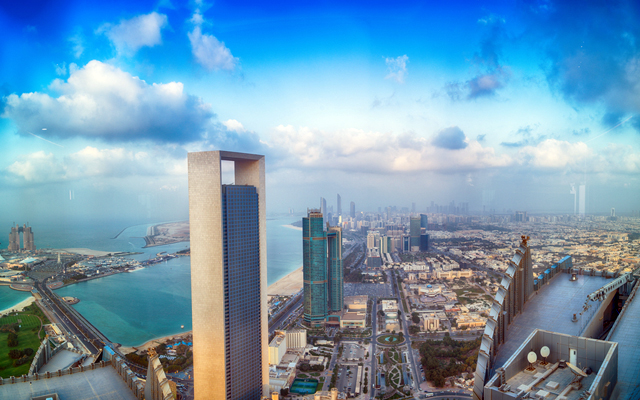
HATA members may opt for post-show tours in Abu Dhabi (pictured)
The Hong Kong Association of Travel Agents (HATA) is adding a new package for its Annual Overseas Convention after “overwhelming response” that saw the post-show tour packages sold out ahead of the event in October.
The 45th edition of the annual event will take place in Dubai, with two- to four-day options available to HATA members.
HATA members may opt for post-show tours in Abu Dhabi (pictured)
The sold-out package, priced at HK$7,968 (US$1,015), includes the convention on October 13, as well as a two days in Abu Dhabi (October 14, 15) before the return to Hong Kong on October 16.
HATA is now introducing a separate package with a one-day tour to Abu Dhabi (October 14) followed by a return home on October 15. This is priced at HK$6,438.
Slots on the two-day convention package (without post-show tour) are still available at HK$4,988. Themed How Artificial Intelligence (AI) impacts on the future of travel, the convention component will comprise a welcome address by HATA convention chairman Edmund Tsang; keynote speeches; coffee break; panel discussion; and an open forum moderated by HATA vice chairman Richard Willis; and concluding remarks by HATA chairman Ronald Wu.
The two-day package would also include an afternoon tour to visit Desert Safari or Dhow Cruise on the day of the convention (October 13).
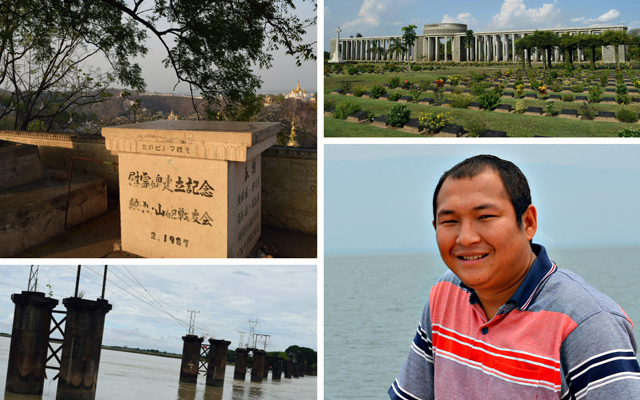
Clockwise from top: Japanese war memorial near Mandalay, Taukkyan War Cemetery, Yaiphaba Kangjam and remnants of Sittang Bridge
Specialist WWII battlefield tour operator Battle of Imphal Tours has expanded its tour options beyond Imphal, where it is based, and Kohima in North-east India, with the launch of itineraries in neighbouring Myanmar.
Founded in 2012 to commemorate the 70th anniversary of the 1944 Battle of Imphal in Manipur, India, the company now hopes to give tourists a fuller picture of the decisive Burma Campaign which started the downfall of Japanese imperial ambitions in Asia.
Clockwise from top: Japanese war memorial near Mandalay; Taukkyan War Cemetery; Imphal-based Yaiphaba Kangjam, who will lead all tours in Myanmar; and remnants of Sittang Bridge
“Myanmar and North-east India are bound together by their shared experience of the Second World War,” said Hemant Singh Katoch, founder of the tour company and publisher of two books about wartime Imphal.
“That’s why we now link the battlefield sites of Imphal and Kohima with those across Myanmar, which has dozens of historically significant locations. Only by covering both sides of the India-Myanmar frontier do you get a proper feel for the full drama and terrain of the Burma Campaign,” he said.
The company has launched the seven-day Essential Burma WWII Tour, the eight-day Chindits Tour, the 17-day Leisurely Burma WWII Tour and the 14-day Full Burma Campaign Tour.
Participants of the full trip may opt for a three-day extension in which they can cross from Manipur in North-east India to Myanmar using the Moreh-Tamu crossing, a route rich in strategic significance during the Burma Campaign.
Battle of Imphal Tours has linked up with Khiri Travel Myanmar, which will handle the logistics, transport and hotels often in remote areas of the country.