TTG Asia
Asia/Singapore Wednesday, 24th December 2025
Page 1401

Elephants will no longer be taken for a ride at Chiang Mai camp

0
World Animal Protection and travel company leaders are working with Happy Elephant Care Valley to transition their current camp into a place where elephants will have the freedom to be elephants instead of entertainers. Photo credit: World Animal Protection / Nick Axelrod

Chiang Mai’s Happy Elephant Care Valley has entered an MoU with animal welfare charity World Animal Protection to end all physical interaction between tourists and elephants at the camp.

The transformation is supported by a coalition of leaders in the travel industry, including Tui Group, The Travel Corporation (TTC), Intrepid Group, G Adventures, Exo Travel and Thomas Cook Group.

World Animal Protection and travel company leaders are working with Happy Elephant Care Valley to transition their current camp into a place where elephants will have the freedom to be elephants instead of entertainers. Photo credit: World Animal Protection / Nick Axelrod

The elephants at Happy Elephant Care Valley were previously from farms and riding camps. Until recently it was possible for close interaction between tourists and the elephants at the venue, with tourists being able to ride, bathe and feed elephants. This stopped when the travel industry coalition presented a business case demonstrating the rise of elephant-friendly tourism.

The transition will take place throughout 2018, with the camp tentatively expected to be ready for re-opening by end-2018 or early-2019. Following the transformation, elephants at the camp will be able to behave as they would in the wild; free to roam the valley, graze and bathe in rivers as tourists experience these wonders, standing at a safe distance.

Josey Kitson, executive director at World Animal Protection Canada, said: “Through the support of the world’s leading travel companies we are proving that elephant-friendly venues, those without forced and dangerous interactions with wildlife, make both ethical and financial sense for camp owners.

“Happy Elephant Care Valley’s move is a huge step forward for both elephants and ethical tourists. It will provide an incredible opportunity for the growing number of tourists who want a positive experience seeing elephants behaving naturally and freely as part of a herd.”

Thousands of captive elephants in many venues across Thailand still give rides that are the result of a cruel and intensive training process. However, a 2017 KANTAR global poll shows a significant drop (nine per cent) in the number of people who find elephant riding acceptable compared to just three years ago.

The poll also shows that more than 80 per cent of tourists would prefer to see elephants in their natural environment, proving elephant-friendly tourism is on the rise.

Sabre partners Microsoft to expand cloud services

0
Cloud is critical to Sabre's microservices architecture, Sabre CTO says

Sabre has sealed a long-term partnership with Microsoft to expand its cloud-based distribution and retailing solutions, weeks after it signed a similar agreement with Amazon Web Services.

The deal will see Sabre’s commercial applications migrated to Microsoft Azure. “The cloud presents an opportunity to rapidly innovate, create and deliver new business value for Sabre and our customers,” said Joe DiFonzo, Sabre CIO.

Cloud is critical to Sabre’s microservices architecture, Sabre CTO says

The agreement is also expected to help Sabre better harness the power of its data and apply artificial intelligence (AI) and advanced analytics to create new services for hotel, agency and airline customers.

As Sabre continues to evolve its cloud strategy, it says its customers will be able to offer travellers more personalised and integrated experiences – especially key as it works to innovate Beyond NDC and deliver next-generation retailing and distribution solutions.

“Cloud technology is critical to our development of a microservices architecture, which will offer our customers bite-sized functionality that can be used independently or combined to build large, complex applications with accelerated speed to market,” said Vish Saoji, Sabre CTO.

Through the Microsoft Azure agreement, Sabre’s cloud transition will enhance the stability and security of its products, and a multi-faceted cloud approach will allow Sabre products to intelligently distribute workload across geographies, resulting in better performance and ensuring continuous service availability.

Sabre and Microsoft partnered earlier this year on the pilot launch of an A.I.-powered chatbot, Ella, that explores how AI can help travel agencies better serve travellers by fulfilling their most common service and support requests with smart technology.

Victoria Dockside rises along Hong Kong’s Tsim Sha Tsui waterfront

0

With the first phase of Victoria Dockside, an ambitious 27.9ha mixed-use project, launched last week, developer New World Development is touting the new US$2.6 billion attraction as a “game-changer” that will revive the Tsim Sha Tsui waterfront.

Adrian Cheng, founder of K11 and executive vice-chairman and general manager of New World Development, said: “Our vision is to make waves at this world-class destination by providing a blank canvas for artists, designers and businesses to maximise their creativity and help create one of the most exciting new neighbourhoods of tomorrow.”

Victoria Dockside, the city’s newest landmark

The site on which Victoria Dockside sits was known as Holt’s Wharf in the early 20th century, when it was instrumental to the city’s rise to the busiest port in the world. Following the opening of New World Centre in 1978, the area became a stronghold for international brands in the city.

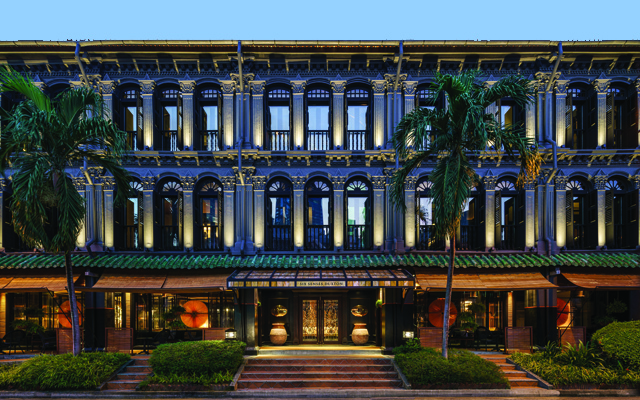
Forty years on, Victoria Dockside is introducing elements including an ultra-luxury Rosewood Hotel and Rosewood Residences, as well as K11 Atelier, the first K11-branded Grade A office building and which holds two green building certifications.

The revamped Salisbury Garden

Fringing Victoria Dockside are the newly relaunched green space Salisbury Garden and Avenue of Stars – the promenade is scheduled to reopen in February 2019 – both public spaces that are expected to host artistic installations, performances, open-air concerts and other cultural events such as movie screenings.

The entire district is set to fully open in 2019, with more updates on the development imminent, according to New World Development.

The growing importance of gastronomy tourism in Asia

0

The 4th UNWTO World Forum on Gastronomy Tourism, which took place in Bangkok last week from May 30 to June 1, concluded with industry players’ strong commitment to promote gastronomy tourism across Asia-Pacific through creative story-telling, supportive policies and improved training.

Held for the first time in Asia, the forum was organised by the UNWTO and the Basque Culinary Centre with the support of the Tourism Authority of Thailand (TAT) and Thailand’s Ministry of Tourism and Sports. Close to 600 delegates participated in the forum in Bangkok.

The conference is focused on raising awareness both nationally and regionally as to the significance and role of gastronomy tourism as a key towards the development of sustainable tourism in the region.

Addressing the opening ceremony, Weerasak Kowsurat, Thailand’s minister of tourism and sports, stressed that gastronomy tourism is firmly linking the country’s two bedrock economic sectors of agriculture and tourism.

“Thai cuisine helps us to drive tourism and boost spending. In 2017, 20 percent of our tourism revenue was on food. We are hoping to increase that in the years ahead,” he said.

Yuthasak Supasorn, TAT governor, also noted that both “gastronomy” and “tourism” are interlinked.

“Both are evolving in line with demographic and technological changes, and both have their roots in traditional culture and tradition. They create opportunities across the entire chain of command, from upmarket fine-dining restaurants to street vendors. They all have their unique characteristics which can change literally from one village to the next.”

The 5th and 6th UNWTO Gastronomy Forums will be held again in Europe in 2019 and 2020. Meanwhile, Indonesia is planning to host an ASEAN Gastronomy Tourism conference in 2019, according to a TAT press release.

Senior officials who attended the forum included UNWTO secretary-general Zurab Pololikashvili, tourism minister of Jamaica Edmund Bartlett, director of Basque Culinary Center Joxe Mari Aizega and PATA CEO Mario Hardy.

Six Senses Laamu appoints resident manager

0

Six Senses Laamu has appointed Graeme Freeman as resident manager, where he will be in charge of the resort’s overall operations.

He joins Six Senses following his previous position as general manager at Aleenta Hua Hin Resort & Spa in Pranburi, Thailand.

The Scot brings more more than 14 years of executive experience to the table. He first began his hospitality career as marketing manager with Bali-based Karma Group. A move into operations followed and after tenures as operations manager and resort manager, Graeme was appointed general manager at Karma Jimbaran, Jimbaran Bay, Bali in 2013.

New DOSM for St Regis Bangkok

0

Sam Chia has joined The St Regis Bangkok as director of sales & marketing.

Chia was most recently leading the sales, events and marketing communications efforts at The St Regis Singapore.

He has a wealth of experience in luxury hospitality including being part of the pre-opening team at Capella Singapore, a stint with the regional sales team of Banyan Tree Hotels & Resorts, and a prior role as assistant vice president – business development at Capella Hotel Group Asia.

Dirty thoughts of ASEAN

0

A panel at the recent South-east Asia Hotel Investors’ Summit said it loud and clear what I’ve been feeling: that we won’t be hearing the last of the dirty word, cesspool.

I’ve suspected all along that there are other Boracays and cesspools in the making in ASEAN. A panelist mentioned Phu Quoc, which he warned had no solid waste management. And if taken in the bigger context of the mismanagement of a tourism asset – not just seawater pollution, usually sewage – a whole string of resorts in the region do qualify as cesspools, sadly.

What gets to me is, Boracay isn’t the first ASEAN cesspool. That dubious honour goes to Pattaya in Thailand when a few decades ago it was hit with not just cesspool but sexpool perceptions. We’ve seen how long it has taken for Pattaya to recover its image and, even today, despite efforts to rebrand it as a family destination, I still have friends with young children who want to visit Pattaya expressing their hesitancy. And just look at TripAdvisor reviews (as I’ve done today, writing this on May 19) where concerns about water quality still dominate the forum.

What gets to me is, after all those years of discussing lessons from Pattaya, why, why, why hasn’t the region learnt anything?

They do so at a greater peril than during Pattaya’s time, because travellers are now more sophisticated while there’s always the Internet and social media to spread the word quickly.

Boracay is a prime example. While its forced closure may be good news to the private sector, which can flag it to governments as an example that actions can and must be taken, it has also spotlighted the dirtiness of Asian beaches to foreign tourists, especially Europeans, a major ASEAN market.

Actually, in Europe, the European Environment Agency runs a regular State of Bathing Water report, usually released in time for the year’s bathing season. It assesses the quality of bathing water in all 28 EU member states, and Albania and Switzerland, which are non-EU. Will it come to the day when health concerns related to bathing in cesspools will force tour operators to conduct their own assessments?

UK-based Chic Locations’ director, David Kevan, told me: “I do fear that if some Europeans go down with a sea-related illness, and operators are forced to conduct a serious assessment on the water quality, many areas might fail and the negative publicity now being seen on Boracay would be mild in the consequences for the total region.”

Beyond water pollution, it’s the sickening truth that there’s a lot of short-term thinking, corruption and/or a lack of vision that sees many beautiful destinations in ASEAN going to waste. Why do we need stalls after stalls of shops selling fake bags, watches and T-shirts along Chaweng Beach in Samui? Why build 50-60-storey skyscrapers in Danang?

The private sector is no better. For example, when business is looking up, it expresses concerns about haphazard development and the need for more quality tourists. When it is down, a hotel will be the first to lower rates and take in anything that walks.

In an ideal world, a country should treat its tourism jewels with care, set the rules who can lease them, the parameters how they can be used, and make no bones that the loan carries with it duty of care. The private sector will have no choice but to follow.

Alas, after three or even four decades, not much has changed.

The pressure is on

0
Hordes of tourists at Angkor Wat in Cambodia

There are more tourists now than ever before, thanks to the explosive growth of the Chinese outbound market and the ever-growing middle class worldwide. International tourist arrivals grew by a remarkable seven per cent in 2017 to reach 1.3 billion, according to UNWTO, and is projected to reach 1.8 billion by 2030.

But with record visitor numbers many destinations and communities in Asia are starting to see the toll of tourism, and along with it resentment and backlash to the problems that unrestrained growth brings.

The forced six-month closure of Boracay after Philippine president Duterte labelled it a “cesspool” reflects the pressure South-east Asia’s once-idyllic islands are now under. Since last year, Thailand’s Phi Phi island will be temporarily closed for four months each summer to allow for rehabilitation, while the rising tide of plastic rubbish on Bali’s beaches has become a major concern for visitors and residents on the famed Indonesian island.

Japan, which received 28 million foreign tourists in 2017, is witnessing the impacts of surging tourism numbers on the quality of life for residents. “Kyoto and Mount Fuji are probably the best – or worst – examples suffering from overtourism,” remarked Masaru Takayama, president of Spirit of Japan Travel and founding chair of Asian Ecotourism Network (AEN).

“Kyoto, where I am born and raised, is suffering tremendously,” he lamented. “The chronic traffic jams, the locals especially the elderly can’t even ride the buses, graffiti, misbehaving tourists that taint our culture, throwing trash on the street, late-night parties at guesthouses despite the code of conduct stated by the community, and the list goes on.”

Visitors flock to Arashiyama Bamboo Grove, a top attraction in Kyoto

Clarion call for tourism planning
For too long, long-term planning and development was sorely lacking in many destinations as governments were caught up in the aggressive pursuit of tourism growth and numbers, pointed out Randy Durband, CEO of Global Sustainable Tourism Council (GSTC).

“A major trend in tourism has been that every government, every country in the world has been focused on demand and promotion. Tourism worldwide is mostly promotion, promotion, promotion, and in some cases nothing else,” Durband remarked.

In the past 18 months, media attention on the problems surrounding mass tourism in such iconic destinations as Venice, Barcelona and Iceland has intensified worldwide, driving a greater awareness of overtourism and prompting calls to action in the global travel community.

“Finally the world is waking up to the fact that we can’t put money only to promotion but into development and management; we have to measure visitor satisfaction and also community satisfaction,” Durband said.

“I think governments were asleep, they didn’t see it coming. Governments typically put money into just promotion, anything into development were just small. Suddenly there’s an awareness as it hits them in the face as they realise they need to put resources into planning. And because they are all so late into the game, we’re going to see more pain for a while until they learn to manage better and disperse the visitors,” he added.

Takayama is heartened that there is “positive movement on the discussion level” for tourism to be more sustainable but concrete actions – and awareness – have yet to take root among the government sectors and mainstream tourism industry.

“(There are still) very little actions on the ground. In my personal opinion, the travel agents are probably the worst of all. The mainstream travel agencies’ top priority is to make businesses out of tourism and the benefits to the host destinations are often overlooked.”

It is with the aim to galvanise industry players into action that Takayama, together with six other agencies, founded the Japan Alliance of Responsible Travel Agencies last month to establish a platform comprising regional and local travel agencies and operators to maximise benefits to the host destinations and tourism stakeholders, including educating and training the industry players.

Takayama stated: “The voices of the locals need to be incorporated so that the tourism destinations first become a good place to live, way before making it a good place to visit.”

He added: “Sustainable development makes sense for every kind of tourism regardless of the size and scale. We all must be involved as there’s only one planet, so I’d highly encourage everyone to be in the game – the tourism sector has a lot of roles to play and industry players have the capacity to deliver them.”

The case of Thailand: what’s after 35 million arrivals?  
One of Asia’s most popular destinations, Thailand will likely be the envy of many destination marketing bodies, going by traditional tourism performance markers.

With the exception of the coup year in 2014, Thailand’s inbound arrivals have been on an upward trajectory in the last decade, with the Chinese market a major driving force to push its annual tourist numbers to over 35 million in 2017, equivalent to half of the country’s population.

Thailand’s famed Maya Bay will be temporarily closed for four months each year to allow for rehabilitation from overtourism

But Tanes Petsuwan, Tourism Authority of Thailand’s (TAT) deputy governor for marketing communication, acknowledged that a different gameplan is now needed – and it’s no longer about pursuing numbers.

When asked what Thailand’s 2018 tourism targets are, Tanes affirmed that tourism revenue will take precedence, unlike previous years. “TAT in the past has been counting numbers as KPI, but the present minister (Weerasak Kowsurat) set a different KPI, signifying a clear tourism direction for the country,” he said.

“Increasing visitors is not a challenge – we’re already very good at it,” Tanes remarked. “But the challenge now is how to balance 35 million for different markets, segments, etc, to ensure that they’re travelling at the right time, to the right places and delivering true benefits to communities,” he continued, emphasising that dispersal of tourists is critical.

Of the opinion that NTOs should give greater weight to social and environmental responsibility in their destination marketing, Tanes revealed that the TAT takes into account the carrying capacity as well as the market segment that each destination is suited for.

Jiraporn Prommaha, director of international affairs division, Ministry of Tourism and Sports Thailand, who together with Tanes were among the speakers at a panel discussion organised by AEN in Bangkok earlier this year, added: “We are trying to push for CBT to disperse tourists away from popular sites beyond Bangkok, Chiang Mai or the beaches to promote the ‘unseen Thailand’.”

But when asked how Thailand could cope with the influx of visitors from China, which alone contributed one-quarter of Thailand’s inbound arrivals last year and is still a growing market, Tanes is confident the changing preferences of Chinese travellers as they evolve into FITs will soon put such concerns to rest.

“Mass tourism will become history in future,” Tanes stated.

Lessons from Agung

0
Mount Agung

As Bali’s tourism moves past the aftermath of last year’s Mount Agung eruption and the bombings in Surabya last month, the travel trade has also been left to ponder the important questions of how to better manage crises and risks in a world constantly fraught with insecurity and change.

Mount Agung, Bali’s highest peak, remains a powerful tourist magnate despite its recent eruption

Lifting hopes for restored tourism confidence is the 2018 Annual Meetings of the International Monetary Fund and World Bank Group taking place in Bali come October. The high-profile meetings are said to be the largest event the island has hosted, with an estimated attendance of more than 15,000 delegates from 189 countries.

Lenny Willyana, director of sales and marketing, Discovery Kartika Plaza Hotel, said: “We would like to have more international events in Bali so that more travellers (would gain the) confidence to travel here and consider Bali as a (top choice for both leisure and business events).”

Travel confidence is especially important to Indonesia now, as the destination is just beginning to recover from the impact of Mount Agung’s eruption in October 2017, which led to airport closures in Bali and Lombok and travel advisories from a number of countries.

Massive cancellations to Bali ensued, and the island’s top origin market of China also took the largest hit.

“(Average) hotel occupancy in Bali was between 50-70 per cent before the eruption, but went down to 10 per cent after the eruption according to reports from some hotels,” Willyana revealed.

Based on the 1Q2018 data from the Bali Statistics Office, arrivals from China were down by 24 per cent year-on-year, Australia six per cent and Singapore four per cent. Total arrivals to Bali in that period was 1.3 million, down 2.7 per cent.

Sudarsana, corporate general manager business development and marketing communications, Santika Indonesia Hotels & Resorts, said: “By March things were back on track and we saw full recovery by May.”

But just as Bali’s tourism recovery picks up momentum after a slower 1Q, a string of terror attacks hit Surabaya last month, prompting worries that recovery efforts would be negated.

Fortunately, tour players such as I Ketut Ardana, chairman of ASITA Bali Chapter, said the immediate impact of the Surabaya attacks on bookings was insignificant.

The recent terrorism incident did not appear to weigh on concerns of outbound agents in South-east Asia, and Ardana is confident that Bali bookings for the coming
summer peak season would remain intact.

With the volcanic eruption and Surabaya incident now moving to the rear view mirror, these recent crises however offer valuable lessons for Bali’s tourism stakeholders.

Yazid Sidik, director of sales and marketing of Best Western Kamala Jimbaran, said: “China was our main international market, so the eruption affected us quite a bit. We are increasing our focus on other markets like India, while keeping the China market (strong).”

On the other hand, Eddy Sunyoto, director of Terimakasih Indonesia Tours & Travel, said: “We also learnt that the Chinese market bounces back very fast.”

Similarly, I Gde Pitana, deputy minister for tourism marketing development I, Ministry of Tourism, said: “The Chinese are obedient citizens who follow (government advice), hence the cancellations. However as soon as the advisory was reversed, the market returned quite fast too.”

Quick crisis response on the international level is also important. In the case of Bali, tourism minister Arief Yahya met with diplomatic missions in Indonesia and authorities in China.

“The result was the lifting of the travel warning and we immediately started to see traffic returning,” said Bambang Sugiono, director of Gajah Bali Tour.

On whether the government was relying too heavily on the China market, Nia Niscaya, deputy minister of tourism marketing development II, whose portfolio includes China, said: “China is the biggest outbound market in the world now. Aiming at a tiny percentage of this market means big in the actual number.”

But the Chinese are also valued travellers for other reasons, she explained, as this market makes relatively quick travel purchasing decisions and also likes exploring a destination instead of just staying in the hotel.

Still, the ministry is also continuing to focus on other growth markets such as India and the Middle East, alongside a diversification of its marketing promotion efforts on destinations beyond Bali in Indonesia, Niscaya said.

Lauding the government’s efforts in market diversification and infrastructural development across the country as part of its 10 New Bali’s initiative, Garth Simmons, AccorHotels’ COO for Indonesia, Malaysia and Singapore, thinks more could still be done.

“The Chinese is not the only market to Bali. You have the Australians, Europeans, Japanese, Singaporeans, and let’s not forget the Indonesian domestic market,” he opined.

Addressing the possibility of Mount Agung as an active volcano erupting again, the tourism minister said contingency plans are ready to be activated, including having airports in neighbouring destinations like Lombok, Surabaya and Banyuwangi ready for aircraft diversion and evacuation; plus land-and-sea evacuation mechanism via Gilimanuk ferry terminal connecting Ketapang in East Java and fast-boat service to Banyuwangi.

The Bali Tourism Hospitality Task Force was also set up as a permanent unit to tackle issues potentially affecting the stability of Bali’s tourism.

A whole new start at Radisson

0

Are views of the chain as being, in a quick word, confusing, fair?
Our corporate rebranding (to Radisson Hotel Group) addresses exactly those things that were probably thought of as confusing. The rebranding wasn’t just a name change but a whole restructuring to gain huge efficiencies from the power of the Radisson name, and it came with a five-year plan, Destination 2022, which is a clear and detailed road map on how we want to grow.

So for example, we now have eight brands that are well-defined and do not compete with any of our other brands. That came from us repositioning, for instance, the Radisson Red brand a few notches higher and making it a more lifestyle brand than before, and launching a new (soft) brand, Radisson Collection (previously the perplexing ‘Quorvus’).

Coming from a development background (Giannouka was Rosewood Hotel Group’s head of development Asia-Pacific and China), I see it as a huge opportunity to start with the company under a new ownership (HNA) and almost a new blank sheet of paper. Much of the five-year plan is about growth and we are building the development team that is going to deliver the growth. We’re planning to triple our portfolio in China and double the portfolio in Asia-Pacific, so going from today’s 18,000 rooms and adding 20,000 rooms across the region. That requires the right team in place.

How are you rebuilding the development team?
I’ve been working on that since I joined. We have just named Ramzy Fenianos as new chief development officer Asia-Pacific, who I’m absolutely certain will help us execute the plan if not more.

We’re also rebuilding our development team in China. To triple the portfolio there requires a very localised knowledge. There are lots of opportunities for us: Four of our eight brands sit squarely in the mid-scale and upper mid-scale, which is where the shift in Chinese travellers is to. It used to be luxury. People talk about the 127 million China outbound but in China there are the 5.1 billion domestic travellers. And Radisson has been in China for 20 years as a brand.

We also look forward to partnering more closely with our new owner whose network in China is strong. We’ve just signed the first deal with HNA where one of its subsidiaries is part of the owning entity of a hotel near the Phoenix airport, a new-build, 334-key hotel in soft-opening which we have rebranded Radisson (Hotel Phoenix Airport). We managed to win that contract in a competitive process.That’s an example of how we can leverage our new owner’s influence and network within China and the vast real estate they own and are developing. It sends a strong signal to the market about their commitment to us and us to them.

But that’s the other thing too. HNA as we know is embattled with a lot of debts, and we’ve seen how it is already offloading some of those debts. How does this affect you?
Right now for our company, everything that we’re planning to achieve is encapsulated in our five-year plan. That plan is completely independent of any contribution or anything from the parent company. It is self-financed from Radisson Hotel Group and is based on organic growth.

So to answer how this influences us, actually we’re self-financed. Financially we operate independently from the parent and the five-year plan was approved by both the boards of Radisson Hospitality and Radisson Hotel Group AB.

Having a single ownership however is what gave rise to a new leadership, which gave rise to our current transformation, which looked at what we needed to do better – sharpen our brand architecture, rebrand the loyalty programme, make a significant investment on an entirely new, customised, IT platform that is going to be cutting edge in the industry, to name a few. All of these wouldn’t have happened had it not been for the new ownership. And then I joined at the right moment (laughs) when the company is going through the transformation it never had before. I’m really excited.

What is your sense of what owners in the region feel about industry consolidation and how is this an opportunity for Radisson?
We talk to our owners all the time. We constantly look out for what is it they need, where do they see the value and, ultimately, it’s back to strong brands.

One of the reasons we decided to focus on our strongest brand Radisson – to build on the strength of that brand and within that sharpen our brand architecture – is because we’re living in an environment where brands matter – what those brands deliver in terms of the recognition they have with owners, guests or talents. Our vision is to be among the top three top-of-mind operators in the world when a guest wants to stay in a hotel, when an investor thinks of a hotel company and when an employee wants to join the industry.

So to the question what owners are looking for, I think it’s more about value. We’ve got to make sure our brands are sharpened to drive value into our hotels.

What is interesting is it’s harder and harder for a single brand to survive in the ever-consolidating industry of ours. We have eight brands that really cover the spectrum, everything from prizeotel, which is in the lifestyle economy segment, all the way up to Radisson Collection, which is the luxury segment. So that’s what we’re focusing on, making sure our brands have scale, are well-defined, so the guests, owners and talents see their true value.