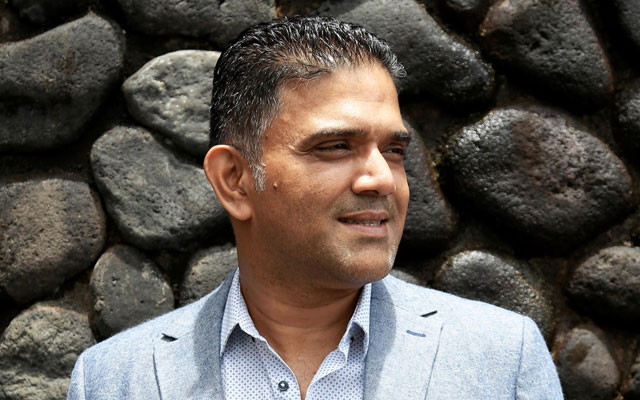
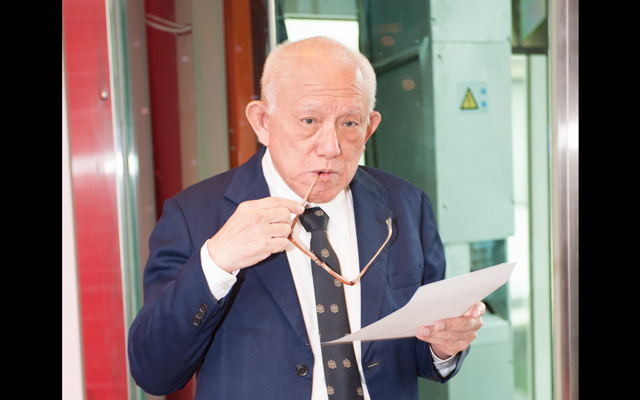
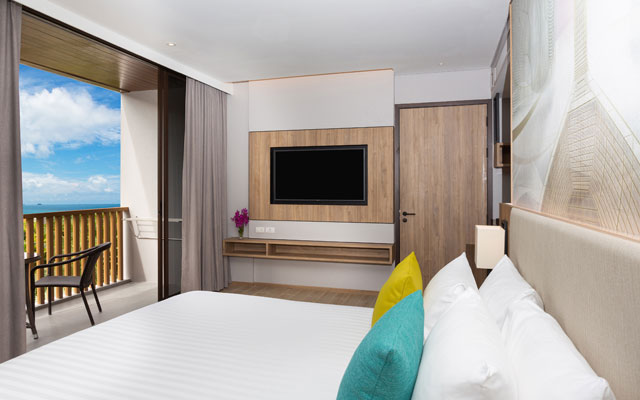
Kamal Munasinghe is now the general manager of Alila Bangsar Kuala Lumpur.
The hospitality veteran has over two decades of hospitality expertise managing independent and international hotels across various locations including Switzerland, Sri Lanka, Malaysia and Vietnam.
The Swiss national first began his career in F&B in Switzerland where he worked his way up to be the director of restaurants at the Zurich Marriott Hotel. After eight years, he joined Movenpick Restaurants as the general manager before re-joining Zurich Marriott in the rooms division where he served for another three years, after which he started his own hospitality management company Worldone Management.
Munasinghe then returned to Sri Lanka, his home country, where he joined Mount Lavinia Hotel Group before his next move to The Kingsbury Colombo Hotel as general manager.
His career then continued in Vietnam with a 3.5-year stint as the director of
operations with the Renaissance Riverside Hotel Saigon, following which he moved to the Renaissance Kuala Lumpur as the resident manager in 2016.
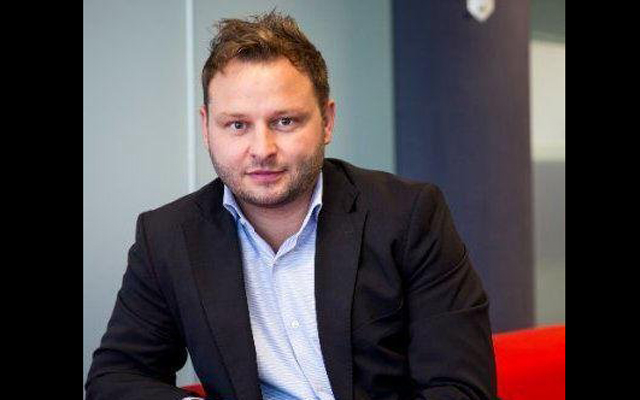
Sam Turner, global director of sales & sourcing: Consolidation across accommodation sector set to continue
Consolidation has been a key part of the accommodation sector over the last 12 months and will continue in 2019. Both investors and owners have recognised that the sector is just way too fragmented. How many other industries can you name where the top 10 brands generate less than a quarter of revenues?
This explains not just the mega deals of recent years, but also the medium-sized chain deals of this year such as Minor Group acquiring NH and Accor acquiring Mövenpick – as well as the constant acquisition of smaller brands and start-ups by Accor and other major chains.
The bedbank sector too remains highly fragmented and this explains the rationale behind our acquisition of both Tourico Holidays and GTA last year, with both companies now almost fully integrated into our business and their brand names now being phased out. We’re not the only people in this sector following this philosophy, just look at the activity of Webbeds and their recent acquisitions, right up to a few weeks ago.
The biggest challenge for travel intermediaries and distributors is to stay relevant to hotels. But for many people in this space the copycat model is becoming increasingly harder to justify, as they are not delivering extra value to hotels. This perhaps also explains some of the consolidation, as people throw in the towel and sell-up or simply go out of business.
Hyped-up new technologies still not delivering, at least not yet
All of the buzz and hype from last year around artificial intelligence (AI) and voice search has failed to deliver this year – as is often the case with the latest trends, the reality is that they take much longer to implement than was originally foreseen.
In the short term the result has been a bit disappointing, and not just in terms of voice search: ultimately you really still have to sit down at an actual computer to fully plan and book any trip, as even on a mobile it is not quite as easy as many had hoped.
For sure both AI and voice search will be relevant in the medium term. But in the short term we need to be more realistic and perhaps 2019 will be a year in which our expectations will slowly begin to match the more slowly developing reality: small improvements and changes, not a quantum leap.
Noteworthy breakout brands and individuals this year
Perhaps the most interesting development in the hotels space this year has not been a piece of technology or from the distribution space.
Oyo Rooms has come out of nowhere to raise huge sums, around a billion dollars at the last round, to create a more level playing field for small independent properties. Already it is the fastest-growing hotel company in the world and will soon be global chain. No one could have anticipated a new competitor emerging so quickly. It goes to show that the sector still has room for more innovation that many would have imagined.
Alternative accommodation sees slowdown in growth
Last year everyone was still assuming that the alternative accommodation sector would just keep growing exponentially. But this year has seen a massive slowdown in growth and we expect that to continue. The likes of Airbnb are still growing well, of course, but nothing like before.
This perhaps explains why such providers are now trying to expand into other areas, such as cross-selling ancillaries or ‘experiences’. They are realising that ultimately they are intermediaries, just another sales platform – and in that respect they are becoming more like OTAs.
Chinese outbound market remains largely untapped
Everyone in tourism with a strategy team or demanding investors to keep satisfied knows that the explosion of Chinese outbound tourism represents an enormous opportunity. The demographic shift in China as people become middle class and aspire to travel internationally means that we will see exponential growth in the passenger figures for many years: in the coming two years alone the Chinese passport office will issue 100 million new passports.
But 2018 was another year in which global hoteliers once again failed to fully capitalise on the Chinese segment. Many are still playing catch-up here and few are fully ready to cater for Chinese travellers. Could this change in 2019? Right now too many hotels don’t accept Alipay, cannot show floor plans in the booking process, or have no visa support service in the Chinese language – the sector is improving, but 2019 is probably not the year most hotels will crack the Chinese outbound market.
Peter Mansour
Peter Mansour, director of product management: Hotel distributors offering re-seller content unsustainable
The growth in recent years in the number of smaller hotel distributors offering ever larger amounts of hotel rooms available for sale is both unsustainable and not in the interest of consumers. Whilst it will probably continue in 2019, over the longer term this is likely to change.
These distributors are increasing the number of rooms they have available simply by signing contracts with re-sellers and are not offering directly contracted rates. Every extra link in the hotel distribution chain adds a cost that is ultimately paid for by consumers. Not only are these distributors not adding value, often this approach is not even sustainable for them in the long term.
Why are they doing this? Right now the distribution industry is consolidating into larger players who have the scale and directly contracted hotel rates. This means that the smaller players are now looking for any extra revenue opportunity, no matter how small. But fast forward a few years and you will notice a great deal less small distributors offering ‘500,000 hotels’ at trade shows like ITB or WTM – they will either shrink back down to whatever their core offering really is, or go out of existence.
More airlines moving into the hotel intermediary space – and in some cases even tour operator space
Over the last few years we’ve seen a trend for airlines approaching us to start selling hotel accommodation on their website. In 2018 this has increased, but we predict that in 2019 it really will begin to snowball.
As airlines look to diversify their revenue sources and increase their margins, the opportunity to cross-sell a loyal customer a hotel room offers potentially more profit than operating the flight itself.
In particular, however, what we are seeing is more and more airlines wanting to go a step further still and actually become a tour operator: offering a complete package to customers by giving them a combination of a flight and hotel – with all the regulatory and operational implications that means, but also the opportunity to cross-sell the customer more products: car hire, transfers, theatre and sports tickets, etc.
Service will slowly become the key differentiator for hotels, not price
The general trend towards greater price transparency and efficiency for hotel accommodation – helped significantly by the advent of metasearch – means that hotel rooms are increasingly becoming more and more commoditised, in the same way airline tickets have been for many years.
So how does a hotel stand out in such a price sensitive market? Service has always been a differentiating factor, but as time goes on it becomes an ever more important one.
In 2019 we will see this shift accelerate slightly as AI and bots become used more frequently by pioneering hotels to improve customer service all round, and not just in the booking process. But achieving this is going to be harder said than done, only the most innovative will succeed – and many will fall behind.
Trend for greater price transparency driven by metasearch leading to a technological arms race
The impact of metasearch pushes us towards greater price transparency and efficiency, which is great news for consumers. For both hotel providers and travel selling intermediaries however, not only does this drive down margins it also makes it harder to compete to actually make that sale.
It is a merciless market out there for those competing on price alone and this is leading to a data-analytics arms race in our sector as providers compete to have the fastest and best pricing technology to outwit the competition.
In Thailand, an ongoing price war in the sale of Japan tour packages has altered the image of the destination, once associated with luxury.
While Japan continues to be among the top destination choices for Thai travellers, lower airfares offered by LCCs and the visa exemption policy the Japan government extended to Thai nationals since 2012 have brought package prices down and triggered a price war.
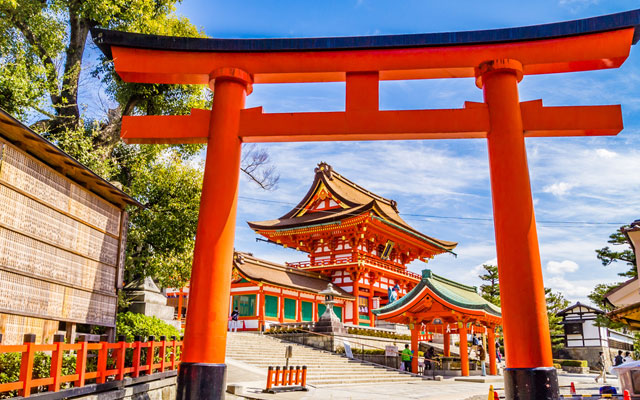
Thai travellers’ perception of Japan has changed over the years; Fushimi Inari Shrine in Kyoto pictured
Prices have dropped by more than 50 per cent, from between 40,000 baht (US$1,219) and 60,000 baht per package five years ago to less than 20,000 baht at present.
Somchai Chomraka, chief executive of Weekend Tours, added: “There have been many groups of Thai seniors who have time and money and wait until tour operators offer their lowest prices (before buying packages). This becomes a habit.”
Thanapon Cheewarattanaporn, president of the Thai Travel Agents Association (TTAA), said Japan tour package prices should average around 25,000 baht each. Any prices lower than this would likely mean a loss-making service for tour operators.
“The question is how they can run business in the long run without profit,” he stressed.
Weekend Tours’ Somchai said Japan has already become the riskiest destination to sell in terms of loss-making potential, followed by South Korea, adding that the situation is likely to persist in 2019.
But Somchai believes that the price war will end in 2020 after some players either go out of business or realise the downsides of engaging in price war.
If China and South Korea tours were any indicator, perceptions of product quality are likely to be affected with such high levels of competition, opined Chotechuang Soorangura, the associate managing director of NS Travels & Tours (NS).
Five years ago, Japan was seen as a coveted destination for holidays and trips sold out fast, Chotechuang said. But as perceptions of Japan change, demand has begun shifting to new destinations.
However, executives of TTAA, NS and Weekend Tours are confident that Japan will remain in high demand for Thais, thanks to the rise of FITs.
TTAA projects that the number of tourists from Thailand to Japan will exceed 1.3 million in 2019. As of October 2018, the arrivals from Thailand to Japan numbered about 900,874.
Thanapon said arrivals to Japan would reach at least one million by the end of 2018. The number of FITs will form the majority of the tourists within 2020, compared with the present 30 per cent proportion, he forecasts.
Switzerland’s largest DMC Swiss Travel Centre (STC) now has its first Asia base with the opening of an office in Hong Kong.
Launched on November 29, the Hong Kong office has three full-time staff and handles only B2B business. Currently, the DMC has representatives taking care of Asia sales activities in Beijing, Seoul and Bangkok.
Front row, from left: STC’s Fabian Bryner, Eva Ammann and Michael Maeder; back row, from left: STC’s Ling Gao, Carrie Ho and Alex Hsu
General manager Ling Gao said: “We expect the biggest growth of our business from Asia over the foreseeable future. With the opening of the office in Hong Kong, we have made sure to be prepared for this potential by becoming closer to our customers.”
The Hong Kong office will initially serve mainland China, Hong Kong and Taiwan. Bookings from other Asian markets are handled by the head office in Zurich for the time being, with the possibility of being transferred to the Hong Kong office in future.
“More and more guests from Asia are travelling to Switzerland, often by group tours through several cities. They want to return for a longer visit to Switzerland to share its grandeur with their children,” Gao said.
“The increased interest is a good reason for opening our Asia-based office. Another core reason is of course that we would like to enhance our service to the Asian industry and clients.”
China, Hong Kong, Taiwan and South Korea – where mono groups are on the up – are currently the DMC’s key Asian markets. New potential markets identified in the DMC’s longer term plans include Indonesia, Singapore and Thailand.
Speaking at the opening ceremony, Zurich-based CEO Michael Maeder explained why Hong Kong was chosen as the company’s Asian base over Singapore and Beijing.
“Criteria like the ease of getting a visa, professionalism and taxes were considered. We made the right choice and still have a team in Zurich to take care of customers from Hong Kong, China, South Korea and Taiwan. Both teams stay in very close contact with suppliers in Asia and partners in Switzerland.
“Looking ahead, we hope to grow using a hub-and-spoke model with representatives appointed in other cities to support our hub office in Hong Kong. Our representative in Beijing, for instance, continues to promote our company within the travel trade in support of that development.”
Meanwhile, the DMC will continue to attend the trade activities organised by Switzerland Tourism and engage individual tour operators through activities such as sales calls, workshops or organising fam trips to Switzerland, Gao shared,
“For instance, we will join STE China next February and engage in sales calls in mainland China afterwards.”
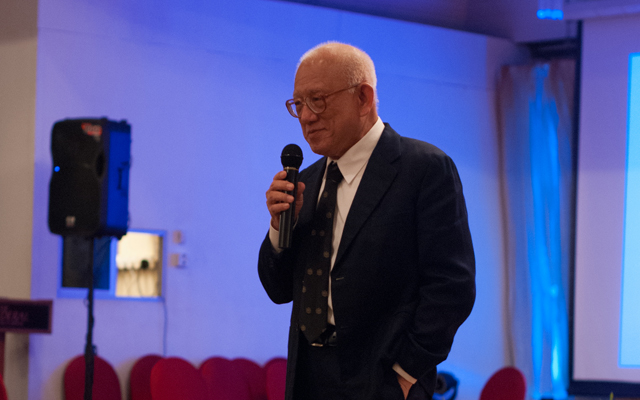
Lim Ba Bin, a respected veteran of Malaysia’s tourism industry, passed away peacefully on December 10. He was 79 years old.
Lim joined Mayflower Acme Tours in 1973 and over the years rose up the ranks to eventually become the company’s senior general manager. After leaving Mayflower in 1990, he set up Babin Tours, a company specialising in longhaul inbound travel from Europe and the US.
In memory of Lim Ba Bin (Credit: Chang Ken Sheng)
1 of 3
Tributes have poured in for the passing of this industry pioneer.
Chang Wee Fatt, managing director, Global Holidays, shared that in his younger days, both him and his peers thought of Lim as an icon who readily shared his industry knowledge with them.
“He was also a very simple person, with his trademark white shirt, and in winter he used to do sales calls without wearing a winter jacket,” Chang recalled.
Arokia Das Anthony, director, Luxury Tours Malaysia, also spoke fondly of Lim. When Arokia went on his first sales trip to Milan in 1993, Lim showed him around the city and how to use the public transportation, adding that Lim “was like a kind uncle who gave me the confidence I needed to go out on my own”.
Tunku Iskandar Tunku Abdullah, group executive chairman, Melewar Group, said: “I have known Lim since the early ’70s, when I ventured into the travel and tourism industry.
“He was someone who was deeply committed and involved in several key organisations including MATTA (The Malaysian Association of Tour & Travel Agents), PATA and Skal International Kuala Lumpur. Lim always voiced out his opinions regarding important industry issues. He had friends the world over, and like me, they will be saddened to know of his passing.”
Azizan Noordin, former CEO at Langkawi Development Authority, also spoke highly of Lim, calling him “approachable, soft spoken and knowledgeable”, with vast experience in the field of guiding and travel agency business.
“When I started work with the Tourist Development Cooperation in 1978, he was like a teacher to me, and provided good advice on the development of the tourism industry. We will miss him and may God bless his soul,” Azizan said.
The Asian Development Bank (ADB) has approved a US$45 million loan to help Vietnam transform secondary towns into more economically inclusive, competitive tourism destinations.
The Second Greater Mekong Subregion (GMS) Tourism Infrastructure for Inclusive Growth Project will construct climate-resilient transport and urban infrastructure needed to boost tourist arrivals and tourism services investment in Hoa Binh, Nghe An, Quang Binh, Quang Tri and Thua Thien Hue provinces.
Most tourism growth and corresponding socioeconomic benefits are concentrated in a few gateway destinations, says ADB’s Steven Schipani
It will also develop urban green spaces and public beaches in these provinces, where the project is expected to benefit about 168,000 residents and more than eight million visitors annually.
“Tourism is growing rapidly in Vietnam, but most growth and corresponding socioeconomic benefits are concentrated in a few gateway destinations. To promote more inclusive and sustainable growth, it’s important for Vietnam to increase public and private investment in secondary towns,” said ADB project administration unit head for Vietnam, Steven Schipani.
Specifically, the project will upgrade about 31km of urban-rural roads and 13 passenger piers to provide visitors and residents with more convenient access to cultural and historic sites in all participating provinces.
To help Nghe An’s Cua Lo town attract more and higher-spending visitors year-round and adapt to climate change, the project will rehabilitate a 5.5km seawall and beachfront drainage, improve public recreation areas and expand market space for local vendors.
Quang Tri’s Cua Viet and Cua Tung beaches will benefit from similar investments.
Using training, certification programmes, and policy incentives, the project will also help ensure that tourism management in project areas meets standards set by ASEAN.
The integrated project design incorporates lessons from more than 15 years of ADB support to foster inclusive and sustainable tourism in Vietnam. This includes the ongoing 2014–2019 GMS Tourism Infrastructure for Inclusive Growth Project and successfully completed GMS Sustainable Tourism Development Project and GMS Mekong Tourism Development Project.
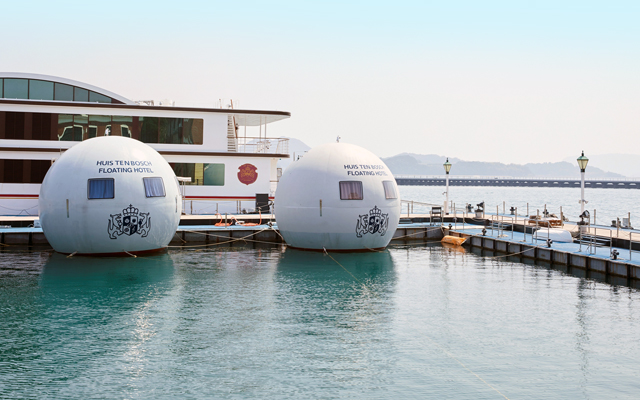
1. Floating sphere-shaped rooms
The Huis Ten Bosch theme park in Nagasaki, Japan has unveiled spherical hotel rooms floating on the bay off the bay. Each pod is arranged over two floors, with the upper level containing a bed and the lower level a lounge area. The self-contained units also has its own bath and toilet facilities. Guests can choose to moor offshore while they are asleep or to be in gentle motion between the park and an uninhabited island nearby.
Floating capsules at the Huis Ten Bosch theme park
2. Air taxi trials get green light
German company Volocopter has developed air taxis for inner-city transport, with these “flying cars” already approved for trials in Singapore next year. Each electrically powered drone aircraft (Volocopter) can fly two people for distances of less than 30km, and can be manoeuvred by a pilot or remote control. The trials will test the feasibility of Volocopters and their flight modes in Singapore’s environment.
Air taxis may soon take off in SingaporePepper 2E part of the TUI team
3. TUI’s robot hire
A humanoid robot named Pepper 2E in August joined TUI Nordic’s new Data Analytics and Machine Learning team in the Stockholm office. This semi-humanoid robot understands and speaks in numerous languages and can understand human emotions. Pepper’s touch screen increases his capacity to interact and enables him to enhance communication by providing visual information.
4. Morpheus descends in Macau
Named after the god of dreams in Greek mythology, Morpheus hotel debuted in Macau on June 15 as the world’s first free-form exoskeleton high-rise architectural structure, designed by the late starchitect Zaha Hadid. Apart from 770 guestrooms, suites and villas, the architectural marvel is home to Alain Ducasse at Morpheus, chef Alain Ducasse’s first restaurant in Macau.
5. The ‘Rubik’s Cube’ winery
Taking the immersive winery experience to the next level is the d’Arenberg Cube in McLaren Vale, South Australia. Inspired by a Rubik’s Cube, the five-storey building ‘floats’ among the Mourvèdre vines and features an entrance door said to spin and fold open like origami. Its five levels are designed for the senses with features including a virtual fermenter, a 360-degree video room, a wine fog room, and a flower and fruit room with puffers you can inhale of one of the 72 wines they produce.
D’Arenberg Cube takes winemaking showcases to another level
6. ‘Craft beer airline’ now boarding
Scottish craft beer brewer BrewDog is chartering a “bespoke BrewDog Boeing 767” to cruise from London Stansted to Columbus Ohio in February 2019. On board, passengers will be treated to a new beer created to taste better at altitude. In Ohio, they will be taken on a behind-the-scene tour of BrewDog Columbus, a walking tour to discover bars in the city and a day trip to Cincinnati breweries. Tickets are for the flight are on sale now, but are available only for “Equity Punks”, or those who invested in the company during its crowdfunding round.
BrewDog plane taking Equity Punks from London Stansted to Columbus Ohio to embark on a beer tour
7. AR baggage measurement tool
Kayak’s augmented reality (AR) baggage measurement tool was created to help travellers determine whether or not their luggage will fit in the overheads bins of an airline before arriving at the airport. Available via the Kayak app on all iOS devices running iOS 11.3 and up, the tool also compares baggage fee policies for all Kayak tracked airlines.
8. Paging for home-based agents
Singapore-based Chan Brothers Group has launched the ten Travel Envoy platform (ten stands for “travel entrepreneur network”) to recruit travel agent “envoys”. Besides getting destination and product training, Envoys can earn five per cent commission per package sold. Those who wish to plan and customise FIT packages for their customers will be charged to use a premium platform from the second year. Not only does this system help Chan Brothers distribute its packages to a wider market, it also serves as an alternative to recruit travel agents, an increasingly challenging task today.
9. VR deep-dive into the Philippines
The Philippine Department of Tourism this year turned to virtual reality (VR) technology to promote dive tourism, a step up from mere photographs of the country’s underwater attractions including Tubbataha Reef, Anilao in Batangas, Malapascua and Bantayan Island in Cebu. VR goggles were made available during European sorties and international dive shows, with scenes curated by Studio H20 Philippines whose staff are all experienced scuba divers and professional underwater videographers and photographers.
10. Creative neighbourhood spotlight
Following the 2017 launch of the Old Town Central programme, Hong Kong Tourism Board picked Sham Shui Po to spotlight in its latest neighbourhood campaign this year. It turns the neighbourhood into a playground for the young and creative to discover authentic local flavours, such as by allowing visitors to scan QR codes to access information at various points of interests. A Sham Shui Po Self-guided Walks guide was also created, featuring walking routes recommended by local personalities and 65 thematic points of interest.
Sham Shui Po Man Fung Building
11. UnDiscover Australia
The challenge of attracting repeat tourists was taken head on with a new campaign inviting visitors to UnDiscover Australia. Launched in September, the A$10 million (US$7.3 million) campaign aims to challenge perceptions of Australia which is known for koalas, kangaroos, the outback and iconic landmarks, and instead showcases unusual and unexpected attractions on offer. These include climbing the roof of the Adelaide Oval to enjoy 60-degree views of the city skyline at sunset or swimming with sharks.
12. Upgrading the longhaul experience
What can an airline do to bump up the comfort level on the world’s longest air route? Well, remove economy class and put in a bevy of entertainment and meal options. That’s what Singapore Airlines did when its daily Singapore-New York service took off in October. The new Airbus A350-900ULR used to operate the ultra-longhaul flight features only premium economy and business class seats, and serves up wellness cuisine curated by chefs and nutritionists from luxury spa company Canyon Ranch.
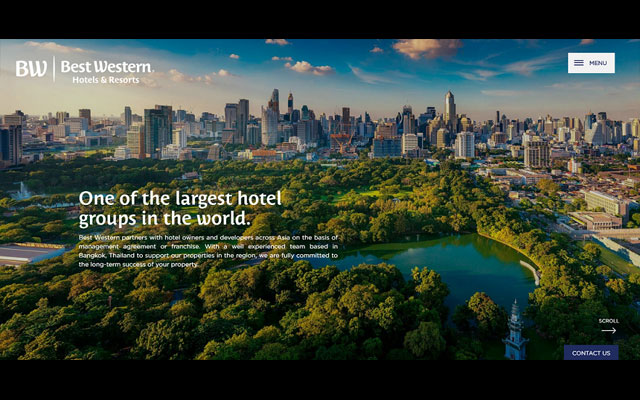
This website will hold Best Western's entire suite of products and services
Best Western Hotels & Resorts has launched a brand-new website dedicated to providing essential information for hotel developers and owners.
The new website, www.bestwesternasiadevelopers.com, offers information of Best Western’s global brands, an interactive map that allows users to visualise the company’s existing portfolio of 13 different brands ranging from economy to upper-upscale, and an overview of its regional pipeline of properties.
This website will hold Best Western’s entire suite of products and services
Olivier Berrivin, Best Western Hotels & Resorts’ managing director of international operations – Asia, said: “With our new website, we are putting our full collection of products and services at the fingertips of our Asian partners.”
Sadie Hotel and Aiden Hotel, which launched in September 2018, are dedicated to conversion projects. These are now available alongside classic brands Best Western, Best Western Plus and Best Western Premier. The brand portfolio also includes Vīb and GLō, midscale concepts that are tailored to new-build projects; and two soft brands, BW Premier Collection by Best Western and BW Signature Collection by Best Western, which allow owners to retain their distinctive style and identity. Meanwhile, Executive Residency by Best Western enables developers to tap into the trend for extended stays.
Finally, recently-launched franchise offerings – SureStay Hotel by Best Western, SureStay Plus Hotel by Best Western and SureStay Collection by Best Western – provide three options for owners and developers who want to avoid high costs, while also harnessing the power and support of a global brand.
Best Western currently operates a portfolio of 56 hotels and resorts across South-east Asia and Japan, comprising more than 5,000 rooms across five of its brands. This region-wide inventory is set to more than double in the coming years, with over 6,800 rooms expected to open across Asia.
In total, Best Western has 37 hotels in its Asian pipeline, covering seven of the company’s 13 brands.
Tour to Feast, spearheaded by Cox & Kings, has been launched to introduce travellers to journeys across India’s most popular culinary destinations, with a slice of history.
Each of these journeys is designed and accompanied by experts who will take travellers through the evolution of the indigenous cuisines of each region.
Culinary diversity is one of India’s treasures; an assorted range of Indian dishes pictured
Speaking at the launch, Debolin Sen, head, Tour to Feast, said the tours cover food tasting at bazaars, food walks, home dining experiences, opportunities to “cook like a local” and informative sharing of the origins of cuisine.
Karan Anand, head, relationships, Cox & Kings said: “Each region’s culture can be best introduced through its food. We see a substantial increase in the number of tourists integrating culinary tours as part of their travel experiences. In India, each state has unique flavours, delectable cuisines and stories of bygone eras and their influence on food – the richness of these experiences needs to be presented in a very unique way and through a niche offering like Tour to Feast.”
To begin with, Tour to Feast will offer journeys across the most popular culinary destinations in India like Mumbai, Delhi, Lucknow, Varanasi, Jaipur, Agra and Goa. Travellers can choose from an array of customised culinary holidays.
Tour to Feast itineraries fall under several categories. First, there’s Feast On, for an all-round destination experience including historical monuments, markets, cooking classes and sit-down meals with local chefs.
Cook like a Local is for those who enjoy or want to learn how to cook a region’s cuisine and get a deeper understanding of the produce on offer. Guests opting for this can expect a mix of cooking classes and demonstrations by local chefs and home cooks, market and farm tours, and cocktail workshops.
The third category is Forgotten Worlds with a heritage element. Itineraries will include heritage trails, cooking classes, home-dining experiences featuring forgotten recipes, and dying regional art forms.
Foodscapes takes participants through the various culinary pockets that make up a destination, giving a deeper understanding of the communities. Participants can meet locals and learn quintessential home-style recipes, set out on heritage trails, and enjoy street food walks served with a slice of history.
Finally, there’s Eat Retreat, where guests can slow down and enjoy organic farming activities, spice plantation tours, rustic meals, cooking workshops, and even yoga and meditation sessions.
The soon-to-open dusitD2 Ao Nang, Krabi has launched a special opening offer starting from 2,220++ baht (US$68++) per night.
Available for booking from now until March 31, 2019, the offer is valid for stays from December 15, 2018 to April 15, 2019. Price includes 40 per cent off Dusit’s Best Available Rate, complimentary breakfast, and other benefits.
1 of 2
Bookings made before January 15, 2019 for a minimum stay of three consecutive nights will also qualify for a complimentary room upgrade.
Members of Dusit Hotels & Resorts’ guest loyalty programme, Dusit Gold, will also be entitled to an additional 10 per cent discount. Guests can sign up to the Dusit Gold programme for free at www.dusitgold.com.
The property located in downtown Ao Nang offers 173 guestrooms and suites, with facilities such as an all-day-dining restaurant, a 200m2 ballroom, an outdoor swimming pool with a separate children’s pool, children’s playground, and spa. Excursions such as rock climbing, jungle treks and boat trips to nearby islands are available too.