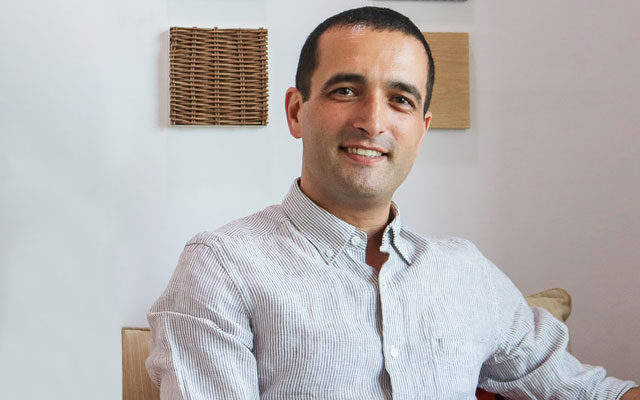
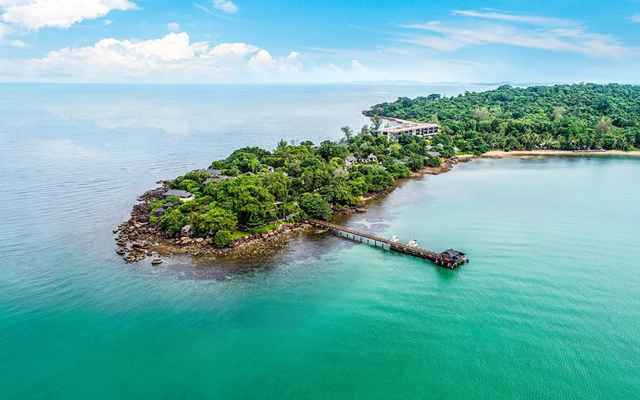
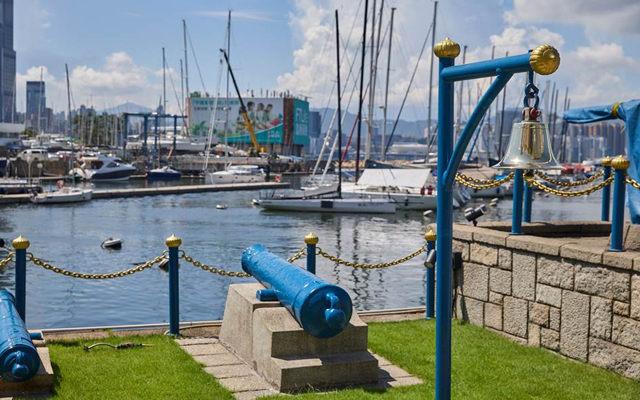
Peter Neto has rejoined Fusion as the general manager of Fusion Resort Phu Quoc, having headed another property under the Vietnamese hospitality group earlier.
In his most recent role, he was the general manager of The Taaras Beach & Spa Resort in Malaysia.
Prior to that, he had also helmed Cassia Cottage Resort on Phu Quoc from 2016 to 2017, Alma Oasis Long Hai (then a Fusion-managed seaside property) near Ho Chi Minh City from 2014 to 2015, and Tanjong Jara Resort and Gaya Island Resort for YTL Hotels in Malaysia between 2011 and 2013.
The hospitality veteran’s career spans over 20 years worldwide, including various countries across Asia with groups such as Rocco Forte Hotels and The Ritz-Carlton.
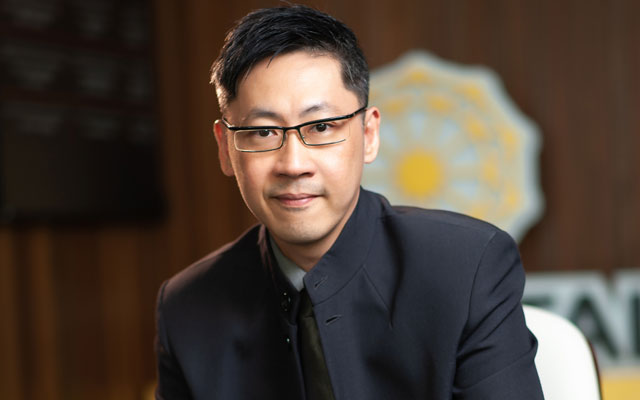
Encore Melaka, the new live art performing theatre at integrated mixed development Impression City by Yong Tai, has appointed TP Long as general manager.
In his new role, Long will oversee the strategic business growth and overall operations of Encore Melaka, including its ticketing sales and global market expansion.
Long has over 20 years of experience in the tourism, hospitality and education industry, spanning international trade and markets including India, Indonesia, Hong Kong, Taiwan, China, Singapore, Thailand, Laos, Saudi Arabia, the UAE & Australia.
Travelport will be acquired by affiliates of Siris Capital Group and Evergreen Coast Capital in an all-cash transaction valued at approximately US$4.4 billion, expected to close in 2Q2019.
Under the terms of the agreement, Siris and Evergreen, the private equity affiliate of Elliott Management Corporation, will acquire all the outstanding common shares of Travelport for US$15.75 per share in cash.
Travelport offices in Cumberland, Georgia
Travelport will become a privately held company upon completion of the transaction by the US-based private equity firms and its common shares will no longer be listed on any public market. Its headquarters will remain in Langley, UK.
In a statement, Travelport said it may actively solicit alternative acquisition proposals from third parties during a “go-shop” period from the date of the agreement through January 23, 2019. It will have the right to terminate the agreement with Siris and Evergreen to enter into a superior proposal subject to the terms and conditions of the agreement.
Doug Steenland, chairman of the board of directors of Travelport, said: “Assisted by external advisers, the board concluded unanimously, after taking into account the ongoing development needs of the business, that entering into this agreement (to be acquired by Siris and Evergreen) represents the best way to maximise value for shareholders.
“It also enables the company to continue its work to position itself for growth in the evolving global travel industry.”
Gordon Wilson, president and CEO of Travelport, commented: “Travelport welcomes this proposed transaction with Siris and Evergreen, who are specialist technology platform investors. Throughout the process, Siris and Evergreen have demonstrated their deep technology expertise… We will continue to develop and invest in our platform to serve the changing needs of our customers in the travel industry. It is very much business as usual at Travelport and we look forward to this new era in the company’s development.”
On the decision to acquire Travelport, Frank Baker, co-founder of Siris Capital, said Travelport has a track record of develop and bringing to market distribution capabilities, technology services, payment solutions and other value-add digital tools for the global travel industry.
Jesse Cohn, partner at Elliott, too highlighted Travelport’s travel technology platform and B2B payments offering (eNett).
The transaction is not subject to any financing condition.
As recent political events in Sri Lanka bring about uncertainties in the tourism sector, the destination is facing further difficulties such as a drop in group bookings and the rapid depreciation of the rupee.
Against expectations that arrivals would drop after president Maithripala Sirisena unceremoniously sacked prime minister Ranil Wickremesinghe on October 26, triggering a constitutional deadlock, tourism numbers in November rose by 16.8 per cent year-on-year to 195,582 guests.
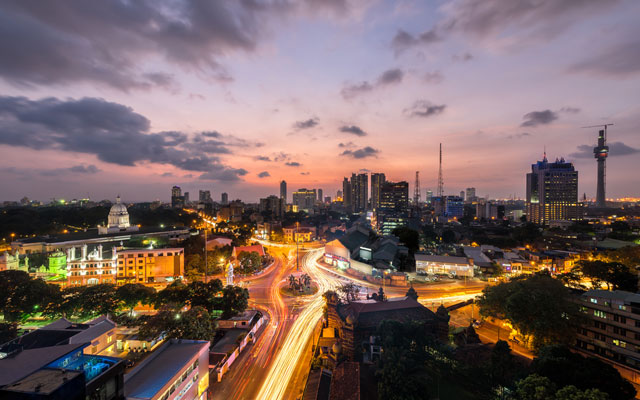
Colombo city at dusk
Arrivals from India, Sri Lanka’s main market, rose by 21.4 per cent while other key markets like the UK (up 61.1 per cent) and Germany (up 89.6 per cent) also performed well, with the exception of China, which recorded a 1.8 per cent drop.
However, this could take a turn in the coming months as hotel managers TTG Asia spoke with observed that the volume of forward bookings and enquiries have dropped.
“We had a few cancellations and forward enquiries have slowed,” said one manager from the hill station of Kandy, a popular destination.
Trevor Rajaratnam, president of the Travel Agents Association of Sri Lanka, said that while the crisis has not impacted FITs and family travel, group travel has not been spared.
Without a tourism minister, the new Sri Lankan tourism marketing campaign under the slogan So Sri Lanka has come to a standstill as calling for tenders and payments of bills have all been delayed.
While the slogan was launched at WTM London last month, the full campaign is to be launched at ITB Berlin in March.
Another headache for the inbound tourism industry is the sharp depreciation of the rupee against the US dollar, down 18 per cent this year, partly due to a strong US economy and weak export earnings in Sri Lanka.
S Paramanathan, managing director, Atlas Lanka Travels, said the overall political situation was introducing instability not only for tourism, but most economic sectors.
Two weeks ago, a court ordered the suspension of the cabinet of minister led by new prime minister Mahinda Rajapaksa pending a petition challenging their appointment, filed by Wickremesinghe and his parliamentary colleagues.
Another case challenging the dissolution of parliament as “constitutional” was completed last Friday with the court verdict due this week.
Pacto DMC’s Bali offices at 141 Jalan Bypass caught fire at around 07.00 yesterday, causing major damages to the second floor of the building.
The fire was believed to have been caused by an electrical failure.
The second floor of the two-storey building hosts the contracting team, common to both Pacto and Bali Prima Holidays.
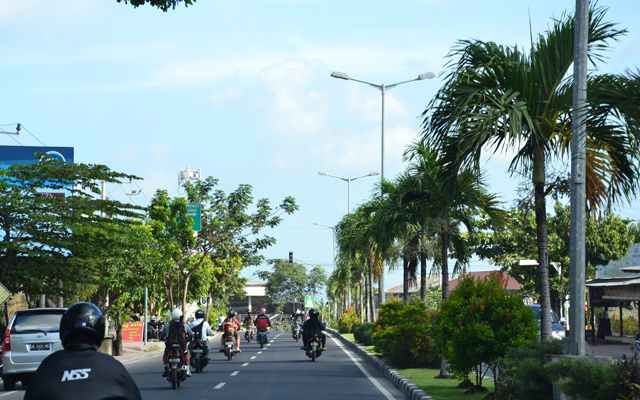
Jalan By Pass Ngurah Rai, Bali
“Eventual structural damage is being assessed jointly with our insurers,” the company said in a statement issued to business partners made available to TTG Asia.
“Given the early hour, only a few staff members were present, and nobody was injured in the accident. The Denpasar firemen’s prompt intervention left the ground floor (fully intact) despite the heavy damage to the second floor,” said the statement.
Pacto COO Umberto Cadamuro, who was in Jakarta at the time of the fire, said crisis response has been swift, and business quickly resumed.
“Within the hour, the operations team was moved to our transportation (department) premises… Within four hours we managed to rent a temporary office in the Madu Sedana complex in Jalan Batursari, capable of housing our 48 staff of Bali Prima Holidays and the contracting team.
“By 16.00, all computers of the ground floor had been relocated to the new premises, while a dedicated team based in Pacto main office was handling reservation and quotations. It was business as usual for our clients.”
He added that all Pacto and Bali Prima Holidays data is safe, being stored in the cloud.
The office’s interim contact numbers are as follow: +62 812 464 35623, +62 812 464 35495, +62 812 464 35796, +62 812 464 35492.
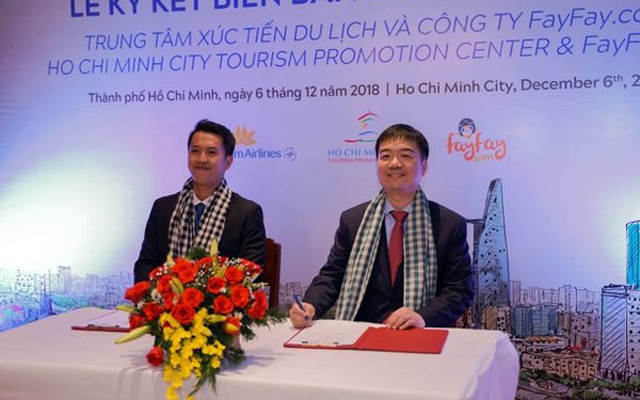
Ho Chi Minh City Promotion Center's Tran Ngoc Dong Quan (left) and Fayfay.com's Kingston Lai at the MoU signing
Hong Kong-based e-commerce travel platform Fayfay.com has signed an MoU with the Ho Chi Minh City Tourism Promotion Center to promote Vietnam tourism, with a special focus on Ho Chi Minh City.
The MoU comes at a strategic time, as visitors from Hong Kong to Vietnam hit a record high in the first 10 months in 2018. It was signed by Tran Ngoc Dong Quan, the vice president of the Ho Chi Minh City Tourism Promotion Center, alongside Kingston Lai and Kelvin Wu, the co-founders of Fayfay.com, in Ho Chi Minh City on December 6.
Ho Chi Minh City Promotion Center’s Tran Ngoc Dong Quan (left) and Fayfay.com’s Kingston Lai at the MoU signing
“We believe strategic joint promotional activities with the Tourism Promotion Center will enable us to leverage our online platform and inspire Hong Kong travellers to visit Ho Chi Minh City,” Wu said in a statement.
Tran Ngoc Dong Quan said that Hong Kong will be the city’s focal market in the coming years, and together with Fayfay.com, he hopes to “make a significant contribution to tourism in Vietnam through joint promotional events, roadshows and media fam trips”.
An e-commerce platform dedicated to Vietnam travel experiences, Fayfay.com offers curated on-the-ground packages and hands-on activities, and also provide travellers with resources such as Visa on Arrival applications, SIM Cards, and private transportation services.
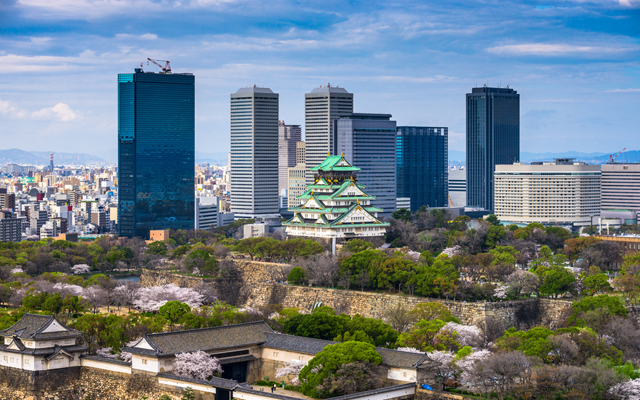
Regional duo city breaks such as those pairing Tokyo and Osaka (pictured) to become popular again
Scott Dunn has released its predictions for luxury travel trends in 2019, including the revival of US destinations and duo-destination breaks among Asia-based travellers.
Duo destination breaks are expected to see an increase in popularity for the Asian market, with Scott Dunn estimating that there will be five long weekends in 2019, allowing travellers to extend what may have previously been a short city weekend getaway.
Regional duo city breaks such as those pairing Tokyo and Osaka (pictured) to become popular among Asians again
The luxury tour operator predicts a resurging interest in regional duo-destination breaks such as Tokyo and Osaka, Phnom Penh and the Koh Rong islands, Yangon and Inle Lake, Ho Chi Minh City and Hoi An, and more.
Scott Dunn further forecasts the revival of US destinations, with the destination more accessible to South-east Asia based travellers following Singapore Airlines’ launch of direct flights to San Francisco and Los Angeles and relaunch of direct flights to New York.
In 2019, Scott Dunn expects multi-generational trips continue to be strong with Asia-based travellers. In the company’s experience, outbound travel from South-east Asia have been selling mainly to Sri Lanka, New Zealand or the Mediterranean in Europe, all destinations that offer premium larger villa style accommodation for groups.
The company has also seen more requests for villa manager, private chef and nannies among Asia-based travellers booking holidays for the extended family.
Meanwhile, in the global market, Scott Dunn foresees the trend of parents or grandparents taking one child at a time on a one-on-one adventure.
Moreover, having seen a tripling in bookings for astro-experiences over the last four years, the tour operator is adding new itineraries of this kind in 2019. These include eclipse tours in Argentina in anticipation of the phenomena expected to envelope part of the region in darkness on July 2, 2019. According to Scott Dunn, Estancia Los Potreros in Cordoba will be the best place to view the total eclipse.
Another new astro-tour to join Scott Dunn’s portfolio is the São Lourenço do Barrocal in Portugal, offering stargazing within the Dark Sky Alqueva Reserve.
Scott Dunn will also be offering more out-of-hours encounters in 2019, providing exclusive access to popular sites and museums including a sunrise picnic at Christ the Redeemer, to the Vatican before it opens to the crowds and late-access to Bangkok’s Reclining Buddha after it shuts to the general public.
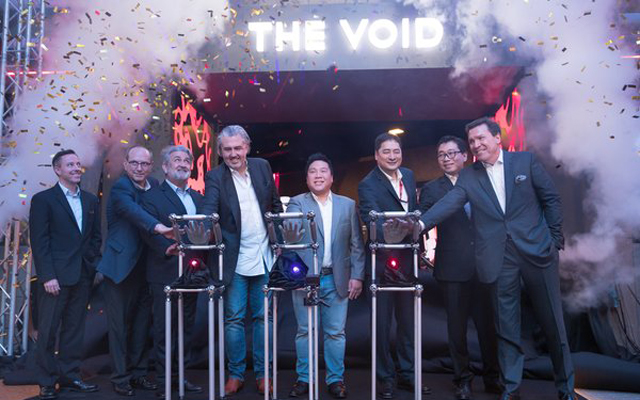
Middle two: Genting Malaysia Berhad's Hui Lim and The Void's Craig Watson celebrating the launch of the Resorts World Genting centre with their respective teams
The Void’s multi-sensory centre has arrived in Malaysia featuring the Star Wars: Secrets of the Empire and the Ralph Breaks VR experiences, marking the brand’s biggest centre out of North America and first in Asia.
The hyper reality experience was last week unveiled within a 650m2 centre in Skytropolis Funland, Resorts World Genting (RWG). Including this latest opening, there are now nine Void centres globally – five in the US, two in Canada and one in Dubai.
Middle two: Genting Malaysia Berhad’s Hui Lim and The Void’s Craig Watson celebrating the launch of the Resorts World Genting centre with their respective teams
Edward Holloway, RWG’s executive vice president of leisure & hospitality, said: “The Void represents the success of technology in extending the frontiers of hyper reality… This is a great leap forward in entertainment for us and we have invested an initial RM10 million (US$2.4 million) to present this level of immersion and interactivity to our visitors in Asia.”
The Void uses proprietary designed equipment to meld the physical and digital worlds through head-mounted displays, backtop computers and haptic vests, which allow sensory effects to be felt from multiple points using haptic feedback.
Star Wars: Secrets of the Empire takes guests through a journey where they feel the impact of blaster bolts, smell smoke from the surrounding environment, push buttons to solve an interactive puzzle to escape enemies, all while coordinating directly with their unit in real time through the blended virtual and physical world.
Ralph Breaks VR is an original hyper-reality experience created by ILMxLAB and The Void in collaboration with Walt Disney Animation Studios, based on their latest hit film Ralph Breaks the Internet.
In this experience, guests are immersed in a storyline where they, as netizens, shoot retro alien spaceships, squash pixel bugs, and fend off hordes of bunnies, and kitties in the Pancake Milkshake Diner while they team up with Ralph and Vanellope in a race to rack up the highest score. It’s all fun and games until an evil security system shows up and threatens to take everyone offline.
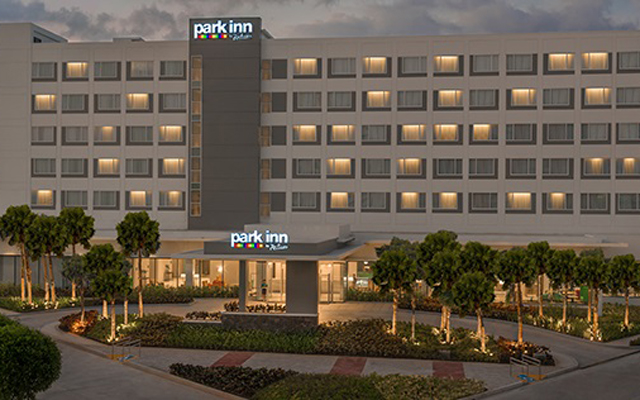
Park Inn by Radisson is continuing to expand its footprint in the Philippines with the signing of a brand-new hotel in Bacolod.
This marks the fifth and latest collaboration between Radisson Hotel Group and SM Hotels and Conventions Corp in the Philippines, following the launch of Park Inn by Radisson properties at SM Cities in Clark, North EDSA (in Metro Manila), Iloilo City and Davao City.
Artist impression of Park Inn by Radisson Clark
Scheduled to open in the third quarter of 2020, Park Inn by Radisson Bacolod will be connected to the SM City Bacolod lifestyle mall and the SMX Convention Center.
Park Inn by Radisson Bacolod will feature 153 rooms, all with free Wi-Fi, two meeting rooms, a business centre, fitness center, all-day dining restaurant and lobby bar.
The capital of Negros Occidental province in the central part of the Philippine archipelago, Bacolod is a regional economic hub and home to more than 500,000 people.
The resort sits on the shores of the Mong Tay peninsula
Since its launch in 2016, the Unbound Collection by Hyatt will next year welcome its first hotel in South-east Asia – the refreshed Nam Nghi Phu Quoc Island.
Nam Nghi Phu Quoc Island will feature 51 villas and 63 guestrooms, four dining outlets, meeting spaces, a swimming pool, kids club, as well as spa and fitness centre.
The resort sits on the shores of the Mong Tay peninsula (photo credit: Facebook/namnghiresort)
This results from an agreement between a Hyatt affiliate and the A&B Group, whom the hotel company is already in collaboration with to launch Hyatt Regency Nha Trang in 2019.
Current properties under The Unbound Collection by Hyatt brand include Jinmao Hotel Lijiang in Lijiang, China; Nish Palas in Istanbul; Carmelo Resort & Spa in Uruguay, Royal Palms Resort and Spa in Phoenix; The Bellevue Hotel in Philadelphia; Holston House in Nashville; Hôtel Martinez in Cannes, France; and the Hôtel du Louvre in Paris.