Singapore-based DMC Tour East has appointed Plateau International as its sales and marketing representative in Europe, a partnership that begins today.
Plateau International has a remit covering all European markets, with the exception of the UK and Scandinavia.
Plateau International will help boost sales and marketing for Europe
Chris Bailey, senior vice president of sales & marketing international of Tour East, expects the partnership to take its Asian products to the European travel trade moving forward.
Tour East has MICE programmes in Singapore, Hong Kong, Laos, Thailand, Malaysia, Indonesia, Vietnam, Cambodia, Philippines, the Myanmar, China, Korea, Taiwan, Japan, Sri Lanka, Maldives, Australia and New Zealand.
Hertz Europe is launching The British Collection in the UK, designed to offer a more premium end-to-end experience.
The new collection features Land Rover and Jaguar luxury cars for rental, British-themed lounges, and a suite of extras – including pick-up options, additional driver and unlimited mileage to enhance the experience.
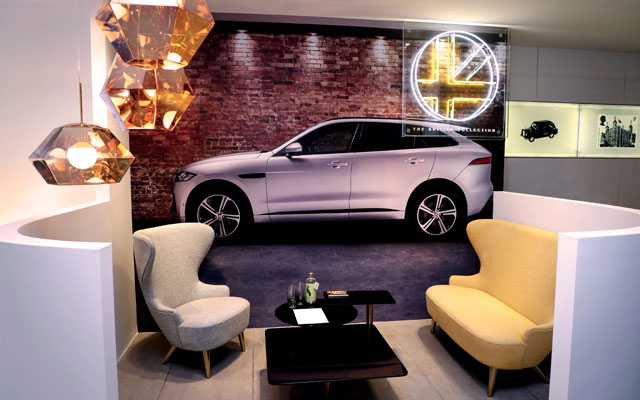
The dedicated lounge decked out with the best of British furnishings in the Hertz office
Models available for hire include the Land Rover Discovery Sport and the Jaguar F Pace, E Pace, XE and XF, from the Hertz locations at London Heathrow Airport, Marble Arch, and Edinburgh Airport – with free additional driver, and unlimited mileage included in the rates.
For added convenience, airport terminal delivery and collection is also part of the package for Heathrow and Edinburgh rentals – and local pick up and drop off for Marble Arch.
The three locations will offer a “dedicated lounge” featuring best of British furnishings from interior design company, Tom Dixon, and enjoy a refreshing ‘botanical’ drink from Seedlip, the world’s first non-alcoholic spirits brand: an ideal choice for nominated drivers and passengers alike.
Hertz has also commissioned London florist, McQueens, to curate a unique in-lounge garden experience, featuring a selection of plants and flowers from across the UK, to recreate the feel of a classic British country garden.
To complete the experience, Hertz worked with British artist Lauren Baker to develop a new neon light installation to launch The British Collection, signifying the union of modern and premium brands from the UK.
The unveiling of The British Collection follows the launch of the premium Selezione Italia range in Italy last year.
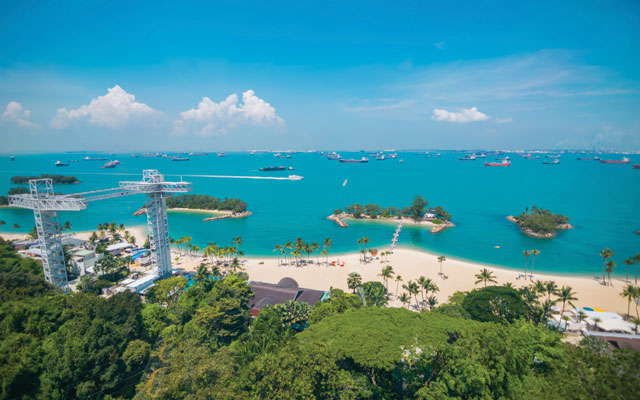
Plans are well underway to reshape and rejuvenate Sentosa
The island of Sentosa will soon welcome a host of developments that are expected increase the destination’s appeal to a wider market segment, particularly families and visitors with mid-tier budgets.
Sentosa Development Corporation’s (SDC) assistant chief executive and chief financial officer, Chin Sak Hin, told TTG Asia that the nearby Pulau Brani will also be “transformed” as part of Sentosa’s rejuvenation blueprint, which will see the former retaining its idyllic charm while new attractions and nature zones are added.
Plans are well underway to reshape and rejuvenate Sentosa
As well, Sentosa will be jointly developed as part of the Greater Southern Waterfront precinct which will bring a host of new attractions, improved transport connectivity, enhancements to its beaches and more MICE facilities, added SDC’s chief marketing officer Lynette Ang.
The SDC is now working closely with other government agencies to draw up development plans for the whole area, which will form part of the Sentosa 2030 masterplan that it is currently developing.
Said Chin: “We always say that we are a world-class destination, but this will bring us to another level.”
Sentosa’s hardware overhaul has already begun, with reburbishment of the island’s main north-south pedestrian thoroughfare set to complete by completed by 2021.
Next month will see Far East Hospitality (FEH) opening the Village Hotel at Sentosa, offering 606 rooms including family rooms, as well as The Outpost Hotel, a new adults-only brand featuring 193 keys and a stylish colonial island concept. Come 3Q2019, the old-school luxury-styled Barracks Hotel will accompany its sibling properties along Artillery Avenue, bringing 40 rooms within a conserved colonial building.
The trio of FEH properties will raise Sentosa’s total room count to 4,200 and make Sentosa more accessible to more tourists with its mid-range prices.
Arthur Kiong, CEO of FEH, said: “Sentosa is a driver of business and is very popular, but it’s interesting that 90 per cent of its 3,200 rooms are in the luxury class. (Our new cluster) caters to families, groups, MICE and niche segments. Visitors may be encouraged to extend their stay in Singapore and Sentosa from one to two days.”
He added that rooms will be “egalitarian” and “priced effectively”, as FEH works on “establishing key partnerships with attractions on Sentosa”.
Inbound tourism players are hopeful that the new properties will entice foreign visitors to extend their stay in Sentosa and Singapore.
Guy Allison, director of procurement, Tour East Holdings, remarked: “Sentosa’s becoming quite a family destination. It’s starting to attract people to stay in Singapore for not just one or two nights, but three or four – maybe even a week. With the new developments, it might even become a destination in itself.”
He also expressed confidence that despite Singapore being a costlier destination compared to its neighbours, the country is “becoming more value-for-money” and more affordable than five years ago.
Meanwhile, to position the island as a holistic destination, SDC has been rolling out a year-round calendar of diverse events to attract visitors, said Chin. These include family-friendly attractions such as Sentosa Sandsation: Marvel Edition and Sentosa GrillFest. The destination recently launched a night light-up event, Island Lights, featuring the first Pikachu Night Parade outside of Japan.
Chin added that SDC is marketing these programmes according to themes such as beach, music, food, sports and festivals to help visitors gain awareness of the island’s suite of offerings.
The SDC has also teamed up with Singapore Tourism Board (STB) for a consumer co-branding campaign Epic Adventures from the Island Beyond, which is aligned with the Passion Made Possible brand to markets such as Indonesia, Thailand and the Philippines.
Lynette Pang, assistant chief executive, marketing group, STB, described: “Through our marketing promotions, we continue to position Sentosa as an exciting island destination, ideal for families with young kids, with plenty of activities and offerings available to visitors from the foodie, explorer, action seeker and socialiser passion tribes.”
Agents will need to meet the minimum sales requirement of 50 million rupiah to receive their three per cent incentive
With rising airfares in Indonesia impacting the local travel and tourism industry, the Indonesian government is strongly urging Indonesian air carriers, especially the state-owned Garuda Indonesia, to drop their airfares immediately.
Luhut Pandjaitan, the coordinating minister for maritime affairs, has given Indonesian airlines an ultimatum to lower their ticket prices on all routes from April 2019.
Indonesian government has ordered domestic airlines to reduce its airfares
The decision was made during a meeting between the Coordinating Ministry for Maritime Affairs, Ministry of Transportation, airlines and tourism stakeholders earlier this week.
“Garuda Indonesia as the national flag carrier must drop its airfares soon, and that is an order,” said Luhut in official meeting notes circulated among industry members.
Budi Karya Sumadi, transportation minister said the government has stepped in to reduce fuel prices for airlines, which had earlier factored high fuel costs into their fare hikes.
“Some airlines have received a special payment scheme to purchase oil. All (Indonesian) regions have requested for airfare cuts.”
He urged Garuda, in particular, to take the lead in bringing down airfares as a state-owned company.
He also ordered the national carrier to provide subclasses on all flight routes. Garuda has closed the economy subclasses on many routes in recent months and published Y class fares, according to some Indonesian ticketing agents.
Responding to the government’s decision, Budijanto Ardiansyah, vice president of Association of the Indonesian Tours and Travel Agencies (ASITA), said the recent airfare hike caught customers off guard.
“Instead of asking airlines to reduce airfares, it is better to urge them to return to selling ticket subclasses, so customers have a choice of prices, from the most expensive to affordable within the (range) set by the government,” he said.
Budijanto opined that price increases were common in business, but the airfare hike in Indonesia was too drastic and ultimately took a toll on the travel industry, with domestic ticket sales down almost 30 per cent in the last couple of months.
Pauline Suharno, secretary general of The Indonesian Travel Agents Association (ASTINDO), added: “(On the one hand), we are fortunate that (the national and presidential) election is coming up. The election campaign to the regions made ticket sales normal. On the other hand, there is a decrease in corporate incentive travel demand. Also, travellers who usually take weekend getaways or short family trips during weekend are declining.”
Pauline is concerned that if high fares and lack of subclass choices persist, sales will be affected in the holiday season. Moreover, with competing destinations carrying out promotions and giving incentive for air tickets, Indonesia’s tourism will suffer greatly as more will opt to travel overseas.
“It’s not only the local travel agents who cry (foul). Other suppliers, such as hotels, amusement parks, museums will bite their fingers. Most sadly, the money that should be spent domestically is lost as Indonesians choose to travel abroad.”
Indonesia Hotel & Restaurant Association (IHRA) reports that hotel occupancy has suffered as a result of pricey air tickets.
Haryadi Sukamdani, chairman of IHRA, said: “Even though it is a low season, compared to last year, hotel occupancy has decreased by between 20 and 40 per cent. Hotels in the regions have gone quiet as demand shift from domestic to international travel.”
IHRA estimates that star-rated hotel occupancy across the country will stay around 55 per cent in 2019, similar to last year’s level. The stagnating figure, according to Hariyadi’s speech at IHRA National Meeting last month, is partly a result of the increase in room supply.
“But if the ticket problem continues, (hotel occupancy) will drop to less than 55 per cent,” he said.
Singapore’s sovereign wealth fund GIC has bought a 25 per cent stake in citizenM for an undisclosed amount, bringing the Dutch hospitality chain’s enterprise value to €2 billion (US$2.3 billion).
Lee Kok Sun, chief investment officer of GIC’s real estate arm, said that citizenM represents an “attractive value proposition of affordable luxury in urban markets”.
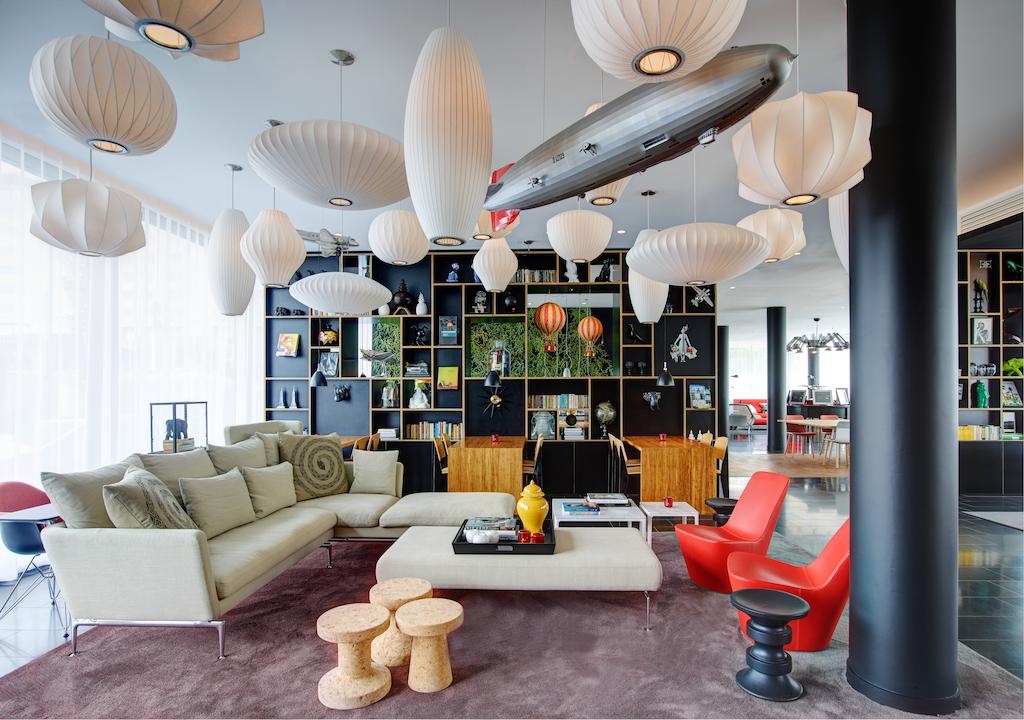
citizenM Paris Charles de Gaulle Airport
GIC is CitizenM’s third investor. Along with its two original shareholders KRC Capital and APG, all three entities have committed to investing a further €750 million of equity for future expansion.
Rattan Chadha, founder & executive chairman of citizenM hotels said: “We are excited to have GIC as our new investor. This move will help strengthen our position as one of the leading affordable luxury brands in the industry.”
Chadha founded CitizenM in 2008 with the first hotel in Amsterdam Schiphol, and the brand targeted short-stay business travellers. There are now more than 15 CitizenM hotels across the world, many of which are located in major business cities such as London, New York and Paris.
According to a Financial Times article, as part of its expansion, CitizenM aims to open another 25 hotels in North America, Asia and Europe by 2020. Most recently, the company opened hotels in Copenhagen and Shanghai and became the first hotel company to list on Airbnb.
The governor of Malacca (centre) at the launch event for World Cup Kabaddi
Inbound travel agencies in Malaysia are looking to capitalise on the World Cup Kabaddi 2019, a sporting event that is expected to bring close to 1,000 participants and foreign supporters from 55 countries to Melaka.
Among the 34 countries competing in Melaka next month, six are from Africa, nine from Europe, three from South America and the remaining from across Asia, Oceania, North and Central America.
Organised by Malaysia Kabaddi Federation and sanctioned by World Kabaddi Federation, the event will run from April 7 to 14 at Temasek Hotel, Melaka, within the heritage Portuguese Settlement in Ujong Pasir.
The governor of Melaka (centre) at the launch event for World Cup Kabaddi (source: https://worldcupkabaddi.org/)
Leong Sang Khin, owner of the 472-room Temasek Hotel, Melaka, said the hotel will run at full occupancy during the World Cup Kabaddi.
For the duration of World Cup Kabaddi 2019, the hotel will host a cultural food festival with participation from local hawker stalls as well as the banqueting team from the hotel. There will also be a local bazaar within the hotel to showcase locally produced items.
Raaj Navaratnaa, general manager, New Asia Holiday Tours & Travel, shared that he will be organising 3D2N pre- and post-event tours covering Melaka, Kuala Lumpur and Penang.
He shared: “To date, more than 500 people have confirmed, from countries such as South America, Africa, Argentina, Mexico, Peru, Egypt, Kenya Tanzania and Nigeria. Many are first timers to Malaysia. Tours will include UNESCO and historical sites in Melaka and Penang, as well as diverse cultural and heritage attractions and food.”
Another inbound agent, Arokia Das Anthony, director at Luxury Tours Malaysia, is working with partners in India to sell packages to the event as well as entrance tickets. Post tours include 3D2N packages to Penang, Langkawi and Resorts World Genting, inclusive of half-day orientation tours and shopping shuttles.
Fliggy Buy channel allows Chinese travellers to browse and shop at overseas merchants before picking their items up in destination
Fliggy, the travel service platform of Alibaba Group, has launched its Fliggy Buy, which allows Chinese travellers to browse and order overseas goods for pick up in-destination.
Merchants on Fliggy Buy will include duty-free and tax-free stores, both overseas and within mainland China, international brands, specialty local stores and an increasing range of shopping destinations.
Fliggy Buy channel will initially include duty-free stores, but there are plans to recruit other merchants
“Duty-free and tax-free stores are our focus during the first phase of rollout, as they are the most visited shopping and consumption venues amongst Chinese outbound tourists. Our next step is to enrich the product categories on Fliggy Buy and recruit more overseas merchants to include high-end luxury brands, household electronics sellers, as well as pharmacy and cosmetics stores, assisting them to reach more Chinese consumers,” Roman Zhu, head of Fliggy Buy.
Furla Hong Kong and Laox of Japan are already on the channel, with more merchants are expected to join.
Chinese travellers using this service can choose from products, including cosmetics, suitcases, bags and alcohol. After selecting a pickup store, as well as inputting their personal information and completing payment, consumers can then pick up their goods at their leisure, Fliggy said in a statement.
One major advantage of this is that it allows travellers more time to explore and experience the destination.
Through Fliggy Buy, Chinese customers can access detailed information and buyers’ reviews about products, presented in their own language, prior to an overseas trip. This helps them understand features and compare prices across different merchants before committing to a purchase.
In addition, the channel allows travellers to check if items they want, especially limited edition goods, are in stock before their trip, pre-order online, and seek online customer service.
“The launch of Fliggy Buy represents our latest move to work with merchants targeting the vast numbers of tourists from China to develop innovative solutions, and offer them targeted customer traffic. Our aim is also to embrace the potential of digital technology and provide a holistic travel experience encompassing food, accommodation, transportation, sightseeing, shopping and entertainment,” Zhu said.
Fliggy’s insights show the average overseas spending of Chinese travellers up nine per cent year-on-year in 2018.
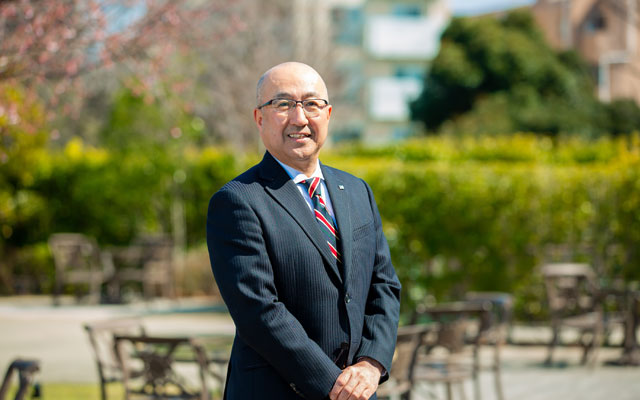
Fujita Kanko has promoted senior managing executive officer Yoshihiro Ise to the new role of president, succeeding Akira Segawa.
During his 36-year tenure with Fujita Kanko, Ise has held a broad range of positions at both corporate offices and hotels.
Yoshihiro Ise
He has managed several key properties as general manager, led multiple corporate initiatives, and developed new properties and brands.
This year, the 64-year-old Fujita Kanko will be announcing its medium-term management plan beginning 2020, where Ise has been tasked with revitalising and strengthening the company’s management and business practices.
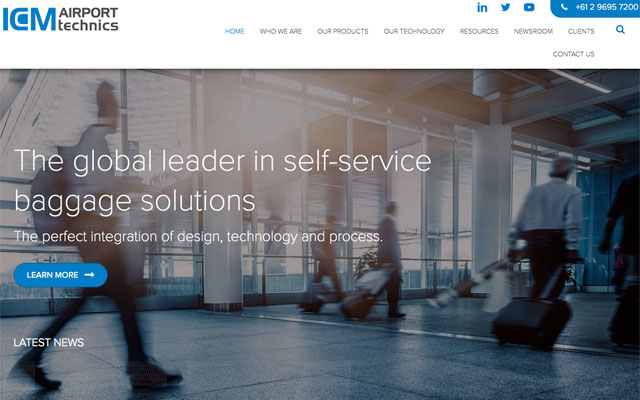
A screenshot from the ICM Airport Technics website
Amadeus will acquire ICM Airport Technics, a Sydney-headquartered provider of passenger automation and self-service bag drop solutions for customers principally in Asia-Pacific and Europe.
Approximately 150 ICM employees are expected to join Amadeus. ICM will become part of Amadeus’ Airport IT division, forming part of its Strategic Growth Businesses customer unit. ICM will retain a local presence close to its customers via offices in both Sydney and Melbourne.
A screenshot from the ICM Airport Technics website
Amadeus and ICM expect the transaction, which will be fully cash-financed, to close in 2Q2019.
Richard Dinkelmann, CEO of ICM, pointed out the synergies between ICM’s self-service and passenger processing solutions and Amadeus’ global reach and complementary product offering.
Following this deal, Amadeus believes it will be in a stronger position to drive future growth in the sector as smart airports continue to invest in improving capacity and efficiency, while seeking one-stop solutions.
Bruno Spada, head of airport IT at Amadeus, said: “Often the passenger experience in airports is not a good one: long queues to check bags in and disparate services and technologies that do not always speak to each other.
“In essence, airports are crying out for open self-service solutions to help take the friction and hassle out of the airport experience for passengers. By combining Amadeus’ and ICM’s software and hardware capabilities, by accelerating and introducing more self-service options, and by using the power of biometrics, this deal announced today will ensure that together we can deliver better journeys for passengers in the future”.
Spada continued: “Importantly, customers continually tell us they need a strategic end-to-end solution in order to answer the evolving operational needs of the airport – they don’t want to have to work with multiple suppliers but rather single providers that can harness the best of the very latest technologies and who ultimately can ‘do it all’: this deal delivers just that.”
Since 2009, ICM has processed more than 75 million bags worldwide and is a global leader in providing airports with either retro-fitted or replacement type Auto Bag Drop (ABD) units. ICM serves around 25 airports. The company is also an early pioneer in biometrics for baggage processing.
Vivanta Kathmandu, Nepal
The Indian Hotels Company has introduced the Vivanta brand in Nepal with the opening of Vivanta Kathmandu. The 110-key property, located in the Jhamsikhel district, offers facilities such as a fitness centre, swimming pool and spa. There are three F&B choices within the property – the pan-Asian restaurant Akari; all-day diner Mynt; and Koko rooftop bar. This is the company’s second property in the Himalayan region after Meghauli Serai, A Taj Safaris Lodge in Chitwan National Park.
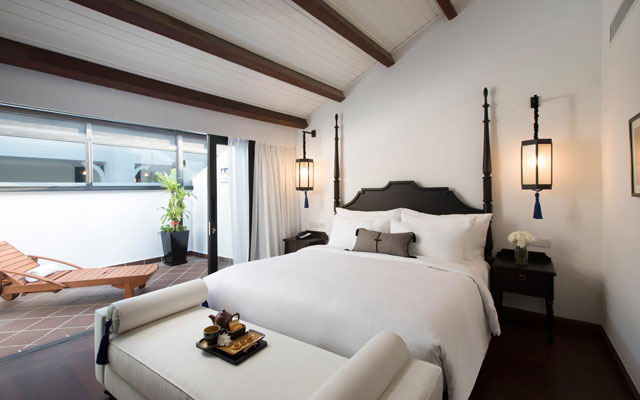
Liu Men Melaka, Malaysia
A boutique property under Tauzia Hotels’ Préférence brand, Liu Men Melaka blends 1930s colonial art deco and Chinese Peranakan culture. The 30-key property features nine different categories of rooms, ranging from the Lekir room that boasts a blackwood herringbone floor, to the attic room named Hang Tuah. The hotel stands along Jalan Tokong, and is within walking distance to Cheng Hoon Teng Temple.
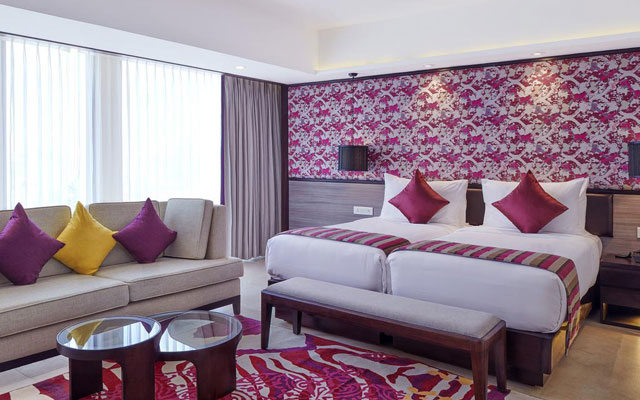
Hyatt Place Changsha Meixihu, China
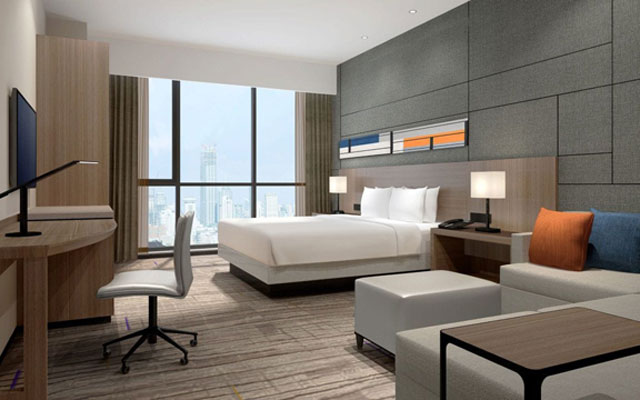
The first Hyatt Place hotel in Changsha – the provincial capital of Hunan in south-central China – has opened with 158 rooms. The hotel offers free Wi-Fi, the Coffee to Cocktails Bar, and the Gallery Menu & Market that serves prepared meals, sandwiches and salads 24/7. Hot breakfast items are also available daily in the Gallery Kitchen. Other amenities include a 24-hour gym, as well as 276m2 of meeting space.
Wyndham Garden Hanoi, Vietnam
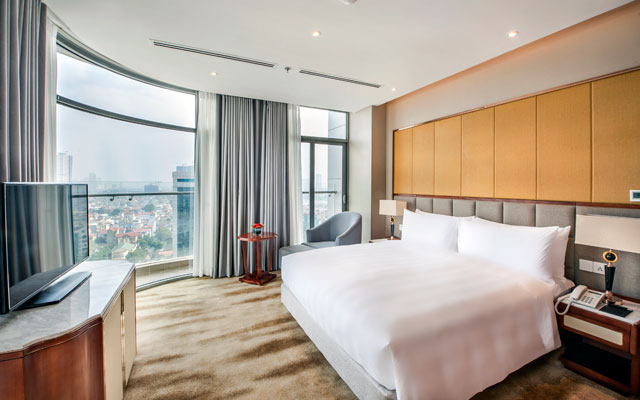
The first Wyndham Garden-branded property in the country offers 112 keys over four room categories. Deluxe rooms start from 28m2, and go up to the 450m2 Presidential Suite. There are two F&B venues on-site, the Silk Garden all-day dining restaurant, and the Twilight Bar on the rooftop. Recreational facilities include a spa, fitness centre, swimming pool, steam room and jacuzzi. The hotel also offers conference and banqueting space, including a 200-guest ballroom, three smaller meeting rooms and a large pre-function area.