TTG Asia
Asia/Singapore Thursday, 2nd April 2026
Page 1189

Trade stands with AirAsia’s petition against PSC hike at klia2

0
AirAsia to remove processing fee in October

The Malaysian travel trade have rallied on AirAsia’s side after the airline recently launched a petition to protest against the additional RM23 (US$5) passenger service charge (PSC) for passengers using klia2 to fly to destinations outside of South-east Asia.

The petition – launched on August 8 on www.change.org with versions available in English, Malay, Chinese and Tamil – has, as at press time, received more than 64,739 supporters.

Malaysia’s travel trade have sided with AirAsia in the airline’s protest against the PSC

When contacted, a source from AirAsia familiar with the campaign said: “The online petition was to give Malaysians an avenue to speak up as well as to create better awareness and to educate the public on the issue at hand.

“For example, many think that the PSC is borne by airlines, so why should passengers be bothered? With this information going out using layman terms, it makes people understand that they are the ones forking out money to pay for the PSC.”

However, the source did not comment on AirAsia’s next course of action once the target of 100,000 signatures is reached.

Following a recent High Court ruling, AirAsia has since August 9 started collecting the increased PSC for klia2 flight bookings, a move that the airline claimed was done “under protest” after it lost a lawsuit against Malaysia Airports Holdings Berhad (MAHB).

Industry players TTG Asia spoke to questioned MAHB’s move to raise the PSC for passengers using klia2, designed and operated as a LCC terminal, to that of full-service KLIA, and warned that the increased PSC may deter travel to the country.

Malaysian Inbound Tourism Association president, Uzaidi Udanis, asked: “I don’t see the logic of charging the same rate between KLIA and klia2 when the latter has lesser facilities. Since the PSC is levelled up to be the same between KLIA and klia2, I wonder if there is a possibility for airlines to choose whether they can fly to or from KLIA?

“If there were such a possibility, then in the long-term, klia2 will lose out. Passengers will prefer to fly from KLIA as the distance to the departure gates is shorter, and the airport has better signages and a classier ambiance.”

He added: “The PSC charges at klia2 should be lowered as that will attract more low-cost foreign airlines to fly to klia2. To further promote tourism, I think the government should look at opening up the management of new airports to the private sector. It will create competition and help make Malaysia a primary hub. Right now, we are a secondary hub to Singapore and Bangkok, which have managed to attract more foreign airlines.”

While there are no known statistics on the impact of the increased PSC on travellers, John Chan, business advisor to ISMA Holidays, is worried that a silent majority of travellers using LCCs “may choose to defer their plans, change course or curtail the length of their travel, especially affinity travellers”.

Presanth Chandra, group CEO, Apollo Conferences, expressed concerns that higher tax rates at klia2 would erode Malaysia’s appeal to foreign travellers, especially for frequent flyers and repeat visitors to the country.

“Malaysia needs to strengthen arrivals into the country. Our current challenge is an oversupply of hotel rooms and tourism products amid lesser demand, (a result of) unnecessary taxes and flight connectivity, among other factors,” stated Chandra.

AirAsia maintains that consumers should not be charged a higher PSC because klia2 was designed and operated as an LCC terminal. The PSC has always been lower at klia2, up until 2018 when the rate was increased and equalised for reasons unknown, it said in a statement.

The PSC rates at klia2 had more than doubled in recent years, increasing from RM32 (until December 31, 2016) to RM50 (from January 1, 2017) and to the current RM73 (from July 1, 2018).

According to Malaysian Aviation Commission, the equalisation of the PSC rate across all airports in Malaysia arose from the need to move towards a more internationally accepted cost-based mechanism for charging PSC, which is consistent with the principles outlined by ICAO, the need to lower the subsidies at klia2, the need to facilitate air traveller welfare, and the fact that PSC rates in Malaysia for both domestic and international departures will remain amongst the lowest regionally and globally.

Effective distribution channels for hotels to stay competitive

0
Phan:

The hotel industry has evolved from providing familiar service and feelings wherever travellers go to providing a unique experience. More boutique hotels are investing in their own branding, offering a “unique experience”, and also encouraging people to book directly with them.

The majority of travellers, more price conscious than brand conscious, however still search for quote/inventory and book through a metasearch service like TripAdvisor, Trivago, or Booking.com, which is why OTAs continue to dominate the booking phase.

Phan: managing a hotel business in this competitive online landscape requires a strong brand recognition

The questions for hoteliers then are, how do our hotels appear higher on the search results of these OTAs? What is the best strategy for distributing booking inventories between direct channels and OTAs? How about pricing? What kind of technology will get us maximum exposure and eye-balls at the price level offered? Is this technology affordable? How do we access and implement it? How about ongoing maintenance?

Whether you’re a company trying to improve SEO, or a YouTuber/content distributor on the Internet wishing to crack its algorithm code to achieve higher exposure, or a hotelier looking to obtain and sustain more retail bookings on OTA platforms, the underlying digital playbook rules remain the same.

Vital to a hotel’s survival and ability to compete digitally are these five hotel distribution pillars: branding on social media, home website, user experience for better conversion rate, metasearch ads, and channel manager.

The first two fall under branding management and the last three are all about managing your hotels’ sales performance on distribution platforms.

OTAs like TripAdvisor are still preferred by travellers, hence it is important to have a strong branding presence there as well

Branding on social media
Even on a crowded OTA platform, your branding presence will help you stand out, so work to increase your brand recognition. Here, the creativity world is your oyster and social media your friends: Hashtag campaign on Instagram with Insta-worthy backdrop; create partnerships with other brands to provide space for experiences: yoga parties, activities and so on; build a distinguishable identity and engage with your audience.

Home website
Pleasing visuals with clean, soothing aesthetics provide guests with a relaxing experience even before their trips, and thus, encourage guests to book. Enhance your tag line slogan or value proposition with high-quality images. Show nearby points of interest – beaches, landmarks, forests, beautiful people relaxing – and make it easy to view prices, room availability, special packages and booking options.

User experience for better conversion rate
Having a great website is fantastic but if people have trouble booking rooms or navigating around the site, then you will lose bookings and business. It’s as simple as that. So run a usability test. A usability test involves engaging real, live test subjects to carry out specific tasks on your website and then evaluating the process from their perspective. You can test whether your website provides enough information to drive the decision to book, and how easily visitors find certain information on your website or complete a task, such as making a booking. Know how well your website is converting browsers into bookers. Put yourself in the customer’s shoes, understand how your customers engage, identify all the traction points from the start of a visit or the end of a booking and eliminate those.

Metasearch ads
Metasearch engines play a crucial role in the guest booking journey today and hotels should take a specific stance on their advertising. A high-quality hotel metasearch platform will continually assess the specific hotel-related needs of both travellers and hoteliers and offer a unique and intuitive experience to both parties. The right property management system (PMS) or central reservation system (CRS) will allow you to connect with the biggest players in the metasearch field and help monitor the key performance metrics of your channels. Know your metrics like the back of your hand, along with which channels are performing well and which are costing you money.

Channel manager
Hotel distribution is a complex ecosystem within travel, much of which can be attributed to the industry’s fragmented ownership and management structure. To bring real efficiency to your hotel’s sales process and to ensure your sales reach their highest potential, you will need a channel manager integrated CRS system – a single system that keeps track of all your room inventory & rates, and updates every sales channel on its own.

Before you rush into this however, there are several factors to consider:

  • Pricing model
    There are many different pricing models and possibly also many hidden costs. Look carefully.
  • PMS Compatibility
    Choose a channel manager that offers a two-way connection that can be synchronised with a PMS system (see above).
  • Easy to use
    Choose a channel manager with a clear and easy interface.
  • Payment system
    Check if the channel manager can be connected with any payment system and how they manage data.
  • Channels
    Consider which OTA you plan to connect to and whether the channel manager can deliver.

Bangkok’s first dusitD2 coming in 2023

0

Dusit International has signed a hotel management agreement with Hong Kong-based Tian Teck Property to operate dusitD2 Samyan Bangkok, which will be the first dusitD2 branded property in Bangkok.

Slated to open in June 2023 on Si Phraya Road, a thoroughfare which runs parallel to Silom and Sathorn Roads in Bangkok’s CBD, the new hotel will boast 181 guest rooms across 23 floors. The hotel facilities will include a lobby bar, a swimming pool with children’s pool, a fitness centre, an all-day dining restaurant and a large meeting room for business travellers.

Dusit International has inked a pact with Tian Teck Property to open its first dusitD2 property in Bangkok come 2023. In attendance at the official signing ceremony held at Dusit International’s corporate headquarters in Bangkok were (from left): Tian Teck Property’s Gerald Cheong; Dusit International’s Chanin Donavanik and Thierry Douin

Dusit-branded hotels currently operating in Bangkok include Dusit Suites Hotel Ratchadamri, Bangkok and Dusit Princess Srinakarin Bangkok. In 2023, Dusit will also open its new flagship Dusit Thani Bangkok as part of Dusit Central Park, a landmark mixed-use project currently being developed opposite Bangkok’s Lumpini Park.

Dusit International’s property portfolio comprises 271 properties (nine owned and 260 managed) operating under six brands across 13 countries. The company has more than 50-Dusit branded hotels in the pipeline and expects to open at least 10 to 12 hotels per year in key destinations from 2019.

New hotels: FCC Angkor, Hotel Soloha, and more

0

FCC Angkor, Cambodia
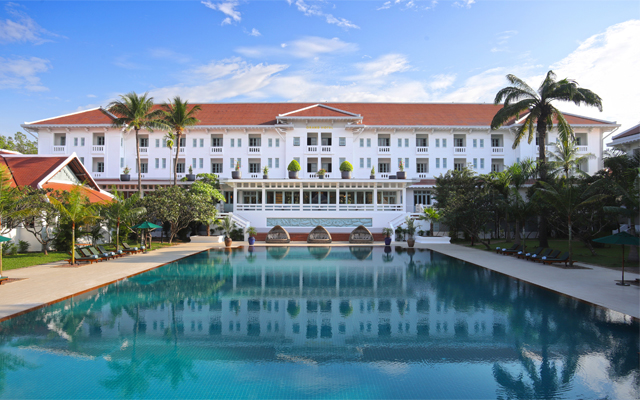
Previously known as the FCC Mansion, Avani Hotels & Resorts has rebranded and renovated the former FCC Mansion in Siem Reap. Located across the Royal Independence Gardens and Royal Residence, FCC Angkor now boasts the restored Mansion restaurant, the Scribe bar, Visaya Spa, and two outdoor saltwater pools. The 80 revamped rooms and suites feature vintage typewriter, rotary dial phones, Khmer carvings and framed front pages of regional newspapers among its decor, plus large windows and terraces that open to greenery.

Hotel Soloha, Singapore
Boasting 45 rooms, Hotel Soloha is the latest art-driven hotel to open in Singapore’s Keong Saik neighbourhood. Artworks featured in the hotel lobby, lift-shaft and rooms were created by local artists Ethrisha Liaw and Danielle Tay. The boutique hotel also boasts four social spaces that can be transformed into event spaces, ranging from the al fresco courtyard for 20 pax, to the indoor F&B space for a maximum of 30. While the hotel also has its own eatery, the Takeshi Noodle Bar, the Keong Saik area is also home to a number of bars, restaurants and shops.

Ritz-Carlton, Xi’an, China
A Ritz-Carlton now stands in Xi’an, the ancient provincial capital of Shaanxi Province in central China. Located in the business centre of the city’s Gao Xin District, the hotel offers 283 guestrooms including 31 suites. Recreational facilities at the hotel include a fitness centre, yoga studio, and The Ritz-Carlton Spa which specialises in treatments steeped in Chinese traditions. There are also five dining experiences on-site, ranging from the Japanese teppanyaki restaurant Tasuro to Jing Xuan Cantonese outlet. Event planners may avail the more than 2,780m2 of space available, which includes several multifunction rooms, as well as a Grand Ballroom for up to 900 guests.

Travelodge Myeongdong Euljiro, South Korea
This select-service hotel in the heart of Seoul’s tourism district offers 224 rooms in three categories – Standard Twin, Superior Twin and Superior Double. Other amenities include The Lodge Restaurant, which guests can use as an all-day social and working space, high-speed complimentary Internet, 24-hour fitness centre and self-service laundromat. This is the group’s second hotel in the South Korean city.

Swiss-Belhotel Serpong, Indonesia
Swiss-Belhotel International has opened an upscale hotel within the Intermark mixed-use development in Serpong, 21km south-west of Jakarta. The 107-room hotel has on-site amenities such as a spa, gym, an outdoor swimming pool, a lounge and bar, and the all-day restaurant Swiss-Café. There are six function spaces, with the largest being a 670m2 ballroom that can hold up to 1,000 guests, and five other meeting rooms that can accommodate between 15 and 100 pax.

Princess Cruises rolls out high-speed Wi-Fi to more ships

0

Princess Cruises will be expanding its high-speed Wi-Fi, MedallionNet, to six more ships come 2020: Grand Princess (February 21), Diamond Princess (March 15), Majestic Princess (April 18), Star Princess (June 12), Enchanted Princess (June 15) and Sapphire Princess (July 27).

Currently, MedallionNet is available on Caribbean Princess, Regal Princess, Royal Princess, Ruby Princess, Coral Princess, Island Princess, Crown Princess and Emerald Princess. Sky Princess will be Wi-Fi-ready for Europe sailings this fall.

Princess Cruises will be rolling out its high-speed Wi-Fi, MedallionNet, to six more ships

MedallionClass Vacations are currently available on Caribbean Princess, Regal Princess, Royal Princess and Crown Princess, with Sky Princess beginning October 12, 2019 when the newest ship in the Princess fleet launches.

The OceanMedallion is a wearable device which delivers personalised service

By end 2020, guests sailing from Singapore on Grand Princess will have the elevated guest experience powered by the OceanMedallion, a wearable device that delivers personalised service to guests.

Miki Travel expresses appreciation to Philippine travel agents

0

Miki Travel’s Asia Division recently treated its Philippine travel agents to a dinner and dance party, as a show of appreciation to local partners for contributing to the 30.6 per cent increase in the turnover of its Asian operations and 48.2 per cent increase in its e-business in 2018.

Miki Travel recently held a dinner and dance to show appreciation for their Philippine travel agents. Miki Travel’s team members present at the D&D were (from left) Katherine Lupisan, Cindy Bartolome, Sharon Soon, Moeschler, Maria Chan and James Timms

Olivier Moeschler, CEO Asia Division at Miki Travel, reported that in 2018, the Japan-based DMC opened new offices in Seoul, India, the US and Canada. With a network of 24 European destinations, he said Miki Travel will continue to expand its European offerings to include the Balkans (including Serbia, Macedonia, Slovenia and Croatia), a large region that has yet to be explored and commercialised.

Evason Ana Mandara welcomes GM

0

Mathias Gerds has been appointed general manager at Evason Ana Mandara in Nha Trang, Vietnam.

Gerds brings a wealth of knowledge to his new position, having spent over 20 years in different roles across luxury city and resort properties across the globe.

The German first began his career in the F&B sector, and then worked in senior roles at hotels such as Anantara Siam Bangkok in Thailand, Kempinski Grand Hotel Heiligendamm in Germany, St Regis Kuala Lumpur in Malaysia, and Relais & Chateaux Palais Coburg in Austria.

Vincent Billiard joins The St Regis Singapore as GM

0

The St Regis Singapore has appointed Vincent Billiard as general manager, an experienced hotelier with over 18 years of hospitality experience in luxury properties.

Prior to his move to Singapore, Billiard held numerous key leadership roles in several Ritz-Carlton hotels, and was involved in the opening of 10 other properties across a portfolio of brands including Ritz-Carlton, Edition and Bvlgari.

Most recently, Billiard led the launch of the Bvlgari Hotel and Residences Shanghai as general manager.

Apple Vacations appoints chief transformation officer

0

Malaysia-based Apple Vacations & Conventions (AVC) has appointed Ngiam Foon as its chief transformation officer.

In this role, he has been tasked with enhancing AVC’s business processes including its digital platforms to ensure a consistent customer experience across all its distribution channels.

Ngiam has 30 years of experience in the travel industry, having served as president and executive council member of the Malaysian Association of Tour and Travel Agents, board member of the Malaysian Promotion Tourism Board, part of the leadership team for a digital marketing collaboration project with China’s Alitrip and Tourism Malaysia, and for a Malaysia-China joint venture sports project under China’s Belt and Road Initiative.

Bayu Buana, Apple Holidays launch JV to target fast-growing India market to Indonesia

0

Bayu Buana Travel Services Indonesia has formed a joint venture company with Sri Lanka-based DMC Apple Holidays to tap the fast-growing Indian market to the country.

The partnership will see Bayu Buana own a 51 per cent stake in Bayu Apple Holidays, the new Bali-based joint venture company which is trading as Apple Holidays Indonesia.

Bayu Buana Travel Services Indonesia has formed a joint venture company with DMC Apple Holidays to tap India’s fast growing tourism market (pictured; from left: Apple Holiday’s Pradeep Kumar, Bayu Buana’s Agustinus Pake Seko)

Agustinus Pake Seko, president director of Bayu Buana Travel Services, said: “The number of arrivals from India to Indonesia has been growing significantly. Data showed that arrivals from India between January and June 2019 were 188,095, the third biggest market to the country after China and Australia. Some 55 per cent of the Indian arrivals are to Bali.”

“India is currently the second biggest outbound market (in the world) after China, with numbers expected to reach 50 million next year. As such, the opportunity to grow the market is huge,” he said.

“We are optimistic that the joint venture will be able to boost arrivals and contribute to achieving the government’s target of 800,000 arrivals by the end of this year.”

India is already the biggest market for Apple Holidays, the inbound company of Sharmila Travels and Tours which also operates in Singapore, Malaysia, Sri Lanka and Maldives.

Forming a joint venture with Apple Holidays – which boasts a strong network across India with its eight offices – is hence a strategic way to grow Indian inbound business into Indonesia, said Agustinus.

And with cases of Indian agents failing to pay for rooms having marred the trust of some Bali hotels in the market, Agustinus believes that Bayu Buana’s long-standing reputation and extensive network as a 47-year-old Indonesian travel company will stand to benefit Apple Holidays’ foray and expansion into Indonesia.

Both companies are not strangers to each another, he added, as Sharmila Travels and Tours and Bayu Buana are the local partners of BCD Travel in their respective countries.

“Pradeep Kumar (Apple Holiday’s managing director) and I are both members of the advisory board of BCD Travel, too,” said Agustinus.

When asked if Apple Holidays Indonesia would form a threat to Bayu Buana Travel Services, which has its own inbound division with operational offices in Bali and Bandung, Agustinus replied: “We will let them compete. Without the new company, our inbound division is facing competition from others anyway.”

“For us, it is like having two vehicles (with the joint venture). If (the Bayu Buana division) loses against Apple Holidays Indonesia, we are not totally at a loss as we still have 51 per cent in the joint venture. We also see this as an opportunity for each party to benchmark against each other to grow,” Agustinus remarked.

In addition, the Indonesia joint venture is also deemed a launch pad to spearhead Bayu Buana’s regional expansion ambitions, Agustinus told TTG Asia.

“We have been planning to go regional for some time, but that does not mean that we have to do it alone, and for us it does not matter if we do not flag our own brand out there as long as we (partly) own the company,” he said.

Meanwhile, Bayu Buana aims to acquire around 50 per cent shares of Apple Holidays, which is currently in the process of moving its headquarters to Singapore.