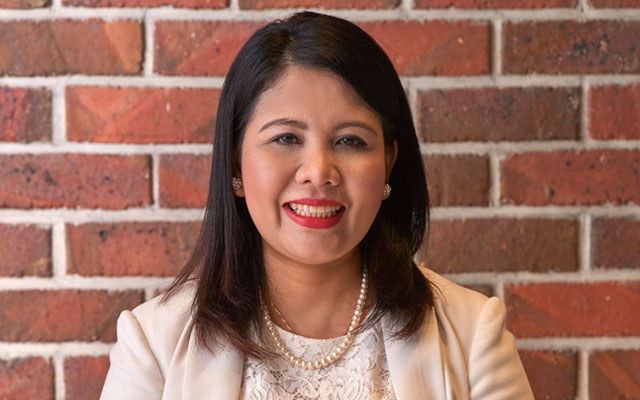
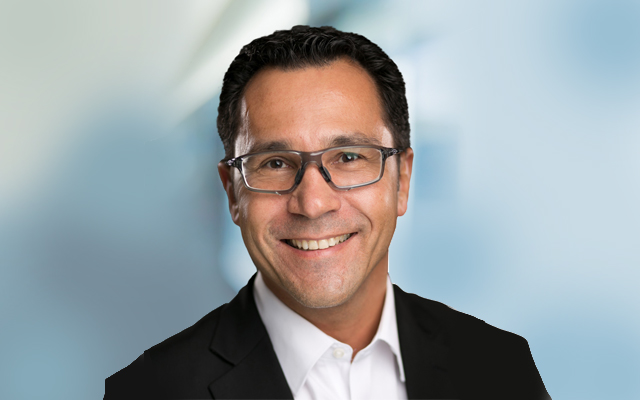
Rosidah Abdullah has been appointed director of sales & marketing at the soon-to-open Four Points by Sheraton Kuala Lumpur, Chinatown in Malaysia.
In her new role, Abdullah will head the hotel’s sales, marketing, events, revenue management and reservations divisions, while developing business strategies that drive growth, maximising all revenue streams and exceeding business goals of the hotel.
With 15 years of sales and client management experience in the hotel industry, Abdullah previously served as director of sales at a sister property of the Marriott group in Malaysia, The Westin Kuala Lumpur.
Prior to that, Abdullah was assistant director of sales at Grand Millennium Hotel Kuala Lumpur under the Millennium Hotel and Resorts. She was also the senior sales manager of Hilton Worldwide Malaysia’s national sales office for four years where she oversaw key accounts for six Hilton hotels nationwide.
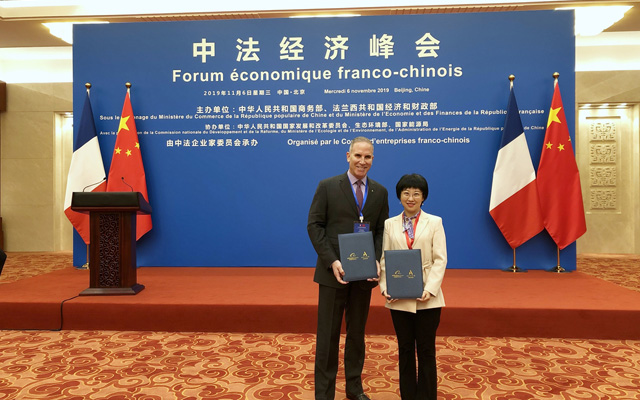
French hospitality group Accor and China’s retail giant Alibaba Group have sealed a strategic collaboration to develop a series of digital applications and loyalty programmes to improve the consumer and traveller experience over the next five years.
The strategic collaboration will enable Accor to gain access to Alibaba’s nearly 700 million consumers across its China retail marketplaces. Alibaba’s travel arm Fliggy will allow consumers to book Accor hotels, access catering services, book entertainment and take advantage of other lifestyle services, while payments can be made using Alipay, a digital payment service operated by Alibaba affiliate Ant Financial.
Accor’s Gary Rosen and Alibaba Group’s Angel Zhao seals partnership to develop a series of digital applications and loyalty programmes
Already, Accor has developed Haoke (which means “welcome” in Chinese), a certification programme that ensures Accor’s hotels are ready to welcome Chinese guests by incorporating Chinese-language, Chinese dishes on menus, Chinese-speaking staff, and other services and payment systems that meet the needs of Chinese travellers.
The collaboration between Accor and Alibaba will be instrumental to the roll-out of Accor’s soon-to-be-launched lifestyle loyalty programme, ALL – Accor Live Limitless, according to Accor leaders. Alibaba will make the programme’s services and benefits available to its massive consumer base, leveraging its ecosystem, consumer insights and digital marketing capabilities, accelerating the roll-out of ALL in China and around the world.
Sebastien Bazin, Accor’s chairman & CEO, said: “China’s importance to the world’s tourism industry and this key collaboration with Alibaba will symbolically strengthen economic ties between China and France, while giving Chinese travelers access to exciting events and benefits through ALL – Accor Live Limitless.”
“ALL forms an integral part of Accor’s aggressive and visionary digital strategy leveraging the growing Chinese travel market,” said Gary Rosen, chairman and COO, Accor Greater China. “This is a milestone collaboration endorsed by two forward-looking nations, and extremely significant for Accor.”
Daniel Zhang, executive chairman and CEO of Alibaba Group, said: “Over the past 20 years, Alibaba has formed two flywheels with one focused on consumers and the other on enterprises. Our consumer-facing business facilitates and stimulates consumption, of which travel consumption is an important segment. Through the Alibaba Business Operating System, we enable tourism industry partners such as Accor to fully digitise their business operations, from sales to marketing, brand building to member management and service innovations.”
The announcement was made at a special ceremony in Beijing during the 2019 China International Import Expo, of which Accor was among the delegation of French companies accompanying French president Emmanuel Macron on a state visit to China.
China-based OTA Trip.com Group (formerly Ctrip) has entered into a strategic partnership with TripAdvisor to expand its global footprint, including a joint venture, global content agreements and a governance agreement.
Ctrip Investment Holding, a subsidiary of Trip.com Group, has entered into a joint venture with TripAdvisor’s subsidiary, TripAdvisor Singapore. Trip.com Group will be the majority shareholder of the new joint venture entity and will contribute cash and market expertise. TripAdvisor will own 40 per cent of the joint venture and will contribute a long-term exclusive brand and content license and other assets of its China business.
Trip.com forges partnership with TripAdvisor to expand global reach
The joint venture, which will operate globally as TripAdvisor China, will see both companies sharing inventories in travel categories at the joint venture level.
As well, Trip.com Group and TripAdvisor have entered into global content agreements providing for distribution of select TripAdvisor content on major Trip.com Group brands, including Trip.com, Ctrip, Skyscanner and Qunar.
Furthermore, both parties have entered into a governance agreement which will give Trip.com Group a nomination right for one TripAdvisor board seat after approval from relevant regulatory authorities. To maintain the board seat, Trip.com Group shall acquire up to US$7 million TripAdvisor shares or TripAdvisor shares valued at US$317.6 million through open market transactions within one year following regulatory approvals.
TripAdvisor and its controlling shareholder Liberty TripAdvisor Holdings (LTRP) have separately agreed to provide Trip.com Group with certain information rights with respect to potential transactions for the sale of TripAdvisor Class B shares or LTRP Series B shares, respectively.
The broad strategic partnership pairs Trip.com Group’s market leadership in travel booking capabilities and China travel market expertise with TripAdvisor’s unique brand strength, rich global user-generated content, and points-of-interest database, as well as best-in-class in-destination supply. The strategic partnership marks an important step for Trip.com Group to realise its globalisation vision with greater quality services, and for TripAdvisor to further strengthen its position as a global travel leader.
“China is one of the largest and fastest growing travel markets in the world. Trip.com Group, with its established brands and travel market leadership, is the perfect partner to help us achieve our long-term goals in the region,” said Stephen Kaufer, president and CEO, TripAdvisor.
Jane Sun, CEO of Trip.com Group, said: “As we expand our footprint overseas, it is important that we offer not only seamless access to global travel inventory, but also quality reviews, opinions and pictures generated by other fellow travellers. We are very excited about this strategic partnership, which will undoubtedly further enhance the travel experience for our customers worldwide.”
Short-term home rental company Airbnb said on Wednesday it will introduce new safety measures in the wake of a fatal shooting at an Airbnb rental in Orinda, California last week, including a 24/7 hotline and review of “high risk reservations”, according to a Reuters report.
Airbnb co-founder and CEO Brian Chesky was quoted by the report as saying at a conference that the company would plough a “significant investment” in the new measures. He also added that it would not have an impact on plans to go public next year.
Airbnb to step up security measures in wake of fatal shooting
Following last week’s fatal shooting incident, where five people were killed at a massive Halloween party inside a rental home, Airbnb has banned “party houses”, according to the report.
In a Twitter post, Chesky said that Airbnb will broaden manual screening of high-risk reservations, first to North America and then globally next year.
The company will also launch a 24/7 hotline for neighbours of Airbnb properties to report concerns anytime, anywhere in the world, he said in another Twitter post.
Chesky also tweeted that Airbnb will be offering a “guest guarantee” from December 15 so customers dissatisfied with the accuracy standards of a listing can rebook at another property or get a full refund.
The company will also begin a verification process for all seven million listings on its platform in bid to regain customer trust, with the objective of verifying all listings by December 15, 2020.
Hong Kong-based Artyzen Hospitality Group has unveiled its ambitious expansion plans with the announcement of seven pipeline projects across mainland China and Singapore by 2023, while plans to roll out its forth hotel brand are already in the works.
Since its inception in 2013, the group has been expanding and currently operates six hotels. It will be launching seven properties under the Artyzen Hotel and Artyzen Habitat brands in Singapore and across mainland China, including Qiantan Shanghai, Lingang Shanghai, Taopu Smart City Shanghai and Hengqin Island in Zhuhai, over the next two to three years.
Artyzen hotels
1 of 3
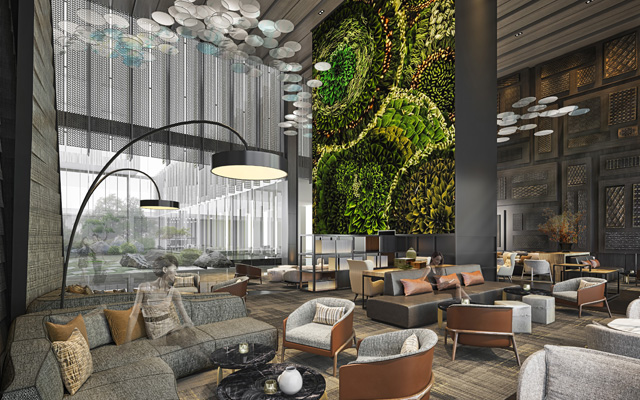
Artyzen Lingang Shanghai Lobby Lounge
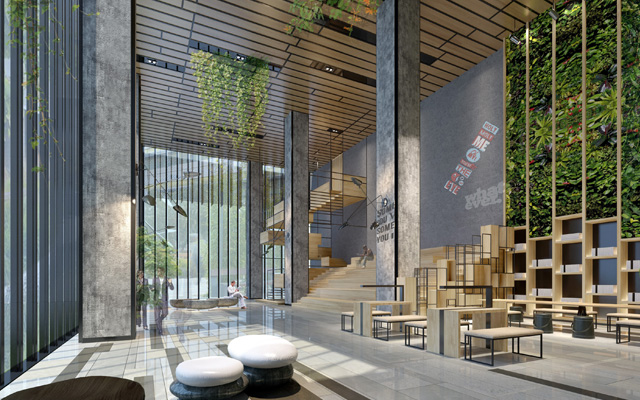
Artyzen Habitat Lingang Shanghai Townsquare
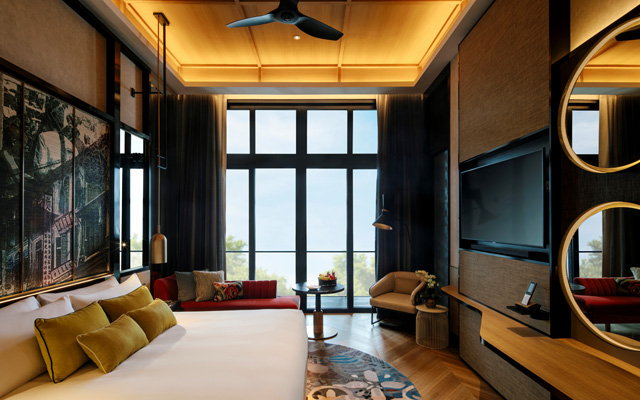
Artyzen Cuscaden Singapore Guest Room
Artyzen has also partnered Lujiazui Group to build two integrated developments, which will include residential properties, convention centres, cultural centres and hotels.
Meanwhile, the hotel group has plans to introduce another new lifestyle brand before December 2019. Artyzen Hospitality Group’s president Robbert van der Maas told TTG Asia that this select service brand will offer limited service and relatively small rooms. The first property will debut at a new CBD in Shanghai with about 220 rooms. The deal is still under non-disclosure agreement and will mark the launch of its fourth brand.
The company’s current portfolio of brands are luxury brand Zitan, Artyzen Hotels and Resorts, and Artyzen Habitat.
However, Zitan hasn’t been rolled out in markets yet. Van der Maas explained: “As a young hotel company launched six years ago, we are still developing and looking for the right opportunities and locations for Zitan. The first Zitan may take another two to three years to launch as we are actively looking at destinations like London, Paris and New York.
“For our Artyzen brands, we don’t want commodified experiences or duplicate products so we curate and celebrate the differences between our hotels within the same brand. In fact, these brands can also co-exist together, so we adopt a dual-brand execution. You might have two hotel brands under the same site and cater for two different markets,” he said.
Apart from this, the group also focuses on developing a cluster of hotels in one country at a time. The first cluster is located in Macau – Grand Coloane Resort and Grand Lapa.
“We’re now building a hotel on the border of Hengqin Island in Zhuhai which will mark our third hotel in this cluster. In the meantime, discussions about opening a property in Zhuhai are underway and we are also looking at Hong Kong,” Van der Maas said.
“Next, we are planning to expand into the Greater Bay Area, i.e. Dongguan and Guangzhou. Likewise for Shanghai, we are looking at Wuxi, Nanjing and Suzhou to start building the first cluster of our properties.”
Van der Maas added that the company will be developing two hotels in Qiantan – Artyzen Habitat and Artyzen New Bund 31, which is a multi-purpose destination.
Artyzen Hospitality Group is also undertaking its first hotel in Singapore with the development of Artyzen Cuscaden Singapore in the Orchard neighbourhood.
The group also has longer-term plans to grow its global footprint, and is exploring opportunities in Australia, Japan, the Maldives, South-east Asia and Portugal, according to van der Maas.
Artyzen Hospitality Group will be operating 13 hotels, with close to 3,000 rooms in Beijing, Shanghai, Singapore, Macau and Hawaii, including those under construction.
Update: The story headline earlier stated that the Artyzen Hospitality Group will be bringing the Habitat brand to Singapore. It should be a Artyzen Hotels and Resort brand. The headline has been updated to reflect the group’s expansion in Asia-Pacific.
Frank Trampert has been appointed as managing director & CCO, EMEA & APAC, Sabre Hospitality Solutions.
In this role, Trampert will be responsible for the financial performance, customer engagement and overall growth of Sabre Hospitality Solutions across Europe, the Middle East, Africa and Asia-Pacific.
Having joined Sabre in January 2017 to lead the company’s Asia-Pacific region, Trampert first oversaw the growth of Sabre Hospitality Solutions within the region, until he took on an interim role earlier this year to include EMEA within the territories he was accountable for.
Prior to joining Sabre, Trampert held numerous roles within the industry, including leadership positions with Wyndham Hotel Group in Hong Kong, Carlson Hotels across four continents, Brand Karma in Singapore, and most recently, as the CEO for Tune Hotel Group in Malaysia.
Wyndham Hotels & Resorts will be launching TRYP by Wyndham, its urban lifestyle brand, in Melbourne.
Set to open in March 2021, the 173-key TRYP by Wyndham Carlton Melbourne will feature a café-style restaurant, a rooftop bar, a modern fitness centre, communal work areas, meeting rooms and a business zone.
TRYP by Wyndham Carlton Melbourne
1 of 4
The new Melbourne hotel, which is being developed by Manors Gate Group, forms part of a strategic expansion of the TRYP by Wyndham brand in Australia. This is the fifth location announced in the country, following TRYP by Wyndham Fortitude Valley in Brisbane, which is already open, and three additional properties in the pipeline: TRYP by Wyndham North Lakes and TRYP by Wyndham Southport in Queensland, and TRYP by Wyndham Pulteney Street Adelaide in South Australia.
TRYP by Wyndham Carlton Melbourne will be managed by Resort Management by Wyndham, a subsidiary of Wyndham Destinations which currently manages 63 properties across Australia, New Zealand, Fiji, Thailand, Indonesia, Japan and Europe.
The Standard, Huruvalhi Maldives Standard International has opened its first Asia-Pacific property in the Maldives, following its London debut. The Standard, Huruvalhi Maldives, nestled between the Raa and Baa Atolls, is home to 115 private pool villas, each featuring its own private lounge deck and plunge pool. Facilities include a spa with nine treatment rooms and a communal hammam; an overwater nightclub; and six F&B offerings ranging from a beachfront BBQ shack to Maldivian cuisine featuring ingredients taken from the island farm. Activities include diving and snorkelling at the house reef, while boat excursions and night fishing can also be arranged.
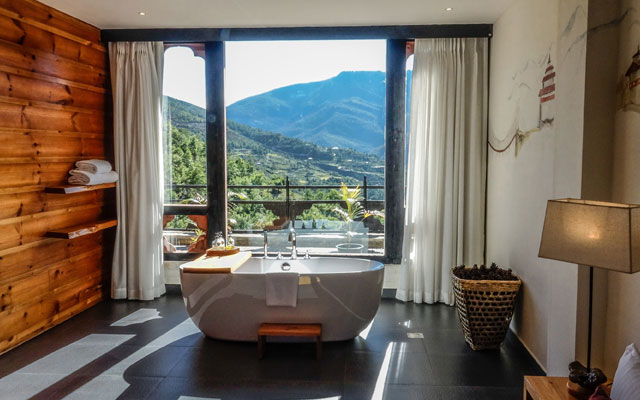
The Postcard Dewa Thimphu, Bhutan
Located a 20-minute drive from Bhutan’s capital city and nestled in a forest is this 15-key mountain hideout. The hotel’s 13 rooms and two suites range from 92m2 to 185m2 – the largest being The Raidak Suite, complete with a private garden, terrace and dining gazebo. Amenities on-site include a restaurant, spa, gym, as well as a temperature-controlled swimming pool. Guests can partake in activities such as yoga, hike to ancient Buddhist temples, tour the numerous sacred sites, or take in the pristine views of the Khasadrapchu Valley and Raidak River.
Seda Lio, Philippines
This property stands along a 4km-long stretch of beach within the Lio Tourism Estate in El Nido, Palawan. Rooms start from 45m2 in size, and all 153 rooms feature a balcony. Amenities on-site include a two level infinity pool, children’s playroom and outdoor play area poolside cabanas, gym, spa with eight treatment rooms, and all-day restaurant. Function rooms at the hotel can accommodate up to 300 pax, plus El Nido’s only indoor ballroom that can seat 150 people.
Monopoly Mansion by Sirocco, Malaysia
The first Monopoly-themed hotel in the world has opened with 290 guestrooms, spread across 14 storeys, in Kuala Lumpur. Features and subtle hints of the board game and the Great Gatsby era (when the idea for Monopoly came about) will be incorporated into the aesthetics of the hotel. For instance, room keycards have been designed like the property cards from the game. Facilities include a rooftop pool, lounge, several restaurants, gym, spa, kids’ playground, alongside a range of meeting spaces including a pillarless Grand Sky Ballroom.
Aerotel Beijing, China
The two-storey hotel is located in the north-east pier of Beijing Daxing International Airport, spanning more than 9,000m2 and offering 215 guestrooms. Other facilities within Aerotel Beijing include a fitness corner, game room with billiard table, and the library lounge/restaurant which offers an international buffet and a la carte menu.
As the flagship property and a first for Aerotel, the hotel also houses two meeting rooms – Xijin House and Jibei House, and VIP room Guji House. Equipped with an audio-visual system, the facilities can accommodate meetings, private dinners and intimate gatherings for up to 36 guests.
Come November 11, 2019, Malaysia-based Sunway Hotels & Resorts will be joining the biggest global cyber sale, with 98 per cent off on the first night of stay.
The 11.11 Sunway-cation Sale is expected to offer room rates from as low as RM10 (US$2.30) on the first night at participating Sunway Hotels & Resorts in Malaysia, Cambodia and Vietnam, according to the hotel group.
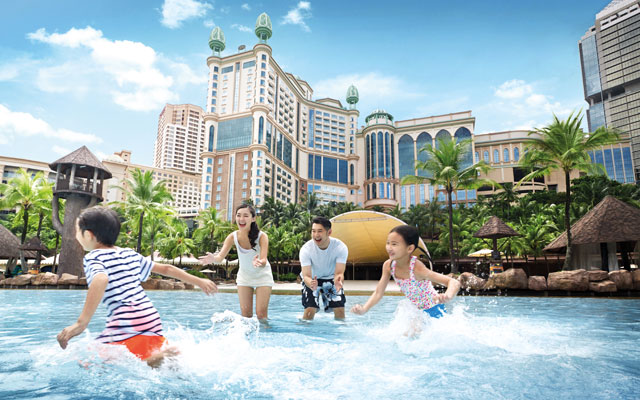
Family fun at Sunway Lagoon
Participating hotels include Sunway Resort Hotel & Spa, Sunway Pyramid Hotel, Sunway Clio Hotel in Sunway City Kuala Lumpur, Sunway Putra Hotel and Sunway Velocity Hotel in Kuala Lumpur city centre, Sunway Hotel Georgetown and Sunway Hotel Seberang Jaya in Penang, Sunway Hotel Phnom Penh and Sunway Hotel Hanoi in Indochina.
The 11.11 Sunway-cation Sale is applicable for stays between November 12, 2019 to June 30, 2020 with a minimum of three days, two nights stay at its hotels in Malaysia, Cambodia and Vietnam when booked directly at www.sunwayhotels.com from 00.00 to 23.59 on November 11, 2019. Terms & conditions apply.
Sandy Ho, country manager China & Hong Kong, Buffalo Tours
Marciano C Ragaza III, president, Travel Enterprise Corp Philippines
Hui Juan Lim, co-founder and COO, Quotient TravelPlanner Singapore
Charlotte Harris, director, Charlotte Travel Hong Kong
Audrey Marc, deputy general manager, Asia World Indonesia
Arokia Das Anthony, director, Luxury Tours Malaysia
Ally Bhoonee, executive director, World Avenues Malaysia
TTG Asia: What key changes are you seeing for hospitality brands? Are brands still relevant? Lim: Chain hotels felt quite sterile and were geared towards efficiency when we started out 12 years ago. However, in the last few years, we’ve seen big brands starting to soften and incorporate properties with a sense of place.
They’re no longer in glassy buildings, but can be housed in historical buildings. These hotels can now create a measured experience for travellers; they have good service; and they know how to operate a hotel well. Big brands can now have a boutique feel, and they know travellers are looking for a variety of experiences, not just the singular feeling of staying in a Hyatt or Westin. With boutique hotels, there is the risk of having to deal with weak booking and payment mechanisms.
Harris: With more hotels consolidating and brands merging under one umbrella, we are seeing an even stronger sense of consistency among hotels under the same brand, leading to an increase in brand loyalty.
Ho: Customers are focusing less on brands but rather on good service standards and price value. Travellers are also seeking options for smaller, independent accommodation with less facilities and F&B outlets. Brands may still be relevant to corporate travellers and luxury clients, but leisure travellers are now more attracted to residential-style accommodation that are well connected to shopping areas and restaurants.
Marc: Main hotel chains nowadays prefer to invest in acquisitions and huge marketing campaigns instead of developing new products and services for their customers. Their focus seems to be on expanding faster globally and in some cases at the expense of guests’ demand for good service, amenities and comfort.
Anthony: Brands will become more relevant. It is the brands that will ride out Airbnb’s rapid expansion. Branded hotels have strong brand loyalty and this will remain. While a small percentage of market share may be lost to Airbnb and other short term accommodation services, the majority of travellers are still keen on staying in branded properties they are familiar with. Brands are also relevant for well-heeled travellers who seek good service, comfort, familiarity of brand and a personal touch.
Bhoonee: Brands will still remain relevant to people with status as they have always been brand conscious. Also with brands, travellers can expect a consistent level of service at the hotel regardless of which part of the world they are in. There are no surprises for the customer. Brands also offer loyalty reward programmes and this is an added value.
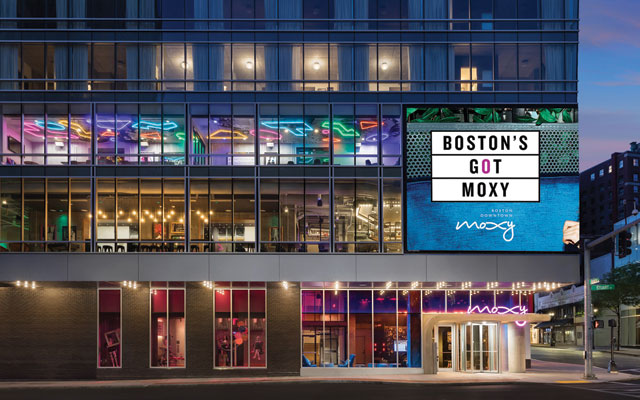
Moxy Boston Downtown
TTG Asia: What hotel branding trends and preferences do you notice among your clients, especially younger travellers who are said to be more brand agnostic? Marc: The younger generation is looking for new and unique experiences (which explains the growing trend for boutique hotels over standardised hotel chains). The power of Instagram also emphasises the demand for independent hotels and villas; millennials crave inclusion and recognition from their online community, so they tend to gravitate towards places with social media credibility which also explains the rise in popularity of villa rentals.
Harris: The current trend among younger travellers is lifestyle travel and we are seeing many hotel brands edging towards this by combining high-quality services and personalised amenities and touches. With Hyatt developing the Andaz brand and Marriott with Edition, millennials are able to stay loyal to a larger umbrella brand, yet find a concept that meets their personalities and requirements.
Bhoonee: Millennials often seek hotels that offer wellness facilities such as spa, gym, rooftop bar and restaurants offering healthy cuisines due to a growing wave of health consciousness. Location is also important – hotels that are close to popular shopping districts and spots, or near the beach tend be more attractive to them. Millennials are willing to pay more for the location of hotels that meet their requirements as compared with their counterparts a decade ago who tended to be more careful with their spending, and just went for the basics.
Ho: Younger travellers want an environment focused on wellness, offering simple yet stylish comforts, and at a good price point. Personalised services are growing in demand. To tap into the young travellers market, direct online marketing and social media channels are the way to go.
Lim: We have younger clients who grew up staying at big hotel chains with their parents, and they would ask us to book them in those hotels. But we also have both young and old guests who are willing to try boutique brands.
Anthony: India and regional markets are cost-conscious. Even the well-to-do would rather stay in a three- or four-star property or local brand rather than in a five-star branded accommodation. They don’t mind staying a little bit out of the central area if it gives them some savings and which can then be spent on other things like entertainment and shopping.
Millennial travellers see the hotel as just a place to stay. They are not looking to have the full hotel experience.
In the past, staying in a branded property was part of the bragging rights. Today, travellers use social media to share or brag about their experiences.
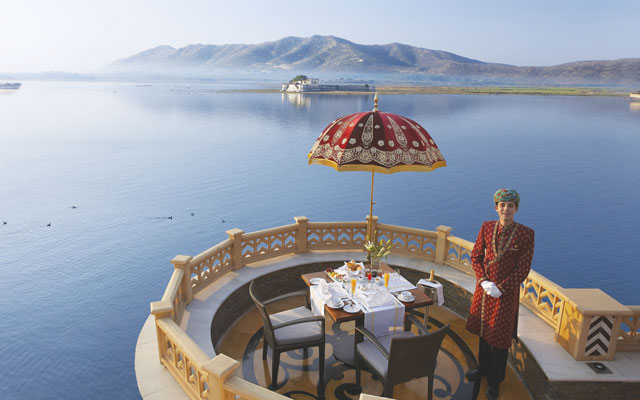
The Leela Palace Udaipur
TTG Asia: What benefits and trade-offs have come with the spate of boutique brand buyouts by bigger chains? How does it impact your customers and you as a travel expert? Marc: Greater access to powerful marketing funds has been a major benefit, along with bigger customer databases and improved efficiency in booking systems and websites. But, of course, all these have come at a cost. The trade-offs would be a proportionate tightening of rules and regulations, combined with a lack of flexibility in terms of sales, distribution and marketing.
As a DMC, we are facing more difficulties with regard to contracting and special deals. Big hotel chains are growing increasingly intransigent in promoting the best rates on their own websites rather than through a more flexible independent.
Ho: The concern will be that pricing structures will be affected as bigger hotel companies are likely to demand control on yield with less competition. We can see commissions getting less down the line when dealing with big hotel companies versus boutique hotels.
Also, some global brand hotels are allowing commissions only if clients pay BAR rates directly at the hotel which adds to the challenge of working with them. Global brand hotels should expect to see a significant drop in sales over time.
Harris: We see benefits of cross-selling within different hotels that fall under a single brand. Clients are keen to chase points and utilise them whenever they can. If they are able to do this at different hotels, then we’re only seeing positive feedback from our clients.
Ragaza III: Boutique hotels usually shunned by travellers who are more comfortable staying with branded hotels will gain more acceptance with these buyouts. As a travel agent, I too will be more confident recommending such boutique hotels. But for the adventurous and bargain hunters, that won’t matter.
TTG Asia: What future do you see for smaller independent brands? Lim: There is always space for everything, even smaller hotels. Every client is different and there are always going to be travellers who want to stay in a smaller, independent property. This is especially the case in Japan, where a lot of family-run ryokans operate very smoothly and are very popular.
Bhoonee: There will still be a big market for boutique hotels or independent brands. Well-to-do Malaysian travellers like niche boutique hotel experiences that offer personalised services. They stay away from big hotels and crowded all-day dining experiences. Independent hotels that offer unique designs or experiences and an atmosphere unlike a large commercial hotel tend to be of greater interest to Malaysians. The management of the hotel is of no importance to clients.
Anthony: It will get harder for boutique hotels or smaller independent brands to survive as the majority of business is driven online. The big chains will win because they have marketing budgets that run in the millions and billions.
In my opinion, smaller hotels with small budgets will die because they cannot compete. Existing independently managed hotels that have been around for a decade or more provide good service, but unfortunately the newer ones seem to only provide lip service to what they promise.
Ragaza III: Eventually, as a new generation of frequent travellers become savvier in choosing and staying in lesser known hotels or brands, these independent brands will be mainstream too. Word of mouth through travel agents, social media and friends will help them.
Harris: Personalised guest engagement based on local experiences is what results in client satisfaction. Those looking for a unique, one-of-a-kind stay will prefer to stay in a boutique hotel which are usually more innovative, trendy and quirky.
TTG Asia: What are your thoughts on hotel chains’ efforts to acquire or partner with boutique and independent brands? Do we still need more brands? Marc: Boutique brands, even those by mega hotel chains, can offer good service and a cosier and intimate ambience, which is what the market wants. However, these hotels tend to remain quite generic and reflect the style of a chain hotel.
Ho: We definitely welcome more brand diversity in the market. Tour operators and DMCs can service client needs a lot better if we are able to offer more options to both the corporate and leisure markets.
Harris: Different brands cater to different travellers and needs. I, for example, may look for a specific brand when I am travelling alone on business. However, I might look for another type of brand when I am travelling with my family. I would be interested to see if hotel brands are able to find a market gap and a unique concept to fill it.
Anthony: Brands are good for a destination. They have their own niche segments, own clientele and they bring prestige to a destination. Having lots of brands in a single destination suggests that the destination is safe.
However, launching more ‘boutique’ brands in tourist destinations such as Kuala Lumpur, Melaka, Penang, Johor will also cannibalise existing market share unless tourist arrivals into Malaysia grows exponentially.
Ragaza III: Having more or less brands is not the issue, but rather having quality hotels at price levels acceptable to the market. There will always be a market for all types of accommodations. The main beneficiaries of this trend are the travellers.
Reporting by S Puvaneswary, Prudence Lui, Mimi Hudoyo, Pamela Chow and Rosa Ocampo