Tokyo Disneyland will welcome the launch of Fantasyland, a large-scale development boasting brand-new attractions, on April 15, 2020.
New attractions include the Enchanted Tale of Beauty and the Beast situated within the Beauty and the Beast Castle. Guests will ride vehicles that dance in rhythm to the Disney animated film’s music and follow Belle and Beast on a romantic musical adventure.
Tokyo Disneyland will launch Fantasyland, a large-scale development boasting new attractions, come 2020
As the new Fantasyland Forest Theatre, the first full-scale indoor theatre for live entertainment at Tokyo Disneyland, signature Disney entertainment unique to Tokyo Disneyland and featuring the Disney friends will be presented in this storybook theatre environment.
In Toontown, Minnie’s Style Studio, which will be presented by Kodansha, will be the first Disney character greeting facility in Tokyo Disneyland where guests can meet and take pictures with Minnie Mouse.
Themed to the Disney film Big Hero 6, The Happy Ride with Baymax attraction, which will be presented by Daihatsu Motor, will open in Tomorrowland. Guests will be pulled by their own personal healthcare companion for an exciting ride that swings them round and round.
As competition in South-east Asia’s affordable accommodation sector heats up, RedDoorz’s founder and CEO Amit Saberwal has every intention to turn the company into a recognised household icon not unlike the ubiquitous “7-Eleven” convenience stores in Thailand and “Aqua” bottled water in Indonesia.
RedDoorz’s recent US$70 million close of its Series C funding round has clearly placed Saberwal a step closer to his ambitions of achieving greater market penetration and brand investment of the Singapore-based startup, which he founded in 2015 after nine years with MakeMyTrip.
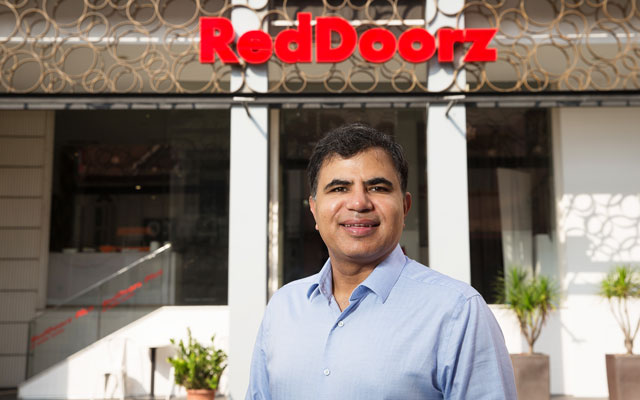
RedDoorz’s Amit Saberwal says the company has plans to venture into the Thailand market come 2020
After successfully venturing into Indonesia, Vietnam, the Philippines and Singapore, Saberwal hopes to corner Thailand next in 2020. “It would be “counter intuitive to not go into Thailand,” Saberwal told TTG Asia, noting opportunities of growth in the country’s large pockets of leisure travel such as Bangkok, Phuket and Pattaya, as well as secondary destinations and lesser-known provinces that are popular among domestic Thai tourists.
The lodging startup chief is holding the “localisation” cards close to his chest as he plots RedDoorz’s expansion strategy into Thailand, leveraging from its experience gained from operating in its four existing markets in South-east Asia. “We will use the 7-Eleven model, i.e. small-format hotels but with high density,” he said, citing success that such a model has brought to its business in Jakarta and Ho Chi Minh City.
“But the (foray into Thailand) is still an evolving thought strategy for us. We haven’t nailed it out yet,” he stated. “Seventy per cent of the business model is common across the markets, but 30 per cent of that model will be differentiated.”
The founder is a firm believer of South-east Asia as a “great opportunity market”, propelled by a surge in the region’s growing middle class and its propensity for travel. “In the first five years (of operation), we have only scratched the surface. We don’t want to go into too many new markets.”
But isn’t the hotel industry veteran concerned about the growing competition from rival outfits, some of which are backed with deep funding and fast penetration in the region?
“We are very focused on South-east Asia, very focused on accommodation. We feel that this is a business that takes a lot of effort to learn, and you can’t accelerate through money or expansion into a new market like Saudi Arabia without first understanding what the market wants,” he stated, alluding to Softbank-backed Indian lodging startup Oyo Hotels and Homes.
Competition, Saberwal insists, may it be from Oyo, Nida Rooms or Zen, will only spur RedDoorz to innovate more. Neither is he worried about the hospitality incumbents like Accor making a play for South-east Asia budget accommodation space through its recent Fragrance Hotel deal.
“More interest in this space also translates into more opportunities for everybody. The way the business is going to expand is when more and more individual entrepreneurs and investors see that there is viable way to make money in hospitality business.”
However, the startup chief admits that it hasn’t been an easy journey scaling up the company. “It’s a tough business standardising offline assets built across different periods of time, and then making consumers come and stay in a reasonably standardised environment, and then trying to develop a good online and offline experience. It lends itself the complexity in many ways. Our use of technology and our way of operations has helped us to overcome many of these challenges.”
Ultimately, the ambitious but prudent entrepreneur hopes to take RedDoorz public.
“In 2020, the plan is to reach a unicorn status,” said Saberwal. “We’re eyeing an IPO in three to four years’ time, which is a logical conclusion for us. If we can provide good returns on investment to our investors and do our IPO at the right time, it will be a milestone for us.”
Hopes are being pinned on Cambodia’s growing collection of immersive in-destination experiences to revitalise the Western market, which is currently in decline.
According to the latest available figures from the Cambodia’s Ministry of Tourism (MoT), tourism arrivals rose by 11.2 per cent in 1H2019. However, this was predominantly driven by Asian markets.
Cambodia’s travel trade is pushing immersive tour experiences to spark renewed interest in the country among Western markets
In contrast, Western markets have shown a downward trajectory, with tourist arrival numbers from Europe tumbling by 5.6 per cent, Australia by 7.7 per cent and the US by 0.8 per cent. And tour operators said they are feeling the pinch.
At the third Cambodia Travel Mart in Phnom Penh last week, VLK Royal Tourism’s product manager Mak Kun told TTG Asia that the company is now pushing eco- and community-based tourism products in a bid to re-stimulate the Western markets.
Itinerary options include seeing the endangered Irrawaddy dolphins in Kratie, homestay options on Mekong River islands and in Kampong Speu, and touring the emerging remote provinces of Stung Treng and Rattanakiri.
“We hope that this will help the European markets to reconsider Cambodia (as a tourist destination) as they like such activities,” he said.
Prak Vuthy, MoT’s director of overseas tourism marketing and promotion department, said that the ministry has highlighted Stung Treng, Rattanakiri, Mondulkiri and Kratie as provinces to promote as prime ecotourism destinations.
Mekong Tourism Coordinating Office’s executive director, Jens Thraenhart, added: “Cambodia is full of authentic lifetime experiences and that is what needs to be developed.”
Hem Sophoan, a tour and sales manager at Paramount Angkor Travel & Tours, said that the dip in longhaul arrivals from Western markets has prompted the company to shake up its business model. “Our focus has always been on the US, European and Australian markets, but now we are looking more worldwide,” he said.
He added that the company has created new itineraries and packages to appeal to the Asian market.
Exploration will figure more prominently among global travellers in 2020, fuelled by technology as well as a growing sense of responsibility and deeper connection with the people and places visited, according to Booking.com’s latest predictions of travel trends for the year ahead.
Here are the top travel trends as revealed by the online travel platform, following research among more than 22,000 travellers across 29 markets:
Booking.com releases report on top travel trends for 2020
Rise of the “second city” traveller Second-city travel, referring to the exploration of lesser-known destinations in a bid to reduce overtourism, will take a leap forward in 2020. Some 51 per cent of global travellers would swap their original destination for a lesser-known, but similar, alternative, if they knew it would leave less of an environmental impact.
Growing reliance in tech-generated recommendations 2020 will see travellers put key aspects of their decision-making process even more firmly in the hands of technology. Some 59 per cent of global travellers want technology to offer them a “wildcard” and surprise options that would introduce them to something entirely new.
The art of slow travel Travel in 2020 will be all about taking it slow and focusing on the journey. Forty-eight per cent of travellers plan to take slower modes of transport to reduce their environmental impact and 61 per cent would prefer to take a longer route to experience more of the journey itself.
Discovering the all-amusive escape Time-starved travellers will want to be as time-efficient as possible on vacation, so instead of settling into one theme for the entire vacation, 2020 will see a rise in travelers exploring the ‘all-amusive’, by visiting destinations that offer an array of enriching experiences and attractions, with
Pets in the priority lane Pet-centric vacations will become more popular as travellers put the needs of their beloved pets well before their own when it comes to selecting where to go, where to stay and what to do, with 42 per cent agreeing they would choose holiday destinations based on whether they can take their pets.
Meanwhile, Booking.com is also observing a rise in the number of pet-friendly properties around the world.
Making great memories with ‘grand’ getaways As today’s older generation is healthier, more adventurous and more keen to stay young and active than ever before, more grandparents are expected to take epic vacations with just their grandkids to enjoy ‘grand’ vacations that offer an array of active experiences for both generations to take part in.
Race to the reservation The coming year will see travelers put culinary ambitions at the forefront of their travel decision making, in a race to snag that all important restaurant reservation. For many, where and when they travel will start with – and depend on – whether they can reserve a table to enjoy highly coveted cuisine.
Fast track to long-term travel As retirement looks set to become less and less about reaching a certain age and leaving the workforce, 2020 will see ‘retirement years’ become surprisingly synonymous with ‘adventurous travel planning’, as travellers will shift their mindset and start to plan big for their future golden years.
Booking.com also predicts the top 10 trending destinations for 2020 to be Gzira (Malta), Ninh Binh (Vietnam), Salta (Argentina), Seogwipo (South Korea), Jodhpur (India), Swinoujscie (Poland), Takamatsu (Japan), San Juan (Puerto Rico), Zabljak (Montenegro) and Yerevan (Armenia).
The full report of Booking.com’s travel trends for 2020 can be viewed here.
To help agents better understand and sell cruise lines to travellers, Cruise Lines International Association (CLIA) is organising a cruise conference on “Cruise in Asia – a consumer’s perspective” at the upcoming ITB Asia on October 18, 2019 in Singapore.
This is the second time CLIA is organising a cruise seminar at ITB Asia, following last year’s successful inaugural run.
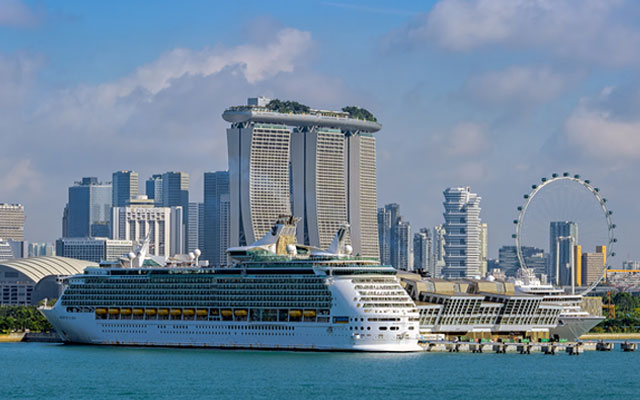
CLIA will be sharing how travel agents can matchmake the right cruise product to consumers at this year’s ITB Asia held at Marina Bay Sands in Singapore
The other eight participating cruise brands are Compagnie Du Ponant, Costa Cruises, Norwegian Cruise Line, Oceania Cruises, Princess Cruises, Regent Seven Seas Cruises, Royal Caribbean International and Uniworld Boutique River Cruises.
During the seminar, representatives from CLIA and its cruise line members will discuss ships of all sizes and help agents understand the best offerings for their customers. The programme, titled “Sharing of latest cruise trends and tips by CLIA”, will highlight the latest trends in the cruise industry and share tips on how agents can increase their cruise profits.
CLIA’s regional manager Asia, Jiali Wong, will be sharing how travel professionals can matchmake the right cruise product to consumers, by understanding the cruise line’s USP and aligning their target market to the cruise line.
In 2019, there will be 18 new CLIA-member ocean ships scheduled to debut, bringing it to a projection of 272 CLIA-member cruise ships in operation this year. On top of new cruise products, there has also been an increase in cruise destinations, providing more itinerary options for the consumers. Ships in Asia will call at 306 different destinations this year, an increase of 18 destinations from 2018.
With the diverse cruise choices, it is vital for a cruise company’s clients to be matched to the right cruise holiday, particularly for first-time cruisers.
There will also be two panel discussions where industry experts will discuss the opportunities for travel professionals in the different cruise offerings.
The first half-hour discussion, titled The Increasing Choice and Diversity Offered by Major Cruise Lines, will see representatives from Royal Caribbean Cruises, Norwegian Cruise Line Holdings and Costa Cruises.
The second half-hour discussion, titled The Evolution of Small Ship Cruising, will see representatives from Norwegian Cruise Line Holdings and Uniworld Boutique River Cruise Collection & U River Cruises.
The cruise conference will be held on October 18, 2019, 12.00 to 13.30 at the Presentation Hub (B1) at Marina Bay Sands, Singapore. CLIA Asia will also be at ITB Asia booth U54 (Level 1) from October 16 to 18, 2019.
More Singaporean travellers are ticking Central Asia off their bucket list as the region enjoys greater accessibility and connectivity to the city-state.
The past year has seen a global push by Air Astana through new connections with Tyumen and Kazan in Russia, codeshare agreements with S7 Airlines and Cathay Pacific, and the launch of its low-cost arm FlyArystan.
Central Asia is growing in popularity among Singaporean travellers; Kazakh yurt on steppe, Kazakhstan pictured
Several countries in Central Asia have also relaxed their visa policies. Foreign travellers from as many as 45 countries can now enjoy visa-free entry into Kazakhstan and Uzbekistan for up to 30 days, and Kyrgyzstan for up to 60 days.
These developments have sparked significant tourism interest in the Stans – Kazakhstan, Kyrgyzstan, Tajikistan, Turkmenistan and Uzbekistan – which “are becoming very popular tourism destinations”, observed Laziz Otayarov, operations manager for Central Asia, G Adventures.
He shared that the agency has seen a 10 per cent year-on-year increase in travellers from Singapore to Kazakhstan, and this figure is expected to rise further “as airline capacity continues to grow”.
He added: “Singaporean travellers no longer require a visa to (visit) most ’stans. Air Astana also offers good deals on their flights (that are) connecting or codeshared either via Bangkok or Kuala Lumpur.”
These groups usually visit a single country for a short time of up to seven days, shared Otayarov, spending their time appreciating the mountains of Kyrgyzstan – dubbed the “Switzerland of Central Asia” – or enjoying the unique cuisine of Kazakhstan.
For Scott Dunn Singapore, Kazakhstan is a rising star of Central Asia thanks to its diverse experiences and efforts in enhancing tourism facilities.
The company’s destination expert Chong Shyh Jie shared: “Kazakhstan is relatively “un-travelled” in comparison to other Central Asian countries, hence Singaporeans are intrigued and (want to) explore it. It is (also) improving transport infrastructure and customer service, and working to bring prices down to make accommodation more affordable.”
As demand for Central Asia climbs, agencies have expressed desire for more outreach campaigns by tourism bodies in the region, especially to aid in arranging esoteric activities there.
For example, more information about Kazakhstan’s campaign on “ethno tourism”, where tourists are given the opportunity to participate in traditional Kazakh culture, would be welcome, said Chong.
Diana Ho, general manager of Royal Wings Travel Singapore, agreed that more B2B networking could be done.
“It will be good to see more tour promotions and more agent outreach. We haven’t received much information about Kazakhstan as compared to other (destinations in Asia),” Ho said.
Europe’s oldest luxury hotel group Kempinski Hotels has entered into a strategic partnership with Duesseldorf-based 12.18. Investment Management Group to launch a luxury lifestyle concept, 7Pines Kempinski.
The joint partnership “represents an important step in (Kempinski’s) growth strategy” for the 120-year-old European luxury hotel group which owns 78 hotels across 34 countries, said Martin Smura, CEO and chairman of the board of Kempinski Hotels.
Kempinski Hotels signs partnership deal with 12.18. Investment Management Group to launch luxury lifestyle brand, 7Pines Kempinski, at the Expo Real in Munich (Pictured; from left: 12.18.’s Carsten Rath, Kempinski Hotels’ Martin Smura, Restaurant Tim Raue’s Tim Raue, 12.18.’s Kai Richter, 12.18’s Jörg Lindner, 7Pines Hotel Management’s Markus Lück)
To promote the expansion, 7Pines Hotel Management has been founded and is based in Duesseldorf. In addition to Richter, Markus Lück, general manager of 12.18.’s flagship 7Pines Resort Ibiza, which opened last year, will act as managing director.
Following the development of 7Pines Kempinski, 12.18. plans to invest 500 million euros (US$550 million) to add 20 new 7Pines Kempinski hotels and resorts to its portfolio by 2022, in cooperation with institutional investors.
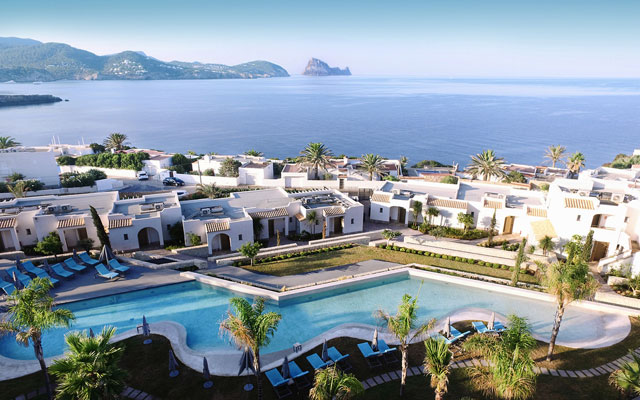
7Pines Kempinski
As part of the expansion course, 12.18. is also expanding its portfolio outside Europe for the first time with the acquisition of its first property in the US, the San Carlos Hotel in New York City, which will operate as the 7Pines Kempinski Manhattan following renovation.
Smura added: “New York has always been a dream destination for Kempinski Hotels and this important partnership makes it a reality.”
In addition to its know-how in managing first-class luxury hotels, 7Pines also benefits from access to the international network and the extensive distribution channels of Kempinski Hotels, said both companies in a joint statement.
Lotus Cruises, which operates luxury ships on the Mekong River, has launched an incentive scheme for travel agents and tour operators, featuring the latest Apple products as rewards for bookings.
The Lotus Incentive Programme, which launched last month and runs until March 2020, gives agents and operators the chance to collect Lotus Coins every time they book a cabin on one of Lotus Cruises’ seven-night sailings. The coins can then be used to redeem a selection of Apple products, including the latest iPhones, iPads, MacBooks and iMacs.
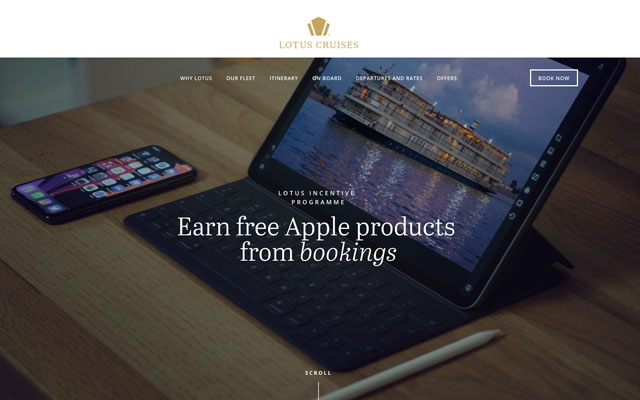
Lotus Cruises pushes out an incentive program rewarding agents with Apple products for bookings
Lotus Cruises’ 34-cabin RV Mekong Navigator sails a seven-night itinerary from My Tho (for Ho Chi Minh City) to Kampong Cham (for Siem Reap), or vice versa, from October 2019 to April 2020, August 2020 to May 2021, and August 2021 onwards.
Lotus Cruises’ second ship, the 34-cabin RV Mekong Jewel, will launch in January 2020. Selected departures in 2020 and 2021 are currently bookable and applicable to the incentive offer.
Under the incentive scheme, agents and tour operators will earn two Lotus Coins for a passenger booking a Superior, Vista or Signature suite on either ship sailing the seven-night itinerary and three Lotus Coins for a passenger booking a Prestige or Grand suite.
Rewards range from iPhones to MacBooks with six Lotus Coins equating to an iPhone 8; eight Lotus Coins, an iPhone 11; and nine Lotus Coins, an iMac or a MacBook Air. The full list of rewards is available here.
To redeem their reward, agents and operators simply need to make the bookings and keep a record of the reference number for each booking. Once they have collected enough coins to redeem a reward prize, they can then complete an incentive form online, and choose their desired Apple product from the available range for the value of coins they have earned.
The Lotus Incentive Programme is valid from September 15, 2019 until March 15, 2020 and includes bookings on seven-night departures from 2019 right up to 2021. Lotus Coins cannot be exchanged for cash.
Prices for Lotus Cruises’ seven-night itinerary start from US$1,619 per person, based on two sharing. The price includes seven nights’ accommodation; full-board meals, including wine, beer and soft drinks for lunch and dinner, champagne welcome reception, wine pairing dinner, speciality coffee and fine tea selection, daily sundowner cocktails, spirits, water onboard and during excursions; personalised aluminium water bottle for excursions; Wi-Fi in-room and public areas; a variety of onboard cultural experiences and performances, including calligraphy and crew farewell performance; the services of an English-speaking crew, expert local guides and destination resource speakers and authentic excursions with visits to communities supported by a Lotus Cruises dedicated guide.
The sales price is commissionable by agents. This price is cruise-only. International flights, pre- and post-cruise hotel stays, etc, are additional.
Wharf Hotels has appointed Christopher Johnson as general manager of Marco Polo Jinjiang.
With 20 years of experience in hospitality industry, Johnson has held senior leadership roles at international hotel brands including Hyatt, Hilton, Four Seasons, InterContinental and Fairmont.
Prior to joining Marco Polo Jinjiang, Johnson was general manager at Millennium Gaea Resort Hualien, Taiwan.
Gregg Webb, the freshly-minted CEO of Travelport, has bold plans to make the travel technology company more agile to adapt to industry changes and competition.
Speaking to international media in a virtual press conference on October 10 – his first since joining Travelport in August – Webb said: “I plan to win, period, and not based on category. I do not plan to be the third player for long.”
Travelport plans a next-gen platform rollout come 2020: Webb
“Travelport can be disruptive, not based on creating a new business model, but by creating a speed to market that will be differentiated,” he added.
Travelport’s key competitors in the global distribution system (GDS) sector include Amadeus and Sabre, where Webb worked his way up to vice chairman in a two-decade-long tenure.
Webb joined Travelport shortly after the UK-headquartered company was acquired by affiliates of Siris Capital Group and Evergreen Coast Capital in a US$4.4 billion deal.
Besides pursuing growth in the air distribution sphere, Webb is also keen on land and sea business opportunities. To do so, he plans to leverage his recent stint as senior vice president and general manager of Oracle Hospitality, which has given him “a lot of insight into the opportunities that exist in the hospitality space, some of which are untapped by the GDS market”.
Sharing Travelport’s broad strategies and plans for 2020, Webb is keen to make “significant investments to move to its next-generation platform”.
He said: “We need to stop talking about Travelport as a global distribution system, but look at it as an electronic exchange between buyers and sellers of travel. We need to have a platform that is the most efficient data source aggregation, and content between buyers and sellers of travel that delivers value on both sides and one that can allow us to consume and efficiently distribute content.”
Webb added that he hopes to relook ways of creating a broader repository of travel data. Other plans in the pipeline include rolling out new capabilities around Travelport’s API suite, including its Trip Services platform and cloud-based point-of-sale system.
“I am very energised about the next-generation platform. In 2020, there will be announcements on capabilities rolling out in the marketplace,” he said.