Index Creative Village and Singha Park Chiang Rai have come together to produce Asia’s largest light festival, Village of Illumination, from December 4, 2020 to January 31, 2021.
The 59-day event, to be held in the 160,000m2 Singha Park Chiang Rai, aims to boost lifestyle tourism in Northern Thailand and is expected to attract more than 300,000 tourists to the province.
Village of Illumination is hoped to boost Chiang Rai’s tourism
Village of Illumination will feature 10 zones in its premiere edition, utilising digital multimedia, art, music and technology to draw domestic and international visitors.
An estimated 600 million baht (US$961,755) is expected to be generated from tourism income during this event.
A worsening economic slowdown has thrown up challenges for Indian hoteliers, with the effects rippling across both domestic and international markets.
Reeling under pressure too are Indian business sectors like automobile, which have been plagued with declining sales.
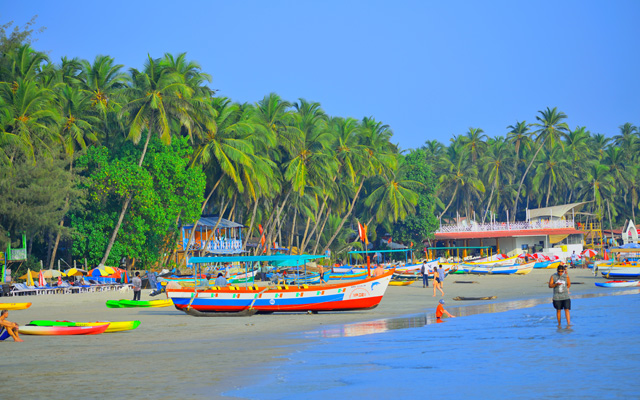
Tourism in Goa is among the hardest hit from the economic slowdown and the collapse of Thomas Cook UK
“The slowdown in the automobile sector has impacted the hospitality industry in Pune, with demand going down by about four per cent,” said Pankaj Saxena, general manager, Radisson Blu Pune Hinjawadi.
It is a double whammy for markets like Goa who have also been hit by the closure of Thomas Cook UK, noted industry players.
“The market sentiments are certainly down, and it has affected both domestic and international guests. Hotel occupancies have declined. Destinations like Goa are among the hardest hit with more declines in international business than any other destination,” said Sarbendra Sarkar, founder and managing director, Cygnett Hotels and Resorts.
“Hospitality players are facing a tough time because of the current economic slowdown. Besides a drop in demand from international tourists, corporate travellers are also shortening their stay or curtailing their expenses,” said Victor Soares, senior general manager, Radisson Blu Resort Goa Cavelossim Beach.
On the bright side, domestic tourism is throwing a lifeline to the majority of hospitality players in India, especially those in the non-metro markets. “Tier II markets are becoming the key focus, especially in leisure segments. Domestic travellers with disposable income are looking forward to exploring new cities apart from traditional places,” said Sarkar.
Several hoteliers remain positive about the growth both in inbound and domestic markets.
Sanjeev K Nayar, general manager, WelcomHeritage, said: “After the liberalisation of the e-visa scheme, inbound tourism hasn’t weakened. Nevertheless, the domestic market is definitely very buoyant and coming up really well. Domestic travel is seeing steady growth as the middle class continues to travel for religious and festive reasons.”
Helping Indian hoteliers to weather the economic headwinds too is the recent move by India’s GST Council to cut tax on room tariffs of Rs7,500 (US$105) and above from 28 per cent to 18 per cent, and tax on room tariffs of less than Rs7,500, from 18 per cent to 12 per cent.
“The GST cut was a very big step for boosting tourist numbers and creating widespread publicity for Indian tourism. There has been an increase in queries and subsequent bookings,” said Nayar.
Sarkar agreed: “This landmark move will act as a catalyst to revive the slow-growing Indian hospitality industry. It will help hotels win back guests and gain traction that was not evident over the past months.”
Tourism and hospitality leaders have joined forces to launch a campaign to encourage visitors to extend their stay in Cambodia’s Siem Reap, as visitorship weakens for the town that serves as the gateway to Angkor Wat.
A recent report by Angkor Enterprise revealed visitors to the ancient religious site slumped by 15 per cent in 2019 to 2.2 million.
#staylongersiemreap
1 of 2
Tonle Sap Lake
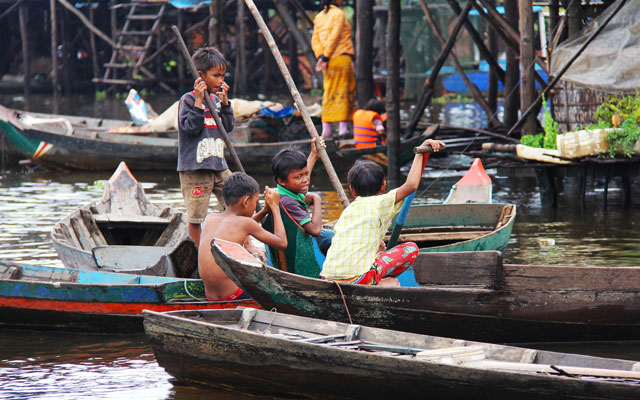
Kompong Phluk Floating Village
The latest available figures from the Ministry of Tourism show a 13.1 per cent decline in arrivals at Siem Reap International Airport during the first 11 months of 2019. This comes amid a steady decline in longhaul visitors.
The four-week #staylongersiemreap video campaign is currently underway, with two videos scheduled for release every week on social media to showcase the bounty of attractions the province is home to. These cover dining, drinking, Tonle Sap exploration, Bakong Temple cycling, arts, relaxation, nightlife and performance, and shopping.
Adam Rodwell, project manager and owner of The Little Red Fox Espresso, said: “The ultimate goal is to promote Siem Reap as a destination that has much more to offer beyond the majestic Angkor temples. (It) can offer traditional and authentic Cambodian experiences alongside more modern and contemporary choices; essentially something for everyone.”
Other businesses involved are Jaya House Hotels, Treeline Urban Resort, Wild Frontiers Travel, George’s Rhumerie, Phare Cambodian Circus and Mulberry Boutique Hotel.
Christian de Boer, managing director of Jaya House Hotels, said the current average length of stay at the property is three nights.
“Upon departure, almost all guests state they would have loved to stay longer and discover more,” he shared.
It is hoped the short videos, produced by Rafael Winer of FILM+STILLS, will showcase Siem Reap’s diverse offerings and encourage people to explore more of the area’s vast offerings.
Craig Dodge, director of sales and marketing at Phare, the Cambodian Circus, said: “It’s essential to build more awareness of the awesome experiences on offer beyond Angkor Wat.”
It is also hoped the campaign will build momentum as other tourism businesses jump on-board and add content under the hashtag #staylongersiemreap.
Malaysian hoteliers will now receive support from private healthcare providers in tackling the spread of the coronavirus, following the signing of an MoU between the Malaysian Association of Hotels (MAH) and Global Doctors Malaysia (GDM).
Under the agreement, which will take immediate effect, GDM will extend health, preparedness and community health advisory to hoteliers, with an added option of a complete corporate health solution.
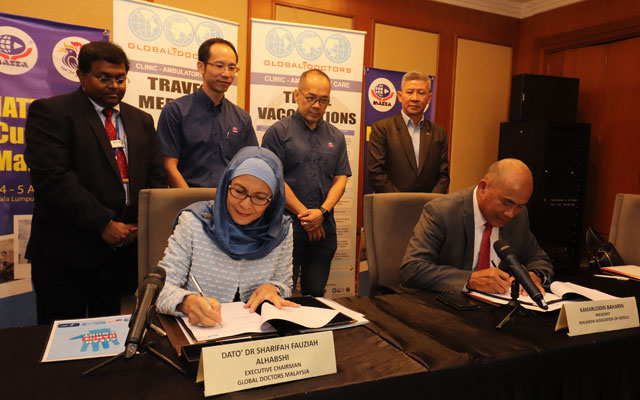
MAH’s Kamaruddin Baharin signs MoU with Global Doctors Group’s Sharifah Fauziah Alhabshi to acquire medical support services at a recent press conference in Kuala Lumpur
Kamaruddin Baharin, president, MAH, shared: “GDM will support MAH members in the areas of health advisory, where GDM will act as an on-call medical advisory assistant to hotels and provide healthcare professionals on-demand, including on-site travel vaccinations for hotel employees and guests; emergency preparedness and training for hotel management and employees on safety and health; community health awareness and advisory pertaining to current health and community concerns such as Covid-19; and Corporate Health Advanced Medical Programme to promote health and well-being.”
GDM will also be present at the inaugural MATTA Fair Cuti-Cuti Malaysia, a domestic fair organised by The Malaysian Association of Tour and Travel Agents (MATTA), which will be held at Kuala Lumpur Convention Centre on April 4 and 5.
MAH will be roping in its members to promote their properties and facilities at the fair. Besides hoteliers and MATTA members, other exhibitors at the fair includes theme park operators and related service providers.
The domestic fair is the industry’s response to cushion the impact of the Covid-19 on tourism. Participating hotels will be offering special packages and rates to encourage greater domestic travel.
GDM staff will be on standby at the fair to offer medical assistance, as well as build awareness around travel vaccinations and travel-related illnesses.
Low-cost carriers (LCCs) are driving growth in the Middle East aviation market, recording a 9.3 per cent increase in seat capacity, according to a Center for Asia-Pacific Aviation (CAPA) study.
This comes at a time when more passengers in the region are opting to fly in more modest and affordable cabin surroundings.
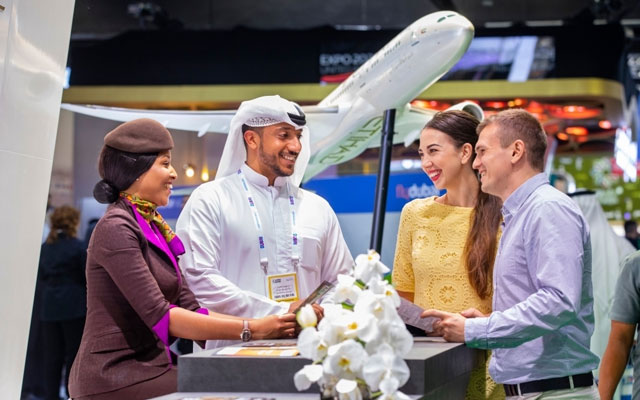
Arabian Travel Market 2020 will feature aviation exhibitors like Emirates, Etihad Airways and Dubai Airports, among others
Over the next 12 months, LCCs are projected to continue competing for their rivals’ market share, with Saudia’s LCC subsidiary, flyadeal, leading this trend by becoming the region’s largest airline by seat capacity and recording a capacity growth of 78.1 per cent, according to the latest CAPA data.
Danielle Curtis, exhibition director ME, Arabian Travel Market (ATM), said: “The rise of LCCs in the region appears to be bringing some fresh momentum to the aviation industry, with research predicting 50 per cent of airline traffic to be on routes of less than 2,000 miles by 2038, a trend which Airbus described as ‘fertile territory for the LCC business model’ in their most recent report.”
Supporting LCCs’ potential for growth in region, Air Arabia and Etihad Aviation Group have announced strategic plans to launch a new budget carrier. Based out of Abu Dhabi Airport, Air Arabia Abu Dhabi, will become the fifth airline to operate in the UAE – and the capital’s first low-cost airline.
There have also been similar expressions of interest from foreign carriers Spicejet and Wizz Air to set up new low-cost airlines in the UAE.
LCC and aviation developments will feature heavily in ATM 2020’s programme, with a keynote from Emirates’ president Tim Clark, titled The Making of Emirates: The Legacy of Sir Tim Clark, taking place on the Global stage on April 20.
Meanwhile, the Low Cost Carriers on the Rise in the Gulf session on the Global Stage will explore the rise of new players in the LCC market, as well as the development of hybrid business models; and in the Inspiration Theatre, a session titled 2020 – Another Challenging Year for Airlines will look at the industry as a whole, discussing the challenges and opportunities and providing an outlook for airlines beyond 2020.
On the show floor, aviation participation at ATM 2020 is expected to increase 25 per cent over 2019. Emirates, Etihad Airways, SAUDIA and Kuwait Airways as well as Dubai Airports and Abu Dhabi Airports Company are among the confirmed aviation exhibitors at the annual trade event in Dubai.
ATM 2020 will be held from April 19 to 22 at the Dubai World Trade Centre.
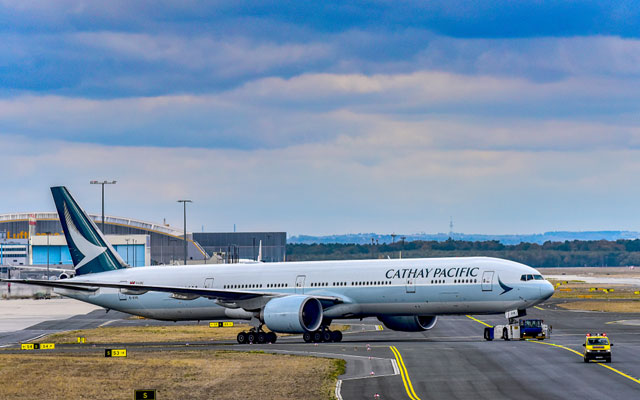
Cathay Pacific Group will slash 40 per cent of its passenger capacity for February and March as passenger numbers continue to slide.
In it latest performance update issued this week, Cathay Pacific Group reported that Cathay Pacific and Cathay Dragon had see a 1.3 percentage point decrease in their passenger load factor to 84.7 per cent over the same time last year.
Cathay Pacific cuts capacity by 40 per cent amid coronavirus outbreak
In his outlook for 2020, Cathay Pacific Group chief customer and commercial officer Ronald Lam said: “The first half of 2020 was already expected to be extremely challenging financially. As a result of this additional significant drop in demand for flights and consequential capacity reduction caused by the novel coronavirus outbreak, the financial results for the first half of 2020 will be significantly down on the same period last year.”
Besides the two-month reduction in global capacity, Lam said the cut may be extended to April “as we continue to monitor and match market demand”.
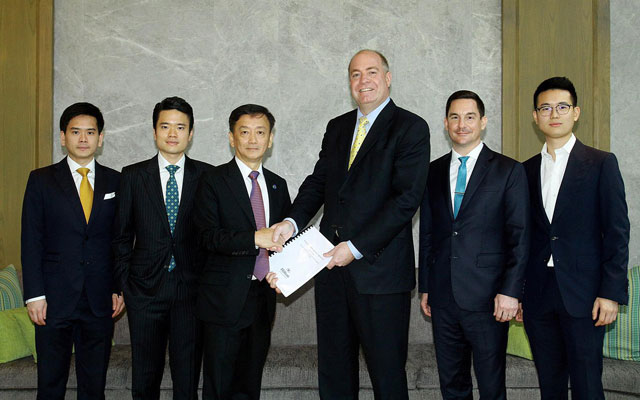
“From Left to Right: Chotiwit Taechaubol, Director of AP Prime Property Co LTD; Krittawat Taechaubol, Director of AP Prime Property Co LTD; Apichai Taechaubol, President of AP Prime Property Co LTD; Matt Fry, Senior Vice President, Development, Asia Pacific, Hilton; Christian Pucher, Senior Director, Development, Asia, Hilton; and Noppawee Taechaubol, Director of AP Prime Property Co LTD.”
Hilton Hotels has signed a management agreement with real estate company AP Prime Property Company to convert the former Grand Ayudhaya Hotel into the 608-room Hilton Bangkok Ratchada by 2022.
The hotel, which will be the Hilton brand’s largest property in Bangkok yet, is located on Ratchadapisek Road, close to commercial buildings and landmarks. The larger vicinity has also been earmarked as one of Bangkok’s rising business and financial districts.
From left to right: AP Prime Property’s Chotiwit Taechaubol, Krittawat Taechaubol, and Apichai Taechaubol; Hilton’s Matt Fry and Christian Pucher, and AP Prime Property’s Noppawee Taechaubol
Following the refurbishment, the hotel will feature an executive lounge, an all-day dining restaurant, a Chinese speciality restaurant, a café and bar, as well as a selection of spacious meetings and events venues.
“Bangkok is a key regional business hub and has long been an established destination for leisure travellers, as well as a venue of choice for meetings and events. Combined with the government’s direction for the Ratchadapisek area to be the next business and financial district in Bangkok, the upcoming Hilton Bangkok Ratchada will be in one of the most coveted addresses for businesses in Bangkok when it opens,” said Guy Phillips, senior vice president, development, Asia & Australasia, Hilton.
Chinese ride-hailing giant DiDi will launch ride-sharing services in Sydney, Australia with DiDi Express (carpooling) and DiDi Max (seven-seater) services, come March 16.
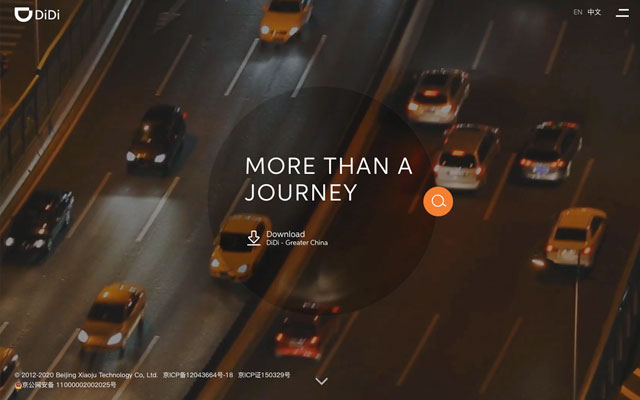
A screenshot from Didi’s official website
DiDi Australia general manager Lyn Ma said: “We are eager to work alongside local stakeholders in the Sydney transportation industry, using leading AI technologies and local operational expertise to innovate and build a better, trusted product with the aim of becoming Sydney’s preferred ridesharing platform.”
The company first moved into the Australian market in May 2018. So far, it has served more than two million passengers in seven cities across four states.
Thomas Cook India (TCIL) has rolled out a range of competitively-priced international tour packages, as it looks to tap into the rising demand among Indian travellers for multiple, smaller holidays, or mini-cations, as opposed to one long annual vacation.
More than 66 per cent of Indian travellers prefer multiple mini-cations, over just one annual vacation, according to a recent study by TCIL.
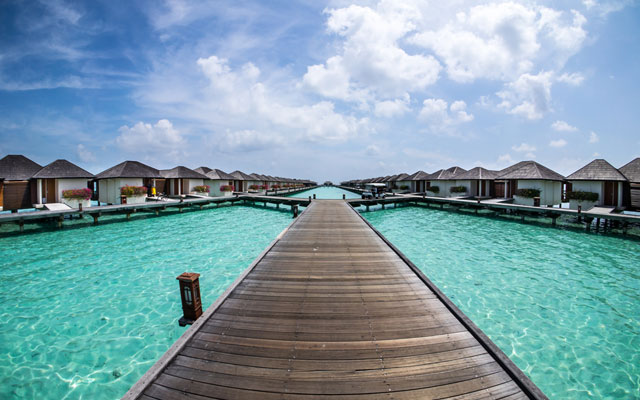
Thomas Cook India rolls out a range of all-inclusive tours to international destinations like the Maldives
Additionally, the study also found that India’s millennials are displaying an increased appetite (of 35 per cent) for travelling.
Rajeev Kale, president & country head – holidays, MICE, visa, TCIL, said: “Over the past few years, we have witnessed a dramatic shift in the lifestyle choices of Indian consumers – the aspiration for travel have increased manifold. And with multiple, bite-sized holidays seeing strong demand, we realised the importance of value pricing.”
To ride on this wave of demand for the upcoming summer holiday season, the company has launched a range of international tours of between 5-7 days, priced under Rs 99,999 (US$1,398) per person (starting from Rs 50,000), subject to T&Cs.
TCIL’s under Rs 99,999 all-inclusive holidays include a wide range of international destinations like Australia, the UK, France, Germany, Austria, Hungary, Russia, Netherlands and Belgium; as well as short-haul favourites of Abu Dhabi, Dubai, Sri Lanka, Bhutan, Maldives, Mauritius and Myanmar.
The all-inclusive tours include flights, hotels, visas, transfers, meals, sightseeing, insurance and the services of an experienced TCI tour manager.
Additionally, TCIL has also designed customised Europe land-only holidays, to give customers the flexibility of selecting their preferred airlines, with prices from Rs 31,600. A range of destinations included are London, Paris, Greece, Iceland, Georgia, Amsterdam and Brussels.
Borneo Eagle Resort, Malaysia
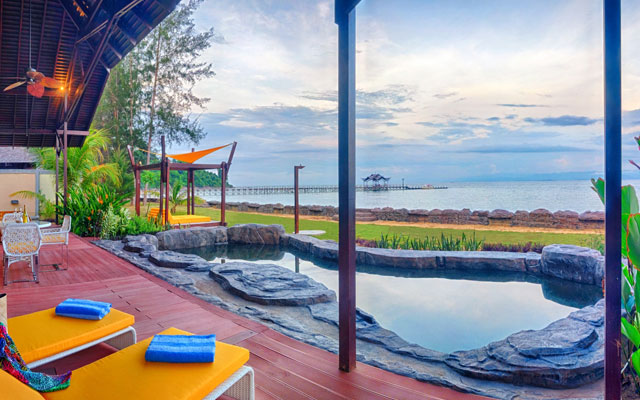
Situated on the island of Pulau Tiga 2.5 hours away by land and sea from Sabah’s capital of Kota Kinabalu stands the 13-villa Borneo Eagle Resort. There are three villa types, all facing the sea and come with their own courtyards. They are furnished with mod cons such as a 55-inch flatscreen TVs and Bose home theatre systems. A Personal Service Ambassador is also assigned to each villa.
Facilities onsite include the Eagles Nest restaurant with a farm-to-table concept, the Landing Bar, fitness centre, 900m2 infinity pool, a multipurpose room that can hold up to eight seated pax, a rooftop area for small events, as well as a Sand Bar by the pool. Outdoor activities include trekking opportunities in the nearby jungle to volcanic mud mounts, while waters around the island are good for diving, snorkelling and kayaking.
MeliáKoh Samui, Thailand
Meliá Hotels International’s first opening in Thailand is a nautical-themed beachfront resort on Koh Samui’s Choeng Mon Beach. The property features 159 rooms and 41 suites, alongside facilities such as two outdoor swimming pools, two restaurants, an executive lounge, beach club, spa, fitness centre, kids’ club and mini water park. There is also the Gallery, a not-for-profit social enterprise of art and design gift shop.
Meanwhile, event planners may avail the seven indoor multifunctional spaces, ballroom that can accommodate up to 200 guests, as well as an outdoor poolside and beachfront function space that can host dinner for 500 guests. This opening is the start of a strategic roll-out of the Meliá brand in Thailand with at least two more to come online in Bangkok and Chiang Mai.
Novotel Melbourne Central and ibis Melbourne Central, Melbourne
This dual-branded new-build houses 483 keys within a 35-storey tower on Little Lonsdale Street.
Novotel Melbourne Central
Occupying levels 20-35, Novotel Melbourne Central’s 213 rooms and suites start from 20m2 in size. All rooms are fitted with rainshowers, as well as 55-inch Google Chromecast televisions. Novotel guests will also have access to its InBalance gym, and 24-hour guest services and a concierge desk.
ibis Melbourne Central
Located on levels 4 to 18, ibis Melbourne Central features 270 premium economy guest rooms averaging 18m2, and are fitted with rainshowers and 49-inch Google Chromecast televisions. Other amenities include three flexible meeting spaces that can cater for up to 50 guests, as well as three restaurants and bars on-site.
Pullman Rotorua, New Zealand
New Zealand’s Bay of Plenty region has received its first international five-star hotel in the form of the Pullman Rotorua. The new-build offers 130 rooms across five categories, some of which offer panoramic views of the city and lake area. Facilities on-site include the Barrel & Co Bar and Grill, an executive lounge, bar, gym, as well as four event spaces.
Courtyard by Marriott Suwon, South Korea
The first Courtyard by Marriott in Suwon has opened as part of the new MICE Complex within Suwon Gwanggyo New Town. The property offers 288 rooms, starting from the lead-in 28m2 Premiers to the 84m2 Lake Park Suite. Meeting amenities include the 70-seater Executive Lounge featuring views of Gwanggyo Lake Park, the Lake Park Ballroom which can take up to 300 pax theatre-style, as well as three multipurpose boardrooms for 16 pax each theatre-style. There is also a fitness centre, laundry room, and two F&B options.