TTG Asia
Asia/Singapore Saturday, 20th December 2025
Page 1124

Global tourism up 4% in 1H2019: UNWTO

0

International tourist arrivals grew 4% from January to June 2019, compared to the same period last year, according to the latest UNWTO World Tourism Barometer.

Growth was led by the Middle East (+8%) and Asia and the Pacific (+6%). International arrivals in Europe grew 4%, while Africa (+3%) and the US (+2%) enjoyed more moderate growth.

Global tourist arrivals grew 4% in 1H2019, from the same period last year, with growth led by the Middle East and APAC (Pictured: Crowds throng popular tourist spot Global Village in Dubai)

Destinations worldwide received 671 million international tourist arrivals between January and June 2019 – almost 30 million more from the same period in 2018 and a continuation of the growth recorded last year.

Growth in arrivals is returning to its historic trend and is in line with UNWTO’s forecast of 3-4% growth in international tourist arrivals for the full year of 2019, as reported in the January barometer.

So far, the drivers of these results have been a strong economy, affordable air travel, increased air connectivity and enhanced visa facilitation.

However, weaker economic indicators, prolonged uncertainty about Brexit, trade and technological tensions and rising geopolitical challenges, have started to take a toll on business and consumer confidence, as reflected in a more cautious UNWTO Confidence Index.

Regional performance

Europe grew 4% in 1H2019, with a positive first quarter followed by an above-average second quarter (April: +8% and June: +6%), reflecting a busy Easter and the start of the summer season in the world’s most-visited region. Intra-regional demand fuelled much of this growth, though performance among major European source markets was uneven, amid weakening economies. Demand from overseas markets such as the US, China, Japan and the countries of the Gulf Cooperation Council also contributed to these positive results.

Asia-Pacific (+6%) recorded above world average growth during the January to June 2019 period, largely fuelled by Chinese outbound travel. Growth was led by South Asia and North-east Asia (both +7%), followed by South-east Asia (+5%) and arrivals in Oceania increased by 1%.

In the US (+2%), results improved in the second quarter after a weak start of the year. The Caribbean (+11%) benefitted from strong US demand and continued to rebound strongly from the impact of hurricanes Irma and Maria in late 2017 – a challenge which the region unfortunately faces once again. North America recorded 2% growth, while Central America (+1%) showed mixed results. In South America, arrivals were down 5% partly due to a decline in outbound travel from Argentina which affected neighbouring destinations.

In Africa, limited available data points to a 3% increase in international arrivals. North Africa (+9%) continues to show robust results, following two years of double-digit figures, while growth in Sub-Saharan Africa was flat (+0%).

The Middle East (+8%) saw two strong quarters, reflecting a positive winter season, as well as an increase in demand during Ramadan in May and Eid Al-Fitr in June.

Source markets

The report also shows mixed results for source markets amid trade tensions and economic uncertainty, with uneven performance across major tourism outbound markets.

Chinese outbound tourism (+14% in trips abroad) continued to drive arrivals in many destinations in the region in 1H2019 though spending on international travel was 4% lower in real terms in the first quarter. Trade tensions with the US as well as the slight depreciation of the yuan may influence destination choice by Chinese travellers in the short term.

Outbound travel from the US, the world’s second largest spender, remained solid (+7%), supported by a strong dollar. In Europe, spending on international tourism by France (+8%) and Italy (+7%) was robust, though the UK (+3%) and Germany (+2%) reported more moderate figures.

Among the Asian markets, spending from Japan (+11%) was strong while South Korea spent 8% less in 1H2019, partly due to the depreciation of the Korean won. Australia spent 6% more on international tourism.

Meanwhile, Russia saw a 4% decline in spending in the first quarter, following two years of strong rebound. Spending out of Brazil and Mexico were down 5% and 13%respectively, partly reflecting the wider situation of the two largest Latin American economies.

Traveloka rolls out insurance services aimed at Indonesians

0

Indonesia’s OTA unicorn Traveloka has launched insurance products under Traveloka Protect, which is aimed at capturing Indonesia’s largely untapped insurance market.

Traveloka Protect offers two types of insurance products: Travel Insurance, which includes comprehensive insurance and Schengen visa insurance; and Life Insurance.

Traveloka rolls out insurance products under Traveloka Protect, which is aimed at Indonesians

Traveloka Protect offers users “an easy purchasing process” sans health checks and complicated administrative processes, said the company, adding that it “guarantees acceptance for all users aged 18 to 69”.

The level of market penetration for insurance in Indonesia ranges from two to three per cent, making Indonesia the second-lowest in insurance penetration among South-east Asian countries, according to the Indonesian General Insurance Association (AAUI).

This low penetration rate is due to lack of insurance literacy, said AAUI. Hoping to tap this market, Traveloka Protect presents a variety of insurance products for Indonesians. Besides offering protection, Traveloka wants to educate the Indonesian people on the importance of insurance.

Construction begins for Dream Cruises’ second Global Class ship

0

The production of Dream Cruises’ second Global Class ship has commenced at MV Werften in Rostock-Warnemünde, Germany – almost exactly a year after the keel laying of the series’ flagship.

The first steel cutting for the 342m-long, 46m-wide, 208,000 gross ton cruise vessel was initiated at the press of a button by Genting Hong Kong’s chairman and CEO Lim Kok Thay.

(From left) Mecklenburg-Western Pomerania’s Harry Glawe, Genting Hong Kong’s Lim Kok Thay, MV Werften’s Peter Fetten and Genting Hong Kong’s Colin Au initiating the start of the steel cutting for Dream Cruises’ second Global Class ship

Dream Cruises’ second Global Class ship is identical in construction to her sister ship, which is due to set sail under the name Global Dream in 2021. The keel laying of the ship is planned already for December 9, 2019, with delivery scheduled for 2022.

Like her sister ship, Dream Cruises’ second Global Class ship is also aimed at the fast-growing Asian market. With 2,500 passenger cabins accommodating over 9,000 passengers and a crew of 2,200, Dream Cruises’ Global Dream and the second Global Class ship are the first vessels worldwide capable of carrying more than 10,000 people. In terms of passenger capacity, they are the largest ships ever built in Germany.

They are also equipped with digital technologies, such as face and speech recognition, as well as climate control and mood lighting via app. The 20m² standard cabins are about 15 per cent larger than other cruise ships’.

Lim Kok Thay and Harry Glawe posing with a steel cut of Mecklenburg-Western Pomerania for Dream Cruises’ second Global Class ship

Some 2,500 passenger cabins and 836 crew cabins for the new ship are being produced as completely prefabricated modules at MV Werften Fertigmodule in Wismar.

A total of over 600 firms are involved in the construction of the second Global Class ship. Over half of the partner companies come from Germany, a fifth from the Federal State of Mecklenburg-Western Pomerania, contributing to the growth of the local economy.

Marriott veteran takes helm of JW Marriott Phuket Resort & Spa

0

JW Marriott Phuket Resort & Spa has appointed George Varughese as general manager.

Varughese has been with Marriott International for over 25 years and brings to the role a wealth of global experience through his hotel career in Austria, Germany, the US, China, Malaysia, Australia and Thailand. His experience spans several disciplines including four hotel openings.

Prior to joining The JW Marriott Phuket Resort & Spa, he was general manager of the Bangkok Marriott Hotel The Surawongse.

STB partners Trip.com to market the Lion City

0

Trip.com, an independent OTA part of the Ctrip Group, has committed to deepening the collaboration on the marketing of Singapore as a tourism destination with Singapore Tourism Board (STB).

Both parties have agreed to deepen their cooperation through multi-pronged efforts which include technology and data, exploring product R&D and brand marketing.

Trip.com has committed to deepening the collaboration on marketing Singapore as a tourism destination with STB (Pictured: Ctrip’s CEO Jane Sun and STB’s CEO Keith Tan)

This announcement came after a recent meeting between STB’s CEO Keith Tan and assistant chief executive Chang Chee Pey with Ctrip’s CEO Jane Sun and general manager of overseas destination marketing Edison Chen at the Shanghai headquarters of the Chinese OTA giant.

“OTAs like Ctrip and Trip.com are important channels for us to reach out to a wider audience, particularly the free and independent travellers. Our partnership with Ctrip and Trip.com reinforces our latest campaign efforts to target post-90s Chinese consumers who tend to book their holidays on their own,” Tan said in a statement.

According to STB, the number of inbound Chinese tourists increased by six per cent year-on-year to 3.4 million in 2018, making it Singapore’s largest tourist source market for two consecutive years. This translated to more than S$3.9 billion (US$2.8 million) in tourism revenue. Other major inbound tourism markets for Singapore include South-east Asia, Australia and Japan, where Trip.com has seen significant growth in recent years and can leverage its platform to drive further growth.

At the same time, Ctrip.com International has announced a proposal to change its name to Trip.com Group, which will be voted on at the upcoming annual general meeting on October 25.

“Trip.com is a great name that clearly conveys our mission to serve our customers through every part of their travel journey. It is easily relatable and understood by global travel audiences,” said James Jianzhang Liang, Ctrip’s executive chairman.

Sun added: “Under the group level, we will continue to operate Ctrip and Qunar as OTA brands for Chinese users, in addition to Trip.com and Skyscanner, our OTA brand and travel search brand for global users, respectively.”

Malaysia’s passenger service charge reduction draws opposing views

0

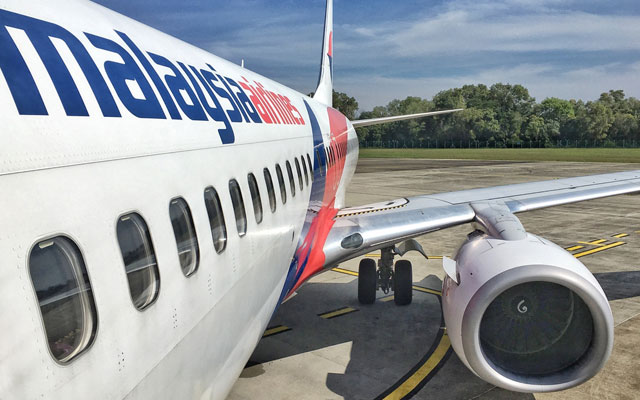
The Malaysian government will reduce the passenger service charge (PSC) for international flights from RM73 (US$17) to RM50 at all airports in Malaysia, except Kuala Lumpur International Airport (KLIA), from October 1.

Transport minister Anthony Loke said the move was meant to reduce the tax burden of travellers, in light of the departure tax introduced on September 1.

Malaysia will reduce the passenger service charge for international flights from RM73 (US$17) to RM50 at all airports in Malaysia, except KLIA, from October 1

He added that the PSC rates for other sectors at all the airports will remain the same – RM35 for flights in South-east Asia and RM11 for domestic flights.

AirAsia’s group CEO Tony Fernandes called the government’s decision “a big win” for Malaysians and the country’s tourism industry, according to a report by The Star.

But Conrad Clifford, IATA’s regional vice president for Asia-Pacific, was quoted in the same report as saying that the government had created an uneven playing field for airlines, as well as cross-subsidisation of other airports or terminals by KLIA users.

“While the reduction in the PSC for destinations beyond ASEAN is positive for most travellers in Malaysia, we are disappointed the government has chosen to discriminate against the airlines and 28 million passengers using KLIA,” he said, adding that if the goal is to offset the departure levy introduced on September 1, a more straightforward solution would be to remove the departure levy altogether.

The Malaysian Association of Tour and Travel Agents (MATTA) refuted the IATA statement that airlines and passengers using KLIA were losing out to other Malaysian airports with lower PSC rates.

MATTA’s president Tan Kok Liang said: “Other international airports in Langkawi, Penang, Senai, Kuching and Kota Kinabalu cannot match KLIA’s standard. It would be unfair for passengers to pay KLIA rates when using other airports with lesser facilities.

“There is no discrimination as airlines can choose to operate from any airport or terminal in line with their premium or budget service, and likewise, passengers get to enjoy the same options. It is only fair for airlines and passengers to pay more for using KLIA and lesser at klia2, which was designed and built as a LCC terminal, and even more so for other international airports in the country,” he added.

“The Transport Ministry ought to be congratulated for currently working on a framework to impose different rates for different airports according to their infrastructure. MATTA fully supports the decision to reduce PSC as facilities at these airports are of no match to KLIA standard, which is our premium airport”.

Thailand postpones levy on foreign visitors

0

Thailand’s Ministry of Tourism and Sports (MOTS) has announced its decision to postpone plans to collect a tourism levy from foreign visitors, The Bangkok Post reported.

The levy could deter travel to Thailand among foreign visitors and further hurt the tourism sector, the report quoted permanent tourism secretary Chote Trachu as saying. Thailand’s tourism industry is seeing a challenging year, amid a strong baht and declining Chinese arrivals.

Thailand postpones plans to collect a tourism levy from foreign visitors for fear that it could hurt the economy

In May, Trachu announced that the ministry had considered the viability of imposing a tourism levy on foreign visitors, with the revenue collected to go towards the rehabilitation of tourism sites across the country, said the report.

At that time, he was convinced that tourist arrivals to Thailand during the last quarter of this year would accelerate to reach the targeted 40 to 41 million due to the government’s extension of the waiver of visa-on-arrival fees, added the report.

However, Thailand has since revised its projection for international tourist arrivals this year down to 39-39.8 million arrivals.

Last year, the country welcomed more than 38 million international tourists, which contributed more than two trillion baht (US$65.3 billion) to the country’s economic revenue. Combined tourism receipts, including domestic travel, totalled three trillion baht in the same year.

Bangkok to get its first Aman

0

Luxury resort brand Aman has signed a long-term partnership with Nai Lert Group to develop a hotel and branded residences in Bangkok, Aman’s second in Thailand after Amanpuri in Phuket.

Under the terms of the agreement, construction of Aman Nai Lert Bangkok is scheduled to commence in the coming months, with the luxury hotel and branded residences project expected to open in 2022.

Luxury resort brand Aman to open its second property in Thailand in Bangkok, after Amanpuri in Phuket (Pictured: Amanpuri’s arrival pavilion)

Situated in its namesake central city parkland, Aman Nai Lert Bangkok will “further cement our vision to bring the Aman ethos to global cities”, Vladislav Doronin, chairman and CEO of Aman said in a statement.

Since its founding in 1988 with Amanpuri, Aman has grown its portfolio to 38 hotels and resorts in 22 destinations across the world. Future openings include Aman Kyoto (2019), Aman New York (2020) and Amanvari in Mexico (2020).

The upcoming mixed-use project in Bangkok also marks Nai Lert Group’s entry into the ultra-luxury segment.

How tourism can lend a hand in preserving intangible cultural heritage

0

The tourism industry has grown a lot over the years, especially over the last three decades. The ways people travel these days are also changing – or maturing – as people make more informed and deliberate choices when they travel, opting for immersive experiences over superficial ones. The search for culture – including in recent times, its intangible aspects – has emerged.

Intangible cultural heritage (ICH) refers to the non-tangible aspects of people’s cultures, including ideas, knowledge, music, food, way of life, as well as aspects of art and painting. This aspect of culture is important because it recognises the cultural identity of places and people, affirms the heritage value of cultures and retains the cultural identity of people.

Tourism can play a part in preserving intangible cultural heritage, an emerging tourist attraction at risk of vanishing due to factors like global warming, migration and food shortages (Pictured: An old lady making batik, the national dress of Indonesia, at her house in Yogyakarta)

There are increasing threats to people’s ICH, no thanks to global warming, migration, food shortages and other issues. This threatens to put ICH, an emerging tourist attraction, at risk of disappearing. The ways we travel perhaps need major changes. The things we do when we travel, and sometimes, the way we do the things, produce effects that can threaten the intangible aspects of people’s cultures.

How ICH can be lost or threatened
ICH is often found in places where there are poorer access to modern infrastructures, and where resource scarcity threatens local cultures’ use of materials that are considered authentic. Other times, ICH is found in places where traditional ways of living still dominate. At times, these are also places that have gradually come to experience tourism.

One possible cause for the loss of ICH is the movement of people from rural areas to the cities, which is one of the main reasons many countries started to promote their countryside as tourist attractions. In the countryside, food represents a vital example of ICH that could be threatened as people migrate to cities.

The tourism industry has a huge opportunity to ensure that culinary tourism is able to promote the economic development by building and supporting the tourism and agriculture industries, argues Gary Paul Green and Michael Dougherty in their book, Localizing Linkages for Food and Tourism: Culinary Tourism as a Community Development Strategy. Using local produce instead of imported food is a method of preserving ICH.

Promoting places with interesting and endangered types of ICH and promoting it responsibly can be another recommendation. The tourism industry can create tours where the experiences revolve around experiencing and being educated on the area’s ICH. Tourism companies need to work directly with local people and local businesses as much as possible.

To cater to large numbers of tourists every day means that the operators and producers of travel experiences have to think of ways to serve the masses, and as a result tourism products often become mainstreamed. The original product, which requires materials and ingredients that may not be available in large supplies, is no longer offered to the masses.

The number of flights that eventually add to global warming and climate change, the waste discharge from our cruise holidays can also worsen existing environmental problems. The pollution from our travels quietly but surely creates disappearance of the ICH by taking away traditional resources. And so we need to evolve in the way we think, consume and experience our holidays and travels. We need to adopt a new mindset, which could be partly driven by regulations and corporate best practices.

The tourism industry has the resources – be it financial, social, or others – to create change. And change is needed if we are to save or preserve intangible aspects of cultures. The tourism industry has the linkages, the systems, the history and the opportunities to create the mechanisms to promote change, and also what is required to overcome the obstacles.

China’s adventure travel market brims with untapped potential: study

0

China is an untapped market ripe for picking when it comes to adventure travel, with accommodation spend in adventure travel totalling US$$8.2 billion per year, according to findings from Bannikin Travel and Tourism.

The China Adventure Tourism Market Study, which surveyed more than 300 Chinese travellers over the age of 18 who had taken a trip in the past year, determined that 16.3 per cent of respondents, or 23.49 million people, chose an adventure trip for their last holiday.

There is a growing demand for adventure experiences among Chinese travellers, finds study

For a market with outbound tourism numbers that are still seeing double-digit growth, this means there are significant opportunities for adventure travel operators looking to expand into the Chinese tourism market.

The study, which aims to find out how many Chinese travellers actively seek-out adventure while on vacation, further revealed that 2.7 per cent of travellers were “hard adventure” seekers while 13.6 per cent pursued “soft adventure” experiences.

Though Chinese consumers do not necessarily associate adventure travel with risk-taking activities, such as rafting or mountain biking, they tend to associate it with remote destinations that could be perceived as exotic and potentially dangerous, said the report.

Here are the other findings of the report:

Adventure travel spend from China accounted for 0.6 per cent of total international tourism spend.

The top outbound destinations for adventure travellers from China were the US, Thailand, Australia and Japan.

Time in nature, camping and backpacking are some of the most popular activities for Chinese adventure tourists.

72 per cent of Chinese adventure travellers spend between four to 10 days abroad, lower than that of Western adventure travellers.

The full report can be read here.