The IATA, in its latest estimates, projects that the global air transport industry could lose up to US$252 billion in revenues this year, or 44 per cent below 2019’s figure, due to the ongoing spread of Covid-19.
The figure is a marked increase from the association’s previous analysis earlier this month that airlines globally risk losing up to US$113 billion if the coronavirus pandemic persisted for a prolonged period – a projection made before countries around the world introduced sweeping travel restrictions that largely eliminated the international air travel market.
Global airlines face up to a US$252 billion loss in revenues if the Covid-19 pandemic persists: IATA
IATA director general and CEO, Alexandre de Juniac, said: “The airline industry faces its gravest crisis. Within a matter of a few weeks, our previous worst case scenario is looking better than our latest estimates. (And) without immediate government relief measures, there will not be an industry left standing. Airlines need US$200 billion in liquidity support simply to make it through. Some governments have already stepped forward, but many more need to follow suit.”
The latest analysis envisions that under this scenario, severe restrictions on travel are lifted after three months. The recovery in travel demand later this year is weakened by the impact of global recession on jobs and confidence.
Full year passenger demand (revenue passenger kilometres) declines 38 per cent compared to 2019. Industry capacity (available seat kilometre) in domestic and international markets declines 65 per cent during the second quarter ended June 30 compared to a year-ago period, but in this scenario, recovers to a 10 per cent decline in the fourth quarter.
ICAO has called on governments across the world to enhance coordination with airlines on the current air services updates and ongoing flight restrictions.
The agency has also asked its member states to examine the best means of supporting stakeholders from the aviation sector, including maintenance, air traffic services, and other safety- and security-critical aviation system suppliers.
ICAO exhorts governments to improve coordination with airlines
ICAO secretary-general Fang Liu stressed: “These are truly unprecedented times, and they are posing risks not only to the airline operator and airport profitability that most passengers would be familiar with. As Covid-19 continues to impede and diminish global mobility in all world regions, we’re also seeing very serious risks emerging to the operational viability of air traffic control systems and safety oversight systems, vital support industry segments such as ground services, repair and maintenance facilities, and other key system providers.”
ICAO’s calls for improved government-operator coordination were contained in its most recent state letter. It drew ICAO member states’ attention to how some current flight crew notifications issued by states were not providing sufficient detail on the respective national flight operations restrictions, airport closures, and reductions in air traffic services now in force.
The letter called on governments to review air traffic services priorities to ensure basic humanitarian, emergency, and other Covid-19-related global response capabilities, and to have basic contingency arrangements in place, especially with respect to the sustainability of the global air cargo supply chain and efficient worldwide availability of medical and hygienic supplies.
Liu underscored that all such details should be clearly highlighted in the Notices to Airmen, which states issue to airline flight crews relevant to their national airspace capabilities and restrictions.
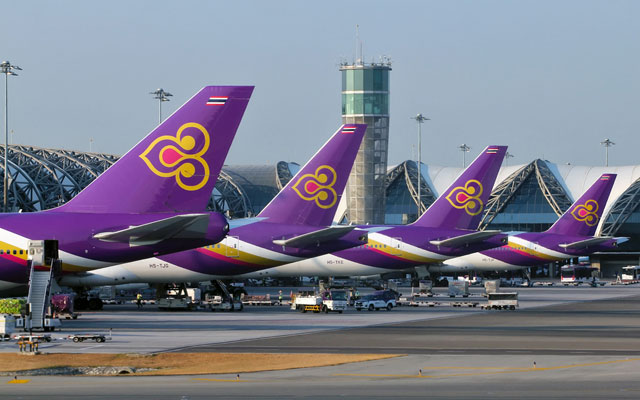
Thai Airways International (THAI) will suspend most of its international flights, in light of the ongoing Covid-19 pandemic.
From Wednesday, the national carrier will temporarily stop services to Hong Kong, Taipei, Tokyo (Narita and Haneda), Osaka, Nagoya, Seoul, Phnom Penh, Vientiane, Ho Chi Minh City, Hanoi, Yangon, Singapore, Jakarta, Denpasar, Kunming, Xiamen, Chengdu, Beijing, Shanghai, Guangzhou, Karachi, Kathmandu, Lahore, Dhaka, Islamabad, and Colombo.
THAI Airways suspends more flights
THAI Smile, its subsidiary, will take over domestic flights to Chiang Mai, Phuket, and Krabi provinces.
From Friday, THAI will suspend its flights to Brisbane, Sydney, Melbourne, and Perth.
From April 1, the airline will cancel most of its flights to Europe – London, Frankfurt, Paris, Brussels, Copenhagen, Oslo, Moscow, and Stockholm.
THAI previously suspended flights to Sendai, Sapporo, Fukuoka, Busan, Manila, Kuala Lumpur, Rome, Milan, Vienna, New Delhi, Mumbai, Kolkata, Chennai, Bengaluru, Hyderabad, Muscat, Dubai, and Auckland.
The airline will allow passengers holding THAI and THAI Smile code-share flights air tickets, issued before March 25 to convert unused tickets to travel vouchers, with a one-year validity, without fee and surcharges.
Eligible tickets must be for travel from March 25 to May 31, 2020 on Asian routes, and from April 1 to May 31, 2020 on European, Australian and New Zealand routes.
Royal Orchid Plus members with award tickets for travel from March 25 to May 31 this year may fully re-credit mileages or change the travel date without any fee or charge, with expired miles extended until September 30, 2020.
New, stiffer measures to be announced by Thailand will seek to limit people's movement to reduce potential viral transmissions
Thailand prime minister Prayut Chan-o-cha has invoked the Emergency Decree across the kingdom, which comes into effect today, March 26 until April 30, 2020.
The Emergency Decree will allow the prime minister to launch appropriate measures to prevent and mitigate the spread of the virus which has resulted in a total of 934 as of March 25, including four fatalities.
New, stiffer measures to be announced by Thailand will seek to limit people’s movement to reduce potential viral transmissions
The new measures, would would be aimed at limiting people’s movements, will join previously announced ones such as temporary closure of venues, and cancellation of events and festivals.
To help travellers as well as travel and tourism industry players keep pace with the fluid situation on the ground, the Tourism Authority of Thailand is publishing updates at the TAT Newsroom.
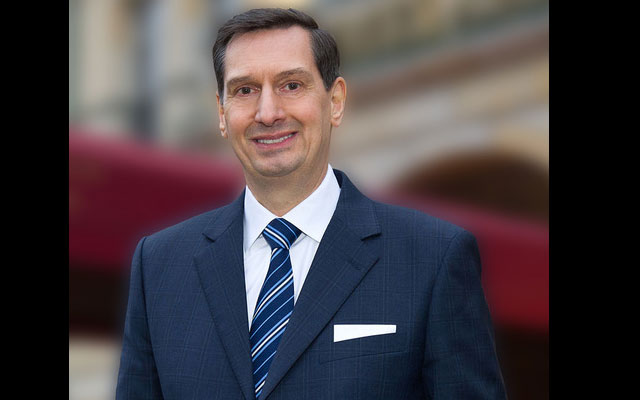
Matthias Al-Amiry has taken on a dual role with the Kempinski Hotels group – managing director of The Capitol Kempinski Hotel Singapore, and regional vice president South-east Asia for the Kempinski Hotels group.
Aside from managing The Capitol Kempinski Hotel Singapore, he also oversees Kempinski’s properties in Bangkok, Jakarta and Bali as well as the future Hotel & Residences in Kuala Lumpur. Al-Amiry is also responsible for future projects in the area.
The German, who recently held the position of managing director in Kempinski’s flagship property, Adlon Kempinski Berlin, brings more than 30 years of hotelier experience to Singapore.
In 2001, Al-Amiry was appointed the director of F&B and regional F&B director Europe at the Raffles Hotel Vier Jahreszeiten, Hamburg. He then joined The Peninsula Manila, Philippines, in 2003 as executive assistant manager in charge of F&B, before being promoted to resident manager in 2007.
In 2009, Matthias became the general manager of Al Faisaliah, a Rosewood Hotel Riyadh, Saudi Arabia. He then changed geographies once more in 2011, by taking on the role of general manager at the Raffles Beijing Hotel, People’s Republic of China. In 2014, he joined the MGM China development team, Macau as vice president hotel operations MGM China, Cotai.
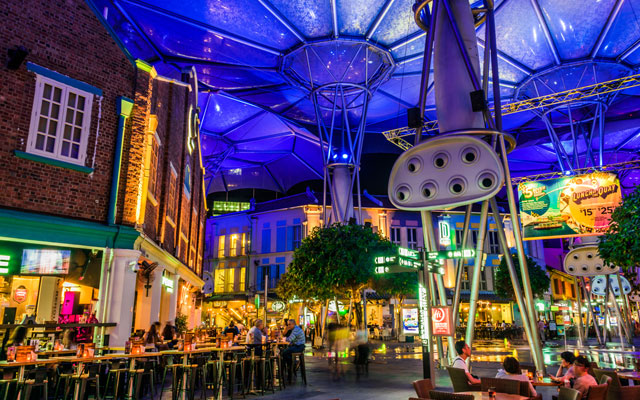
All Singapore organised guided tours, as well as entertainment venues such as bars, cinemas and theatres, will be shuttered from March 26, 23.59, to April 30, announced the government’s multi-ministry coronavirus task force yesterday (March 24).
It has also announced the suspension of all events and mass gatherings regardless of size. This includes shows within all attractions, group tours in museums, trade fairs and exhibitions. Social gatherings have also been limited to a maximum of ten persons.
Singapore enforces stricter measures; bars in Clarke Quay pictured
Other venues where contact is transient, like shopping malls, museums, attractions and restaurants, will remain open, but operators are required to ensure there is no more than one person per 16m2 of usable space.
Furthermore, Singapore residents returning from the UK and the US from Wednesday (March 25), 23.59, will serve out their 14-day stay-home notices at dedicated hotels, instead of at home.
Any citizen who breaches the notice would be liable for a fine of less than S$10,000, or a jail term of less than six months, or both.
Additionally, Singapore residents or long-term pass holders who leave Singapore from March 27 will be charged unsubsidised rates should they be hospitalised in public hospitals for Covid-19 treatment.
The measures come as Singapore reported 49 new Covid-19 cases, including 32 imported cases, on Tuesday. This brings the country’s total to 558 cases.
Announcing the measures, national development minister Lawrence Wong described them as pre-emptive, but necessary at a time of high risk.
He said: “The threat of a widespread virus outbreak is very real because the imported cases are continuing to rise due to the large number of returning Singaporeans, and despite our best efforts to isolate these cases to ring-fence any new clusters that pop up, the risk of local transmission will rise as we have more imported cases. So we have to take seriously the measures to protect ourselves, our family members and the people around us.”
He added that the measures may be extended past April 30 “if the situation does not improve”.
Singapore’s deputy prime minister Heng Swee Keat said through a Facebook post that on Thursday (March 26), he will present “a further set of measures aimed at preserving jobs and livelihoods, helping viable companies stay afloat, and supporting (Singapore’s) households”.
“More support will be given to the most severely impacted sectors,” he assured.
Once filled with merry folks on vacation or business people meeting and closing deals, several hotels in Asia are now readying for a new role as the battle against the Covid-19 pandemic continues.
Come next week, the five-star Media Hotel & Towers in Jakarta, Indonesia will begin operations as an apartment for frontline medical staff. All hotel facilities will be at the government’s disposal until the situation is brought under control, according to Fifi Aleyda Yahya, vice president corporate communications of Media Group.
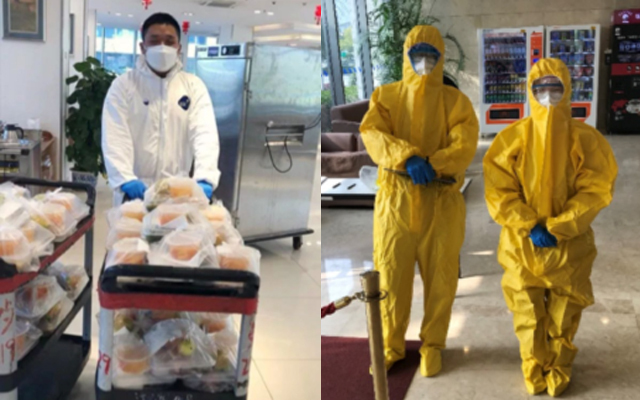
Staff at Nanjing International Expo Center, which serves as an isolation facility for Covid-19 patients, decked out in protective suits
Hotels in metro Manila, the Philippines and Sri Lanka have also reached out to their community with the same offer, to be used as quarantine centres or accommodation for medical staff.
With the number of suspected and confirmed Covid-19 cases growing, hospitals across cities are finding their capacities stretched beyond their limits while healthcare frontliners are exhausted and in need of a resting place close to their stations and yet away from their family.
The decision to volunteer one’s hotel as a medical facility does not come easy. It requires an alteration of operations, as taking care of holiday-makers and business travellers is different from looking after people with medical conditions.
When Nanjing International Expo Center (NIEC) in China chose to help alleviate the city’s pressure for isolation facilities, staff found themselves tasked with a fresh set of responsibilities along with protective suits as their new uniform.
Regarded as a landmark in the Chinese city of Nanjing, the Centre has 140,000m2 of exhibition space, a convention centre and a 252-key hotel.
Leo Liu, deputy director of sales & marketing with the Centre, told TTG Asia that a system had to be established, where a health docket was created for every guest, temperature screening was conducted twice a day, public spaces were sanitised twice daily, and garbage was carefully sorted out individually and transported for safe disposal.
NIEC had to work closely with the city’s health authority to establish critical procedures needed to safely isolate hundreds of people. Hotel staff also cooperated with government personnel, the police and healthcare specialists to ensure the safe storage of medical supplies such as masks, thermometers, alcohol, and disinfectants.
Amid all that, the Centre’s staff upheld their hospitality commitment.
Liu said: “We provided three daily meals, and we did our best to address the needs of our guests. We kept communications going with our guests who are in isolation in order to keep their spirits up, while observing them to ensure they get the necessary protection they need. For the latter, we had to play the role of educator, reminding them constantly of good hygiene practices and to ensure none of them gathered in the hotel for social purposes.”
Liu opined that all the hard work was worth it. “We need to assume social responsibility during these unusual times. We will continue to provide assistance to the community should our help be needed. The pandemic is spreading globally and becoming more serious, and there may be more cases from returnees to China. We welcome them and promise to provide a home-away-from-home environment,” he said.
Presently, the government is allocating returnees, including Chinese students from overseas schools, to various hotels in Nanjing that are serving as isolation centres. Suspected cases picked up at the airport are directed straight to hospitals and designated medical facilities.
TreadRight Foundation was founded by The Travel Corporation (TTC) in 2008, with a mission to have a positive impact on the people and communities we visit, which could be by way of supporting cultures; to protect wildlife – one of the things we are strongly against are attractions and activities that exploit animals; and to care for the planet we call home so that it will continue to be around for many, many generations to come.
Our work, through TreadRight, centres on those three pillars: People, Wildlife and Planet. These pillars were unveiled in 2018 along with our #MakeTravelMatter motto.
TreadRight is supported by TTC’s family of brands, and the projects undertaken according to each pillar will differ from brand to brand.
One thing unique about TreadRight is that all our projects must have a direct impact on the cause we are supporting. With this in mind, writing out a cheque for an NGO to use in whatever ways it wants is not what we do. We run micro projects that matter.
Can you give some examples of a micro project?
Trafalgar has a People project in Austria that supports the Kloster Wernberg Monastery. The monastery was falling apart and about to shut down. What we did was to work it into our Switzerland and Austria itinerary. We brought our tour groups over, where the nuns would prepare lunch using fresh produce from their garden and farm, with bread from the on-site bakery. Money earned from being part of our programme helped to support the monastery.
Another great example of a People project is an experience through Contiki that allows our travellers to visit the Iraq Al Amir Women’s Cooperative in Amman, Jordan on the Israel and Jordan Uncovered trip. This is a project centred on helping local women become financially independent through learning handicraft skills such as pottery and crafting goods that they can then sell at the Cooperative. Contiki groups visit the centre, enjoy a home-cooked meal and have the chance to interact with the women, learning about their lives and work.
Yet another interesting one is our support for Laboratorio Giuditta Brozzetti, one of the last Perugian-style weaver of its kind in Italy. Using funds provided by the TreadRight grants programme, the workshop in Perugia, Umbria was able to access new markets via e-commerce capabilities and continue to teach the tradition of weaving which promotes job creation, entrepreneurship, creativity and innovation, while contributing to the protection of Umbria’s cultural heritage.
Are these micro projects one-off, or part of a regular programme?
They are standard programmes because it makes no sense to support a cause just once a year. If we had brought our tour group just once last year to Kloster Wernberg Monastery, it may not be around again this year.
We make a conscious effort to really sustain our micro projects, so that it will have a long-term benefit.
How about Planet projects? How does a tourism company reconcile its business objectives to planet-saving objectives? The act of travelling – be it by plane, train, ship or car – produces carbon emissions.
We are quite conscious about our carbon footprint and we take steps to minimise it.
We advocate the use of coaches in our programmes, which emits less carbon emissions than airplanes. Our fleet of coaches is also never more than four years old, because older vehicles have reduced fuel efficiencies, plus newer models tend to have better fuel-saving technology.
Besides that, we have done away with single-use plastics on all our programmes. On Uniworld Cruises, for example, we no longer offer bottled water.
TreadRight grants support the Laboratorio Giuditta Brozzetti, one of the last Perugian-style weaver of its kind in Italy
Is there truth in the belief that sustainable travel will dampen the travel experience?
Not at all! We are removing single-use plastics, not quality hotel accommodation and experiences (laughs).
I think we need to look at how we communicate our sustainability goals and efforts to our customers. If we explain why we are bringing them to a rundown monastery to eat a home-cooked lunch instead of a fine restaurant for a feast, our customers will understand and appreciate the opportunity to support a community and valuable architecture. Sustainable projects provide travellers with greater emotional rewards.
Is it hard to convince travellers to get on board with your sustainable goals, or why these People, Wildlife and Planet projects are important?
At the beginning, yes, but mostly with the older generation of travellers.
The young ones, like our Contiki customers (only for 18- to 35-year-olds), understand our motive right away because environmental and sustainability concepts are taught in schools.
The older customers will ask many questions about why we are doing our programmes this way, but once they understand, there is no push back.
Increasingly, people want fulfilling holidays. Sure, there is fun in a holiday that is all about shopping and eating. But for many, a chance to give back to the destination they visit is also desired.
What new sustainable projects has TTC got?
As part of Trafalgar’s core mission to incorporate sustainable practices into all facets of its business model, it has set a goal to become plastic-free by 2022, under the guidance of parent company TTC.
In support of the Planet pillar, Trafalgar has donated to the UK’s National Trust and helped build a sustainable visitor centre at the Giant’s Causeway in Northern Ireland. By rebuilding the visitor centre with local, sustainable materials, it was possible to welcome more guests without impacting the environment. The new facility demonstrated the importance of enabling and preserving as opposed to running the risk of eliminating, with people roaming without regard for what they are seeing.
Indian prime minister Narendra Modi has ordered a 21-day nationwide lockdown which started immediately on March 25 at the stroke of midnight.
The decision will require the suspension of all road, rail and air services, as the country makes a bigger effort to contain the spread of Covid-19.
A busy scene like this at the Taj Mahal may not be seen in the next 21 days as India gets locked down
In a special televised address on Tuesday night, the prime minister said that even those nations with the best medical facilities could not contain the virus and that the social distancing is the only option to mitigate it.
Modi acknowledged that the lockdown would mean a hefty economic loss for the country but insisted that it was his priority to “save the life of each and every Indian”.
“Hence, It is my plea to you to continue staying wherever you are right now in the country,” he said.
According to the Associated Chambers of Commerce and Industry of India, the country has lost about 1.5 million foreign tourist arrivals for the months of March and April.
“Jobs and businesses are at stake. We, the inbound tour operators, are in serious trouble,” Arun Anand, managing director of Midtown Travels, told TTG Asia.
“We need to pay salaries to our staff despite having no business. Office rental and government taxes are making our lives more difficult,” he said.
With growing numbers of global infections, Arun is bracing for zero foreign arrivals to India for another seven to eight months.
Although the Philippines’ tourism sector is one of the hardest hit by the Covid-19 pandemic, it is also one of the fastest in responding to the needs of the community.
At least eight budget hotels in metro Manila have offered their facilities for free to house medical frontliners from various hospitals.
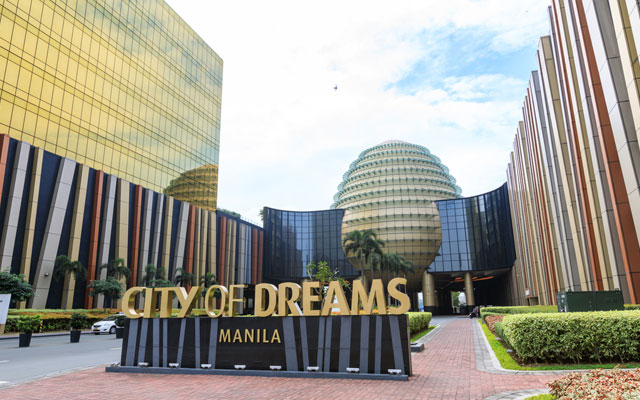
City of Dreams Manila is one of the resorts that have donated food and water supplies to relief centres and healthcare staff amid the Covid-19 pandemic
The number is likely to shoot up as the Congress and Senate have given the Philippines’ president the power to direct the operations of any privately-owned hospitals, medical and health facilities, as well as hotels and other similar establishments to temporarily house healthcare workers, serve as quarantine centres, and medical relief and aid distribution locations, with appropriate compensation.
The drastic need for more spaces ensued as some major metro Manila hospitals find themselves packed to the rafters and unable to receive more Covid-19 patients, which surged to 522 yesterday.
Since Luzon is on lockdown until April 12, all hotels and restaurants have been closed, domestic airlines have ceased operations, mass transport is suspended, and inbound and outbound travel banned.
The state-owned Philippine Amusement and Gaming Corporation announced that the metro’s four integrated resorts have donated 210 million pesos (US$4.1 million) to boost the government’s efforts in cushioning the economic impact of the Covid-19 pandemic.
Coming from Solaire Resort and Casino is 60 million pesos worth of personal protective equipment (PPEs) and N95 masks for medical frontliners in various hospitals dealing with Covid-19 cases.
Meanwhile, Okada Manila has shelled out 50 million pesos for testing kits, PPEs, validator/testing machines, masks and alcohol for the Philippine General Hospital.
On the other hand, City of Dreams Manila donated 675,000 kilos of rice, 500,000 bottles of water, 500,000 cans of sardines, 250,000 cans of tuna, 500,000 cup noodles, with a total worth of 50 million pesos to relief centres, affected families and healthcare providers.
In addition, Resorts World Manila released 50 million pesos for the procurement of PPEs and infrared thermometers, as well as other essential items for public hospitals and grocery packs to community beneficiaries.
City of Dreams Manila and Okada Manila have also lent their shuttle buses to help transport health workers in and around Paranaque City.