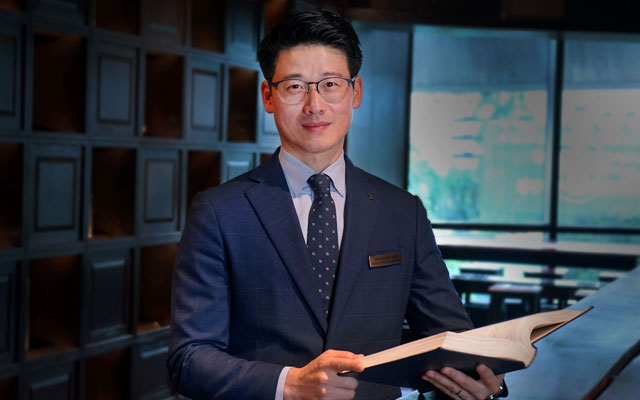
Tracy Ng has joined Grand Copthorne Waterfront Hotel as general manager.
Prior to her latest appointment, she was previously the general manager at Carlton Hotel Singapore.
Ng brings a wealth of hospitality experience spanning more than three decades, having embarked on her hospitality career after a stint with Singapore Airlines. She cut her teeth at properties such as The Elizabeth Hotel, Furama Hotel, Traders Hotel and Carlton Hotel.
All-inclusive resorts, which typically include accommodation, meals and entertainment, have long been a popular vacation mode among European travellers, but now the concept is catching on in the Asian market.
“In Europe, the all-inclusive resort concept is very common, and Europeans love to stay in the resort for 10 days or two weeks to just enjoy (the resort’s facilities),” noted Petra Gauthey, director of business development Asia, Riu Hotels & Resorts. “In Asia, we don’t see this trend of people staying so long (overseas), so we had to do quite a lot of branding and promoting of our all-inclusive resorts because that concept is not very common in Asia.”
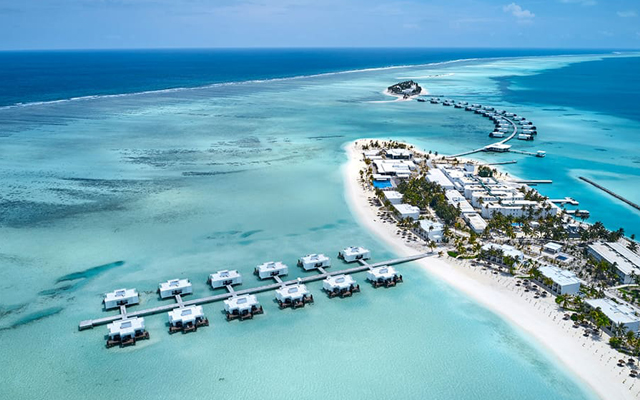
Riu Atoll, one of two resorts that the hotel group has opened in the Maldives this year, is attracting more Asian travellers
Already, Gauthey has observed an uptick in interest in the hotel group’s all-inclusive properties from markets in Asia-Pacific. “We (are seeing) a huge amount of clients from different Asian countries. China is the biggest Asian market for all our destinations, and also India because of the country’s proximity to our properties in the Maldives and Sri Lanka. We also have clients from South Korea and Japan.”
The 66-year-old Spanish hotel conglomerate, which owns 93 all-inclusive properties across 19 countries, has recently expanded its presence in the Asia-Pacific region, with resorts launched in Sri Lanka and Maldives.
To correctly communicate what their all-inclusive resorts provide, especially among “skeptical” travel agents, Gauthey said that Riu is stepping up on efforts in Asia to build awareness around their offerings, with the group’s latest effort being a recent workshop held at Parkroyal on Pickering, Singapore last week.
Singapore-based Fortune Travel’s senior sales manager Adrian Ang, who was one of the participants at the workshop, said that it was his first time hearing about the all-inclusive concept. “I think the response would be overwhelming if people knew that they could go to a resort where everything is included. I think the all-inclusive concept would be very well received in the Asian market. Nowadays, resorts have come up with a lot of creative ideas and activities for patrons to enjoy exclusively.”
But Ang, who sells package tours to corporate groups, admits that “budget-concerned clients” will be the main challenge in marketing the all-inclusive concept to Asian travellers. “Costs are still the top priority for most of our clients,” he said.
To overcome that obstacle, Gauthey said that Riu will look at pushing promotions during off-peak seasons. “Asian travellers are very focused on the pricing, so we will look at doing more promotions during the low season because that is the time when we can really drop our prices,” she added.
Gauthey debunks the common misconception that staying at an all-inclusive resort means having to fork out a fortune. Rather, she pegs Riu properties as “four- and five-star properties”, targeting in particular families and corporate groups looking for “comfortable, hassle-free holidays”.
In the region alone, Riu has already appointed two representatives in China and another two in India to promote the resorts, said Gauthey. “There are more travel agents in Asia who are approaching us now to find out more information about our resorts. Currently, we have direct contracts with about 20 agents in China and another 10 in India,” she said. In Singapore, Riu works with Hana Tours, a B2B agency, to distribute hotel rates for its properties.
Gauthey said that other Asia-Pacific countries on Riu’s radar are South Korea, Japan, Malaysia, and Australia.
The company also has a B2B website, www.riuagents.com, where agents can make direct bookings at any Riu hotels worldwide, earn points and stay free in Riu resorts worldwide once they have earned sufficient points.
As part of Riu’s Asia push, the hotel group is also dangling attractive agent incentives. Travel agents in Asia who make at least five new bookings for their clients in Riu Atoll or Riu Palace Maldives from November 1, 2019 till February 29, 2020 will score a four-night, all-inclusive stay for two pax in a double room in Riu Atoll. The prize is inclusive of a return domestic flight from Male to Kudahuvadhoo airport.
In future, Gauthey said that the company is also looking at running online workshops to connect with travel agents “in countries like Australia or India where there are many agents but they can’t be reached easily”.
As the China-Pacific Island Countries Year of Tourism 2019 drew to a close at the China International Travel Mart (CITM), which recently took place in Kunming, Yunnan, expectations were high among industry leaders that China will play a bigger role in the region’s tourism development landscape.
Christopher Roy Cocker, CEO, Pacific Tourism Organisation (SPTO), said: “The partnership has opened up tourism, with China now the fastest emerging market for the Pacific Islands. In 2018, out of the 2.1 million visitors, 5.8 per cent were Chinese.”
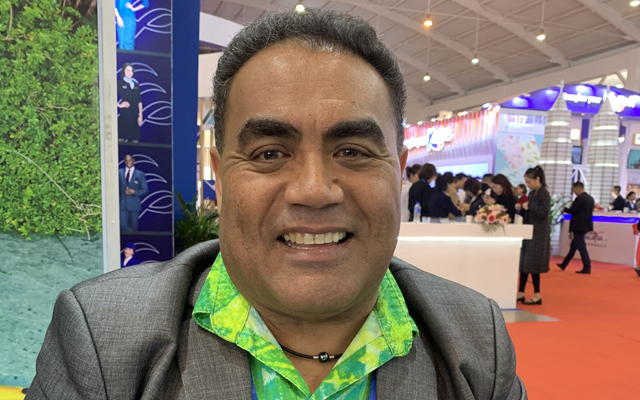
China now the fastest emerging market for the Pacific Islands: Cocker
When asked about the mission of SPTO – a representation of all 20 Pacific Islands – Cocker shared: “One of our aims is to get each destination to come up with their own USPs. Everyone knows the region has water sports, diving and fishing, but I can’t just sell sun, sea and sand. All 20 islands are different.”
A newcomer to this year’s CITM is Kiribati, a sovereign state whose niches lie in fishing, diving, bird-watching, and WWII relics. Said Petero Manufolau, CEO, Tourism Authority Kiribati: “We are hoping to make tourism our main economic driver, and move away from fishing. The Chinese market is a fantastic opportunity (to help this happen).”
Currently, few Chinese tourists make their way to Kiribati, which offers “lots of room for growth”, Manufolau said.
Similarly, the Solomon Islands is hoping to move away from logging and mining, and has expanded efforts on the development of the tourism sector as an economic driver.
Josefa Tuamoto, CEO, Tourism Solomons, told TTG Asia: “Resources have a shelf life. Mining, logging and fishing will come to an end. What’s next? Tourism.”
Currently, the Solomon Islands welcomes around 2,000 Chinese visitors – mostly business travellers – of the annual total of 30,000 tourists.
“China has the potential to bring in 30,000 for us in a month, yet we welcome only 2,000 in a year. The Chinese are the largest outbound market globally, and we want a piece of the cake,” Tuamoto remarked.
Seeking not just a “spike” in Chinese numbers but the cultivation of a “long-term relationship” with China, Tuamoto revealed that the Solomon Islands is now working on easing visa entry regulations for Chinese travellers, as well as developing specific products for the market.
As for the type of products Chinese travellers sought, Tuamoto said: “When I spoke to Chinese wholesalers, they shared that Chinese market wants soft adventure, such as snorkelling and trekking. They are also usually higher-spending, and more experienced travellers.”
China clearly has the makings of a luxury market for Vanuatu, which is among the earliest to tap the Chinese outbound travel boom, said Adela Issachar Aru, CEO, Vanuatu Tourism Office. She noted that Chinese travellers usually spent six to eight nights in Vanuatu, spending over US$2,000.
Aru shared: “There has been a 33 per cent increase in Chinese tourists over the last four years, with more arriving yearly.”
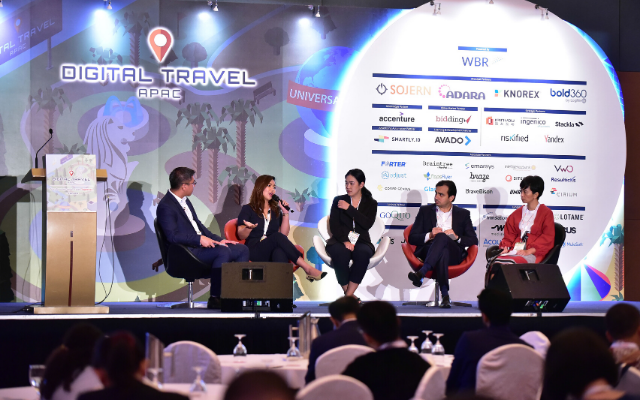
The fifth edition of the Digital Travel APAC, which will see the gathering of some of the world’s most innovative and disruptive travel companies, will be held from April 20-22, 2020 at the Resorts World Sentosa, Singapore.
E-commerce, digital marketing and customer experience leaders from Asia’s top travel businesses will converge at Digital Travel APAC 2020 to share their views on this emerging demographic of travellers.
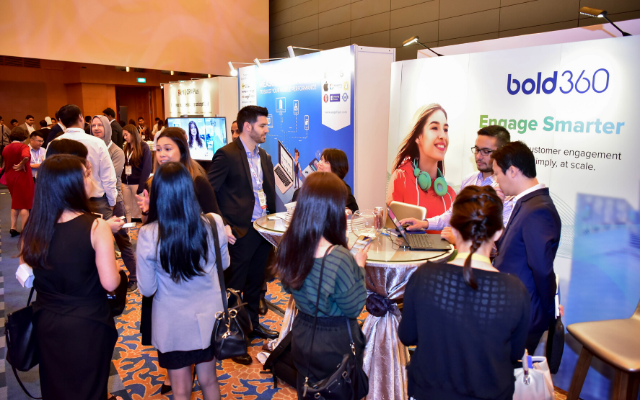
Digital Travel APAC
1 of 3
Already, forward-looking travel businesses are changing their strategy when interacting with today’s increasingly tech-savvy travellers.
Multi-device, mobile messaging platforms such as WhatsApp, WeChat and Facebook Messenger are a key tool in enriching the consumer experience.
From pre-sale enquires to flight reminders and chat assistance during their trip, agencies staying connected to their customers leads to higher satisfaction levels.
The SITA, 2025: Air Travel for a Digital Age report shows that 68 per cent of all passengers will be digital travellers by 2025, and will expect to manage their travel in much the same way they do every other aspect of their daily lives – using their mobile phones.
Digital Travel APAC will further explore the industry drivers of tomorrow’s travel business in an interactive two-and-a-half-day conference.
Key topics of discussions include:
Perfecting Personalisation – How to deliver a single view of the customer and real-time data access to deliver a hyper-personalised experience
Data-driven personalisation – What are the people, processes and technology requirements for rolling out a practical strategy that delivers on the customers’ individual needs from the get go?
How to understand customer needs to deliver personalised travel solutions in multiple markets
The discussions will be led by an advisory board comprising Cheryl Goh, group vice president of marketing, Grab; Jerome Thil, vice president of digital innovation, Singapore Airlines; Ronald Dalderup, vice president of innovation, Shangri-La; Nandor Locher, head of digital direct, Qantas; Akira Mitsumasu, vice president of global marketing, Japan Airlines; Andrew Cefai, senior director, marketing & e-commerce Asia-Pacific, Hilton; Piotr Jakubowski, ex-chief marketing officer, Go-Jek; and Vikas Bhola, regional director, South Asia-Pacific, Booking.com.
2020 will also see the travel event hold new formats for deeper engagement and discussions:
“How to” roundtables – A highly interactive small group format that allows participants to choose their desired topics while enjoying a glass of champagne.
Country Clinics – Deep diving into upcoming markets like Vietnam, India, Indonesia, China
Shark Tank – Identifying “the next best thing” in travel tech
Further information about event can be viewed here.
Readers of TTG are entitled to a 20 per cent discount to attend Digital Travel APAC 2020; simply quote ‘DTA20_TTG’ on checkout or email to sgwbrinfo@wbresearch.com.
Hyatt Hotels Corporation will introduce its first dual-branded Hyatt Place and Hyatt House project in South-east Asia, with the 300-key Hyatt Place Saigon, District 7 and 250-key Hyatt House Saigon, District 7 slated to open in Ho Chi Minh City come 2023.
The result of a management agreement between a Hyatt affiliate and Xuan Mai Sai Gon Construction Investment Joint Stock Company, the new hotels will form part of the Eco Green Saigon 13ha mixed-use project, which will also include residential units, office space, event space, and a primary school.
A rendering of the upcoming dual-branded property by Hyatt in Vietnam
Hyatt Place Saigon, District 7 will feature a café, a bar, a lobby lounge, three meeting rooms, an outdoor pool and fitness centre.
Hyatt House Saigon, District 7, which will predominantly cater to guests looking for longer-term accommodations, will consist of 250 rooms divided into studios and one-bedroom suites, a bar, a lobby lounge, a meeting room, an outdoor pool and fitness centre.
Solo travellers in Asia are leading the charge by a large margin, as the concept has already been relatively popular in western nations
The vast majority of travellers – regardless of age, gender, or nationality – are keen on solo travel, according to a Klook-commissioned Solo Travel study conducted by YouGov.
The study, which polled close to 21,000 respondents across 16 markets, found that 76% of them have either travelled alone or are considering it.
The number of travellers in Asia who are more inclined to travel solo are growing
When comparing generational preferences, 80% of Generation Z (18 to 24 year olds) respondents and 79% of Millennials (25-39) said they have already travelled alone or would be keen to plan a solo trip.
Similar trends were also found among the older generations: roughly 73% of Generation X (40-54) and 71% of Baby Boomers (55+) said they were interested in travelling alone. There is also little difference between genders, with 74% of women and 78% of men saying they have either already experienced or would be interested to pursue solo travel.
And while there has been an uptick in interest globally, the data shows that solo travellers in Asia are leading the charge by a large margin. Between 69% and 93% of travellers from Asia have either travelled solo in the past or said that they are open to the idea. In western countries, by comparison, that number hovers between 60% and 69%.
When asked about their reasons for flying solo, half of the respondents said that they wanted to enjoy uninterrupted “me time” or reward themselves, suggesting that travellers value their independence more than ever.
However, the same survey also found that while many people said that they are interested in hitting the road alone, they also had reservations about potentially feeling lonely. In fact, half of the survey participants who wanted to solo travel cited a “fear of loneliness” as the biggest hurdle. This concern was prevalent across all generations – with Gen Z, Millennials, Gen X and Baby Boomers all ranking loneliness as their top concern.
Additionally, 48% said that safety was their biggest worry; and 30%, planning and booking the itinerary on their own.
Vietnam-based travel booking platform VLeisure has partnered with Travel Prologue, a hotel direct booking service provider, to deliver live room rates and inventory to B2B channels like travel agencies, wholesalers and corporate travel intermediaries.
Under the partnership, VLeisure is able to provide an open ecology network to its customers, while leveraging on Travel Prologue’s hotel connectivity services and network of hotels such as Mandarin Orchard Singapore, Furama Hotels International and Berjaya Hotels & Resorts.
Phan: sharing technology is the way forward for the business
VLeisure’s technology will deliver “seamless payment solutions and many more efficiency driven modules for wholesalers and agents”.
VLeisure’s CEO Phan Le said: “An open ecosystem for the travel industry will be the next development in the hotel distribution business. There is no longer a ‘one man wins’ in hotel distribution anymore, making it more of a level playing field. Sharing technology is the way to go and Travel Prologue shares the same ideology with our vision on this.”
Travel Prologue’s managing director Ho Siang Twang said: “Our B2B hotel direct booking service, Trip Affiliates Network, is designed to help hotels and their B2B channels improve their direct bookings with one another.”
Hertz is marking its 60th anniversary with the addition of 60 Mini vehicles, including the Mini Cooper, the Mini One and the Mini Countryman, to the premium British Collection.
To launch the expansion, Hertz has asked the vehicle wrapping company Yannimize to “dress up” some of its Mini cars in vinyl, featuring three eye-catching designs. The artwork showcases the traditional red, white and blue of the Union Jack, alongside 16 typically British cultural references.
Minis are available for rental in the UK from Hertz
“Mini is an icon of British style and culture, and as such, it had to be part of our British Collection,” Hertz UK’s country manager Richard Davies said. “With the British Collection sporting Jaguar, Land Rover and Mini models, as well as an exclusive, personalised service, we trust customers will be pleased to join the ‘Best-of-British’ vibe.”
The newly added Mini models are available at Hertz locations in Edinburgh Airport, London Heathrow Airport and London Marble Arch.
JW Marriott Hotel Bangkok has appointed Dongwoon Kim as director of sales and marketing.
A Korean national, Kim joins JW Marriott Hotel Bangkok from Renaissance Riverside Hotel Saigon, where he was also director of sales & marketing.
His previous stints include the positions of director of sales and associate director at the Grand Hyatt Guangzhou, and other sales positions at the Hyatt Regency Jing Jin City Resort & Spa, and the Hyatt Regency Xi’an.
Royal Caribbean International has entered into a new multimillion-dollar marketing partnership with Singapore Tourism Board and Changi Airport Group (CAG) to promote fly-cruises.
The five-year tripartite collaboration is expected to bring some 623,000 international fly-cruise visitors to Singapore, and generate over S$430 million (US$315.6 million) in tourism receipts between end-2019 and 2024.
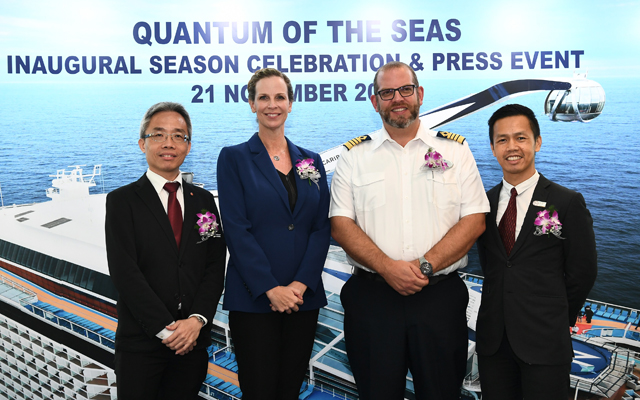
From left: Changi Airport Group’s Peh Ke-Wei; Royal Caribbean Cruises’ Angie Stephen; Quantum of the Seas’ captain Sindre Borsheim; and STB’s Keith Tan at the event to mark the tripartite collaboration to promote fly-cruises
The partnership targets key regional markets including China, India, Indonesia and Malaysia, as well as longhaul markets like Australia, the UK, and the US.
Angie Stephen, managing director Asia-Pacific, Royal Caribbean Cruises, is confident that the partnership will “extend beyond five years”. She told TTG Asia: “This is because of the success that we’ve seen over the past 11 years. Cruising, and the awareness of cruising, is just getting started in Asia. I am very optimistic about the growth of cruising, (which is further) buoyed by a rising middle class.”
The partnership is also expected to generate at least 60 per cent higher tourism receipts compared to the previous partnerships combined. The first partnership ran from 2015 till 2018 to market Mariner of the Seas, followed by another three-year partnership launched in 2017 to promote Ovation of the Seas and Voyager of the Seas. Both partnerships generated a total of S$260 million in tourism dollars.
Aside from being a significant generator of economic benefits, South-east Asia’s cruise tourism sports a positive outlook, as the sector is expected to post growth of between 4.6 per cent and 6.4 per cent per annum to reach 4.5 million cruise passengers by 2035.
To support fly-cruises, a fast-growing passenger segment, CAG launched a seamless intermodal transfer service for passengers flying into Singapore and sailing out on cruise lines and ferries.
Passengers who take up this service will have their bags delivered from their arriving flights to their departing ship and enjoy facilities of the Changi Lounge located in Jewel Changi Airport, before being transferred to the cruise terminal. From December 1, 2019, Royal Caribbean guests sailing out of Singapore from China will be able to enjoy this seamless transfer service as part of the new fly-cruise travel packages.
This announcement is in tandem with the cruise line’s five-year Quantum Class ship deployment in Singapore. To kick off the partnership, Quantum of the Seas has arrived fresh from her multimillion-dollar refurbishment for her six-month homeporting season in the city state – Royal Caribbean’s longest ever Singapore deployment for a Quantum Class ship – which is expected to carry some 150,000 overseas and local guests.
Royal Caribbean also announced new amenities onboard the refurbished Quantum of the Seas, including an escape room and glow-in-the-dark laser tag, which target multigenerational travellers.
“We’re also working on a new children’s programme that we hope to announce next year. We’re also looking at themed cruises – for instance we’re partnering a local radio station in March 2020 – and we’ve also successfully completed a halal-certified cruise for a partner in Malaysia with 500 guests on Voyager of the Seas two weeks ago,” Stephen shared with TTG Asia.
She noted that it marked the cruise line’s first halal-centric initiative, and based on its success, is certainly something “we can explore in the future”.