More domestic tourists are heading to Shanghai than ever, drawn by the metropolis’ ever-growing supply of internationally-branded theme parks and attractions.
Shanghai Disneyland, for instance, is a popular attraction that welcomed 11.8 million visitors in 2018, up from 11 million in 2017 – its first full year of operation.
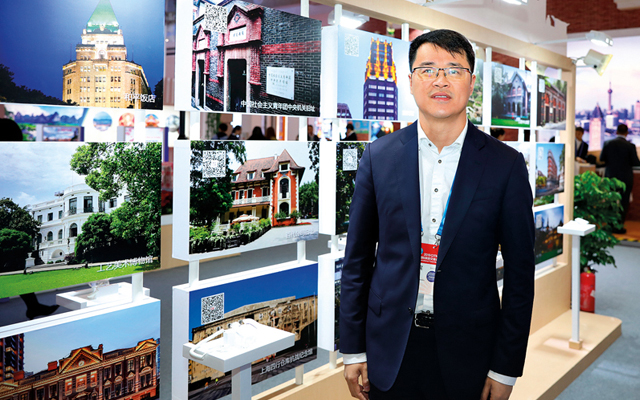
Chen: Shanghai’s tourism authorities are rolling out new products and attractions to attract leisure travellers from the various Chinese provinces
Shanghai Municipal Administration of Culture and Tourism, marketing and promotion department’s director, Patrick Chen, said: “In Disneyland, domestic tourists spend quite a fair bit on the hotel rooms and make purchases at the park. Also, these visitors are usually the younger generation who tend to spend more, as well as travel more.”
When Legoland Shanghai opens in 2023, Chen is confident that the theme park will “bring in even more domestic traffic”, while the constantly expanding high-speed rail network will “improve connectivity” within the vast country. Currently, more than 180 cities across some 30 provinces are connected by high-speed trains.
But domestic tourists are drawn to Shanghai not just for its renowned attractions, as the Chinese port city also plays host to other global events throughout the year, such as the MotoGP world championship, WGC-HSBC Champions golf tournament, and ATP Masters 1000 Shanghai tennis tournament.
“We are also constantly updating our products and attractions, e.g. an acrobat show run by a French company, to attract leisure travellers from the various Chinese provinces,” Chen shared.
In 2018, Shanghai welcomed 340 million domestic tourists, contributing a total revenue of RMB447 billion (US$64 billion).
Aside from domestic tourists, Shanghai is “of course” actively wooing the international market, Chen stressed. About 8.9 million overseas tourists visited Shanghai last year, up 2.4 per cent year-on-year.
While Chen believes Shanghai is likely to attain nine million international tourists in 2019, reaching the goal of achieving 10 million overseas tourists by 2020 is “slightly difficult”.
Chen explained: “To do this, I have to add around three million flight seats on international flights (which poses a problem). Currently, 70 per cent of the inbound traffic are Chinese, and only 30 per cent are foreigners.”
When asked if cruising may help to bolster inbound numbers, especially as China’s cruise industry has grown rapidly in recent years, he said that cruise ships bring in about 13,000 international passengers yearly, as homeporting ships generally catered to Shanghai’s outbound.
“I hope to see more international calls from cruise ships, especially from luxury lines such as SilverSea and Ponant. These high-spending cruisers usually fly into Shanghai, stay a few days, before cruising to Japan and South Korea, helping to contribute to the local economy,” Chen explained.
Hopes are high that China’s swelling middle-class travellers will be able to help steer Myanmar’s lagging tourism industry to recovery.
As many longhaul markets continue to shrink for Myanmar, China has emerged the front runner in arrivals. Yangon International Airport welcomed 80 per cent more Chinese visitors in the first eight months of 2019, based on the latest available figures.
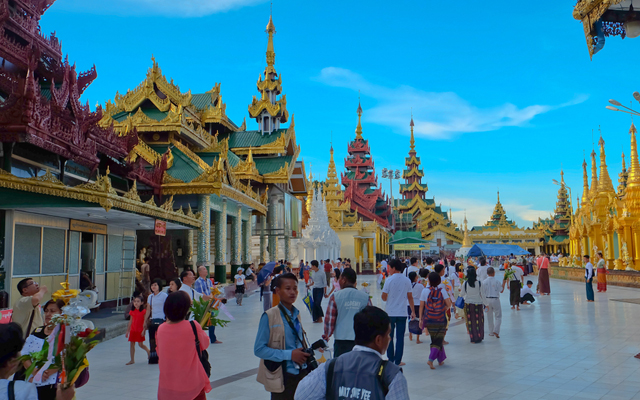
Myanmar is placing high hopes on Chinese travellers to boost its floundering travel industry
Sammy Samuels, managing director of Myanmar Shalom, said: “The Chinese are playing a key role in stimulating the tourism industry’s recovery.”
He added that the spike in visitors from China is helping fill hotels, with some starting to see full occupancy, while there have been reports of large groups taking hot air balloon trips in Bagan.
Pan Pacific Hotels Group’s two Yangon-based properties have been “encouraged” by the uptick in interest from China – now its strongest source market – amid slumping markets, said Neo Soon Hup, executive vice-president, operations.
An increase in charter flight connections to Chinese destinations will spur greater awareness of Myanmar as a travel destination, noted Khiri Travel Myanmar general manager Melissa Tan, and subsequently more “discerning segments will follow”.
But to truly tap into China’s potential as a visitor source market, Myanmar needs to promote experiences away from what can be had in China – and they need to be accessible, she added.
“We also need to proactively promote multiple facets of the country rather than being seen as solely Buddhism-led experiences, which limits attracted market segments,” Tan said.
The Hilton Garden Inn brand will be making its entry into Pattaya through a management agreement with Honour Hotel and Retail.
Slated to debut in 2022, Hilton Garden Inn Pattaya City will be the second Hilton Garden Inn hotel in Thailand signed this year, following the announcement of the upcoming Hilton Garden Inn Bangkok in June.
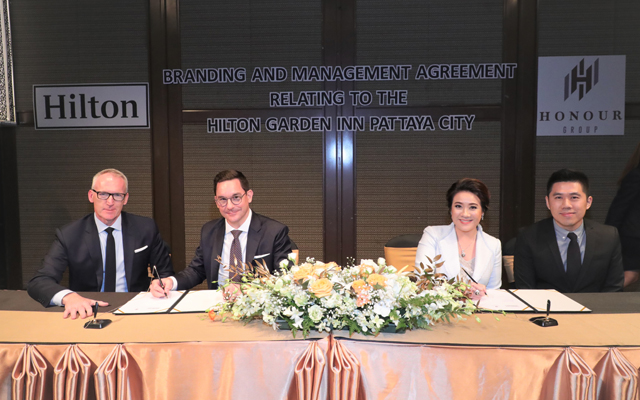
Hilton’s representatives ink deal with Honour Hotel and Retail’s executives to open Hilton Garden Inn Pattaya City
Situated in North Pattaya, Hilton Garden Inn Pattaya City will be part of a mixed-use development featuring more than 2,000m² of commercial and retail space, as well as an adjacent 427-unit residential tower.
The hotel will feature 315 rooms ranging from 26m² to 52m² Two Bay Suites, an all-day restaurant, bar, and fitness centre, along with on-site parking.
There is currently one hotel managed by Hilton in Pattaya, operating under its flagship Hilton brand.
Japanese travel B2B wholesaler Overseas Travel Service (OTS) has formed an exclusive partnership in Asia with Travel Prologue (TP), a Singapore-headquartered hotel direct booking service provider.
This new strategic partnership for distribution is a pivotal thrust on the part of OTS to broaden its distribution network and supplier base outside of Japan, said the company in a statement.
Overseas Travel Service partners Travel Prologue to broaden distribution network beyond Japan
In order to tap into both the supplier and B2B channels, OTS, which supports over 6,000 agents in Japan, is partnering with TP on its B2B platform, Trip Affiliates Network (TA Network).
OTS’ managing director Mizuho Kayama said the partnership with TA Network will provide OTS with “the support to instantaneously contract dynamic rates” in excess of 300 hotels across Asia, excluding Japan.
Kayama revealed that OTS will be launching a new hotel group booking service by year-end, in collaboration with TA Network in Asia.
Travel Prologue’s executive director Josef Foo, said: “The OTS hotel group booking initiative extends our current FIT focus to a new group booking service. This enhances the hotel services we provide to our hotel and travel affiliates within TA Network.
He added: “Our strategic partnership with OTS broadens our entry into Japan and accelerates TA Networks’ expansion and footprint in Asia. This further enhances TA Network as an add-on SaaS solution. This will connect Asia-Pacific’s leading travel wholesalers, agents, and management companies, on a single platform.”
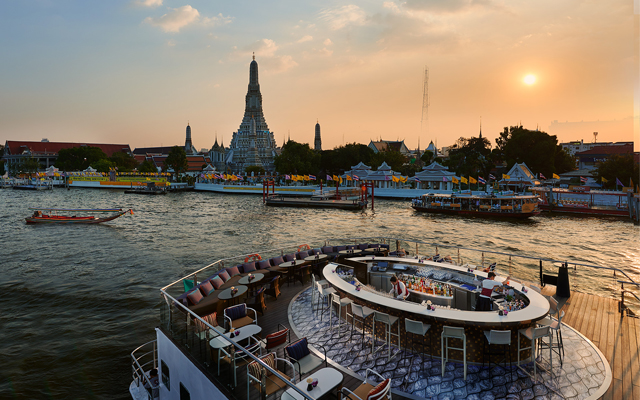
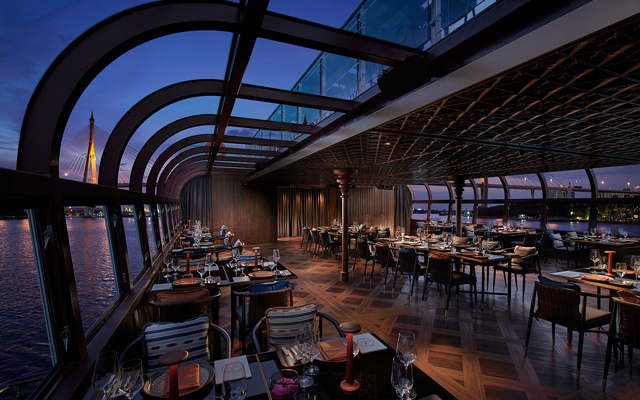
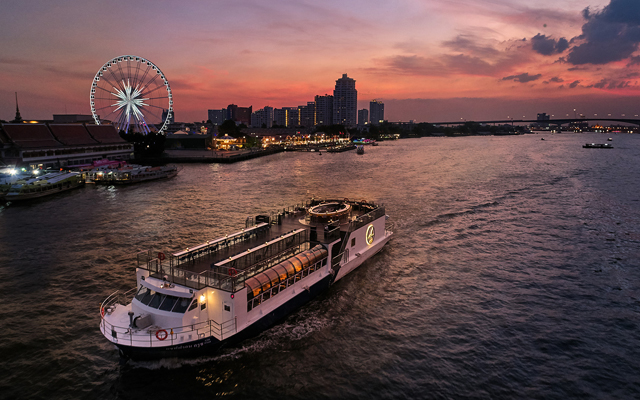
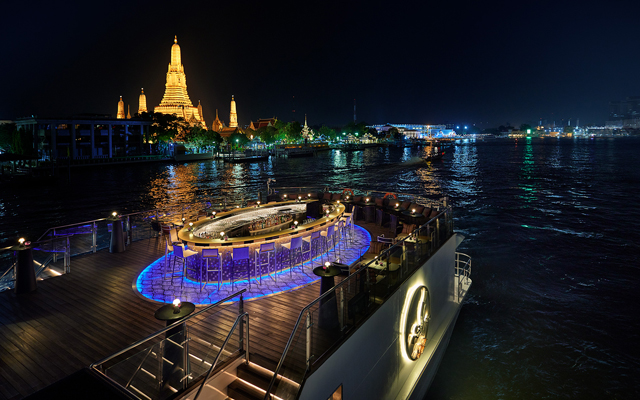
Banyan Tree Bangkok Hotel has launched the Saffron Cruise, a new riverboat cruise service offering a dining experience along the Chao Phraya River.
The 38m-long vessel features a show-kitchen restaurant and bar on the open-air main deck for alfresco daytime and evening dining, with air conditioning available upon request. Guests can also enjoy authentic Thai dishes courtesy of Banyan Tree’s signature Thai restaurant Saffron.
Saffron Cruise
1 of 4
As well, the ship’s rooftop Moon Deck features a stool-sit bar and lounge plus a scenic Sky Bridge. On-board ambience includes live entertainment and cultural performances.
As a leisure river cruise service, Saffron Cruise also offers MICE hosting, including business and trade group meetings and company incentive events. Private charter packages include cooking classes, tailored spa treatments from the Banyan Tree Spa, engagement and wedding ceremonies, cultural/scenic tours, and more.
The cruise takes guests along the Chao Phraya and a cluster of popular riverside cultural sites and attractions, including Wat Arun/Temple of Dawn, The Grand Palace, Asiatique, and Royal Barge Museum.
Daily sunset cruise, inclusive of one standard drink at the Moon Deck, is priced at 550 baht (US$18) per person.
Daily dinner cruise, inclusive of a five-course Thai set menu plus one cocktail at Moon Deck, is priced at 3,200 baht per person.
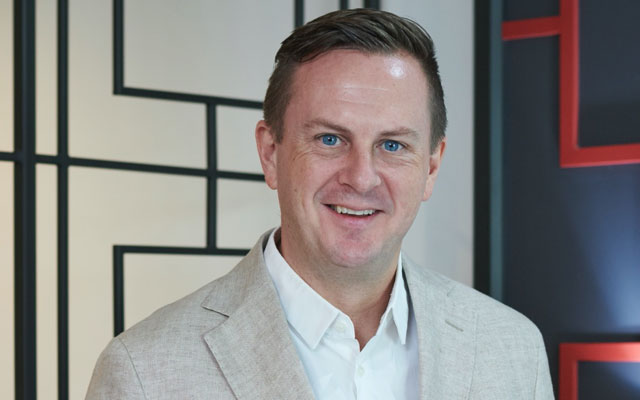
Simon Barnett has been appointed hotel manager at Four Seasons Hotel Singapore.
With more than 25 years of varied experience and hospitality expertise, he was most recently hotel manager at Four Seasons Hotel Sydney.
Prior to that, he served as director of catering and conferences services in Four Seasons Sydney, as well as director of sales and marketing at the hotel.
Barnett has worked for international hospitality groups across the globe, including five years as director of sales and marketing at Jumeriah Hotels & Resorts in London and New York, and tenures at Hilton Hotels in the UK.
Villa de Pranakorn, operated by Unicorn Hospitality, has announced that Erik Lannge will be joining the property as general manager.
Lannge has been tasked with handling the pre-opening stages, as the 47-key property prepares to open its doors at the end of next month.
He has over eight years of experience in the hospitality sector, having first joined Oakwood as a management trainee, specialising in F&B. Lannge then moved to Rembrandt Hotel Bangkok, and later became the director of F&B at the Novotel Bangkok Siam Square.
In 2017, Lannge was appointed general manager of X2 Koh Samui, before being promoted to the role of cluster general manager for X2 Kui Buri, X2 Le Bayburi, and Away Pranburi Beach Resort.
Airlines are starting to put customers at the centre of airline retail experience, making great strides in their websites and digital offerings
Recent retailing agreements a “breakthrough” in rich data distribution, and experts say travel consumers will soon benefit from a modern flight shopping experience that more closely resembles Amazon or other e-commerce sites
Besides enabling modern flight shopping at scale, distribution of ATPCO’s rich content through Sabre and Amadeus platforms is expected to bring greater workflow efficiency for travel agents
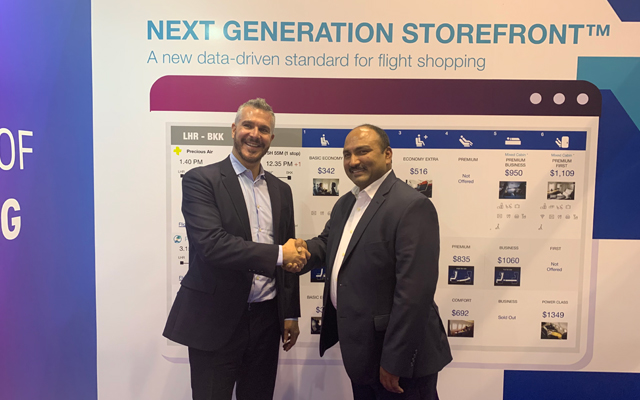
ATPCO’s Robert Albert and Sabre’s Rakesh Narayanan discussed how the scalability of rich airline distribution would change flight retail experience for travel agents and consumers alike at the recent IATA Airline Industry Retailing Symposium
For an industry that is hooked on data and technological advancement, personalised online merchandising for airlines remains one of its under-invested areas, but growing digitalisation, together with changing customer expectations, are expected to drive a rapid transformation in the airline digital retailing space in the next decade.
That the airline industry, unlike the sophisticated retailing techniques already dominant in other sectors, has yet to embrace the retail model fully in tandem with fast-changing consumer behaviour and preferences, was a common refrain expressed by airline executives during the recent IATA Airline Industry Retailing Symposium, which took place in Bangkok.
Amazon experience for the skies? But in “an era of complete retail”, it is especially critical that airlines make flight shopping “far more intuitive” and “far more value focused” in order to attract a new generation of travellers who expect airlines to “offer the same level of personalisation as everyday retail they interact with”, said Henry Harteveldt, founder of Atmosphere Research Group, a consultancy focused on global travel.
Urging airlines to improve their flight shopping experiences by emulating successful retailers such as Amazon and Starbucks, whose sites offer rich product information, photos and videos, Harteveldt also advised greater and savvier use of the massive information that carriers have of passengers by delivering highly personalised offerings to fulfil as many travellers’ end-to-end needs and capture the maximum share of wallet.
Such a move will enable an airline to position itself as “a travel site, not just an airline site” to passengers, allowing it to differentiate from competitors, Harteveldt argued.
“We are at the point now where technology, the customer, and marketing and distribution all come together to support your ability to really be a complete retailer,” he stated. “We’ve got NDC (New Distribution Capability) now going; we’ve got companies that are certified level four or NDC at scale; and we’ve seen a huge amount of investment and effort by many airlines to participate in NDC and ONE Order… so a lot of the key obstacles have been removed or can be managed.”
Scaling up distribution of rich airline content But disruption appears not far off on the horizon. The long-term retailing agreements that airfare clearinghouse ATPCO recently entered into with Sabre and Amadeus signal a major transformation underway in flight shopping.
Through the ATPCO partnership, airlines’ so-called rich content – including photos, graphics and videos of the product offerings on board, say, legroom or meals in any fare class – will be funnelled into both GDSs’ various flight shopping interfaces and applications serving travel agencies, OTAs, corporate booking tools and other sellers. Both travel technology companies have also pledged to support ATPCO’s Next Generation Storefront (NGS) standard.
As well, Kayak has also signed a multi-year retailing deal with ATPCO to integrate all three Routehappy Rich Content types – Amenities, Universal Ticket Attributes, and Universal Product Attributes – for its portfolio of travel brands.
Such partnerships are a “catalyst” in the modernising of the flight shopping experience, pushing the distribution of rich content into the next level, said Robert Albert, EVP retailing at ATPCO and founder of Routehappy.
Since launching Routehappy in 2011, Albert has been urging airlines to address the differentiated and unbundled offerings that have mushroomed in the industry over the last decade before his venture was acquired by ATPCO in February 2018.
Airline retailing capabilities and distribution have been a perennial “chicken and egg problem”, insisted Albert. “Airlines weren’t committed to rich content as there weren’t places to put the rich content, and sales channels weren’t committed to rich content because there wasn’t a repository of rich content,” he noted. “We hope (both the Amadeus and Sabre deals) are going to inspire the whole industry to get much more serious basically because there are so many more places to put it out.”
Ludo Verheggen, director of global air content strategy at Amadeus, agreed: “Airline retailing until now was very much price driven. And what we need to make sure is that it really becomes value proposition driven, so that the airlines can really convey correctly the whole value that they are bringing – what’s included in the fare but also what’s on board the flight experience. And it’s clear today there are limitations when it comes to how we convey that flight experience to travel buyers.”
More efficient workflow for travel agents Besides enabling modern flight shopping at scale, another distinct advantage that the integration of ATPCO’s rich content through Sabre 360 platform is greater workflow efficiency for travel agents, said Rakesh Narayanan, vice president, regional general manager, South Asia and Pacific, Travel Solutions Airline Sales at Sabre, as agents no longer have to leave the Sabre interface to look up information on airlines’ websites or elsewhere and then come back.
“Earlier, it used to be through an API, and wherein every single request would have to come in and out of the system. A travel agent or website and OTA will go to RouteHappy/ATPCO for the content for the rich content, and to come to Sabre for another content,” Narayanan said.
“But now the agent just have to come to Sabre – the one pipe which is highly efficient and scalable, and where they will get the regular content plus rich content through the same pipe and the same interface. So that’s why it’s a huge leap forward for both the industry and both of us (Sabre and ATPCO).”
Furthermore, in an age where travellers are placing a premium on experiences, having access to such rich content will enable travel agents to play the role of consultants more effectively. Instead of a potential passenger having to visually imagine how products differ across airlines or classes when doing price comparisons, Narayanan has observed high-street travel agents “actually turning their screen around to show customers what exactly they’re investing into”.
Meanwhile, Sabre is currently working on pushing rich content distribution through APIs for OTAs, with “more progress and announcements coming in the next few months”, said Narayanan. “We’ll also integrate that into our passenger services, or CSS, the SabreSonic system. The agreement we have is a comprehensive one to cover every aspect of the distribution channels.”
The pace of rich airline merchandising adoption is only going to get quicker, insisted Albert. “One of the things that we’ve learned along the way is rich content is so much more complex than anyone realised at the beginning, and everybody has so much to do to make our technology work and transform flight shopping into the modern age… but we got a whole global interconnected industry that has to work together to change something, and it’s actually happened.”
But like most things related to airline retailing, industry players expect the integration to take some time before next-gen selling becomes a norm. “With NDC, the analogy was being made about the plumbing right now,” said Amadeus’ Verheggen. “I would say with rich content, the same is going to happen.”
Horses grazing in Sichuan's Yading Nature Reserve in autumn
In hot pursuit of Indonesia’s outbound market, Sichuan Provincial Department of Culture and Tourism is intensifying its marketing efforts by providing 40 per cent advertising subsidies to travel companies in Indonesia which include Sichuan in their promotional materials.
The scheme, introduced at the Sichuan Tourism Roadshow in Jakarta last week, is part of Sichuan government’s efforts to raise the province’s profile among Indonesian tourism agencies.
Horses grazing in Sichuan’s Yading Nature Reserve in autumn
Besides organising fam trips for agents and the media from Indonesia to promote Sichuan’s various attractions, the government will also provide free landing reception, cultural performances and transportation, according to Yuan Shijun, director of international cooperation and exchanges, culture and tourism department of Sichuan Province.
Sichuan is targeting 200,000 arrivals from Indonesia in 2022 – a growth of 10 to 15 per cent as compared to the 40,000 Indonesians who visited the Chinese province from January to November 2019.
Overall, official data from the Sichuan province showed that the south-western Chinese province welcomed some 3.7 million overseas visitors in 2018, representing a 10 per cent year-on-year increase. The number of Indonesian visitors, on the other hand, only accounted for about five to seven per cent of total arrivals in Sichuan.
Yuan noted that the low visitorship was in part due to the absence of direct flights between Sichuan and Indonesia, with visitors having to transit in several countries and regions, such as Malaysia, Singapore, and Beijing.
“We are encouraging agents to charter flights from Indonesia to Sichuan. The government will provide a subsidy of RMB500 (US$71) per tourist for travel companies which charter flights from Indonesia to Sichuan,” he said.
While capitalising on Sichuan’s unique position in the world as the home of pandas, the provincial government also plans to expand its “Sichuan, more than pandas” campaign to raise awareness of the province as a key tourism destination in international markets.
Yang Xingping, vice-governor of Sichuan Province, said: “We have enough products in Sichuan (to attract tourists), including five UNESCO World Heritage sites – Jiuzhaigou Valley, Huanglong Valley, Emei Mountain-Leshan Giant Buddha, Qingcheng Mountain-Dujiangyan Irrigation System and Sichuan Giant Panda Sanctuaries.”
In coming years, Sichuan’s major tourism offerings will include 10 areas such as Sichuan’s capital city Chengdu; the greater Emei Mountains area; the greater Jiuzhaigou; National Highway 318 and 317, which link Sichuan and the Tibet autonomous region; the greater Shangri-La-Gongga Mountains area; the greater Shangri-La-Yading; as well as the Jialing River area and Qinba Mountains area.
Yang added that the province, thanks to its rich resources, is on track to grow into a major tourism destination in China, while the Sichuan government is working to ensure a pleasant travelling experience for Indonesian travellers by providing various Muslim-friendly facilities.
“There are many halal restaurants and Muslim-friendly hotels. We also have a mosque and Islamic community in Sichuan, which is certainly interesting to visit or to include as a tour package,” he shared.
Yang: Sichuan is set to become a major tourism destination in China, with the government rolling out a series of promotional campaigns and incentives to attract visitors
Such initiatives were welcomed by Andayani Halim, vice president of Istana Tour, who remarked that with the incentives provided, the prices of tour packages may be sold at a cheaper rate to entice more Indonesian travellers to Sichuan.
“Even if we offer a comfortable road trip, the journey still feels tiring. But if the travellers have to fly from Chengdu to Aba Prefecture (in north-western Sichuan), it will cost them more, which was already expensive to begin with because there is no direct flight,” she said.
Deputy secretary general of ASTINDO, Pauline Suharno, who is also managing director of Elok Tour, noted: “It is indeed challenging (to sell Sichuan to the Indonesian market). The price is high, making us unable to sell to the mass market. The province can be be offered for incentive groups and family holidays because Sichuan is very comfortable and beautiful.”
Meanwhile, Khairul Gumay, owner of Safa Tour & Transport, has seen traveller interest in multi-destination packages like a seven-day tour combining Beijing or Shanghai, which were created to compensate for the the absence of direct flights connecting Indonesia and Sichuan.
“This gives more options for travellers, especially those who are looking for new destinations. This tour also gives them more experience and experiential travel is highly sought-after by Indonesians,” Khairul said.
In another major stride towards cementing itself as a lifestyle brand that sells more than just airline tickets, AirAsia has commercialised its inflight menu to launch its first on the ground restaurant, Santan Restaurant and T&CO Café, at the Mid Valley Megamall in Kuala Lumpur yesterday.
The fast food outlet, which opened for business yesterday, promises a maximum four-minute wait time for orders made at the outlet. Menu prices at the restaurant are slightly higher compared to pre-orders meals on AirAsia’s flights, as airline meal portions are smaller.
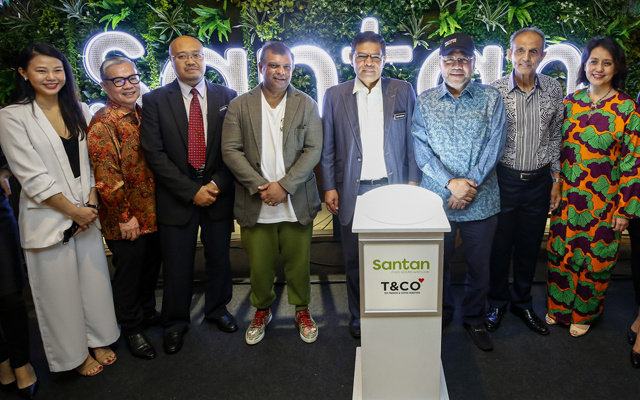
Photo Caption: (From left) Santan Restaurant and T&CO Cafe’s Catherine Goh, AirAsia’s Fam Lee Ee, deputy secretary-general of domestic trade Alauddin Sidal, AirAsia Group’s Tony Fernandes, minister of domestic trade and consumer affairs Saifuddin Nasution Ismail, AirAsia Group’s Datuk Kamarudin Meranun, AirAsia’s Aziz Bakar, and AirAsia Group’s Aireen Omar at the Santan and T&CO flagship restaurant launch at the Mid Valley Megamall in Kuala Lumpur
Santan Restaurant and T&CO Cafe’s general manager Catherine Goh said: “We have seen a significant appetite for our in-flight menu offerings beyond our flights across the region and this is our answer to that demand… By the end of 2020, we aim to have five Santan restaurants and 100 franchise-operated restaurants and cafes within the next three to five years with expansions in global markets.”
AirAsia Group CEO Tony Fernandes shared that it was his dream to open a Santan restaurant at the Times Square in the US. He added that he was also looking at franchise opportunities within South-east Asia and beyond, with a franchise set to open soon in China.
While Santan Restaurant and T&CO Café will compete with many other restaurants selling local and South-east Asian favourites, Fernandez said that its competitive edge lies in its pricing, quick customer service response time, and hyper-personalisation by leveraging big data to further customise its food offerings to cater to customers’ food preferences.
Designed to enhance customers’ dining experience through a personalised digital journey, the restaurant and cafe features a smart menu equipped with artificial intelligence and machine learning, which is able to serve up recommendations based on time, past ordering patterns as well as demographic taste.
Customers can order ahead online at santan.com.my or the T&CO mobile app before collecting their orders at the outlet.