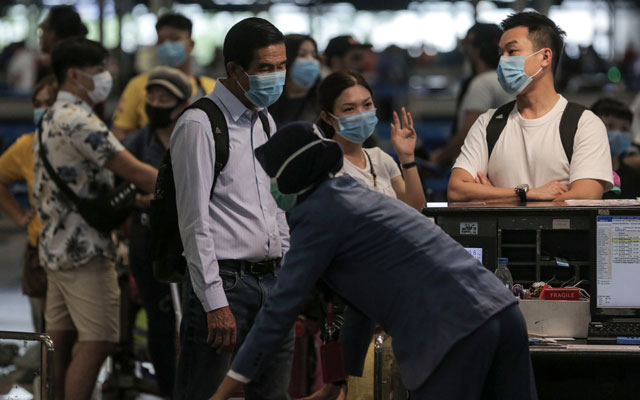
Malaysian Inbound Tourism Association (MITA) will be meeting with the Ministry of Tourism, Arts and Culture today to propose a plan to assist Chinese tourists from Wuhan and surrounding areas who are currently stuck in Malaysia and unable to return home.
Hubei Province, where Wuhan is the capital city, has been locked down by the Chinese government in an effort to control the spread of the Novel Coronavirus.
Malaysian industry stakeholders plan to assist to bring home Chinese citizens stuck in Malaysia
MITA president Uzaidi Udani told TTG Asia that during its EXCO meeting on Wednesday (January 29), members had raised concerns about these stranded tourists and expressed hopes to help them return home.
He said: “Many tourists have come on the Electronic Travel Registration & Information (eNTRI) visa, which is valid for 15 days. We want to be proactive and highlight to the Ministry foreseeable issues that could arise once the visa expires.”
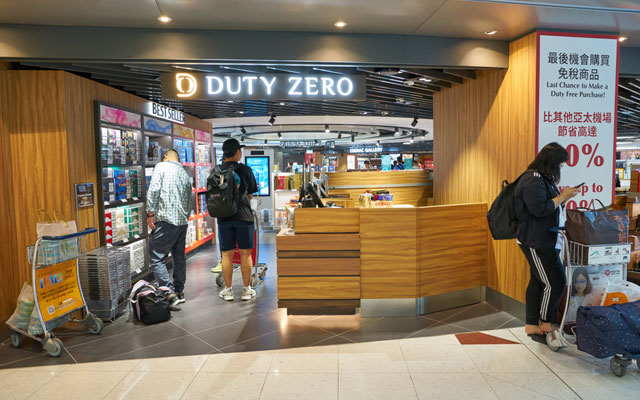
Duty free retail sector poised to take a tumble; duty free area in Hong Kong International Airport pictured
The escalation of the coronavirus outbreak could have a detrimental impact on global airport retail sales, which had been forecasted to reach US$48.2 billion in 2020, up 6.1 per cent on 2019, according to data and analytics company GlobalData.
Coronavirus has already dented retail and leisure spending across the Chinese New Year holiday due to consumers being encouraged, and in some cases forced, to stay in and avoid travel.
The airport retail sector is poised to take a tumble; duty free area in Hong Kong International Airport pictured
Honor Strachan, principal analyst at GlobalData, said: “The prevention of travel for Chinese consumers will impact the performance of airport retail worldwide. Over the last few years, airport retailers, especially those in Europe, have tailored their propositions, integrated Chinese payment solutions and invested in Mandarin-speaking staff to target Chinese passengers and maximise sales growth opportunities. If outbound tourism from China suffers as a result of coronavirus, airport operators and retailers must adapt their strategies to target other passengers.”
In response to the crisis, retailers are considering closing stores, with the China Duty Free Group closing its mall in Haitang Bay – impacting the Asia-Pacific duty free market in 2020.
Should foreign offices extend their advice of avoiding travel to the Hubei province to other regions, then passenger numbers and airports in tourism hubs such as Beijing, Shanghai, Chengdu and Xi’an will be negatively hit.
British Airways (BA) has suspended all direct flights to mainland China until January 31, although the BA website shows no direct flights to mainland China through January and February, while the likes of United Airlines and Cathay Pacific Airways have also cancelled selected flights to China.
Strachan added: “Asia-Pacific is forecast to be the fastest performing region for airport retail spend in 2020, with sales rising 8.4 per cent to US$21.7 billion – 45.1 per cent of the global channel. While this recent coronavirus outbreak cannot yet be compared to the impact of SARS, if the coronavirus continues to spread globally over the course of 2020, its impact on tourism and economies, particularly across Asia-Pacific, could be severe.”
In 2003, SARS caused tourism spend in China to collapse while visitor numbers to Thailand, Malaysia, Singapore and Hong Kong significantly dropped off, causing airlines to ground planes and reduce flight schedules.
However, the 2020 Olympic Games in Tokyo should provide a significant boost to airport retail in Japan, and also neighbouring countries as visitors tour the Asia-Pacific region, said GlobalData. As seen with previous Olympics, we would also expect to see a halo effect with 2021 and 2022 also benefiting from the games.
However, it added, controlling the spread and severity of coronavirus over the next two months is vital to ensure this event will still attract international visitors and achieve the forecasts produced pre-breakout.
The US$8.8 trillion industry is growing at 3.9 per cent ― ahead of the global economy for the eighth consecutive year ― and continues to be one of the most dynamic industries. In this day and age of selfies and social media, travel industry providers must distinguish themselves in providing “Insta-worthy” experiences.
Millennials armed with high disposable incomes are among the most influential travellers of today. Studies have shown that 83 per cent of millennials book only bucket-list destinations and prefer immersive, experiential travel experiences, networking with peers and “flashpacking”.
In light of this, travel and hospitality (T&H) providers are stepping up efforts to increase the experience quotient that these travel cohorts seek, and turn that into a differentiation.
Ekambaram: digital technologies are the way forward, and the T&H sector would do well to embrace it
Digitally-crafted “signature moments” In the current digital landscape, T&H players are better positioned to imbue every customer touchpoint with a distinct experience. Forrester says that these distinct experiences are “signature moments” and “memorably crafted and branded micro interactions delivering delight and brand value to guests in a subtle yet recognisable way”.
An illustration in point is Marriott, which is redefining customer experience through technologies such as voice assistants in hotel rooms, “VR postcards” that enable guests to experience travel stories in 360-degree and in 3D via VR headsets, touchscreens in the hotel lobby, and intuitive mobile apps. T&H players are now looking at how technology can be used to infuse broader customer journeys with “signature moments”.
Technology to create differentiating moments It is essential that T&H providers leverage the enablers of digital transformation to craft “signature moments”.
Hilton has hired over 150 data scientists to collect more than one billion data points every day, to drive insightful decision-making. Such is the importance of customer analytics that Gartner calls it the top contributor to experiences. Analytics makes it possible to make critical decisions that enhance customer experiences across various touchpoints.
Did you know that Japanese travellers visiting Paris prefer classes and workshops, while US travellers prefer food and drinking? Airbnb, through investments in machine learning (ML), has analysed customer behaviour and trends to arrive at such deductions, enabling T&H providers to offer customised experience packages to targeted cohorts of guests. Hyper-personalisation through artificial intelligence and ML can thus provide deeper insight into customer needs.
Over the years, while automated self-service options such as Internet/mobile check-in, digital room keys, and automated bag drop facilities have empowered travellers, hotels such as Alibaba’s Flyzoo have now taken it to the next level by enabling facial recognition to open doors, and providing robotic room service, and even robotic bartending.
While augmented and virtual reality (AR and VR) have been spoken about a lot, there are still many new applications being developed for these technologies, with Mixed Reality also taking centre stage. Emirates uses VR technology for guests to explore their seats and cabin in their bigger fleets, enabling hands-free cabin navigation and seat selection by using any standard VR headset. Immersive experiences can truly be felt using AR and VR in traveller interactions.
With Alexa and Google Home becoming a part of many families, airline companies like Transavia are using voice assistants, such as Google Home assistant, to enable travellers to leverage information even during the planning phase of a vacation. The way forward for interactions is through voice assistants, instead of type or touch.
The need to think holistically While T&H companies construct novel experiences and leverage digital enablers to enhance customer delight, it is also important that the core business is driven holistically to anticipate customer needs and surpass their expectations. Uber Eats, for example, ties the concept of food delivery to Uber’s original business of transportation, enabling them to tap into the market presented by hungry riders and mobilise not just people, but also food! Such services are only possible if investments in technologies are made in the complete context of future traveller’s needs.
By leveraging digital technologies, and building services on top of them, T&H companies can build strong touchpoints to interact with travellers. In an Eye for Travel survey, close to 80 per cent of the respondents stated that data-driven personalisation was the biggest game changer in the travel industry. Given this, it is imperative for T&H providers to make informed investments in the right technologies in order to create engaging touchpoints and deliver immersive experiences. After all, travellers and guests are out to experience a wonderland!
InterContinental Phuket Resort, Thailand
The beachfront resort on the western coast Kamala Beach features 221 rooms and villas with panoramic views of the Andaman Sea. Other resort facilities include five swimming pools, a fitness centre, tennis court, Planet Trekkers Kids Club, and a spa with eight treatment rooms and a full-service nail salon. Event planners may avail five meeting spaces.
F&B options are numerous, ranging from the modern Thai Jaras and international cuisine restaurant Pinto. There is also a beach bar and lounge, as well as a Sawan Beans and Leaves Bar serving handpicked teas from Chiang Mai and single-origin roasted coffee from local farmers.
Niraamaya Retreats Srinivas, India
Niraamaya Retreats has partnered with Srinivas, a private residence of Karanvijay Singh Ji – the maharaja of Jodhpur – to open up the retreat to guests. Situated in the northern quarters of Rajasthan, the seven-bedroom private residence is a way for guests to learn about the family’s regal lifestyle and their love for polo. The residence features a large formal dining space, and the interiors boast of antique furniture, old family photographs, and Persian handcrafted carpets. Meanwhile, the courtyard features Raj-era wicker-seated planter’s chairs and armoires.
Renaissance Xiamen Resort & Spa, China
The first Renaissance hotel in Fujian province offers 200 guestrooms, including seven luxurious villas, all of which come with a private balcony overlooking the sea. On-site are five F&B options, five themed outdoor swimming pools, an indoor heated pool, spa, fitness centre, and kid-friendly play area. The hotel also offers indoor meeting facilities. Outdoors, the lawn or beachfront can be used for casual cocktail functions.
Mercure Canberra Belconnen, Australia
The five-storey new-build in Canberra offers 125 rooms, each furnished with Smart TVs, Chromecast and complimentary Wi-Fi. Other amenities include a gym, laundry area, a restaurant, and business centre. The hotel was built in partnership with hotel owners, Canberra Labor Club. As such, the hotel adjoins the Club’s precinct, accessible via a connecting walkway, allowing guests access to more F&B and entertainment facilities within the club.
Four Points by Sheraton Kuala Lumpur, Chinatown, Malaysia
There are 318 rooms available within this property in the Malaysian capital, of which 18 are suites while 76 are inter-connecting rooms. There are three F&B venues for guests to choose from – Quan’s Kitchen, the all-day restaurant with an open theatrical kitchen; Jann, the chinoiserie-styled bar; and Lady Yi’s Tea House, the lobby lounge on the seventh floor. On the seventh floor are a fitness centre and an outdoor splash pool.
Why
Singapore’s popular historical landmarks, such as the Civilian War Memorial in City Hall and Fort Canning Park, have been well-travelled and well-documented by tourists. Scarcely do reviews identify more obscure memorials and trails that sit squarely on the battlegrounds of World War II – and even fewer tours take visitors to these sites with ghost-detecting equipment.
What
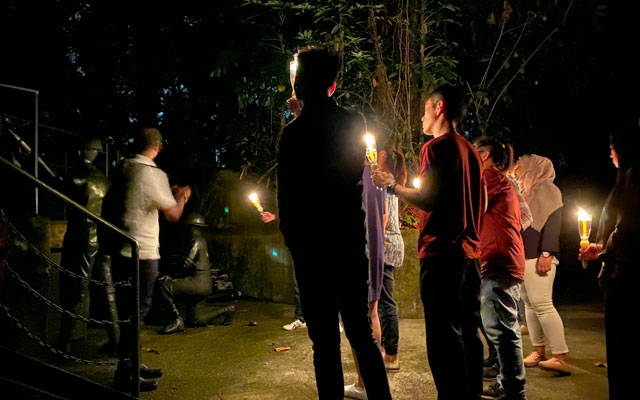
Oriental Travel and Tours’ newest project, Creepy Tales of Singapore, lifts the fog on these locations in the western region of the island. Armed with flickering candles and electromagnetic field (EMF) readers, participants on this night tour are brought to sealed-off bunkers, preserved batteries and a cemetery, where the guide relays tales of heroes and historical figures who fell in these locations.
Along the way, the guide will also relay anecdotes of spine-chilling encounters, and participants may have an unexplainable encounter of their own. During my four hours on this tour, several members of the group and I myself witnessed a number of incidents.
How
Transport is provided between locations on this tour, making the journey comfortable and fuss-free. My tour was led by Oriental Travel and Tours’ co-founder Jasmine Tan, who was well-read and passionate about the lesser-known background details of World War II, as well as the history of the locations we visited. She remained calm at all times and consistently checked in with the group for our comfort, even to the minute details of providing mosquito repellent and tissues.
The tour begins at 19.00, and dinner is not provided. However, the journey ends at popular hawker centre Adam Road Food Centre, where participants can end the day with a hearty supper and a “debriefing” session with the guide.
The tour will run with a minimum of two pax. Larger groups will be divided into group, although smaller group sizes are recommended for an ideal immersive experience.
Verdict
Recommended for history buffs and those not faint of heart, Creepy Tales of Singapore is a rare after-dark tour that unveils an unexpected side to the Lion City.
Duration: Four hours Rate: S$118 per person (US$87) Contact
Email: orientaltravel@outlook.sg
Website: oriental.tours
Christoph Meyer has been appointed general manager for Hong Kong, South China and Macau at Lufthansa Group, from February 1, 2020.
In his new role, Meyer will be responsible for passenger sales of Lufthansa German Airlines and Swiss International Air Lines (SWISS) in Hong Kong, South China and Macau.
The Swiss previously worked as head of content & dialogue marketing for SWISS based in Zurich, where he was responsible for airline sponsoring, event management, and tourism partnerships, among others.
It is scary not so much because of the widespread cases of confirmed infections, which as of Wednesday (January 29) stand at 5,974, including 132 deaths, in China alone. Well, that figure is unnerving too, considering how the SARS epidemic in 2003 had fewer confirmed cases in China – 5,327 – although it was more fatal with 349 deaths.
Fearmongering claims have spread following the coronavirus outbreak; Chinese citizens wearing masks while taking the subway in Chongqing, China pictured
The current outbreak is scary because of how people are reacting to it. A faction has emerged on one end, declaring that the world’s media is fearmongering, playing up the outbreak to the extreme to score maximum viewership and readership. They insist that the Novel Coronavirus is no more infectious than the seasonal flu, life should carry on as usual, and there is no need to harp on it any longer.
On the other end lies a more anxious faction, devouring every piece of Novel Coronavirus-related content they see and read, and are ready to share all that they consume in a nervous heartbeat. They are certain that the real numbers of infection and fatality are far greater but covered up by authorities with hidden agendas. Peddlers of fake and sensationalised news love them, using them as effective vehicles to further propagate wrong information and fan the flames of hysteria.
In Singapore, social media posts have been circulating, claiming outrageous incidents, such as a train station being shut down for disinfection after a suspected case was found, that Singapore has fatal cases, that 100 travellers from Wuhan were denied entry. Singapore’s minister for communications and information, S Iswaran, made it clear on January 27 that legal action will be taken against such falsehoods.
In Malaysia, the Malaysian Communications and Multimedia Commission detained an individual on January 28 in connection with spreading fake news regarding the virus, and arrested another four the next day.
For the travel and tourism industry, which is often the first to suffer business fallouts from negative events around the world, both factions are bad news.
Indifference during a viral outbreak can make it more challenging for health authorities to stem the spread, as public monitoring measures need to be matched by individuals who stay alert to their own health conditions, make an effort to improve personal hygiene, and minimise mobility when unwell. It was indifference that led a Chinese traveller from Wuhan – where the virus had originated – to take medication to mask her fever, allowing her to slip pass French immigration officers and health checks, and proceed with her holiday in Lyon. She even went on to boast about her achievements on social media.
Thankfully, she was not a Novel Coronavirus carrier. But her case sparked ire in and out of China, no doubt making anxious faction even more anxious. As the outbreak spreads beyond China, citizens of non-Chinese cities with confirmed infections are urging their governments to ban all Chinese arrivals. In Malaysia, for example, an online petition to temporarily stop Chinese entry garnered more than 35,000 signatories in less than a day. On January 27, Malaysia moved to suspend all visa facilities for Chinese tourists from Wuhan and Hubei as part of measures to combat the outbreak on January 27.
That ghastly fear of Chinese travellers, possible infections and potential death from visiting destinations with reported cases is keeping anxious people away from travel, further impacting tourism businesses in Asia that are already inundated by travel cancellations and postponements from Chinese customers who have no way of leaving their city due to ongoing suspension of transportation services in affected Chinese cities. It is at this crucial time that these destinations need travellers from other markets more than ever.
Destinations, travel and tourism suppliers, and event organisers looking to reassure travellers and recover arrivals and business, will have to rethink their marketing and communication action plans and take into account the presence of fake news surrounding the outbreak. Open and frequent updates are critical for now, to ensure the right information is reaching as many reputable news sources and opinion leaders as possible.
As individuals in the travel and tourism trade, we are ambassadors and have the responsibility to tell the right story – not one of indifference or anxiety, but one that is built on verified facts – in both our personal and professional circles.
Garuda Indonesia will address the concern within the travel industry over the prevailing high domestic airfares, as part of its support for the tourism sector.
Speaking at his inaugural press conference in Jakarta last weekend, Garuda’s new president and CEO Irfan Setiaputra said: “We will review our airfares to reach reasonable prices… although we cannot go cheap (and) compromise on safety. We will find a way to make passengers happy yet (allowing) Garuda (to remain) profitable.”
Garuda to look at lowering domestic airfares, says new chief Irfan Setiaputra (Photo credit: Tiara Maharani)
Irfan said he was ready to collaborate with tourism stakeholders as part of Garuda Indonesia’s commitment to support tourism industry.
“Garuda will also work closely with the Ministry of Tourism and Creative Economy, while designing the right formula in order to realise the president’s wishes to advance the tourism and business event industries. Garuda will have to be the spearhead of tourism,” he added.
However, Budijanto Ardiansyah, vice president of the Association of the Indonesian Tours and Travel Agencies, said rather than reduce airfares, the airline should reopen subclasses to give customers a variety of choices.
Pauline Suharno, secretary general of The Indonesian Travel Agents Association, suggested that the airline open new routes connecting destinations in Indonesia with the rest of the world, for example, linking Bangkok to the Indonesian cities of Yogyakart and Surabaya.
“If Garuda wants to support tourism, it should not only open popular routes or add flights on (overcrowded) routes, but open a route in a destination that cannot be reached by (foreign) tourists. The main problem (impinging on) Indonesian tourism is connectivity, so we hope Garuda can be a solution,” Pauline said.
She added that Garuda should work towards improving the quality of their services, starting with their in-flight meals. “Garuda’s catering service has declined recently, especially for domestic flights. With the high ticket price, passengers are only served rice boxes, sometimes, even bread and snacks,” she said.
Tourism Promotions Board (TPB) chief operating officer Marie Venus Tan has left barely two years into the plum post, a move that sent shock waves through the Philippine travel trade that thinks highly of the veteran tourism official.
“I am gratified that my more than 30 years in government service that started with the Philippine Tourism Authority ended still in service to the tourism industry that I love with passion,” Tan wrote in a farewell message posted on TPB’s Facebook page.
Maria Anthonette Velasco-Allones (right) replaces Marie Venus Tan as the new chief of Philippines’ Department of Tourism
“I would never trade the opportunity I was given, as Department of Tourism’s (DoT) Tourism Attache in Europe, to show the world how beautiful our country is and how charming the Filipinos can be – given the chance to meet them up close and personal.
“What gave me a sense of fulfillment too was working with our communities as DoT regional director, highlighting their awesome natural treasures, being a bridge that provided them with livelihood and entrepreneurial skills in the tourism value chain, giving them pride of place and, ultimately, enabling them to become beneficiaries of the developments that tourism brings.”
Bruited to replace Tan next month is Maria Anthonette Velasco-Allones, a lawyer and currently executive director of the government agency Career Executive Service Board.
Velasco-Allones did not reply an email from TTG Asia seeking confirmation of her appointment to the top TPB post.
She clocks 22 years of public sector service, including stints as assistant secretary of National Defense and the Department of Labor and Employment and later, resident ombudsman of the Department of Labor and Employment.
Ongoing bushfires that have ravaged large parts of Australia have greatly affected Sydney Drive Regional, a submarket within a two-hour-drive radius of Greater Sydney, according to STR’s preliminary data.
For the month of December, the submarket showed a 14.7% year-over-year decline in demand (room nights sold) and subsequent double-digit declines in each of the three key performance metrics: occupancy decreased -14.5% to 52.2%, while average daily rate (ADR) fell -18.4% to A$194.74 (US$143.14) and revenue per available room dropped -30.3% to A$101.48.
New South Wales hotels suffer a dip from bushfires
“Because the physical impact of the bushfires has been predominantly across the Great Dividing Range of New South Wales and Victoria, we’ve not yet seen significant demand decreases in the major city areas of Australia,” said Matthew Burke, STR’s regional manager – Pacific.
“However, these regional locations are popular tourist spots for family holidays in vacation homes, hotels and holiday parks. The post-Christmas period to the end of January is peak season, when so many local businesses rely on the transient tourist trade. Moreover, with road closures through January, we will watch to see the impact more broadly.”
Across New South Wales, results have been mixed. The NSW North Coast submarket, or Northern Rivers region, saw a 7.0% jump in demand and a 5.8% lift in ADR, while the NSW North Coast South submarket (known as the Mid North Coast) saw muted demand growth (+0.4%).
Separately in South Australia, the impact of bushfires on Kangaroo Island has been heavy, including the destruction and significant damage to a number of properties, which will have a direct impact on tourism in the short term, said STR in a statement.