TTG Asia
Asia/Singapore Saturday, 27th December 2025
Page 1057

AHRA slams event partnerships with short-term rentals

0

The nine-year, five-Games partnership inked last November between the International Olympic Committee (IOC) and Airbnb to provide accommodation for athletes, spectators and fans has put South-east Asian hoteliers on edge even though none of the arrangements will make it to this region.

As a global partner, Airbnb will support the Olympic Games Tokyo 2020, the Olympic Winter Games Beijing 2022, the Olympic Games Paris 2024, the Olympic Winter Games Milano Cortina 2026 and the Olympic Games Los Angeles 2028.

Yap: AHRA does not welcome short-term rentals

ASEAN Hotel & Restaurant Association (AHRA) president Eugene Yap said such an arrangement will be rejected by hoteliers in South-east Asia due to the lack of regulations on short-term rentals, which could result in safety and security problems that would dent the destination’s reputation.

Yap said: “What the IOC did with Airbnb may inspire similar arrangements for regional events such as the South-east Asian Games. AHRA does not welcome such arrangements.”

He explained: “There are issues of short-term rentals being a source of public nuisance, and concerns around safety and security. In the worst-case scenario, one is not able to trace terrorists who come into a destination and stay with an unregulated short-term rental. With legitimate hotels, all guests are registered so the government can get all the information they need.”

Working with short-term rentals also result in diminished economic impact for the destination, opined Yap who explained that hotels are a major contributor to local taxes and tourism receipts through their onsite recreational and dining facilities.

Brunei upskills tourism frontliners ahead of ASEAN Summit 2021

0
Front desk staff member from The Empire Hotel in Brunei. Photo credit: The Empire Hotel

The Brunei Association of Hotels (BAH) is working on upskilling frontliners and students in the hospitality industry, as the country readies to host the ASEAN Summit in 2021.

Its president, Mohd Iswandi Maaruf, said that BAH members will conduct two-day training programmes on customer service skills starting mid-2020.

Front desk staff member from The Empire Hotel in Brunei. Photo credit: The Empire Hotel

He said there were also plans to work with ASEAN Hotel & Restaurant Association members to further develop human capital for the hospitality industry in Brunei.

He shared: “Around 90 frontliners in hotels and restaurants received training in late 2019 in preparation for the recently concluded ASEAN Tourism Forum in Bandar Seri Begawan. To ensure that the level of service is in tip-top shape and in preparation for Brunei hosting the ASEAN summit next year, we have to continue this kind of training.”

BAH has also taken into account the feedback from ATF delegates in Brunei on the service levels of hotels and restaurants in the country in order to organise appropriate training programmes in the future.

2020 bodes well for China’s hotel sector: STR

0
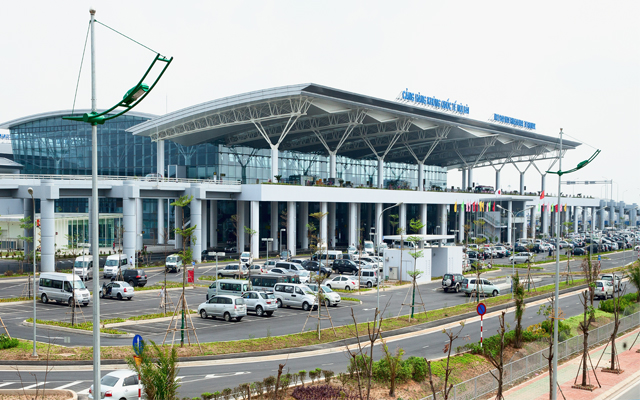
Beijing Daxing International Airport is the second international airport of Beijing

Key mainland China hotel markets are projected to report performance growth in 2020 despite a challenging macroeconomic environment, according to the latest forecast from STR and Tourism Economics.

“China’s economy, and by extension its hospitality industry, remains strong, even with concerns around the trade war with the US and an overall global economic slowdown,” said Christine Liu, STR’s regional manager, North Asia.

Beijing Daxing International Airport is the second international airport of Beijing

“A decline in Chinese departures to other countries, combined with significant government investment in infrastructure is driving domestic demand in key markets. However, the country’s resiliency to difficult macroeconomic situations will be tested if the trade war continues to decelerate economic growth.”

At the market level, Beijing should continue on its growth trajectory with a forecasted increase of 3.7% in revenue per available room (RevPAR). Average daily rate (ADR) is expected to continue to grow (+1.8%) after a strong 2019 in the metric.

“Demand growth is key for Beijing as supply continues to increase at a healthy rate. The newly opened Beijing Daxing International Airport, projected to be one of the busiest in the world; and Beijing preparing for the 2022 Winter Olympics, highlight potential growth for the tourism and hospitality sector,” Liu said.

After a challenging 2019, Chengdu is forecasted for ADR growth of 1.4%. The market is projected to report the country’s second-largest supply growth rate (2.8%) with close to 18,000 rooms in the development pipeline. Demand will be helped by China’s high-speed train system and subsequent MICE business.

As the international trading centre and comprehensive transportation hub of China, Guangzhou is expected to show RevPAR growth of 3.4% with solid increases in both occupancy and ADR.

Hangzhou, known for welcoming a mix of leisure and business travellers, is set to see its run of performance growth end in 2020 (RevPAR: -2.4%). Among key markets in mainland China, Hangzhou should see the largest increases in supply (+4.1%) and demand (+4.7%).

Following three years of occupancy declines owing to new supply, 2020 is expected to be Shanghai’s year of recovery. RevPAR growth is expected to reach 2.5% as the market is likely to pick up displaced demand caused by continued protests in Hong Kong.

IHG inks deal with AWC to grow Thailand portfolio

0

InterContinental Hotels Group (IHG) has deepened its partnership with Thai real estate group Asset World Corporation (AWC) with the signing of a number of properties which will see the development of more than 1,200 rooms across Thailand.

Under the agreement, hotels in multiple popular destinations such as Chiang Mai, Bangkok and Hua Hin will be signed within three years, including the 306-room InterContinental Chiang Mai Mae Ping which is a conversion of the now-defunct Imperial Mae Ping Hotel.

From left: Asset World Corp’s Stephan Vanden Auweele and Wallapa Traisorat; and IHG’s Rajit Sukumaran and Serena Lim

Located in downtown Chiangmai, InterContinental Chiang Mai Mae Ping will feature six F&B outlets, a spa, as well as over 3,600m2 of outdoor and indoor convention, event and meeting spaces. There are also plans to convert the current Teresa Teng Museum into a speciality restaurant and rooftop bar, where guests can experience its original set-up, decor and furniture when Teresa Teng last stayed here over two decades ago.

The hotel is expected to open in 2021 and will continue its extension with full operations in 2022.

IHG plans to double its portfolio in Thailand in the next three to five years, according to Serena Lim, vice president, development, IHG South East Asia and Korea.

Thailand continues to be a strong growth market for IHG with 29 existing hotels across six brands in the portfolio, with another 30 hotels in the pipeline.

The next big thing in travel

0

BeMyGuest recently secured a Series B funding, so what’s next in the company’s growth trajectory?
I think we have the basis of our business foundation already, so now we are focusing on the B2B distribution and technology side of the travel sector. There has been a lot of investment on the B2C side, and for any sector of travel, especially online, to really bloom, you need to build the pipelines in the back.

What we have been doing since (our inception) is focusing on developing the technology for operators to be able to sell online. Most recently, we rolled out a SaaS (Service as a Software) platform called Xplore, which operators can use for their own business as well.

A little of what we do is (improving) the connectivity of our distribution partners, which are mostly OTAs or online resellers accustomed to having savvy customers booking online. Those same customers are now demanding that travel activities are available for instant booking and at the same level of speed that they are accustomed to for their flight or hotel bookings.

We will continue to build more distribution partnerships. Right now, we have secured around 50 partners in the region that are fully integrated with our API, and we also have hundreds of non-API partners buying products from us and reselling them to their different customers.

In Asia, you cannot forget about the offline travel agents like Chan Brothers, JTB and HIS. They are still prominent in certain markets, and they are the ones helping consumers to buy products, just in a more traditional way. As well, Chan Brothers is also one of our investors.

Are you looking at the next funding round soon?
That’s something we cannot really comment on.

Is BeMyGuest pivoting away from being just an aggregator to focus on growing your tech lead in the B2B space?
Well, you have to have technology to be a player. Period. I would describe our business as having the distribution side as well as the booking system side, and both of them are interconnected through the main engine, which is the platform that we’ve been building. This main platform allows us to distribute to partners and collect products from operators. The aggregation piece is always there, and in terms of securing the right amount of products, we have a fairly large database that can be broken down for different strategies of selling.

What has changed was that we used to have a B2C strategy, but now we always partner with somebody in an advance or sizable market to sell to the customer. In a sense, we are B2B2C – we are not fully B2B or B2C – so this model not only shows how different we are but is also a reflection of the region. We realised very rapidly that one size doesn’t fit all, especially in Asia. We have to find the distribution channels for operators to find the model attractive, so we partner with as many OTAs, travel activity websites or offline agents selling travel products to give wider exposure to operators’ products.

But operators were lacking the technology to give correct information for us to digitise those products and deliver them through instant confirmation to the consumers or our partners, so we built an engine (to collect the information) and then pass it over to our partners upon check-out. The information is then passed back to the operator in milliseconds to confirm the booking. We have removed layers of customer service in a lot of manual processes, and we are able to deliver that instant bookability too.

To sell online, you need to be able to deliver an electronic ticket pricing and fulfil a booking instantly. Nobody likes to fill in a form anymore and wait 48 hours for a confirmation email; you want everything in milliseconds. But when you look at the operators who offer these in-destination experiences, they are behind in terms of technology adoption.

Are Asian operators lagging in the tech race?
In general, operators of travel activities are behind in the adoption of technology but Asia specifically more, because the region is more fragmented due to its cultural, language and currency differences across countries, and payment methods are not as homogeneous as in markets in the US or Europe. And this is just natural because unlike products sold in the hotel or airline spaces – which are pretty standard or can be standardised more easily, and hence, pricing and booking management systems are correspondingly much easier to develop – the travel activities products are so diverse and fragmented and span across so many categories that the sector was the last to be digitised.

If you think about things to do in a destination, even the check-out process for a day tour booking will be more complex than selecting the type of room or seat. In addition, we deal with day tours, activities, attractions, and sometimes events, so the fragmentation and the differences between product types are so big that the engine behind the booking technology needs to be a lot more complex than a hotel or flight booking engine.

But now, with hotels and flights pretty much commoditised and bookable everywhere online, everybody starts looking at the next revenue opportunity. When the industry starts taking the activities sector seriously, you start seeing a lot of changes in terms of the products offered by the big brands.

For example, Booking.com is offering its customers the possibility to book travel activity products on their own website without having to book hotel rooms. AirAsia is positioning itself as a full travel platform, while Traveloka launched its Xperience products as well, so there is a lot of interest in this new revenue stream.

How about multi-day tours?
Actually, the multi-day tour is something that we tested out very early on back in 2013, but we decided to not focus on them. A multi-day tour requires still a lot of selections, but a majority of the products sold in this sector are activities or things to do for a few hours or half a day.

Now that we have all the products online – not just ours but a lot of companies are investing and bringing all this inventory online – and they are fully instant confirmation and electronic ticket enabled, then we can make amazing strides. I think that (multi-day tours) will be the next phase, although we are still a few years out.

In a fragmented and diverse marketplace as Asia, what challenges lie in rolling out tech solutions for the tours and activities sector?
We try to help operators in Southeast Asia the most because they’re the ones lagging the most behind. Unique activities are often run by local operators, who sometimes might not even speak English, let alone another language like Bahasa Indonesia, which lends to Asia’s complexity.

In the region, Japan is probably the slowest in tech adoption due to its traditional business thinking, not because they are averse to technology, so it’s more of a cultural factor at play. But with the government pushing for increasing international visitation to the country, I hope that will change.

Singapore, despite its small base, is an attractive destination and the operators are a little bit more advanced in tech adoption. Malaysia is a little more difficult to navigate, as the country is a bit more bureaucratic.

Indonesia is kind of split into Bali versus the rest of the country. Bali is much more used to welcoming international travellers, so that is reflected in the (tech readiness of its) tour operators as well. The Indonesian market is still generally very domestic though – as a source of travellers, it is definitely one of the biggest markets but as a source of supply, it doesn’t have that many destinations featured apart from Bali. Vietnam is both a destination and source, while Cambodia is still largely a destination.

For Thailand, travellers tend to stop in the tier one cities, but there is a rising trend of going into second- and third-tier cities, driven by the increase in low-cost carriers connectivity.

Is technology the missing piece in this whole tours & activities space?
Definitely. There’s been a change. When we sign a business, one of the main things that we do is fulfil tickets electronically via the API, but to be able to do that, sometimes we have to buy printed tickets. It was not too long ago that I had to queue up at the ticket counter at a major attraction and wait for 10,000 tickets to be printed in order for us to turn them into e-tickets. Know what? We don’t collect printer tickets anymore.

Operators are adopting technology slowly, but there has definitely been a shift. They are starting to understand that they need to adopt some form of technology, whether it is our system or somebody else’s, to deliver the electronic ticket, because the printing generates costs – staff costs, printing costs, time, and that it’s not very eco-friendly.

It’s astonishing that you still needed to queue up for the tickets.
Remember that the tours and activities sector is not new, but it is very offline. It is a sector worth US$150 billion but a majority of these transactions are still offline, although a transformation is now underway. A lot of traditional travel agents like Chan Brothers are starting to look at alternatives.

The biggest wave is online in Asia-Pacific, which already surpassed Europe and the US in terms of the market size, specifically for travel activities. It is also the fastest growing and that is why nowadays, a lot of tech developments or innovations are coming from Asia, and then being adapted to the US and Europe markets, versus the usual trend of tech innovations originating in the US or Europe before being adapted into Asia.

How has competition in Asia’s tours and activities sector changed for BeMyGuest?
One of our largest competitors is all the B2B resellers in the offline space. They are competitors, but also partners – we try to enable them, to be honest. There are a lot of traditional resellers in the B2B space and some have adopted technology, but not at this scale that we have built because all of our technology is proprietary. We have won multiple awards, including one of the world’s top 50 most innovative companies by American entrepreneurship magazine Fast Company. In terms of technology, we are quite advanced but there is still a lot of volumes in the B2B offline reselling space.

Do you foresee greater competition from consumer-facing sites like Ctrip, who is also your client?
We also understand that the dynamics in the online space is very interconnected and that it is a reflection of the operators as well. Operators always want to hedge and have more than one sales point, so they are going to work with Ctrip, TripAdvisor, GetYourGuide, BeMyGuest, Klook, etc. It will come to a stage where they cannot manage (the many sales points) any more, so they are going to pick and choose those channels that generates more volume for them, and then they will want to stop and aggregate the rest with somebody.

We are really successful in this strategy where we partner with companies. For any player who is focusing in, say, South Korea or Taiwan, we are basically adding value by supplying them with every other destination they are not in. With some partners, we hold a large market share or share of their products that they sell in certain destinations.

You boast a strong background in startups and tech. How is it like being a woman entrepreneur in the travel tech sector?
I don’t know, because I’ve been here forever (laughs). I don’t know how it’s like not being here. But the online space is amazing, super fun and friendly. At conferences, people are peers even if you are competitors. And the travel space is not that big. There are big brand names, but the network of individuals running the corporate companies is not huge. When you get to interact with people around the world running the global companies, that is pretty cool.

Trio of appointments at Banyan Tree

0
From left: Rosalynn Tay

Banyan Tree Holdings has made three new appointments to its senior management team.

From left: Rosalynn Tay; Jonathan Ye; and Boris Sertic

Rosalynn Tay has been named the new senior vice president, head of growth and demand.

In her new role, Tay will be leading the charge to drive the group’s multi-brand growth strategy while charting customer engagement across current and new digital channels. She will also define the strategic approach to sales, marketing, distribution, revenue and channel management.

With 28 years’ experience in transformational work and leadership, Tay was most recently Dentsu Aegis Network country head and Dentsu CEO. Prior to that, she was managing director, head of marketing for consumer banking at DBS Bank, and managing director of Tiger Airways Singapore.

Meanwhile, Jonathan Ye has been hired as the new vice-president, head of demand. As the global head for marketing, Ye will be leading strategic integrated marketing directions and functions across offline and online channels for multi-brands’ campaigns, digital performance marketing and content.

Ye was most recently the head of digital marketing, Asia Pacific at Huawei Consumer Group, before he was promoted to CMO in 2017. Prior to that, he was part of Starwood Hotels and Resorts Asia Pacific (including China), driving social, mobile and emerging technologies for the region, before the hotel group was acquired by Marriott International in 2016.

Also coming on board as the new senior assistant vice president, head of revenue is Boris Sertic, a travel industry veteran with over 20 years’ commercial experience in the fields of pricing, revenue, distribution, group loyalty programmes and fares database.

In his new role, Sertic will provide global directions and implement group revenue management and distribution strategies in collaboration with the growth & demand team at the group and hotel levels. His previous stints also include the role of corporate director at Centara Hotels & Resorts, as well as senior management positions for wholesale international tour operations.

Sustainable tourism, regional travel shine bright for SE Asia

0
Tourism ministers agree that balancing economic development and tourism is crucial moving into the future

The growing emphasis on eco-tourism as well as sustainable and inclusive tourism development, were spotlighted at the ASEAN Tourism Forum (ATF) ministers’ press conference held on yesterday in Brunei Darussalam, in conjunction with ATF 2020.

Aside from the 10 ASEAN tourism representatives, China, Japan and Republic of Korea’s tourism ministers were also in attendance.

Tourism ministers agree that balancing economic development and tourism is crucial moving into the future

During the conference, it was noted that despite the current global economic slowdown, it has not taken a huge toll on tourism in South-east Asia. The region welcomed 133.1 million tourists in 2019, a seven per cent increase from the previous year, according to preliminary submissions by ASEAN member states.

Notably, intra-ASEAN travel continued to contribute the major share of tourists, making up 36.7 per cent of total international arrivals in 2018, according to a joint media statement at the 23rd meeting of ASEAN tourism ministers.

Speaking through a translator, Xu Zhang, vice minister of culture and tourism, China, said: “On the backdrop of this sluggish (global) economic development, regional tourism may flourish in Asia in the future. Travel with shorter distance and less time would be more popular among tourists. As such, the Chinese government is now composing a strategic plan to promote regional tourism in Asia.”

“We also want to enhance our tourism capacity, in terms of quality and engagement of participants, and create more jobs in the industry.”

As well, ministers who attended the conference also placed a strong emphasis on growing their countries’ eco-tourism offerings.

“We are making eco-tourism our main product, where tourists are encouraged to go to rainforests – not to destroy but to preserve them. In fact, we don’t use the term eco-tourism anymore, but ‘responsible, sustainable and inclusive tourism’,” said Ali Apong, minister of primary resources and tourism, Brunei.

Citing the rehabilitation of major tourist destinations in the Philippines in recent years, the country’s tourism secretary Bernadette Romulo-Puyat stressed that it’s not just up to the national governments, but also industry stakeholders, to promote sustainable tourism.

“We also have to be mindful of the need to balance economic development with saving the environment. If we don’t save our environment, then we will no longer have our tourist destinations (in the future),” she said.

During the conference, when asked about the focus for 2020, Singapore Tourism Board’s chief executive Keith Tan revealed the Lion City has plans to grow its health and wellness tourism offerings to enhance the country’s attractiveness as a tourist destination.

“We are looking beyond medical tourism. We want to pursue a broader ambit of wellness tourism, beyond hospitals, clinics and surgeries. There are a whole host of other health and wellness offerings that people are now seeking out. So our focus is on making Singapore attractive for people who are pursuing health and wellness options outside a hospital setting.

“We believe that it is a very big growth area in Asia as people will be willing to spend more on skincare, haircare, anti-ageing in the future. (We also have plans to hold) health and wellness events, for example, international yoga or pilates events, where we get wellness instructors to lead wellness festivals in Singapore,” shared Tan.

Singapore Tourism Board sharpens focus to tap halal travel boom

0

Singapore is stepping up its game for Muslim travellers with a mega campaign set to launch as early as next month.

Sharing the news in a panel session yesterday at ATF 2020, the Singapore Tourism Board (STB) announced that it will be working together with booking platform Have Halal Will Travel (HHWT) and research company CrescentRating on a series of tourism products and marketing collaterals targeting Muslim travellers around Asia.

Muslim visitors at the Flower Dome at Gardens by the Bay

These STB projects include a 44-page guide book developed with CrescentRating that details not only halal dining offerings in Singapore, but also hidden cultural activities and local Malay entrepreneurs and business owners that travellers can discover, revealed Fazal Bahardeen, CEO of CrescentRating & Halaltrip.

This book will be released as early as next month in English, and will subsequently be published in Bahasa Melayu and Bahasa Indonesia.

Meanwhile, HHWT will come in with a number of brand partnerships to develop online promotions and tour products targeting Muslim millennials and families.

Its co-founder Mikhail Melvin Goh shared: “We are bringing in several big partners for this year-long project with STB. These include Klook, who can direct Muslim travellers to (Singapore’s) attractions and vendors, and Traveloka for the Indonesian market. To spice things up, we also brought in a cellphone manufacturer to do a photowalk.”

These roll-outs aim to make Singapore “more discoverable” for Muslim travellers in the region, explained Dawn Ng, area director, Malaysia & Brunei, STB.

According to CrescentRating, this segment holds significant weight in Singapore’s tourism balance, accounting for an estimated 18 to 20 per cent of overall arrivals. Among Asia’s non-Muslim majority countries, Singapore places first by a long shot, noted Fazal.

While Singapore has been a high-ranking destination among Muslim travellers, a study conducted by HHWT found that the destination has not sufficiently communicated its authentic offerings and stories to the Muslim market.

These upcoming market engagements are hence hoped to plug this gap, while also serving as a “platform for conversion” for Muslims to make further reservations at Singapore’s attractions and dining establishments, expressed Ng.

She added that Singapore’s multicultural history can serve to pull in more Muslim tourists with personal stories with which they can resonate.

Macau to record negative growth in 2020: MGTO

0
; Ruins of St. Paul's in Macau pictured

With a mix of negative external factors weakening inbound tourism to Macau, such as the ongoing US-China trade war and the prolonged Hong Kong protests, the Macao Government Tourism Office (MGTO) has projected negative growth of three per cent for 2020 despite recording a 10.1 per cent growth in visitor arrivals in 2019.

Speaking at MGTO’s Annual Press Conference on Wednesday (January 16), its director Maria Helena de Senna Fernandes said that the negative projection was unprecedented.

MGTO predicts a decrease in visitors this coming year; Ruins of St. Paul’s in Macau pictured

She noted that Macau registered a double-digit decrease in visitor arrivals for November and December 2019. This marks a drastic reversal from when robust growth in inbound numbers was recorded for the period of January to July 2019, in part due to inbound traffic generated via the newly-opened Hong Kong-Zhuhai-Macao Bridge, said Fernandes.

She added that following a six per cent drop in visitor arrivals during the Macau Grand Prix in November 2019, MGTO did not foresee any positive rebound in the short term, hence, its projection for the Lunar New Year period would be a six per cent drop in visitor arrivals to 1.1 million, as compared to 1.2 million over the same period in 2019.

“Many business travellers and MICE groups usually make their way to Macau after their conferences (in Hong Kong) while leisure travellers also take short trips here. With numerous countries having issued travel alerts on Hong Kong since August, visitor arrivals have dropped. Therefore, MGTO will strengthen promotion with overseas markets, especially those with direct air connections to Macau.

“Meanwhile, we’ll work with cities in the Greater Bay Area (GBA) to craft new tour products to attract international visitors. With more new hotels scheduled to complete this year and over the next few years, we will (work to) attract more overseas travellers and visitors from GBA to stay overnight here. Our focus also includes cities outside the Guangdong Province of China which are connected (to Macau) by high-speed rail.”

China Travel Service (Macao), travel department sales and marketing manager, Pun Cheng Man, said MGTO’s projection is not an accurate reflection of the overall situation, as travel agents in Macau grapple with the fallout from the Hong Kong riots.

“Many mainland Chinese pick Hong Kong-Macau as a travel destination. Macau is too small to be mono destination. Unlike Hong Kong, we don’t have many tourism offerings and resources to keep them here for longer stays,” she said.

A silver lining in the cloud of uncertainty is the upcoming pre-summer opening of the newly-revamped Macao Grand Prix Museum, which will now host multimedia and interactive facilities.

Elsewhere, the city is also pushing the development of maritime tourism products. Discussions with industry partners on the feasibility of developing island tourism products in the GBA are also ongoing. MGTO will also organise a variety of mega tourism events and invite GBA cities to participate in them.

Macau welcomed more than 39.4 million visitors last year, with a surge in both the figures of same-day visitors (up 20 per cent to exceed 20.7 million) and overnight-stay visitors (up 0.8 per cent to surpass 18.6 million), according to preliminary figures.

International visitor arrivals dropped by 2.8 per cent to three million while mainland China, Hong Kong and Taiwan remained Macau’s top three visitor source markets, all of which registered an increase in visitor volume.

The city welcomed over 27 million mainland Chinese visitors last year, up 10.5 per cent from 2018, with 45 per cent of visitors coming from Guangdong Province.

Meanwhile, visitor arrivals from Hong Kong surged 16.2 per cent to 7.3 million, while visitor arrivals from Taiwan rose 0.2 per cent to over 1 million.

Bali agents say surprise new attraction tariffs will hurt bottom line

0

Travel players in Bali are crying foul over the regency government’s surprise price hike on entrance fees for popular attractions, saying that they will have to bear the price difference for contracts inked before the change.

The new tariffs came into effect on January 1, 2020 in a bid by the regency government to boost tourism revenue. Attractions impacted by the price hikes include Mount Batur in Kintamani and Penglipuran village, which saw entrance fees raised from 30,000 rupiah (US$2.20) to 50,000 rupiah. In Tabanan and Badung, entrance fees have risen by 25,000 rupiah.

Penglipuran Village (above) among attractions in Bali slapped with a price hike on its entrance fees

Bambang Sugiono, director of marketing and overseas promotion of Bali-based RD Tours, said the government should have given the trade at least six months of notice so that changes could have been made to package prices.

Foreign clients who had committed to his tour packages last year would not accept the sudden price hike, as such, his company would have to shoulder the price difference.

Contracts with the old tariffs have been signed until June 2020, with at least 500 travellers each month, Bambang revealed.

For Eddy Sunyoto, owner of Terimakasih Indonesia Tours and Travel, contracts with the old rates were signed up till April this year. He agreed that clients were unlikely to pay the difference. “How do we tell our foreign partners who have already printed their brochures?” asked Eddy.

To avoid a huge loss for his company, he will choose not to receive as many travellers from his foreign partners or to reduce the number of attractions featured in his itineraries. For contracts after April 2020, he intends to adjust package prices by upwards of eight to 10 per cent.

Eddy explained that while the price increment was a small amount, it would add up to a considerable sum since tourists could visit up to five attractions in a day on a tour.

Bali agents emphasised that they were not against the price hikes, as they understood the purpose of the move.

Bambang shared that his partners in China, India and Nepal were understanding too, but will only accept the elevated entrance fees in new contracts.

Hence, he expressed disappointment about the regency government’s disregard of travel agents’ repeated requests to get at least four months’ prior notice to price hikes in attractions.

He stressed that the price hikes could add up to substantial losses for these agencies, given that several attractions are included in each day’s itinerary.

He added that he would raise the price of his tour packages by eight to 10 per cent after the existing contracts expire in April.

Echoing Bambang’s sentiments, Putu Winastra, secretary-general of Association of Indonesian Tours and Travel Agencies Bali chapter, said he intends to send a letter of protest to I Wayan Koster, governor of Bali. He hopes the new tariffs will be reviewed and postponed for Bangli and other regencies.

Umberto Cadamuro, COO inbound of Pacto, said the price hikes were minute in comparison to the amount of money European tourists fork out for an experience in Indonesia, and were unlikely to hurt inbound demand.

While travellers will not mind the higher entrance fees, they will be observing if the new tariffs will result in enhanced public facilities and services, such as cleaner toilets and improved parking lots, he opined.

“(In 2021,) they will be comparing this year’s services to the previous year’s. If the destination they visit is beautiful and clean with friendly staff, they will not be bothered about the price increase of two or three euros.”