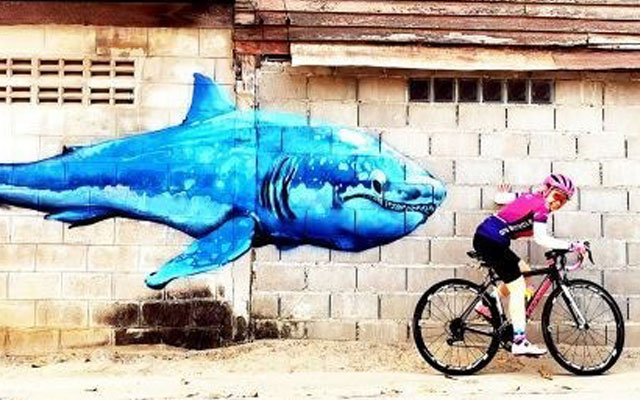
The Tourism Authority of Thailand (TAT) Prachuap Khiri Khan Office has partnered Hua Hin’s public and private sectors to launch a new destination brand called Hua Hin: Thai Authentic Beach, with emphasis on local-themed street art installations located at the town’s communities.
Launched on November 21, 2019, the new brand leverages Hua Hin’s unique history and cultural significance as Thailand’s first beach resort destination.
Hua Hin street art installations
1 of 4
TAT Prachuap Khiri Khan director, Soraya Homchuen, said: “The launch of the new brand provides Hua Hin’s tourism operators with an authentic new marketing tool to promote the destination (among) both local and international tourists.”
Under the newly-created brand, the TAT Prachuap Khiri Khan Office will promote the town’s latest landmarks and street art installations in the villages of Samo Riang, Poon Suk, and Khao Tao.
The street art initiatives, which features creative images that reflect the locals’ way of life as well as paintings of the late King Bhumibol Adulyadej, are part of integrated collaborations between the villages and Hua Hin’s public and private sectors to create new tourism experiences.
The Khao Tao community is also creating a tourist trail linking Khao Tao Reservoir with the village centre and the beach, which will showcase the fishing village’s way of life as well as local products from the Ban Khao Tao Professional Handicraft Centre.
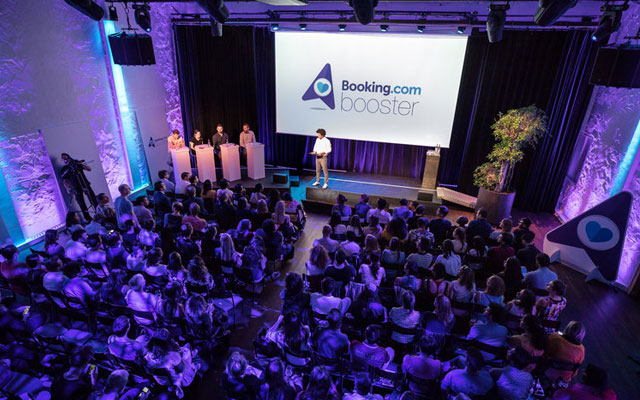
The fourth edition of Booking.com’s Booking Booster programme, which recognises and backs the development of sustainable travel solutions, is now open to applications with a focus on sustainable accommodation.
The 2020 Booking Booster will bring startups, social enterprises, non-profit organisations and accommodations of all kinds together directly to explore solutions to become more sustainable. Participants with innovative products and services, including accommodations themselves, will have the opportunity to secure grants from the company’s US$3.4 million fund.
This year’s edition of Booking.com’s Booking Booster programme will provide $34 million in grants to support sustainable accommodation
The accommodation focus for the 2020 Booking Booster programme is underpinned by Booking.com’s research, which shows that 82 per cent of the company’s accommodation partners want to collaborate on sustainability and that 87 per cent of global travellers think it is important to consider sustainable properties when travelling.
Designed to support accommodation partners as they strive to overcome roadblocks to make their properties and operations more sustainable, the 2020 Booking Booster will consist of two complementary 10-day programmes exclusively focused on sustainable accommodation.
The first programme in May is geared towards organisations with innovative products and services to help accommodations become more sustainable.
The other programme in September targets accommodations, including those that are just starting their sustainability journey.
Participants from both sessions will present live on stage at the Booking Booster finale in September to secure scaling grants.
The 2019 Booking Booster, held in Amsterdam, benefitted 10 finalist teams that hailed from eight different countries including India, Indonesia, Nepal and Malaysia. Okra Solar from Australia and IMPULSE Travel from Colombia were awarded with the largest grant of 400,000 euros (US$442,478) for their proposed plans.
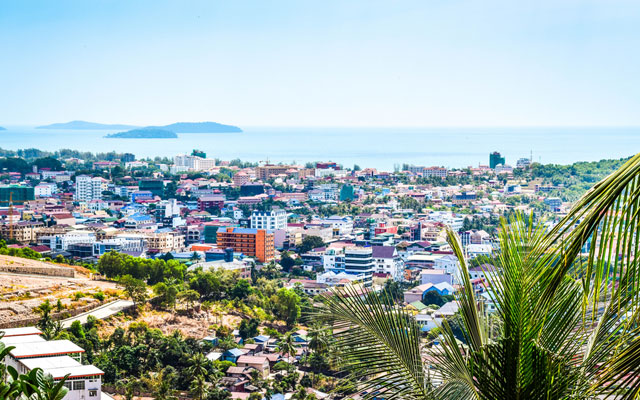
A wave of Chinese investment has led to a slew of properties and developments mushrooming in the Cambodian costal village of Sihanoukville over the last few years.
However, the Cambodian government’s recent ban on online gambling over concerns of money laundering has dealt a serious blow to the city’s tourism and real estate sector, and disrupted a three-year booming business in the country which catered primarily to Chinese tourists.
Sihanoukville retains potential for growth on the back of ongoing construction projects and development of SSEZ: C9
Still, the outlook is not entirely bleak, in light of ongoing infrastructure projects and the development of the Chinese-invested Sihanoukville Special Economic Zone (SSEZ), noted C9 Hotelworks’ Sihanoukville Tourism & Property Market Update 2020.
“Sihanoukville was originally a peaceful coastal village set in the southwest of Cambodia. In the past, it attracted mostly Western tourists and was once a weekend getaway destination for locals. However, starting in 2017, the dramatic inflow of Chinese investment driven by the Belt and Road Initiative has changed the seaside town completely,” Bill Barnett, managing director, C9 Hotelworks, said.
“Prior to 2016, only limited domestic and charter flights served Sihanoukville airport. The emerging market has drawn attention from various segments, especially the gambling sector, and brought hundreds of thousands of mainland Chinese workers and investors to the city.”
As of year-to-date October 2019, the city’s main getaway Sihanoukville International Airport hosted 602,755 passenger arrivals, which is a 266 per cent year-on-year growth compared to the same period in 2018.
Currently, the Sihanoukville airport has direct connectivity to four countries, serving 27 destinations and 22 cities in mainland China.
“Land values, rents and condominium sales prices have skyrocketed during a three-year period due to the surging demand and massive development of the city,” Barnett added.
There are currently 3,296 hotel keys in Sihanoukville, ranging from midscale to the upper upscale tier, with most properties boasting large room stock that caters to groups, said the report.
“Without a doubt, the Cambodian ban of online gambling, driven by the Chinese government has hit the tourism and real estate sector hard. Yet, ongoing construction of public infrastructure and development of SSEZ will likely contribute to stabilising development in the medium to long term,” Barnett said.
Sihanoukville International Airport is undergoing an extension of the runway to serve larger aircraft, with the project expected to be completed this year.
Despite the challenged online gambling sector, future growth is expected to be diversified in various segments, with a focus on the industrial industry alongside a rebound in tourism, said the report.
While there is massive construction of buildings in the city, key projects total 18 developments, representing 30,549 condominium units. All upcoming projects include condominiums; with six mixed-use properties also having hotels, shopping malls and office buildings.
Luxury hotel group GHM will be launching The Chedi Kudavillingili, its first resort in the Maldives, later this year.
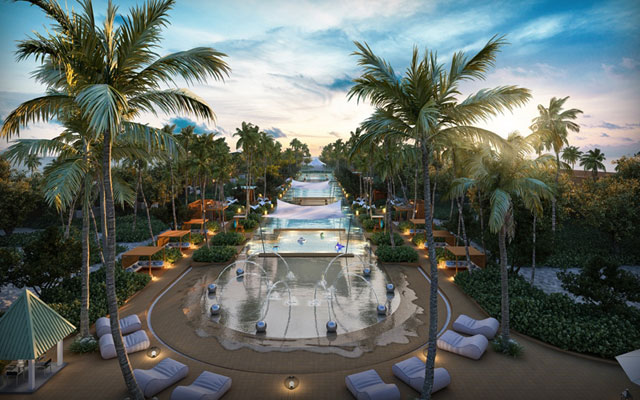
Located on a 1km coral island called Kudavillingili, The Chedi Kudavillingili will be located a 25-minute speedboat ride away from the Malé International Airport.
The Chedi Kudavillingili is slated to open later this year
The 99-villa property will feature 36 overwater villas, 63 island-based villas, a 150m central pool, a spa with eight treatment rooms, a beach club and bar, an all-day dining restaurant and Hawkers Stalls featuring four live cooking stations.
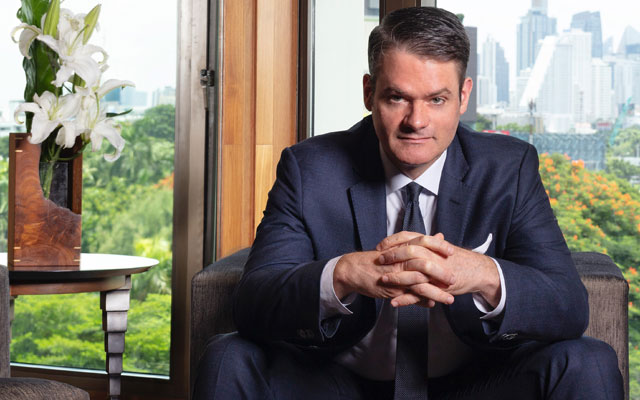
Thomas Schmitt-Glaeser has been appointed as the general manager of The Sukhothai Shanghai and vice president for The Sukhothai Hotels & Resorts.
In his new roles, Schmitt-Glaeser will oversee the full operation and service delivery of The Sukhothai Shanghai and spearhead the brand expansion of the group.
With more than 25 years of experience from various hotels all over the world, Schmitt-Glaeser most recently served as the general manager of The Sukhothai Bangkok since 2016.
The hotelier spent more than 10 years with the Shangri-La hotel group before joining the Sukhothai family, where he worked in different locations including Bangkok, Shanghai, Singapore, Hong Kong and Beijing.
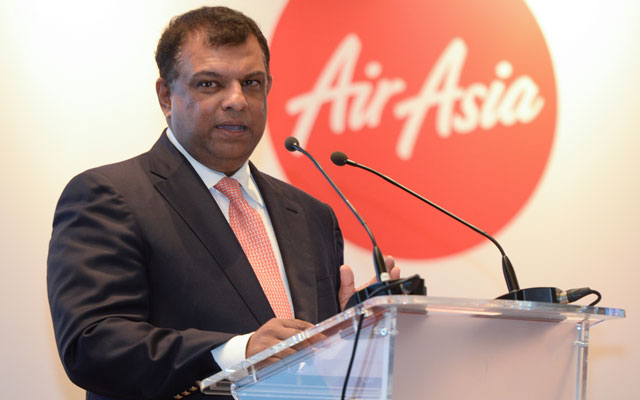
Fernandes and Kamarudin have both denied any allegations of wrongdoing or misconduct as AirAsia's directors
AirAsia Group’s CEO Tony Fernandes and chairman Kamarudin Meranun have announced they would be stepping aside for two months, as authorities investigate allegations that Airbus had paid a bribe to win plane orders from the budget airline, reported The Straits Times.
The allegations – in which Airbus paid a bribe of US$50 million – were revealed as part of a record US$4 billion settlement Airbus agreed with France, Britain and the US. Prosecutors said the aircraft maker had bribed public officials and hidden payments as part of a pattern of worldwide corruption.
Fernandes and Kamarudin have both denied any allegations of wrongdoing or misconduct as AirAsia’s directors
The allegations against AirAsia Group and Airbus follow the same that was made against former SriLankan Airlines CEO Kapila Chandrasena and his wife, whose arrests have been ordered by the local court this morning.
A committee comprising the non-executive members of AirAsia’s board will review the allegations and take any necessary actions, AirAsia said in a statement.
Senior company executive Tharumalingam Kanagalingam will be the acting CEO, with changes effective immediately.
Currently, Fernandes and Kamarudin will remain advisers, however, “in view of the current difficult economic circumstances facing the airline industry”, the company said in a statement.
In a joint statement, Fernandes and Kamarudin have denied any allegations of wrongdoing or misconduct as directors of AirAsia, saying they “would not harm the very companies we spent our entire lives building to their present global status”.
Sri Lankan authorities have ordered the arrest of the former CEO of national carrier, SriLankan Airlines (SLA), and his wife after they were implicated in a US$2 million bribery scandal involving the purchase of Airbus planes.
Attorney General (AG) Dappula de Livera on Monday directed police to obtain an arrest warrant from court for former SriLankan Airlines CEO Kapila Chandrasena and his wife Priyanka Niyomali Wijenayake for allegedly accepting bribes from French aircraft manufacturer Airbus over the sale of aircraft to the state-run carrier. It is not known whether the couple is in Sri Lanka or abroad.
Former SriLankan Airlines CEO and his wife have been arrested over money laundering allegations
The alleged bribery took place during the November/December 2013 period. The money was funnelled to a straw company registered in Brunei, which was owned by Wijenayake who had acted as an intermediary in these transactions. Her husband was CEO of SriLankan Airlines from August 2011 to January 2015.
Airbus employees had reportedly offered up to US$16.84 million to Wijenayake to influence SLA to purchase 10 Airbus aircraft and lease an additional four.
The scam was revealed in a UK High Court last week when Airbus was fined 3 billion pounds (US$3.9 billion) for resorting to bribery to secure several contracts in 20 countries. In SLA’s case, it involved the promise by the former CEO to purchase six A330-300s, four A350-900s and lease four other planes.
Airbus had also agreed to pay US$5 million to Wijenayake if SLA didn’t purchase any competitor aircraft at the time, according to a report released by UK’s Serious Fraud Office.
Airbus employees had misled the UK Export Finance to Wijenayake’s name and gender in order to conceal her identity, after US$2 million of the US$16.84 million was paid to her company, added the report.
The report followed a four-year investigation into Airbus, over allegations of external consultants used by the company and paid bribes in Sri Lanka, Malaysia, Indonesia, Taiwan, and Ghana between 2011 and 2015.
When the news broke on Sunday, Sri Lankan president Gotabaya Rajapaksa ordered a thorough investigation and firm action against the responsible parties.
The national carrier said on Sunday it would cooperate fully in any government investigation on the issue.
Health and safety concerns rising along with the number of Novel Coronavirus cases in China and beyond are stifling travel confidence in Asian markets, with outbound agencies in Singapore, Indonesia and Sri Lanka reporting cancellations and postponements for the next few months.
Anticipating sliding travel demand from Singaporeans, the National Association of Travel Agents Singapore (NATAS) has postponed its popular NATAS Travel Fair 2020 from February 21-23 to May 1-3 as a measure to “lower the risk potential for the public and staff (of participating travel agencies)”, explained Alicia Seah, director, public relations & communications, Dynasty Travel, a member of NATAS.
Coronavirus has put a damper on Asian tourism markets
Within Dynasty Travel, there are plans to reduce advertising and marketing expenditure, and to scale down events in response to the “sharp drop in travel demand”, shared Seah.
Nam Ho Travel Service is seeing some deferred travel bookings, especially those to China, shared Joe Lim, a consultant for the company. He described: “The market is currently quiet, because it is post-Chinese New Year when travelling has slowed down compared to any other times of the year. Some bookings were deferred, especially those to China, while the rest (of our customers) are adopting a wait-and-see (for how the situation will develop).”
In Indonesia, outbound travel agents are claiming large financial losses from cancellations by nervous Indonesian customers.
Pauline Suharno, managing director of Elok Tour, told TTG Asia that “many cancellations of tour packages” by Indonesians have resulted in the suspension of chartered flights from Indonesia to major Chinese cities, such as Hainan, Kunming and Nanning.
The last chartered flight took off on January 24, she said.
South Tangerang-based Safa Tour’s owner Khairul Gumay said he has recorded 800 million rupiah (US$58,691) in financial losses from six group cancellations. The groups were supposed to visit Beijing, Kunming, Guangzhou and Hong Kong over the Chinese New Year holidays and the coming Valentine’s Day in February.
Khairul said these clients were worried about being infected as well as being trapped in the Chinese cities should travel suspensions worsen.
Pauline, whose business is also bleeding from the outbreak, added that with Japan – a popular destination among Indonesians – having confirmed infections, she has had to propose major domestic destinations as alternatives to customers who are still looking to take vacations.
The adverse business impact is felt in Sri Lanka too, with an anonymous outbound agent saying he is saddled with a large number of postponements or cancellations of incentive tours to various parts of Asia, totalling over 500 participants.
The agent who declined to be named told TTG Asia that the financial loss was “huge”.
With Sri Lankan corporates urging their executives to postpone non-essential overseas travel, outbound travel business can expect deeper dents.
Meanwhile, a number of Chinese visitors in Sri Lanka have requested to extend their holidays instead of returning home immediately. At present, there are between 800 to 1,000 Chinese travellers in the country, immigration officials said. – Reporting by Pamela Chow, Kurniawan Ulung, Feizal Samath
Indian tourists visiting Wat Phra Chetuphon in Bangkok
Tourism Authority of Thailand (TAT) will be targeting millennials and quality tourists in India this year, projecting a 10 per cent growth from the Indian market in 2020.
TAT’s new marketing campaign for the Indian market in 2020 will also be themed to attract more Thai millennial travellers to India, seeing how the category has grown more than 30 per cent over the past five years.
Indian tourists visiting Wat Phra Chetuphon in Bangkok
“We are inviting a few social media influencers to visit destinations like Bangkok and Koh Samui as part of our strategy to attract millennials, who we expect will project themes like 10 things to do in Bangkok or Koh Samui,” Klissada Ratanapruk, executive director, ASEAN South Asia, and South Pacific Region, TAT told reporters on the sidelines of a roadshow in New Delhi.
TAT will also work closely with Indian travel agents, airlines and social media platforms to create awareness about Thailand as a quality destination, with a focus on niche segments like wedding and golf to draw high-value Indian tourists.
“We are targeting a modest growth from the Indian market this year compared to the previous year as our focus is on high-value tourism. We understand that by focusing on quality tourists, we will be able to achieve our revenue target from the Indian markets,” said Kulpramote Wannalert, deputy executive director, ASEAN South Asia and South Pacific Region, TAT.
At a time when growth from Thailand’s key source markets like China and Europe has plateaued, South Asian and South-east Asian markets have emerged as extremely important markets for the destination to achieve its targets in tourist arrivals and receipts.
Around 1.9 million Indian tourists visited Thailand in 2019, a growth of over 20 per cent from the previous year, on the back of more than 300 flights per week that connect India and Thailand.
Today’s independent hoteliers have a greater awareness and appetite around technology when it comes to their marketing and distribution strategies, noted new research backed by hotel guest acquisition platform SiteMinder.
According to eHotelier’s Marketing & Distribution 2020 Journal, 68.4 per cent of independent hotels already have a digital marketing strategy implemented for their business, while a further 24.4 per cent intend to implement their strategy over the coming year.
Number of independent hoteliers leveraging technology to drive business on the rise: study
Only 7.2 per cent of independent hoteliers do not understand the relevance of a digital marketing strategy or how it can help their hotel business, found the study which surveyed 461 hotel industry professionals from around the world, with 80 per cent from independent hotels.
James Bishop, senior director of global demand partnerships at SiteMinder, said: “These figures seemed almost unimaginable as recently as 13 years ago, when SiteMinder first opened its doors to hoteliers all around the world who yearned for a way to market and sell their rooms online.”
When it comes to the value of booking channels in driving revenue, direct website bookings remain perceived among respondents as the most important booking channel for independent hoteliers, with 62.1 per cent ranking direct website bookings as either very valuable or valuable – a sentiment accentuated among hotel chains and franchises (87.9 per cent).
Owned channels, such as direct mail and a hotel’s website, trumped paid channels, such as paid social media, in terms of their perceived effectiveness in driving business.
The study also underlined a growing desire for hoteliers to better know their customers, with direct feedback seen as the most important channel in defining how they approach their marketing strategy.
“Unsurprisingly, direct website bookings remain perceived as the most important channel, a heartening outcome for the health of the market, as it displays the enthusiasm that hoteliers of all sizes currently have to embrace the tools and innovations at their disposal. However, hotels should also remember that having a balanced distribution strategy between channels, such as OTAs, wholesalers and GDS – as well as direct – remains key in the success of marketing your hotel online,” Bishop said.
“At SiteMinder, we are encouraged to also see hoteliers looking at the distribution of data from their core platform to other applications, such as CRM, upselling tools and guest messaging, to support their overall strategy in 2020 and beyond.”