TTG Asia
Asia/Singapore Friday, 1st May 2026
Page 1042

Local leverage

0
One of Malaysia’s many adventure spots, Kiulu River, Sabah, is suitable for families and amateurs with its gentler Class One to Two rapids

A decade ago, adventure tourism used to be associated with Europeans on holiday seeking an adrenaline high through adventurous pursuits such as bungee jumping, rock climbing or a hiking expedition.

This trend is changing. Over the last couple of years, the travel trade in Asia has seen increasing demand from Asians looking for soft adventure activities as well as authentic experiences in destinations off the beaten track.

Natasha Martin, a freelance consultant on adventure travel based in Cambodia, reckoned that the trend is motivated by an increasingly mature Asian traveller market. Unsatisfied with the typical shopping and sightseeing, the market is eyeing more meaningful experiences.

That is where adventure travel comes in. Travellers are given the opportunity to explore new places and learn about new cultures – two elements which make for “a memorable holiday”, noted Martin.

Where nature meets culture
It is that emphasis on not just nature and adventure, but education and culture that sets Asian adventure travellers apart.

Irshad Mobarak, founder of JungleWalla Tours – a tour operator specialising in taking groups to eco-tourism destinations in Langkawi – has seen that with his company.

He noted a rise in the number of participants from Singapore, South Korea, Japan and the domestic Malaysian market over the last five years. “Most (of them are) FIT nuclear and multigenerational families, who appreciate an educational element in the programme,” he shared.

Unlike European travellers, the Asian market prefers soft adventures. “They seek activities such as birdwatching, wildlife spotting and kayaking, as well as the opportunity to, say, trek to a waterfall and enjoy a home-cooked meal at a local’s residence on the way back,” revealed Mobarak.

In comparison, guests from France and Germany tend to engage JungleWalla Tours for hardcore adventures.

Where dollars make sense
Given the high-risk and specialised nature of adventure tours, travellers in this niche sector are more likely to engage professional services – including that of guides and tour operators – than the traditional travel market, noted Martin.

Uzaidi Udanis, general manager, Eyes Holidays, agreed and noted that, in fact, travellers were ready to fork out more than usual for such services. This was evident when his company took FIT travellers from neighbouring countries to Gopeng, Perak, for a two-day, one-night whitewater rafting trip.

“(The travellers) were willing to pay US$500 for the unique experience of being in an all-natural, pristine setting where rapids were of Class One to Class Four,” he shared.

Paul Landgraver, co-founder of Wicked Adventures, said travellers were willing to pay for his packages, which are priced at the higher end of the market. Wicked Adventures draws an increasing number of working professionals from Singapore, Bangkok and Kuala Lumpur, aged 25 to 35.

Wicked Adventures takes travellers to remote Indonesian destinations, such as Komodo, Flores and Sumbawa, where they can engage in active adventures.

Where sustainability matters
Landgraver shared that a percentage of his company’s revenue is channelled to the local community through the Wicked Good Foundation. The latter provides on-the-job training for locals interested in the tourism industry, and funds turtle conservation camp Pante Hera in the Savu Sea Marine Protected Area.

Run by volunteers and operated through donations, Pante Hera camp works to protect endangered hawksbill sea turtles and raise environmental awareness among local villagers.

Considering the close relationship between nature, culture and adventure travel, making genuine efforts to engage with and give back to the local community – while taking on the responsibility of environmental conservation – seems the natural course of action for players in the sector.

Where community is key
This brings to mind another niche sector where adventure and experiences of local culture can meet: community-based tourism (CBT).

Guam, located in the western Pacific Ocean and nearest to the Philippines among ASEAN nations, is a choice location for CBT travellers, with culture dating back to neolithic times. Latte stone structures on the island are testament to the culture of her indigenous people – the Chamorros – which dates back to the Latte Period of 2000BC.

Currently, the US island territory receives mostly tourists from Japan and South Korea, which are a few hours’ flight away. However, Guam is looking to promote CBT on the island to South-east Asian markets.

Mark Manglona, marketing manager, Guam Visitors Bureau, shared that his team is looking to set up marketing representation in either Singapore or Malaysia.

One of the island’s key eco-tourism destinations closely tied with the community is The Valley of the Latte Adventure Park. Locals are involved in the tours offered, which feature an adventure riverboat cruise on the Talofofo and Ugum Rivers, kayaking as well as stand-up paddle-boarding.

After all the action, visitors go on a tour of the Latte Stones and an ancient Chamorro village. They are also invited to witness fire-starting and basket-weaving demonstrations and learn about the culture of the Chamorros.

Within South-east Asia, CBT is also thriving. Local communities have been able to benefit from tourism while visitors get to appreciate the heritage of the places they visit. And for this authentic exchange to happen, local communities find value in preserving their environment and way of living.

Where they get the word out
Tapping on the potential of adventure travel and CBT is inevitably tied to responsible promotion.

In mid-February, 347 delegates from 33 countries gathered in Sabah, Malaysia, for the 2020 run of the PATA Adventure Travel Conference & Mart to promote their destinations, network, and better understand the adventure travel market.

Sabah took the opportunity to bring some of the delegates to the renowned Kinabalu National Park, where they learnt about local culture and myths amid unspoiled nature.

Considering Sabah’s status as a key eco-tourism spot in Malaysia, the local tourism office continuously emphasises to CBT players the need to market their products online, Noredah Othman, general manager, Sabah Tourism, told TTG Asia.

They are also encouraged to follow Sabah Tourism on overseas roadshows and tradeshows for promotions.

Revenue Insight adds new features to spur hotel recovery

0

OTA Insight​, a cloud-based data intelligence platform for the hospitality industry, is introducing several new product features to its business intelligence tool ​Revenue Insight​ to support hotels’ Covid-19 recovery plans.

As lockdowns lift, hotels’ PMS data will become an even greater source of insights to understand the market and demand shifts at the property level.

Revenue Insights rolls out new features to help hoteliers anticipate demand and plan recovery

To make the most of the rebound and business recovery, it’s critical that hoteliers and revenue managers can easily visualise pick-up and pace insights, analyse business mix trends, rapidly adjust forecasts, and most importantly, quickly spot segments that are showing signs of recovery.

“Hoteliers are relying on Revenue Insight more than ever to help navigate unpredictable market conditions,” Sean Fitzpatrick, CEO of OTA Insight, said in a statement.

“We’re working closely with hotel and cluster level users to quickly innovate and deliver features and insights based on the ‘new normal’ versus relying on historical trends.”

In addition to monitoring each property’s performance, cluster managers can now manage their hotel portfolio to monitor trends and track data on a granular level​. This is increasingly critical as the onset, pace, and intensity of the recovery differs by market, region and customer segment, said OTA Insight.

Revenue Insight multi-property​ delivers instant access to portfolio performance data to make faster and better decisions suitable for each hotel, as well as comprehending where each property stands in the recovery phase.

Emerging as the first business intelligence solution to remove manual Excel reporting and fully harness the power of detailed PMS data, Revenue Insight empowers multi-department commercial teams to achieve better cross-functional alignment.

Revenue Insight unique property-level features include:

● Custom date period comparison – ​the same period last year is no longer relevant. The new compare features enables comparison with last week, last month or any custom periods to make better planning assumptions.
● Make quick forecast adjustments – as restrictions are lifted and market conditions change rapidly. Hoteliers will be able to adjust, compare and keep their enterprise team up to speed. Budget and forecast targets can easily be uploaded directly into the dashboard to monitor performance.
● Business breakdown details ​– track data by segment, agency, channel and company as the onset, pace, and intensity of the recovery will differ by region and by customer segment.
● Rate Insight’s rates integration ​– evaluate how rate positioning impacts hotel business, and take immediate actions to optimise performance.

This is in addition to portfolio-level features, including aggregated KPIs​, which allow users to monitor hotels’ overall performance and momentum, as well as a dynamic business mix dashboard​ to predict the recovery, and monitor which locations start picking up and on which channels to refine pricing and distribution decisions.

Marriott’s W checks into Melbourne

0

Marriott International will be marking the return of its W brand to Australia, with the opening of its second property in Melbourne this December, following a delay of its original June launch.

Forming the centerpiece of Cbus Property’s A$1.25 billion (US$816 million) Collins Arch mixed-use precinct, W Melbourne is touted as the city’s first luxury lifestyle hotel with a “rebellious luxury” edge.

W Melbourne will open its doors to guests this December

Located at 408 Flinders Lane, W Melbourne will feature 294 guest rooms, including 29 suites. Hotel facilities include four F&B outlets, starring a Japanese fine dining restaurant, an all-day dining venue, as well as two bars including a hybrid café-meets-wine-bar.

Other amenities include a fitness facility, a gold-roof adorned indoor pool with poolside bar and DJ booth, as well as 830m2 of conference, meeting and event space, including a 426m2 pillarless ballroom.

Aviation sector faces major headwinds, long road to recovery

0

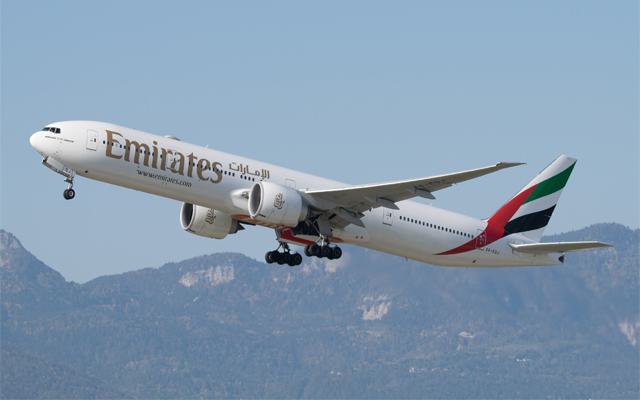
The aviation industry will likely take three to four years to get back to pre-Covid-19 activity levels, while Emirates, one of the first airlines to be impacted by the pandemic, will be among the last to recover from the crisis.

That is the “pessimistic” prognosis by Gary Chapman, president, group services and DNATA, Emirates Group, taking into account not just the recovery from the crisis but also “the mother of all recessions that will follow” to be marked by waves of unemployment and disruptions.

Emirates may take three, four years to bounce back from the pandemic, says Gary Chapman during a webinar hosted by the Philippine’s tourism board 

“I am very positive about the future and about our ability to come through this, but at the moment, it is a pretty horrible place to be in the aviation industry… because it is, frankly, a horror story,” Chapman said in a webinar called The Future of Travel, a World Travel and Tourism Council exclusive organised by the Philippine Department of Tourism.

He added that while there’s a need to plan for the uncertain future, “the real focus right now is making sure that we stop the haemorrhaging, the cash bleed that we’re all facing”.

It’s “a very emotional, a very difficult time” for Emirates, with 260 aircraft grounded and 105,000 staff in the organisation, while presently doing only a number of repatriation flights, he said.

Chapman shared that as a hub-and-spoke operator globally, Emirates will be among the last to recover from the pandemic given that “we have no domestic market” and “we are also bringing people (to and from all continents)”.

Based on what can be seen in the last few weeks as the pandemic progresses, “we become a little more pessimistic in the sense that we make forecasts and predictions… and it’s turning more and more into a worst-case scenario”, Chapman said.

“Any recovery will be toxic and erratic”, he added, as the travel and tourism sector fights for consistent and clear safety and security standards for travelling.

Chapman also noted the impracticality of some proposed travel protocols like a two-week quarantine for travellers and social distancing.

“There’s a risk that it will make the (travelling) experience rather unpleasant. You may compare it with going to the dentist for root canal and you have no anaesthetic and what happens is not about medical control but what the experience is going to be like,” he said.

Chapman added that “the talk of social distancing in aircraft is garbage as far as I’m concerned,” pointing out that the economics of it will be the “death knell” for the industry and that no airline will be able to operate commercially.

“If anyone wants that, let them buy six or seven seats and they can have their own space.”

Fare caps in place as India’s domestic skies open up

0

The Indian government has allowed domestic flights to resume in a calibrated manner from May 25, after two months of grounding.

The Ministry of Civil Aviation has issued a set of standard operating procedures (SOPs) that has to be followed by airlines, airports and passengers for the resumption of flights.

Domestic flights will resume from airports across all major Indian cities from May 25

To ensure affordability of air fares for passengers, the government has capped ticket prices for three months. The elderly, pregnant women and people with health issues have also been advised to avoid travel.

“The industry has been waiting for the systematic opening of domestic flights. Even though the capacity will be limited to begin with, it is a step in the right direction as many stranded people will be able to travel by air,” said Ankur Bhatia, executive director, Bird Group.

He added: “The government has given a detailed SOP which will be helpful in curtailing the spread of the virus. Fare cap might be challenging and impact the airline yields but these are extraordinary times and such measures are required.”

Kanika Tekriwal, CEO & founder of JetSetGo Aviation, said: “In the downtime, we were preparing ourselves to reopen our services by working on the guidelines prepared by the government to ensure the maximum safety of our guests. We are looking forward to the detailed plan of flying and reopening our bookings by the authorities.”

Industry players urged the government to also allow hotels to reopen to support tourist demand that will surface through the opening of flights.

“Most travellers would need to stay at hotels. Hotels on their end have used the lockdown period to prepare for reopening, putting into place measures such as social distancing,” said Bhatia.

However, a section of the travel trade was quick to add that it may take some time before domestic tourism starts picking up.

Arun Anand, managing director, Midtown Travels, said: “Domestic travel may slightly ease up, but travellers’ apprehension (to flying) has to go in order for demand to rise significantly.”

Planeterra raising funds to aid fragile communities

0
Jia Community Centre in China distributes masks and thermometers to nearby villages during Covid-19

Planeterra Foundation, G Adventures’ non-profit partner, has launched a fund-raising campaign to help tourism-reliant communities weather the Covid-19 storm.

The ​Turn Travel into Impact from Home campaign aims to raise CAD$50,000 (US$35,800) in emergency funds for needy communities.

Already, the campaign has raised more than CAD$15,000, allowing the non-profit to transfer grants to six of their partners to help support basic community needs, including food and medicine.

Among the first to receive funding is the AidChild Leadership Institute (ALI) in Uganda, which sees 50 per cent of their operating budgets generated by their tourism initiatives, including a cafe and guesthouse. The grant is helping to feed the 67 HIV-positive orphans in their care.

Despite hardships, many communities are demonstrating kindness and resilience, with project members offering support and services to others amid the crisis.

I​n China, the Jia Community Restaurant, which supports rural women and children by providing meaningful employment, has turned into a delivery and distribution centre for masks and thermometers for nearby villages.

Elsewhere in Zambia, the team at Tribal Textiles, which supports local artisans outside South Luangwa National Park, are using their workshop to sew 1,500 masks for local healthcare workers.

Planeterra president Jamie Sweeting said in a statement that fragile communities need the support now more than ever to ensure they are protected and can continue to offer life-changing experiences when travellers return in the future.

“Our global team is working overtime to support our projects, with grants to purchase food and medicine already going out to communities in Morocco, Belize, and Botswana,” she said.

We’re encouraged by projects that are helping one another and their communities, and we hope this fund will provide some relief and help to ensure jobs and organizations remain intact for when travellers inevitably return,” Sweeting continues.

Donations, which can be made here, will help project partners cover basic needs like food and medicine for their staff and beneficiaries, and provide support and vital resources to help tide them through this period.

Accor partners AXA to offer guests medical support

0

Accor has teamed up with insurer AXA to provide medical support to guests at its 5,000 hotels across 110 destinations worldwide.

From July, the hospitality giant’s guests will be able to enjoy free medical teleconsultations, as well as access to AXA’s medical networks with “tens of thousands of vetted medical professionals”, which will allow hotels to make the most relevant referrals to their guests, in terms of language, speciality, and more.

Accor’s new partnership with AXA will allow its guests to enjoy free medical teleconsultations

The medical service complements Accor’s overall Covid-19 recovery plan, and is part of the group’s enhanced hygiene protocols put in place across its properties through its ALLSAFE Cleanliness label, the companies said in a statement.

Sébastien Bazin, chairman and CEO of Accor, said: “This distinctive partnership with AXA which we have been working on for several months makes even more sense in today’s context.

“In an increasingly complex environment, our 300,000 team members on the ground will be able to assist our guests and ensure their safety during their stays, turning our hotels into shelters.”

Engaging travel lovers today to champion the travel recovery tomorrow

0

Currently, most travellers who love the journey are grounded. How can travel brands connect with travellers to reassure them, support them, and help them to once more take to the skies when the time is right?

The first few months of 2020 brought a seismic shift to travel. Under the influence of Covid-19, airlines, hotels and every business across the travel ecosystem has had to navigate uncharted territory. With certain Asian markets beginning to return to travel, now is the time to ask: How can we engage, support and assist travel lovers today, to champion the travel recovery of tomorrow?

Acting with continued empathy and flexibility
Asia-Pacific is the world’s top spender for outbound tourism and has the largest aggregate domestic travel market. However, in recent months, Covid-19 has left frequent travellers feeling frustrated and powerless. They have been cut-off from doing the thing they love, unable to plan for the future, and in many cases, prevented from doing their job. During this time, it has been imperative that travel brands provide flexibility with regards to rebooking and cancellation policies.

Many airlines, hotels, loyalty programmes and tourism operators have waived cancellation fees, relaxed loyalty membership earning requirements, and introduced more flexibility on future bookings – providing peace of mind at what has been a difficult time.

We also saw brands empower and reward loyal customers, by way of helping them to manage the challenges of Covid-19. Hong Kong’s flagship airline Cathay Pacific was one of the first to reward their Marco Polo Club members three months of relief points to enjoy when travel resumes; and the airline is allowing customers to make unlimited changes to tickets purchased before June 30 this year.

This type of action displayed loyalty to customers during this critical time, while also helping give back control at a time when many felt powerless. As travel lockdowns begin to lift, and we start to see a return to domestic travel in region, it remains imperative that businesses maintain this amenable, customer-first mindset; so customers feel brands are supporting and championing their return to travel.

Staying engaged and connected
Most brands have been on a communications journey, depending on when and how their business was affected by the outbreak. Now, with the first green shoots of progress being seen in markets like China, brands have the opportunity to get more creative with aspirational and even bold communications – because travel lovers need reassurance and crucial information, as much as they need a reminder that the joy of travelling is not forever lost.

Shangri-La launched a new Always Care. Always Here. campaign, while Lonely Planet is using social media to share cool travel finds – and these are just two examples of how brands can use timely, aspirational communications to stay front of mind and inspire people to keep their love for travel alive.

Diversify and grow
The coronavirus outbreak even spurred businesses to go one step further and add value by diversifying their offering during this unprecedented period. Carousell is working with the Singapore Brand Office to give free exposure to out-of-work creative freelancers, restaurants are transforming into grocery stores, and fashion and beauty brands are pivoting to produce face masks, face guards and hand sanitiser.

For travel organisations who invested in an online earn or redeem platforms – designed to reward customer loyalty – the Covid-led surge in online retail has provided a much needed ancillary revenue stream.

While enabling travel companies to stay in touch with grounded travellers, earn platforms also ensure that their customers can continue to build points and air miles with a range of retailers, to put towards a dream holiday once lockdowns lift.

At a time when many are trying to reduce outgoing spend, redeem platforms have proven popular with consumers wishing to use points instead of cash. With Asia being the world’s fastest-growing e-commerce market, it’s likely the importance of platforms such as these will only continue to grow as the world adjusts to its new normal.

Building traveller confidence in the journey
With markets in Asia already beginning their travel recovery journey, the new normal for now is domestic, followed closely by market-to-market routes. The optimism of Asia-Pacific travellers is fantastic news for global travel’s eventual recovery, but it’s also important to ask – what do customers expect from brands, in order for them to feel confident travelling?

A renewed focus on health and safety should be a priority. One recent survey found that disinfection procedures are the number one concern for nearly 80 per cent of travellers considering a return to the skies, with around three in four respondents also citing a desire for communications on safe places to travel.

These types of concerns have prompted travel industry action, such as Emirates’ decision to do Covid-19 testing for all passengers – and Hong Kong International Airport’s introduction of cleaning robots and disinfection booths.

It will be critical that travel brands not only institute health and safety measures, but also communicate these with frequency, clarity and transparency.

Travel brands can also consider new and creative ways to help travellers feel more comfortable and in-control after this intense period of unexpected disruption.

More collaboration across the travel ecosystem, to give customers an integrated door-to-door journey that feels connected, cohesive and catering to their needs at all times, will be core to this.

Looking towards travel recovery
After Covid-19, the future of travel may look very different than any of us imagined. But there’s no going back; and every business operating in and around the travel sector must take a stake in building that future.

With a cautious resumption of some travel in Asia-Pacific, the time to act is now – as travellers will remember the brands that went above and beyond to reward, reassure and reconnect with them during this difficult period.

Travel brands must take a stand, be kind and be innovative in order to show their customers that they are valued. Engaging travel lovers today will help ensure the travel recovery of tomorrow.

Myanmar, Cambodia pin hopes on China tourists for post-pandemic restart

0

Tourism authorities in Myanmar and Cambodia are eyeing to recapture the Chinese market once travel resumes.

At the latest meeting of Mekong Tourism Advisory Group (MeTAG), Hla Myint, director (promotions department) at Myanmar’s Ministry of Hotels and Tourism, said the ministry has held virtual meetings with a number of Chinese tour operator representatives this week.

Cambodia aims to recapture Chinese outbound travel market; Chinese tour group visiting Bayon temple at Angkor Wat complex in Siem Reap, Cambodia pictured

He elaborated: “The immediate emphasis is on encouraging the development of domestic tourism, but we also need to think about when we open our doors to international visitors… We are preparing to receive Chinese travellers in post-pandemic times.”

In 2019, China drove Myanmar’s tourism sector. A total of 344,268 arrivals saw a 75 per cent year-on-year increase, making the destination Myanmar’s number one source market.

At a webinar conducted by Mekong Tourism Advisory Group, Myanmar’s Ministry of Hotels and Tourism’s Hla Myint (top row; middle) said the ministry has held virtual meetings with Chinese tour operators as it looks to recapture the China market when travel rebounds

Cambodia’s Ministry of Tourism (MoT) is also pinning hopes on China leading its recovery. Top Sopheak, secretary of state and MoT spokesman, said the country will continue to promote its “China Ready” strategy – a five-year plan to lure more Chinese visitors.

He added that tourism companies in the country are preparing a range of new tour packages targeting Chinese tourists post-pandemic.

Since 2017, Cambodia has welcomed a rapidly rising number of visitors from China. In 2019, more than two million Chinese tourists visited Cambodia, marking a 16.7 per cent year-on-year rise.

In another move, Cambodia this week lifted travel bans in place since mid-March on six countries: Iran, Italy, France, Spain, Germany and the US.

Despite preparations being put in place, Xu Jing, former director of the UNWTO, warned not to expect any major international recovery until 3Q or 4Q of this year.

South Korean airlines to resume international flights from June

0

South Korea’s major airlines are cautiously preparing to restart a handful of international flights from June, starting with countries which have not imposed entry bans, but only quarantine measures.

For one, the country’s second-largest carrier Asiana Airlines said it will cautiously reopen flight routes next month in an attempt to raise its operating rate from the current eight per cent to 17 per cent.

Asiana Airlines and Korean Air will reopen some international routes from June

It will restore 13 international routes and add 57 more flights during weekdays in an effort to prepare for the easing of entry restrictions in the near future and boost its profitability.

Out of the 13 restored routes, 12 will go to China. Also, the number of flights going to South-east Asian cities like Hanoi and Ho Chi Minh will rise from the current three times a week to seven weekly connections, while flights to Phnom Penh and Manila will increase from three times a week to four times weekly.

“Although the demand for international flights is meagre compared to before, we have decided to reopen some routes for those that need to go on business trips and official government duties”, Asiana Airlines said in a press statement, adding that more routes may be opened based on demand.

Flights operated by Asiana Airlines going to Seattle will resume for the first time in 77 days, with thrice-weekly services, on the back of increasing cargo demand. As well, flights going to Frankfurt in Germany will be upped to four times a week from the current three.

Since May, Korean Air has been operating special flight services for Korean citizens in Sydney and Vancouver to Incheon regularly, while also adding daily flights between Incheon and New York. The national carrier said that from June, it will resume regular flights to destinations in South-east Asia, including Kuala Lumpur, Yangon, Hanoi, Ho Chi Minh and Singapore.

Smaller carriers like Eastar Jet and Air Busan have suspended all international flights until the end of June, while Jin Air, Jeju Air, T’way Air and Air Seoul have not officially announced a date for flight resumption.