


Hospitality and tourism companies returning to business in a post-lockdown world are driving a growing demand for talents equipped with knowledge in health and safety as well as technology, with new positions opening up to support fresh or evolved revenue streams.
Patrick Basset, Accor’s chief operating officer for upper southeast & northeast Asia and the Maldives, said the company has created a new role for an ALLSAFE officer as a part of its new global safety and sanitation label.
An ALLSAFE officer will be positioned at all Accor’s properties to ensure that the hotel abides by best practices in terms of cleanliness and safety, and covers the 16 main areas of focus under the programme.
Along the same lines, housekeeping and operational roles may require more resources as recovery begins, opined Andrew Chan, founder and CEO of ACI HR Solutions.
“At Marriott International, digitally-savvy individuals are increasingly relied upon for certain functions as a result of travel in the new normal,” added Regan Taikitsadaporn, chief human resources officer – Asia Pacific. “As guests are increasingly looking to minimise physical interactions when they book and travel, tech-savvy teams will help make such transitions seamless.”
New F&B services such as home delivery and takeaway programmes are also presenting new roles that must be filled, shared Regan.
At the same time, hirers are paying greater attention to specific traits like adaptability, resilience, empathy and an ability “to maintain a sense of infectious positivity even when things look bleak”, shared Arthur Kiong, CEO of Far East Hospitality.
“Other new skill sets needed in the hospitality business include creative thinking, market and financial planning, communication, social sciences, data analysis, basic understanding of law,” added Kiong.
However, Chan pointed out that talent requirements by hotels would likely continue to evolve as operations return to normalcy.
Readying new blood
Kaye Chon, dean and chair professor of The Hong Kong Polytechnic University’s School of Hotel and Tourism Management (SHTM) as well as Walter and Wendy Kwok Family Foundation Professor in International Hospitality Management, believes his students have little to worry about fitting into a hospitality world of tomorrow.
“This crisis presents an opportunity for us to reorient our curriculum and the way we teach, but the hospitality and tourism industry has already been moving towards technology and digitalisation in various aspects, from marketing to HR and finance management. The crisis has merely forced the industry to speed up its technology revolution.
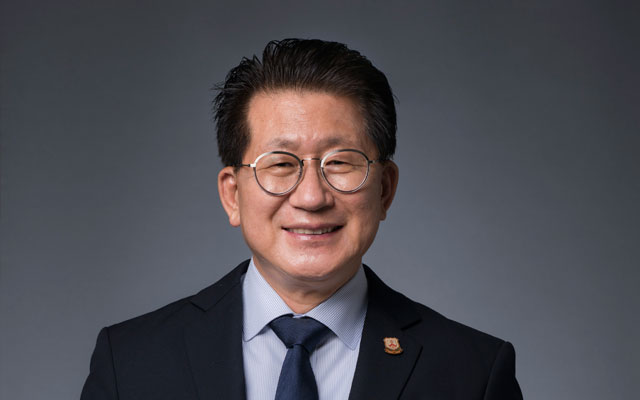
“Our school has been ahead of this trend and we have added courses that focus on digital management, marketing in a digital age, and big data analytics, among others (to prepare our students for future employment),” said Chon.
Even with the enhanced curriculum on technology capabilities, Chon emphasised that “hospitality is a spirit”, and so the need for soft skills “will never grow out of trend”.
“It is important that we strike a balance between imparting soft skills and service philosophy, and technology know-how. We are not grooming students in computing, we are not raising technocrats, and we don’t want to lose our versatile students to the technology industry,” he remarked.
Echoing similar beliefs, Somkiat Wongjeeraphat, head of the president office at Bangkok’s International Hotel and Tourism Industry Management School, said the pandemic would not completely alter basic human needs, and therefore “all of the traditional roles in the hotel and tourism sector will still be needed”.
Weak hiring appetite
What worries academic chiefs is the poor job market in the hospitality and tourism industry, which has seen many companies imposing pay cuts or laying off staff.
Chan shared that more retrenchments than recruitment are happening today, and hiring demand is down across the region and sector.
Naturally, graduates of James Cook University (JCU) are today most concerned about their employability, said Abhishek Bhati, campus dean and head (Singapore) learning, teaching and student engagement.
And with many organisations turning to digitisation and technology to reduce human reliance, especially in back-office operations, fresh graduates will face an even tougher job market.
“We are preparing JCU students and graduates to be resilient and to (be) innovative to improve business outcomes. They will be welcomed in different roles as long as they can add value to businesses,” said Abhishek, adding that he has advised his students to “consider all opportunities without being too picky and be prepared for unconventional roles”.
To help place JCU graduates, the school relies on its local and regional alumni networks, and offers networking opportunities through virtual platforms. These efforts are paying off, as several students are in discussion with JCU’s industry partners for careers and assignments immediately or in 4Q2020.
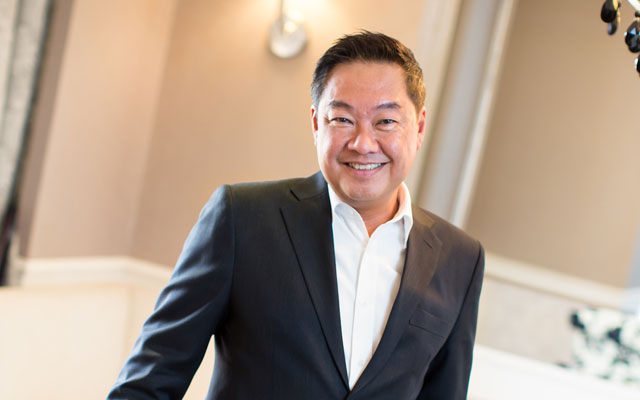
Despite the state of the hospitality industry, Kiong emphasised that employment could still be found, especially with companies that were savvy enough to turn crises into gold.
“For many local or regional hospitality companies, the pandemic presents opportunities to pick up new management’s contracts, sell auxiliary services, or acquire hotel assets that are strategic to their brand expansion. Such companies will have a better crop of hospitality graduates to choose from since the usual international brands may not be recruiting as aggressively,” opined Kiong.
Chan also encouraged job seekers, be they fresh graduates or displaced professionals, to cast their eyes – and curriculum vitae – towards the luxury travel sector, which is primed to be the first to rebound once international borders reopen.
“Also, I’m seeing more tech-related start-ups in the industry that could potentially offer some relief to displaced talents in the short to medium term,” he added.
Training gaps
Another problem presented by the pandemic and tourism crisis is a weakened corporate appetite for interns. Ten SHTM students who were on an internship programme between January and July this year were let go before the completion of their stint. The school had to step in with alternative arrangements with other employers.
Chon said internship programmes during these challenging times must be flexible, so students are allowed to take on remote projects with relevant companies.
The school is also relying on close relationships with industry leaders to lend support in internship and job placements.
Far East Hospitality, which has been an active contributor to hospitality education, has maintained its internship programmes with hospitality and tourisms schools it supports. Kiong said: “We have always played an active role in nurturing young industry professionals. Even during this pandemic, we did not stop the programme, as we know that this is an important part of (education). In fact, we have several ex-interns whom we have hired as permanent staff after they graduated.
“We also have a well-resourced Learning and Development Team which reports directly to me. This makes a difference as I take personal responsibility for how many new graduates we recruit each year, the content of our management development programmes, and their progress and promotions into leadership positions. This is the core of what makes us different and manifest into the brand of hospitality we ultimately deliver – Singapore-inspired.”
Far East Hospitality’s training emphasis has, however, shifted in response to the crisis – from customer experience focused to crisis, safety, and hygiene management.
The company’s commitment to grooming talents extend to its existing team, with the down time now used to provide staff with cross-training between departments. “(We also) take the approach of train-the-trainer to continue building up staff capabilities,” shared Kiong.
PATA Youth Ambassador, Aletheia Tan, urged hospitality and tourism companies to not freeze their internship and talent development programmes now, even though times are difficult. Doing so would create a dearth of talents in the future, when the industry is ready to return to business.
Exacerbated talent drain
The job crisis in the hospitality and tourism industry is likely to force new graduates to consider alternative career paths, exacerbating a talent drain that the industry already suffers.
“We have found over the years that our students do not necessarily move on to jobs in this industry. Some who find immediate employment in hotel and tourism may also not stay on,” he shared, adding that hospitality knowledge is a tool that helps students open doors to many other industries, particularly that of luxury retail.
Skipping the beleaguered industry for greener pastures now is a practical approach that must be taken by anyone who dreams of a career in tourism, opined Tan.
“Students, youths and fresh graduates…are passionate but due to the current situation the industry isn’t hiring. (They) are facing one of the worst job markets in history, so they are taking the skills they have learnt and applying them in other ways and pivoting to different industries. They don’t really want to, but they have to,” she said.
However, Tan believes that the truly passionate would eventually return to fulfil their dreams.
Sharing a similar view, Kiong regards the pandemic as a test of one’s dedication to the hospitality industry, saying that it would “attract those with the genuine aptitude and passion for it”. – Additional reporting by Anne Somanas
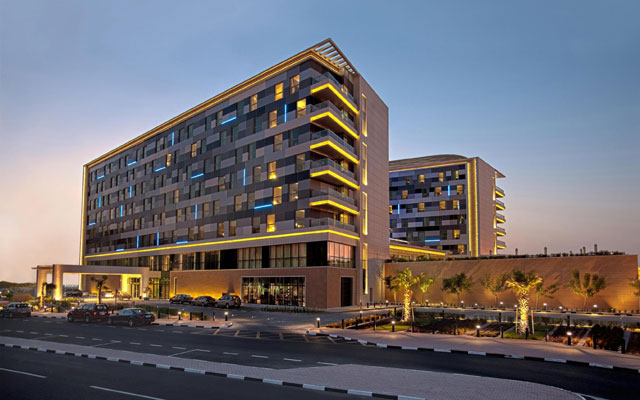

















Hyatt Hotels Corporation will open its first Hyatt Regency branded hotel in Doha, Qatar this September 15, and is currently taking reservations.
Hyatt Regency Oryx Doha, the third Hyatt property in the Middle East, features 400 rooms and 12 luxury suites, a multitude of social spaces, several F&B concepts, as well as 1,000m2 of event facilities, including a state-of-the-art business centre, two ballrooms and 11 meeting and conference rooms.
It is located close to Hamad International Airport and a few minutes from the heart of the city, the palm-fringed corniche and Doha’s vibrant business district.
Srdjan Milekovic, senior vice president operations EAME, Hyatt, said in a press statement: “We believe that Hyatt Regency Oryx Doha will become a key destination in the city, satisfying the needs of on-the-go business travellers with an exemplary setting for meetings and leisure, and attracting local guests looking for modern dining experiences.”
The property will apply Hyatt’s multi-layered Global Care & Cleanliness Commitment to further enhance its operational guidance and resources around colleague and guest safety and peace of mind.