TTG Asia
Asia/Singapore Tuesday, 7th April 2026
Page 1032

Guiding ways

0

On a crowded bus heading towards Singapore’s famous Merlion Park, a tour guide rattles off a template tale of the fabled structure to rows of tourists. He caps off his monologue by whipping out a collection of souvenirs – keychains, magnets and other generic trinkets – and makes his way down the aisle, hawking the wares to the visitors. They had come to learn about the Singapore story, but a tour guide is now selling them a quick fix – and they are in love with it.

Many grab the goods by the fistfuls, grateful for the chance to squeeze some shopping into their short and hectic schedule. Cash from these purchases goes to the bus driver, who relies on the guide’s pitch to help supplement their income, explained Veronica Yu, a freelance guide.

“Some markets, such as those that are new to travel, want or even expect to be sold such (shopping) options and souvenirs,” she shared.

These guides tread a delicate balance between telling a tale and making a sale. As travellers become more informed and their standards rise, many have also come to demand personalised service, expert knowledge and authenticity as the minimum standard. In contrast, some guides have fallen behind in their approach to guest service.

“I’ve been on tours where, the moment the tour guide gets on the bus, it’s not about giving a commentary of Singapore – it’s about selling key chains and demanding tips – and he doesn’t even get off the bus (with the group at the attractions),” described Stanley Foo, founder and managing director, Oriental Travel and Tours.

Such practices, can “damage the quality of the experience both for the guides and the guests, and by extension, the industry”, explained DMC Xperience Singapore’s director, Jane Goh.

Guides versus ambassadors
The issue is compounded with the swelling popularity of niche tours centred on themes like architecture, gastronomy, local businesses and fading industries. Pioneered by boutique agencies, similar itineraries have been adopted in tours marketed towards large groups.

However, not all of such tours in the mass market are led by well-trained and expert guides. Part of the reason is that such new tour concepts are not addressed in the Singapore Tourism Board’s (STB) guiding examination, which is mandatory for certification. The curriculum, which was last revised in 2015, covers skillsets such as “create customer experience”, “apply tourism knowledge” and “promote Singapore as a tourist destination”, said Kenneth Lim, director, travel agents and tourist guides, STB.

As a result, many fresh guides enter the market with little to no training on niche topics of interest. TY Suen, founder & CEO of Woopa Travels, expressed: “I think the (tourism) school can be updated much more because a lot of the material is outdated. It only teaches guides about the standard attractions, history and culture.”

Other avenues exist to help guides pick up courses on specialty tours, such as STB’s 60 Professional Redevelopment Courses, of which guides must clock 21 hours every three years to renew their license. However, these classes alone are not enough to make a guide an expert in the chosen topic, said Ryan Lim, a freelance guide. Instead, the onus of training and research falls on tour companies or the guides themselves.

“Travellers are now so savvy with information. They want guides who can provide local expertise and personal communication with locals. Guides need a flexible mindset and do their own research,” commented Desmond Wee, a freelance guide.

Yet not all guides are open to adapting and making full use of these courses to stay updated and relevant, observed Foo. In this, they are doing a disservice to the hardworking guides and operators who attend or craft their own training programmes in order to create memorable experiences for travellers.

For instance, each guide taken in by Oriental Travel and Tours must undergo at least two training sessions per itinerary, including observation and trial runs. Food tour company Wok ‘n’ Stroll trains its guides – some freelancers – to be “food explorers”, and has written up a special curriculum for its new farm-to-table tour.

Many guides in the market even take the initiative to sign up for enrichment and training courses on their own volition, shared Karni Tomer, founder & CEO of Wok ‘n’ Stroll. She said: “There is a wonderful generation of guides who want to learn as much as they can, so that clients know they are given the best value. They are not just tourist guides, but ambassadors of Singapore.”

With specialty content on the rise – even among mass market tours – passionate and skilled guides are increasingly coveted by the country’s growing number of tour providers, and the pressure is on for the remaining to shape up into effective representatives of Singapore.

Greater emphasis on service
As industry players race to develop unique experiences and take on passionate recruits, tour operators and guides have commented that they willingly bear the responsibility of training. In Suen’s words, it helps the company “stand out as an employer”, and it gives guides the opportunity to take on more interesting assignments.

Instead, what is sorely needed is a curriculum that recognises Singapore’s changing tourism landscape, evolving tourist expectations and current tour formats, as well as a sharper focus on personal service and accountability.

Suen said: “I think the school should place more emphasis on character building and conduct, not just on content and knowledge, which they can come out and learn. How a guide behaves and welcomes (unique tours) is very important.”

Xperience Singapore’s Goh concurred. She remarked: “To improve the image of guiding, not only should there be an emphasis on the quality of the guides, but the programmes that the travel agencies are producing.”

Looking for change, the trade has banded together to push growth in this field. Freelancers like independent guide Lionel Chee and operators like Wok ‘n’ Stroll are cooking up programmes to train the trade for specialty tours. The National Association of Travel Agents Singapore (NATAS) is developing a series of travel-specific service quality courses with the Singapore Management University’s technology college.

Charles Tan, secretary-general, NATAS, told TTG Asia: “It’s not about changing the role of the tour guide to something else. It’s about redesigning the job to see how we can bring more value to the customers. The standards and quality of guiding service is something we’re always looking at.”

Tomer remarked: “This down period would be a good time for the trade to pick up some new skills and training, so they can be prepared for recovery once the pandemic is over.”

Sindhorn Midtown Bangkok names exec team

0
Jee Hoong Tan

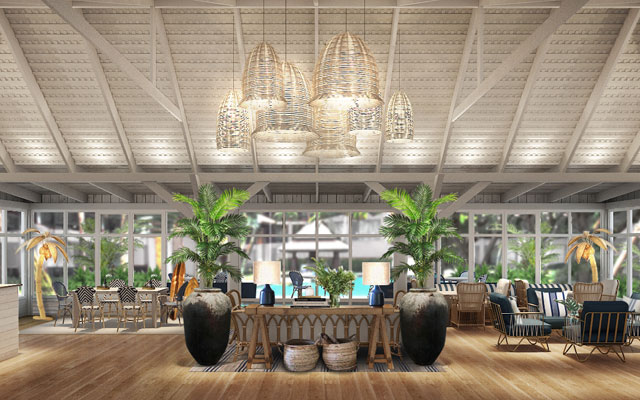
Siam Sindhorn has announced its executive team for Sindhorn Midtown, a new, Thai-born hospitality brand in Bangkok’s Langsuan neighbourhood.

The team is lead by general manager Jee Hoong Tan, who brings with him 25 years of hospitality experience, with particular expertise in launching and marketing new hotel properties and brands.

Jee Hoong Tan

Tan has worked with several established brands across South-east Asia, including Renaissance, Sheraton, Kempinski, Le Meridien, Westin and Mandarin Oriental.

Meanwhile, hotel manager Nawin Pakwattanakarn boasts 18 years of experience in the hospitality industry, and has served on the opening team for Sindhorn Midtown since 2017.

Nawin joins Sindhorn from The Dhara Dhevi, a boutique resort in Chiang Mai, where he served as director of rooms and manager. Prior to that, he was rooms manager at the Mandarin Oriental Dhara Dhevi.

Lastly, director of sales & marketing Nicha Ruenthip brings 15 years of experience, most recently with SO/ Bangkok. Nicha has broad experience developing corporate, leisure and MICE business, and is very familiar with the Bangkok market.

TTG Asia breaks for Hari Raya Puasa

0

TTG Asia e-Daily will be taking a break on Monday, May 25, for the Hari Raya Puasa public holiday.

News will resume on Tuesday, May 26.

From all of us at TTG Asia Media, Selamat Hari Raya Aidilfitri to our Muslim friends!

Indian government snubs tourism and hospitality in stimulus package

0

Tourism and hospitality stakeholders in India have found themselves locked out of their government’s economic stimulus package worth 1.7 trillion rupees (US$22.5 billion) that was announced last week.

Federation of Associations in Indian Tourism & Hospitality (FAITH), which represents the country’s complete tourism, travel and hospitality industry, said their members are in a state of disbelief and shock.

“Indian tourism, travel and hospitality is said to impact 10 to 12 per cent of India’s employment, covering almost over 50 million direct and indirect jobs. The industry has gone numb from a lack of any umbrella direction from the government and without any fiscal and monetary support,” the association said in a statement.

Dark days ahead for India’s tourism, travel and hospitality industry which has been forgotten in the government’s economic stimulus package; Jal Mahal, Jaipur pictured

Earlier, FAITH had proposed a dedicated interest and collateral-free long-term fund for salaries and operating costs, and a minimum 12-month waiver of fixed central and state statutory and banking liabilities without any penal or compounding interest.

These proposals have not been addressed.

TTG Asia understands that many companies have downsized due to cash flow problems or non-existent business. With this latest announcement, the industry risks bankruptcies and business closures, which could result in millions of job losses across the country.

“We will see a surge in mass employments and shutdowns in the industry because the road to recovery for tourism will be much longer compared to other sectors,” warned Ravi Gosain, managing director, Erco Travels.

Although domestic leisure and corporate travel may ease up post-lockdown, not much movement is expected due to new social distancing rules as well as concern for the vulnerable groups.

Philippine parks and attractions association pushes tech to rebuild business

0

Expecting industry losses to hit 600 million pesos (US$11.8 million) in three months ending June 15 due to the pandemic, members of the Philippine Association of Amusement Parks and Attractions (PhilAAPA) will adopt new technology and cashless transactions to win public trust and confidence anew.

In a webinar organised by the Tourism Congress of the Philippines, PhilAAPA president Mario Mamon acknowledged that it is difficult to recover losses and get back on track as the industry is “at the bottom of priorities because we are crowd- and group-enabling businesses and that’s the number one no-no for social distancing”.

Restricted visitor numbers and infection concerns will hurt revenue even as parks and attractions are allowed to reopen

Mamon, who is also president of Enchanted Kingdom, said they could learn from Shanghai Disneyland, which reopened on May 11 at 30 per cent capacity and with measures such as limited attendance with an advanced reservation and entry system where visitors could only buy admission tickets for selected dates while annual passholders had to make advance reservations. These measures ensured contactless guest interaction and kept long queues at rides and attractions at bay.

Mamon said Philippine attractions could continue to implement visitor temperature screening as well as introduce contact tracing and early detection using the QR code system that is common now in China.

PhilAAPA can also draw on Mamon’s wealth of information on basic protocols and guidelines for such situations, gleaned from the International Association of Amusement Parks and Attractions, of which Mamon was past president.

Elpidio Paras, president and CEO of Dahilayan Adventure Park in Bukidnon and Seven Seas Watermark and Resort in Misamis Oriental, said the company already has an ICT solution and an online ticketing system, and it is just a matter of implementation once the attractions are allowed to reopen.

Paras added that his attractions would implement an RFID wristband system which visitors can tap to pay.

As for contact tracing, he said he would have to consult with the Philippine Privacy Commission if his parks could get the address of visitors in case of Covid-19 infection, something that they never did in the past.

PhilAAPA members may also have to bring nurses onto premises, disinfectant chambers and other measures that the government may require.

With a reduced number of permitted visitors, PhilsAAPA members are determining how revenue will be impacted, and how to manage costs and operations so that the bottomline will still be positive.

PhilAAPA has about 40 members with 2,000 employees and make an annual gross income of three billion pesos.

Oakwood focuses on hospitality as pandemic brings more interest in long stays

0

The Covid-19 crisis has heavily impacted hotel businesses around the world, but for long-stay operator Oakwood, its stable occupancy rates have garnered greater attention from owners and developers.

Leaning into this interest, Oakwood announced last week its transition into solely developing its hospitality portfolio, with the corporate housing segment to be managed by its relocating solutions partner Dwellworks.

Schreiber: strong market potential for differentiated hospitality products in the serviced residences industry

Dean Schreiber, chief executive officer of Oakwood and managing director of Oakwood Asia Pacific, explained: “Our operating model has gained a lot of attention from owners and developers looking for solid returns on investment. This is particularly evident in the current Covid-19 pandemic, where we have seen the unprecedented closure of thousands of hotels around the world; yet at Oakwood, we have still been able to maintain stable occupancy rates at lower operating costs, and at the same time not having to sacrifice any service standards with this operating model.”

He added that the group has identified “market potential for differentiated hospitality products in the serviced residences industry”, and aims to sharpen its offerings across its six brands in order to appeal to the “savvy corporate executives at different life cycles”.

With its new direction, Oakwood plans to double its portfolio of managed properties by 2025. Destinations in the pipeline for Asia-Pacific include Beijing, Foshan, Melbourne, Phnom Penh, Jakarta, Yokohama, Kyoto, Yangon, Bangkok, Manila and Ho Chi Minh City; as well as Dubai and North America’s Seattle, Philadelphia and San Francisco.

Schreiber expressed that although its opening schedules are expected to be delayed due to disrupted construction across Asia, he believes that “some of these projects catch up” as governments have begun to reopen some sectors of economies.

“We anticipate the opening of the next Oakwood property in the third quarter of 2020, followed by quick successions in the months ahead. Once travel restrictions are lifted, I am confident that more projects will be added to the list above,” he confirmed.

The pandemic has spurred the group to enhance its hygiene and sanitation measures across its properties, and guests can expect “a series of creative solutions” that will elevate Oakwood’s service standards in the age of the “new norm of travel”, revealed Schreiber.

Southern Kansai campaign draws strong interest in China

0

A destination marketing campaign implemented earlier this year by a Chinese digital marketing company and Japan International Economic Development Organisation (JIEDO) to draw Chinese travellers to Osaka and Wakayama has attracted stronger than expected interest.

iClick Interactive Asia Group, which is involved in the campaign, said the activity has drawn 49,845 likes, comments and shares – 97 per cent more than expected.

An online destination marketing campaign for Osaka and Wakayama (pictured) that targeted Chinese travellers was a success

A total of two million views were registered across the campaign, according to iClick.

To promote the southern Kansai destinations, iClick worked with Chinese online influencers to come up with videos featuring attractions in Osaka and Wakayama, as well as itineraries tailored to travellers’ needs.

Additionally, the influencers strategically promoted top-of-mind awareness of holiday car rentals as a convenient mode of transport around the region, due to its developing transport networks.

The two partners also tapped on travel websites such as Ctrip as well as a range of Chinese social media, including content-based platforms Tiktok, Weibo and Xiaohongshu, to engage Chinese travellers.

NZ tourism and hospitality industry calls for more govt support

0

The New Zealand tourism and hospitality industry has been calling for more targeted support from the government, particularly financial support, after the national budget for 2020 was laid out on May 14.

As part of its Budget 2020 plans, the government has set aside NZ$400 million (US$244 million) for a targeted Tourism Recovery Fund. Besides this, wage subsidies have been extended, recovery task forces set up, and channels to provide tourism businesses with advice through the difficult period put in place.

New Zealand’s latest Tourism Recovery Fund is deemed insufficient to aid struggling hospitality businesses

However, Hospitality New Zealand, the country’s commercial accommodation and F&B association, expressed fears in a statement that the current support might not be enough, and called for more extensive and concrete support.

Despite the extension of the Wage Subsidy Scheme, which will reduce “some … operating costs”, the lack of a “targeted working capital grant” or concrete rental financial support means hospitality businesses will continue to struggle with operating costs, noted Julie White, CEO, Hospitality New Zealand.

Rent makes up 30 per cent of business costs, explained White.

The government’s extension of the Wage Subsidy Scheme has meant the pumping in of another NZ$3.2 billion, on top of the NZ$10 billion already paid out under the scheme. However, the wage subsidy is capped at an eight-week lump sum per employee.

Chris Roberts, CEO, Tourism Industry Aotearoa, reckoned that “some (tourism businesses) will be disappointed it is only for an additional eight weeks”.

While he acknowledged in a press statement following the release of Budget measures that the support was “welcome”, he, too, echoed the need for “further initiatives… in the months and years ahead”.

The Budget 2020 measures follow an earlier Covid-19 response package released in March, where the New Zealand government set aside NZ$12.1 billion – about four per cent of the country’s GDP in 2019 – to aid businesses and individuals through the pandemic.

Thai Airways files for bankruptcy protection to rehabilitate its business

0

The Thai cabinet on Tuesday approved the ailing state enterprise Thai Airways International (THAI) to file for bankruptcy protection at the Central Bankruptcy Court to rehabilitate its business in the face of Covid-19 disruptions, evaporating liquidity and insurmountable debt, ending all possibility that the airline will receive any financial assistance from the government.

THAI will also file for Chapter 11 in the US.

THAI will stick to its scheduled resumption of passengers flights after June 30

The bankruptcy court will oversee the rehabilitation process and appoint an administrator with the consent of THAI’s creditors. The decision will help the flag carrier avert bankruptcy and save it from furloughing its entire workforce of over 20,000.

However, as the Ministry of Finance, THAI’s largest shareholder, will reduce its stake in the airline from the current 51 per cent to below 50 per cent to transform THAI into a limited company, THAI staff will no longer be protected by the State Enterprise Labor Relations Act. Given the airline’s cripplingly low employee productivity compared with other leading regional flag carriers, the action may lead to a 25 per cent dismissal of its workforce by 2022 as THAI seeks a new path toward profitability.

The bankruptcy protection may also empower THAI to delay its 150 billion baht (US$4.7 billion) purchase of 38 new airplanes from Boeing, negotiate for debt cuts, convert its debt into equity, minimise costly sale of tickets through traditional travel agents, and replace its board of directors – currently filled with civil servants and air force generals – with professional, seasoned business executives.

Despite the process now in play, acting THAI president Chakkrit Parapuntakul on Tuesday issued a press release clarifying that the airline will continue operating as permitted by the ongoing Covid-19 restrictions. THAI is currently scheduled to resume flying passengers after June 30.

THAI has been loss-making every year since 2013, except in 2016 when a small profit of 15 million baht was reported. According to its latest financial report, the airline’s assets amounted to 257 billion baht at the end of last year while its total liabilities were 245 billion baht. Its current liabilities of 84.4 billion baht far exceed its current assets of 49.5 billion baht, hindering its debt servicing ability. Its debt-to-equity ratio stood at the calamitous 21:1.

THAI’s shareholders’ equity, valued at 11 billion baht at the end of 2019, is now decimated by the projected loss of 18 billion baht in the first half of this year, reports the Bangkok post.

Following this landmark cabinet’s decision that ended months of speculation and years of ineffective business rehabilitation plans, THAI stock has jumped by more than 14 per cent, a reversal of a decline of more than 89 per cent since a peak in May 2013.

IATA defines layered approach and principles for industry re-start

0

IATA has outlined a temporary layered approach to biosecurity for restarting passenger flights amid the pandemic, and along with that a commitment by airline CEOs to adhere to five restarting principles.

In a press statement issued this morning, IATA said its Biosecurity for Air Transport: A Roadmap for Restarting Aviation aims to provide the confidence that governments will need to enable the reopening of borders to passenger travel; and the confidence that travellers will need to return to flying.

IATA is faced with a short time frame for governments to agree to a layered approach to biosecurity for restarting passenger flights

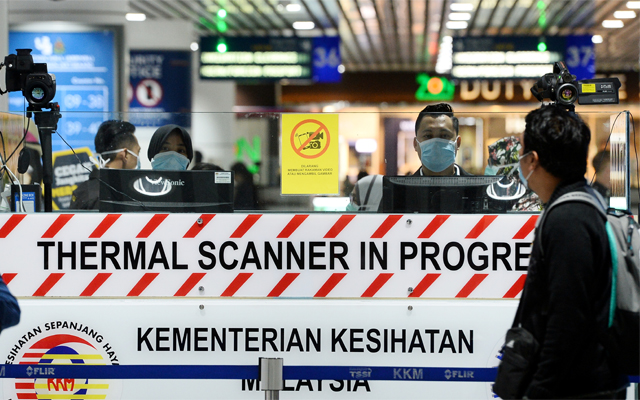
At the departure airport, IATA foresees several layers of protective measures, including restricted access to the terminal building; temperature screening by trained government staff at entry points; physical distancing through all passenger processes, including queue management; use of face coverings for passengers and masks for staff in line with local regulations; self-service options for check-in used by passengers as much as possible; efficient boarding and hand luggage limitations; and cleaning and sanitisation of high touch areas in line with local regulations.

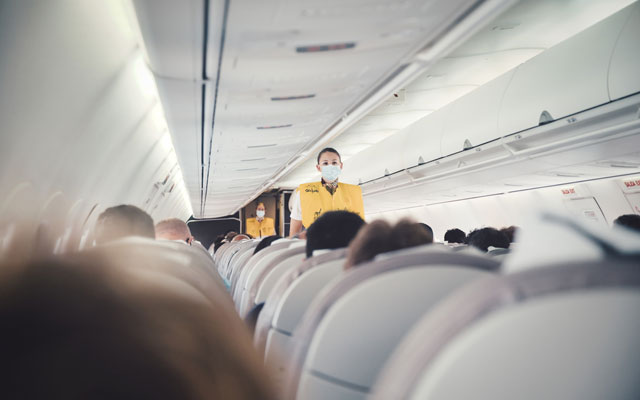
In-flight, layers of protective measures include face coverings for all passengers and non-surgical masks for crew; simplified cabin service and pre-packaged catering; reduced congregation of passengers in the cabin; and enhanced and more frequent deep cleaning of the cabin.

At the arrival airport, IATA expects accelerated processing and baggage reclaim to reduce congestion and queuing as well as health declarations and robust contact tracing to be undertaken by governments, and more.

IATA stressed that these measures should be temporary, regularly reviewed, replaced when more efficient options are identified or removed should they become unnecessary.

IATA hopes two areas could be game-changers in facilitating efficient travel until a vaccine is found. Firstly, it supports testing when scalable, accurate and fast results are available. Secondly, it supports the development of immunity passports to segregate no-risk travellers, at a time when these are backed by medical science and recognised by governments.

As the mutual recognition of globally agreed measures is critical for the resumption of international travel, IATA is reaching out to governments with the Roadmap.

Alexandre de Juniac, IATA’s director general and CEO, said: “(Many governments) are planning a phased re-opening of borders in the coming months. We have a short time to reach agreement on the initial standards to support safely reconnecting the world and to firmly establish that global standards are essential to success. The vital element is coordination. If we don’t take these first steps in a harmonised way, we will spend many painful years recovering ground that should not have been lost.”

At the same time, airline CEOs on IATA’s Board of Governors have committed to five restarting principles:

  1. Putting safety and security first by implementing a science-based biosecurity regime and ensuring that aviation is not a meaningful source for the spread of communicable diseases
  2. Responding flexibly as the crisis and science evolve, by utilising new science and technology as it becomes available, developing a predictable and effective approach to managing any future border closures or mobility restrictions, and ensuring that measures are scientifically supported, economically sustainable, operationally viable, continuously reviewed, and removed/replaced when no longer necessary
  3. Recognising that aviation will be a key driver of the economic recovery, and to re-establish capacity that can meet the demands of the economic recovery as quickly as possible, and ensure that affordable air transport will be available in the post-pandemic period
  4. Meeting environment targets, such as achieving IATA’s long-term goal of cutting net carbon emissions to half of 2005 levels by 2050, and successfully implementing the Carbon Offsetting and Reduction Scheme for International Aviation (CORSIA)
  5. Operating to global standards which are harmonised and mutually recognised by governments