International Luxury Travel Market (ILTM) has postponed its annual Cannes gathering to 2021 in light of Covid-19, but will hold a virtual event next month to connect luxury travel suppliers and buyers across the globe.
Entitled ILTM World Tour – access all areas, the one-off virtual event will take place across three consecutive days, over three consecutive weeks, reaching three buyer source regions.
The sessions will take place in Asia-Pacific from November 17-19, before moving to Europe, Middle East and Africa from November 23-25, and both North and South America from December 1-3.
Alison Gilmore, ILTM portfolio director, said: “We have created this one-off event to design a truly global business opportunity for all our ILTM suppliers and buyers and planned it so that we respect all time zones. With a three-week time frame, everyone can create their own strategy and arrange meetings that will work for them.
“We know that the unprecedented events of 2020 have meant the luxury travel industry has had to adapt their business strategies. With target markets shifting as some borders remain closed, we want the objective of the ILTM World Tour to offer a global proposition to open up opportunities for all participants and be a time to bring people together, uniting through shared experiences and business, whilst we plan for our return.”
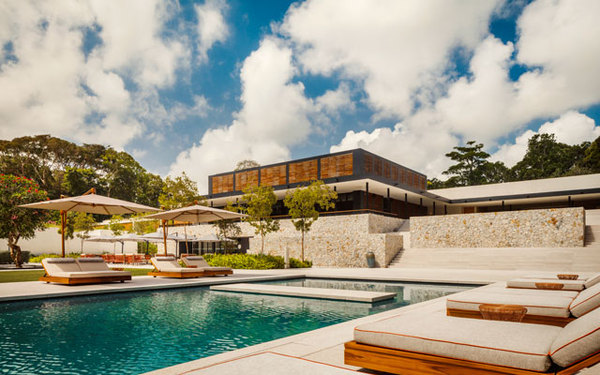
OneOnly Desaru Coast Main Infinity Pool Main Building
Tourism providers in Malaysia welcomed the opening of ultra-luxe resort One&Only Desaru Coast – the brand’s first Asian outpost – as timely as it offers them an opportunity to tap the under-served upmarket segment in the destination amid the pandemic.
Uzaidi Udanis, president, Malaysian Inbound Tourism Association, said that the award-winning resort, which opened its doors earlier this month, “caters for the high-end segment which is sorely needed” as luxury hotels and resorts in the country remain scant.
One&Only Desaru Coast is the brand’s first property in Malaysia
“With the ongoing Covid-19 pandemic, Malaysians are not allowed to travel overseas. The high-end domestic segment is often overlooked by the travel trade as they usually holiday abroad. But this is the time to capture this segment and the opening of One&Only Desaru Coast is timely,” he added.
Adam Kamal, head of procurement & domestic market, Ice Holidays, shared that One&Only Desaru Coast has created buzz among the elite for being the brand’s first property in Asia, throwing up an opportunity for agents to tap high-yield domestic tourists for higher returns.
He opined: “Travel agents need to be smart in coming up with innovative packages so that domestic travellers buy from them.”
Spread across 51ha, One&Only Desaru Coast offers a collection of 42 Junior Suites, a pair of two-bedroom Grand Suites and an exclusive four-bedroom Villa One. All suites boast private plunge pools, as well as indoor and outdoor living spaces. Nestled on the south-eastern shoreline of Malaysia, the tropical retreat is designed by Kerry Hill Architects.
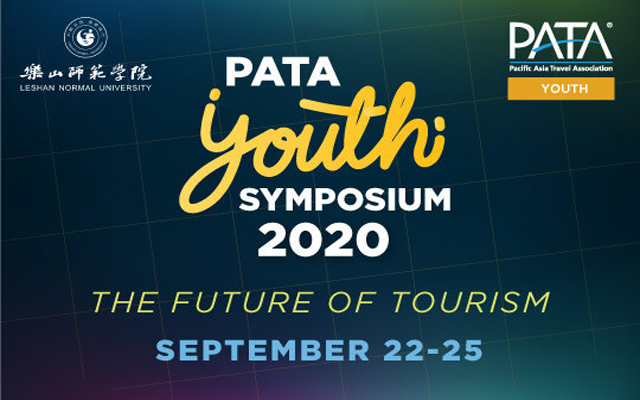
This year’s PATA Youth Symposium, with the theme The Future of Travel, will take place alongside the Virtual PATA Travel Mart 2020 as a four-part series from September 22-25.
The event is organised by the PATA in collaboration with Leshan Normal University, and supported by the Guam Visitors Bureau, iFree Group, MAP2 Ventures, Myriad International Marketing, and Talent Basket.
“This year’s PATA Youth Symposium has been tailored to provide the next generation of young tourism professionals with industry insights, mentorship opportunities and peer-to-peer inspiration. Furthermore, we have organised a much-requested panel of HR experts from well-loved brands to give youth advice on how to find their next job, particularly during this current environment,” said PATA youth ambassador Aletheia Tan, who is also the organiser of the event.
PATA CEO Mario Hardy added: “The PATA Youth Symposium is the perfect opportunity for young tourism professionals to learn from today’s leaders but also, more importantly, for leaders and industry stakeholders to hear from the future of the industry – the youths themselves. Hence, the Youth Symposium is designed to initiate constructive conversation and facilitate cross-cultural collaboration in order to create a more responsible, inclusive and sustainable travel and tourism.”
The first part of the Youth Symposium, The Future of Tourism, opens with a keynote speech by Hafizuddin Haslir, regional business development manager, Euromonitor International on September 22 from 12:00-13:00 (GMT +8). Haslir will be presenting on Travel 2040: Sustainability and Digital Transformation as Recovery Drivers, and explore how the industry must grapple with the fact that travel as we know it is over. He will also provide insights into the latest outlook for global tourism demand and its impact on travel, future travel trends, and new sustainable technologies that will disrupt and transform the industry. This session is open to the public and interested parties can register here.
The second and third parts of the PATA Youth Symposium, Mentorship Session and Student Chapter Roundtable Discussions, are by private invitation only. The Mentorship Session has confirmed a total of 19 mentors from various sectors of the industry with representatives from Myriad International Marketing, Guam Visitors Bureau, Khiri Reach, TTG Asia, Catalonia Tourism Board and the IATA.
The Student Chapter Roundtable Discussions provide an opportunity for PATA Youth to present their passion projects from academic years 2019-2020. During this session, peer-to-peer learning and inspiration is at its highest with youths from around the world representing their colleagues, universities and destinations on an international stage.
During the fourth and final part of the Youth Symposium, happening on September 25 from 12:00-13:00 (GMT +8), HR experts Orapin Musiknavabutr from Minor Hotel Group; Pinky Tan from Visa Worldwide, and Savitri Meyer from Agoda, will sit down for a panel discussion on Getting a Job in a Post-Covid-19 World.
The session will look at the challenges and opportunities that youths face, as well as how tourism jobs will adapt in the future, what skills are predicted to be in high demand, and what resilience looks like. The session is open to the public and interested parties can register here.
IHG has further expanded voco’s global footprint, with the launch of the upscale hotel brand in the US and Greater China.
The group has signed agreements to develop three voco franchise hotels in the US, including New York City; St. Augustine, Florida; and Columbia, Missouri. Among the trio, the first voco-branded hotel expected to open is the Franklin Hotel located in the Upper East Side neighbourhood of New York City.
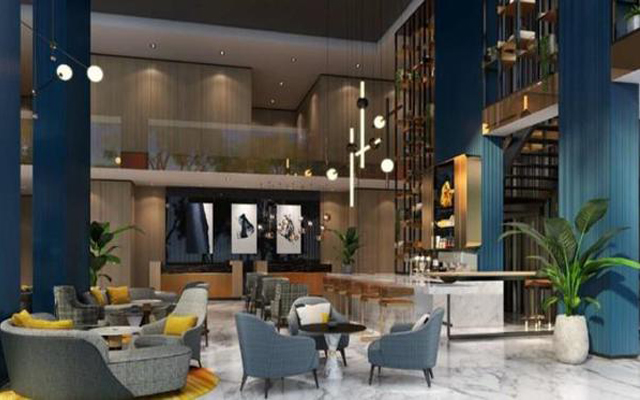
IHG takes voco global with launch in the US and Greater China; Voco Sukhumvit Bangkok pictured
IHG is also set to debut voco in Greater China, with the brand’s first property in the region to open in Hangzhou very soon. Next will be a conversion property in Wuhan, an independent hotel which will be rebranded as voco Wuhan Xinhua in 2021.
Over in the EMEAA region, the company now has 36 hotels which are open or in the pipeline, with 24 conversion and new-build hotels due to open in key cities such as Paris, Sydney, Melbourne, Frankfurt, Edinburgh, Krakow, Danang and Den Haag over the next five years.
Since the brand’s launch in 2018, a mix of 12 conversion and new-build voco hotels have opened across the UK, Continental Europe, the Middle East and Australia.
voco has seen an uplift in conversion activity during 1H2020. The brand’s current development pipeline of 28 properties will take it into 19 countries over the next five years, and IHG said that voco remains on track to open more than 200 hotels in urban and leisure locations over the next decade.
Across the full breadth of its portfolio, IHG CEO Keith Barr said that conversions accounted for a quarter of the group’s signings overall in 1H2020, led by voco. Rebranded properties include brands such as Regent, InterContinental, Hotel Indigo, Crowne Plaza, Holiday Inn and Holiday Inn Express.
With an expanding hotel portfolio and strong domestic bookings for its properties in Indonesia, RedDoorz is claiming victory against the Covid-19 pandemic and remains upbeat about tourism prospects.
The budget accommodation group’s general manager – Indonesia, Mohit Gandas, told TTG Asia in an interview that there has been more than 100 hotels joining the network every month.
Mohit: properties certified clean and safe see the strongest booking rebound
There are presently more than 1,400 RedDoorz properties across at least 120 Indonesian cities.
“We are pleased to see the growing supply and footprint our team is able to acquire and retain in Indonesia, especially amidst the global pandemic,” Mohit said.
Room demand has also picked up following the Indonesian government’s decision to ease movement restrictions and facilitate economic recovery, although it has yet to return to pre-pandemic levels.
However, with the domestic market being RedDoorz’s traditional leading source of business, Mohit is optimistic that local bookings will pave a firm path to recovery.
“We foresee the post-Covid-19 budget accommodation business to be dominated by domestic travel – especially in Indonesia, which has always been the biggest market for us,” he said. “Before Covid-19, close to 90 per cent of our demand came from the domestic market. As such, we anticipate an enormous potential for the budget stays in Indonesia once all travels resume.”
Mohit observes that Indonesians are eager and willing to travel, and are open to alternative accommodation as long as “they are reassured on the health and safety protocols”.
“Since we launched our HygienePass initiative, we have been seeing a rise in demand for our properties that are HygienePass-certified. The 400-plus HygienePass-certified properties that we have currently are the first to see more than 100 per cent increase in occupancy rates, as compared to the non-certified properties,” he shared.
Despite being a budget accommodation specialist, Mohit asserted that RedDoorz abides by a strict health and safety standards not unlike that of higher categories of hotels.
RedDoorz HygienePass certification programme is done in collaboration with Ikatan Ahli Kesehatan Masyarakat Indonesia (IAKMI), the Indonesian public health association.
Properties participating in the programme must go through two separate, comprehensive audits by RedDoorz and IAKMI in order to obtain certification. The first audit uses RedDoorz’s proprietary digital technology solution developed specifically for HygienePass, enabling key elements of the audit and certification process to be implemented digitally. IAKMI then independently assesses each establishment before awarding the HygienePass certifications.
Mohit said that the programme was inspired by the Singapore government’s SG Clean certification, which rallied stakeholders, businesses, and the public to adopt good sanitation standards and hygiene practices.
“As Singapore is known for its industry-leading practices, we wanted to bring the same standards of hotel sanitation and hygiene measures to our other markets to help boost consumer confidence,” he said.
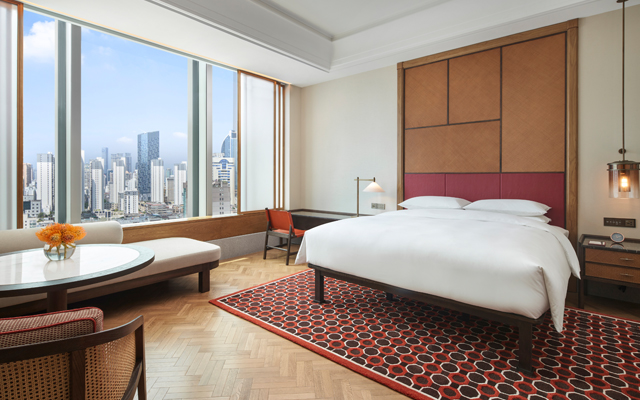
Park Hyatt Auckland, New Zealand
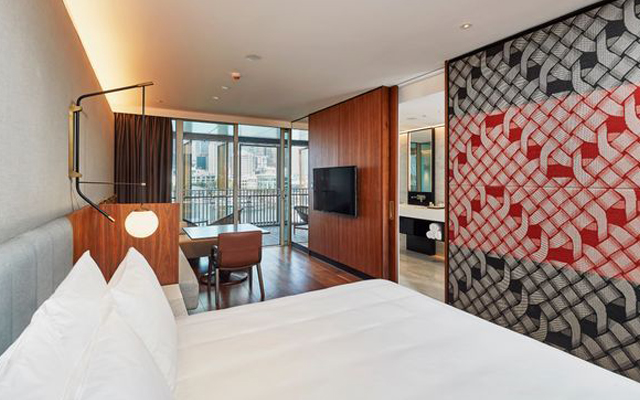
Overlooking Waitematā Harbour, the hotel has been designed to reflect a Māori wharenui (meeting house). Within the seven-storey hotel is 195 guestrooms, where lead-in rooms start from 47m2, going right up to the 245m2 Presidential Suite. For events, the property offers more than 9,500m2 of flexible event spaces, including a ceremonial garden, meeting rooms and Waka; the rooftop bar. Also on offer are four F&B venues, such as the Onemata, the hotel’s signature restaurant serving local produce.
Andaz Xiamen, China
Part of the mixed-use development The MixC, the Andaz Xiamen houses 304 rooms, including 20 suites with separate living rooms. All non-alcoholic minibar drinks and snacks are complimentary in each guestroom, as are local telephone calls and Wi-Fi. The hotel offers almost 2,000m2 of Nanyang-inspired event space, including seven standalone spaces ranging from 80m2 to 900m2. Recreational facilities include a 24-hour fitness centre, yoga room, heated 25m outdoor swimming pool, alongside four F&B venues.
Aloft Jakarta TB Simatupang, Indonesia
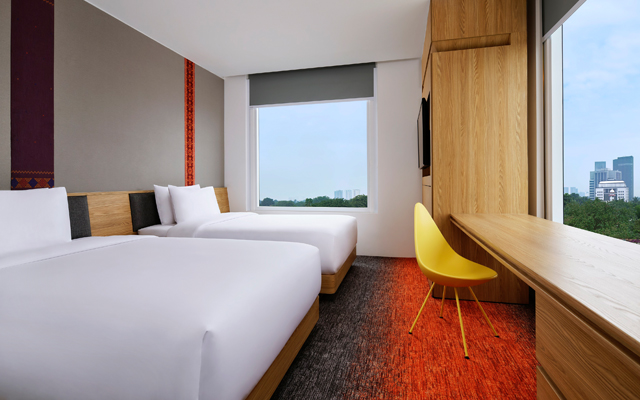
The second Aloft in Jakarta features 170 guestrooms furnished with complimentary Wi-Fi, 49-inch LCD TVs, as well as mobile key access. Aside from offering a variety of dining options – the brand’s signature W XYZ bar, Fraya, Southside Rooftop Bar and Lounge – additional facilities include a 24/7 Re:charge fitness centre and kids’ club. For events, eight meeting rooms and the ballroom are at guests’ disposal.
InterContinental Residences Jakarta Pondok Indah, Indonesia
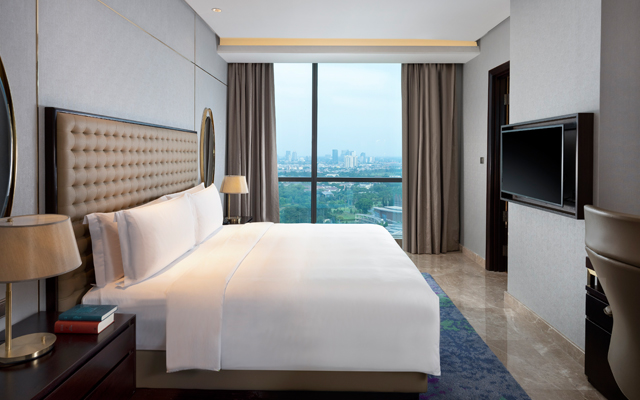
IHG has opened its first residences under its luxury brand, InterContinental Hotels & Resorts, in Indonesia. Residences come fully-furnished with kitchen and a separate dining area, and would be ideal for long-term business guests working in the country’s capital. The residences are connected to the five-star InterContinental Jakarta Pondok Indah hotel, giving residents access to the hotel’s range of facilities including a 24-hour fitness centre, steam room, sauna and outdoor swimming pool.
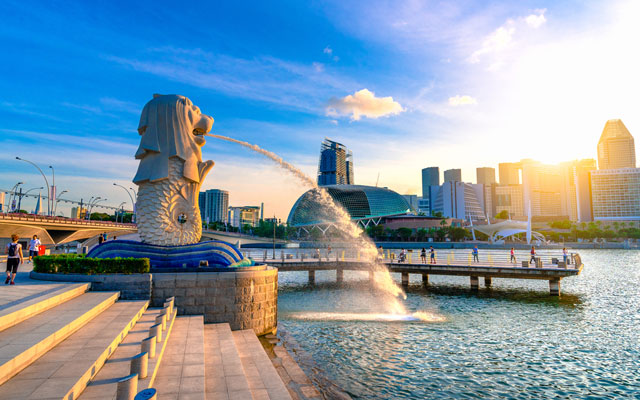
Singapore Tourism Board (STB) and Visa have signed a three-year MoU to buoy up tourism and lifestyle SMEs that have been impacted by Covid-19.
The collaboration focuses on two areas to revive the local tourism industry: marketing partnerships, as well as joint research and analytics.
STB, Visa partner to drive local spending and support tourism and lifestyle SMEs battered by Covid-19
In the first phase of their marketing partnership, which will be launched in October 2020, both organisations will tap on their respective campaigns – #SingapoRediscovers and #WhereYouShopMatters – to encourage Singaporeans to shop from local retailers and support the domestic economy.
STB and Visa will also roll out joint campaigns centred on three key themes: Escape, Feast and Shop. These themes are aligned to encourage spending at hotels, attractions, F&B outlets and other local retailers. Partnership efforts will also profile homegrown brands and business owners, including showcases of how SMEs can adopt e-commerce and technology such as contactless payments.
In the second phase of the marketing partnership – when international travel resumes – experiences, events and activities in Singapore will be promoted through content creation, promotions and tourist privileges. These campaigns will be launched in phases in key markets based on readiness to travel. STB and Visa will also trial initiatives to drive incremental spending through cross border e-commerce.
Under the push for joint research analytics, both organisations will combine proprietary data, as well as research and analytical capabilities, to derive insights on how Covid-19 has changed domestic and international consumer behaviour. These insights will help identify new trends and opportunities that will be shared with local SMEs.
This has been kickstarted by the collaboration’s first report, Impact of Covid-19 on Tourism in Singapore and the Road to Recovery and Transformation. The report found that local brands are the worst hit, experiencing double-digit negative growth, with a lack of online presence; while Orchard Road and Marina Bay were the hardest hit precincts.
In the next phase of their data and research collaboration, STB and Visa will focus on the impact of Covid-19 on business travel. Business travel represents the country’s highest-yielding segment, and this in-depth study will identify changing behaviours, new trends and growth opportunities to guide future campaigns on capturing inbound business tourism spend.
As international travel gradually resumes, the partnership will be scaled up to include joint international marketing, powered by data and insights derived from their combined research. The aim is to develop marketing strategies and initiatives to help Singapore businesses capture demand once global travel resumes.
The Department of Culture and Tourism – Abu Dhabi (DCT Abu Dhabi) is among the early adopters of Tripadvisor’s newly-launched first-party data platform delivering audience targeting, insights, and performance reporting. The tourism board has leveraged the data-intelligence solution dubbed Tripadvisor Navigator for its latest campaign, set to launch year-end.
With the goal of promoting Abu Dhabi as a top destination to the Tripadvisor audience, the co-branded promotion will target high-intent travellers to discover more about the destination and deliver efficient conversions for DCT Abu Dhabi.
DCT Abu Dhabi utilises Tripadvisor’s new data platform for new campaign to drive traveller inspiration
Tripadvisor Navigator connects an advertiser’s brand, via first-party audience segments, with the platform’s high-value audience. The campaign also incorporates a bespoke insights platform that enables partners like DCT Abu Dhabi to monitor performance in real-time, allowing them access to a market-specific understanding of the way users are engaging with the destination and how it stacks up against competitors.
“As the world gradually reopens following this pandemic, real-time updates and active travel audience insights are more important than ever. The Tripadvisor platform is a powerful demand-driver for our destination and a fantastic resource for decision-making when it comes to our marketing spend. This is especially the case when it comes to tracking current trends that are changing with a high level of frequency,” said Saeed Al Saeed, destination marketing director, DCT Abu Dhabi.
The tourism board has also launched a new range of content in the form of bespoke videos and podcasts designed to engage prospective travellers and inspire travel to the emirate once international travel resumes.
Medical workers checks body temperature of passengers at airport terminal. Staff in uniform and masks. Public safety concept. Virus prevention, coronavirus test in terminal.
WTTC is confident that an internationally coordinated plan to save the travel and tourism industry will be sealed by mid-October, following extensive discussions with several governments around the world and a letter signed by 120 CEOs to the heads of state of the G7 countries.
The UN agency said that it has been in talks with various governments regarding a globally coordinated plan of action to bring clarity on Covid-19 testing and reporting – a crucial step towards restoring traveller confidence and saving the battered travel and tourism sector.
WTTC hopeful for an international agreement on Covid-19 testing, reporting and repatriation
WTTC is hopeful that an international agreement will be endorsed by the European Union at a meeting of EU tourism ministers on September 28, and more widely by all the G20 group of countries in early October.
The coordinated international plan is focused on securing widespread international agreement on the standardised testing protocols on departure, including no quarantine for travellers; as well as each government guaranteeing protection for travellers and ensuring resources are set aside to repatriate travellers.
Also included in the plan is establishing agreement on a traffic lights system of reporting Covid-19 numbers to ensure global consistency, with reduced or removed quarantine periods based on cases above or below 25/100,000 of the population over a 14-day period; as well as piloting of air corridors to resume international and business travel.
The deals hope to reverse travel restrictions such as damaging blanket quarantines, which have seen international travel and visitor numbers collapse, WTTC said.
Gloria Guevara, WTTC president and CEO, said: “Agreed international protocols on traveller testing on departure could be the key to removing economically devastating travel restrictions, which have crushed consumer confidence to travel and have hobbled the hopes of an economic revival, which is so desperately needed.
“Governments around the world need to align their policies to create the conditions necessary to ensure the introduction of a comprehensive testing programme with globally-recognised protocols. By countries working closely together, we hope we can look forward to an international accord by members of the G20 group of countries in October to revive travel and tourism and millions of jobs around the world.”
First step towards return of international tourists
Visa appears to benefit mostly expatriates and ‘snowbirds’, and not the wider tourist demographic
14-day quarantine requirements could discourage takers but benefit certified quarantine hotels
The Thai Cabinet’s decision on Tuesday to in-principle approve a special long-stay tourist visa has drawn criticism about the programme’s limited true benefit to the country’s devastated travel and hospitality industry, although some have acknowledged it as good first step to international tourism recovery.
The long-stay visa could potentially benefit ‘snowbirds’ who seek Thailand’s tropical warmth during winter months
The special tourist visa (STV) scheme would cost 2,000 baht (US$64) for 90 days and be renewable twice for a total of 270 days. Visitors would need proof of long-stay plans, such as paid accommodation or evidence of property ownership; doctor’s appointments for medical tourists; a certificate to prove they are Covid-19-free; and have sufficient travel and health insurance.
Marisa Sukosol, newly appointed president of the Thai Hotels Association, said the STV was “the first step that we need to take for the survival of the hotel economies here in Thailand”.
Although the Thai government has lifted restrictions for 11 groups of people in Thailand, including families and business executives, the country remains out of bounds to international tourists.
C9 Hotelworks’ founder Bill Barnett, who remains “cautiously optimistic” about the programme, said implementation would take time since the scheme was proposed by the Ministry of Tourism and Sports and would need to be vetted by other ministries.
Others in the trade are less optimistic, saying that the STV is more suitable for long-stay expatriates who lack the spending habits of tourists, as well as ‘snowbirds’ – travellers seeking warmer holidays to escape winter at home – who now have other, cheaper and possibly more appealing options.
Trade players have also questioned the plausibility of the scheme’s financial targets.
“Although they are only expecting 1,200 foreigners per month, the Thai government is expecting a payout of around one billion baht per month, which seems excessive particularly if the foreigners spend the whole time with family or friends,” tweeted British travel blogger Richard Barrow.
Bailey: limited flights and industry participation could restrict the STV from benefitting the wider hospitality industry
BTM Services hospitality and leisure travel consultant Chris Bailey remarked: “The STV is certainly a step in the right direction, specifically in getting the Thai population comfortable and accepting of the reopening of their borders to foreign visitors. But that’s about where it ends.
“By pure mention of two to three flights per week and select programme participants from hospitality, (I’m not certain) how will this go anywhere near helping the wider hospitality sector and tourist companies survive in their current precarious state.”
Focus on trace-and-track preferred
To qualify for the STV, travellers must comply with a 14-day quarantine along with measures set by the Ministry of Public Health of Thailand.
However, as long as quarantine requirements remain, Andre van der Marck, founder and managing director of Travel Exclusive Asia, believes that the scheme does not represent a “serious reopening of the country”.
He added that it is critical that the Thai government establishes “stringent test measures” or “a mechanism that allows numbers to return from certain markets, like what’s happening in Europe now”.
Emphasising that a careful approach to bringing tourists back into Thailand is needed, Anthony Lark, president of the Phuket Hotels Association, said: “As long as there is a safe, well managed process to ensure these guests are Covid-19 free, we support and appreciate this and other ideas to open the doors to visitors, especially to those from relatively safe countries like Taiwan and New Zealand.”
Meanwhile, the compulsory quarantines for travellers holding the STV may provide a much needed lifeline to accommodation suppliers. The scheme allows STV holders to choose a state quarantine, an alternative state quarantine or hospital quarantine.
Barnett said tapping the quarantine market could boost hotel occupancies, many of which are currently running in the single or low double digits, by 300 to 400 per cent. He observed at least 80 hotels in Phuket and 100 more in Bangkok had in August applied for the alternative local state quarantine and alternative state quarantine certifications.