TTG Asia
Asia/Singapore Friday, 16th January 2026
Page 1019

Fusion appoints Stuart Lyall to manage new Vietnam property

0

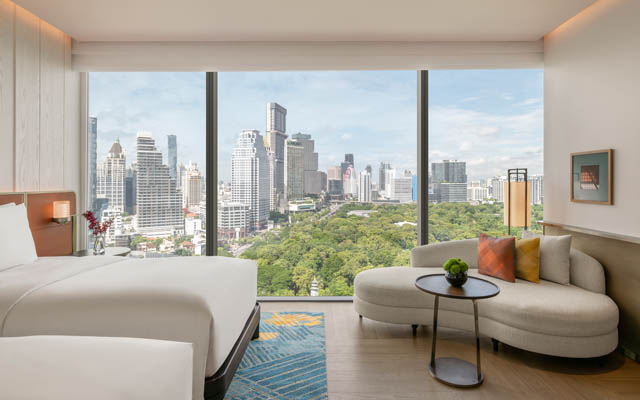
Wellness-focused hospitality group Fusion has appointed Stuart John Lyall to manage a new Vietnam property, Fusion Suites Vung Tau, which is opening in April.

Lyall’s most recent role saw him guide Selong Selo Resort & Residences in Lombok through its soft opening phase as general manager. Prior to his time in Indonesia, Lyall was also general manager at Our Jungle Camp from 2017 to 2018.

Before his move to Asia, he was with Australian cruise company, Travel Marvel, where he served as regional product manager of Asia and India from 2013 to 2017.

Prior to that, Lyall spent time in other capacities, such as general manager of sales and marketing for South Sea Horizons; regional product manager Asia Pacific with Peregrine Adventures; an international travel and hotel consultant for Flight Centre; and Asia-focused tour director for Intrepid Travel.

Coping with Covid-19: lessons from the hospitality industry

0

Covid-19 is going to cost world tourism at least US$22 billion. This is because Chinese travellers ⁠— the world’s largest spender when it comes to tourism ⁠— have essentially closed their pocketbooks.

As the pandemic continues and more cases emerge internationally, there is no doubt that the international hotel sector is taking a hit. We are already seeing the impact — occupancies are down, mass gatherings have either been cancelled or postponed, and tourist arrivals have dropped.

I recently embarked on an international study to find out how Covid-19 is affecting hotels and what they are doing to cope with the current coronavirus situation. While data collection is still ongoing, some key insights have emerged.

As of March 6, 2020, there are over 450 respondents from the hotel industry. About 43 per cent of these respondents are from Asia; 30 per cent are from the Americas, 16 per cent hail from Europe and 11 per cent are from the Middle East and Africa.

Feeling the pinch
The impact of Covid-19 was felt as early as January, a month after the virus emerged, with almost two-thirds of respondents noticing a drop in business mid-January.

Occupancy has fallen by more than 30 per cent about a third of those surveyed. Various tactics are being adopted to counter this, including developing targeted promotions, lowering rates and offering value-added packages.

Learning from history
As the industry struggles to find new ways to recover, I looked back on a study I did in 2010 on tactics for surviving an economic downturn. Over 900 respondents from around the world participated in that study and provided some very insightful comments. From there, several lessons emerged.

Be prepared
As one respondent stated: “It is never too early to be prepared. You should always have a contingency plan that you can implement within minutes”.

When you develop your plan, focus on the long-term and consider the impact the plan will have on customer satisfaction, employee satisfaction and the long-term image of your brand. If you lose sight of the long-term, you may end up compromising customer and employee satisfaction and hurting profitability and viability.

Do not panic
Respondents talked about the need to stay calm and look for solutions. “Do not panic. Do not compare downturn periods with previous good periods. Think more in terms of long-term decisions,” said one respondent.

Be wary of broad scale discounting
Time and again, businesses discussed how it would take years to recover from the discounting that they engaged in during an economic downturn.

If you must discount, do so in an intelligent way and consider creative packaging that add value to the consumer without costing the hotel too much. Think about what customers want. Also, focus in on packages that are unique — anyone can offer an extra night for free, so try to develop packages that are exclusive to your hotel.

Do not cut your marketing budget
Respondents discussed the need to keep current guests and to develop packages and promotions that attract both current and potential guests. This is only possible if the marketing budget is maintained.

“When the bad times hit again, save the marketing dollars on new initiatives and focus the spending on the existing customer base,” suggested one respondent.

Consider marketing approaches
It is important to explore smaller, less price-sensitive market segments. Another popular and effective tactic is to develop other new revenue streams within the hotel, such as food and beverage or spa.

One respondent summarised this nicely, “We just have to diversify our business rather than relying too heavily on a particular business and geographic segment. At the same time, more emphasis has to be put on how to optimise revenue conversion from all revenue streams be it major or minor, which will ultimately help to improve bottom line.”

Maintain service levels
If you need to cut costs, do so in areas of the hotel that have the least impact on customer service and the hotel image. “Don’t reduce standards. Add value. Guests are very sensitive to changes,” said one respondent. “The bad times are not forever and it could take a longer time to recover if you cut corners to save a buck!”

If customer satisfaction and service quality are negatively affected, it will be more difficult to both maintain your current guests and attract new guests after the recession is over.

Stronger together
While it is disheartening to see businesses struggling, it is also important to remember that difficult times are a driver of innovation. Covid-19 is intimidating to be sure, but hoteliers can emerge more resilient and with more lessons to apply to the future.


Airbnb grants free housing for 100,000 Covid-19 frontline workers

0

Airbnb is partnering its hosts to house 100,000 Covid-19 frontline workers – including first respondents, healthcare professionals and relief workers⁠ – for free.

Hosts across the world can now offer their homes for the initiative and on a complimentary basis, through Airbnb’s Open Homes platform. If they are not able to do so for free, Airbnb will waive all charges.

International Medical Corps, International Federation of the Red Cross, the International Rescue Committee and Red Crescent Societies will be among the beneficiaries

Hosts will be asked to comply with a safety protocol that the home sharing platform has developed with leading experts and officials.

Among the measures to be taken are listing entire homes, ensuring at least 72 hours between stays as well as enhanced cleaning. The protocol will be updated in line with latest government requirements, said Airbnb.

Airbnb will then work with government and emergency management agencies, businesses and nonprofits to match first responders with such accommodation near their workplaces.

One of the organisations that will benefit from Airbnb’s initiative is the International Medical Corps, with frontline health workers and first responders stationed across the world.

With accommodation taken care of, the organisation can direct its funds towards providing medical care, offering mental health services and supporting other Covid-19 related initiatives, said Nancy Aossey, president and CEO, International Medical Corps.

International Federation of the Red Cross, the International Rescue Committee and Red Crescent Societies are some of the other organisations that Airbnb would be working with to provide accommodation for first responders.

Earlier, on March 17, a pilot version of this initiative was jointly launched in France by the French government and Airbnb, where local medical support staff were offered free accommodation in Airbnb homes. The pilot received a heartening response from close to 4,000 hosts.

Phuket shutters airport, beaches

0
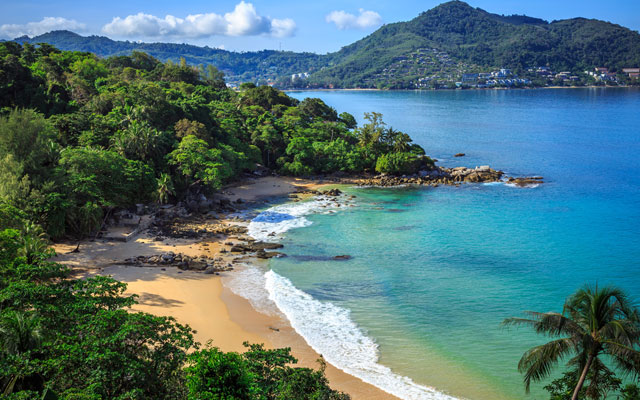
Phuket (Laem Sing Beach pictured above) aims to reduce, and eventually, remove all foam and plastic usage

Phuket airport is set to close from April 10 to 30, banning all flights and corking off all entry points by land and sea in hopes of stemming the spread of Covid-19.

The city’s sea routes are closed off already, as is Sarasin Bridge, the sole land transport route connecting it to the Thai mainland.

Indefinite closure of all of Phuket beaches was enforced over the weekend; Laem Sing Beach pictured

As Civil Aviation Authority of Thailand (CAAT) regulations require seven days’ advance notice for the closure of air transport routes, the airport shutdown will only begin April 10. In response, nine Thai airlines have suspended flights and most hotels in the province are closing to new tourists.

Vehicles transporting gas, medical supplies and food will be allowed entry, but all others will be denied unless they carry special permission from the Ministry of Public Health.

Meanwhile no crews on foreign ships will be allowed to disembark; domestic ship crew can disembark only by presenting a doctor’s certificate and after undergoing a health screening as specified by the Ministry of Public Health.

Phuket also enacted 13 other safety measures over the weekend, reported local news outlet PostToday, among which was the indefinite closure of all of its beaches. Bars and clubs, sports venues, cinemas and massages shops are already under a two-week closure which began March 18 along with the rest of the country’s entertainment venues; the measures now also extend to popular walking street Bangla Road in Patong (now closed to tourists), zoos, and all touristic animal show venues. Under sections 22 and 35 of the Communicable Disease Act, violators could be jailed for up to one year and/or fined up to 100,000 baht.

Phuket has also organised a hoarding inspection team, and implemented additional social distancing, hygiene and quarantine requirements, and enacted a daily curfew from 20.00 to 03.00 with the exception of urgent errands.

Phuket has the highest number of confirmed Covid-19 cases in all of Thailand’s southern provinces, of which nine more were confirmed on March 30 raising the total to 62 cases.

Local hospitality trade organisations such as the Phuket Hotels Association are in the midst of preparing guidelines for their members on how to proceed. The association was unavailable for further comments at press time.

Australia restricts public gathering to two; fine, jail as punishment

0

Australia is limiting public gatherings to just two people, and will impose fines and jail terms to enforce the new rule, as the country tightens social-distancing controls, following the rise of the nation’s death toll from the coronavirus pandemic, despite a slowdown in new infection cases.

The enforcement of the new rules is at each state’s discretion. Victoria will slap on-the-spot fines of A$1,652 (US$1,021) for individuals and A$9,913 for businesses that breach these rules. In New South Wales (NSW), people could also face six months’ jail.

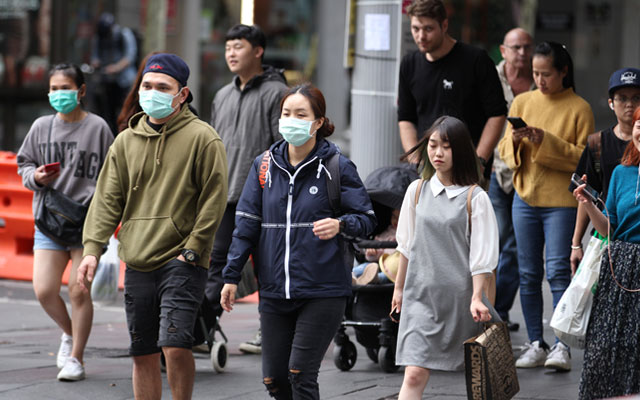
Australia restricts public gatherings to two people; people walking on the streets of Sydney’s CBD pictured

Under the new directive, Australian authorities have made known that there are only four reasons people should be leaving their homes: shopping for food and essential supplies; medical care or compassionate needs; exercise in compliance with the two-person rule; and work and education, if one is unable to do that remotely.

The NSW government has also advised individuals to stay 1.5m away from others at all times when they are out.

Meanwhile, Tasmania became the country’s first state to ban people from alternating between their main home and their second home.

The country has seen the rate of new infections halved in the past week, under existing restrictions on movement to about 4,200 people nationally; however, the death toll rose to 17.

Amid business closures to stem the virus spread and resulting massive lay-offs, Australian authorities have announced a six-month moratorium on evictions for commercial and residential tenants in financial distress due to the economic shock from the coronavirus outbreak.

On Monday, the government also unveiled a third rescue package to the tune of A$130 billion to support “hibernating” Australian businesses and their employees so as to prevent further job cuts during the ongoing coronavirus pandemic.

International tourism to nosedive up to 30% in 2020: UNWTO

0

The number of international tourist arrivals will plummet by 20-30 per cent in 2020 when compared with 2019 figures, due to the ongoing coronavirus pandemic, projected the World Tourism Organization (UNWTO).

The new projection, which takes into account the introduction of major travel restrictions worldwide, is a sharp revision of an earlier forecast in early March of a one to three per cent decline.

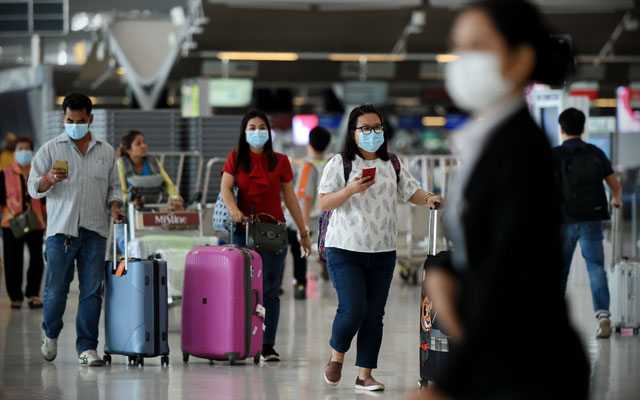
UNWTO projects that the number of international tourist arrivals will plummet by 20-30 per cent in 2020; travellers wearing masks walking through Suvarnabhumi Airport pictured

The projected drop in arrivals will lead to an estimated loss in international tourism receipts of between US$300-450 billion, almost one-third of the US$1.5 trillion generated in 2019, said the UNWTO in a statement.

Based on past market trends, this translates to a loss of between five and seven years’ worth of growth due to Covid-19.

In comparison, UNWTO noted that in 2009, on the back of the global economic crisis, international tourist arrivals dipped by four per cent, while the SARS outbreak led to a decline of just 0.4 per cent in 2003.

UNWTO secretary-general Zurab Pololikashvili said: “Tourism is among the hardest hit of all economic sectors. However, tourism is also united in helping to address this immense health emergency – our first and utmost priority – while working together to mitigate the impact of the crisis, particularly on employment, and to support the wider recovery efforts through providing jobs and driving economic welfare worldwide.”

Tokyo Olympics moves to July 23 to August 8, 2021

0

The 2020 Tokyo Olympics will be held from July 23 to August 8, 2021, following a decision made by organisers to postpone the sporting event in response to the global Covid-19 pandemic.

The new dates were announced on March 30 by Tokyo 2020 chief Yoshiro Mori, who also said that the Paralympics will be held from August 24 to September 5 in the Japanese capital.

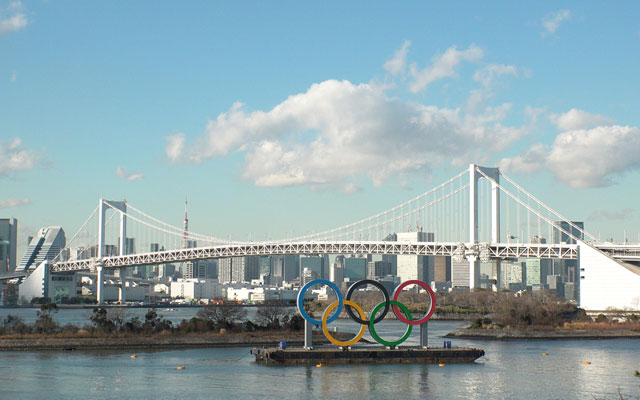
Postponed Tokyo Olympics to open on July 23, 2021

The 2020 Tokyo Olympics was scheduled to open on July 24 this year, and this marks the first-ever peacetime postponement of the Games.

Although the International Olympic Association and host country Japan were keen on pressing forward with the Games, the massive pressure they faced from sports bodies and athletes due to the rapidly-spreading virus has led to the eventual postponement of the event.

Malaysia Airlines to bring stranded customers home

0

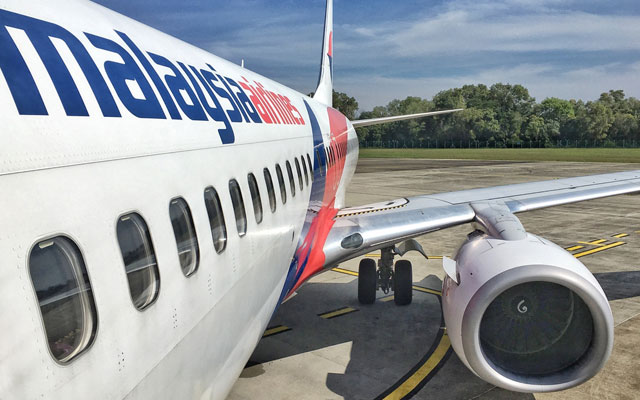
Malaysia Airlines is reinstating some of its international flights in April and May to bring home families who have not been able to return to their loved ones due to travel restrictions in many parts of the world.

Group CEO Izham Ismail said in a press statement that many customers have asked his global offices for next available flights, mostly between Kuala Lumpur and Australia and New Zealand as well as onward to London.

Malaysia Airlines is reinstating flights between Kuala Lumpur and Auckland, Melbourne, Sydney, Perth, Jakarta and Guangzhou

“Being a network carrier, Malaysia Airlines is able to maintain connectivity and bring our customers direct or closest to their intended destination. And being Malaysia’s national carrier, it is our duty to ensure accessibility for Malaysia domestically and internationally during these difficult times,” Izham said.

The reinstated flights are between Kuala Lumpur and Auckland, Melbourne, Sydney, Perth, Jakarta and Guangzhou.

Since the enactment of the Movement Control Order in Malaysia which ends April 14, Malaysia Airlines has had to reduce its domestic frequencies and schedules. It is running at minimum, mostly to facilitate essential travels and cargo movement.

Izham shared that Malaysia Airlines and its sister airlines under the Malaysia Aviation Group have been supporting the local health ministry by transporting medical devices and supplies. It most recently delivered two tonnes of face masks and personal protection equipment from Kuala Lumpur to Kota Kinabalu as well as 300,000 pieces of disposable masks, 50,000 pieces of protection suit and 8,000 pieces of protection suit with eye mask courtesy of the Jack Ma Foundation and Alibaba Foundation from Shanghai to Kuala Lumpur.

Domestically, Malaysia Airlines, Firefly and MASwings facilitate movement of goods as well as medical staff across Peninsular Malaysia crossings and within Sabah/Sarawak. The three airlines have also positioned standby aircraft at Subang Airport, Kuala Lumpur International Airport and Kota Kinabalu International Airport to initiate rapid mobilisation of medical staff and professionals as well as other (non-Covid-19) patients to support the Ministry of Health’s capacity/resource management efforts across Malaysia.

Expo 2020 Dubai is open to one-year postponement

0

Expo 2020 Dubai and the UAE have expressed support for a one-year postponement made by the Steering Committee following a meeting on March 30.

In a press statement, both emphasised their “collective aim to deliver an Expo that is true to its time and to our shared, urgent priorities” and acknowledged that with the ongoing pandemic, now “is not the right time”.

Bureau International des Expositions member states will need to vote on Expo 2020 Dubai’s fate at the next General Assembly

The statement said: “We continue to face a global situation that is both fast moving and unpredictable. Over the last several weeks, we have been working hard, both internally and in consultation with key UAE and international stakeholders, to review the ongoing impact of Covid-19 on our plans and preparations for Expo 2020 Dubai.

“While everyone involved in Expo 2020 Dubai remains firmly committed, many countries have been significantly impacted by Covid-19 and they have expressed a need to postpone Expo’s opening by one year, to enable them to overcome this challenge.

“In spirit of solidarity and unity, we support the proposal to explore a one-year postponement made by the Steering Committee at today’s meeting.”

Following the decision made at the Steering Committee meeting, the next step would be to have the Bureau International des Expositions (BIE) member states vote on the postponement at the General Assembly. Article 28 of the BIE Convention stipulates that a change of dates requires a two-thirds majority vote from the BIE Member States.

SIA raises US$13.3 billion in crisis funding

0

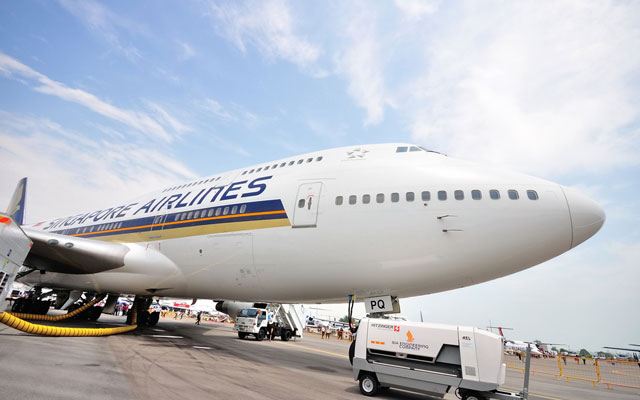
National carrier Singapore Airlines (SIA) has raised S$19 billion (US$13.3 billion) to tide over the pandemic, with S$15 billion through rights issuances, subject to shareholder approval, and the rest through a bridge loan facility with DBS Bank.

Proceeds from the former will be used for “capital and operational expenditure requirements” – including fleet upgrades – while the bridge loan will help the airline with “near-term liquidity requirements”.

SIA has secured S$19 billion in funding

Under the two rights issuances, all shareholders will be offered S$5.3 billion in fresh equity and up to S$9.7 billion in the form of 10-year Mandatory Convertible Bonds (MCB).

SIA’s largest shareholder, Temasek Holdings, intends to vote in favour of the issuances. Additionally, the investment company has committed to subscribe for its full entitlement and to purchase any balance from both issuances.

Peter Seah, chairman, SIA, is “confident” that the funding raised will better equip the airline to deal with existing challenges, and allow it to reinforce its leading position in aviation.

Dilhan Pillay Sandrasegara, CEO, Temasek International, believes the transaction will not only provide the airline with much needed short-term liquidity, but will also help SIA to extend the growth the company experienced prior to the pandemic to post-Covid-19 times.

In his Resilience Budget statement, deputy prime minister and minister for finance Heng Swee Keat said the Singapore Airlines Group was the heart of Singapore’s aviation ecosystem, accounting for more than half of passenger traffic in Singapore last year.

He emphasised the need to support the Group amid a fall in air travel, as a “diminished SIA will undermine the ability (of Singapore’s air hub) to recover from the crisis”. Heng also expressed his support for Temasek’s financial injection.