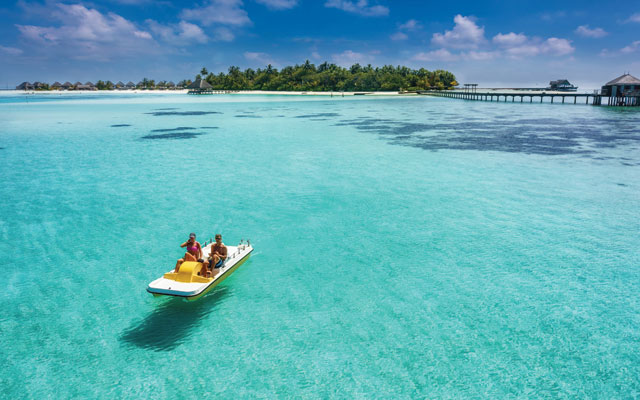
WIthout a domestic travel market to rely on for the post-pandemic tourism rebound, Maldives will need to sharpen its destination marketing efforts in accessible regional markets, opined industry leaders during a webinar organised by PATA and the Maldives Marketing & PR Corporation (MMPRC) on Monday.
Speakers at the COVID-19 Crisis and Maldives Tourism webinar were Thoyyib Mohamed, managing director, MMPRC; Mario Hardy, CEO, PATA; and Sarah Mathews, group head of destination marketing APAC, TripAdvisor.
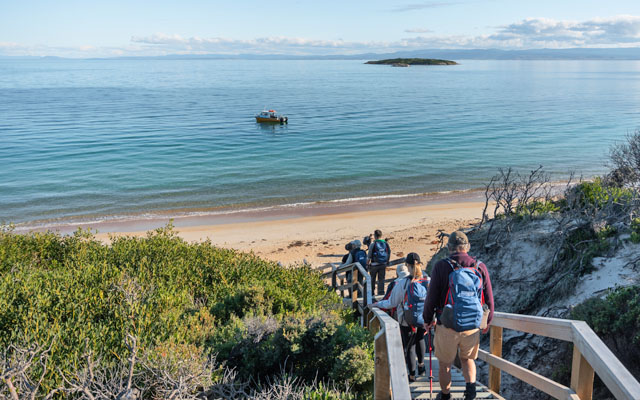
The Maldives has shifted her marketing campaigns to digital and online platforms, focusing on empathy
All speakers agreed that domestic travel would be the first to take off, with Hardy projecting the domestic market dominance will run for an extensive period before individual travel and eventually, mass market travel returns.
Damian Cook, CEO of E-Tourism Frontiers, expected the mass market to take a long time to recover due to health risks and higher travel costs driven up by stringent health checks, certification and longer turnarounds for aircraft needing disinfection.
On a positive note, Mathews said people would be eager to travel again after being cooped up indoors for so long.
“People are planning their next trip, doing research and seeking advice,” she shared, adding that travellers will book their next trip based on quality (value for money) and not cheap offers.
However, without “a domestic tourism product”, Cook said the Maldives would have to look at attracting travellers from the region and on short-haul flights.
Cook opined that destinations without a domestic market back-up would need a proper communication plan and show a lot of digital content to entice travellers to return.
MMPRC’s Mohamed revealed that while the destination’s Visit Maldives campaign was severely disrupted at the onset of the crisis, the team had chosen to “re-adopt and re-strategise our campaigns in our source markets”.
“We have shifted to digital and online campaigns, focusing on empathy. Our content is light-hearted and our ‘visit later’ message is for people to see and dream about the Maldives,” he explained.
Mohamed acknowledged that the Maldives would have to address public health in marketing, specifically the quality of the health measures and social distancing norms.
He emphasised that the Maldives’ one island, one resort concept has helped to contain the outbreak.
The Maldives has 214 Covid-19 infections as of April 27 and no fatalities.
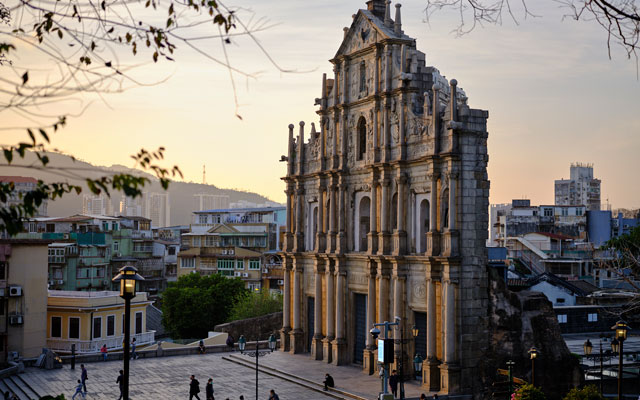
The Macau Government Tourism Office (MGTO) India is taking the travel downtime to train Indian travel partners in Macau’s tourism products, using online platforms such as WhatsApp.
Destination videos, presentations, voice notes and brief text messages will be sent out on live online platforms as well as text and voice messaging platforms like WhatsApp to Indian travel agents.
Online training during the current downtime will ready Indian travel agents for a sales rebound later
The content will include updated information on the city’s tourism offerings and points of appeal as an outbound destination.
Arzan Khambatta, head, MGTO India, said in a press statement that the country lockdown as a result of the pandemic has presented MGTO India a chance to “educate and connect with our travel trade partners virtually”, especially with travel agents it wasn’t able to reach out to earlier.
He said MGTO India is able to cater to a wider base of travel agents across India with this exercise.
Khambatta shared that he expects the travel industry to recover in a few months’ time.
“When the travel bands are lifted, we want to make sure agents are equipped with accurate information about Macau and can promote (the city) to discerning Indian travellers,” he said.
MGTO is also set to roll out a Macau Specialised Online Training Program for travel trade partners in India, complete with accreditation. Through completing and passing the modules in the specialist programme, agents in India can be certified as Macau Specialised Agents.
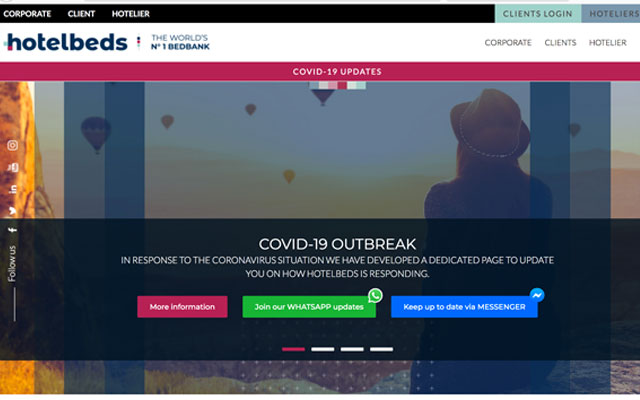
Hotelbeds has launched a convenient subscription service where both hotel partners and clients can receive Covid-19 updates through WhatsApp and Facebook Messenger.
Clients and partners will be able to access details of the force majeure that Hotelbeds has placed on bookings worldwide till April 30. Through the new service, clients can also access information on how to modify and cancel bookings on the company website.
Clients and partners of Hotelbeds can sign up for the subscription service
The declaration of force majeure entailed that travellers could cancel both refundable and non-refundable bookings without cancellation charges, if done within a stipulated time, and subject to some exclusions.
Hotelbeds is also going ahead to cancel travellers’ bookings and waive cancellation fees for destinations where hotels have been asked to close their doors by local authorities. Accompanying services, such as car rental, transfers, activities and theme park bookings, will also be cancelled without charges.
Hotel partners interested to know about how changes in travel restrictions impact their bookings can now receive updates through the new channels. They can also obtain answers to commonly-asked questions through an interactive menu, or request direct responses from the Hotelbeds’ operations team.
Gareth Matthews, marketing and communications director, Hotelbeds, said in a statement announcing the launch of the service: “To all our clients and hotel partners our there, I’d just like to say that we recognise that these are very tough times, but we want you to know that we will be with you all the way, right now and when you and your customers and guests are ready to go again.”
Hotelbeds will be taking “further actions” over the weeks and months ahead to “fulfill this promise”, said Matthews.
In the meantime, clients and partners can sign up for the new subscription service on the Hotelbeds’ Covid-19 website.
Herbert Laubichler-Pichler has taken charge of the opening of the 196-pavilion and 384-suite resort in Vietnam’s Cam Ranh peninsula.
The hospitality veteran’s work in Vietnam spans almost 14 years and includes management of properties such as The Anam (also in Cam Ranh), Ho Chi Minh City’s Reverie Saigon, and Nam Hai in Danang.
The Austrian’s experience in Asia also includes overseeing the opening of Raffles Hainan in China; working for Shangri-La Hotels and Resorts in mainland China, Hong Kong, Singapore, Malaysia and the Philippines; and managing GHM (General Hotel Management) properties in Malaysia.
Born into a hotelier family, Laubichler-Pichler started out in the industry working at his parents’ guesthouse in Austria as a bellboy at 10 years of age during the summer season. He later studied hotel management and became a certified chef before rising through the ranks to become the general manager at properties in Austria, Germany and Cyprus.
The Air Carriers Association of the Philippines (ACAP), comprising the country’s three leading airlines – Philippine Airlines, Cebu Pacific and AirAsia Philippines – is seeking government assistance, including waiver of airport charges and credit guarantees to its three airline members, as it foresees the beleaguered industry shrinking in the next two years.
The plea comes as the Philippines extends metro Manila’s coronavirus lockdown to May 15, even as the government begins to ease strict quarantine measures meant to stem the spread of the virus.
Philippines’ leading airlines seek government’s intervention to ease aviation burden amid shutdown
ACAP vice chairman and executive director Roberto Lim said they are asking for neither cash nor bailout but for “credit guarantees so the existing credit lines of airlines can be opened by banks” and “will assure the banking sector that they can lend money under existing facilities or provide new ones”.
The industry is expected to shrink in the next two years in terms of visibility to serve destinations and frequency of services, Lim said in a webinar hosted by the Tourism Congress of the Philippines (TCP) last Friday.
Apart from sleeper flights organised privately and through the intervention of the Department of Tourism for stranded tourists and overseas Filipino workers, ACAP members have temporarily mothballed their aircraft during the lockdown period and are understood to be rocking up huge losses.
But they continue to pay for fixed charges and other expenses despite being non-operational, hence, ACAP’s request for the waiver of airlines’ parking charges, rental and other fees and charges.
Lim said that logically, the carriers will focus on domestic routes first when they resume flights as “we’re not in total control of international travel”, in light of other countries having their own travel bans and restrictions.
He said ACAP has touched base with regulatory authorities for the three airlines to start operating from May 15 when the lockdown is lifted, and will ask if airline personnel can resume work earlier so they can prepare the aircraft to make them flyable again and to sell limited flights.
As to how airfares will be post-Covid-19, Lim said that the airlines will put sustainability at the heart of their decision-making, and adapt to evolving realities to lay the groundwork for recovery.
“Maybe the new normal on social distancing cannot achieve a 100 per cent load factor for every flight, but low load factor will allow airlines to observe social distancing overtime,” Lim said.
There are permutations though – for example, there’s no need for social distancing to be observed by a family travelling together, but only individual travellers.
He said that TCP members have identified in a framework agreement discussed with Civil Aeronautics Board; Civil Aviation Authority of the Philippines; as well as airports in Manila, Mactan, and Clark; on the hygiene and safety precautions to be adopted on international and domestic flights.
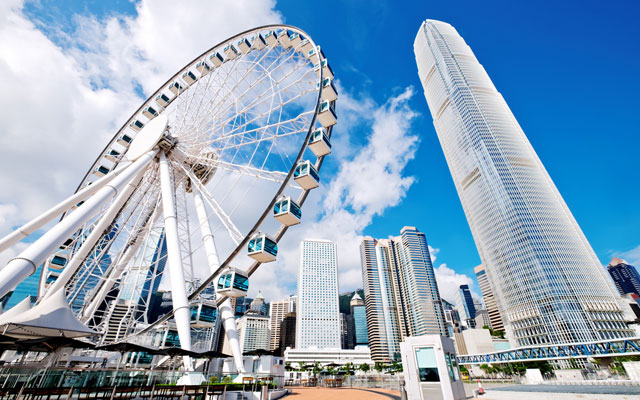
The Hong Kong Tourism Board (HKTB) will be partnering the local travel trade to devise a long-term strategy and recovery plan for the city’s tourism industry, as it foresees a new tourism landscape post-pandemic.
The announcement was made during a recent web conference helmed by HKTB chairman YK Pang and executive director Dane Cheng to provide the local travel trade with updates on Hong Kong’s tourism development and introduce the HKTB’s strategic framework for recovery.
Hong Kong rolls out three-phase plan to boost the city’s tourism
During the conference, which was attended by nearly 1,500 industry stakeholders, Cheng said that the HKTB has devised a three-phase plan to reinvigorate the city’s tourism.
The plan complements the tourism board’s allocation of HK$400 million (US$51 million) to support promotions by the trade once Covid-19 is over.
In the ongoing phase one (“Resilience”), the HKTB is preparing a recovery plan for Hong Kong’s tourism industry.
In phase two (“Recovery”), when the pandemic shows signs of abating, the HKTB will first focus on promoting domestic tourism by encouraging locals to rediscover different neighbourhoods and community cultures in order to send a positive message to visitors and restore their confidence in the city.
As well, the HKTB will launch tactical promotions with the trade in selected markets based on the developments of individual markets to stimulate people’s interest to visit Hong Kong.
In phase three (“Relaunch”), mega events and a new tourism brand campaign will be launched to rebuild Hong Kong’s tourism image.
Pang said that the Covid-19 pandemic has posed unprecedented challenges to Hong Kong tourism and ground global tourism to a halt.
He added: “The tourism landscape will be reshaped. In the post-pandemic world, we will see a shift in preference and behaviour among travellers – the public health conditions of destinations, and the hygiene standards of transportations, hotels and other tourism facilities will become a top priority; people will prefer short-haul breaks and shorter itineraries; wellness-themed trips will become a new trend.
“It is in fact an ideal time for us to review and rethink Hong Kong’s position in the global tourism market and elevate service standards. Together with the travel trade, the HKTB is going to map out the long-term development strategy for our tourism industry.”
Representatives from the HKTB’s worldwide offices also participated in the meeting to provide insights into the latest developments in various
market regions: mainland China, short-haul and new markets, and long-haul markets.
In mainland China, given the economic fallout from the virus, consumers will become more price-conscious and pursue value-for-money holidays. After prolonged confinement, visitors will also place greater emphasis on health and nature. For future trips, they will also favour destinations that pose low risks to health.
Domestic and regional travel will lead the way for tourism recovery, and regional destinations will see fiercer competition in the wake of the pandemic. In Japan, South Korea and Taiwan, the young and middle-aged segments will be the most eager to travel. Green tourism and the outdoors will be favoured, while short-haul travel will be preferred due to financial and holiday leave constraints.
Long-haul markets will take longer to recover, with outbound travel to resume in 4Q2020 at the earliest. Ethnic Asian visitors are expected to be the first to visit Hong Kong after the pandemic; while Canada, France and Germany is likely to recover faster than other feeder markets.
Centara Hotels & Resorts is further expanding its presence in Vietnam, with the signing of hotel management agreements for two new resorts being developed by Novaland Group, a Vietnamese property and real estate developer.
Centara Hotels & Resorts’ Markland Blaiklock (front row, right) signs deal with Novaland Group’s Huy Bui (front row, left) to open two resorts in Vietnam
The partnership will see the addition of 2,260 keys to Centara’s growing Vietnam portfolio.
Slated to open in 2022 and 2023, the two resorts which will be located in Vietnam’s “top tourist cities” will feature family-centric entertainment, water parks, spas and culinary venues.
The Singapore flag was illuminated on the slopes of Switzerland’s famed Matterhorn mountain on Friday (April 24), in a show of solidarity during the coronavirus pandemic.
Since March 24, artist Gerry Hofstetter has lit up the majestic Swiss Alps every night with projections of different images, including the flags of various nations such as Japan, Thailand and South Korea, as a sign of hope and solidarity amid the pandemic.
Singapore flag lights up the Matterhorn
1 of 2
Images of the projection of the Singapore flag were uploaded on Switzerland Tourism’s Facebook page, with the accompanying caption: “In the city-state Singapore, different ethnic groups live together peacefully.
“The country is well organised and clean: similar characteristics are attributed to Switzerland. We show solidarity with the people of Singapore and send a sign of hope.”
The Matterhorn was illuminated daily until April 26, 2020.
The IATA is calling for governments to work with the industry on confidence-boosting measures in the face of an anticipated slow recovery in demand for air travel.
“Passenger confidence will suffer a double whammy even after the pandemic is contained – hit by personal economic concerns in the face of a looming recession on top of lingering concerns about the safety of travel. Governments and industry must be quick and coordinated with confidence-boosting measures,” said Alexandre de Juniac, IATA’s director general and CEO.
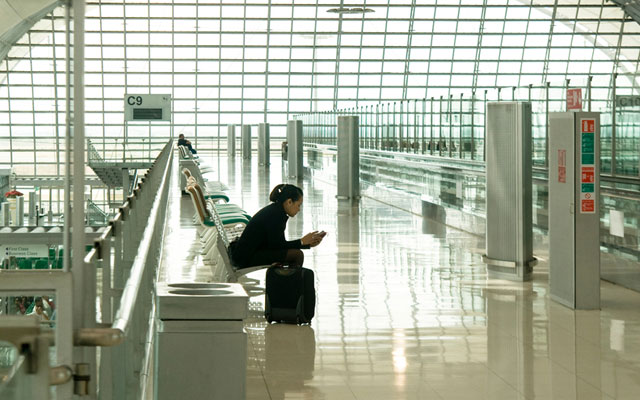
IATA urges governments to boost consumer confidence in the face of slow recovery; a woman cuts a lone figure in a Bangkok airport as the pandemic empty airports around the world
An IATA-commissioned survey of recent travellers found that 60 per cent anticipate a return to travel within one to two months of containment of the pandemic, but 40 per cent indicate that they could wait six months or more. Additionally, 69 per cent indicated that they could delay a return to travel until their personal financial situation stabilises.
Early indications of this cautious return-to-travel behaviour are seen in the domestic markets of China and Australia, where new coronavirus infection rates have fallen to very low levels.
In China, domestic demand began to recover when new infections fell to single digits and rapidly headed towards zero. While there was an early upswing from mid-February into the first week of March, the number of domestic flights plateaued at just over 40 per cent of pre-Covid-19 levels, according to IATA.
Actual demand is expected to be significantly weaker as load factors on these flights are reported to be low, it added. China accounts for some 24 per cent of all domestic passengers.
Over in Australia, domestic demand continued to deteriorate even after new infections fell to single digits, which triggered an initial recovery in the Chinese domestic market.
IATA stated that there is still no sign of recovery, with total domestic flights at 10 per cent of pre-Covid-19 levels, even as new infections near zero. Australia accounts for three per cent of all domestic travellers.
Domestic market behaviour is a critical indicator as the post-pandemic recovery is expected to be led by domestic travel, followed by regional and then intercontinental as governments progressively remove restrictions.
“In some economies, the spread of Covid-19 has slowed to the point where governments are planning to lift the most severe elements of social distancing restrictions. But an immediate rebound from the catastrophic fall in passenger demand appears unlikely,” said de Juniac.
“People still want to travel. But they are telling us that they want clarity on the economic situation and will likely wait for at least a few months after any ‘all clear’ before returning to the skies. As countries lift restrictions, confidence boosting measures will be critical to re-start travel and stimulate economies.”
Last week, IATA conducted regional summits with governments and industry partners to begin planning for an eventual re-start of the air transport industry.
“The passenger business came to a halt with unilateral government actions to stop the spread of the virus. The industry re-start, however, must be built with trust and collaboration. And it must be guided by the best science we have available,” said de Juniac.
“Time is of the essence. We must start building a framework for a global approach that will give people the confidence that they need to travel once again. And, of course, this will need to be shored up by economic stimulus measures to combat the impact of a recession.”
In addition to confidence-building and stimulus measures, the anticipated slow recovery also adds urgency to the need for emergency financial relief measures, said IATA.
IATA estimates that some 25 million jobs in aviation and its related value-chains, including the tourism sector, are at risk in the current crisis. Passenger revenues are expected to be US$314 billion below 2019 – a drop of 55 per cent – and airlines will burn through about US$61 billion in liquidity in 2Q alone as demand plummets by 80 per cent or more.
“This is an emergency. Airlines around the world are struggling to survive. Virgin Australia which entered voluntary administration demonstrates that this risk is not theoretical. Governments will need financially viable airlines to lead the economic recovery. Many of them won’t be around to do that if they have run out of cash,” said de Juniac.
“The number of governments recognising that relief measures are needed is growing. But the crisis is also deepening. We thank the governments that have committed to provide the industry a lifeline and look forward to quick implementation. For the others, each day matters. Millions of jobs are at stake and relief cannot come fast enough.”
The travel and tourism sector faces a staggering 100 million job losses due to the pandemic, a more than 30 per cent jump from last month’s forecast, according to the World Travel & Tourism Council (WTTC).
The WTTC said that it has alerted G20 Tourism Ministers to the extent of the crisis, as they gathered by virtual conference last week. Of the 100.8 million jobs at risk, almost 75 million of them are in G20 countries.
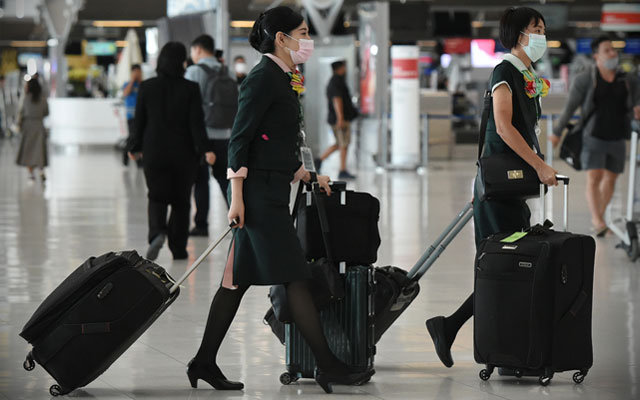
Over 100 million travel, tourism jobs are on the line, says WTTC; flight attendants wearing masks walking in departure hall of Suvarnabhumi Airport, Bangkok, this February, pictured
WTTC analysis also shows a sharp escalation in the economic loss to the world economy, up to US$2.7 trillion of GDP, from US$2.1 trillion just a month ago.
The punishing impact of the Covid-19 crisis has led to over one million jobs already being lost every day.
Gloria Guevara, WTTC president & CEO, said: “This is a staggering and deeply worrying change in such a short time. In just the last month alone, our research shows an increase of 25 million in the number of job losses in travel and tourism. The whole cycle of tourism is being wiped out by the pandemic.
“We have alerted the G20 Tourism Ministers… to the extent of the crisis and advised on how governments need to step in swiftly to support and protect our sector.
“Travel and tourism is the backbone of the global economy. Without it, global economies will struggle to recover in any meaningful way, and hundreds of millions of people will suffer enormous financial and mental damage for years to come.”
Travel and tourism contributes 10.3 per cent of global GDP, is responsible for generating one in four of the world’s new jobs, and for nine successive years, has outpaced the growth of the global economy.