TTG Asia will be taking a break for Vesak Day on Thursday, May 7. News will resume on May 8.
Here’s wishing all our readers a happy Vesak Day!
TTG Asia will be taking a break for Vesak Day on Thursday, May 7. News will resume on May 8.
Here’s wishing all our readers a happy Vesak Day!

PATA has inked a new partnership with TCI Research, a leading travel data intelligence agency.
Under the agreement, TCI Research will be the sole content contributor to the industry-related, data-focused article for both editions of Issues & Trends 2020. They will also have the opportunity to share market trends, data and analysis with PATA members.
TCI Research fuels destinations’ success through data, setting global proprietary standard analytic solutions for all-size DMOs and travel verticals, with a focus on visitor experience, destination reputation and resident sentiment, combining hybrid analytics sourced from surveys and social/big data.
“The Covid-19 pandemic presents a severe threat to the world economy and, in particular, the global travel and tourism industry. As the industry faces one of the greatest threats it has ever seen, PATA has continually highlighted the essential need for industry stakeholders to have trusted and reliable analysis and insights on the most-up-to date data and information in order to enact a measured and balanced recovery strategy,” said Mario Hardy, CEO, PATA.
“Our partnership with TCI Research allows our members to leverage their data and insights to build a more resilient, responsible, sustainable and stronger travel and tourism industry, and I look forward to working with them towards this goal.”
The first edition of Issues & Trends by TCI Research, providing 19 recommendations to battle the Covid-19 impact on destination reputation, will be available on the PATA Store on May 19, 2020.
The World Travel & Tourism Council (WTTC) is currently developing a set of new health protocols in a move to renew confidence in travel, and will share them in the next two weeks with governments worldwide to ensure a coordinated approach to travelling within the Covid-19 world.
By working with the G20, the EU, as well as organisations and governments throughout the world to translate the protocols into easily adopted public policies in each country, the WTTC hopes to renew confidence in and restart travel in a Covid-19 world, before a vaccine is available to the masses.
Protocols will be developed through observations of the factors that led to China’s initial recovery as well as new successful standards employed by industry players.
They will include more frequent cleaning of rooms on cruise ships, social distancing measures at airports, wearing of masks on aircrafts, intensive cleaning of aircrafts and the use of contact tracing apps at airports.
Government endorsement of protocols put forward by the private sector – who understand the operations on the ground best – and their subsequent adoption, is crucial, said Gloria Guevara, president and CEO, WTTC, in a press statement. Public-private partnership is what allowed recovery timeframes to be greatly reduced in the past, she explained.
WTTC will take into consideration feedback and suggestions of its members, as well as global and regional travel organisations – including International Air Transport Association, Cruise Lines International Association, and Pacific Asia Travel Association – in developing the protocols. The WHO and health experts will also weigh in.
The council expects the travel and tourism industry to recover gradually over the months ahead, returning first in the form of staycations and domestic travel, followed by short-haul travel, and finally, long-haul travel.
Travellers between the ages of 18 and 35, less vulnerable to Covid-19, are likely to be the first to lead the growth, said WTTC in the statement.
Meanwhile, the council also pointed out some encouraging signs in the region — such as recent data from travel analytics firm Cirium, which showed a recovery in China’s domestic air capacity by more than 30 per cent between February 24 and April 22.
VietJet has also resumed flights between Vietnamese capital city Hanoi and Ho Chi Minh City, as well as between the two cities and popular emerging destination Danang, noted WTTC.
The Singapore Hotel Association (SHA) has partnered hospitality analytics company STR to offer benchmarking tools for Singapore’s hotels, based on data collected and analysed by STR.
The tools will allow hotels to track advancements in their performance and benchmark it against that of competitors, explained Margaret Heng, executive director, SHA, in a press statement.
Bernard Kee, regional manager for South-east Asia, STR, said in the statement that the partnership will allow SHA members to benefit from “single-point data collection” and a “unified voice for hotel performance” across the country.
According to the release, STR has the world’s largest hotel performance data sample, comprising 68,000 hotels and 9.1 million hotel rooms worldwide. The data revealed that Singapore’s hotels had a record low occupancy (38.3 per cent) and revenue PAR (S$81.35/US$57.44) for March 2020, due to the Covid-19 pandemic.
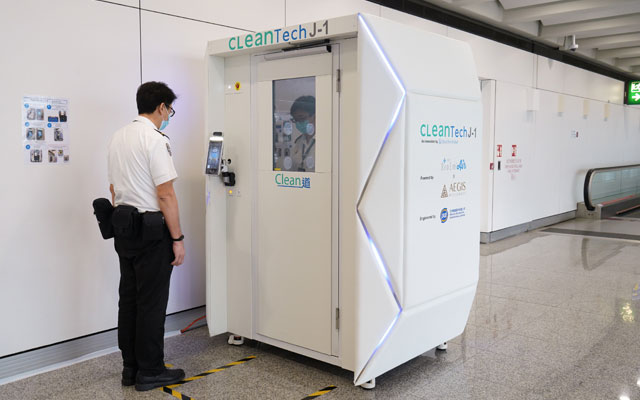
Hong Kong’s Airport Authority (AA) has employed enhanced cleaning technology, including full-body disinfection booths, antimicrobial coating for high-touch surfaces, and cleaning robots, at the Hong Kong International Airport (HKIA) to protect staff and passengers from Covid-19.
HKIA is the world’s first airport to trial CLeanTech, where passengers and staff, following a temperature check, will enter the enclosed booths for a 40-second disinfection procedure.
Each booth’s interior is equipped with antimicrobial coating, which can remotely kill viruses and bacteria on human bodies and clothing through photocatalyst and nano needle technology. Sanitising spray will also be applied for quick disinfection.
Pilot tests are also being held for the application of antimicrobial coating on high-touch surfaces in passenger facilities, including smart check-in kiosks, baggage trolleys and bathrooms. Trials are set to be completed this month, after which AA will consider establishing it as a long-term disinfection procedure.
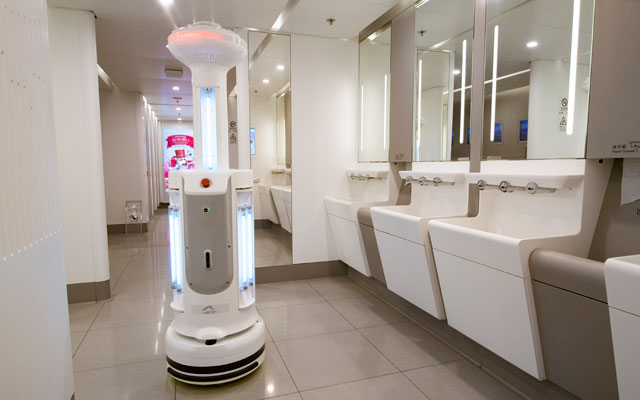
As well, cleaning robots are being deployed for disinfection of public areas and passenger facilities in the airport.
The Intelligent Sterilization Robots are programmed to move without constant human direction, and can use UV light and air sterilisers to sterilise up to 99.99 per cent of bacteria in its proximity, including surfaces and surrounding air, in approximately 10 minutes.
In fact, public toilets and key operating areas in the terminal building are already being serviced by the robots round-the-clock.
Steven Yiu, deputy director-service delivery, AA, said that the aviation statutory body will continue to seek and test out new measures to enhance cleaning and disinfection standards at HKIA, and ensure a safe environment for stakeholders.
In a world of full uncertainty, there is at least one thing we do know for certain – it won’t be business-as-usual after this crisis.
The unprecedented Covid-19 crisis has upended the status quo and left no part of life in Asia-Pacific or the world untouched. Business paused. Borders closed. Travel halted. Life won’t return to how it was before the pandemic; life will adjust to a new normal.
Like other sectors of the economy, the pandemic has significantly disrupted the travel and tourism sector. The UN World Tourism Organisation estimates that international tourist arrivals could plunge by up to a third in 2020, and the World Tourism & Travel Council (WTTC) has found that one million jobs are being lost every day due to the virus.
Sadly, the Asia-Pacific region is not immune. The WTTC estimates 63 million tourism jobs in Asia are at risk – close to five times the number in Europe and close to eight times the number in North America.
But this crisis has also reinforced what matters most in life to people. Connection. Kinship. Belonging. Being apart has reminded people of how much they want to be together.
It is for these reasons and more, we know travel will recover. We know that even though there has been a once-in-a-century disruption that travel is resilient and will return.
Despite countless conflicts and calamities, tourism has continued to go from strength to strength. The number of tourist arrivals globally grew from just 25 million in 1950 to over 1.5 billion in 2019. Before the coronavirus emerged, the growth of the travel and tourism industry in the Asia-Pacific region had outpaced the regional economy for five straight years.
While the desire to travel remains undiminished, how people travel will be different. We expect the immediate future of travel will see demand for more local, longer, unique and value-for-money experiences. With long-haul international travel likely to be limited in the short-term, people will look much closer to home for their holidays such as exploring off-the-beaten path destinations they haven’t visited domestically or even travelling between specific international corridors, such as the mooted ‘Trans-Trasman bubble’ between Australia and New Zealand.
Given the significant impact to the regional economy, we also expect travellers will be more cost-conscious. Travellers will prioritise more affordable places to stay and experiences. For families, this may mean choosing accommodation types which gives them room for the whole family to stay together and offers convenient amenities such as kitchen and laundry facilities.
In this new tourism environment, short-term rentals will play an important role. It can help governments achieve the twin objectives of recovery and resilience. Short-term rentals such as Airbnb listings can help accelerate tourism’s recovery by giving travellers greater and more affordable choices, and by making it easier and cheaper to travel. Short-term rentals can also help diversify tourism, making it more resilient and less vulnerable to future shocks.
As such, it may be appropriate for some governments to consider whether their existing regulatory settings remain fit-for-purpose. Rules that might have worked pre-crisis might not work post-crisis. A business-as-usual approach to regulation risks undermining tourism’s much-needed recovery. In some cases, reforming short-term rental rules may act as a form of regulatory stimulus and help create jobs.
At Airbnb, our immediate focus has been on safety and supporting the community through these testing times. We launched a program to help Covid-19 frontline workers, like doctors and nurses, find safe and convenient places to stay so they can continue to carry out their critical, lifesaving work. We have been regularly updating hosts-and-guests with the latest advice and guidance from government and health experts.
We’ve also been listening closely to Airbnb’s local hosts. To date, we have held dedicated listening sessions with local host communities in places right across the region including South Korea, Japan, Australia and India. For hosts who depend on the income they make through the Airbnb platform, the pandemic has been a hammer blow. Many hosts are struggling to make ends meet. Many hosts are experiencing significant personal and financial hardship. To help them weather the storm, we are providing more than US$270 million in funding to hosts impacted by Covid-19.
Importantly, we have been working hard to help our hosts prepare for the future of travel. In partnership with leading experts in hospitality and medical hygiene, we are developing a new cleaning protocol for hosts with enhanced procedures and guidance on how to clean every room in a home. This is the first overarching standardised protocol for cleaning and sanitisation in the short-term rental industry and builds on the Airbnb community’s already strong track record in this space.
Regardless of how long the storm lasts, Airbnb wants to be a good partner to governments and local communities. We want to work hand in hand with them to rebuild the much-needed and critically important tourism industry. In the post-Covid world, we believe the local, authentic travel provided by the Airbnb community will be an invaluable tool for helping grow and future-proof tourism throughout the region.
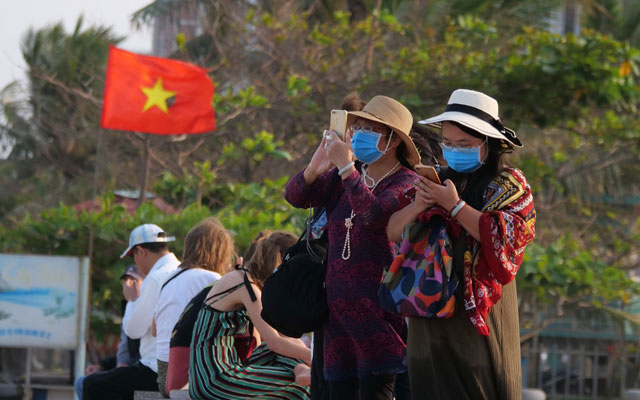
Vietnam’s tourism industry has gotten an early start to recovery, with domestic demand set to spearhead growth, as the country becomes the first in South-east Asia to lift social distancing restrictions.
The lifting of social distancing restrictions was announced by the Vietnamese government on April 24, setting the stage for the return of domestic tourism. Restaurants in the country have started filling up again and some airlines are operating domestically. From April 23, VietJet started six daily flights connecting Hanoi and Ho Chi Minh City.
Jeff Redl, managing director of Diethelm Travel Vietnam, said: “It’s a very positive signal. The demand seems to be quite strong as per information received from several hotels.”
Linh Le, principal and co-founder of Luxperia, said with restrictions lifted, many city dwellers had planned trips to the coast for the four-day holiday from April 30 to May 4. However, he noted that the cost of flights is significantly higher, making flying more of a luxury than previously.
Added Le: “Hotels are offering some good deals with added value, however, while domestic tourism will increase, its pre-pandemic high-performance shall be shortened this year. Savvy operators are to tap into local micro and niche markets to attain some recovery of business within domestic tourism.”
Michael Piro, CEO of Wink Hotels, said he is slowly starting to see a “modest” pickup in bookings. He added: “We believe the market will continue to show signs of improvement towards the end of the year.”
Piro predicts the recovery will initially be led by business travel, transitioning to leisure-driven travel through the summer months. To further stimulate domestic demand, he said discounts and promotions will be used to encourage locals to travel.
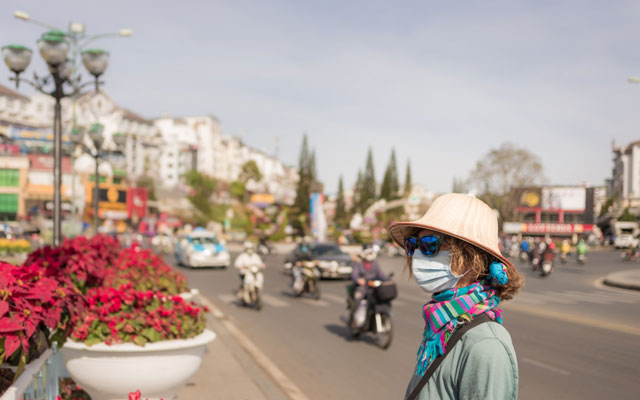
Tourism ministers of the 10 member states of the Association of Southeast Asian Nations (ASEAN) agreed on Wednesday to deepen tourism cooperation so as to mitigate the effects of Covid-19 on the sector.
The announcement was made via a joint statement following a special meeting of the ASEAN tourism ministers on the Covid-19 via video conferencing, which was chaired by Cambodian Tourism Minister Thong Khon.
The ministers agreed to foster coordination among the member countries in speeding up information exchange about travel, especially pertaining to health standards and other measures implemented by the member countries in controlling the spread of Covid-19, so as to provide timely and accurate information for travellers and tourism marketers.
They also struck a deal to deepen the collaboration of South-east Asian NTOs with other relevant sectors in the region, especially in the sectors of health, information, transportation, immigration; as well as regional external partners to collectively implement the comprehensive measures in a transparent and timely manner to mitigate the impact of Covid-19 and other crisis in the future.
The tourism ministers also agreed to enhance cooperation in the sharing of information and best practices among member countries as well as with South-east Asian dialogue partners in supporting the tourism sector.
The cooperation also covers the implementation of policies and measures to bolster the confidence of domestic and international visitors to South-east Asia, including the development of standards and guidelines to create a safer and healthier environment so as to protect staff and communities in the hospitality and tourism-related industries.
In addition, the ministers also concurred to support the development and implementation of a post Covid-19 crisis recovery plan, as well as efforts on the promotion and marketing of joint tourism with the aim of advancing South-east Asia as a single tourism destination.
They also agreed to quicken the implementation of micro- and macro-economic policies; provide technical support and financial stimulus; tax relief; capacity and skill improvement, especially digital skills, for industry stakeholders.
Furthermore, they will also work to accelerate the cooperation with South-east Asian dialogue partners, international organisations and relevant industries to “build a strong and prepared South-east Asia to effectively implement and manage tourism that is sustainable and inclusive after the crisis”.
Indonesia’s vice minister of tourism and creative economy Angela Tanoesoedibjo, who took part in the ministerial meeting, said: “Several studies state that it needs at least five years for the tourism sector to return to the normal condition after Covid-19. But I believe that ASEAN is better than that, the tourism in our region will recover faster under one condition – we have to strengthen (our) cooperation and collaboration.”
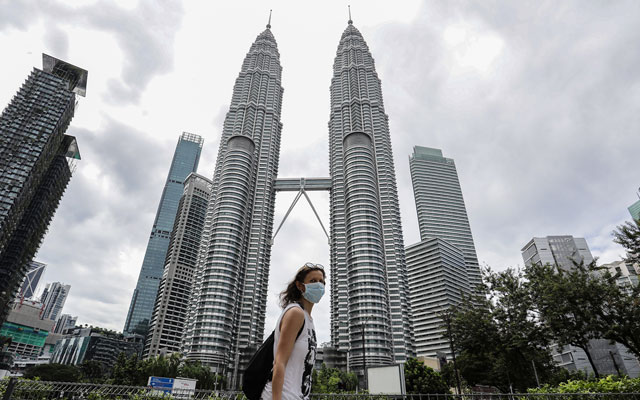
Malaysia has entered a conditional movement control order (CMCO) starting Monday (May 4), about a week ahead of the scheduled end of the fourth phase of the MCO on May 12, in a move to restart its economy.
The announcement was made by prime minister Muhyiddin Yassin on May 1. Under the CMCO, almost all economic sectors and business activities will be allowed to operate, except for those businesses and social activities that expose people to the risk of being infected by Covid-19.
“At the same time, the government will enforce the enhanced MCO in areas where the number of Covid-19 positive cases are high,” the prime minister said. He added that restarting the economy is vital for individuals and businesses, as the country loses RM2.4 billion (US$553.2 million) in revenue every day the MCO has been in effect since March 18.
Activities allowed under the CMCO are subject to strict conditions and enforcement of stringent health standard operating procedures as the battle against the spread of Covid-19 in the country continues.
Workers in the retail sector including restaurants must wear face masks and the entry of customers at any one time will be limited. For dine-ins, all premises must adhere to social distancing rules, limit the number of customers, as well as record details of all customers.
The rules of social distancing and restrictions on the number of patrons applies to all retail outlets operating during this CMCO as well, which also must be disinfected three times daily.
Based on guidelines for the reopening of the economy provided by the National Security Council, hotels are allowed to operate 24 hours and to take in guests comprising frontliners in the fight against Covid-19, professionals from essential services such as oil and gas, and sectors that have contractual period agreements with hotels. Staying in hotels for leisure purposes is still not allowed. Also, hotel facilities such as prayer rooms, gym, swimming pools, spas, lounges and meeting facilities cannot be used. Restaurants and cafes also cannot serve buffets.
Businesses that are not allowed to operate during the CMCO include theme parks, nightclubs, movie theatres, museums and all indoor sports operators. Activities prohibited during this period includes swimming and contact sports, ecotourism activities in the jungle, meetings, conferences, seminars, workshops, exhibitions, as well as social and public gatherings and all form of assemblies.
While interstate travel for tourism purposes is still not allowed, Nigel Wong, honorary secretary of the Malaysian Association of Tour and Travel Agents (MATTA) said: “We hope as the Covid-19 situation improves, internal borders will gradually reopen and domestic travel can resume. Industry expectations are that inbound and outbound travel will see early signs of recovery by early next year.”
Sharmini Violet, director of sales & marketing at Mega Water Sports Jetski Tours in Langkawi, said the company will not operate its jetski tours until the government says that it is safe to travel for domestic tourism.
She added: “We believe domestic tourism will rebound ahead of inbound travel. However, we are selling ‘buy now, travel later’ open tickets, and offering discounts of up to 40 per cent for advance bookings for travel up to December 31, 2021. We started selling these open tickets from last month on our social media platforms. There is engagement, but no sales.”
Senior minister (security cluster) Ismail Sabri Yaakob has advised Malaysians to continue staying at home throughout the CMCO period, unless to attend to urgent matters, as the battle against Covid-19 is not yet over.
At press time, nine of 13 states in Malaysia are not following or fully adhering with the federal government’s move to ease conditions and allowing businesses to resume.
The Star Online reported on May 4 that Kedah, Sabah, Sarawak, Pahang, Penang and Kelantan have decided not to follow the move while Selangor, Perak and Negri Sembilan said it would limit the number of businesses allowed to resume operations and restrict dine-ins at restaurants and sports and recreational activities.
Douglas Uggah, deputy chief minister of Sarawak, said the state will remain status quo until it has studied the implications of reopening economic activities, after which it will announce in stages which activities and sectors would be allowed to reopen.
Meanwhile, the chief minister of Kedah, Mukhriz Mahathir, said the state would not implement the CMCO until it has been discussed at the state security working committee meeting on Covid-19 on Tuesday.
Penang will only allow selected sectors to reopen from May 8 under the CMCO. Until then, the MCO remains intact.
During a media briefing on Saturday, the Health Ministry reported 105 new Covid-19 cases, bringing the total number of infections to 6,176, while the death toll remained at 103.
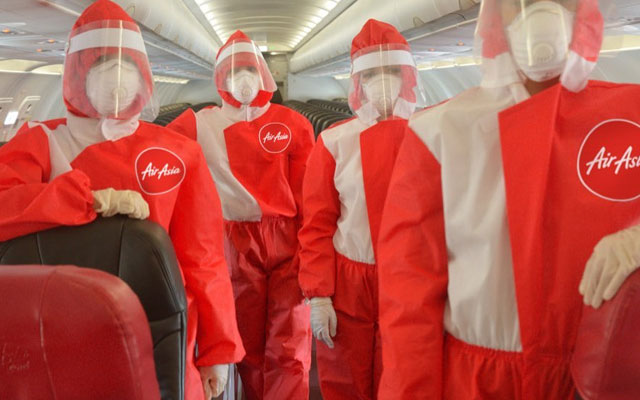
AirAsia is trialing a customised personal protective equipment (PPE) design for its cabin crew to use on board rescue flights, amid enhanced safety protocols adopted by airlines due to the pandemic.
Designed by Filipino fashion designer Puey Quinones, the PPE suits come in AirAsia’s signature bright red, and have allegedly been approved by the Philippines’ Department of Health.

The PPE suits were first used in a recent repatriation flight from Bangkok to Manila, and a further assessment of the design is underway.
Having grounded most of its fleet in March, the carrier plans to resume some of its domestic flights, beginning with Malaysia on April 29, 2020, followed by Thailand, India, Indonesia, and the Philippines, accordingly.