

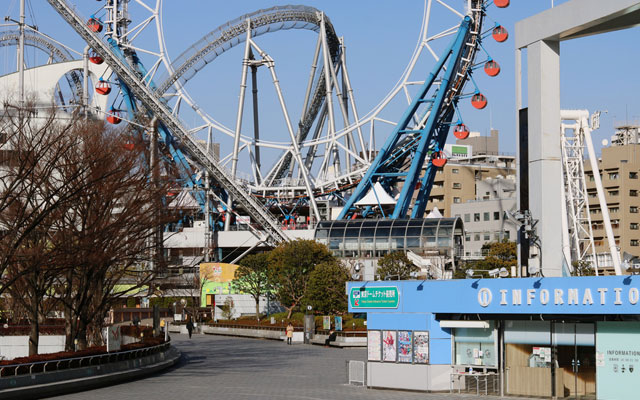
Tourism businesses in Japan have hit another speed bump in their road to recovery from coronavirus, following a further suspension of the government’s Go To Travel subsidy scheme, as the country enters a second state of emergency in response to a virus resurgence.
Eleven prefectures – Tokyo and neighbouring Chiba, Kanagawa and Saitama; Osaka, Kyoto and Hyogo in the Kansai area; and Aichi, Gifu, Tochigi and Fukuoka – were placed under the declaration until February 7.
The Japanese government has urged residents in the 11 prefectures under its state of emergency to refrain from going out or travelling between prefectures unless essential, following insufficient changes in public behaviour since the emergency declaration.
As well, the suspension of the Go To Travel subsidy programme has been extended until the same date, adding further strain to the tourism industry.
Restaurants and bars have been asked to close by 20.00, which has resulted in a 60 per cent drop in the number of diners at eateries since the declaration, according to online reservation firm Toreta.
With borders shut to leisure foreign tourists, Makarim “Mac” Salman, founder and lead guide of Maction Planet, swiftly pivoted in spring 2020 to cater to the domestic market. Many visitors joined his range of Tokyo tours under the subsidy scheme launched in July 2020, which covered 50 per cent of travellers’ costs. Most were retirees, hailing from northern Japan, and cited an interest in practicing English and seeing Japan from a foreigner’s perspective as reasons for joining his tours.
“People could afford to stay longer than usual (due to the programme) so I had looked forward to developing (my offerings) further, but the cessation of Go To Travel has reduced the number of tourists coming to Tokyo,” he said.
Yuko Inamasu, founder of cultural experiences curator Toki, has also seen further losses in business as infection levels have risen. “We had some customers come in fall, but as soon as Covid started becoming a threat (again) around late November, we experienced cancellations,” she said.
In response to the continued slump in travel, Central Japan Railway Co is to cancel more than 1,500 bullet train services on the Tokaido Shinkanen between Osaka and Tokyo from January 26 to end-February.
Many industry experts have expressed uncertainty as to whether Go To Travel can be restarted given Japan’s third wave, which has raised the nationwide number of infections to around 6,000 per day.








 Mehta was previously director of Airbnb Experiences for APAC and was responsible for launching the Experiences business across the region, including Online Experiences in 2020.







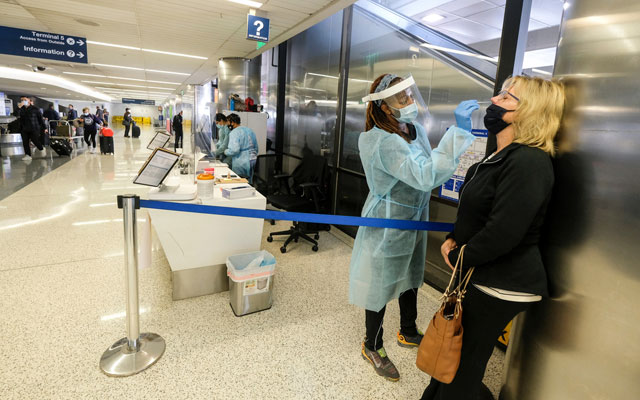
Strong summer holiday bookings on the back of global vaccination rollout and widespread pre-departure testing could see more than 100 million jobs return to the global travel and tourism sector this year, according to an optimistic projection by the World Travel & Tourism Council (WTTC).
As the sector begins its road to post-pandemic recovery from late March onwards, a strong summer of travel is expected, with many major travel companies reporting a significant rise in forward bookings.
The sector’s revival is backed by WTTC’s latest economic forecast. Last year, during the height of the pandemic, WTTC warned 174 million global travel and tourism jobs were at risk. However, in its latest analysis, WTTC’s most optimistic scenario predicts as many as 111 million jobs could be revived – but this would still be 17 per cent below 2019 figures, accounting for 54 million fewer jobs.
This best-case scenario, with travel recovery starting from late March, factors in widespread vaccination programmes and a swift adoption of comprehensive test-and-trace regimes, together with continual, strong international coordination from the private and public sectors.
A more conservative projection would still see a return of 84 million jobs, but this would be 25 per cent below 2019 levels, with 82 million fewer jobs recovered.
Under this scenario, the recovery of international travel is pushed to 2H2021. Vaccines would be rolled out more gradually, slowing down the removal of worldwide travel barriers and restrictions currently in place, while depressing demand to travel and reducing consumer confidence.
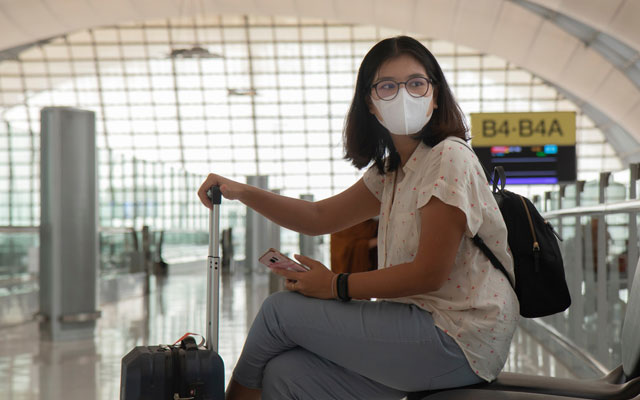
Gloria Guevara, WTTC president & CEO, said: “We are looking forward to a strong summer of travel, thanks to a combination of mask-wearing, the global vaccination rollout and testing on departure unlocking the door to international travel once more.
“Our latest research supports this and shows there is definitely hope on the horizon for the global travel and tourism sector in the year ahead, with the possible recovery of up to 111 million jobs.
“This projected outcome will come as a huge relief and be welcomed as the beginning of the long-awaited recovery, for a sector which has for so long suffered the brunt of hugely damaging travel restrictions.”
The new research also revealed that in the best-case scenario, travel and tourism’s contribution to global GDP will fall 17 per cent compared to 2019 figures, to US$7.4 trillion.
And in the more conservative outcome, with a slower recovery, the sector’s contribution will drop by more than one quarter (27 per cent), to US$6.5 trillion.