TTG Asia
Asia/Singapore Sunday, 5th April 2026
Page 641

Hotel Nikko Bali Benoa Beach welcomes new GM

0

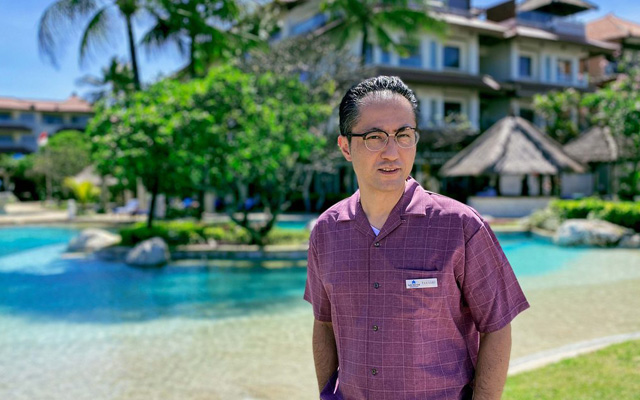
Takashi Hoshino is the new general manager of Hotel Nikko Bali Benoa Beach, bringing with him over two decades of experience in the hospitality industry.

He has rich experience in launching new hotels with Okura Nikko Hotels, having joined several pre-opening offices where he set up a sales channel and IT system for Room Division such as OTA, wholesaler, metasearch, PMS, and more.

Kuramathi Maldives appoints new HR director

0

Anjali Masih is the new director of human resources at Kuramathi Maldives. She brings over two decades of experience in several hospitality brands and owning companies in the United Arab Emirates.

Prior to joining Kuramathi, she was the director of human resources & training in The Chedi Al Bait, Sharjah.

In her new role, she will champion an inclusive culture of growth and create a sustainable workforce by emphasising team building, colleague development, succession planning and improving overall employee welfare.

Indonesian outbound businesses speed up business recovery through travel fairs

0

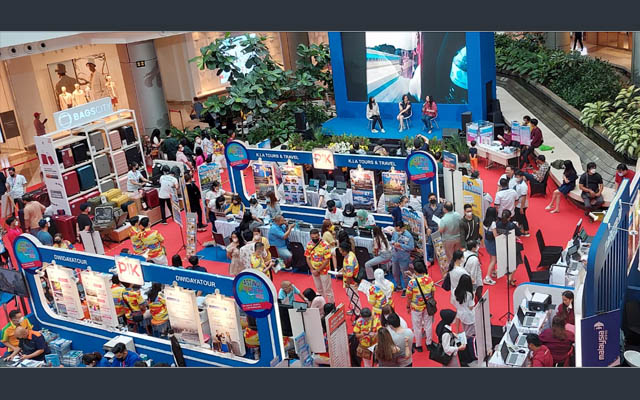
The Association of the Travel Agencies in Indonesia (ASTINDO) held its ASTINDO Hybrid Travel Fair 2022 in partnership with Bank BCA in early September, joining other travel-related businesses in Indonesia racing to capture the country’s pent-up demand for outbound travel.

Bank BCA had also partnered with Singapore Airlines for a travel fair earlier this year, while Kompas Daily and Bank Mandiri organised a similar fair last weekend. Just last week, Garuda Indonesia also offered Super Deals 9.9 on its popular domestic and regional routes through its website and official distribution channels.

The four-day ASTINDO Hybrid Travel Fair 2022 yielded total sales of more than 69 billion rupiah

At the opening of the hybrid fair, Pauline Suharno, president of ASTINDO said: “While borders have opened and travel restrictions relaxed, we have been facing the challenge of seat capacity, expensive airfares, longer visa applications, not to mention the pandemic and the Russian-Ukraine war that have resulted in the (monetary) inflation around the world.

“However, the Global Rescue Summer 2022 Traveler Safety and Sentiment Survey showed 79 per cent (of) travellers around the world said that the (increased) airfares and tour prices did not affect their desire to travel. Some 20 per cent of respondents chose to adjust their budget.”

Andini Tirtawisata, head of leisure, Panorama JTB Tours told TTG Asia: “After being unable to travel overseas for two years, people’s interest to travel have come back strongly. Many of our clients who have visited us at travel fairs already know where they want to spend their holidays. They visited the fair to find what tour programmes and offers are available.”

The various discounts available coupled with banks offering cashback, plus instalments with zero interest for credit card payments on-the-spot have attracted travellers to buy products on the spot, according to Pauline.

The 25 participating travel companies at ASTINDO Hybrid Travel Fair 2022 managed to yield total sales of more than 69 billion rupiah (US$4.7 million) during the four-day show, according to the ASTINDO report.

Top on the list of travellers’ choices are Europe, Turkey and the US.

Andini commented that in terms of Covid-19 restrictions, although Turkey has been the easiest destination to travel to and is a favourite destination, Europe is still the top destination.

She shared that despite the longer visa application process, lack of seats and the Summer holiday chaos at some European airports, these issues did not deter travellers’ plans and instead taught travellers to plan ahead.

Pauline said: “Instead of changing their plans to travel to Europe due to the obstacles, travellers choose to adapt.”

She added that travellers even pack extra clothing and medication in their hand-carry bags in anticipation of the possible chaos at the airport.

“They buy their holidays now to give themselves ample time to apply for the visa and to secure their seats for the year-end holidays.”

Airlines have also helped to educate the market and enticed travellers to book early by offering them interesting promotion fares for 2023 at the fairs, said Andini.

Hong Kong Disneyland Resort packs out 2023 calendar

0

In celebration of Hong Kong Disneyland’s 17th anniversary as well as the 100th year since the founding of The Walt Disney Company, the themed attraction in Hong Kong will roll out a new line-up of exciting events.

Among the highlights is the launch of the long-awaited and first-ever World of Frozen, set to open 2H2023. Guests will be able to visit the kingdom of Arendelle in this highly immersive Frozen-themed land that is only available in Hong Kong. The World of Frozen will feature the world’s first Frozen-themed coaster, Wandering Oaken’s Sliding Sleighs, and Frozen Ever After where guests can step into Elsa’s Ice Palace and meet all their beloved Frozen characters.

The first-ever World of Frozen will open 2H2023 at Hong Kong Disneyland

In celebration of The Walt Disney Company’s centenary, the Hong Kong theme park will have events all year, from Lunar New Year to Halloween. Guests can look forward to appearances by Mickey Mouse and friends in all-new 100th anniversary outfits. Oswald the Lucky Rabbit will also make his debut in the park.

Other celebratory happenings include a brand-new immersive Duffy and Friends-themed experience; Heroic Encounters with Marvel characters; new Disney and Pixar friends, and more. For some spooky excitement, there will be a delightful line-up of Disney Villains during Halloween in October.

For more information, visit Hong Kong Disneyland.

Accor to open first dual-branded hotel in Osaka

0

Accor will introduce its first dual-branded hotel to Japan with Mercure Tokyu Stay Osaka Namba, slated to open on December 1 this year.

In partnership with Japanese real estate company Tokyu Resorts & Stays, the property will offer the best of both companies – Accor’s global reach and international loyalty programme Accor Live Limitless (ALL), and Tokyu Stays’ domestic network and hotel facilities.

Mercure Tokyu Stay Osaka Namba is slated to open on December 1, 2022

The 288 guestrooms are ideal for short-stay and long-stay guests, with a portion of guestrooms offering washer-dryers and kitchenettes, one of the signature features of Tokyu Stay properties. There is also an all-day Italian dining restaurant on site.

The hotel is within a four-minute walk from Namba station which offers a direct train line to Kansai International Airport. Local landmarks like Shinsaibashi shopping district and “America Town” are also easily accessible.

Garth Simmons, CEO, Accor Southeast Asia, Japan and South Korea said: “This property offers the perfect setting for local and international visitors to explore the local scene whether they are in town for business or leisure, and enjoy the warm hospitality that is unique to this region.”

“(The hotel’s location) will continue to attract attention as a sightseeing base for Kansai in the future. We anticipate that guests will discover a new charm of Osaka Namba at this sophisticated dual-branded hotel,” said Toshihiro Awatsuji, president & CEO, Tokyu Resorts & Stays.

Singapore’s heritage building turns hotel, joins SLH

0

Keeping the love alive

0

What is the state of your membership?
The number of members is on a declining trend. This has become more pronounced in the last three years as a direct result of the coronavirus pandemic, as the Japanese government has placed a complete ban on foreign tourists entering the country in 2020 while demand from domestic travellers is falling. Combined with the inevitable impact on the nation’s economy, it is perhaps not surprising that a number of onsen operators have gone bankrupt.

Onsen operators are already facing challenges before the pandemic. What are the biggest issues that they must overcome?
There are several reasons why onsen operators are struggling.

The first is that while onsen in the suburbs of Tokyo and towns like Hakone, Kusatsu and Atami are full of youngsters, the vast majority are not staying overnight like guests used to in the past. Today, young people do not have enough disposable income required to make overnight trips.

The second problem that onsen operators face is the difficulty of finding and retaining staff. Many onsen are in areas that are difficult to reach from major cities. Also, working at an onsen is not appealing to younger people, as the hours can be long and the pay is not as high as other industries.

We have heard that some family-run inns with onsen have had to close down as the owners’ children have moved to the city in search of work instead of taking on the family business.

Unlike hotels, ryokan – Japanese inns – generally have a capacity of four or five people to a room, but currently there are very few inns that are booked to capacity. That is partly due to the national birthrate declining and a sharp decrease in group travel. More and more ryokan with onsen are changing to corporate-style hotels, while ryokan cannot attract people to stay overnight any more.

What can your association do to reverse this trend?
We are encouraging more people to take day trips to an onsen and then suggesting that these day visitors think about an overnight visit the next time.

To help more people understand the history and importance of onsen in the Japanese society and culture, we have initiated an educational programme called the Onsen Certificate.

To attract more workers to the sector, we are collaborating with universities and vocational schools to help operators attract new staff. We also believe that the industry will soon start to employ a greater number of workers from overseas.

Do you have any initiatives to reassure potential visitors about the safety of onsen?
The association has produced and distributed a checklist of coronavirus countermeasures for member onsen operators, and we are asking them to follow the recommendations. We are happy to be able to report that no coronavirus clusters have been reported at any of our member facilities.

How important are foreign tourists to the future of Japan’s onsen businesses?
According to statistics from the Japan Tourism Agency, many foreign visitors list an onsen visit as one of the must-do experiences while they are here. In the last survey, it was the fifth most-popular thing to do in Japan, with 38 per cent of visitors saying they intended to bathe in an onsen.

Why is it such an important part of any visit to Japan?
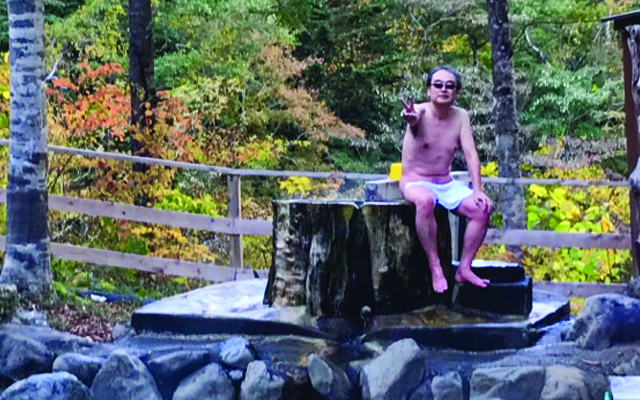
I believe that foreigners are looking for a different experience. They may be embarrassed at first at communal bathing, but Japan’s open-air baths are different from anything that exists in the West.

How are onsen operators working to meet the requirements of more foreign visitors?
In public bathhouses in Japan, men and women bathe separately. In the past, it was quite normal for men and women to all bathe completely naked together, especially in rural regions, but that has been largely halted since Western culture arrived in Japan.

In addition to the separation of the genders, some onsen operators are now introducing yuamigi, which is a disposable bathing suit that can be worn in the onsen by anyone who does not want to be completely naked with other people. In principle, it is forbidden to wear clothing in the bath tub in Japan, but operators cannot completely ignore the needs of their customers, so this is the compromise.

Some onsen operators will never permit yuamigi in their baths because it is contrary to Japanese culture, but an increasing number are permitting people to wear them.

Why are onsen such an important part of Japanese culture?
Onsen are so commonplace and ordinary to us that it is difficult to explain why they are so important. It is simply a part of our lives. Just as the Finns have their sauna culture, we Japanese have our own way of bathing. If you go into rural parts of Japan, you will find that many villages have grown up around onsen. It is up to our association to help these onsen operators because if they fail, then entire rural communities would collapse.

And what does the future hold?
Unfortunately, the declining birthrate and the aging Japanese population cannot be halted, so I fear that the number of hot spring resorts will gradually decline. However, the Japanese people’s love of hot springs is embedded in their DNA, so onsen will not disappear.

In addition, I am confident that the number of foreigners around the world who love our hot spring culture will continue to increase and I hope this will contribute to the preservation of our onsen culture.


TTG Conversations: Five Questions with Serge Dive, This Is Beyond

0

Luxury travel appetite has never been as huge and meaningful as it is now, as people exit the pandemic lockdowns with an intention to lead a more “optimised and amplified” life, observes Serge Dive, CEO and founder of This Is Beyond, the company behind the annual Further East luxury travel tradeshow.

In this episode, Dive discusses how the growing desire for life-changing moments in travel as well as reconnection with loved ones is accelerating luxury travel recovery; the intense appeal for Asia, which has been able to retain its authenticity to satisfy current demand for meaningful travel; and the value of seclusion.

Dive also sheds light on how This Is Beyond has been able to build a community of luxury travel specialists and provide a platform for members to engage all year-round.

Mass affluent travellers hold limitless potential for the luxury travel sector

0

Mass affluent travellers are a growing market across the globe after two years of amassing more wealth and not being able to spend it in a way meaningful to them. They are classified as those who possess substantial savings, can afford to fly premium economy or business class, and are willing to spend more on travel experiences.

Although this has opened up a new market for the tourism industry, whether these individuals will revert to their regular spending habits, or move up the spectrum to become luxury travellers, remains a contending point.

Kiely: people will prioritise luxury travel and put money aside for it

Tom Kiely, president & CEO, West Hollywood Travel + Tourism Board, told TTG Asia at ILTM Asia-Pacific: “I think we’re going to see a fair amount of mass affluent travellers stay in the luxury travel market. The pandemic has taught us that we don’t know when we will get locked down again, so a lot of these people are spending money on travel.”

Kiely shared that West Hollywood has been positioned, even before the pandemic, as “new luxury”. He defines new luxury as travellers staying at a three-star hotel but paying more for personal experiences not easily obtainable, such as a VIP experience at Universal Studios, dining at a Michelin-star restaurant, or skydiving.

“There will also be those that never spent on luxury travel before the pandemic, and will now stay in that category because they love it so much. My neighbour is a nurse at a big hospital in Los Angeles, and last summer, I encouraged him to buy a business class ticket to Europe as prices were cheap then. When he came home, he thanked me and told me he’s never flying in economy again,” Kiely shared.

He added: “There will be a certain number of people that will get their first taste of luxury travel, and realise that that is what they want from now on. They will then prioritise that and put money aside for it.”

Another exhibitor, Switzerland Tourism’s director for South-east Asia, Batiste Pilet, agreed that there are those who have “tasted luxury travel, and will want to do it again”.

Similarly, he agreed with Kiely that unforgettable experiences are what these mass affluent travellers are looking for. “They will save up, and reward themselves with luxury travel for an anniversary or birthday,” Pilet said.

Queiroz: mass affluent travel is closely related to revenge travel

Meanwhile, Ines Queiroz, Visit Portgual’s tourism director, Japan and South Korea, opined that mass affluent travel is closely related to revenge travel.

“These travellers have some money and are not rich, but they are tired of being stuck in their own countries, and are willing to spend more. But I’m not sure if this behaviour will be repeated (in the long run),” she added.

Sherona Shng, regional vice president, operations Asia, and managing director at The Langham Hong Kong, believes that it is up to hotels, and the tourism industry at large, to retain this market.

“I personally believe that if we make every experience memorable, they will come back to us. For instance, these travellers might previously not have stayed in a luxury hotel, but once they do and they see the value in the additional money they are forking out for the high level of service and hassle-free travel, I think they will come back to us,” Shng elaborated.

She noted: “The value proposition is very important because value proposition is not necessarily always based on price – it is based on the experience.”

Philippine tourism chief pushes for removal of outdoor mask mandate

0

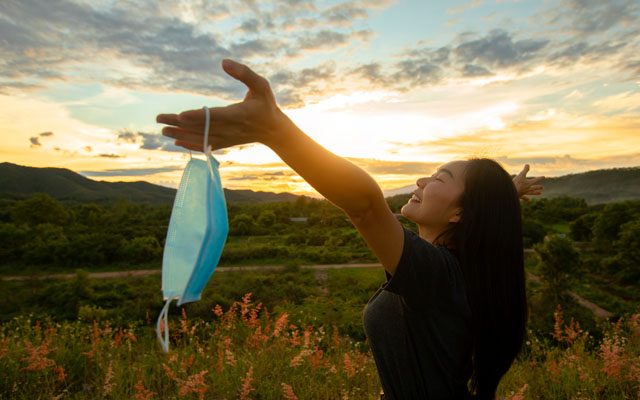
In order to jumpstart tourism recovery in the Philippines, Philippine tourism secretary Christina Garcia Frasco has emphasised the urgent need for the government to adapt to prevailing global health practices – and is backing the Inter-Agency Task Force for the Management of Emerging Infectious Diseases’s (IATF-EID) recommendation to make mask-wearing optional for outdoors.

The IATF-EID has recommended that mask-wearing outdoors is made voluntary across the country, while senior citizens and immunocompromised individuals are highly encouraged to continue wearing masks.

The removal of the outdoor mask mandate could help jumpstart tourism recovery in the Philippines

“With the recent improvement of the global tourism landscape as a result of immunisation, countries around the world have been instituting various measures such as the reopening of international borders, and relaxation of health and safety protocols and requirements, resulting in an immediate positive economic impact of these countries and faster recovery of their respective portfolios,” she said in a statement.

She noted that based on a comparative analysis of mask mandates, Covid-19 incidence, and tourist arrivals of the Top 5 ASEAN countries comprising Singapore, Thailand, Malaysia, Vietnam, and Indonesia, more liberal mask mandates did not appear to cause an uptick in Covid-19 cases.

She added that aside from ASEAN countries, the Philippines’ key markets in Asia and other parts of the world (Japan, South Korea and Hong Kong) have also started to lift mask mandates.

Citing the province of Cebu as a model in liberalising mask mandates since June 8, she stated that the province has maintained its risk classification at low levels.

Expressing optimism for the country’s tourism industry, Frasco said lifting the mask mandate “will give the Philippine Tourism Industry a better chance to regain its vibrant and booming operations”.