TTG Asia
Asia/Singapore Friday, 10th April 2026
Page 1484

Princess Cruises appoints first head for Asia

0
Stuart Allison's scope of responsibilities expanded from Australia and New Zealand to APAC

Carnival Corporation has announced leadership changes within Princess Cruises related to certain business units and its operations in Asia, including the promotion of Stuart Allison from vice president for Australia and New Zealand to senior vice president, Asia-Pacific planning and operations.

Continuing to be based in Sydney, he will be directly responsible for Carnival’s China, Japan, Taiwan, Korea, Hong Kong and Singapore business, while retaining revenue and operations oversight for the Australia and New Zealand business.

Stuart Allison’s scope of responsibilities expanded from Australia and New Zealand to APAC

He will report to Deanna Austin, newly appointed chief commercial officer for the Princess Cruises brand, who currently leads global deployment and revenue management.

In addition to her current work, Austin has assumed overall responsibility for the commercial management for the Princess Cruises brand in 12 offices in the UK, Australia, China, Japan, Taiwan, South Korea, Hong Kong and Singapore, as well as international sales through Princess Cruises GSAs.

Austin will continue to report to Jan Swartz, group president, Princess Cruises and Carnival Australia.

As well, former executive vice president, international operations for Princess Cruises, Anthony Kaufman, has been appointed executive vice president, professional services and CFO, for four business units of Carnival Corporation – Princess Cruises, Holland America Line, Seabourn and Carnival Australia.

Reporting to Stein Kruse, CEO of the four business units, Kaufman will oversee financial planning and reporting, financial analysis, accounting, tax and the financial strategy for this group.

New Bangkok attraction to offer ‘window’ into Thailand’s 77 provinces

0

A new US$20 million cultural and retail attraction headed for Thailand’s upcoming Iconsiam development is promising to bring together 3,000 traditional businesses and craftsmen from the country’s 77 provinces in a single destination.

Chadatip Chutrakul, CEO of Siam Piwat and director of Iconsiam, said: “SookSiam is like a window into every province and into every corner of Thailand… The outlets at SookSiam are real stores that all have real counterparts in towns and villages around Thailand and which are transposed into SookSiam.

Sook Siam to feature stores selling regional products with real counterparts in local villages and towns

“Within SookSiam are outlets of varying types that are built in the style of their respective regions, and which offer regional specialties, whether they be crafts, foods, beverages or services that are unique to that region,” she said.

To bring the local towns to life, the attraction will leverage technology and and interactive virtual reality software, Chayapong Naviroj, CEO of SookSiam, added.

Explaining the “co-creation” model, Luckana Naviroj, who is producing and curating the attraction, said: “Everything special being presented at SookSiam is created by someone somewhere else in Thailand. We ‘co-create’ with them by adding our knowledge of consumer preferences and supporting them with innovation as well as with retailing and marketing techniques based on our insights into the needs of Thai and foreign visitors. We also assist them in ‘curating’ the selection and the presentation of their offerings, adding value to their intellectual property and proprietary skills.”

SookSiam will span 1.6ha in the US$1.7 billion Iconsiam, a mega riverside project scheduled to open at the end of this year.

MakeMyTrip partners India’s leading e-commerce player

0
Partnership follows last month's announcement that Flipkart was entering the travel retail business
Partnership follows last month’s announcement that Flipkart was entering the travel retail business

Indian OTA MakeMyTrip has partnered the country’s largest e-commerce marketplace, Flipkart, with the aim of leveraging the latter’s consumer base to drive online bookings in travel services.

The partnership will start with a roll-out of domestic flight bookings in the next few weeks, followed by hotels, bus and holidays bookings.

Commenting on the partnership, Deep Kalra, founder & group CEO, MakeMyTrip, said: “This partnership will help us reach out to an even wider consumer base and further open up the online travel market.”

In turn, the partnership furthers Flipkart’s goal of being a one-stop destination for all digital transactions online, Kalyan Krishnamurthy, CEO, Flipkart said.

Singapore travel startup welcomes tourism veterans as strategic advisors

0
New members of Wegogo's advisory team, Kathleen Tan (left) and Robin Yap

An online travel startup targeting Chinese users via WeChat, Wegogo, is adding two notable names from the travel industry to its advisory team as it enters a new phase of development.

Former CEO of an AirAsia-Expedia joint-venture and currently AirAsia’s president of China, Kathleen Tan is joining the Singapore-headquartered company as strategic advisor.

New members of Wegogo’s advisory team, Kathleen Tan (left) and Robin Yap

Tan, who has been been credited for AirAsia’s success in China, has further made an undisclosed personal investment in the start-up.

Wegogo is also welcoming Asia president of The Travel Corporation (TTC), Robin Yap, as strategic advisor.

A seasoned professional in B2B travel, Yap, in his role at TTC, oversees 25 travel brands – including Insight Vacations, Trafalgar Tours, Contiki Holidays and Uniworld Cruises – in 14 countries.

Yap was previously with Singapore Airlines and now sits on the advisory council of PATA.

A social trip sharing platform on WeChat connecting travel businesses and hosts to Chinese users, Wegogo has offices in China, Singapore, Thailand and Malaysia.

The company’s next phase of development includes incorporating blockchain technology to the app-in-app WeChat offering, according to chairman of Wegogo Wong Toon King.

Wegogo’s WeChat app has seen over 5,000 bookings for 400 activities in 10 islands across Asia. With the upcoming launch of Android App, the start-up aims to cover 125 island destinations and offer 16,000 activities by 2020.

Update: The article has been amended to reflect Kathleen Tan’s current position at AirAsia. 

When beautiful turns ugly

0

The degradation of one of the Philippines’ most pristine beach destinations into a ‘cesspool’ – a term used by Philippine president Rodrigo Duterte – is a bitter lesson on the need to keep the country’s tourist destinations from falling prey to unbridled growth, lax enforcement and insatiable greed.

In February, Duterte threatened to close Boracay, following which the Department of Environment and Natural Resources, Department of Interior and Local Government, and the Department of Tourism found that many establishments on the island were violating rules and regulations, including the 25m easement from the shore, lack of septic tanks, and illegal building on protected lands.

The three government agencies  recommended a drastic move in March: close the island for six months beginning April 26.

Shocked by the short notice, absence of rehabilitation details and lack of consultation, local stakeholders took a united stand in pleading with the government to reconsider the closure and instead rehabilitate Boracay in phases.

They proposed giving the island’s stakeholders 60 days from April to May to clean up, rectify their mistakes and rehabilitate their respective properties.

Some trade players, however, feel that short-term pain is necessary for long-term gain. Ritchie Tuano, general manager, Asiareps Travel Services, opined: “I (tend to) agree with a total shutdown – maybe not for a year… but on a short-term basis to expedite the cleanup and rebuilding.”

But many believed that the planned closure of Boracay is not the solution. “I don’t believe you can close an entire destination. That would be catastrophic economically,” maintained Bill Barnett, managing director of hotel and hospitality consultancy C9 Hotelworks.

Indeed, according to data from Boracay Foundation, over 17,000 hospitality employees stand to lose their job, plus around 17,000 from the informal sector, such as tattoo artists, vendors and beach masseurs.

The economic repercussions of a closure would be hefty not just for Boracay, which last year drew two million visitors and 59 billion pesos (US$1.1 billion) in tourism receipts, but the country’s image as well.

What then are some alternative ways to bring a semblance of sustainability to Boracay – and other destinations in peril?

Philippine Tour Operators Association (Philtoa) president Cesar Cruz,  said a lot rests on better government planning and tighter implementation of laws and regulations.

Cruz said the country has not learnt from its past mistakes, citing the case of Puerto Galera in Oriental Mindoro, a once-pristine beach destination that has since lost its tourism appeal due to disregard for the environment and management.

Another glaring example is the upmarket West Cove resort in Boracay, a 1,000m2 project that was illegally built on five rock formations. The resort was recently closed for operating without the required permits over the years.

How could the local government and other government agencies have overlooked the flagrant violations of such a large-scale project for so long, asked an incredulous travel agent.

The lack of planning and regulation at tourist destinations in many less developed countries typically boils down to “a broad disconnect between government agencies and (the absence of a coordinated) effort between the national and local levels”, Barnett stated.
“It’s fragmented and the result is absolute chaos as we are seeing in many Asian nations,” he added.

Barnett recommends Asian governments to look at long-term planning, designate certain areas for large-scale tourism and some for lower imprints. Zoning is a key concern, as is issuing and controlling hotel licensees.

“Look at how Hong Kong and Singapore do this. It’s part of public sector planning and goes across tourism lines to land development, infrastructure, taxation and licensing,” said Barnett.

Meanwhile, Paul So, secretary general of the Philippine Travel Agencies Association (PTAA), underscored the need to advocate the importance of tourism sustainability to local government units, as popular destinations like Sagada, Banaue, Baguio and Puerto Princesa are becoming overcrowded due to mass tourism.

“They don’t understand that they have to protect the environment,” lamented So, who was  at press time trying to talk to local government units in the Cordillera.

AA Yaptinchay, general manager of Kirschner Travel Manila and one of the few marine wildlife experts in the Philippines, noted that the country’s coastal and terrestrial destination are “experiencing some level of unsustainability”.

Examples range from whale shark provisioning programmes in Oslob, Cebu, to overdevelopment in Coron, Moalboal, Puerto Galera and El Nido, and overtourism in Mount Pulag and Sagada.

Yaptinchay said: “The Philippines’ best tourism assets are its natural, beautiful islands. But islands are fragile ecosystems with their coral reefs, seagrass, mangrove, beach habitats and biodiversity… Any destination should factor (sustaining these ecosystems) into development. (But) we tend to alter natural beauty for our convenience and comfort and this is where the problem starts.

“Sites and destinations have carrying capacities that need to be determined and followed. Corruption plays an important (factor) in this problem,” Yaptinchay continued.
The importance of sustainability is clear. But the government’s plan to close Boracay for rehabilitation and to ensure sustainability, while also approving the construction of two casinos and a mega hotel – all with Chinese investments – has struck some as doublespeak.

It’s confusing times for tourism in the Philippines. It remains to be seen whether there’s the political will to save Boracay, whether restoring it back to health will require its closure, and whether this concern for sustainability will reverberate to other ailing destinations.


Keeping TTG Asia in shape

0

People sometimes ask us, ‘How long has TTG Asia been in the market?’ And all the time, we’d be pausing and scratching our heads thinking how long. We’re having so much fun covering the industry for the monthly print and the daily news online, that we don’t think about how old we are. The travel business gets more exciting year after year and, much like falling in love, the excitement keeps us feeling young and alive always.

Age really does not matter but for the sake of an answer, can you believe that we’re going to be 45 years old next year? We can’t believe it ourselves. Seems only yesterday that we celebrated our 40th anniversary with the year-long theme, 40tude.

TTG Asia redesign

We will of course be planning our 45th bash soon but for now, we thought we’d give you a refreshed TTG Asia – our version of a nip and tuck to iron out the wrinkles and keep us looking youthful, attractive, friendly, interesting and entertaining.

We hope you will like the new look for TTG Asia monthly, coming after last year’s relaunch of TTG Asia online and e-daily news.

But more than just a cosmetic surgery, if you look beyond the re-design, you will see that we have revamped our destination reports from this issue on and, beginning next issue, there will also be new columns, including pages dedicated to customer service and travel technology.

Our destination reports have been expanded to include coverage of more places within a destination; a new focus on innovative tours and activities; and a bigger drive to spotlight travel entrepreneurs or industry players who have a new business model or idea, just to name a few debut pages.

While we cover travel technology regularly online and through several special reports in the printed issue, we hear you – you want more, and you want it in the form of short, concise, easy-to-digest articles. Actually, you want all our articles to be shorter, more concise, easier to digest, without losing depth. You are demanding!!!

We do understand, dear reader, that you are time-starved and information-overloaded. So we’ll do our best to give you what we privately dub a ‘digestive biscuit’ experience: a read that goes down well quickly, yet is complete, wholesome, satisfying.

But of all the feedback we’ve heard from you, none is louder than your need for a dedicated focus on customer service. You’re so hungry for more guidance and information customer service.

So we’ve come up with several sections for this new column, including one called Troubleshoot – a specific issue a travel professional has faced on the job and how it was handled. And another named Say that again? – client requests that make an agency do a double take.

We’ll also take a look around the world of examples that show why travel agents are still needed – and, hey, why they aren’t – so you can learn from both the good and bad. And if we encounter a great or bad service ourselves while on the job, you can be sure we would be extracting the customer service lessons from it for you.

We want to continue to hear from you, so that we can keep improving, keep being your trusted, relevant read since over four decades and in the decades to come.

We intend to be forever young. 🙂

AccorHotels snaps up stake in South Africa’s Mantis Group

0
Draycott Hotel

AccorHotels has acquired a 50 per cent stake in South Africa-based Mantis Group, a collection of privately owned, managed and branded five star properties and lodges located around the world.

The Mantis network features 28 managed properties, plus a global network of branded hotels and residences, including boutique villas and flagship properties such as Founders Lodge – a South African game reserve in the Eastern Cape, Mantis St Helena – a boutique hotel on the remote island in the Atlantic Ocean, as well as the Draycott Hotel in London.

Draycott Hotel

Sebastien Bazin, AccorHotels’ chairman and CEO, said: “Mantis is a pioneer in customised, one-of-a-kind travel services in some of the most imaginative hotels across the world. With this strategic partnership, we are reinforcing the group’s footprint in Africa.”

This strategic partnership is accompanied by the launch of Community Conservation Fund Africa (CCFA), a non-profit organisation which aims to amplify both groups’ commitment towards preventing the accelerating decline of Africa’s wildlife and bringing together three internationally renowned conservation organisations – Wilderness Foundation, Tusk Trust and African Parks.

The partnership agreement is subject to regulatory approvals.

Move to cap domestic airfares beneficial for tourism

0

The Malaysian government is planning to introduce a price ceiling for domestic airfares by mid-2018, a move that has brought cheers to the local trade for its potential to encourage more tourist inflows and movements around the country.

Deputy transport minister Ab Aziz Kaprawi said the move comes on the back of complaints of expensive flight tickets during festive seasons, reported news agency Bernama.

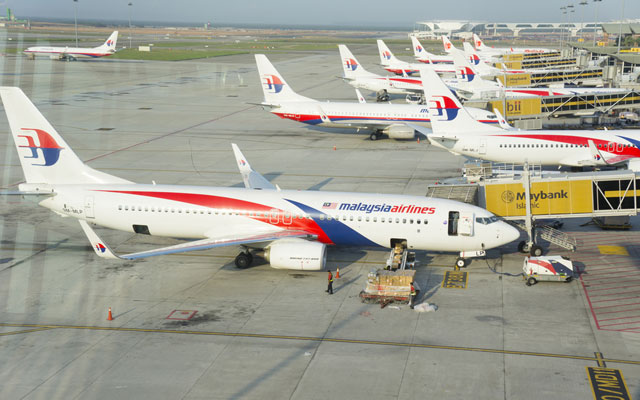
Malaysia Airlines is one of the numerous airlines that operate domestic routes in the country

A study by Malaysian Aviation Commission (MAVCOM) showed a five-fold increase of airfares during festive periods.

The Malaysian Association of Tour and Travel Agents (MATTA) supports the Ministry of Transport’s decision, suggesting that any rise in fares should be capped between 1.5 to two times.

Said MATTA president KL Tan: “Airlines should review their pricing strategy during low and high periods so as not to (penalise) passengers travelling during peak seasons. Airlines have various classes and fares based on their Reservations Booking Designator to maximise revenue.

“Authorities such as MAVCOM and Malaysia Competition Commission should closely monitor and ensure airlines do not form or behave like cartels to drive up fares, especially during peak seasons.”

He added: “High domestic fares have driven away many Malaysians to overseas destinations flying on cheaper airfares.”

Tourism and culture minister Mohamed Nazri Abdul Aziz commented that a cap on domestic airfares will also benefit international tourists as most international airlines fly only to Kuala Lumpur, and tourists may choose to take domestic flights to visit other parts of the country.

Hotels can now buy their way to the top of TripAdvisor listings

0
by putting your listing on top of TripAdvisor search results for travelers searching for a place to stay in your area

Hotels no longer need to rely on just great user reviews and competitive rates to ascend to the top of listings on TripAdvisor; they can now buy a top spot with the latter’s launch of Sponsored Placements.

TripAdvisor has officially launched paid hotel placements following a three-month beta period, which it says saw over 10,000 accommodation owners sign up for the advertising service.

Hotels can now increase the visibility of their TripAdvisor listings

Access to Sponsored Placements is available to all accommodation providers with an active Business Advantage subscription and who share rates and availability through TripAdvisor.

The new advertising subscription will complement Business Advantage, which had evolved from TripAdvisor’s Business Listings to allow accommodation businesses to “impact booking decisions, differentiate from competitors, and measure and strengthen their online reputation”.

To set up a Sponsored Placements campaign, hotels select from three monthly cost-per-click budgets, with customisable budgets coming soon.

The ads are then automatically targeted to internet users searching for relevant accommodation options in the area. Businesses are only charged for the clicks their ads receive.

According to TripAdvisor, the accommodation owners who participated during the beta phase had launched thousands of ad campaigns across over 5,500 destinations.

Boracay closure: flight cancellations and other airline updates

0
Malaysia operations see first 2Q with revenue in the billions
AirAsia will add flights on routes to popular Philippine destinations

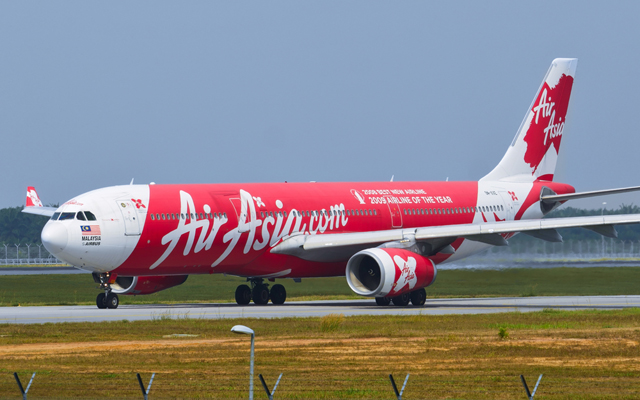
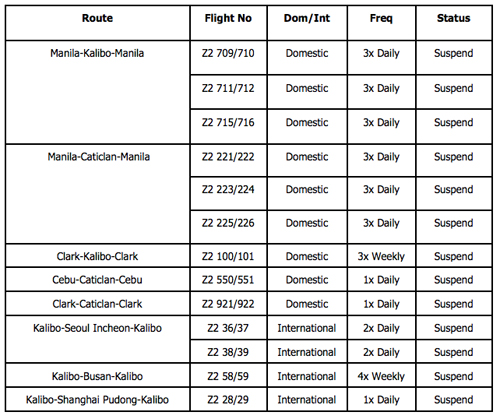
With the Philippine government ordering the closure of Boracay to tourists for six months starting April 26, airlines such as AirAsia and Cebu Pacific will temporarily suspend most of their scheduled Caticlan and Kalibo flights.

From April 26 to October 26, 2018, AirAsia will make the following changes:

Source: AirAsia

AirAsia will however continue to operate the daily Manila-Kalibo-Manila service under flight number Z2 713/714, and flights Z2 219/220 on the Manila-Caticlan-Manila route.

It will also mount additional flights to popular leisure destinations Palawan, Bohol, Cebu and Davao in the Philippines.

Meanwhile, Cebu Pacific will cancel the following flights to and from Caticlan and Kalibo from April 26 to October 27, 2018:

Source: Cebu Pacific

The airline will continue the below services:

Affected passengers of both airlines will be entitled to a full refund, and given the option to place the value of the ticket in a travel fund (e.g. AirAsia BIG Loyalty account) for future use; rebook the flight, or reroute to any domestic destination. Separate terms and conditions apply for the respective airline.