TTG Asia
Asia/Singapore Wednesday, 8th April 2026
Page 1455

Travel industry urgently needs to tackle overtourism, disaster resilience

0
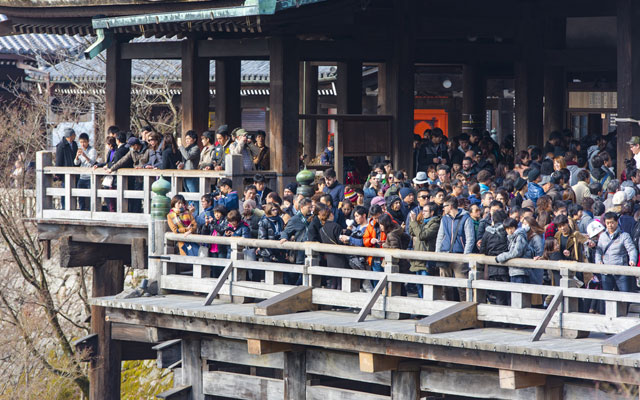
Crowd of people at a terrace of the Kiyomizu dera Temple in Kyoto on January 02. 2017 in Japan

Industry speakers at the Pacific Asia Travel Association (PATA) and United Nations World Tourism Organisation (UNWTO) joint debate last week outlined several key challenges the global travel industry is currently facing.

Held at the PATA Annual Summit in Gangneung, South Korea, the debate addressed two imminent challenges in tourism: insufficient resilience to natural disasters, and the need for tourist limits and redistribution in over-visited destinations.
Tourist pollution is becoming a problem in popular destinations around the world; a large crowd on Kiyomizu-dera Temple’s terrace in Kyoto pictured

“There is growing concern about high cost of living, traffic congestions and the overall deteriorating quality of life because of overcapacity. We need to desperately deal with how cities can accommodate tourists, otherwise, we are not delivering the optimal visitor experience,” said Maria Helena de Senna Fernandes, director, Macao Government Tourism Office.

UNWTO projects that international tourism arrivals will grow by an annual average of 4.8 per cent between 2018 and 2020. China registered 130 million outbound trips in 2017 and India 21 million in 2016. Last year, Japan received 28 million foreign arrivals, contributing to what the locals call “tourist pollution”.

These numbers call for more vigilant strategies by tourism stakeholders to control their inbound traffic and redistribute travellers to second- and third-tier cities, expressed Fernandes.

Macau has had discussions with China – its major source of tourism – to adopt “annual controlled growth to limit the increase” of tourists to the territory, she shared.

She advised that up-and-coming destinations that are not yet at capacity can take a leaf from larger destinations to adopt “adequate infrastructure” in anticipation of a tourism influx.

Faeez Fadhlillah, CEO and co-founder of Malaysia-based Tripfez, added that countries should remember to promote the cultural aspect of other cities and make tourism work for the local people, so as to prevent overtourism that disturbs local culture, creates wastage and nuisance, such as in the case of Langkawi.

Meanwhile, Edmund Bartlett, Jamaica’s minister of tourism, argued that a greater challenge is many countries’ lack of resilience in the face of natural disasters.

He proposed that governments needed more “public policies for mitigation” as well as “financial resources and public and private partnerships to build knowledge capacity”.

Abdulla Ghiyas, president of the Maldives Association of Travel Agents and Tour Operators, shared that this is especially critical in the Maldives, as a single tsunami had wiped out two-thirds of the country’s GDP – which is largely reliant on tourism – and it took more than 10 years to prepare shelters and for local communities to bounce back.

Bartlett chimed in: “We need to balance human and natural resources so that both can be sustained. This calls for innovation, new ideas and capacity building.”
Hotel investment sentiment on the upswing with Mahathir in PM seat

0

Investor confidence in the Malaysian hospitality sector has surged following the appointment of Prime Minister Mahathir Mohamad, who has made clear that he would foster a business-friendly administration, and welcome foreign direct investments from all over the world.

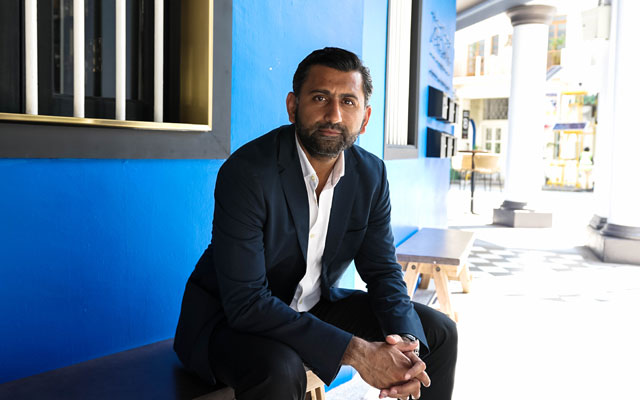
Business outlook has climbed with Mahathir’s assurance for a pro-business environment in Malaysia, as well as the setting up of a special taskforce to probe into the 1Malaysia Development Bhd (1MDB) scandal and retrieve assets from the misappropriation of funds under former leader Najib Razak, Zerin Properties CEO and founder, Previndran Singhe, told TTG Asia yesterday on the sidelines of the Hospitality Malaysia Conference in Kuala Lumpur.

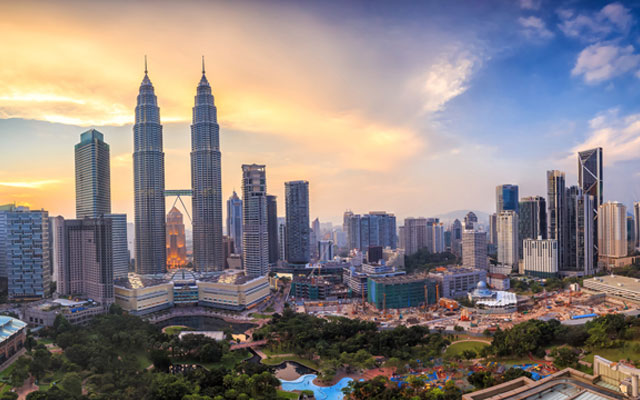
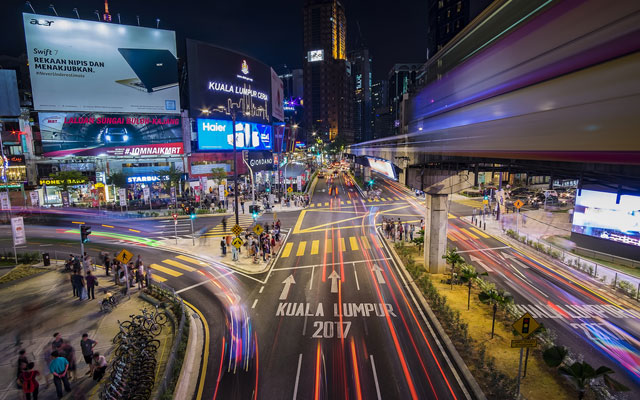
Kuala Lumpur (pictured) is one of two locations drawing strong investor interest from the hospitality sector

He commented: “We are getting enquiries from foreign investors in Asia-Pacific looking for greenfield and brownfield investment opportunities to build hotel properties of 150 keys upwards.”

According to Previndran, Kuala Lumpur and Kota Kinabalu are two key destinations drawing strong investor interest; the former because it is the capital, while the latter is favoured for its good infrastructure and air connectivity to North Asia, alongside its diversity of natural attractions.

Naresh Mohan, CEO of Grand ION Delemen Hotel in Genting Highlands, said during the ‘Unveiling the Investment Road Ahead for Malaysia’ forum session that foreign hotel investors are also attracted to Malaysia due to robust growth projections in the tourism industry, driven by a new crop of attractions such as the 20th Century Fox World Theme Park in Genting Highlands.

“Once the theme park opens, demand for rooms in Genting will outstrip the supply,” he remarked. Currently, there are more than 10,000 rooms at Resorts World Genting.

But to keep foreign investor momentum high, the new government has to look into “improving air connectivity especially to tourist destinations”, Previndran urged.

“Langkawi, for instance, has the highest average room rates in Malaysia but there are not enough business class seats on domestic flights to Langkawi. Langkawi also attracts tourists from Russia during the year end, but there are no direct, scheduled flights from Russia to Langkawi and Malaysia,” he continued.

Malaysian Association of Hotel Owners executive director Shaharuddin Saaid, said the new government should focus on attracting more high-end hotel brands. He said: “We need to focus on increasing tourist receipts by attracting high-income tourists rather than tourist numbers.”

An experienced hand at turning shophouses into hotels

0

Founder and managing director of investment property company 8M Real Estate, Ashish Manchharam, has an affinity with shophouses, having grown up in one and now is in the business of buying them and injecting new life into these heritage properties.

The Jones Lang LaSalle alum’s interest in such niche investment is no surprise, as his family was behind the gentrification of Singapore’s Haji Lane, converting a row of nine shophouses into retail boutiques in the early 2000s. The wave of independent retail businesses opening in the district has since continued over the past 15 years.

Ashish: an affinity with heritage shophouses

Manchharam’s first shophouse acquisition was made five years ago when he noticed that interesting neighbourhoods and ground floor frontage were growing in popularity as venues for F&B concepts. Shophouses in CBD locations, where population and infrastructure had been growing, were especially coveted.

In the last few years, Manchharam noticed a growing interest in people wanting to live in such locations. This eventually led developing part of the portfolio for accommodation purposes, which culminated in Base Residences, offering four apartments, and Ann Siang House, which opened in March 2018 with 20 rooms. A Keong Saik Road property is also slated to open later this year.

“In general, there was a gap in the market for all of the above. F&B operators want independently accessible space within cool neighbourhoods, without being in a traditional mall or bottom of an office building, constrained by opening hours, etc. For accommodation, the focus was on hotel use. We noticed there are people who want to experience living close to the CBD within these neighbourhoods but longer term.” Manchharam said.

“We converted part of our office space at Hongkong Street to test the market in 2016. Noticing the pick up in demand, we have started to focus on providing accommodation space within our properties. We are seeing more people wanting more flexibility when it comes to being able to stay short- or long-term,” Manchharam told TTG Asia.

The said shophouse at 31 Hongkong Street was acquired in July 2015. Named Base Residences, the building was converted into serviced residences, comprising a studio and three two-bedroom apartments.

Manchharam expects demand for longer-term stays in such locations will eventually pick up over time, as demand to be in these locations increases as more infrastructure (i.e. MRT) increases.

Exterior facade of Ann Siang House

When asked about space constraints within the shophouses, as well as the lack of facilities such as gyms, he remarked: “Generally, we feel that today’s travellers do not always require all the traditional services in a hotel or serviced apartment. We are focusing on what is important such as a good bed/shower, reliable Wi-Fi, cooking/laundry facilities, and handy phones to remain connected locally.”

To increase Base Residences’ range of offerings for instance, Manchharam partners with nearby gyms and yoga studios. He indicated that this is one way to provide “high-quality, best in class operators”, and allowing them to focus on providing the service they know best.

Manchharam’s F&B establishments move to the same beat, evident in his latest venture – Ann Siang House – where there are three F&B brands currently occupying the spaces around the hotel lobby.

The space on the right is currently occupied by coffee bar Cult (daytime)/and contemporary eatery The Guild (night-time), while the space on the left is home to Italian restaurant Perbacco.

“The F&B (spaces act as) a meeting point for people throughout the day, which we think is important in driving people to stay with us. In addition, our properties 
are located in well-sought after locations for F&B operators. F&B will be an important part in all our properties,” he shared.

8M Real Estate’s S$500 million (US$375 million) portfolio currently spans more than 30 locations – most of which are in Singapore’s CBD – such as Ann Siang Road, Keong Saik Road, Boat Quay, Circular Road and New Bridge Road. This is in addition to previous acquisitions in like Gemmill Lane, Amoy Street, Tanjong Pagar Road, Neil Road, Craig Road and Hongkong Street.

Former Lanson Place CEO Marc Hediger joins Dusit

0

Dusit International has appointed Marc Hediger as senior vice president – development to oversee the development team’s global operations except China.

Prior to joining Dusit, Hediger was CEO of Lanson Place Hospitality Management in Hong Kong.

The Swiss national brings more than 30 years of years of development and operational experience to the table, having worked as general manager for Hyatt Hotels, spent eight years as senior vice president and director of development Shangri-La Hotels & Resorts in Hong Kong, as well as two years as senior vice president – property development – for New World Hospitality, also in Hong Kong.

Being ‘new’, real and trustworthy key to winning APAC’s millennial travellers

0
What does it take to win a millennial's heart, mind, and wallet?

Amadeus has released its latest report – Journey of Me Insights: What Asia Pacific Millennial Travelers Want – which unveiled the behaviours and preferences of millennial travellers (18-35 years of age) across 14 markets in Asia-Pacific.

Millennials currently represent more than 45% of Asia-Pacific’s population, with 60% of the world’s millennials expected to live in Asia by 2020.

Conducted in collaboration with YouGov, the research surveyed 6,870 respondents, 45% of whom were millennials at the time the data was collected.

What does it take to win a millennial’s heart, mind, and wallet?

Embracing the new
More so than the generations that have come before them, millennials are embracing new technology, experiences and ways of travelling. Forty-two per cent of millennials say they often use ride-sharing apps when they travel, and 35% frequently use sharing economy services for trip accommodation.

Millennials in India in particular have embraced the sharing economy more than their regional counterparts, with 75% using ride-sharing apps and 55% using home-sharing apps often or very often. On the other hand, millennial travellers in Japan are the least likely to use these services, with over 90% saying they never or seldom use these apps.

Targeting millennials’ desire for new experiences is a golden opportunity for travel providers. In fact, the research found that after recommendations that help them save money (37%), millennials are most interested in recommendations that expose them to new experiences (27%).

They are also open to travel providers sending them these recommendations or updates through alternative platforms. Twenty-three per cent of millennials say they prefer to be contacted via social media, which sits in second place behind e-mail (35%). However in countries like Thailand and Indonesia, social media comes up as the top choice for millennials, chosen by 50% and 34% of them respectively.

Karun Budhraja, vice president, corporate marketing & communications, Asia Pacific, Amadeus, said: “The millennial generation is indeed an extremely interesting generation. They grew up with the Internet and technology is second skin to them. They have an openness to new experiences and a willingness to rattle the status quo. They want different experiences in travel, so the industry must serve them differently.

“Travel providers will need to adopt new technology, new strategies, and above all, new mindsets if they want to secure millennial mind and market share. By understanding what drives Asia-Pacific millennials and what they value when they travel, businesses will be better placed to meet their needs.”

People over brands
When asked who has the most influence over their travel planning, and where they receive the most relevant travel recommendations from, millennials choose family and friends, as well as traveller reviews.

Somewhat surprisingly, millennials ranked celebrities and social media influencers right at the bottom, even lower than brochures.

“While millennials may still look to influencers to curate trends, ideas and inspiration, I believe they are also becoming more sophisticated in how they evaluate them. With so many influencers becoming brands unto themselves, some of the authenticity that made them so appealing in the first place starts to get lost. ‘Real’ is more important than ‘perfect’, and that is an important lesson for the industry to understand,” added Budhraja.

Cautious or adventurous?
Millennials have long garnered a reputation for being bold and adventurous. The research finds this true in some areas, but less so in others.

Compared to older generations, millennials are less likely to avoid visiting a destination that has had a recent terror attack, political or social uprising, or the likelihood of a natural disaster like an earthquake. While 59% of baby boomers would avoid a destination where natural disasters are likely, only 51% of millennials say the same.

However, the research also finds that millennials are less open than older travellers to sharing their personal information with travel providers, in return for more relevant offers or personalised services. Meanwhile, 68% of baby boomers and 66% of Generation X travellers say they are open to sharing their information, while only 62% of all Asia-Pacific millennials say likewise.

The research further finds that Taiwanese (76%) and Indonesian (75%) millennials are the most open (76%), while Japanese (33%) and New Zealand millennials (45%) were the least open. This caution may be due to millennials being tech-savvy digital natives, and therefore more likely to be aware of security and privacy issues.

“While this research has highlighted a number of unique behaviours and preferences of APAC millennial travellers, it is also worth pointing out that there are just as many similarities between millennials and travellers from other generations. Personalisation is increasingly important, being real is key, and travellers want to be connected with the right content, through the right channel, and at the right time. What is certain is that the travel industry can only thrive if we put the traveller at the center of everything we do,” said Budhraja.

After 11 years, Blackstone checks out of Hilton with huge profits

0

American investment firm Blackstone will be selling its 5.8 per cent stake in Hilton, after 11 years of holding shares in the hotel chain.

The sale of 15.8 million shares would generate more than US$1.3 billion, closing out one of the most profitable private equity transactions.

Blackstone will have US$14 billion of profit, meaning the firm has more than tripled its initial investment

In a statement last week, Hilton said it did not offer any shares of common stock in the transaction and will not receive any proceeds from the sale of shares by the selling stockholders.

Hilton will repurchase about 1.3 million shares from shareholders from the shareholders affiliated to Blackstone.

Blackstone in 2016 sold a 25 per cent stake in Hilton to China’s HNA Group for US$6.5 billion.

Earlier this year, the heavily indebted Chinese conglomerated announced its intention to sell some or all of its US$6.3 billion stake in Hilton.

Andaz Singapore gets chatty with digital concierge system

0

Andaz Singapore has partnered with Vouch to develop and launch the ConcierGO programme, a digital concierge system that functions as a chatbot with artificial intelligence through the hotel’s Facebook messenger account.

Besides helping the team answer everyday queries about the hotel, the chatbot serves as a guide, providing curated tours, recommendations for various food haunts and interesting activities in the neighbourhood. This is expected to help Andaz Singapore improve manpower productivity and enhance the service experience for guests.

Chatbots can be one of the ways to build a lasting and engaging relationship with customers

Currently in the first phase, phase two of the project will see the chatbot managing guests’ basic room requests through an integration with the hotel’s direct logistics system.

This endeavour was supported by the Singapore Tourism Board (STB), which launched the Tourism Innovation Challenge for Hotels last year to crowd-source novel solutions that address the challenges and opportunities faced by hotel and travel agency industries. ​

What you missed at Digital Travel APAC 2018

0

Brought to you by WBR Singapore

Over 350 of Asia’s most senior digital travel professionals representing top hotels, airlines, OTAs and metasearch engines descended on the resort island Resorts World Sentosa in Singapore, for the third edition of Digital Travel Summit APAC. Held from 17 -19 April, this year’s Digital Travel APAC played host to over 70% new speakers with some industry big-names like Peter Yoshihara, General Manager, Japan, Ctrip and Joey Faust, Head of Customer Shared Services &  Digital of Air New Zealand.


A technology benchmarking pre day gave attendees an unbeatable, time-saving opportunity to meet and compare leading technologies in the space with new level of detail and interactivity in just one afternoon of networking.

With in-depth tracks for Directors and VPs of eCommerce and Digital Marketing, creative boardrooms, debates and case-studies, Digital Travel APAC ensures there is something for everyone.

Now in its third year, Digital Travel APAC has made a name for itself as APAC’S Most Senior-Level E-Commerce and Digital Event for Travel.


“A wonderful event for digital marketers in travel. Digital Travel APAC provides rich insights that are relevant to effectively target the modern travelers now in Asia”

– Anita Ngai, Chief Revenue Officer at Klook


“Gave me plenty of fresh new ideas on how we can improve our ecommerce and digital marketing”

– Victor Tseng, VP of Global Corporate Affairs, Ctrip


“Truly addresses the ecommerce and digital marketing challenges facing us; an excellent way to learn how my peers are tackling the same issues”

– Anni Ahnger, Head of Digital Revenue, Finnair

This year also saw technology provider MadHouse partaking in the conference. MadHouse is the world’s largest independent mobile ad platform company. It was announced during the event that a new mobile ad platform aimed to help local travel industry marketers to target the upcoming and growing Chinese travelers everyday, has been officially launched and named TravelMad.

As the day came to a close, attendees were treated to an in-house carnival featuring a clown sculpting balloons, a claw machine and tons of fun carnival games and cocktails.

Digital Travel APAC is part of a series of two ecommerce conferences organised by WBR addressing markets in the Asia-Pacific. The next edition of eTail Asia will be hosted in Singapore, 5 – 7 March 2019 whereas Digital Travel APAC is on 9 -11 April 2019.

About Digital Travel APAC

Digital Travel APAC is APAC’S Most Senior-Level E-Commerce & Digital Event for Travel designed to offer senior travel professionals the unique opportunity to address their most pressing digital challenges and network with key market participants.

It is Asia’s premier Digital Travel event bringing together 450 digital travel professionals.

Visit Digital Travel APAC website

Hopes high as Malaysian trade awaits details on zero-rated GST

0
While the GST removal is good news, stakeholders in Malaysia are seeking details on the new SST in order to price their tours

With the Harapan Coalition now in power, Malaysia’s travel trade is looking forward to the promised reduction of the Goods and Services Tax (GST) to a zero rate beginning June 1, down from the current six per cent, effectively scrapping the consumer tax implemented on April 1, 2015.

The GST will be replaced by the Sales and Services Tax (SST), which will only kick in after the government makes a decision on it, likely after the zero-rated GST is effected in June.

While the GST removal is good news, stakeholders in Malaysia are seeking details on the new SST in order to price their tours

While welcoming the zero-rated GST, the Malaysian Association of Tour and Travel Agents (MATTA) and Malaysian Association of Hotel Owners (MAHO) are currently seeking clarification from the Royal Malaysian Customs Department on details of the GST removal and implementation of the new SST system.

MATTA president, KL Tan, said: “It is not entirely clear whether GST needs to be charged for tours sold before June 1, 2018 but with a travel date on or after June 1, 2018.

Still, he expects the removal of the GST to ultimately grant a “discount” on the price of local tour and travel, which is likely to in turn boost the domestic travel industry.

Tan added: “The ‘zero per cent GST’ is bound to promote spending by both locals and tourist especially on Malaysian shopping and F&B, including tourist attractions, thus potentially increasing the price appeal of Malaysia as a travel destination and encourage more tourist spending.”

Likewise, MAHO’s executive director Shaharuddin Saaid expects the lower price of hotel rooms and services to buoy domestic and inbound tourism, in addition to spurring non-room spending in hotels in the interim period between June 1 and the introduction of the SST.

MATTA’s Tan added that the policy shift will also bring consistency in GST treatment between Designated Areas – Labuan, Langkawi and Tioman, which are tax free destinations, with the rest of Malaysian travel locations.

Meanwhile, Diethelm Travel Malaysia managing director, Manfred Kurz, expressed concern over the lack of information about the SST.

He said: “Contracts for 2019 have to be finalised by end of May because many tour operators in Europe start printing their brochures in July and selling in September. We cannot give them details about the SST such as how many per cent it will be because at this point – no one knows. What will it include – transportation, entrance fees to attractions? We don’t know at this time.

“Our strategy is to be very open with our partners. We have informed them that the GST will be zero-rated from June 1 and that the SST will be reintroduced at some point in the near future. We will keep them updated when we get more information, and advise them not to publish lower rates in their new brochures.”

Customised, in-depth travel catches on with new-gen Chinese

0

A new generation of Chinese travellers is placing experiences at the forefront, driving a stronger demand for in-depth, customised travel in Europe with their greater world knowledge, confidence and savviness, industry insiders say.

“Unlike the older generation of Chinese, who don’t know much about Europe and are happy to leave trip planning to agencies and follow typical itineraries, the new generation has a better understanding of European history, attractions and diversity, and as a result know what they want to see, visit and experience in the continent,” Quentin Ma, chief operating officer of Hiseas International Travel Group, shared with TTG Asia last week at ITB China.

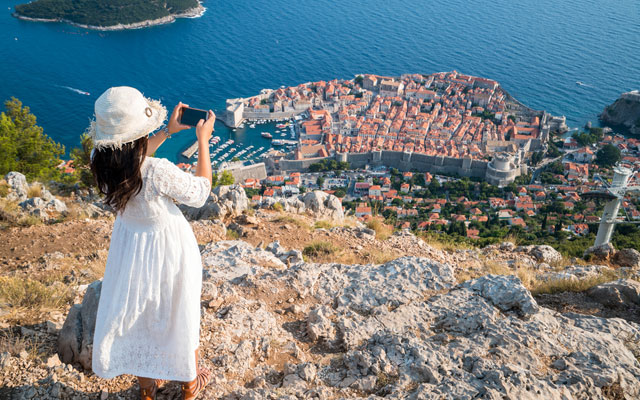
A Chinese tourist taking a picture of the Old Town of Dubrovnik, Croatia, a filming location for Game of Thrones

With a greater appreciation of Europe’s diversity and experiences, Chinese millennials are not afraid to plan their travel according to their preferences and interests, may it be for skiing, witnessing the Northern Lights or visiting the filming sites of Games of Thrones, added Ma.

It is also not uncommon for special interest groups or associations, say, chess or painting clubs, to come together and request a customised European trip according to specific themes, he elaborated.

This observation also gels with the findings in the latest Customised travels of Chinese visitors to Europe study co-published by leading Chinese OTA Ctrip and China Outbound Tourism Research Institute, which revealed that “in-depth travel” is the most popular demand for customised tours to Europe.

According to this study, such itineraries span an average length of stay of 12 days and no more than two countries per trip, a contrast to most package-tour travellers who visit three or more countries in 10 to 12 days.

The Chinese customised travel market in 2017 is “universal, young and growing fast”, the report further stated. European travel accounts for 10 per cent of Ctrip’s overall outbound customised travel business, posting a 130 per cent year-on-year increase between 2016 and 2017.

The growing quest for in-depth experiences among Chinese travellers has benefited smaller and lesser-known European nations.

“The Baltic States offers a level of ‘exclusivity’,” said Gabriel Orentas, marketing director of Lithuania-based DMC Baltic Vitalis. “It’s where (premium Chinese travellers) come to have some time and space for themselves, seeking unique experiences like foraging the forest for wild fruits and mushrooms.”