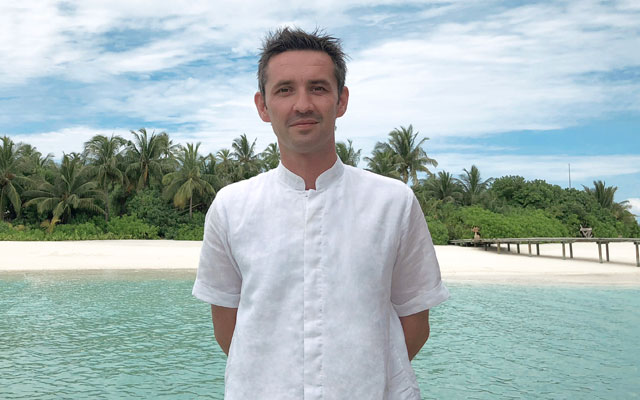
Six Senses Laamu has appointed Graeme Freeman as resident manager, where he will be in charge of the resort’s overall operations.
He joins Six Senses following his previous position as general manager at Aleenta Hua Hin Resort & Spa in Pranburi, Thailand.
The Scot brings more more than 14 years of executive experience to the table. He first began his hospitality career as marketing manager with Bali-based Karma Group. A move into operations followed and after tenures as operations manager and resort manager, Graeme was appointed general manager at Karma Jimbaran, Jimbaran Bay, Bali in 2013.
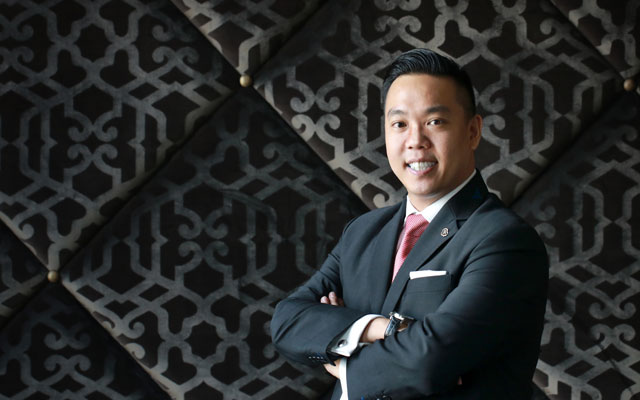
Sam Chia has joined The St Regis Bangkok as director of sales & marketing.
Chia was most recently leading the sales, events and marketing communications efforts at The St Regis Singapore.
He has a wealth of experience in luxury hospitality including being part of the pre-opening team at Capella Singapore, a stint with the regional sales team of Banyan Tree Hotels & Resorts, and a prior role as assistant vice president – business development at Capella Hotel Group Asia.
A panel at the recent South-east Asia Hotel Investors’ Summit said it loud and clear what I’ve been feeling: that we won’t be hearing the last of the dirty word, cesspool.
I’ve suspected all along that there are other Boracays and cesspools in the making in ASEAN. A panelist mentioned Phu Quoc, which he warned had no solid waste management. And if taken in the bigger context of the mismanagement of a tourism asset – not just seawater pollution, usually sewage – a whole string of resorts in the region do qualify as cesspools, sadly.
What gets to me is, Boracay isn’t the first ASEAN cesspool. That dubious honour goes to Pattaya in Thailand when a few decades ago it was hit with not just cesspool but sexpool perceptions. We’ve seen how long it has taken for Pattaya to recover its image and, even today, despite efforts to rebrand it as a family destination, I still have friends with young children who want to visit Pattaya expressing their hesitancy. And just look at TripAdvisor reviews (as I’ve done today, writing this on May 19) where concerns about water quality still dominate the forum.
What gets to me is, after all those years of discussing lessons from Pattaya, why, why, why hasn’t the region learnt anything?
They do so at a greater peril than during Pattaya’s time, because travellers are now more sophisticated while there’s always the Internet and social media to spread the word quickly.
Boracay is a prime example. While its forced closure may be good news to the private sector, which can flag it to governments as an example that actions can and must be taken, it has also spotlighted the dirtiness of Asian beaches to foreign tourists, especially Europeans, a major ASEAN market.
Actually, in Europe, the European Environment Agency runs a regular State of Bathing Water report, usually released in time for the year’s bathing season. It assesses the quality of bathing water in all 28 EU member states, and Albania and Switzerland, which are non-EU. Will it come to the day when health concerns related to bathing in cesspools will force tour operators to conduct their own assessments?
UK-based Chic Locations’ director, David Kevan, told me: “I do fear that if some Europeans go down with a sea-related illness, and operators are forced to conduct a serious assessment on the water quality, many areas might fail and the negative publicity now being seen on Boracay would be mild in the consequences for the total region.”
Beyond water pollution, it’s the sickening truth that there’s a lot of short-term thinking, corruption and/or a lack of vision that sees many beautiful destinations in ASEAN going to waste. Why do we need stalls after stalls of shops selling fake bags, watches and T-shirts along Chaweng Beach in Samui? Why build 50-60-storey skyscrapers in Danang?
The private sector is no better. For example, when business is looking up, it expresses concerns about haphazard development and the need for more quality tourists. When it is down, a hotel will be the first to lower rates and take in anything that walks.
In an ideal world, a country should treat its tourism jewels with care, set the rules who can lease them, the parameters how they can be used, and make no bones that the loan carries with it duty of care. The private sector will have no choice but to follow.
Alas, after three or even four decades, not much has changed.
There are more tourists now than ever before, thanks to the explosive growth of the Chinese outbound market and the ever-growing middle class worldwide. International tourist arrivals grew by a remarkable seven per cent in 2017 to reach 1.3 billion, according to UNWTO, and is projected to reach 1.8 billion by 2030.
But with record visitor numbers many destinations and communities in Asia are starting to see the toll of tourism, and along with it resentment and backlash to the problems that unrestrained growth brings.
The forced six-month closure of Boracay after Philippine president Duterte labelled it a “cesspool” reflects the pressure South-east Asia’s once-idyllic islands are now under. Since last year, Thailand’s Phi Phi island will be temporarily closed for four months each summer to allow for rehabilitation, while the rising tide of plastic rubbish on Bali’s beaches has become a major concern for visitors and residents on the famed Indonesian island.
Japan, which received 28 million foreign tourists in 2017, is witnessing the impacts of surging tourism numbers on the quality of life for residents. “Kyoto and Mount Fuji are probably the best – or worst – examples suffering from overtourism,” remarked Masaru Takayama, president of Spirit of Japan Travel and founding chair of Asian Ecotourism Network (AEN).
“Kyoto, where I am born and raised, is suffering tremendously,” he lamented. “The chronic traffic jams, the locals especially the elderly can’t even ride the buses, graffiti, misbehaving tourists that taint our culture, throwing trash on the street, late-night parties at guesthouses despite the code of conduct stated by the community, and the list goes on.”
Visitors flock to Arashiyama Bamboo Grove, a top attraction in Kyoto
Clarion call for tourism planning
For too long, long-term planning and development was sorely lacking in many destinations as governments were caught up in the aggressive pursuit of tourism growth and numbers, pointed out Randy Durband, CEO of Global Sustainable Tourism Council (GSTC).
“A major trend in tourism has been that every government, every country in the world has been focused on demand and promotion. Tourism worldwide is mostly promotion, promotion, promotion, and in some cases nothing else,” Durband remarked.
In the past 18 months, media attention on the problems surrounding mass tourism in such iconic destinations as Venice, Barcelona and Iceland has intensified worldwide, driving a greater awareness of overtourism and prompting calls to action in the global travel community.
“Finally the world is waking up to the fact that we can’t put money only to promotion but into development and management; we have to measure visitor satisfaction and also community satisfaction,” Durband said.
“I think governments were asleep, they didn’t see it coming. Governments typically put money into just promotion, anything into development were just small. Suddenly there’s an awareness as it hits them in the face as they realise they need to put resources into planning. And because they are all so late into the game, we’re going to see more pain for a while until they learn to manage better and disperse the visitors,” he added.
Takayama is heartened that there is “positive movement on the discussion level” for tourism to be more sustainable but concrete actions – and awareness – have yet to take root among the government sectors and mainstream tourism industry.
“(There are still) very little actions on the ground. In my personal opinion, the travel agents are probably the worst of all. The mainstream travel agencies’ top priority is to make businesses out of tourism and the benefits to the host destinations are often overlooked.”
It is with the aim to galvanise industry players into action that Takayama, together with six other agencies, founded the Japan Alliance of Responsible Travel Agencies last month to establish a platform comprising regional and local travel agencies and operators to maximise benefits to the host destinations and tourism stakeholders, including educating and training the industry players.
Takayama stated: “The voices of the locals need to be incorporated so that the tourism destinations first become a good place to live, way before making it a good place to visit.”
He added: “Sustainable development makes sense for every kind of tourism regardless of the size and scale. We all must be involved as there’s only one planet, so I’d highly encourage everyone to be in the game – the tourism sector has a lot of roles to play and industry players have the capacity to deliver them.”
The case of Thailand: what’s after 35 million arrivals?
One of Asia’s most popular destinations, Thailand will likely be the envy of many destination marketing bodies, going by traditional tourism performance markers.
With the exception of the coup year in 2014, Thailand’s inbound arrivals have been on an upward trajectory in the last decade, with the Chinese market a major driving force to push its annual tourist numbers to over 35 million in 2017, equivalent to half of the country’s population.
Thailand’s famed Maya Bay will be temporarily closed for four months each year to allow for rehabilitation from overtourism
But Tanes Petsuwan, Tourism Authority of Thailand’s (TAT) deputy governor for marketing communication, acknowledged that a different gameplan is now needed – and it’s no longer about pursuing numbers.
When asked what Thailand’s 2018 tourism targets are, Tanes affirmed that tourism revenue will take precedence, unlike previous years. “TAT in the past has been counting numbers as KPI, but the present minister (Weerasak Kowsurat) set a different KPI, signifying a clear tourism direction for the country,” he said.
“Increasing visitors is not a challenge – we’re already very good at it,” Tanes remarked. “But the challenge now is how to balance 35 million for different markets, segments, etc, to ensure that they’re travelling at the right time, to the right places and delivering true benefits to communities,” he continued, emphasising that dispersal of tourists is critical.
Of the opinion that NTOs should give greater weight to social and environmental responsibility in their destination marketing, Tanes revealed that the TAT takes into account the carrying capacity as well as the market segment that each destination is suited for.
Jiraporn Prommaha, director of international affairs division, Ministry of Tourism and Sports Thailand, who together with Tanes were among the speakers at a panel discussion organised by AEN in Bangkok earlier this year, added: “We are trying to push for CBT to disperse tourists away from popular sites beyond Bangkok, Chiang Mai or the beaches to promote the ‘unseen Thailand’.”
But when asked how Thailand could cope with the influx of visitors from China, which alone contributed one-quarter of Thailand’s inbound arrivals last year and is still a growing market, Tanes is confident the changing preferences of Chinese travellers as they evolve into FITs will soon put such concerns to rest.
“Mass tourism will become history in future,” Tanes stated.
As Bali’s tourism moves past the aftermath of last year’s Mount Agung eruption and the bombings in Surabya last month, the travel trade has also been left to ponder the important questions of how to better manage crises and risks in a world constantly fraught with insecurity and change.
Mount Agung, Bali’s highest peak, remains a powerful tourist magnate despite its recent eruption
Lifting hopes for restored tourism confidence is the 2018 Annual Meetings of the International Monetary Fund and World Bank Group taking place in Bali come October. The high-profile meetings are said to be the largest event the island has hosted, with an estimated attendance of more than 15,000 delegates from 189 countries.
Lenny Willyana, director of sales and marketing, Discovery Kartika Plaza Hotel, said: “We would like to have more international events in Bali so that more travellers (would gain the) confidence to travel here and consider Bali as a (top choice for both leisure and business events).”
Travel confidence is especially important to Indonesia now, as the destination is just beginning to recover from the impact of Mount Agung’s eruption in October 2017, which led to airport closures in Bali and Lombok and travel advisories from a number of countries.
Massive cancellations to Bali ensued, and the island’s top origin market of China also took the largest hit.
“(Average) hotel occupancy in Bali was between 50-70 per cent before the eruption, but went down to 10 per cent after the eruption according to reports from some hotels,” Willyana revealed.
Based on the 1Q2018 data from the Bali Statistics Office, arrivals from China were down by 24 per cent year-on-year, Australia six per cent and Singapore four per cent. Total arrivals to Bali in that period was 1.3 million, down 2.7 per cent.
Sudarsana, corporate general manager business development and marketing communications, Santika Indonesia Hotels & Resorts, said: “By March things were back on track and we saw full recovery by May.”
But just as Bali’s tourism recovery picks up momentum after a slower 1Q, a string of terror attacks hit Surabaya last month, prompting worries that recovery efforts would be negated.
Fortunately, tour players such as I Ketut Ardana, chairman of ASITA Bali Chapter, said the immediate impact of the Surabaya attacks on bookings was insignificant.
The recent terrorism incident did not appear to weigh on concerns of outbound agents in South-east Asia, and Ardana is confident that Bali bookings for the coming
summer peak season would remain intact.
With the volcanic eruption and Surabaya incident now moving to the rear view mirror, these recent crises however offer valuable lessons for Bali’s tourism stakeholders.
Yazid Sidik, director of sales and marketing of Best Western Kamala Jimbaran, said: “China was our main international market, so the eruption affected us quite a bit. We are increasing our focus on other markets like India, while keeping the China market (strong).”
On the other hand, Eddy Sunyoto, director of Terimakasih Indonesia Tours & Travel, said: “We also learnt that the Chinese market bounces back very fast.”
Similarly, I Gde Pitana, deputy minister for tourism marketing development I, Ministry of Tourism, said: “The Chinese are obedient citizens who follow (government advice), hence the cancellations. However as soon as the advisory was reversed, the market returned quite fast too.”
Quick crisis response on the international level is also important. In the case of Bali, tourism minister Arief Yahya met with diplomatic missions in Indonesia and authorities in China.
“The result was the lifting of the travel warning and we immediately started to see traffic returning,” said Bambang Sugiono, director of Gajah Bali Tour.
On whether the government was relying too heavily on the China market, Nia Niscaya, deputy minister of tourism marketing development II, whose portfolio includes China, said: “China is the biggest outbound market in the world now. Aiming at a tiny percentage of this market means big in the actual number.”
But the Chinese are also valued travellers for other reasons, she explained, as this market makes relatively quick travel purchasing decisions and also likes exploring a destination instead of just staying in the hotel.
Still, the ministry is also continuing to focus on other growth markets such as India and the Middle East, alongside a diversification of its marketing promotion efforts on destinations beyond Bali in Indonesia, Niscaya said.
Lauding the government’s efforts in market diversification and infrastructural development across the country as part of its 10 New Bali’s initiative, Garth Simmons, AccorHotels’ COO for Indonesia, Malaysia and Singapore, thinks more could still be done.
“The Chinese is not the only market to Bali. You have the Australians, Europeans, Japanese, Singaporeans, and let’s not forget the Indonesian domestic market,” he opined.
Addressing the possibility of Mount Agung as an active volcano erupting again, the tourism minister said contingency plans are ready to be activated, including having airports in neighbouring destinations like Lombok, Surabaya and Banyuwangi ready for aircraft diversion and evacuation; plus land-and-sea evacuation mechanism via Gilimanuk ferry terminal connecting Ketapang in East Java and fast-boat service to Banyuwangi.
The Bali Tourism Hospitality Task Force was also set up as a permanent unit to tackle issues potentially affecting the stability of Bali’s tourism.
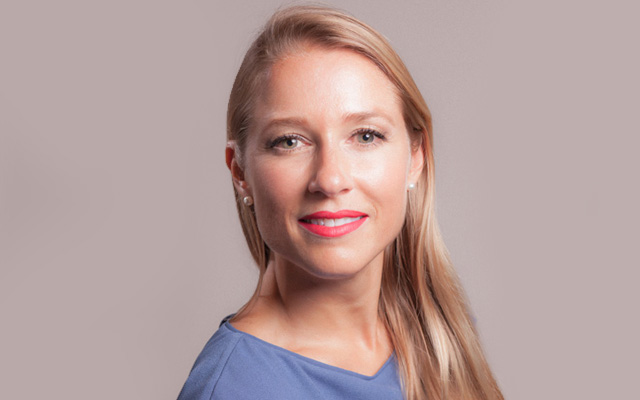
Are views of the chain as being, in a quick word, confusing, fair?
Our corporate rebranding (to Radisson Hotel Group) addresses exactly those things that were probably thought of as confusing. The rebranding wasn’t just a name change but a whole restructuring to gain huge efficiencies from the power of the Radisson name, and it came with a five-year plan, Destination 2022, which is a clear and detailed road map on how we want to grow.
So for example, we now have eight brands that are well-defined and do not compete with any of our other brands. That came from us repositioning, for instance, the Radisson Red brand a few notches higher and making it a more lifestyle brand than before, and launching a new (soft) brand, Radisson Collection (previously the perplexing ‘Quorvus’).
Coming from a development background (Giannouka was Rosewood Hotel Group’s head of development Asia-Pacific and China), I see it as a huge opportunity to start with the company under a new ownership (HNA) and almost a new blank sheet of paper. Much of the five-year plan is about growth and we are building the development team that is going to deliver the growth. We’re planning to triple our portfolio in China and double the portfolio in Asia-Pacific, so going from today’s 18,000 rooms and adding 20,000 rooms across the region. That requires the right team in place.
How are you rebuilding the development team?
I’ve been working on that since I joined. We have just named Ramzy Fenianos as new chief development officer Asia-Pacific, who I’m absolutely certain will help us execute the plan if not more.
We’re also rebuilding our development team in China. To triple the portfolio there requires a very localised knowledge. There are lots of opportunities for us: Four of our eight brands sit squarely in the mid-scale and upper mid-scale, which is where the shift in Chinese travellers is to. It used to be luxury. People talk about the 127 million China outbound but in China there are the 5.1 billion domestic travellers. And Radisson has been in China for 20 years as a brand.
We also look forward to partnering more closely with our new owner whose network in China is strong. We’ve just signed the first deal with HNA where one of its subsidiaries is part of the owning entity of a hotel near the Phoenix airport, a new-build, 334-key hotel in soft-opening which we have rebranded Radisson (Hotel Phoenix Airport). We managed to win that contract in a competitive process.That’s an example of how we can leverage our new owner’s influence and network within China and the vast real estate they own and are developing. It sends a strong signal to the market about their commitment to us and us to them.
But that’s the other thing too. HNA as we know is embattled with a lot of debts, and we’ve seen how it is already offloading some of those debts. How does this affect you?
Right now for our company, everything that we’re planning to achieve is encapsulated in our five-year plan. That plan is completely independent of any contribution or anything from the parent company. It is self-financed from Radisson Hotel Group and is based on organic growth.
So to answer how this influences us, actually we’re self-financed. Financially we operate independently from the parent and the five-year plan was approved by both the boards of Radisson Hospitality and Radisson Hotel Group AB.
Having a single ownership however is what gave rise to a new leadership, which gave rise to our current transformation, which looked at what we needed to do better – sharpen our brand architecture, rebrand the loyalty programme, make a significant investment on an entirely new, customised, IT platform that is going to be cutting edge in the industry, to name a few. All of these wouldn’t have happened had it not been for the new ownership. And then I joined at the right moment (laughs) when the company is going through the transformation it never had before. I’m really excited.
What is your sense of what owners in the region feel about industry consolidation and how is this an opportunity for Radisson?
We talk to our owners all the time. We constantly look out for what is it they need, where do they see the value and, ultimately, it’s back to strong brands.
One of the reasons we decided to focus on our strongest brand Radisson – to build on the strength of that brand and within that sharpen our brand architecture – is because we’re living in an environment where brands matter – what those brands deliver in terms of the recognition they have with owners, guests or talents. Our vision is to be among the top three top-of-mind operators in the world when a guest wants to stay in a hotel, when an investor thinks of a hotel company and when an employee wants to join the industry.
So to the question what owners are looking for, I think it’s more about value. We’ve got to make sure our brands are sharpened to drive value into our hotels.
What is interesting is it’s harder and harder for a single brand to survive in the ever-consolidating industry of ours. We have eight brands that really cover the spectrum, everything from prizeotel, which is in the lifestyle economy segment, all the way up to Radisson Collection, which is the luxury segment. So that’s what we’re focusing on, making sure our brands have scale, are well-defined, so the guests, owners and talents see their true value.
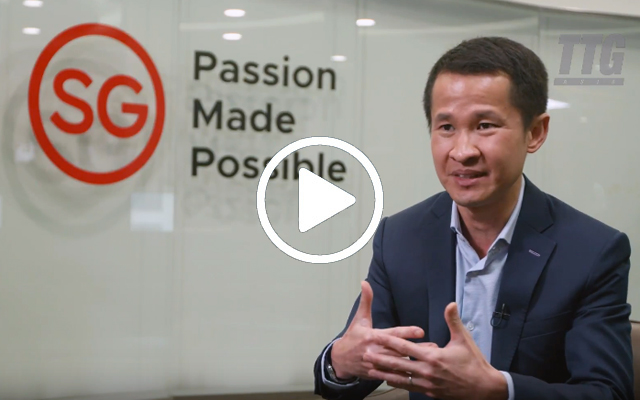
Yeo: “We can't expect the Travel Agency Act to be the silver bullet.” Watch the video here
Singapore travel agencies are rising to the challenge of transforming their business models to suit current demands, according to Lionel Yeo, who left the Singapore Tourism Board (STB) as CEO yesterday (May 31).
In an exit interview, Yeo used the example of STB’s Tourism Innovation Challenge last year which brought together travel agencies with startups and solution providers to create a better understanding of the issues agents face and the solutions that are available or can be created for them.
“Both sides were very engaged, to the extent they want to do more. NATAS (National Association of Travel Agents Singapore) in fact said they want to organise their own innovation challenge. To me that’s a high point because the industry is taking ownership,” he said.
Yeo: “We can’t expect the Travel Agency Act to be the silver bullet.” Watch the video here
The number of agencies in Singapore has remained the same at around 1,200 in the past few years, because the rate of new agencies opening and exiting has been fairly constant at around 100-plus each way. Asked if there are more innovative agents and what they have in common, Yeo said: “There will always be a vanguard of more progressive businesses and business owners.
“What they have in common is a very clear sense that they need to keep abreast of how the operating environment is changing for them. So if a new technology comes on stream, they ask how is it an opportunity to grow their business. Some have been able to deploy technology to increase staff productivity. They get their sales agents to be more productive, to be more sales-focused on customer engagement, potentially upselling and not just taking orders.
“They are also the ones who are attuned to consumer trends and are quick to respond to travel trends. Chan (Brothers Travel Singapore) for example traditionally organises the bigger coach tours but has introduced Prestige. They sensed a segment of travellers who still want a trip organised for them but in a more intimate type of group setting. So you see such examples of agents responding to the market and technology,” he said.
Yeo said agents would always be around. “As long as you are able to transform and meet market segment needs, you’ll always be relevant. There will be many types of travel for which an individual may feel he can self service. That’s fine, and that’s part of what is driving the growth in travel. But there are other kinds of trips where you appreciate a more specialised advice, someone who knows what they are talking about, who’s familiar with destination you are thinking of going.”
Changes in the Travel Agency Act have meanwhile have opened up opportunities for more innovative tour developments, since tour guides no longer needed to be licensed as agents to introduce their tours, Yeo observed. Another outcome thus far is in boosting consumer confidence in the industry, as requirements to be licensed agents have been beefed up.
Added Yeo: “We can’t expect the Act to be the silver bullet; we have to look at it in totality with the agents roadmap that STB is working with NATAS to ensure the agents industry continues to transform and stay relevant.”
Agency owners interviewed expressed hope that Yeo’s successor will continue the efforts.
Anthony Chan, group managing director of Chan Brothers Travel, said: “Great efforts have been invested by STB over the past years to engage with and support the agency sector, particularly the outbound industry segment. We strongly believe that to fully realise the vision of a technology-enabled travel landscape based on developments thus far, the momentum and monetary support must be sustained.”
Agreeing, Clifford Neo, president/CEO of Dynasty Travel, said: “The leader must continue to inspire and motivate the agency sector to innovate in this disruptive landscape. As well, continue to work with NATAS on of the initiatives implemented under the Travel Agent Roadmap to transform our businesses, adopt technology and relook at manpower practices.”
In tomorrow’s Part III interview with Yeo: How Singapore picks its STB chief
An industry hopeful of the benefits that Malaysia’s latest tax changes will bring is reacting in different ways, as the zero-rated goods and services tax (GST) policy kicks into place starting today until August 31, after which it will be replaced by the sales and services tax (SST) from September 1.
Some inbound agents are proactively working to reflect the new zero-rated GST in their contract rates, and others still awaiting more concrete details about the upcoming SST.
Hotels are in the midst of preparing new contract rates due to the zero-rated GST
Ally Bhoonee, executive director of World Avenues, said: “A majority of hotels have not given us new contract rates. Not all hotels are revising rates as some hotels had been absorbing the six per cent GST and giving us nett contract rates since the introduction of the GST in 2015.
“Another headache is that hotels that impose the six per cent GST have their own formula for calculating it. It is not a standard formula.”
Updating rates has been a “labour intensive” process at World Avenues, Ally said. The agency has hired two workers to contact hotels individually for the new contract rates and update its online booking system manually, in addition to processing GST refunds to partners overseas for hotel and tour bookings made from June 1 to August 31.
“We have also inserted a clause on our quotations for bookings made from September 1 onwards that rates are subject to change as the SST rate has yet to be determined by the government,” said Ally.
Another inbound agent, Nanda Kumar, managing director at Hidden Asia Travel & Tours, said he is maintaining the current contract rate pricing for group and incentive quotations. “Once bookings are finalised, we will rectify the rate.”
When contacted, Malaysian Association of Hotel Owners executive director Shaharuddin Saaid, said the Royal Malaysian Customs Department has not engaged them or given any official letters about the zero-rated GST.
Malaysian prime minister Mahathir Mohamad said that the government is looking into whether or not to levy the SST to the old rate of 10 per cent, according to a news report by The Malay Mail, although the system is expected to be a “somewhat updated version”.
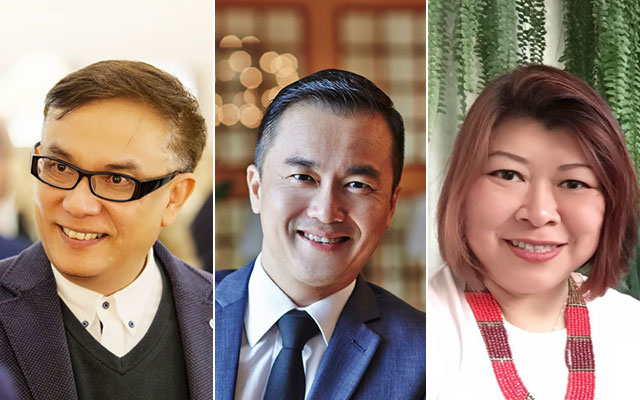
The Travel Corporation (TTC) has a new Asia chief, Nicholas Lim, effective today, following the retirement of Robin Yap, who has been named chairman emeritus Asia, a new non-executive ambassadorial role that recognises his 33 years with company.
Lim’s promotion to managing director Asia, reporting to TTC’s CEO Brett Tollman, came after 18 years with the company. Replacing him as president of Trafalgar Asia is Mae Cheah, previously Trafalgar’s regional sales director, who has been with the company for 24 years.
(From left) Robin Yap, Nicholas Lim and Mae Cheah
The appointments reflect a value of the family-owned company, now in its fourth generation, to reward loyal staff and promote from within.
Said Tollman: “The company has always been committed to promote and grow seasoned, proven executives. Their knowledge, proven experience and understanding of our business serves as a valuable foundation for our future growth. We are also pleased that Robin will continue to support Nick and his team in his new role as chairman emeritus and we thank him from the bottom of our hearts for the unwavering, remarkable loyalty and dedication which he had displayed during his long tenure with the company.”
Yap made Insight Vacations, Trafalgar and Contiki Holidays – three of TTC’s brands – household names in Asia long before the Asian outbound markets boomed. On filling his shoes, Lim told TTG Asia: “Robin’s 33 years’ (experience) is always going to be hard to beat, but I suppose 18 years with TTC has its advantages, for example, familiarity with the business and culture.”
Lim sees an opportunity for TTC to tap the rising Asian outbound luxury travel market. The company launched its Luxury Gold brand in the Philippines recently, its fastest-growing source market after Singapore.
Lim said: “Moving forth, while my immediate goal is to grow the existing business, there is also a need to further expand our footprint across Asia especially in the luxury travel space. The main challenge, and opportunity, is getting the brands/products out to the markets and agents across Asia.”
Apart from Trafalgar, TTC’s most important brand, Insight Vacations, Luxury Gold and Contiki, Lim is also responsible for the business development in Asia of TTC’s other key brands Uniworld Boutique River Cruises, Red Carnation, Inspiring Journeys and AAT Kings.
“With a strong management team in place in Asia, we are excited to have Nick now help us replicate the fantastic success he’s had for Trafalgar and CostSaver over the past several years, for our other brands now,” said Tollman.
Yap, in a light-hearted moment, said about his new role: “It’s a nice position where ‘I can watch things happen and not having to make things happen’. I have always believed in succession and 2018 seems to be a good year for leadership change, as we have already seen a few in the business. My motto is, when you are on the job, do a good job and when it is time to pass on the baton, pass it on gracefully but always be available when advice is needed and only when asked.
“TTC has an outstanding team in Singapore at all the brands and I am confident the future is going to be awesome led by Nick.”
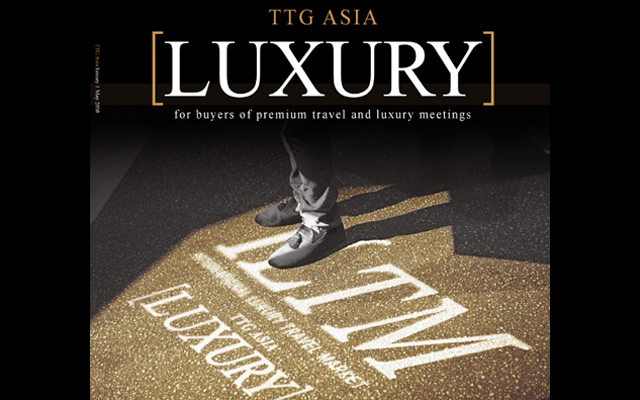
A co-branded TTG Asia Luxury and ILTM Asia Pacific issue was distributed at the show. Read the latest issue here
The first ILTM Asia Pacific, held in Singapore from May 21-24, hosted 538 luxury travel planners from 16 countries across Asia-Pacific and saw 33,000 pre-scheduled business meetings, according to organiser Reed Exhibitions.
Feedback gathered at the show by TTG Asia Luxury pointed to a high satisfaction rate overall, with buyers and sellers in sum saying it was a good show with the potential to grow further, and that it was better than its predecessor, ILTM Asia – previously held annually in Shanghai in June – in the sense that products and decision-makers were better matched to Asia-Pacific needs rather than being too China-centric.
A co-branded TTG Asia Luxury and ILTM Asia Pacific issue was distributed at the show. Read the latest issue here
Reed said ILTM Asia Pacific was created following research among suppliers who said they were separating their marketing and business plans for the continent into two: Asia-Pacific and China. Its bet on Singapore as a better hub than Shanghai to pull in more Asia-Pacific buyers paid off: Of the 538 high-end Asia-Pacific travel agents, plus seven from Russia and CIS and 11 from other international countries, 260 were new buyers from 11 countries, with markedly stronger attendance from buyer markets such as Australia – “the most requested”, according to ILTM portfolio director, Alison Gilmore. As well, Singapore and India, which grew by 83 per cent, 115 per cent and 118 per cent respectively.
Andrew Phua, Singapore Tourism Board’s director of exhibitions and conferences, said Singapore “has the ability to bridge East and West”.
ILTM Asia Pacific also issued statements from satisfied participants. First-time ILTM buyer Rakus Cuuabria of Yes Travels, Mumbai, said: “The organisation is fantastic and I’ve (found) some great luxury products and experiences in this really effective system.”
Koichi Imabayashi of Japan’s Grace Inc said: “I’ve met with many different experiences from across the world at ILTM Asia Pacific this week and I’m looking forward to sharing these new and exciting opportunities with my clients.”
Exhibitor Maxine Howe of Niccolo Hotels said: “The calibre of buyers at ILTM Asia Pacific has been exactly what we were looking for. Travelling to wherever we need to and then identifying and meeting these important buyers is impossible, and we are delighted ILTM has made the job so easy for us here in Singapore.”
Mercedes Garcia of Barcelona Tourisme said: “By splitting the regions, this show has given us a real reach into Asia-Pacific buyers. I have seen (agents and planners) from Singapore, Hong Kong and Malaysia, all of whom are sophisticated and know what their premium clients are looking for.”
ILTM Asia Pacific, which also absorbs ILTM Japan, will return to Singapore, May 27-30, 2019. A new ILTM China, meanwhile, will take place in Shanghai from October 31 to November 2, 2018. It is expected to draw around 220 buyers, predominantly Chinese buyers, with just a small percentage from Asia and international markets.



 A
A 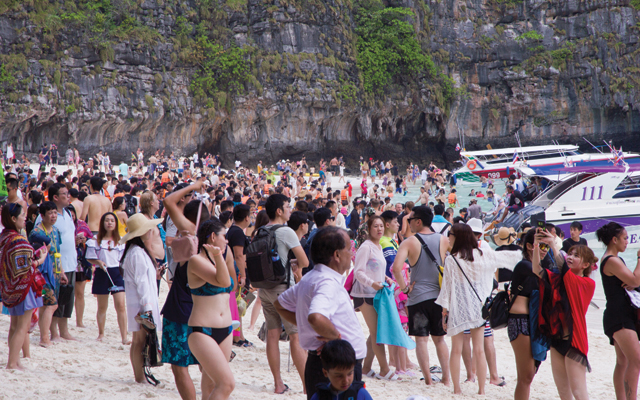



 Are views of the chain as being, in a quick word, confusing, fair?