TTG Asia
Asia/Singapore Thursday, 2nd April 2026
Page 1087

Banyan Tree plants flag in the Bahamas

0

Banyan Tree Hotels & Resorts has partnered Island Developers to launch the Banyan Tree brand’s first property in The Bahamas.

Located just 48 nautical miles and a 20-minute seaplane ride from Miami, Banyan Tree illa Bahamas is set on 16ha of Atlantic Oceanfront and Bimini Bayfront properties.

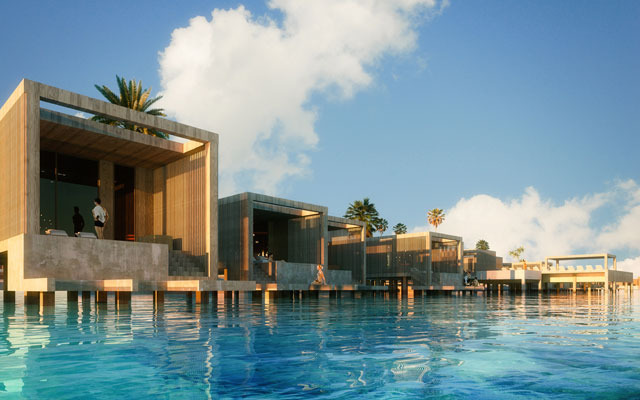
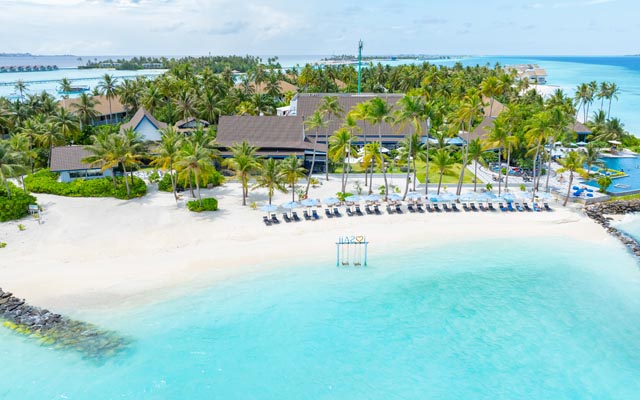
Banyan Tree illa Bahamas will be the hotel group’s first property in the Bahamas

The eco-conscious resort will consist of 50 keys and 54 luxury residences, exclusively offering the first, authentic Maldives-style overwater bungalows in the Caribbean. As well, hotel suites will include private terraces and plunge pools.

From unique culinary pop-ups to curated music series, and oceanside meditations at the Banyan Tree Spa, illa Bimini will bring a host of authentic experiences to the secluded tropical region.

Hot air balloon rides, exclusive tours among National Museum of Australia’s new offerings

0

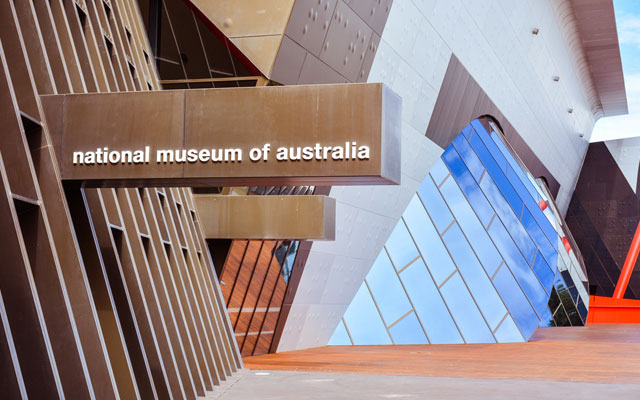
The National Museum of Australia (NMA) has unveiled three new visitor experiences, where guests can admire the NMA’s dramatic architecture from a private hot air balloon above Canberra, and explore the iconic collection up-close on a private tour of the galleries and storage houses.

The experiences will be on offer via Cultural Attractions of Australia (CAMD), one of the segments represented under Tourism Australia’s Signature Experiences programme.

National Museum of Australia rolls out three new experiences

Of the three new experiences, the In, Above And Behind The Scenes package (A$2135/US$1,435 per person; minimum two people per booking) includes a hosted hot air balloon tour of the NMA’s architecture and surrounds, an exclusive tour of the Museum with a curator before opening hours, a champagne breakfast on the deck at the lakeside cafe, a gift from the guest’s experience, and private transfers.

The second-tier package, Out To The Shed (A$349 per person/minimum two people per booking), includes an exclusive tour of the NMA’s “off display” collection in a behind-the-scenes tour of the Museum’s purpose-built storage facilities, lunch in the Museum’s cafe, and private transfers.

The Big Histories package (A$125/minimum two people per booking) includes an exclusive tour with an expert to explore the NMA’s most iconic objects, including Phar Lap’s heart, Holden prototype, the Enterprise paddle steamer and Australia’s dinosaurs; as well as an Australia grazing platter and local beer or wine on the cafe deck.

All three experiences are bookable through the CAMD and NMA websites for travel from April 1, 2020.

Radisson adds third hotel to Bangladesh portfolio

0

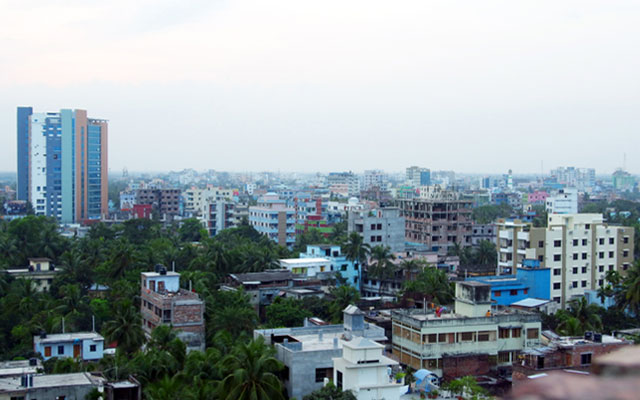
Radisson Hotel Group (RHG) continues its expansion in South Asia with the signing of its first hotel in Khulna, the third largest city in Bangladesh.

Scheduled to open in 3Q2023, Radisson Hotel Khulna is nestled in a prime location 2.5km from the centre of this port city.

Radisson to open its first hotel in Khulna come 3Q2023

Radisson Hotel Khulna will feature 150 rooms and suites, an all-day dining restaurant, a bar and coffee lounge, a swimming pool, fitness centre, and a spa. Meeting and event facilities will include a large and divisible ballroom, a pre-function area, meeting rooms and a boardroom.

Currently, RHG operates two hotels in Bangladesh, namely, Radisson Blu Dhaka Water Garden, and Radisson Blu Chattogram Bay View.

Philippines lifts travel ban on Taiwan tourists; flights resume

0

The temporary ban on Taiwan has been lifted by the Inter-agency Task Force for the Management of Emerging Infectious Diseases after it established that Taiwan has been implementing “very strict and excellent protocols” in handing outbound travellers.

The ban on arriving Taiwanese citizens, along with citizens from China, was put in place on February 11, as the Philippines sought to limit the spread of the Covid-19 outbreak within her borders.

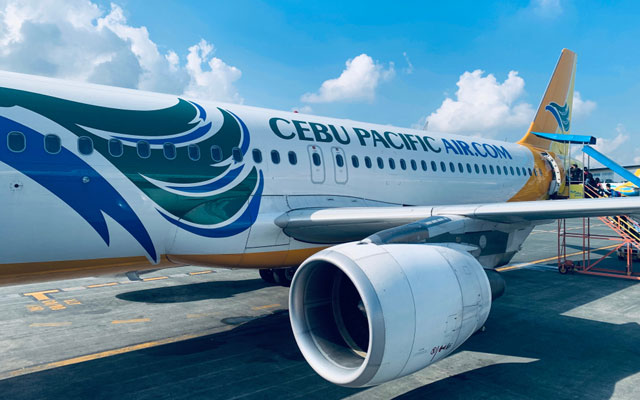
Cebu Pacific moves swiftly to resume affected flights to Taipei

The Philippines Department of Tourism (DOT) welcomes the lifting of the travel ban.

Tourism secretary Bernadette-Romulo-Puyat commented: “(This) is highly assuring and we hope that the nCov crisis would soon be resolved, worldwide. Ultimately, the recovery of all affected countries is a universal prayer, especially that tourism is an inclusive and sustainable business for and of the people.”

Along with the termination of the travel restriction, Philippine Airlines and Cebu Pacific Air will resume flights between Manila and Taiwan.

The Task Force underscores the need to review on a regular basis the precautionary measures taken by the Philippines’ tourist source markets, and to implement stricter protocols to contain Covid-19.

Taiwan is the country’s fifth largest tourist source market, raking up an impressive double-digit growth of 37 per cent for its 305,570 arrivals in January to November 2019.

All preventive and precautionary measures have been put in place by the national government to contain the spread of the COVID-19. The guidelines in handling guests in tourism enterprises during this global emergency are being implemented in hotels and resorts around the country and facilities are equipped with infrared thermometers and more hand sanitizers.

Meanwhile, the ban on tourists coming from China and her Special Administrative Regions (SARs), Hong Kong and Macau, as well as the 14-day quarantine for Filipinos coming from the said places is still in effect.

Embracing quiet charms

0

A sleepy mountainous island south of Hiroshima, Shikoku, is looking to the upcoming Tokyo Olympic and Paralympic Games in May to bring in a stream of visitors, with its tourism board and stakeholders working to raise awareness of the island’s many charms.

Shikoku comprises four prefectures – Ehime, Kochi, Kagawa and Tokushima – and has been increasingly welcoming more direct flights from the rest of Asia. Ehime’s Matsuyama Airport is connected to Seoul and Shanghai, while Kagawa’s Takamatsu Airport is linked to Taipei, Seoul and Shanghai.

Nakatsu Gorge (pictured) can be found along the Niyodo River

And travel to Shikoku is set to become even more accessible, with China Airlines’ flights between Taiwan Taoyuan International Airport and Takamatsu Airport coming online, and a new highway connecting Kochi Regional Airport and Kochi City currently under construction.

Now, Singapore is next on the agenda, shared Yuka Minami, manager, Tourism Shikoku. She said: “We are currently focusing on the Singapore market. In August 2019, we joined JNTO to exhibit at the NATAS Travel Fair, and we have found that Singaporeans like food experiences such as soba noodle-making and yuzu fruit-picking.

“Over the next two years, we plan to return to Singapore’s travel fairs again in August or September.”

Minami added that Tourism Shikoku also plans to step up participation in global tradeshows such as Visit Japan Travel Mart, as well as trade outreach events in England and France. Other than Asian visitors, the bulk of longhaul visitors to Shikoku currently hail from English-speaking markets such as the UK and the US.

Meanwhile, Kochi is slowly turning its strength as a popular domestic holiday destination towards attracting more international travellers, particularly from Singapore, said Taichiro Oogi, staff, department of inbound tourism, Kochi Visitors & Convention Association.

Last year, the Kochi Prefectural Government joined hands with travel and fitness companies to craft hybrid tours for FITs and interest groups from Singapore. It struck a collaboration with Singapore agency Royal Wings Travel to develop two 7D6N free-and-easy tours to encourage in-depth exploration of the east and west regions of Kochi.

These unguided itineraries – which can be tweaked according to preference – include three-star hotel reservations; train tickets; local businesses and attractions; as well as maps and tourist information, compiled within a travel guidebook. The tours were launched at an Experience Kochi travel and food fair in October in Singapore, where they were sold by agencies Pegasus Travel Management, Siam Express and JOYOJ.

The Kochi Representative Office also joined hands with Singapore-based ABCDE Fitness on a marathoner package that includes flights, accommodation at the new Mont Bell Mountain Lodge, warm-up sessions with a local running group, passes for the Kochi Ryoma Marathon in February 2020, private tours and workshops, and a dinner party with local residents.

Such creative collaborations are essential to attracting visitors today, said Takanori Asai, deputy director of the Kochi Representative Office in Singapore. He expressed: “It has become really hard to promote a destination through traditional means, so we’ve had to come up with new ways to promote Kochi.”

Cancellations flood Asia cruise sailings amid Covid-19 outbreak

0

The ongoing Covid-19 crisis has brought Asia’s cruise schedules to a standstill, as major cruise lines are axing their sailings or diverting their vessels away from the region for the remaining season.

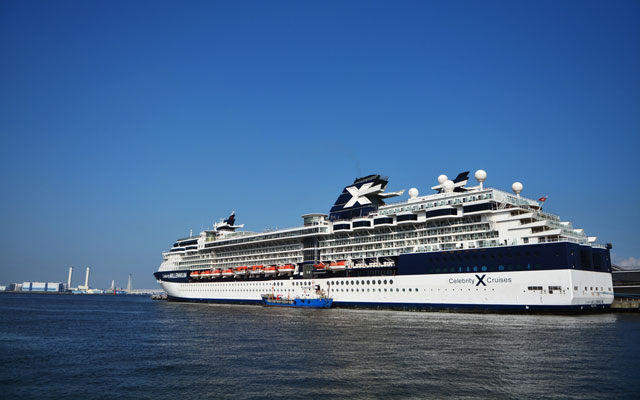
Celebrity Cruises informed TTG Asia that, as of February 13, it has cancelled the rest of Celebrity Millennium’s season in Asia. The ship will be repositioned to the US three months earlier than originally planned.

Major cruise lines are cancelling their sailings from Singapore amid coronavirus fears

“Up until today, we did not intend to cancel the remaining season, however, due to continuous and unpredictable changes in travel restrictions and port closures, we feel this is the best decision for the health and safety of all,” said a spokesperson of Celebrity Cruises.

Additionally, Celebrity Constellation’s debarkation and embarkation in Singapore on March 17 has been rerouted to Dubai. Affected bookings will be refunded and the company will also provide flight reimbursement for guests.

Meanwhile, Royal Caribbean has cancelled two Quantum of the Seas voyages due to depart Singapore tomorrow (February 15) and February 24. A spokesperson of the cruise line said: “The Singapore market remains of great importance to us and we look forward to returning there very soon.”

Princess Cruises’ Sapphire Princess, which was due to sail from Singapore on Thursday, was cancelled a day prior to its departure.

This wave of cancellations follows as the Westerdam, a luxury liner operated by Holland America Line under Carnival Cruises, has been refused entry into the port of Japan, Guam, the Philippines, Taiwan and Thailand, leaving 2,257 passengers and crew adrift.

Coronavirus travel setback spreads beyond China; flight bookings from APAC stall by 10.5%: ForwardKeys

0

The travel setback caused by the coronavirus outbreak has now spread beyond China, with other parts of the Asia-Pacific region experiencing a 10.5% slowdown in outbound travel bookings for March and April, excluding trips to and from China and Hong Kong, according to a study by ForwardKeys.

As of February 9, the setback looks likely to be most marked in North-east Asia, where outbound bookings for March and April are 17.1% behind where they were at the equivalent moment last year. Bookings from South Asia are 11% behind; from South East Asia are 8.1% behind, and from Oceania, 3% behind.

Coronavirus travel slump spreads from China across Asia, with APAC travel bookings nosediving for March and April: ForwardKeys

By comparison, the all-important Chinese outbound market is much more severely affected. Currently, bookings for March and April are set to be just 55.9% of what they were at the equivalent point in 2019.

Forward bookings to Asia-Pacific are 58.3% behind; bookings to Europe are 36.7% behind, to Africa & the Middle East are 56.1% behind, and to the Americas are 63.2% behind.

Looking backwards over the three-week period following the imposition of government travel restrictions in response to the coronavirus outbreak, outbound travel from China has fallen by 57.5%.

Travel to all parts of the world has been severely down, with the Americas worst affected in relative terms and Asia-Pacific in absolute terms. Travel to Asia-Pacific, which receives 75% of the Chinese outbound market, was down by 58.3%; travel to Europe was down by 41.7%; travel to Africa & the Middle East was down by 51.6%, and travel to the Americas was down by 64.1%.

Olivier Ponti, vice president insights, ForwardKeys, said: “The world’s largest and highest spending outbound travel market, China, is in severe difficulty; cancellations are growing by the day and the trend is now spreading to surrounding countries.

“On the brighter side, however, we are not seeing a slowdown in travel outside the Asia-Pacific region; so this is a moment to fill the void by studying alternative origin markets and focusing promotional efforts on them. We will be monitoring the situation carefully because in a disease outbreak like this, travel trends can change quickly; and different markets are likely to respond differently.”

New sustainable lodge in Myanmar eyes longhaul travellers

0
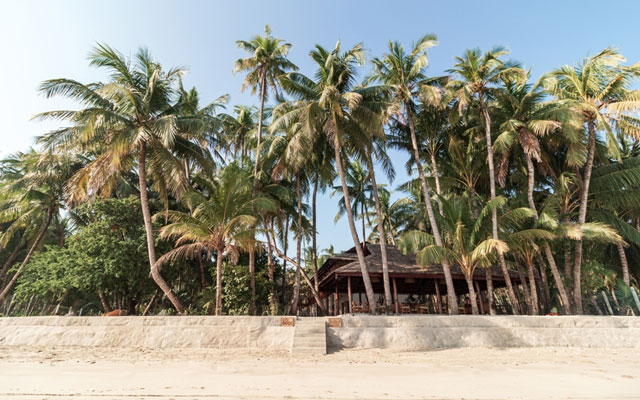
Aerial view

A new sustainable lodge is aiming to lure more longhaul travellers to Myanmar’s untouched coastline, while giving back to the community.

Lalay Lodge opened its doors in January in the remote fishing village of Maung Shwe Lay in Rakhine State, offering visitors a slice of tropical beach paradise combined with a glimpse into authentic rural Burmese life.

In line with the values of conscious travellers, the nine-room resort was designed by Australian architect, Mary Lou Thompson, using natural, locally-sourced materials to blend in with its surroundings.

All 15 staff have been recruited from the village and undergone hospitality training. They are headed by an English-speaking general manager, who is also the only foreign employee.

As part of its sustainable pledge, the lodge has launched a coral reef protection programme and set up a waste collection system for the 1,500 villagers. It also uses solar power and no single-use plastic, and reuses grey water.

Edwin Briels, Lalay Lodge co-owner, said: “Involving communities is what tourism should be all about.”

Briels, who is also managing director of Khiri Travel Myanmar, has been organising day trips to the village, which sits a combined one-hour tuk tuk and boat cruise from Thandwe (Ngapali) airport, for the last seven years.

He said: “My local business partner (for the lodge) told me that if you’re born in a community like this and don’t want to be a fisherman or farmer, then there are no proper jobs. That’s why we started.”

Briels predicts the majority of guests will be longhaul travellers from Australia, Europe and America. They will also tap into regional visitors wanting to experience traditional Asian village life.

Added Briels: “It’s really good for communities to have jobs in their own area and building small lodges is one way to do this. Tourists don’t want to go to only the big attractions; they want to explore more of the countryside and do off-the-beaten-track activities. It’s really about village life, which is amazing in Myanmar.”

Currently, the average stay at the lodge is three nights, with management working with DMCs and FITs through online platforms, such as Booking.com and Agoda.

High-tech botanical garden to bloom in Tokyo’s Inari

0

Japanese leisure and entertainment giant Yomiuri Land is set to open a high-tech botanical garden which will allow visitors to soak up floral wonders year-round instead of only during bloom seasons.

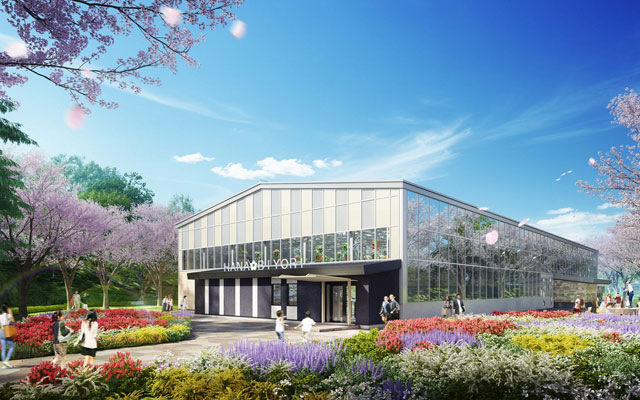
Hana Biyori, which will sit adjacent to the Yomiuriland amusement park in west Tokyo’s Inari area, will launch on March 14.

Visitors to the 40,000m2 facility will be able to immerse themselves in a world of flowers and digital art. Displays will be equipped with projection mapping and imaging technology to show flowers in full bloom year-round.

The 1,500m2 greenhouse will house 300 suspended flower “chandeliers,” the largest arrangement of its kind in the Kanto region, as well as a flowerbed over 20m long and 2m high. Outside, the garden will feature more than 130 tree species and 17,000 flowers every season.

Yusuke Okutani, a planning and advertising executive at Yomiuri Land, told TTG Asia that the move was driven by the desire to take on new challenges and keep offerings fresh and relevant to increasingly discerning travellers.

“Leisure needs have diversified along with changing customer needs. It is an era where bold ideas are not bound by the inevitable. Nothing can surpass the beauty of fresh flowers but recent innovations in digital technology have made possible a fascinating concept beyond imagination,” he said.

Japan’s flowers and foliage are a big draw for international tourists, resulting in annual booms in arrivals during the cherry blossom season and autumn foliage season. The spring and autumn seasons are therefore big business for the trade, with flower-related tours, events, activities and experiences.

With Hana Biyori offering year-round floral appeal, it is poised to become a new highlight for inbound visitors. Okutani hopes to attract particularly active seniors, extended families, as well as women in their 20s and 30s.

Hana Biyori is part of Yomiuri Land’s Super Amusement Park Vision, which promises “a fusion of nature and entertainment unlike anything seen before”. Other efforts include the renewal of Goodjoba with digital elements. The amusement park offers fun and experience of Japanese craftsmanship at four factories (automobile, food, fashion and stationery), and will reopen on March 6.

Boutique hoteliers are still mistaken when it comes to technology

0

The demand for boutique hotels around the world continues to increase, according to a recent report by industry analyst Market.us global.

Major players like Marriott International and Hyatt aggressively market themselves for a bigger share of this valuable market. They have bought out others, scaled down existing properties within their portfolio, and rebranded to give their properties that authentic boutique feel that travellers are looking for.

What sets the boutique chains apart from the smaller independent operators, located in towns and cities in every country, is their access to technology which gives them the edge when it comes to delivering an all-round authentic experience. Tools like data analytics and related sources provide an integrity and promise that many independents struggle to compete with.

The tide is turning, however. The travel tech industry, which larger chains have enjoyed for years, is shifting, allowing smaller hotels to operate on a much more level playing field. There are tools out there that are affordable to the independents, providing a much needed boost in this market. Tools that are giving boutique hotels the opportunity to compete with the big chains while maintaining their unique bijou charm.

Being boutique means that you are flexible, with the freedom to implement new tools. Technology can help you manage guest experiences and problem-solving while your guests are with you. It’s the promise of a personalised, attentive hotel stay for visitors.

Apps available today (like Alexa for hotels) are able to use local knowledge which will enhance hotel guests’ stay by providing them with information on where the local markets or best street food are, and so on. As a boutique hotel, this tech maintains your authenticity because it’s more commonplace among the majority of visitors. They use it every day and it’s very affordable.

While apps offer a relatively cheap means of improving the guest experience, the real challenge for small hotels this year is how to improve hotel management. This is the engine that drives everything, and if you get that right, then the other hotel operations – marketing, sales and customer services – will fall into place.

Hotel property management systems (PMS) schedule and manage daily operations, enabling hotels to handle front office workflow (booking, guest check-in & checkout, etc). This helps hotel staff to better coordinate the operational functions across all the departments by streamlining operations, saving man-hours and serving guests.

Revenue Management Systems (RMS) automate your analytics, determine the right price for your rooms to maximise revenue and profitability. Put simply, a good RMS will enable you to sell the right product at the right time for the best price across the most effective channels.

Multilingual chatbots will boost your room sales. This smart technology provides a potential customer with a direct mode of communication to the hotel, who can answer any questions a prospective guest might have before they make a booking. Prospective guests are able to make an informed decision, and far less likely to book with a direct competitor.

All great stuff but well over budget, right? Wrong.

A New Ecosystem

For small hotels, finding the right software fit is critical, but more importantly, it has to be affordable. Large hotel chains have been using these systems for years and many boutique hotels, with limited budgets, have been playing catch up ever since.

For most small hotels, these stand-alone systems have been out of reach.

What we are moving towards now, however, is a new ecosystem, where tech companies and booking platforms like VLeisure are forging key partnerships that allow them to share this technology. These industry collaborations are making sales and distribution processes a level playing field for all hotels, regardless of their size and budget. This tech is no longer exclusive to large hotels with deep pockets. So, a PMS and an RMS is now a reality, and not a pipe dream.

The Future Is Bright

The more travel businesses like ours work together with tech providers, the greater the opportunity for independent properties to tap into these resources.

Unlike the retail industry, which is seeing more independent stores disappear from the high street, the travel industry is offering new opportunities for small hotels to thrive and compete. It’s the next stage of the boutique renaissance. Keep your ear to the ground because the future is bright for small hotels.