TTG Asia
Asia/Singapore Wednesday, 29th April 2026
Page 860

Chinese wanderlust benefits Macau, Hainan: ForwardKeys data

0

A ForwardKeys analysis has found that pent-up travel demand in China is translating to more and longer stays in destinations close to home, in particular Macau and Hainan.

From March to May this year, both Haikou and Sanya in Hainan province recorded growth in air arrivals when compared to the same period in 2019. May saw the largest increase, thanks to the Labour Day holiday, with Haikou gaining 39 per cent more domestic arrivals and Sanya 49 per cent more.

All tickets issued as of June 7 for travel to Sanya during June and August are currently 33.2 per cent ahead, while tickets to Haikou are only 6.4 per cent behind 2019’s.

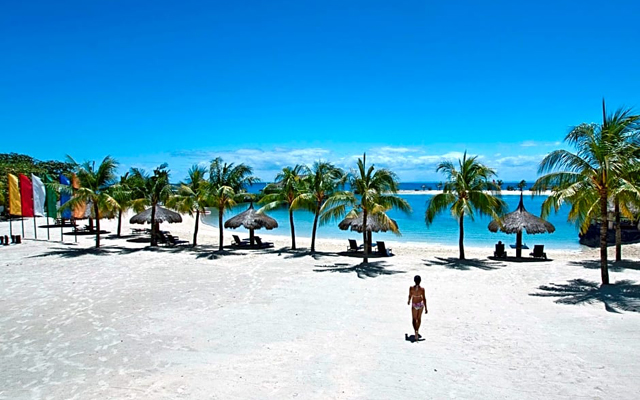
Sanya, compared with Haikou, is a more popular holiday destination among Chinese domestic travellers

Big Chinese cities have emerged the most enthusiastic feeders of tourism traffic to Hainan. Shanghai is the top source market for Hainan in general, with bookings increasing 154 per cent to Sanya and 60 per cent to Haikou.

While Beijing arrivals to Sanya has leapt by 82 per cent, arrivals to Haikou are on par with 2019.

Arrival figures from Zhejiang to Sanya and Haikou have maintained double-digit growth.

In a further demonstration that central cities prefer Haikou over Sanya, 50 per cent of domestic arrivals in Haikou are from Chengdu and 46 per cent are from Wuhan.

On the other hand, Guangdong province’s recent surge in Covid-19 cases has led to delayed, reduced bookings for Haikou, much more than for Sanya,

Over in Macau, Chinese travellers are now giving more time to the destination, instead of combining it with a few days in Hong Kong.

“People used to visit both destinations, say, for a five-day holiday. But in the pandemic era, due to safety concerns and travel restrictions, people are choosing just one destination and enjoying the experience at a slower pace,” said Nan Dai, China market expert at ForwardKeys.

Chinese travellers are spending more days in Macau post-pandemic

During the first five months of 2021, the share of Chinese travellers staying at a destination for three to five nights has increased significantly, by 32 per cent when compared to 2019. Meanwhile, there was a 30 per cent drop in shares of one- to two-night stays.

Since Macau reopened to mainland China on February 23, the number of issued tickets has been building up. In the first week of June, issued tickets for travel from mainland China to Macau reached 48 per cent of 2019’s level, while in general outbound Chinese travel recovered only four per cent.

When examining Macau’s top source markets from the mainland, data reveals that Chengdu and Nanjing have recovered relatively quickly, reaching 60 to 70 per cent of their pre-epidemic levels.

Dai added that 59 per cent of domestic Chinese travellers are now booking their trip to Macau in under four days.

Park Regis Singapore strengthens trade distribution with TA Network

0

Park Regis Singapore has joined Trip Affiliates Network’s (TA Network) technology platform to enhance its online distribution channels and grow direct bookings from preferred agents, wholesalers and corporates.

The platform will enable the upscale hotel to grant its business partners around the world instant access to best available rates for their leisure and business travel customers, and benefit from a host of technology solutions that promise to automate inventory management processes with traditional offline contractors, eliminate overbooking/underbooking issues, and facilitate digital payment, among others.

Park Regis Singapore expects TA Network capabilities will improve B2B distribution and yield management

The hotel’s director of sales, Portia Low, said: “Our collaboration with TA Network highlights our continued commitment to improve our partnership with our travel agencies, wholesalers and corporates who form a strategic segment of our business.”

The new B2B distribution capabilities will also “further revitalise our service delivery to our valued offline partners and also improve our yield management at group level”.

TA Network currently supports more than 300 hotels across 15 countries.

Spain, South Korea revive disrupted tourism pact

0

Spain and South Korea signed a new memorandum of understanding (MoU) at a preparatory conference in Barcelona last week, paving the way for the resurrection of a joint tourism plan that was thwarted by the outbreak of Covid-19 at the start of 2020.

The ceremony was attended by South Korean president Moon Jae-in and the host country’s industry and tourism minister, Reyes Maroto.

A renewed tourism development pact between Spain and South Korea will rebuild both economies and shape a more resilient tourism future

Both expressed hopes to recuperate the growing tourism numbers registered between the two countries before the pandemic struck and to work together to make the sector more sustainable.

Maroto stressed that Spain was beginning “to see a horizon of hope” as it recovered from the worst of Covid-19, and had so far managed to fully vaccinate some 27 per cent of the population.

“(South) Koreans are welcome in Spain and we want to receive them very soon,” she said, pointing out that Spain is the country with the third biggest collection of attractions on the UNESCO World Heritage list.

“Now it is time for us to build the future together after Covid,” she added,

Not only would the accord help in rebuilding economies, “it will also take on the transformation of the tourism model to make it more resilient, sustainable, inclusive and digital,” she added.

Moon said that the reopening of tourism was important for the economies of both countries. “It is my wish that Spain and (South) Korea will lead with this collaboration to open up a sustainable tourism model.”

The original MoU was signed by Maroto and South Korea’s minister of culture and tourism, Park Yang-woo, in Seoul in October 2019.

A joint working group will now share data and work together in key areas such as tourism promotion, digital marketing, market intelligence and the development of intelligent and sustainable destinations.

Special emphasis will be put on the areas of gastronomy, cinema, medical and business tourism sectors, the Spanish government revealed.

South Korean arrivals to Spain soared from 43,000 at the start of the 2010s to 630,000 in 2019, behind only China (699,000) and Japan (686,000) in the Asian market.

While Spanish arrivals to South Korea have been increasing, figures only reached 30,000 in 2019.

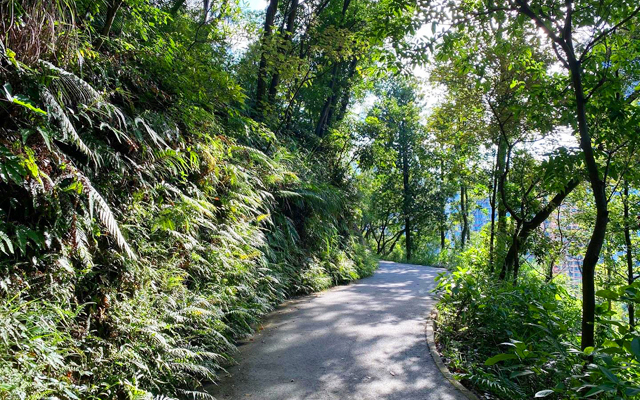
Into the woods

0

Singapore reduces stay-home notice for travellers from higher-risk locations

0

77% of APAC travellers ready to take to the skies again

0

Australian domestic tourism projected to reach record high by 2025

0

Wyndham expands Pakistan portfolio with seven signings

0

IHG makes triple signing in Thailand

0

Green financing for hospitality sector thrives in Singapore despite travel downturn

0
  • More hotel groups, hotel developers securing green loans
  • Green loans on the rise; finance sector plays its part to support government and private sector’s sustainability agenda
  • Green financing encourages sustainable business practices, engagement with responsible travellers

The pandemic may have devastated Singapore’s travel and tourism industry but green financing for hotel properties has remained buoyant and experts expect even stronger investments ahead.

Major financiers and industry players TTG Asia spoke to indicated that sustainability efforts to green properties will likely accelerate post-pandemic and green financing seems poised on an upward trajectory too.

Ascott Residence Trust secured a S$50 million five-year green loan from DBS Bank to finance lyf one-north Singapore

The focus on sustainable financing in the hospitality sector has grown significantly over the years as travellers become more aware of the environmental and social impact they have on local ecosystems and communities, according to Lam Li Min, head of real estate and hospitality, sector solutions group, group wholesale banking, UOB.

Last year, Park Hotel Group secured its first green loan of S$237 million (US$176.1 million) under the UOB Real Estate Sustainable Finance Framework. Launched in 2019, it was the first-of-its-kind for the sector established by a Singapore bank. The framework sets out the eligibility criteria, including sustainability strategy, objectives, ratings and performance targets, for companies to meet when applying for green loans or sustainability-linked loans.

Tan: Green financing nudges hotel operators towards integrating sustainability into their businesses

Tan Shin Hui, executive director, Park Hotel Group said: “Sustainable financing for the hospitality sector is like a carrot on a stick for hotel developers and operators to incorporate sustainability in their business strategy and decisions. This development in financing encourages companies to consider environmental impact of their investments and new business initiatives. It also motivates hotel developers and operators to measure and evaluate the positive difference they are making on the environment.”

This month, Worldwide Hotels Group also inked its first green loan facility worth S$405 million for its new hotel and commercial development, 8 Club Street, with Maybank Singapore. The agreement with the Group is one of the largest bilateral green financing for a hospitality asset in Singapore to date.

Maybank Singapore has also dished out S$250 million in Islamic green financing to property investment chain, Royal Group back in March – said to be the world’s first for hospitality. The funds will go towards the upcoming Raffles Sentosa Resort & Spa Singapore and the existing Sofitel Singapore Sentosa Resort & Spa. This marks Royal Group’s first foray into sustainability finance, according to Gregory Seow, head of global banking, Maybank Singapore.

Seow: Pandemic has sharpened sustainability focus for hospitality stakeholders

“Within the hospitality sector, there is increasingly more focus given to green financing as the pandemic is a wake-up call for sustainable financing. We do see more clients embedding sustainability into their business models to show their stakeholders that they take ESG (Environmental, Social and Governance) targets seriously and will work towards the desirable outcomes they aim for,” Seow added.

Ascott Residence Trust (ART) will use its S$50 million five-year green loan from DBS Bank in January this year to finance its maiden development project and co-living property, lyf one-north Singapore.

Beh Siew Kim, CEO of ART Management and Ascott Business Trust Management, said: “Being the first hospitality trust in Singapore to secure a green loan reinforces ART’s commitment to do our part for the environment and the communities we operate in. In 2020, we increased the number of green properties in ART’s portfolio by about four times compared to 2019. To date, 21 properties in the ART portfolio have obtained green building ratings and certification.”

According to a 2018 UN World Tourism Organization report, hotels account for about one per cent of global greenhouse gas emissions as an industry – so it is crucial for hospitality businesses to embark on ways to reduce their carbon footprint.

Greening makes business sense
Apart from being able to secure green financing for their projects and combat climate change, integrating green practices into their properties will ultimately benefit the bottomline for hotel owners and operators as guests trend towards travelling sustainably and responsibly too.

Seow pointed out that both government and the private sector have also been advocating the sustainability agenda as a differentiator on the country, as well as on a company level.

From 2019 to 1H2020, the Monetary Authority of Singapore revealed that Singapore corporates have borrowed S$10.2 billion through green and sustainability-linked loans, and S$4.8 billion of green and sustainability bonds were issued from Singapore. There is an increased traction for real estate owners and developers to opt for green loans.

As at mid-2020, the green share of total loan and bond transactions in Singapore remains modest at less than five per cent, reflecting the significant opportunity for growth ahead. Seow added: “The finance sector will continue to play our part in promoting sustainable financing for the hospitality sector.”